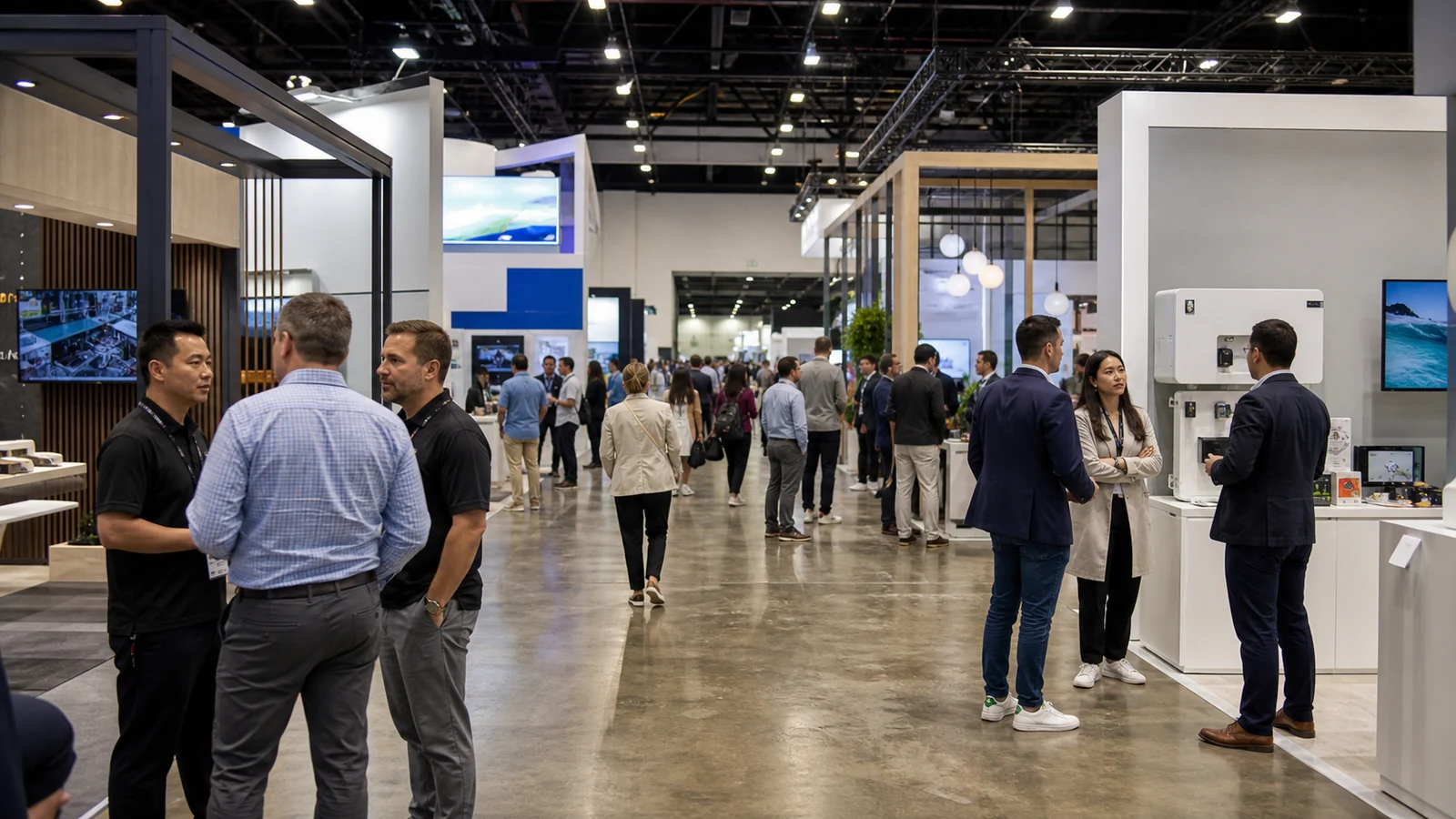
Installation and dismantling costs grow when a crew is present but cannot keep working. The freight is not at the booth. The current drawing is missing. An outlet sits under a cabinet. A special tool is still in another crate. One decision waits for a manager who has left the hall.
If you are ordering I&D labor for a U.S. trade show, your best cost control is not an unrealistically short labor estimate. It is a booth, freight plan, drawing set, and decision path that let the crew work without preventable stops.
Define What “I&D Labor” Includes at This Show
Installation and dismantling labor sets up and takes down exhibit properties. GES describes display labor as work that may include exhibits, signs, and floor coverings, while electrical, plumbing, rigging, forklift, and other services may be separate crafts or orders.

Read the current exhibitor manual before deciding who will perform each task. Rules differ by city, venue, show, and type of work. Confirm:
- work an exhibitor’s own employees may perform;
- work reserved for official or qualified labor;
- whether you may appoint an EAC;
- EAC notice, insurance, credential, and deadline requirements;
- separate orders needed for electrical, internet, plumbing, rigging, lifts, or material handling;
- straight-time, overtime, minimum-call, and cancellation rules.
Do not use another show’s labor experience as the rule for this show.
Choose Supervision Deliberately
With supervised labor, the official provider or I&D company directs the crew using your instructions. With exhibitor-supervised labor, your representative directs the work onsite. The wording and responsibility vary, so use the definitions in the current order form.
Exhibitor supervision can work well when your lead knows the booth, arrives before the labor call, stays available, and can make decisions. It fails when the “supervisor” is also collecting badges, finding freight, setting up products, and joining internal meetings.
Provider supervision can reduce the need for your staff to be present for every step, but it demands a complete build packet and clear authority for questions. Whichever model you choose, name one person who can answer layout and finish questions and one person who can approve cost or schedule changes. The broader owner, approver, and change process belongs in the trade show project management guide.
Prepare One Installation Build Packet
The crew should not have to decide which PDF is current. Prepare one controlled package containing:

- final plan and elevations with revision and approval date;
- numbered component or crate list;
- assembly sequence and hardware map;
- flooring and utility plan;
- product placement and weight information;
- graphic locations and orientation;
- lighting and AV coordination notes;
- special tools, lift needs, and safety instructions;
- finish standards and photographs of the intended result;
- onsite contacts and approval limits.
Mark the starting orientation clearly. “Left wall” means different things when one person faces the aisle and another faces the back wall. Use booth number, neighboring booth numbers, and aisle direction.
For a reusable exhibit, add photos from the last completed installation and notes about anything that was difficult, damaged, or modified. A good photo can resolve a detail faster than a page of vague text.
Make Freight and Utilities Ready Before the Labor Call
Labor time is wasted when the booth materials are unavailable or the floor cannot be covered because power has not been placed. Link the I&D call to freight delivery, empty-container access, flooring, electrical, internet, plumbing, rigging, and product arrival. Use the trade show logistics and shipping guide for advance-warehouse, direct-to-show, material-handling, and outbound decisions.
Before the call, confirm:
- freight piece count and booth delivery status;
- the floor is accessible and marked;
- utilities below flooring are complete or scheduled in the correct sequence;
- tools and hardware are in a known first-open case;
- the current drawing is physically and digitally available;
- the person directing work is credentialed and onsite.
If one dependency is uncertain, decide what useful work the crew can perform while it is resolved. Do not order a full crew simply because the hall is open.
Estimate Labor From Tasks and Dependencies
Break the build into real tasks: unload or identify properties, lay flooring, assemble structure, install graphics, place products, coordinate utilities, test lighting and AV, clean, and correct punch-list items. Estimate crew size and time for each task, then identify which tasks can run in parallel.

A bigger crew is not automatically faster. Five people cannot install one connection at the same time, and an extra crew waiting for a lift or an approval still bills time. Ask the I&D provider which steps determine the critical path and what can be prepared before those steps begin.
Include time for opening and organizing cases, not only for visible assembly. Repacking often takes longer than expected because each item must be protected, counted, and matched to outbound destinations.
Keep the Crew Moving Onsite
Start with a short crew briefing: booth orientation, work sequence, safety concerns, finish standard, hard stop, and who can authorize changes. Walk the freight and drawing before work starts.
Keep a live issue list. For each problem, record what is blocked, who is resolving it, the decision time, and whether the crew can move to another task. Photograph concealed utilities before flooring or cabinets cover them. Photograph the completed booth before products and literature hide construction details.
Do not wait until the end to inspect. Check alignment, graphic orientation, fasteners, stability, cable paths, doors, locks, lights, and visible damage while the relevant tools and crew are still present.
Pack the Exhibit for Its Next Destination
Show close is not permission to start early. Confirm the official break time and tell the team who releases products, lead devices, and personal items before labor begins.
For dismantling, provide the same clarity as installation:
- approved start time and labor order;
- what must be returned to storage, another show, the company, or a supplier;
- packing materials and case assignments;
- damage and missing-part inspection;
- outbound labels and documents;
- who signs off before each case closes;
- who remains until freight release is confirmed.
Do not let loose hardware disappear into an unmarked box. Use a count sheet, photograph each open case before closing, and flag repairs instead of packing damage as if nothing happened.
Review the Invoice Against What Happened
Keep labor tickets, crew start and stop times, change approvals, delays, and the issue log. Review them promptly against the order and invoice. If time grew, identify whether the cause was scope, missing information, freight, utilities, access, a requested change, or labor performance.

The purpose is not only to question a charge. It is to remove the cause before the same booth is installed again.
Frequently Asked Questions
How should you compare two I&D labor quotes?
Put both quotes on the same basis: crew size, estimated hours, rate period, minimum call, supervision, equipment, travel or administrative charges, cancellation terms, and included tasks. A lower hourly rate is not a lower installation cost if it assumes more hours or excludes the person directing the crew.
What should you do if the crew damages a booth component?
Stop work on that component if continuing could worsen the damage or create a safety problem. Photograph the condition, record when it was found, notify the supervisor, and agree whether it will be repaired, replaced, or installed with an approved temporary correction. Keep the record for packing, the labor ticket, and the post-show repair decision.
Can product setup happen while the booth structure is still being installed?
Only when the work zones are separated and the current rules allow it. Product staff should not enter an area with active lifting, overhead work, unstable components, or blocked exits. If product placement will trap access to fasteners, utilities, or graphics, wait until those tasks have been inspected.
What should you check before signing a labor ticket?
Check the crew count, start and stop times, breaks, equipment, completed work, approved changes, and any waiting time. Note unresolved discrepancies on the ticket or through the provider’s documented process before the crew leaves. Keep a copy; memory is a poor invoice record after the show.
What to Send Your Installation Team
Send the current drawings, component and case list, assembly order, utility plan, graphic locations, product information, finish reference, contacts, and approval limits as one installation package. Confirm that the freight, floor, utilities, tools, and onsite supervisor will be ready when the labor call begins. For dismantling, add the destination, case assignments, outbound labels, and the person who signs off before each case closes.