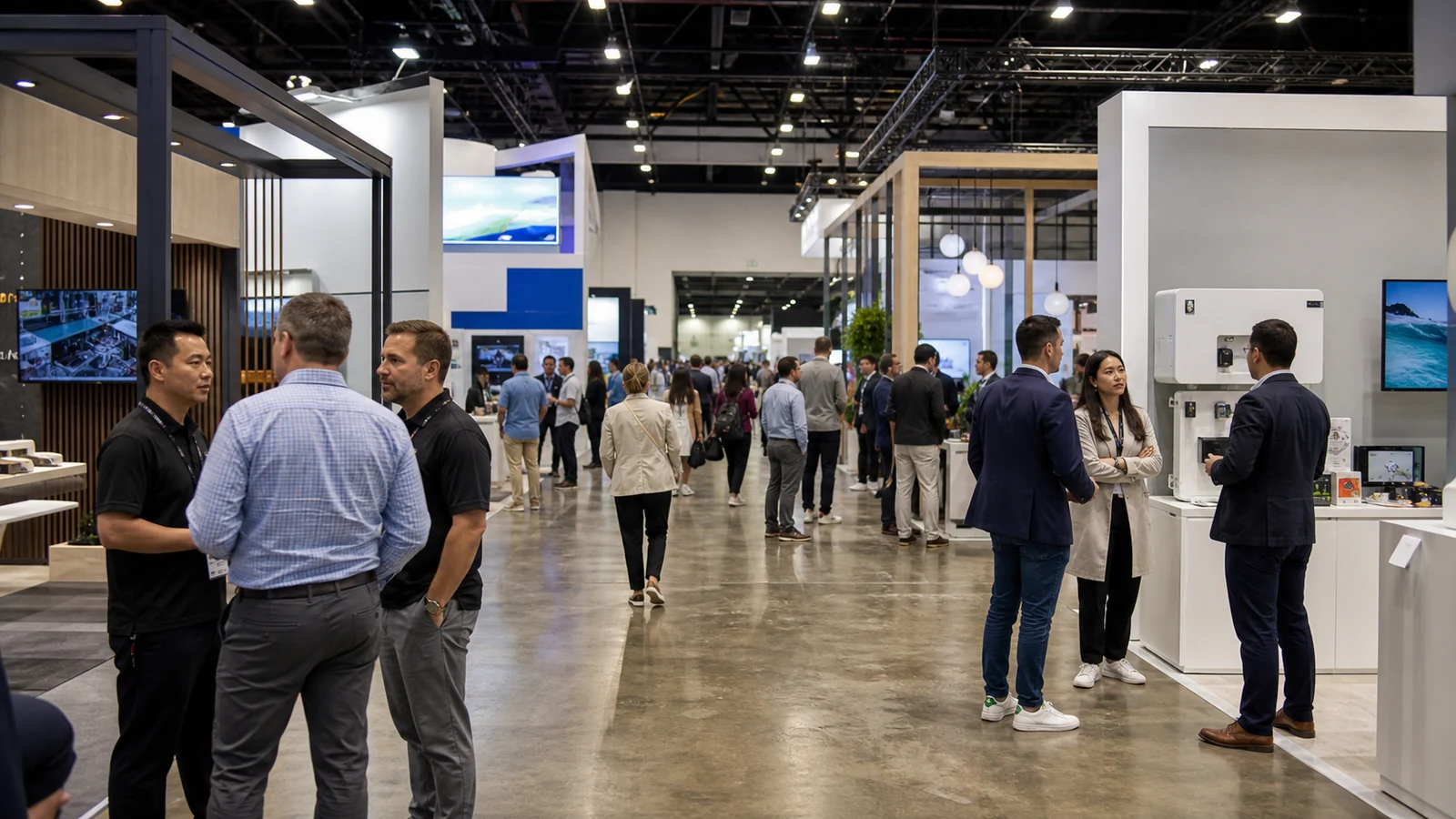
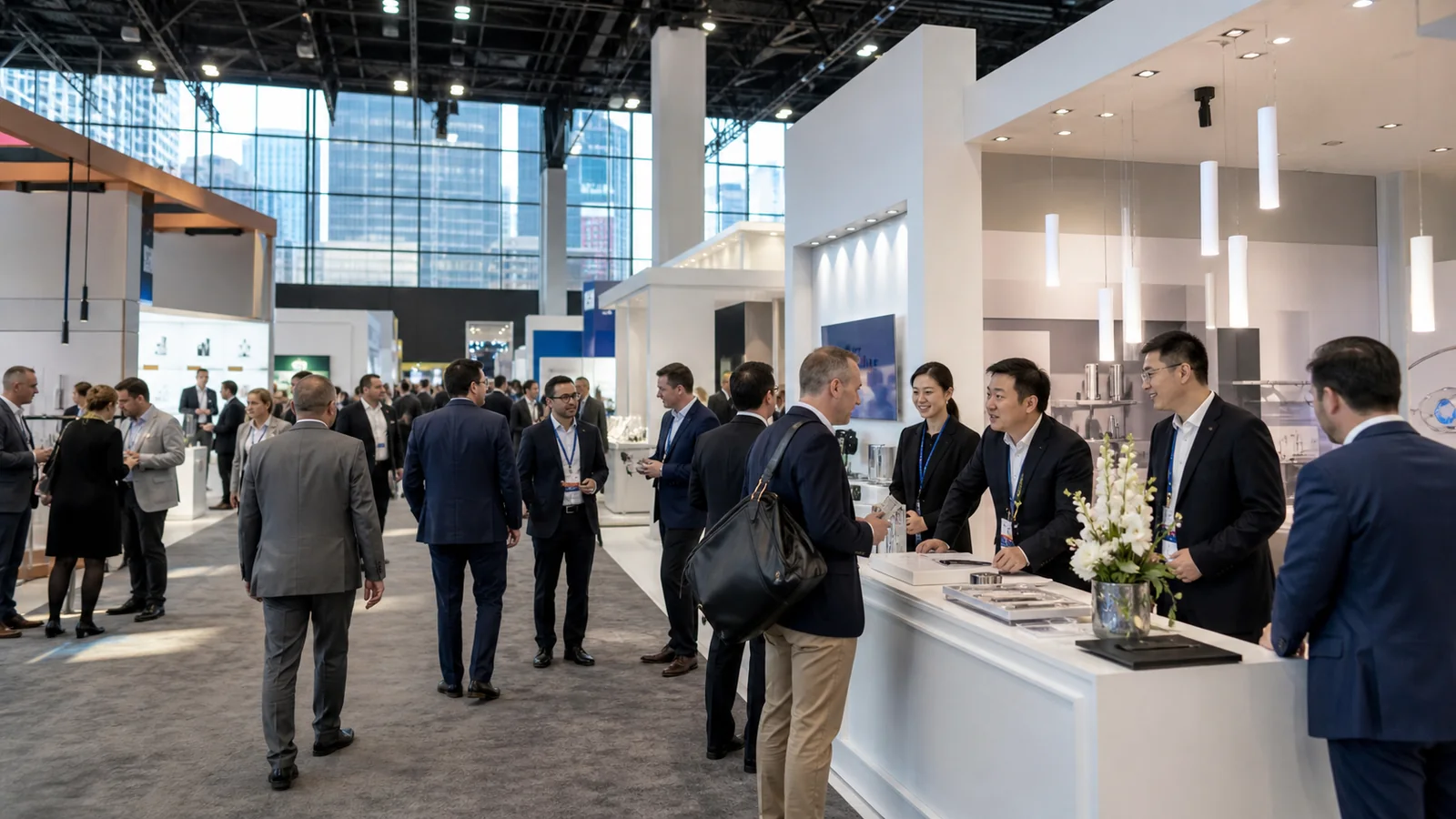
The number on a trade show prospectus is usually the cost of floor space—not the cost of exhibiting. Your real budget may also include the booth or display, show services, freight and material handling, staff travel, lead capture, and promotion.
This guide separates those numbers so you can build a budget that your team can approve and then replace estimates with current show quotes.
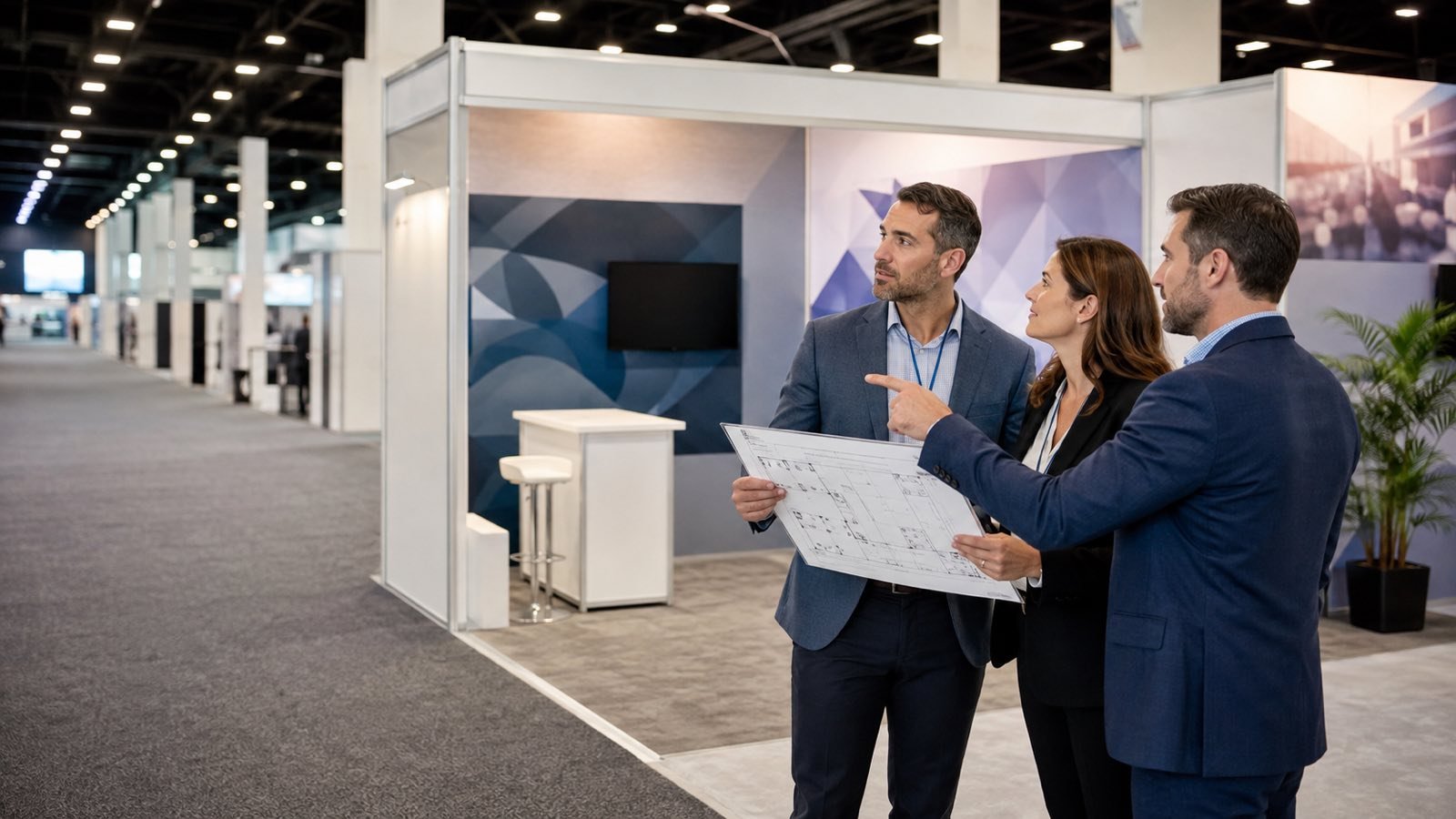
Quick Answer: How Much Should You Budget to Exhibit?
For a U.S. planning anchor, a basic 10×10 presence often falls around $5,000–$15,000 all-in, a standard 10×10 around $10,000–$30,000, a 10×20 around $20,000–$60,000, a 20×20 custom booth around $50,000–$150,000+, and a large island exhibit around $100,000–$300,000+. These are broad planning bands synthesized from published 2026 exhibitor guides and current show fees—not a market average or a KingExhibits quote. Your show prospectus and service manual determine the actual number.
Typical All-In U.S. Planning Bands
| Exhibit type | Typical all-in planning band | What the band assumes |
|---|---|---|
| 10×10 tabletop or basic booth | $5,000–$15,000 | Regional or niche show, light display, 1–2 staff, limited freight |
| 10×10 standard booth | $10,000–$30,000 | Standard rental or modular display, show services, freight, and a small team |
| 10×20 booth | $20,000–$60,000 | Larger display, more graphics or demonstration space, 2–4 staff |
| 20×20 custom booth | $50,000–$150,000+ | Custom or hybrid build, engineering, AV, logistics, and on-site labor |
| Large island exhibit | $100,000–$300,000+ | Flagship architecture, multiple staff, premium services, rigging, or major AV |
The ranges cover the planning question “what does it cost to exhibit,” rather than only the trade show booth cost. They can move lower for a local tabletop package or much higher for premium sponsorships, complex rigging, heavy products, or international customs. A 2026 industry cost guide likewise separates regional, mid-tier, and tier-1 show budgets instead of presenting one national price.
What Does “Exhibit Cost” Actually Mean?
When someone asks what it costs to exhibit, they may be asking about three different numbers:
Space-Only Cost
This is the organizer’s charge for your contracted floor area and any base package stated in the prospectus. It may be priced per square foot and changed by membership, area, corner or island position, and the rate deadline. Keep the prospectus page that shows the rate, inclusions, and cutoff date.
Booth or Display Cost
This covers the physical environment your visitors see: design and engineering, structure, graphics, flooring, lighting, furniture, storage, screens, and other display equipment. Your trade show display cost changes with the system and the scope, so ask for each item and its quantity in the proposal.
Total Exhibiting Budget
Your all-in working budget is the combination of:
space + booth/display + show and venue services + freight/drayage/I&D + staff/travel + marketing/lead capture + approved contingency
Keep the provider’s booth scope separate from organizer, venue, carrier, and internal-company costs. A single booth quote is not automatically a total show budget.
Main Trade Show Exhibit Cost Factors
Your total is built from four connected cost factors: exhibit space, the booth or display, show and venue services, and the people and marketing needed to operate the program.
Exhibit Space
For the selected 2026 examples reviewed for this guide, published space-only rates run from roughly $28 to $100 per square foot. The same 100 square feet could therefore represent $2,800, $4,000, or $10,000 before you order a booth, ship anything, or send staff.
| 2026 official example | Published space rate | Illustrative math | Conditions to check |
|---|---|---|---|
| IPPE | $28–$30/sq ft | 10×10 = $2,800–$3,000 | Rate date, membership discount, and corner terms |
| NAR NXT | $40/sq ft | 10×10 = $4,000; 20×20 = $16,000 | Standard rate and corner premiums |
| AVMA | Inline $44/sq ft; island $56/sq ft | 20×20 island = $22,400 | $500 per inline corner; island rules |
| ASRS | $100/sq ft | 10×10 = $10,000; 20×20 island = $40,000 | Package inclusions and member/non-profit rates |
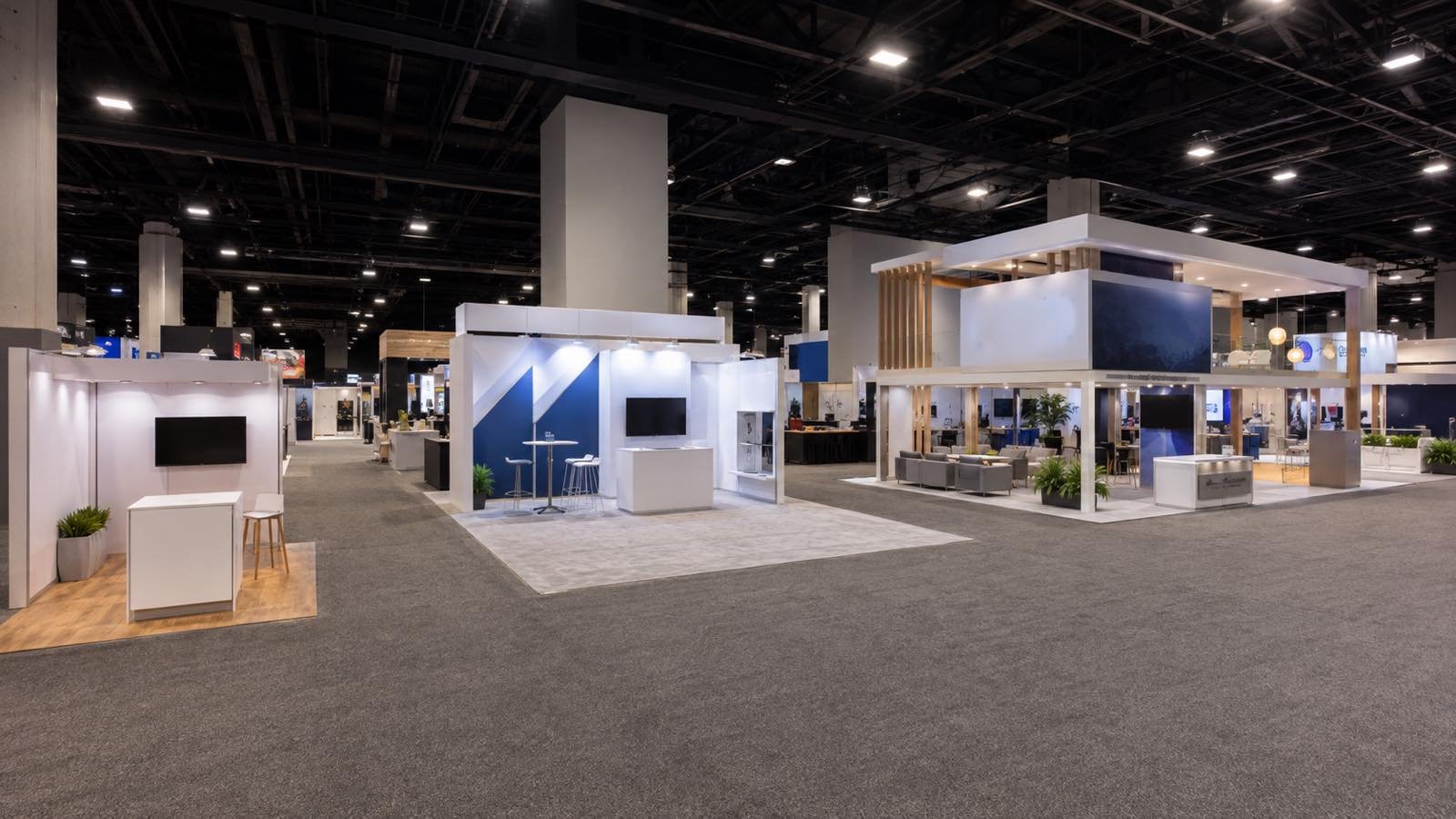
These examples illustrate how space pricing varies by event and configuration. They do not predict your all-in cost. Before comparing shows, confirm whether the quoted space includes pipe and drape, carpet, furniture, waste service, or other basic items.
The underlying rate pages are the IPPE 2026 prospectus, NAR NXT 2026 exhibit page, AVMA 2026 booth pricing, and ASRS 2026 prospectus. Each is an edition-specific space example.
Worked 10×10 Planning Example
Here is a transparent worksheet for a hypothetical 10×10 at a show charging $40/sq ft, using the NAR NXT 2026 space rate as the anchor. The other figures are planning allowances, not published market prices or a quote.
| 10×10 budget line | Planning input |
|---|---|
| Space fee | $4,000 fixed example |
| Booth or display | $4,000–$8,000 allowance |
| Electrical, internet, lead retrieval | $1,000–$3,000 allowance |
| Freight, drayage, and I&D | $1,500–$4,000 allowance |
| Two-person staff travel | $2,500–$5,000 allowance |
| Marketing, samples, and follow-up | $500–$2,000 allowance |
| Registration, insurance, tax, and administration | $500–$2,000 allowance |
| Contingency | $1,000–$3,000 allowance |
| Illustrative planning total | $15,000–$31,000 |
Replace every allowance with the show’s current order forms, supplier proposal, travel plan, and tax treatment. This is what turns a headline 10×10 booth cost into a usable cost-to-attend-as-an-exhibitor estimate.
Booth and Display
The booth/display line pays for how your space works, not just how it looks. It can include design, engineering, structure, branded graphics, floor treatment, lighting, furniture, product shelving, meeting areas, AV, and packing or storage components.
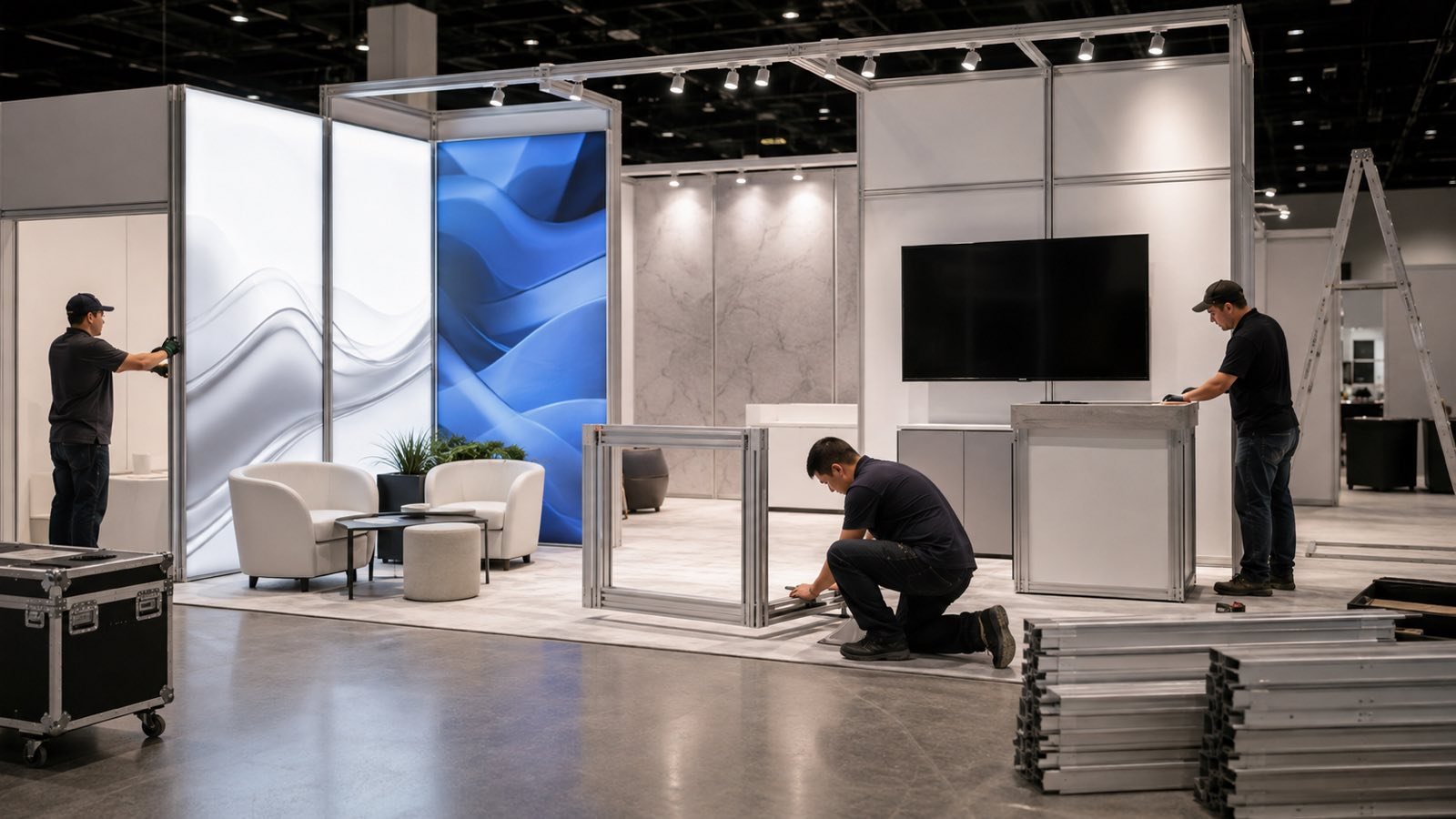
Trade Show Booth Rental vs. Purchase
- Rental: You pay for a configured system for the event and return the main components. It can suit a first show or a footprint that changes often; compare the full exhibition booth rental cost, not only the hardware line.
- Modular: Reusable components can be rearranged for different spaces. Compare the cost of replacement graphics, reconfiguration, and storage—not only the first build.
- Custom purchase: You own the structure and finishes. Add freight, storage, repairs, graphic refreshes, and future engineering to the ownership decision.
- Hybrid: Keep selected brand assets while renting or reconfiguring the rest. This can make sense when your message is stable but your show sizes are not.
Do not ask only, “Which option is cheapest?” Ask, “What will this program cost across the next two or three shows?” A lower first invoice can become expensive if it creates heavy freight, difficult storage, or a complete rebuild for the next footprint.
Your proposal should identify what is included in the display price, what is billed by a third party, who owns each asset after the show, and what changes would trigger a new quote.
Show and Venue Services
Space and a booth do not make the exhibit operational. Show and venue services can add separate charges for electrical power, internet, rigging, cleaning, lead retrieval, required labor, and venue-specific services.
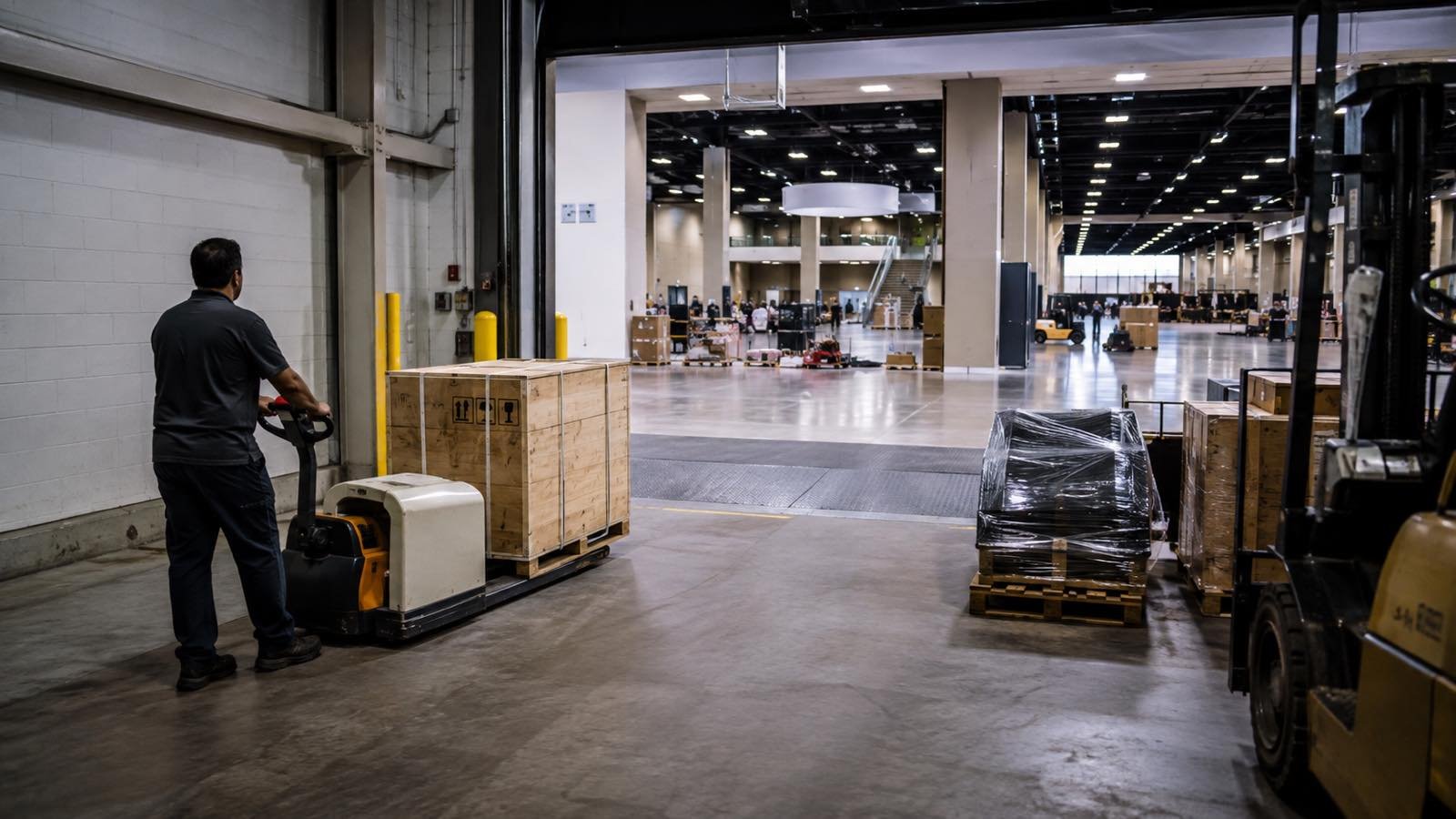
Freight also has several paths. Drayage, often called material handling, is the on-site movement of your freight from the receiving dock to the booth, plus empty-crate handling and movement out after the show. GES describes material handling as separate from ordinary shipping and space charges; your current service manual controls the actual calculation. (GES material handling guide)
Check each service for its billing unit and deadline:
- electrical: outlet type, power quantity, and order deadline;
- internet: wired or wireless service and bandwidth;
- rigging: hanging-sign approval, point count, and labor;
- cleaning: daily service or one-time order;
- freight: advance warehouse versus direct-to-show receiving;
- material handling: weight, shipment type, storage, and overtime;
- installation and dismantling (I&D): labor call, union rules, and schedule;
- empty-crate storage and return freight.
Also create separate lines for exhibitor registration or extra badges, certificate-of-insurance or event insurance, sales tax or other applicable taxes, security, waste removal, payment-processing fees, and union labor minimums. If you are shipping across a border, add customs, duties, brokerage, and any product certification or compliance work; those items do not belong in a generic U.S. range.
The requirement is show-specific: for example, some 2026 exhibitor rules require a certificate of liability insurance, while others give a limited number of complimentary badges and charge for additional registrations. Check your own contract and rules rather than assuming insurance or registration is included. (TFEA 2026 exhibitor information, APA 2026 exhibitor rules)
Early-order and late-order prices can be different. Put the service manual version and each deadline in your budget file so a late fee does not appear as a surprise.
Staff, Travel, and Marketing
Your exhibit only produces value when the right people can operate it and follow up on conversations. Budget staff headcount, badges, hotel nights, transportation, meals, samples, demonstrations, giveaways, lead capture, pre-show promotion, and post-show follow-up as separate lines.
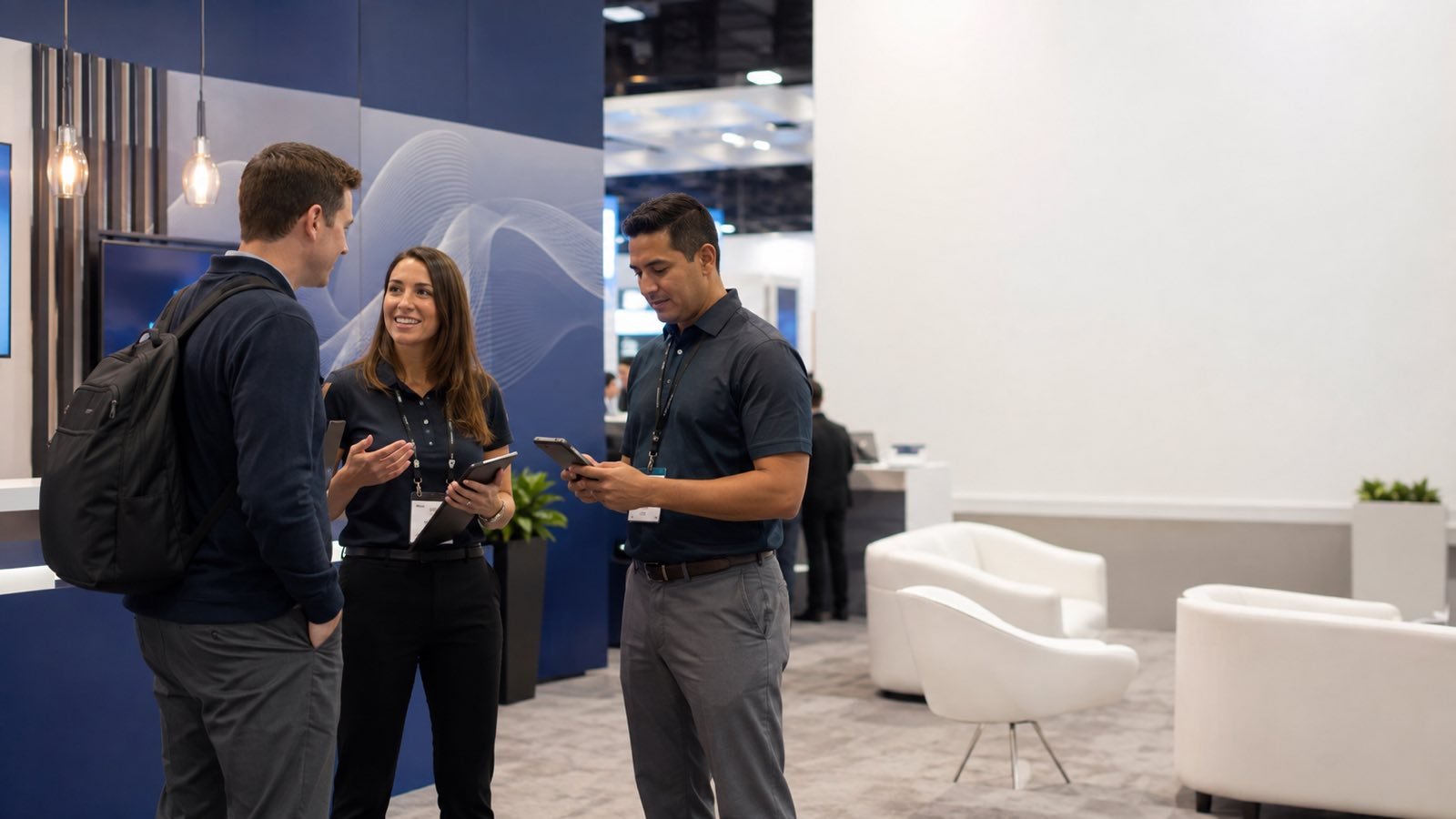
Use your own inputs rather than an unverified “average per person” number:
staff travel = people × nights × (hotel + transport + meals) + badges
Then add sample or demo shipping, marketing production, and the follow-up work required to process leads. If a meeting program needs a private room, hospitality, or additional AV, place those costs in the relevant service or marketing line instead of hiding them in the booth total.
Full-Cost Table
| Cost layer | Include | Who or what to verify |
|---|---|---|
| Organizer and space | Floor space, package, corner/island premium, sponsorship, registration | Current prospectus, rate date, inclusions |
| Booth and display | Design, engineering, rental/build, graphics, flooring, furniture, AV, storage | Provider proposal, ownership, reuse |
| Venue and show services | Electrical, internet, rigging, cleaning, lead retrieval, required labor, security, waste removal, union minimums | Exhibitor service manual and official contractor |
| Freight and site labor | Shipping, advance warehouse, direct-to-show, drayage, I&D, empty-crate storage, return freight | Weight, receiving window, labor call, overtime, destination |
| People and marketing | Staff travel, hotel, meals, badges, promotion, samples, giveaways, lead licenses, follow-up | Headcount, days, campaign scope, owner |
| Risk, tax, and administration | Sales tax, exhibitor insurance/COI, property coverage, payment fees, customs or product compliance when applicable | Show rules, venue/state requirements, finance and compliance owner |

How Do You Build a First-Pass Total Budget?
Use the 3× check only as an initial approval check, then replace it with your own ledger. GES presents this multiplier as a budgeting ballpark; it is one screening tool—not a universal trade show budget calculator. (GES budgeting guide)
Use the 3× Space-Fee Check as an Approval Screen
First-pass total = exhibit-space fee × 3
For example:
- $10,000 space fee → approximately $30,000 first-pass budget;
- $20,000 space fee → approximately $60,000 first-pass budget.
The multiplier is useful because it forces you to ask about non-space costs. It is not a U.S. standard and should not replace a line-by-line estimate. Heavy freight, a large LED wall, rigging, union labor, a large team, or peak-season hotels can push your total higher. A small tabletop exhibit or an organizer’s inclusive package may land lower.
Replace the Ballpark With Your Own Cost Ledger
- Lock the show, venue, dates, booth size, and open sides.
- Save the current prospectus and exhibitor service manual.
- Request a booth/display scope with quantities and assumptions.
- Estimate freight, drayage, I&D, utilities, and storage from the manual.
- Add staff, travel, samples, promotion, lead capture, and follow-up.
- Mark unknown items as pending quote, not zero.
- Set an approval ceiling and a person who can authorize changes.
Track budgeted, committed, and actual amounts separately. That makes the next show easier to price and shows which assumptions caused the variance.
Use Clear Quote Labels
| Quote label | Meaning for your approval file |
|---|---|
| Included | Covered in the quoted amount with stated quantity |
| Fixed price | Provider or organizer commits to the stated scope and price |
| Allowance | A placeholder amount that changes when the final order is known |
| Estimated third-party | Planning figure supplied for another contractor’s charge |
| Client-direct | You order and pay the organizer, venue, or carrier directly |
| Excluded | Not covered; you need a separate budget line |
Two proposals are not comparable when one puts electricity, freight, or installation under “included” and the other leaves them as exclusions.
Which Factors Move the Total Most?
- Footprint and configuration: Inline, corner, peninsula, and island layouts change the space fee, open sides, structure, and visitor flow.
- Show and venue: Rates, service contractors, labor rules, hotel demand, and transport distance vary by event.
- Build complexity: Height, hanging signs, enclosed rooms, heavy products, specialty finishes, LED/AV, and live demonstrations add engineering, equipment, and labor.
- Freight path: Weight, volume, advance warehouse versus direct-to-show, empty-crate storage, and return destination affect material handling.
- Order timing: Missing an early-order deadline can trigger late, rush, or overtime charges.
- People and program length: More staff, more nights, hosted meetings, and longer campaigns increase the all-in number.
- Reuse plan: A one-show rental and a multi-show purchase should be compared over the same program period.
How Can You Reduce Cost Without Losing the Main Exhibit Job?
Start with the visitor action that matters most—book a meeting, test a product, or understand one offer. Then spend on the layout, demonstration, lighting, and graphics that support that action. Decorative complexity that does not improve visitor understanding is the safest place to simplify.
Read the service manual early and order utilities, material handling, and labor before the early deadline. Reduce freight weight through lighter packing and fewer unnecessary shipments, but compare advance-warehouse and direct-to-show windows before choosing.
If your footprint is still changing, compare rental or modular options first. If the same structure will be reused, calculate purchase cost with storage, repairs, graphic updates, reconfiguration, and future freight. Finally, require every quote to show included and excluded items; a low headline number with unassigned costs is not a low-cost plan.
What Should You Confirm Before Approving the Budget?
Use this short approval check before committing funds:
- Show, venue, dates, booth number, dimensions, open sides, and space rate.
- Prospectus and service-manual version, including member, corner, island, and deadline terms.
- Booth scope: structure, graphics, furniture, AV, flooring, storage, pre-build, and post-show ownership.
- Freight path, drayage, I&D, empty-crate storage, return freight, and responsible payer.
- Electrical, internet, rigging, cleaning, lead retrieval, insurance, and other required services.
- Staff headcount, nights, travel, samples, promotion, lead capture, and follow-up owner.
- Each line labeled included, fixed, allowance, estimated third-party, client-direct, or excluded.
- Pending quotes, contingency trigger, approval limit, and change authority.
Frequently Asked Questions
How much does a 10×10 trade show booth cost all-in?
There is no single all-in price across U.S. shows. As a planning anchor, a basic 10×10 may fall around $5,000–$15,000, while a standard 10×10 may be $10,000–$30,000. Your final amount depends on the display, services, freight, staff, marketing, taxes, and insurance included in your plan. (2026 industry cost guide, NAR NXT 2026, ASRS 2026 prospectus)
Is the booth space fee the same as the total cost to exhibit?
No. The space fee buys the contracted floor area and the items expressly included in the prospectus. Total exhibiting cost adds the booth/display, show services, freight and material handling, installation, people, travel, and promotion.
Is it cheaper to rent or buy a trade show booth?
It depends on how many shows you will run, whether the footprint stays stable, and what storage, repair, graphic-refresh, and reconfiguration will cost. Compare both options across the same two- or three-show period instead of comparing only the first booth invoice.
What is drayage, and is it included in the booth price?
Drayage, or material handling, is the venue’s on-site movement of freight from the receiving dock to your booth, plus empty-crate handling and movement out after the show. It is often billed separately from ordinary shipping and booth space. Check the current service manual for weight, shipment path, storage, and overtime rules. (GES material handling guide)
How much contingency should you add to a trade show budget?
Do not apply an unsupported universal percentage. First list pending quotes, late-order exposure, freight-weight uncertainty, staffing changes, and other variables. Then set a contingency line that reflects those specific triggers and require approval before it is used. This produces a more defensible number than copying a percentage from an unrelated show.
Final Thought
Your trade show budget should end with one approved number and a visible list of assumptions—not a booth quote taken out of context. Before you commit, confirm the show prospectus, booth size and open sides, display scope, service deadlines, freight path, staff plan, taxes, insurance, and reuse goals. For a preliminary estimate, contact KingExhibits for a trade show budget review. Share those inputs so we can compare rental, modular, and custom exhibit options, map booth design and display scope, coordinate freight, and plan installation, dismantling, and multi-show reuse. You receive a line-item starting point with included and excluded assumptions before production commitments.