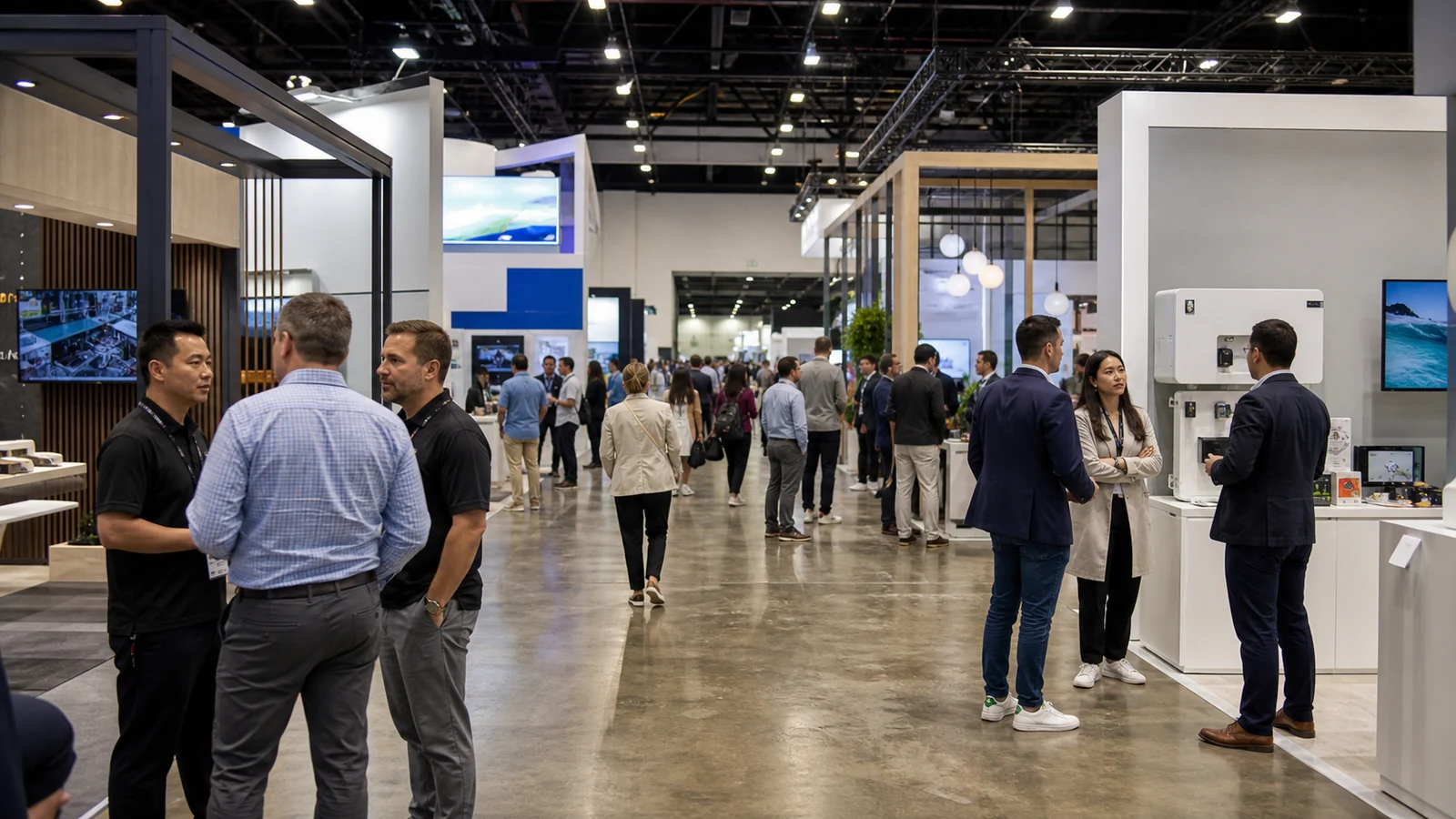
Paying a carrier to deliver your exhibit does not necessarily get the freight to your booth. At many U.S. trade shows, a separate material handling process begins when the shipment reaches the official advance warehouse or show-site receiving dock. Understanding that handoff helps you assign responsibilities, compare costs, and protect the installation schedule.
What Is Trade Show Material Handling?
Trade show material handling is the controlled movement of exhibit freight between an approved receiving point and the booth. The receiving point may be an advance warehouse operated for the show or the venue’s show-site dock. After dismantling and packing, the process runs in reverse. Within U.S. exhibitor manuals, “drayage” is commonly used as another term for this show material handling service.
At many large U.S. shows, the organizer appoints an official service provider or general service contractor, often shortened to GSC, to manage the receiving dock and mechanized freight movement. This centralized control keeps multiple carriers, forklifts, crews, and exhibitors from competing for the same access routes during a short move-in or move-out window.
What Material Handling Commonly Includes
Although every show manual must be checked, material handling commonly covers:
- receiving and unloading freight at the advance warehouse or show-site dock;
- moving crates, pallets, cases, or approved machinery to the booth;
- removing, storing, and returning labeled empty containers; and
- moving repacked freight to the dock and loading the carrier identified in the outbound paperwork.
The charge therefore covers a sequence of handling activities rather than a single freight movement. That sequence may include multiple transfers, temporary empty-container storage, dock coordination, equipment, and labor across both move-in and move-out.
What It Commonly Does Not Include
Material handling usually excludes:
- carrier transportation to and from the event;
- customs clearance and international freight formalities;
- booth installation and dismantling;
- electrical, rigging, plumbing, internet, AV, or other specialized labor; and
- accessible storage, long-term storage, disposal, or repairs unless expressly ordered.
A proposal described as “turnkey” may combine some services, but the label does not define the scope. Check which party owns each handoff, which order applies, and which costs the venue or official contractor will invoice separately.
Where Material Handling Fits in the Full Freight Journey
Material handling sits between inbound transportation and booth installation, then reappears between booth packing and outbound transportation. Treating these as separate milestones prevents a carrier’s delivery confirmation from being mistaken for “freight at booth.”
Inbound Shipping to the Receiving Point
Inbound shipping moves the exhibit from its origin to the advance warehouse or venue address specified by the show. The carrier transports it to that receiving point; your project team must use the correct address, booth number, labels, delivery window, and documents. A carrier status of “delivered” does not necessarily mean the crates are at the booth or ready for installation.
Dock or Advance Warehouse to the Booth
Once the official receiving operation accepts the shipment, material handling begins. The advance warehouse is a show-designated receiving and staging service: eligible freight is accepted during its published window and later moved to the venue on the show’s schedule. It is not general-purpose warehousing. Direct-to-show freight is unloaded at the venue during the published receiving window. In either route, the material handling provider controls the final movement to the assigned booth.
Your installation schedule should therefore show three different checkpoints:
- the carrier has delivered the shipment;
- the freight has been delivered to the booth; and
- the booth is ready for the installation crew to start.
Those events may occur hours or days apart, particularly at targeted shows or congested move-ins.
Empty-Container Storage During the Show
After unpacking, empty crates and cartons normally cannot remain in the booth or aisles. The material handling team removes properly labeled containers to an area that is usually inaccessible during show hours and returns them after closing. Remove any tools, samples, or packing materials you will need before the containers leave; empty storage is neither accessible storage nor long-term warehousing.
Booth to Dock and Outbound Shipping
At show close, I&D labor dismantles and packs the exhibit. Once the pieces are labeled and supported by the required outbound form, material handling moves them to the dock and loads the designated carrier. Outbound shipping starts when that carrier takes possession; transportation to the next destination is normally a separate charge.

Material Handling vs Shipping, Warehousing, Move-In/Move-Out, and Installation Labor
These terms describe different services or stages, even when one supplier coordinates several of them. Separating them before comparing proposals is the fastest way to find missing responsibilities.
| Term | What It Means | Typical Start and End | Typical Responsible Party | Common Misunderstanding |
|---|---|---|---|---|
| Material handling or trade show drayage | Controlled receipt, movement, empty-container storage, return, and reloading of exhibit freight | Approved warehouse or show-site dock ↔ booth | Official material handling provider, often the GSC | “It is included because shipping was paid.” |
| Shipping or freight | Transportation between cities, facilities, warehouses, venues, or consecutive shows | Shipment origin ↔ approved receiving or next destination | Freight carrier, forwarder, or logistics provider | “The carrier can take the crate directly to the booth.” |
| Advance warehouse | A pre-show receiving route that accepts eligible freight during a published window | Warehouse receipt → staged delivery to the booth | Official contractor or its appointed warehouse operation | “It is general storage and always cheaper.” |
| Empty-container storage | Temporary removal and return of labeled empty crates during the event | Booth after unpacking → booth after show close | Usually the material handling provider | “The crate remains accessible during the show.” |
| Long-term or show-to-show storage | Storage outside the temporary show-floor material handling cycle | After one project → a later retrieval or event | Booth provider, warehouse, or logistics partner | “It is included with empty storage.” |
| Move-in and move-out | Published time windows when freight, labor, utilities, and other site work occur | Dates and times set by the show | Show management coordinates; several providers perform separate work | “Move-in is one service with one fee.” |
| Installation and dismantle labor | Assembly, adjustment, and removal of the booth structure and related elements | Packed components ↔ assembled exhibit | Approved I&D labor team or permitted company staff | “Drayage includes building the booth.” |
The same contractor may offer material handling, transportation, and installation labor. That can simplify coordination, but it does not make the services interchangeable. Ask for each service to be identified by scope, responsible party, ordering method, and invoice source.
Who Is Responsible at Each Handoff?
Responsibility changes each time the freight changes location or custody. A useful project plan names one owner for every handoff instead of assigning everything to a general “logistics team.”

| Handoff | Physical Task | Typical Responsible Party | What Your Team Must Confirm |
|---|---|---|---|
| Origin to receiving point | Transport the shipment | Inbound carrier or forwarder | Official address, receiving window, booth number, labels, bill of lading, weight documentation |
| Receiving point to booth | Receive, unload, and deliver freight | Official material handling provider, often the GSC | Rate category, package type, shipment count, target date or time |
| Packed components to assembled booth | Install and finish the exhibit | Approved I&D team or permitted company employees | Current drawings, labor order, supervisor, utilities, start time |
| Empty crates during the show | Remove, store, and return empties | Material handling provider | Correct empty labels and whether any accessible storage was separately ordered |
| Repacked booth to dock | Move and load outbound freight | Official material handling provider, often the GSC | Outbound form, labels, piece count, carrier, pickup deadline |
| Dock to next destination | Transport the outbound shipment | Outbound carrier or forwarder | Check-in instructions, tracking, destination, insurance, next receiving window |
Before the Freight Leaves Its Origin
Confirm the official shipping instructions, package count, documented weight, carrier appointment, and route. Remove old labels and show the booth number on every required piece. Record products, AV cases, or samples that travel separately because each shipment may create its own receiving record and minimum charge.
At the Advance Warehouse or Show-Site Dock
The carrier follows the published delivery instructions; the official material handling operation receives the freight and controls dock-to-booth movement. Keep the tracking number, carrier, delivery record, and on-site service contact available in case freight has been received but not located at the booth.
At the Booth During Move-In
The material handling crew delivers the freight; the installation team opens, assembles, aligns, and finishes the exhibit. Other scopes may cover product placement, AV, electrical work, rigging, or machinery positioning. Schedule I&D from the expected freight-at-booth time and required prerequisites, not only the carrier’s estimated arrival.
After the Show Closes
The I&D team repacks the exhibit, the material handling provider moves it to the dock, and the outbound carrier transports it away. An authorized on-site contact should confirm the carrier, destination, labels, piece count, and release form. Because missed pickup procedures vary, build the outbound plan from the current manual rather than a previous event’s checklist.
Advance Warehouse vs Direct-to-Show
Neither route is always cheaper or better. The right choice depends on the event’s rate sheet, receiving windows, freight restrictions, installation start, and the amount of schedule risk your project can absorb.
| Decision Factor | Advance Warehouse | Direct-to-Show |
|---|---|---|
| Receiving time | Accepts eligible freight before show-site move-in during a published window | Accepts freight at the venue during assigned move-in dates or target times |
| Booth availability | Freight can often be staged for delivery before or near the assigned setup period | Delivery depends on carrier arrival, dock traffic, and the show’s unloading sequence |
| Carrier flexibility | Provides a wider pre-show arrival period when the warehouse window is open | Requires precise delivery coordination and may involve waiting or marshalling |
| Freight restrictions | May reject uncrated, oversized, hazardous, temperature-controlled, or other listed freight | May accept items that must go directly to show site, subject to event rules |
| Cost | Uses the event’s advance-warehouse rate and any applicable late or special-handling rules | Uses the direct-shipment rate and any target, overtime, or special-handling rules |
| Best fit | Useful when schedule certainty matters and the shipment is warehouse-eligible | Useful or required for late items, certain machinery, or freight excluded from the warehouse |
When Advance Warehouse Is the Safer Route
Advance delivery can reduce the risk that a long-distance shipment reaches the dock after the installation team is waiting. It also gives the receiving operation time to stage eligible freight before the main show-site rush. This route is often useful when the booth has a fixed installation start or when your team is traveling internationally and cannot supervise an uncertain direct arrival.
The tradeoff is that the warehouse has opening and closing dates, freight restrictions, and its own rate rules. A shipment arriving before the window, after the deadline, or in an ineligible form may create a different problem rather than solving one.
Because this is an event-specific receiving service, the shipment must still use the designated address, labels, dates, and eligible packaging. Arrival outside the receiving window does not turn the facility into ordinary paid storage.
When Direct-to-Show May Be Necessary
Direct delivery may be required for machinery, oversized pieces, uncrated items, late-produced graphics, or other freight the advance warehouse will not accept. It can also work for a reliable local shipment that can meet a precise target time.
Direct-to-show does not mean direct-to-booth. The carrier still checks in, waits for unloading when necessary, and transfers custody to the official material handling operation at the dock.
Carrier waiting or marshalling may still affect transportation costs even when the published material handling rate is unchanged.
What to Check Before Choosing
Compare both routes against the same information:
- warehouse opening date, closing date, and late threshold;
- direct-to-show date, target time, and carrier check-in procedure;
- package type, dimensions, single-piece weight, and restrictions;
- each route’s rate, minimum, surcharges, and expected freight-at-booth time; and
- installation prerequisites and delay costs, including carrier waiting and I&D overtime.
The lowest material handling line is not the lowest project cost if the route creates expedited freight, waiting labor, or a missed setup sequence.
How Are Material Handling Charges Calculated?
Material handling charges are usually calculated from show-specific rules rather than a universal U.S. rate. Weight is a common base, but the final invoice may also reflect shipment count, packaging, delivery location, timing, and the type of unloading required.
Billable Weight, CWT, Per-Pound, and Minimum Charges
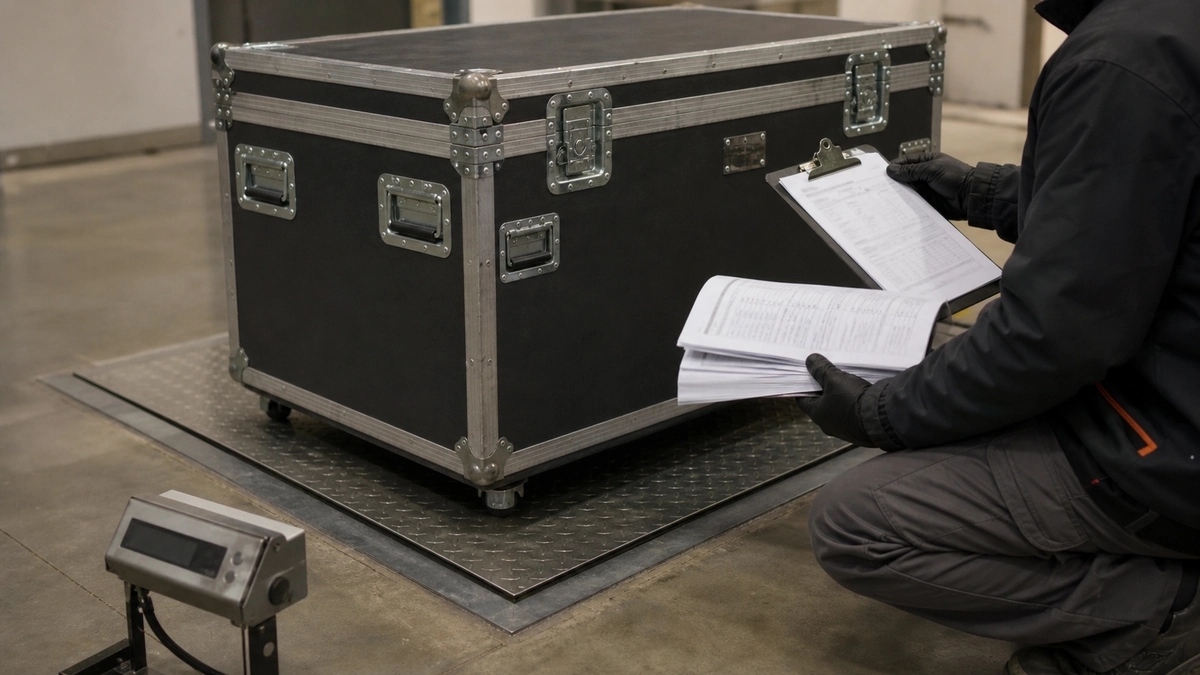
Many events publish a rate per hundredweight, or CWT, where 1 CWT represents 100 pounds. Other events use a per-pound rate, a flat small-package charge, or a simplified all-inclusive model. The contractor may round weight according to its published method and apply a minimum charge to each shipment.
A planning formula is:
billable weight in the rate sheet’s unit × show-specific material handling rate
Then apply the published rounding, minimum, and surcharge rules.
Hypothetical example: Assume a 450 lb shipment is billed at $X per CWT, and the show’s rule rounds it to 500 lb. The billable weight is 5 CWT, so the base charge is 5 × $X. Compare that amount with the per-shipment minimum, use the amount required by the rate sheet, and then add only applicable published surcharges. A separately arriving shipment is calculated again and may trigger another minimum. This example explains the method; $X is not an industry-average rate.
Always use the current show documents because rounding rules can differ by event.
Timing, Location, Packaging, and Special Handling
The same weight can produce different charges because the handling conditions are different. Review whether the rate changes for:
- advance warehouse versus direct-to-show;
- arrival within or outside the published date or target window;
- straight-time, overtime, weekend, or holiday handling;
- crated, palletized, loose, mixed, stacked, oversized, or uncrated freight;
- nonstandard unloading or missing weight documentation; and
- multiple delivery areas or separated shipments.
“Special handling” is not a universal checklist. Read the definition in the current event documents and compare it with how the carrier will load the truck and how the exhibit will be packed.
Match the rate-sheet wording to the actual unloading access: stacked or mixed freight may require a different process from a single accessible crated piece.
Small Packages, Multiple Shipments, and Missing Documents
A parcel courier does not automatically bypass material handling. Small packages may use a flat or per-package program, while heavier deliveries may enter the standard freight category. Before dispatch, confirm whether the show requires a certified weight ticket, bill of lading, delivery receipt, or other document; carrier tracking alone may not satisfy billing or receiving requirements.
How Can You Reduce Avoidable Material Handling Costs Without Increasing Move-In Risk?
The most reliable ways to reduce drayage are to reduce billable weight, avoid multiple minimum charges, minimize special handling, and meet the correct receiving window. These savings must still protect the exhibit, delivery reliability, and installation schedule; otherwise the expense may reappear as expedited freight, carrier waiting, damage, or overtime labor.
Consolidate and Label Shipments Correctly
Combine compatible items into properly packed crates or pallets to reduce separate minimum charges. Use the official labels and remove obsolete ones, but keep pieces separate when destinations, arrival dates, customs treatment, or installation sequences differ.
Reduce Unnecessary Weight and Special Handling
Review the structure, samples, literature, AV equipment, spares, and packing materials together. Remove unnecessary weight where requirements allow, and use stable packaging that supports conventional unloading. Confirm the truck loading method against the show’s special-handling definition before dispatch.
Match the Route and Arrival Window to the Install Plan
Build backward from the time the installation crew needs freight at the booth. Compare receiving windows, carrier reliability, dock procedures, and late-arrival consequences against the full setup sequence, including flooring, electrical work, hanging signs, machinery spotting, and I&D labor.
Separate Provider Scope From Official-Contractor Charges
Ask the booth provider, carrier, and official contractor where each responsibility starts and ends. Compare proposals against the same shipment and handoff list; a lower total is not comparable if it omits carrier charges, material handling, venue labor, products, AV cases, or separately shipped graphics included elsewhere.
What Should Be Confirmed Before Shipping and Before Move-Out?
The inbound and outbound plans should be completed before the exhibit leaves its origin. Move-out is too late to decide where the freight goes, which carrier will collect it, or who is authorized to release it.
Before Inbound Dispatch
Confirm:
- the current exhibitor services manual and official shipping instructions;
- the correct route, address, receiving window, and freight restrictions;
- booth number, labels, package count, dimensions, package type, and documented weight;
- carrier appointment, bill of lading, and required weight ticket;
- rate category, minimum, and possible surcharges; and
- who tracks delivery, follows up at the booth, and releases installation to start.
Before the Show Closes
Confirm:
- who dismantles and repacks each booth, product, and AV component;
- accessible packing materials and expected empty-container return;
- outbound carrier, destination, labels, and package count;
- the Material Handling Agreement, bill of lading, or equivalent release form;
- carrier check-in, pickup deadline, and missed-carrier procedure; and
- who remains authorized on site to resolve discrepancies.
Keep these responsibilities in one closeout sheet, but do not merge the services into one line. The person supervising dismantle, the party releasing freight, and the carrier collecting it may be three different contacts.
Frequently Asked Questions
Is trade show material handling the same as drayage?
In U.S. exhibitor manuals, the terms are commonly used for the same show-site service. In broader freight and port logistics, drayage can describe other short-distance transportation, so use the event manual’s definition when reviewing a trade show quote.
What Is a Bill of Lading?
A bill of lading, or BOL, is a transport document used by the shipper and carrier. It typically records the parties, route, freight description, piece count, and weight. For trade show freight, follow the event manual for the required show name, exhibitor name, booth number, receiving address, and form. Some contractors use an outbound BOL where another uses a Material Handling Agreement, so do not assume the names or functions are identical across shows.
What Is Detention in Trucking?
Detention is carrier waiting time beyond the loading or unloading allowance in its terms; that delay may create a time-based transportation charge. Marshalling-yard or dock queues can contribute during move-in or move-out, but detention is not the material handling rate. Check the carrier’s terms and record check-in, dock-release, and departure times.
Can you avoid material handling by carrying items into the venue yourself?
Some shows permit limited hand-carry under specific rules for routes, tools, equipment, package size, and eligible company personnel. Other venues restrict access or mechanized equipment more tightly. Check the current manual before treating hand-carry as an available exemption.
Who completes the Material Handling Agreement for outbound freight?
The exhibitor or an authorized on-site representative normally submits the contractor’s required outbound form with the carrier, destination, piece count, and shipment details. The document name, submission method, and deadline vary by show, so assign this responsibility before the event opens.
Final Thoughts
Manage material handling as a distinct handoff: shipping reaches the approved receiving point, material handling connects that point with the booth, I&D labor handles the structure, and outbound shipping begins when the next carrier takes possession.
For a U.S. exhibit involving crates, product displays, AV equipment, or a fixed installation start, send KingExhibits the current show manual, booth plan, freight origin, estimated shipment list, preferred delivery route, and outbound destination. Within the agreed project scope, the team can align booth design and packing assumptions with freight milestones and the installation sequence while identifying official services that need to be ordered separately.