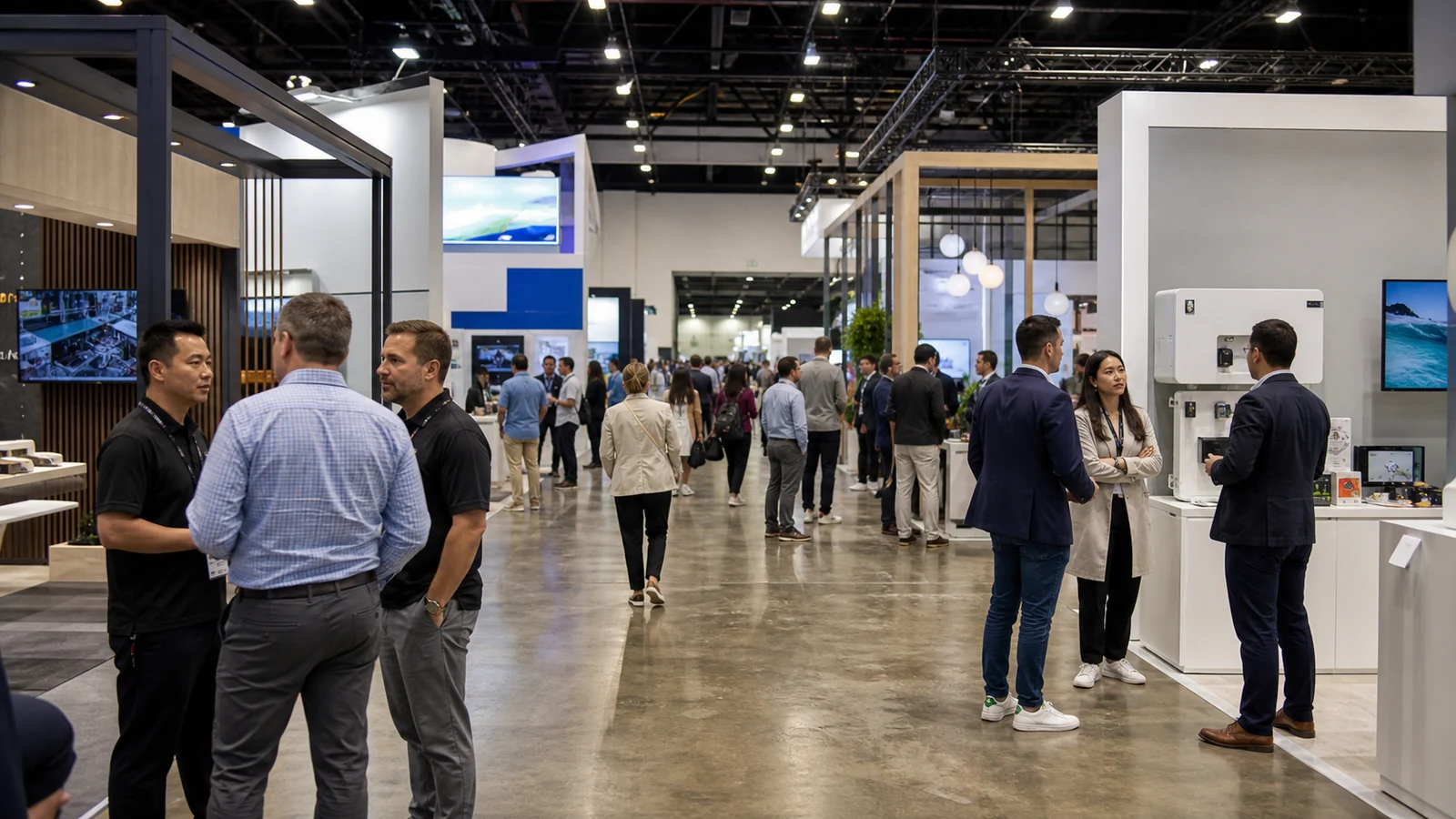
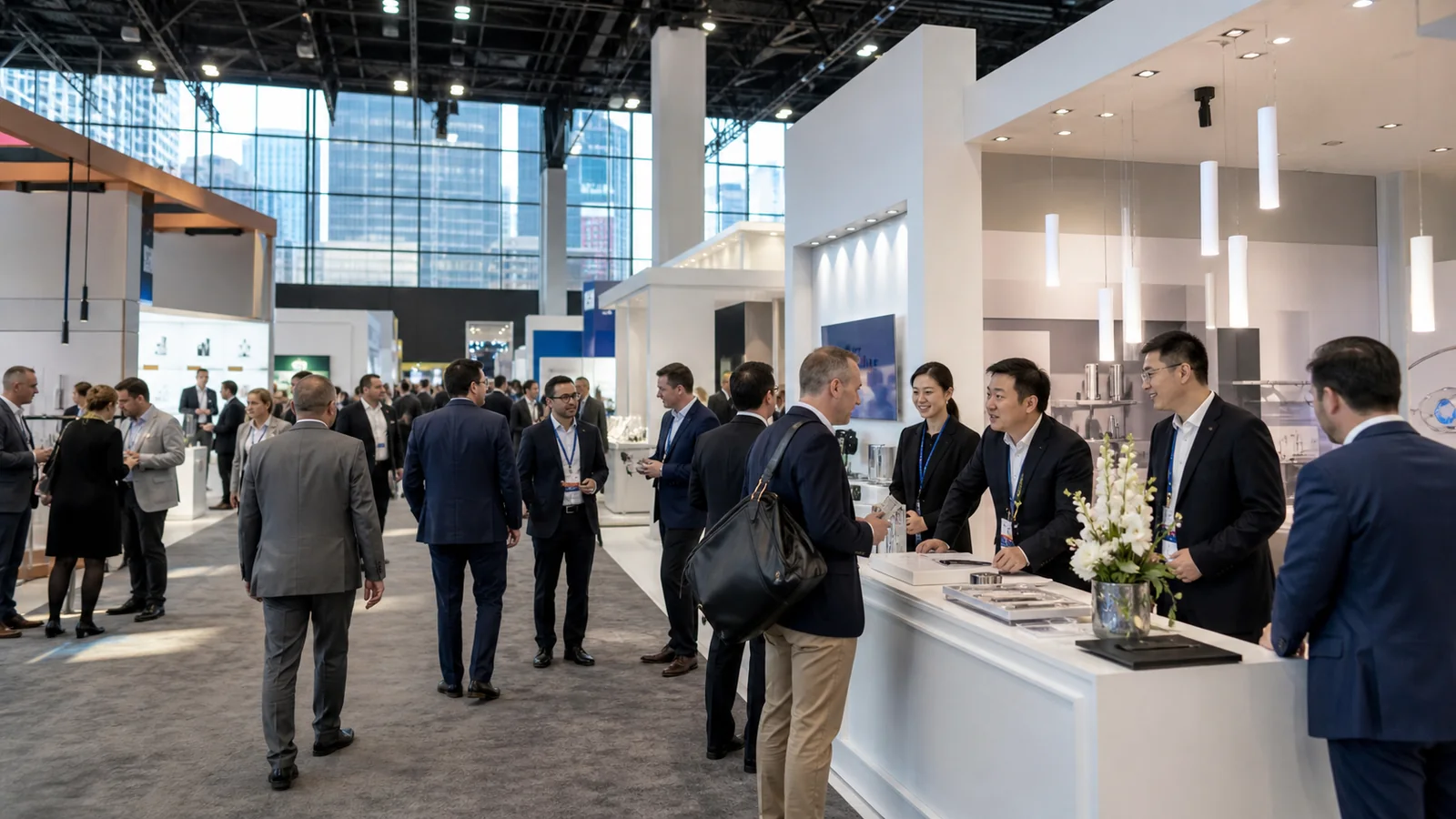
Government trade shows and conferences are not one standardized class of event. The phrase can describe an agency industry day, a public-sector association conference, a procurement forum, or a defense exposition. This guide starts with representative events, then shows you how to choose an event and plan the exhibit without treating participation as a government qualification.
Representative U.S. Government-Related Events by Market
These examples show the main event models rather than rank them. Because dates and participation options change, use the linked event page for the edition you plan to attend.

| Market or event model | Representative official source | What the example illustrates | Check before budgeting |
|---|---|---|---|
| Public procurement | NIGP Forum and Products Exposition | A public procurement forum paired with a products exposition | Next edition, exhibitor route, audience, date, and location |
| Local government management | ICMA Annual Conference | An association conference for local-government professionals with exhibit and sponsor options | Current packages, registration class, and deadlines |
| State and local government technology | GovTech events | Regional public-sector technology programs with government and industry participation | Regional audience and exhibitor or sponsor format |
| Government-hosted education and outreach | GSA events and DLA events | Calendars that may include agency-hosted programs, joint events, training, outreach, and outside events attended by an agency | Actual host, exhibit availability, and participant eligibility |
| Defense association exposition | AUSA Annual Meeting & Exposition | An association-led defense conference with exhibit, sponsor, attendee, and international information | Exhibitor terms, badges, exhibit content, and logistics |
| Base or federal technology expo | NCSI event calendar | Commercially organized government and defense technology events that may use tabletop exhibits | Organizer relationship, access terms, and current exhibitor registration |
These examples lead to different event-selection decisions:
- NIGP Forum and Products Exposition is the clearest example here of a public procurement profession paired with a product exhibition. It is useful when your subject connects to how public organizations source, manage, or evaluate goods and services. Because the linked 2026 edition has ended, use it to understand the model and locate the next official edition before planning spend.
- ICMA Annual Conference and GovTech events both address state or local public-sector audiences, but they approach that market through different functions. ICMA centers on local-government management, while GovTech organizes regional technology programs. The better option depends on whether the roles and agenda match the problem your exhibit addresses.
- GSA and DLA event calendars are useful starting points for agency-led education, outreach, and industry engagement. They also show why a government calendar is not automatically a trade-show list: an entry may be training, an online session, an agency-hosted event, a joint program, or an outside event attended by the agency.
- AUSA and NCSI illustrate two different defense-related formats. AUSA is an association-led conference and exposition, while NCSI lists commercially organized technology events that may offer smaller tabletop participation. Compare the exhibit format and audience first; handle any event-specific access question separately.
Start with two or three events that match the government level and function you serve. A focused event may be more useful than a larger conference with a broad “government” label.
What Counts as a Government Trade Show or Conference?
An event belongs in this broad group because of its organizer, audience, subject matter, or participation model—not merely because “government” appears in its name.

| Event type | Typical organizer | Common format | First question to answer |
|---|---|---|---|
| Government-agency event | Federal, state, local, or other public agency | Training, briefing, summit, industry day, outreach session, or occasional expo | Whether suppliers or exhibitors can participate |
| Public-sector association conference | Professional association or nonprofit organization | Education, peer networking, conference exhibits, and sponsorship | Whether government professionals are the primary audience and what exhibitor categories are offered |
| Public procurement or contracting event | Procurement association, agency, or industry organization | Acquisition education, supplier outreach, matchmaking, or products exposition | Whether it is educational, opportunity-specific, or a commercial exhibition |
| Defense, military, or intelligence-related event | Agency, military association, nonprofit, or commercial organizer | Tabletop technology expo, conference, industry exchange, or large exposition | Event-specific eligibility, badging, access, exhibit, and information-handling rules |
Government-agency events and industry days
Agency events include training, briefings, supplier outreach, research exchanges, and industry days. The GSA events calendar contains several formats, so an event’s appearance on a government calendar does not prove that it has an exhibit hall. Look for a supplier, exhibitor, sponsor, or industry-participation page before budgeting for a booth.
Public-sector association conferences and expos
Association conferences can combine public-sector education with exhibit or sponsorship programs even when no agency organizes them. Government professionals may attend or speak, but the event remains association-run unless the stated host relationship says otherwise.
Public procurement and government-contracting events
Procurement-focused events cover acquisition practice, supplier engagement, contracting education, or specific agency needs. They range from product expositions to matchmaking and pre-solicitation exchanges. Participation supports learning and introductions; it does not replace a solicitation response, entity registration, contract vehicle, or agency qualification.
Defense, military, and intelligence-related events
Defense-related events range from large association expositions to small technology tabletops and may be organized by agencies, military associations, nonprofits, or commercial companies. Eligibility and access are event-specific; questions involving restricted information or other regulated activity belong with the organizer and your own compliance specialists.
How to Decide Whether an Event Fits Your Goal?
Event fit depends on government level, operating function, real audience, and participation format—not on the event name alone.
Match the government level and operating function
First identify whether your target is federal, state, local, tribal, public procurement, or defense-related. Then narrow by function, such as information technology, finance, public works, logistics, acquisition, infrastructure, or security. This prevents you from choosing a broadly relevant conference whose attendees do not manage the problem your exhibit addresses.
Check the real audience, not the promotional label
Use the audience description, agenda, speaker roles, exhibitor prospectus, and prior-edition information to identify job functions and organization types. Agency attendance does not prove purchasing authority or an active requirement, so base the decision on audience relevance rather than an assumed contract pipeline.
Identify the participation format
Attendee registration, a booth, sponsorship, tabletop, matchmaking, and speaking submission are separate options. Before requesting booth design, make sure an exhibit opportunity exists, your organization is eligible, and the exhibitor prospectus supports the space and benefits you need.
Use a simple scorecard to compare the shortlist before discussing booth size:
| Decision factor | Strong fit | Weak fit |
|---|---|---|
| Audience fit | Attendee roles and organizations align with the problem you solve | The page relies on broad labels without useful role detail |
| Exhibit fit | A booth, tabletop, or sponsor format supports a relevant demonstration or conversation | The event is mainly training, speaking, or general attendance |
| Commercial fit | Participation cost and expected conversations support a defined market objective | The decision depends only on event size or brand recognition |
| Operating fit | Dates, location, staffing, freight, and service deadlines fit the program | The event creates unresolved schedule, staffing, or logistics conflicts |
A candidate does not need to score perfectly in every row. The scorecard is meant to expose why the event belongs in the plan and what must be resolved before space is purchased.
Registration, Exhibitor Eligibility, and Access Are Separate Checks
Registering to attend, qualifying to exhibit, receiving badges, and entering a particular venue are separate steps. Completing one does not guarantee the others.

| Check | Question to answer | Evidence to obtain |
|---|---|---|
| Attendee registration | Who can register for the conference program? | Current registration categories and attendee terms |
| Exhibitor eligibility | Which organizations and displays can participate? | Exhibitor prospectus, contract, product restrictions, and deadlines |
| Badge approval | What attendee and staff information is required? | Official badge instructions, name-submission dates, and identification rules |
| Venue access | Are there additional entry conditions? | Venue or organizer access notice for that edition |
Attendee registration is not exhibitor registration
An attendee ticket does not automatically provide floor space, signage, display permission, lead access, or exhibitor credentials. Use the exhibitor prospectus or contract to compare dimensions, included services, staff badges, deadlines, cancellation terms, and exhibitor versus sponsor benefits.
Venue access may add event-specific requirements
Hotels and convention centers may use ordinary badge procedures, while government or military locations can add identification, advance roster, or escort requirements. Follow the notice for that venue and edition; if it is incomplete, obtain clarification before assigning staff or shipping equipment.
What Exhibiting Does Not Automatically Give You
Exhibiting is a marketing and information-exchange activity. It does not automatically create a government contract, required registration, approved-vendor status, or government endorsement.
| Event participation | Separate requirement |
|---|---|
| Meeting agency or public-sector attendees | A formal procurement need and authorized acquisition process |
| Buying a booth or sponsorship | Any entity, vendor, or award registration required by the relevant program |
| Appearing near agency speakers or logos | Written authority to claim official approval or endorsement |
Contract and vendor registration remain separate
For federal awards, SAM.gov’s entity-registration guidance explains that an entity needs registration when it wants to bid directly on contracts or apply directly for federal assistance. An event badge or exhibitor contract does not replace that process, and other programs may have their own requirements.
Agency presence is not product endorsement
An agency speaker, government attendee, or nearby logo does not give an exhibitor permission to claim approval. 5 CFR 2635.702 limits federal employees’ use of public office in connection with private endorsement, subject to its scope and exceptions. The AUSA Annual Meeting page also states that its use of the U.S. Army logo should not be viewed as official endorsement of the event or AUSA.
How Event Type Changes Your Exhibit Plan
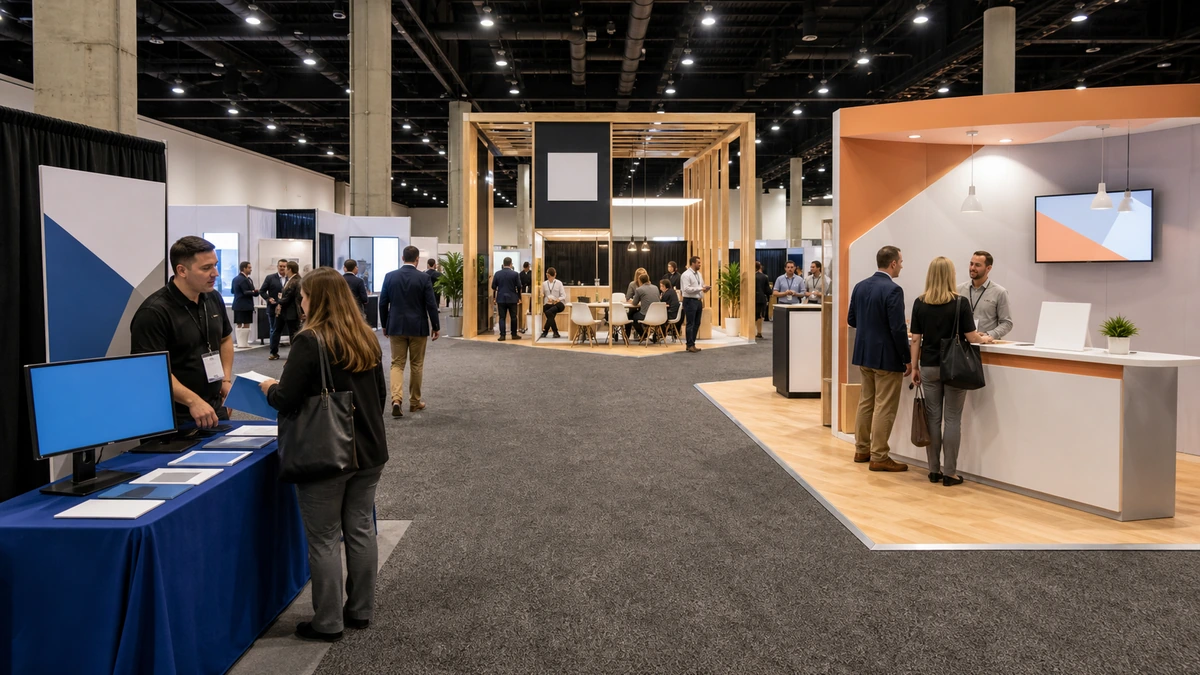
Your exhibit plan should follow the event format, audience task, space, and venue rules. A tabletop, standard conference booth, and large exposition require different messages, staffing, logistics, and budgets.
| Exhibit format | Useful planning emphasis | Common mistake to avoid |
|---|---|---|
| Tabletop or small technology expo | One clear problem, compact approved materials, a short demonstration, limited storage, and simple staffing | Planning a full 10-by-10-foot booth before confirming the tabletop rules |
| Standard conference exhibit booth | Clear message hierarchy, verifiable evidence, a practical discussion or demonstration area, and graphics within organizer rules | Filling the booth with broad capability claims that do not match the event function |
| Large public-sector or defense exposition | Coordinated floor plan, services, equipment, freight, labor, installation, storage, and dismantling inputs | Pricing the structure without the operating scope |
Tabletop or small tech expo
A tabletop works best when visitors can understand one relevant problem and one credible response quickly. Keep the display compact and fit demonstrations, storage, screens, banners, and staffing to the organizer’s tabletop limits.
Standard conference exhibit booth
A standard booth gives you more room for message hierarchy, substantiated evidence, demonstrations, and focused conversations. Price it against the floor plan, height limits, electrical needs, venue labor, accessibility, and included furnishings rather than relying on the nominal booth size alone.
Large defense or public-sector exposition
A large exposition adds more service orders, equipment, freight, installation labor, storage, and dismantling handoffs. Translate those requirements into drawings, schedules, shipment plans, and staff instructions; access or compliance decisions remain separate from exhibit logistics.
Three procurement questions to answer before selecting a booth solution
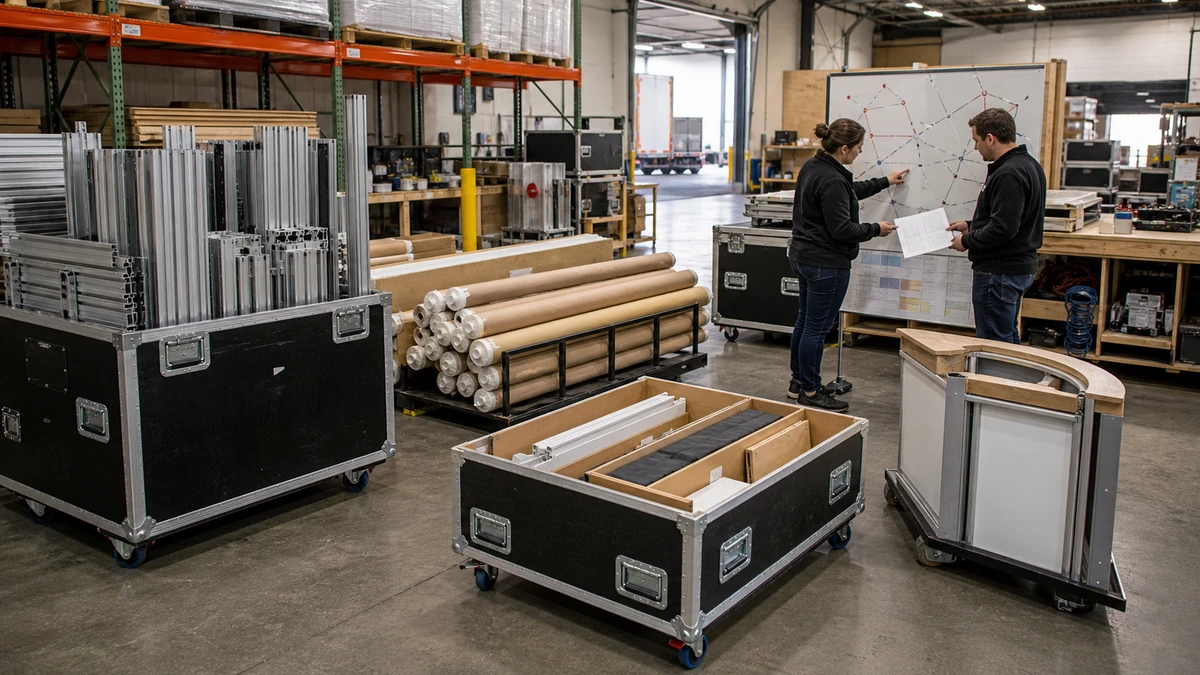
Event format tells you what can fit on the floor, but it does not determine the right purchasing model. Before requesting a proposal, answer three commercial questions that affect design, production, reuse, freight, labor, storage, and the total program cost.
| Procurement question | Why it changes the solution | Inputs to give the exhibit provider |
|---|---|---|
| Is this a one-time event or a repeat exhibit program? | A one-time presence and a multi-show program have different needs for reuse, resizing, graphic updates, refurbishment, and storage | Planned events, booth sizes, cities, expected number of uses, and what must remain consistent |
| Do you need a rental, custom, modular, or combined approach? | Rental describes how exhibit assets are supplied and returned; custom describes the required design; modular describes how components can be reconfigured. These choices can overlap rather than act as three mutually exclusive categories | Brand and demonstration priorities, ownership preference, reuse plans, expected layout changes, and approved budget range |
| Does the program involve interstate freight, storage, installation, and dismantling? | Multiple states or venues add handoffs, service orders, material-handling rules, labor windows, storage decisions, and return or onward shipping | Origin and destination, move-in and move-out dates, carrier responsibility, installation scope, storage period, and the next event location |
For a repeat program, compare the cost and operational responsibility across the full schedule rather than comparing only the first booth price. The proposal should make clear which assets are rented or owned, what can be reused or reconfigured, who stores them, who coordinates freight and installation, and which organizer or venue charges remain outside the exhibit provider’s scope.
Ask for scenario pricing when the schedule is not fixed. A useful comparison separates the first event, a repeat event at the same size, a resized configuration, graphic replacement, storage between shows, and freight to the next city. This makes the quote easier to compare than a single total that mixes reusable assets with event-specific services.
Inputs to prepare before booth design begins
Prepare these inputs before the design and commercial scope are frozen:
- The current official event page, exhibitor prospectus, and exhibitor manual.
- The confirmed booth or tabletop size, floor plan, and service rules.
- Products, demonstrations, graphics, specifications, and materials planned for display.
- The event schedule, number of uses, booth-size changes, staffing, and desired rental, ownership, or reuse model.
- Freight, installation, dismantling, storage, return-shipping, and venue-service responsibilities.
These inputs turn a general exhibit idea into a buildable plan. They also expose unresolved access or content questions before they become late design changes or on-site problems.
Frequently Asked Questions
These answers cover common discovery and participation questions.
Where can you find upcoming U.S. government conferences?
Start with agency calendars, relevant professional associations, and government-event directories. Use directories to build a shortlist, then use the organizer’s page for the event edition, venue, registration, and exhibit status.
Can a foreign company exhibit at a U.S. defense event?
There is no universal answer. Some association expositions publish international participation options, while other events limit organizations, personnel, exhibits, or access. Use the event’s exhibitor terms and route any nationality, export, or restricted-information issue to your own specialists.
Do you need SAM registration to exhibit at a government conference?
Not solely because an event is government-related. Exhibitor eligibility is set by the organizer’s current terms, while SAM registration serves a separate federal purpose. SAM.gov states that entity registration is needed when an organization wants to bid directly on federal contracts or apply directly for federal assistance. If a particular event or opportunity requires SAM registration, that condition must appear in the relevant official instructions; a booth purchase alone neither creates nor replaces the registration.
Are government trade shows open to commercial vendors?
Some are, but others are limited to defined attendee groups, invited participants, members, authorized industry representatives, or organizations that meet event-specific exhibitor criteria. Confirm that the current event offers an exhibit or sponsor program, then review organization eligibility, product restrictions, badge rules, and venue access before treating it as an open commercial show.
What is the difference between a government industry day and a trade show?
An industry day is typically organized around information exchange: an agency or program team explains needs, timelines, acquisition context, or research interests and may collect questions or market feedback. A trade show is organized around exhibits, with defined display space and exhibitor participation. Some events combine both functions, so check the agenda and exhibitor materials instead of deciding from the title alone.
Final Thoughts
The best first step is not to find the biggest government trade show. It is to shortlist relevant events, identify their real audience and exhibit format, and then plan a display without overstating its government status.
If you are ready to plan the physical exhibit, prepare the event name, confirmed booth or tabletop size, official exhibitor manual, approved exhibits and demonstrations, staffing plan, and key deadlines. King Exhibits can use those inputs to discuss the next stage of booth planning and execution; government contracting, certification, security approval, venue access, and export-compliance decisions remain separate responsibilities.