Outdoor Retailer Exhibitor Guide 2027: Decide If the Show Fits and Build a Buyer-Ready Booth
If you are planning to exhibit at Outdoor Retailer, you need to know whether the buyers fit, which route and booth size fit your budget, and how to avoid a display that cannot support real conversations. Start with the show format and buyer action—not a rendering. This guide covers show fit, route, booth planning, service-manual controls, logistics, and post-show measurement.
Outdoor Retailer Exhibitor Planning Checklist
Use this seven-step route to keep the project moving:
- Confirm show fit and objectives.
- Choose the booth route and space.
- Define the product-display actions.
- Prepare the exhibitor brief.
- Check the ESM and order services.
- Approve the design and itemized quote.
- Ship, staff, and follow up.
Important note: The 2027 Exhibitor Service Manual (ESM) will control move-in and move-out, utilities, shipping labels, insurance deadlines, access rules, and other operational details. Use this guide for planning; use the current ESM and your contract for final commitments.
What Is Outdoor Retailer and Who Exhibits There?
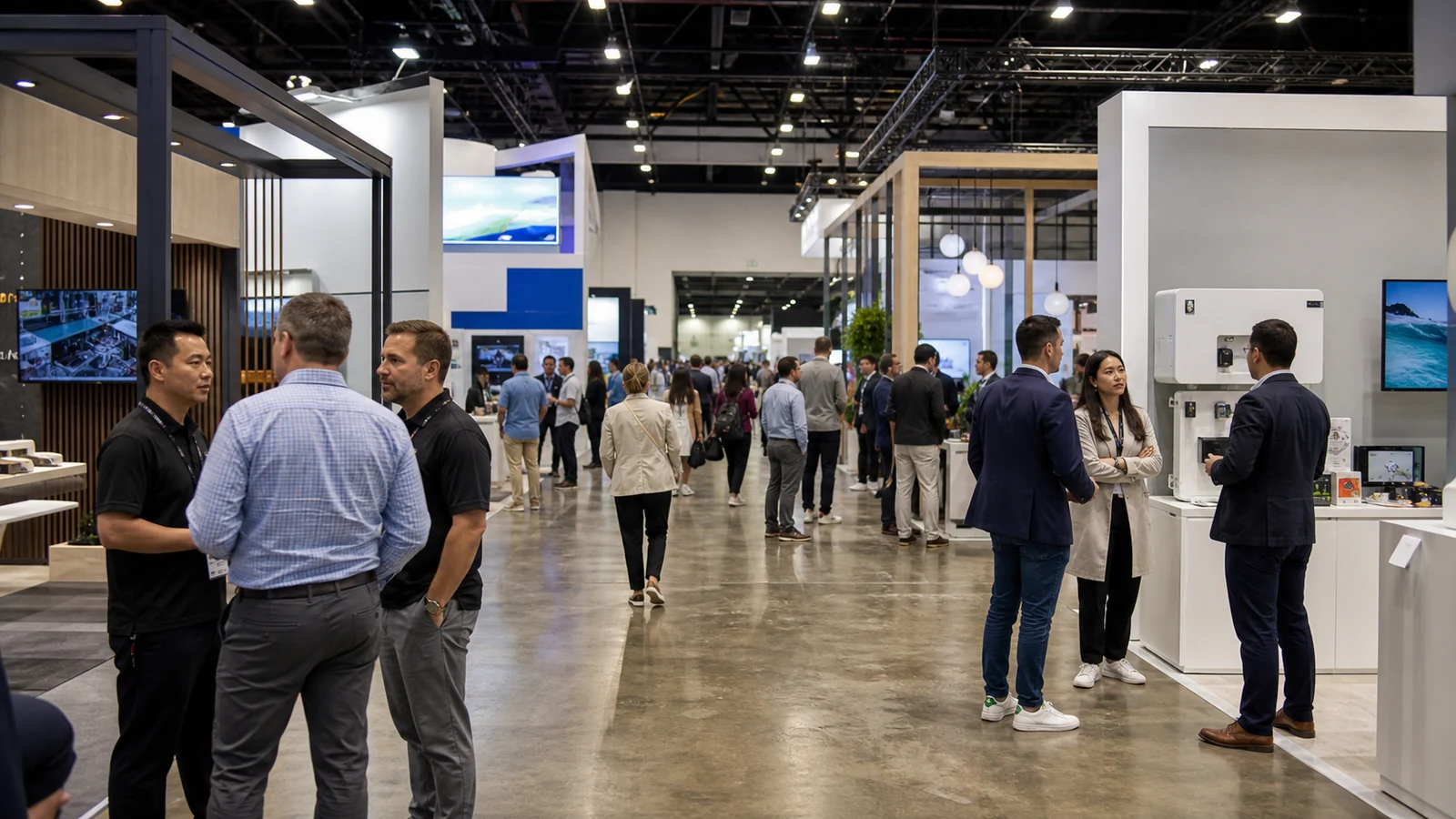
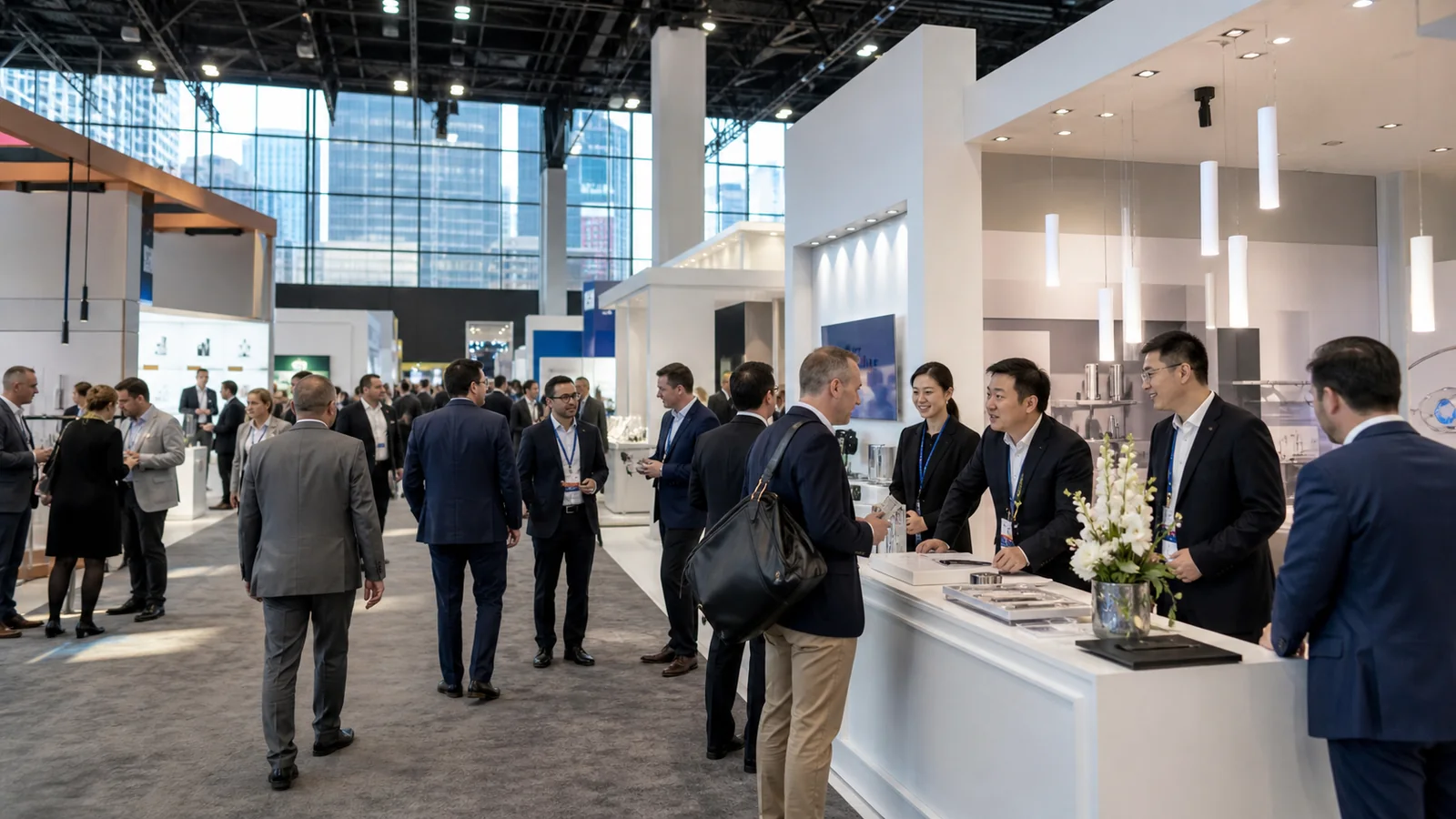
Outdoor Retailer is a business-to-business outdoor sports show where brands, retailers, representatives, designers, suppliers, media, and industry leaders meet around product discovery and retail relationships. It is not a public consumer market; the official FAQ says admission is limited to authorized buyers and members of the trade.
The 2026 Minneapolis debut gives you a useful completed baseline: the organizer reported more than 1,800 attendees, 275 brands, 400 qualified retailers, and 150 creators and media from 45 states and 20 countries on the official show site. Those figures describe the 2026 event, not a forecast for your 2027 lead volume.
The show is relevant when you need to present a collection, compare product details, strengthen retail relationships, or discuss distribution and sell-through. Give each visitor a clear next action: compare, test, meet, request a sample, or review a line sheet.
Outdoor Retailer 2027 Dates and Venue
Verification snapshot — checked September 4, 2026: the current official homepage displays Education Day on August 18, 2027, the Exhibit Hall on August 19–20, 2027, and the Minneapolis Convention Center. The footer shows © 2026, with no separate last-updated timestamp or tentative label. Treat this as currently announced information, not a final service schedule; if the page changes, update the date, check date, and dependent timeline before publishing or ordering.
Education sessions and exhibit-floor conversations are different work modes. If your team attends Education Day, reserve time for learning and scheduled meetings. For the two Exhibit Hall days, plan staffing, samples, demos, and appointments around your busiest buyer windows. The ESM and contract will set access and move-in details.
The homepage’s “Thank You for an Incredible 2026 Show” section gives the 2026 attendance and brand figures but no separate publication date; a related official news item is dated August 24, 2026. Use them as a completed-show reference, not a 2027 forecast.
Which Outdoor Products and Buying Motions Fit the Show?
Outdoor Retailer can fit apparel, footwear, camping and hiking gear, climbing and water products, snow and winter equipment, hardgoods, accessories, materials, and outdoor technology. The useful question is not “How many products can fit in the booth?” but “Which product decision should a visitor be able to make here?”
| Product situation | Useful on-floor action | Booth input to prepare |
|---|---|---|
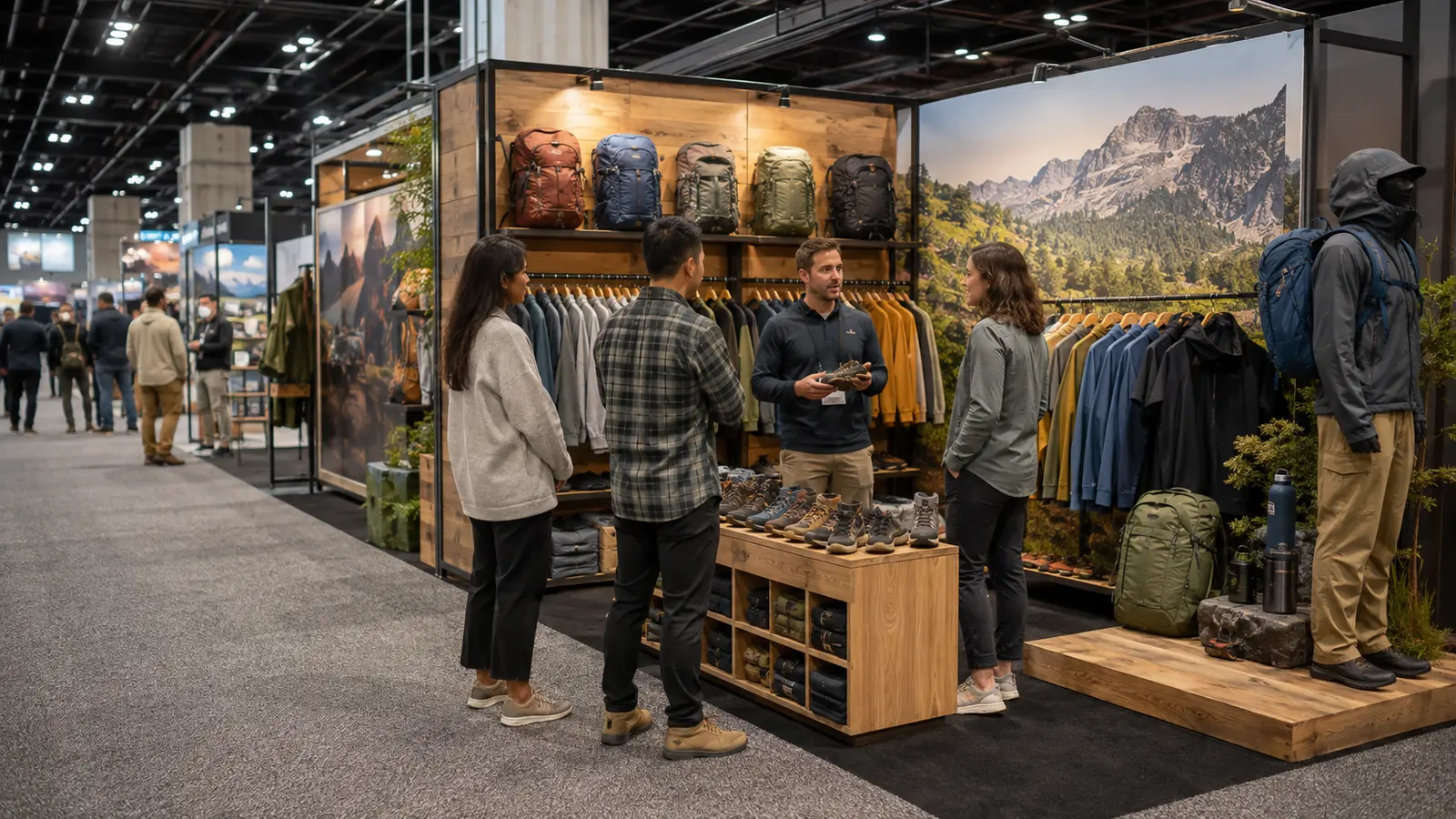
| Apparel, footwear, and lifestyle collections | Browse a range, compare materials or fit, discuss a seasonal line | Rack plan, size/colour hierarchy, sample handling, replenishment |
| Camp, hike, climb, water, snow, and hardgoods | Touch, inspect, test a feature, or compare use cases | Product footprint, weight, mounting/handling needs, safe demo boundary |
| Accessories and outdoor technology | See a system, review compatibility, or book a technical conversation | Power/network needs, content, security, spare units, meeting time |
Before reserving space, write one sentence for each priority product: “You will see…, compare…, and leave with….” That sentence is a better design input than a generic request for a larger display.
Is Outdoor Retailer the Right Show for Your Company?
Outdoor Retailer fits better when your products, samples, specifications, pricing or channel information, and follow-up owner are ready for professional conversations. It fits less well when you only want consumer foot traffic or have no clear next step for a trade contact.
A Practical First-Time Exhibitor Check
First-time exhibitors should appoint one owner for the contract, design, ESM, shipping, and follow-up, and list who approves claims, artwork, budget, and purchase orders. A rental or shared format can reduce structural work while you learn the show if its display and reuse limits fit your products.
Choose the Right Exhibitor Route
Standard booths, emerging-brand programs, state pavilions, and partner activations solve different problems. Compare eligibility, space control, included services, visibility, and change/cancellation terms before graphics.
| Route | Best fit to explore | Space and brand control | Cost responsibility to clarify | First-time signal |
|---|---|---|---|---|
| Standard booth inquiry | A dedicated collection and meeting program | Highest control, subject to show rules | Usually planned as an independent scope; confirm every organizer and vendor charge | Good when you already own the full brief |
| ASCENT / emerging-brand program | A qualifying newer brand seeking a supported entry point | Package and footprint may be more defined | Confirm what the package includes and what remains your responsibility | Can be easier to scope if current criteria fit |
| State pavilion | Several brands sharing a state-led presence | Shared environment; confirm your display rights | Confirm shared-cost rules, add-ons, and product ownership | Useful when a pavilion provides coordination |
| Partner activation | A specific collaboration or program | Depends on invitation and branding rights | Confirm deliverables, data, staffing, and follow-up ownership | Only suitable when eligibility is clear |
The official Get a Booth page directs exhibitors to inquire about availability and pricing. As checked on September 4, 2026, the ASCENT page still describes the 2026 program, including its $2,500 package; use those conditions only as a prior-year reference until 2027 terms are published. The State Pavilions page describes the shared-pavilion model.
Choose Booth Space and Format Around the Exhibitor Job
There is no universal best size. Choose 10×10, 10×20, 20×20, or larger only after defining collections, product dimensions, meeting load, demonstrations, storage, and open sides.
An inline space gives you one controlled presentation face; a corner improves approachability but exposes more edges; an island supports multiple approaches and meeting zones while increasing structure, graphics, staffing, and logistics. Put footprint, open sides, height limits, columns, neighbors, and access conditions in the brief.
Small Booth Strategy: Make 10×10 Work Harder
For a 10×10, use one hero wall, a compact counter, and vertical display. Keep only conversation-ready samples and store replenishment under the counter or in a lockable cabinet. Use a slim meeting perch when meetings are secondary. Move to 10×20 for separate browsing/meeting zones, a live demo, or multiple stories—not simply a bigger wall.
Plan Your Booth Around Buyer Actions
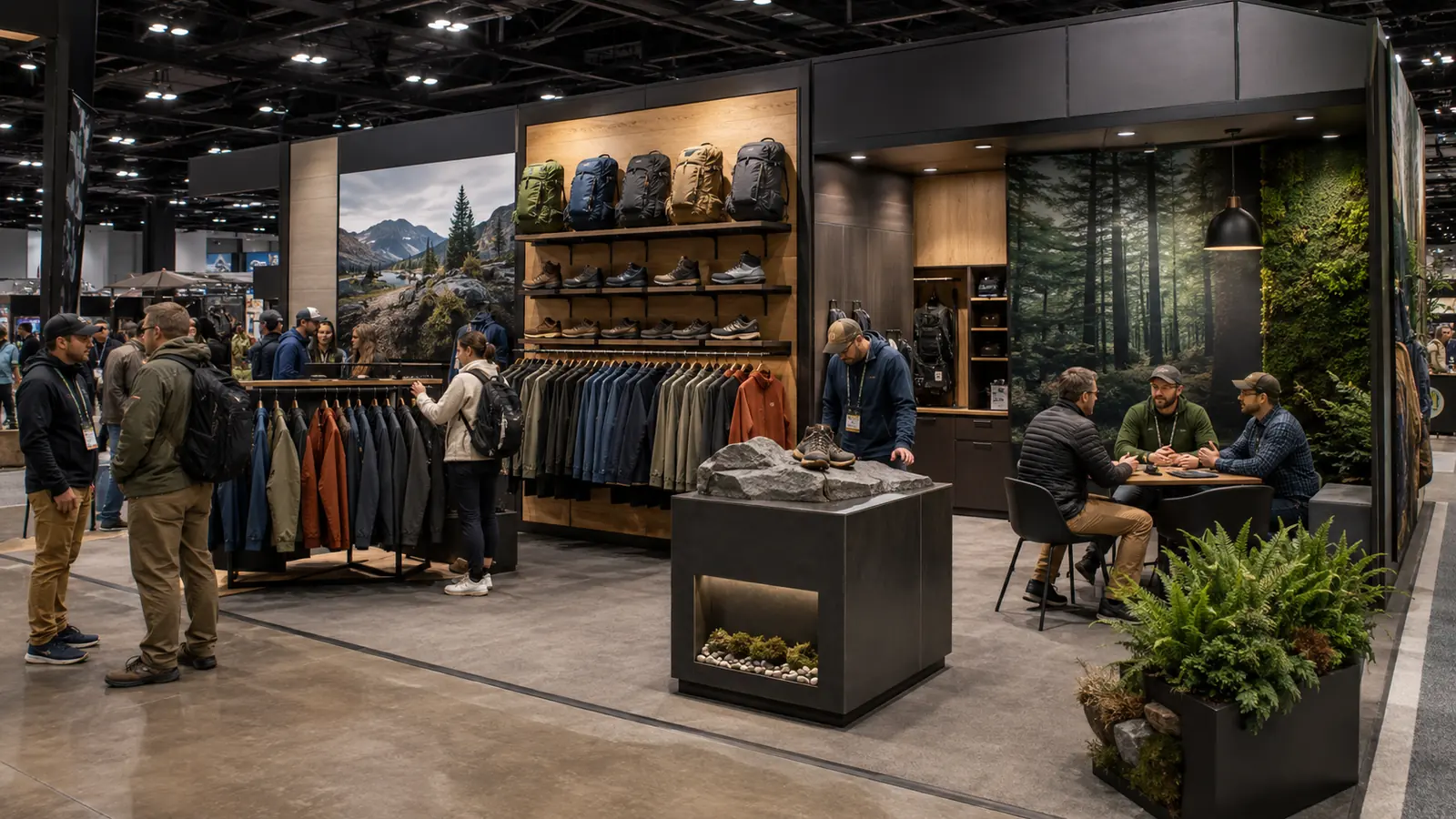
Your booth should let someone understand the product hierarchy from the aisle, browse without blocking a conversation, and move naturally into a meeting or demonstration.
Design the Entrance and Sightlines
Keep one clear approach; do not put a tall counter, storage tower, or monitor in the entry. Use vertical or overhead branding only where the ESM permits it. The first three seconds should answer what you make, who it is for, and what visitors can do.
Choose Product Walls, Racks, and Hanging Systems by Use
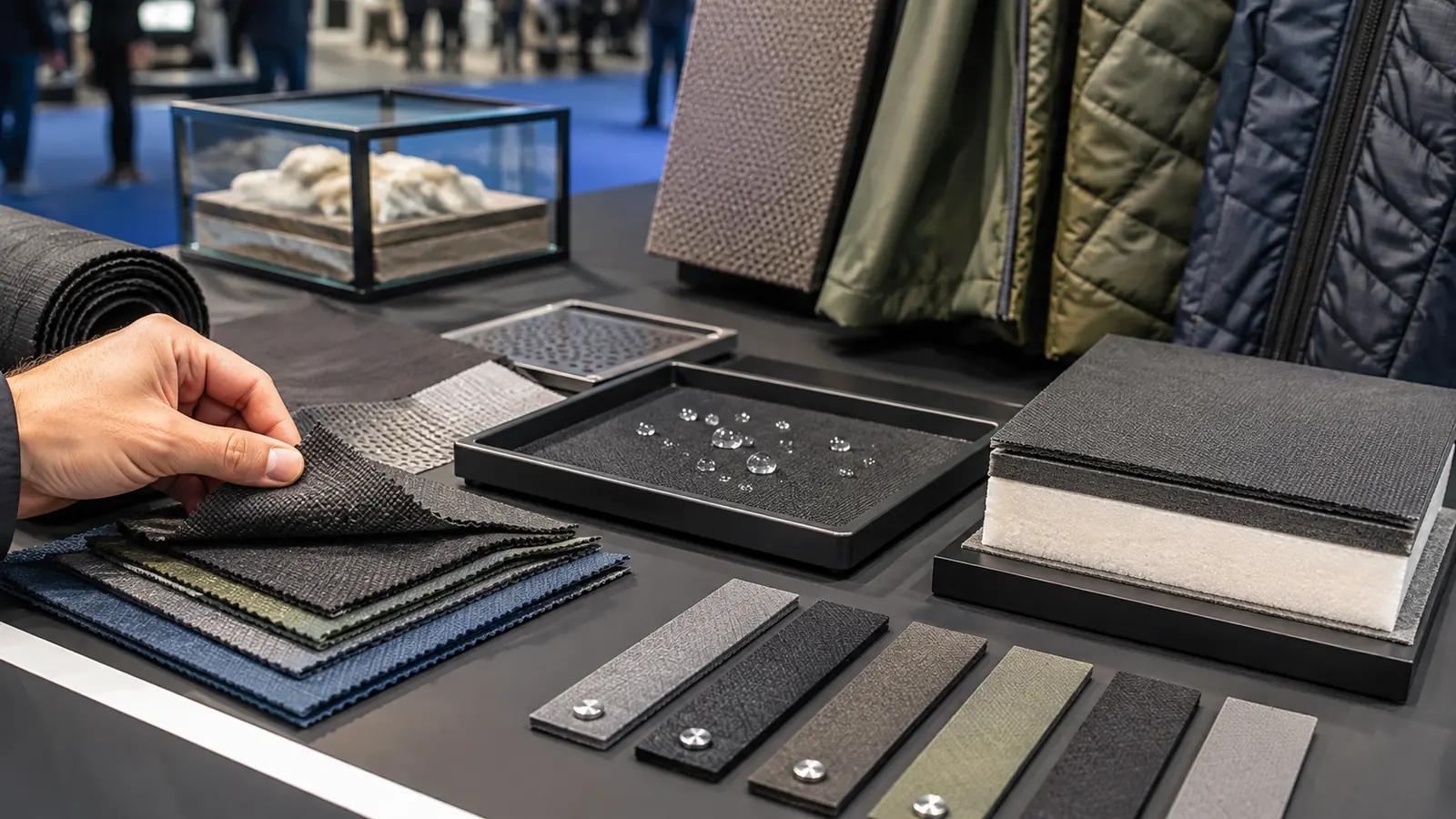
Use apparel racks for browsing, hardgoods walls or shelves for weight-bearing display, and hanging systems for distance visibility. Record weight, mounting, reach height, replenishment, and security. Replace any wall that cannot show the feature with a sample, cutaway, swatch, or proof graphic.
Show Performance Without Creating a Risky Demo
For waterproofing, abrasion resistance, insulation, grip, or packability, use a controlled sample, cross-section, swatch, or bounded test. Keep water, heat, sharp edges, and moving parts contained and easy to reset; a simple proof station can outperform a theatrical installation.
Separate Browsing, Demonstration, Meeting, and Storage Zones
Keep browsing on the public edge, demos where two people can stop without blocking the aisle, and meetings deeper inside. Hide packaging, personal items, spare hardware, and replenishment stock. Provide a clear access path and reachable information.
Build a Clear Brand Story
Use a short promise, one proof point, and a visible range: the wall explains the category, the sample proves performance, and the meeting table handles pricing, channel, and launch details. Reusable structure and low-waste packaging can support sustainability without an unverified certification claim.
Build the Exhibitor Brief Before the First Rendering
An effective brief turns the assigned space and business objective into production inputs: year, contract, booth number, footprint, open sides, height limits, priority products, dimensions/weights, display actions, brand assets, graphics, meeting/storage, furniture, flooring, lighting, power, network, AV, staff, shipping, delivery, return route, and contacts.
Mark each line included, coordinated, by exhibitor, excluded, or still open. Ask which input changes layout, price, engineering, or installation; that is the approval test.
Control ESM, Logistics, and Deadlines
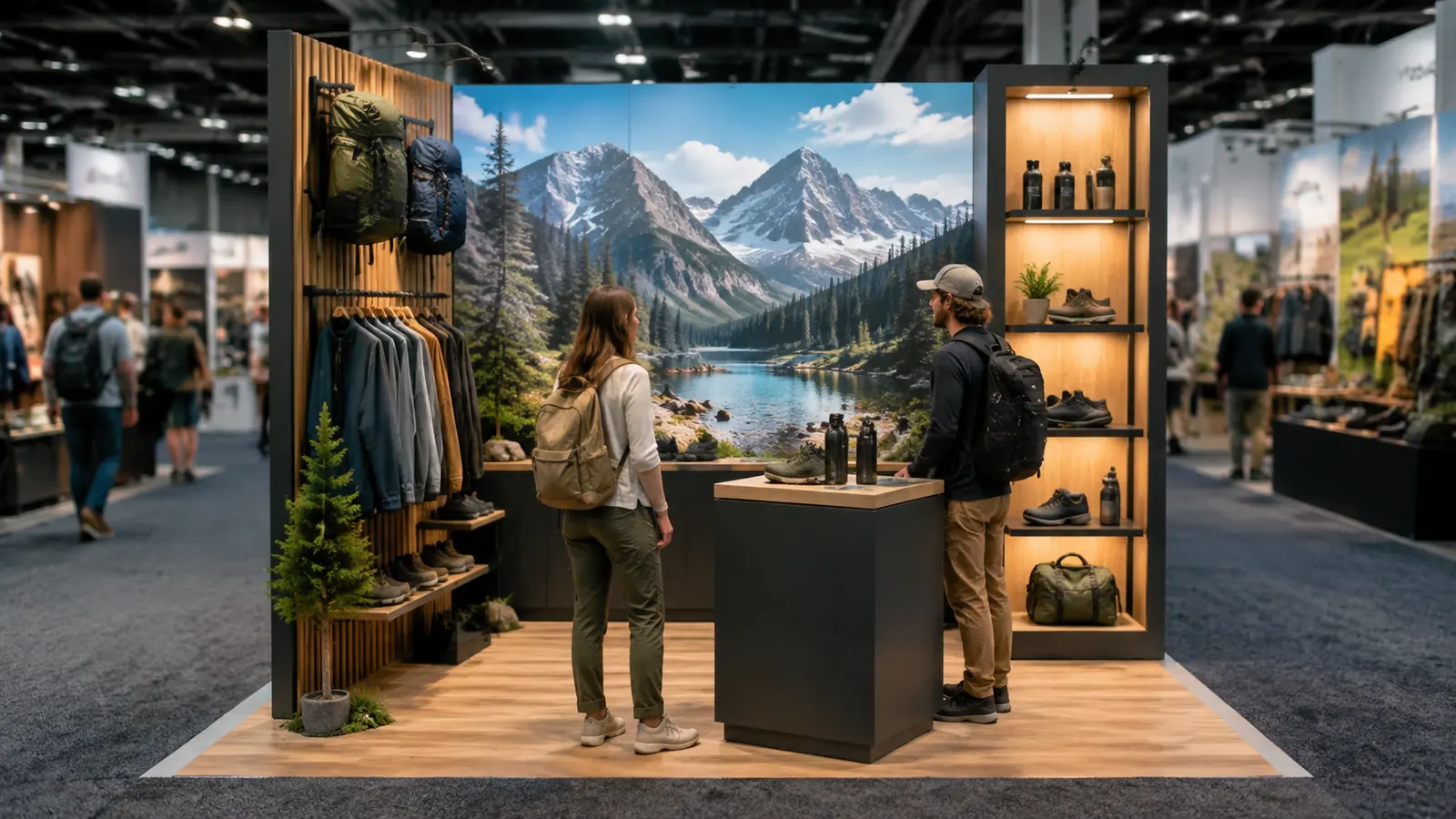
The ESM should be your working checklist for booth regulations, utilities, shipping labels, move-in and move-out, building access, insurance, official vendors, and on-site procedures. As checked on September 4, 2026, the official Exhibitor Resources page does not show a downloadable 2027 ESM; the official FAQ says ESMs appear when available and that move-in, move-out, and building-access hours vary by show. The same current FAQ and resources page still reference the official app and OR Match for matchmaking and lead retrieval.
Keep one record for the contract, floor plan, ESM version, COI, proofs, utility orders, shipping labels, packing list, installation scope, and contacts. Mark unpublished requirements pending, assign an owner, and note the decision they could change.
Copy-and-Paste Exhibitor Brief Template
Show / year:
Booth number / footprint / open sides:
Priority products and visitor action for each:
Display units, weights, mounting and replenishment:
Brand message, graphics and proof owner:
Meeting seats, privacy, storage and AV:
Power, internet, demonstrations and accessibility:
Shipping origin, delivery window, return route:
ESM version / open questions / responsible owner:
Scope: included | coordinated | by exhibitor | excluded | open
Put this in your project record before requesting a rendering so every quote uses the same inputs.
Budget and Schedule the Full Exhibitor Scope
The official site does not publish one universal 2027 booth price. A comparable quote should separate space/organizer charges; design, engineering, fabrication or rental; graphics/furniture/lighting/displays/AV; utilities, internet, cleaning, material handling, freight, storage, installation, dismantle; and insurance, taxes, rush charges, changes, and return shipping.
An Internal Allocation Model (Not an Outdoor Retailer Cost Estimate)
Use this only as an internal allocation model while waiting for quotes. Percentages refer to your planning budget, not dollars, and are not an industry standard. It is a starting comparison for a small rental booth versus a custom island; footprint, structure, product weight, services, and rules can change the mix.
| Cost category | Illustrative share of your planning budget | What it helps you reserve |
|---|---|---|
| Booth space | 25–40% | Space and organizer charges |
| Design and construction | 20–35% | Design, engineering, fabrication, or rental |
| Graphics and furniture | 10–20% | Graphics, counters, seating, flooring, displays |
| Freight and material handling | 10–20% | Freight, material handling, and storage |
| Utilities and labor | 10–15% | Power, internet, installation, and dismantle |
Do not treat the ranges as actual Outdoor Retailer costs or a fixed formula. Replace them with organizer and vendor quotes when scope is known.
Outdoor Retailer Exhibitor Cost Checklist
| Cost line | Include in the quote? | Questions to answer |
|---|---|---|
| Booth space and organizer charges | Yes | What footprint, open sides, taxes, and payment dates apply? |
| Design and build or rental | Yes | What structure, engineering, flooring, storage, and reuse are included? |
| Graphics, furniture, lighting, displays and AV | Yes | Quantities, file specifications, hardware, labor, and replacement cost? |
| Utilities and venue services | Yes | Power, internet, cleaning, material handling, and service-order deadlines? |
| Freight, storage, installation and dismantle | Yes | Destination, labels, labor hours, overtime, return route, and damage process? |
| Insurance, taxes, rush charges and changes | Yes | Who owns COI, what triggers a change order, and what is excluded? |
Use this checklist to request an itemized quote; it is not a price list.
Request an Itemized Quote and Work Backward
Give each supplier the same footprint, products, meetings, graphics, technical inputs, delivery window, and reuse plan. Request assumptions, exclusions, responsibilities, and deadlines. When official dates are available, work backward through shipping, review, production, proofs, approval, and the internal decision date. Compare proposals on identical inputs so omitted costs do not look cheaper.
Ship, Operate, and Measure the Show
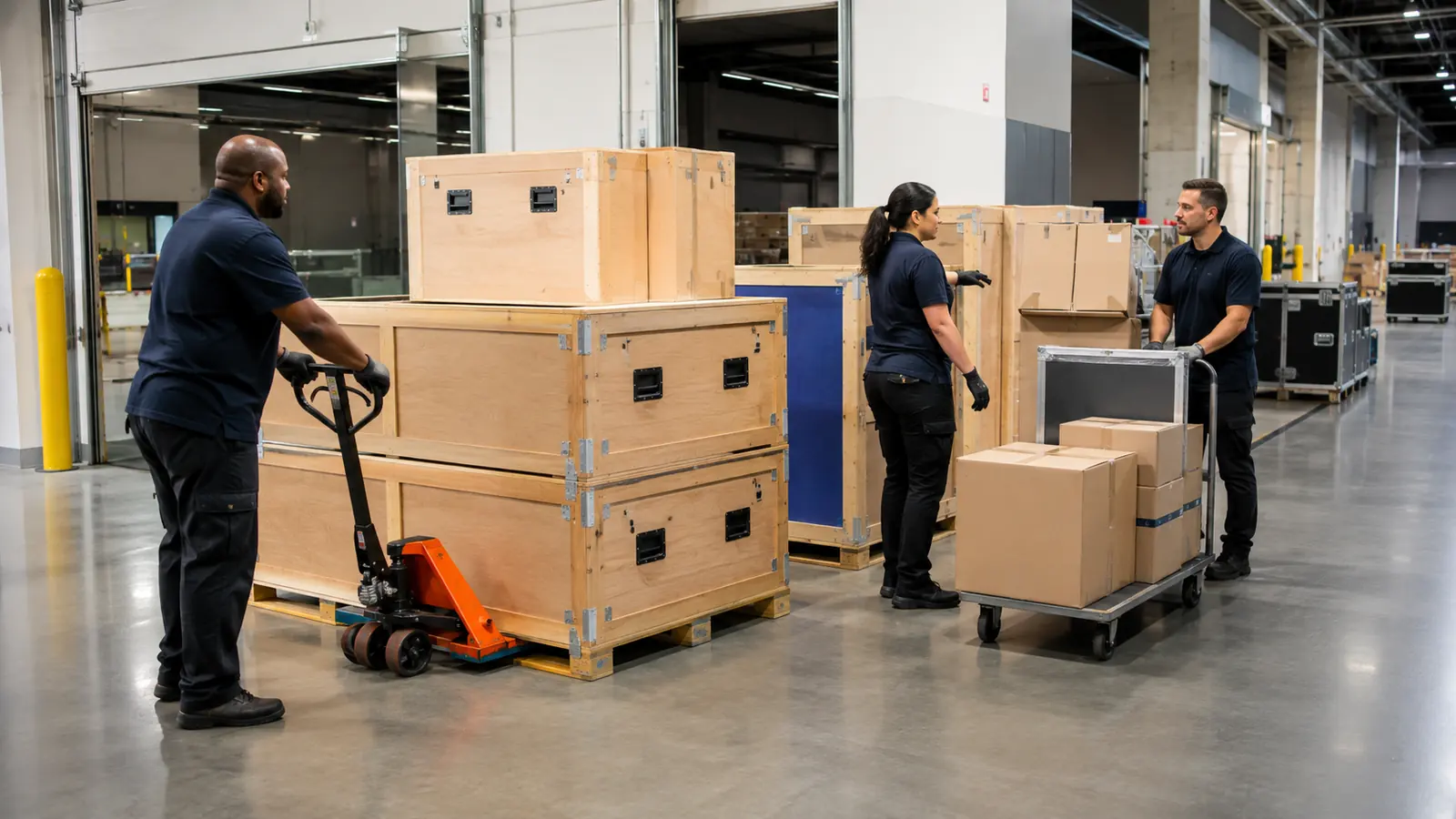
Confirm destination, labels, packaging/weight, material-handling responsibility, receiving contact, return route, and damage process. Assign COI, drawings, venue orders, installation, and dismantle. Use the official app and Match to prepare a focused account list, appointment question, and product document.
Set Lead-Generation Targets Before You Arrive
Set internal targets: target accounts, meetings, qualified conversations, sample requests, quote opportunities, media/representative contacts, and 30-day follow-up. Record the product, stated need, promised item, and next date; separate follow-up, opportunities, quotes, samples, and orders in your CRM.
How KingExhibits Can Support Your Outdoor Retailer Project
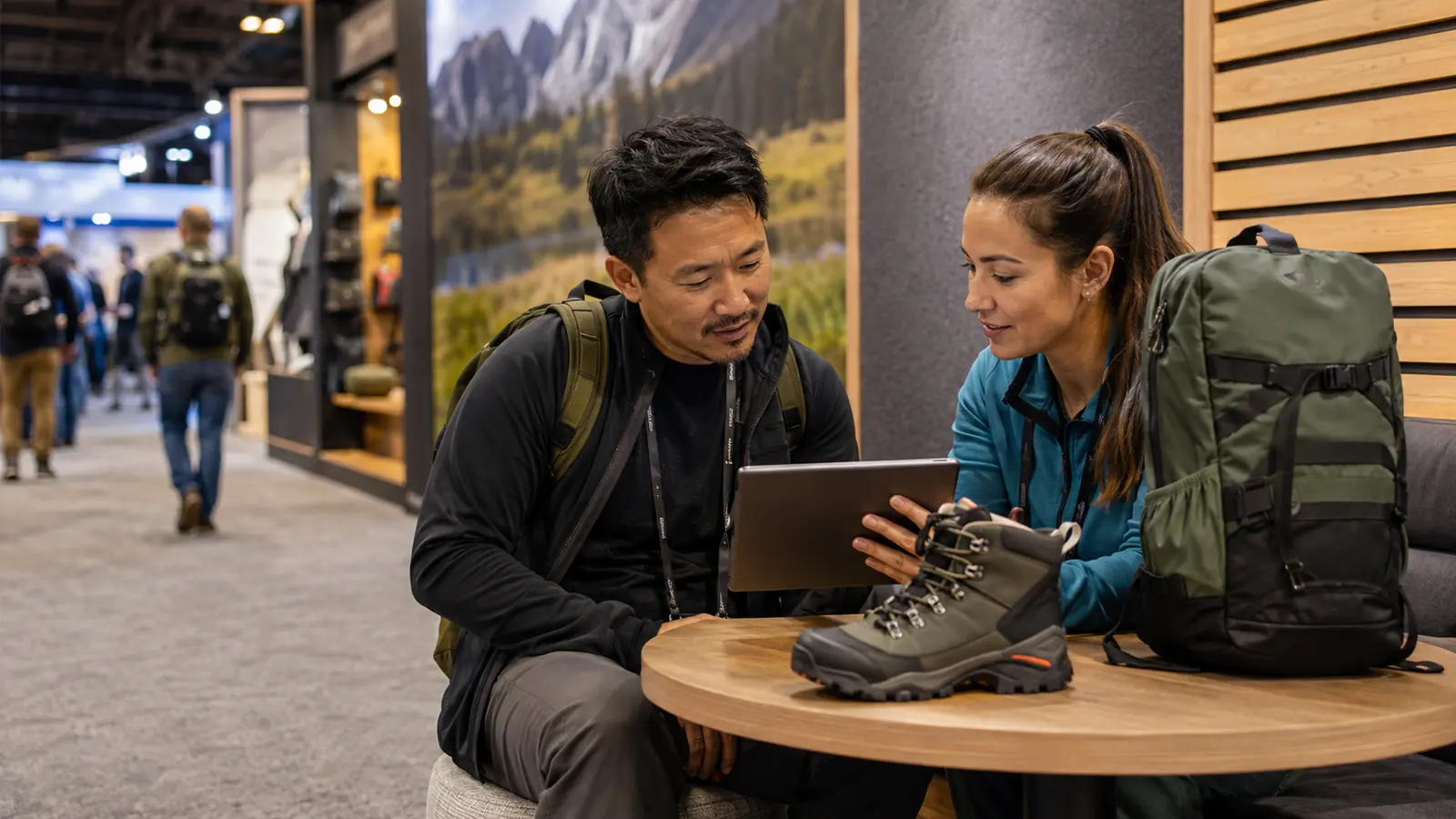
KingExhibits can support an Outdoor Retailer project when the booth must do more than carry a logo. The scope starts with the information you already have—or need to organize—so the design discussion stays tied to products, visitor actions, and meeting goals.
Turn Product Information Into a Buildable Brief
Provide the product list, dimensions and weights, priority collection, proof points, target visitor action, meeting capacity, storage needs, graphics, technology, and shipping window. KingExhibits can use those inputs to outline display zones, product walls or racks, demo boundaries, lighting, storage, and a practical visitor path. The result is a brief that a designer, fabricator, rental partner, and logistics contact can read in the same way.
Make Design and Quote Decisions Easier to Compare
The service scope includes booth design and 3D rendering, followed by a clearer review of what the design requires: structure, graphics, furniture, lighting, AV, utilities, freight, installation, and dismantle. Each line can be marked included, coordinated, by exhibitor, excluded, or open. That gives you a useful comparison point when two proposals look similar but carry different assumptions.
Coordinate the Handoff to the Show Floor
For a custom build or rental system, the project can be organized around artwork approvals, production or rental preparation, packing, shipping labels, delivery destination, installation, on-site contacts, and dismantle. KingExhibits’ stated scope includes graphics and AV, shipping and installation coordination, and dismantle; the current Outdoor Retailer contract and ESM still control venue rules, deadlines, and approved services.
Plan for More Than One Show
If the same product line will appear at other trade shows, the brief can identify which structure, graphic panels, shelves, counters, and sample units are worth adapting. Reuse planning is not a promise that every component will fit every venue; it is a way to decide early what should be modular, replaceable, or show-specific.
Frequently Asked Questions
How do you become an Outdoor Retailer exhibitor?
Start with the official Get a Booth inquiry, then prepare your target product range, preferred footprint, meeting needs, open-side preference, and route questions. Ask the organizer to confirm availability, contract terms, included services, and the current application or program requirements before you release a booth design.
Can you rent a booth for Outdoor Retailer?
Yes, a rental booth system can be considered when you need a defined structure for one show or want to reuse a modular setup across several events. Compare what the rental includes, which graphics and fixtures can change, who repairs or stores the parts, and whether the system supports your product weights, meeting needs, and ESM limits.
What should you bring to Outdoor Retailer as an exhibitor?
Bring the samples that support your priority buyer conversations, a concise line sheet or product document, specifications, pricing or channel information, spare units for demonstrations, lead-capture fields, and a named follow-up owner. Match each sample to a visitor action instead of filling the booth with every SKU.
How early should you start planning an Outdoor Retailer booth?
Start as soon as you know the show route and space. Lock the product story and brief first, then allow time for design, quote comparison, artwork approval, fabrication or rental preparation, shipping, and staff scheduling. Put the official ESM deadlines into the calendar when released and work backward from the hardest service and freight dates.
How can exhibitors generate more qualified leads at Outdoor Retailer?
Set a target-account list and book focused conversations through the official app or Match where available. Use a booth message that tells visitors what they can compare or test, capture the stated need and next action, and complete the promised follow-up within 30 days. Measure qualified conversations, sample requests, quote opportunities, and completed follow-up rather than raw scans alone.
Final Thoughts
Outdoor Retailer planning becomes manageable when the audience and buying motion fit your product, the route matches your level of control, and the booth brief is complete before design approval.
KingExhibits can support booth design and 3D rendering, custom fabrication or rental booth systems, graphics and lighting, shipping and installation coordination, on-site dismantle, and multi-show reuse planning. Send us your booth size, product list, target visitor actions, meeting needs, and ESM status to receive a preliminary booth scope and budget framework.