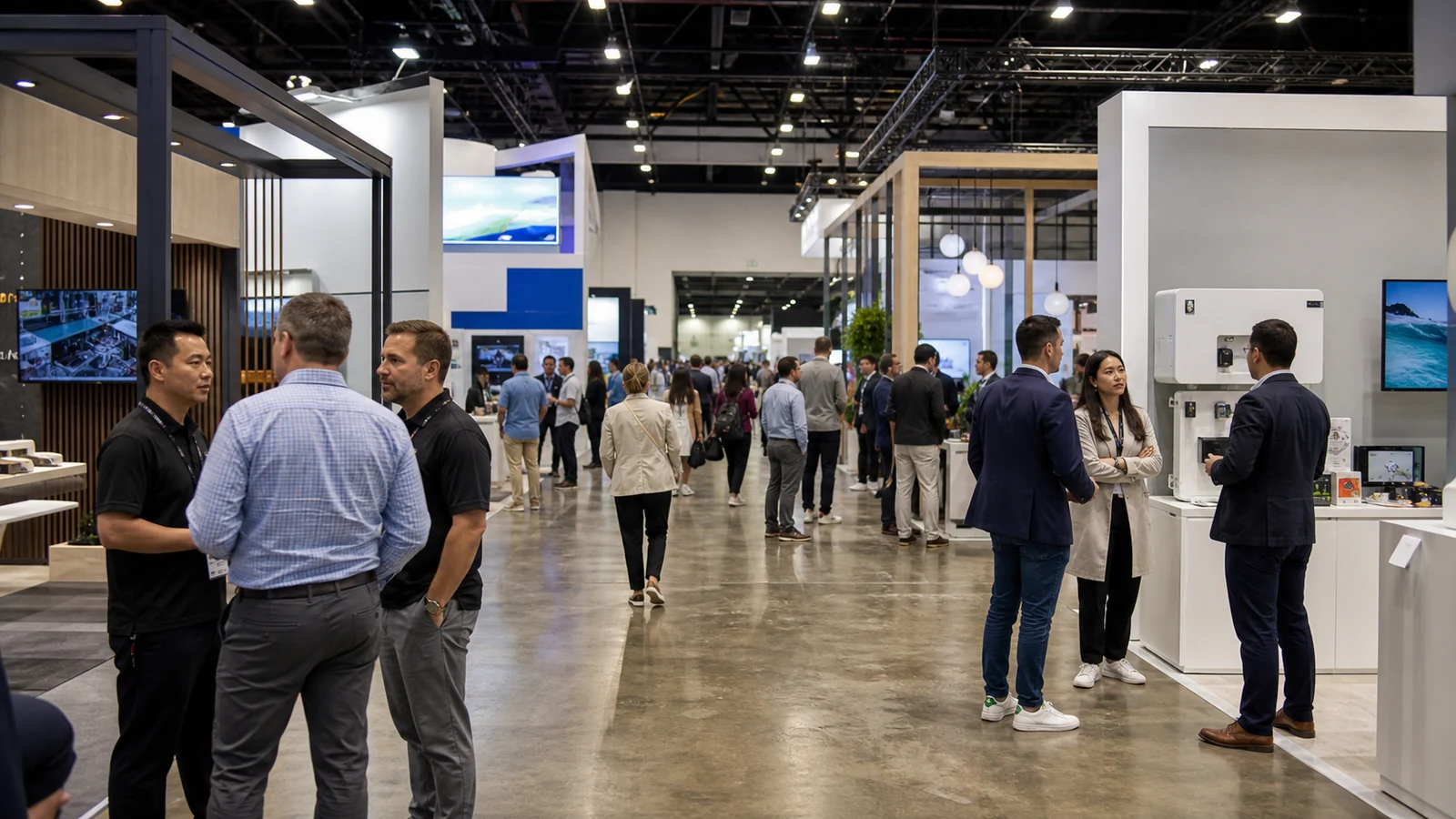
If your company sells gifts, souvenirs, beach products, or resort merchandise, the Ocean City Resort Gift Expo may look like an obvious match. The harder question is whether its buyers, November ordering window, and booth package fit the way your company actually sells.
This guide gives you the confirmed 2026 event facts, then helps you test buyer fit, wholesale readiness, booth scope, and operating risk before you sign a contract or approve a display.
The event details below were checked on September 8, 2026. Dates, prices, space, suppliers, and rules can change. Reopen the organizer's current pages and obtain the contract, booth assignment, Exhibitor Resource Center documents, and written approvals that apply to your company before you pay or start production.
What Is Confirmed for the 2026 Ocean City Resort Gift Expo?
The next published edition runs November 15–17, 2026, at the Roland E. Powell Convention Center in Ocean City, Maryland. The official event page and the Clarion Events North America calendar show the same dates and venue.
| Planning item | Confirmed public information |
|---|---|
| Dates | Sunday, November 15–Tuesday, November 17, 2026 |
| Show-floor hours | Sunday and Monday, 9:00 a.m.–5:00 p.m.; Tuesday, 9:00 a.m.–2:00 p.m. |
| Venue | Roland E. Powell Convention Center |
| Address | 4001 Coastal Highway, Ocean City, MD 21842 |
| Event model | Trade-only gift, souvenir, and resort merchandise event |
| Published 10×10 price | $1,400 before any applicable location, service, insurance, travel, freight, or display cost |
Those three days provide 21 published show-floor hours. That is enough time for repeated buyer conversations, but only if your team can quote consistently, record order details, and follow up after the event. A full booth and a busy aisle do not repair unclear wholesale terms.
What Kind of Event Is It?
The official attendee registration page says the event is open to the trade only. It recognizes qualified retail buyers, manufacturers' representatives, non-exhibiting manufacturers, press, and registered guests. It also says a non-exhibiting manufacturer may not sell or promote on the show floor.

That distinction matters. This is not a public holiday market where your main goal is to sell individual products at retail. Your booth needs to help professional buyers judge whether a line belongs in their stores, what it costs at wholesale, how much they must order, when it can ship, and how it will perform during their selling season.
The organizer's exhibit page describes buyers from the Mid-Atlantic and New England. It says the majority are resort or souvenir stores and specialty stores, while also listing apparel and accessories, grocery and gourmet food, jewelry, online retail, galleries and craft stores, amusement and theme parks, hardware stores, and museum gift shops.
These are intended buyer categories, not a promise about who will visit your booth. Use them to screen relevance, then ask the show team for the current prospectus, available space, exhibitor mix, and any buyer information it can substantiate. Do not build your sales forecast from a promotional description.
Is the Buyer Mix Right for Your Product Line?
Start with the store where you expect your product to be sold. A coastal souvenir shop, museum store, theme-park shop, gourmet retailer, and online gift seller may all attend, but they do not buy the same assortment or accept the same delivery terms.

The organizer lists destination merchandise, souvenirs, beach items, T-shirts, general giftware, shell products, coastal and nautical goods, decorative and fashion accessories, toys and games, aromatherapy, logo products, stationery, tabletop items, gourmet products, and garden gifts. Your category can fit that list and still be a weak commercial match.
Your fit is stronger when:
- your line has a clear reason to belong in a resort, souvenir, specialty, attraction, or museum retail setting;
- you already have wholesale prices, minimum order quantities, case packs, lead times, and payment terms;
- buyers can understand the range quickly without a long consumer demonstration;
- you can explain which products support late holiday purchases and which can arrive for the spring or summer resort season;
- your packaging, labeling, margins, and fulfillment process are ready for retailer orders.
Pause if your only evidence is that the products are attractive or giftable. A retailer also needs to know how the line fits its customer, shelf space, price points, inventory cycle, and delivery calendar. Skip the event if your company is not prepared to sell wholesale or if your product requires a buyer group the organizer does not identify.
What Does the Published 10×10 Booth Package Include?
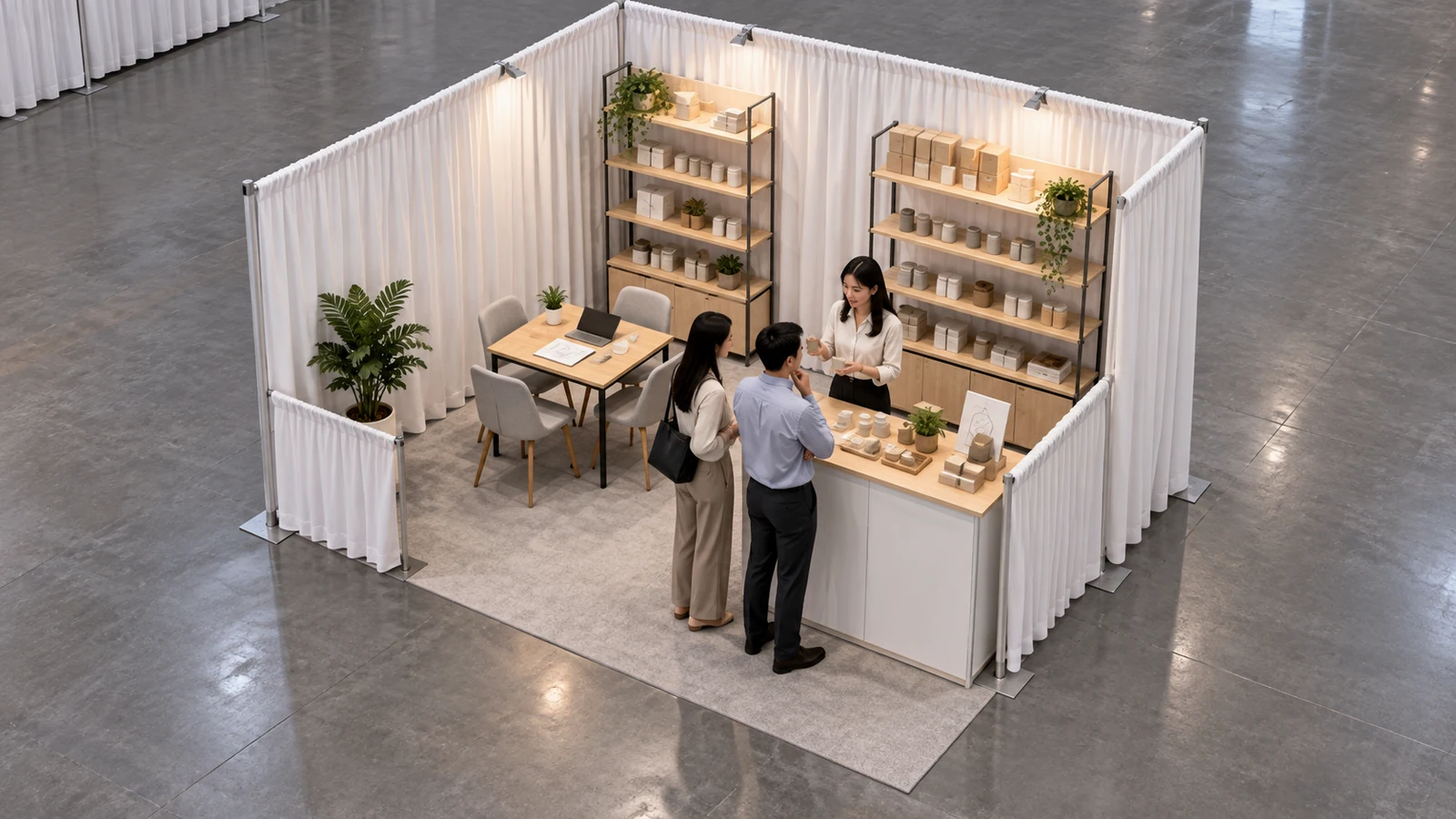
Treat $1,400 as a public starting price, not a complete budget. The same page separately displays a $250 “corner fee,” a $350 “single corner fee,” and a $300 “premium position fee.” Because those labels overlap and the page does not explain their relationship, do not add or assign them yourself. Ask the sales team to identify every line item that applies to the exact space it offers you.
Your complete budget should separate at least five groups:
| Cost group | What you need in writing |
|---|---|
| Show contract | Booth size, location, open sides, position fees, badges, directory benefits, payment terms, cancellation terms, and taxes or service charges |
| Display | Flooring if required, graphics, counters, shelving, lighting, storage, samples, packing cases, setup, dismantling, and any rental or fabrication scope |
| Venue and official services | Extra power, internet, material handling, labor, furnishings, waste, approvals, and order deadlines |
| Travel and product movement | Freight, local delivery, hotel, transport, meals, insurance, samples, returns, and damaged or unsold stock |
| Sales operation | Staff time, order system, payment or credit process, lead capture, printed line sheets, follow-up, and sample fulfillment |
Do not estimate value from booth price alone. Define the number and quality of retailer conversations, sample requests, qualified accounts, written orders, or follow-up appointments your team would need to justify the complete cost. Use your own margins and conversion history; the public event pages do not provide a reliable ROI promise for your brand.
How Should a 10×10 Wholesale Booth Work at This Show?
A small wholesale booth has two jobs: stop the right retailer and make the buying decision easier. It should not try to display every SKU with equal weight.

Lead with one recognizable product story. That might be a destination program, a coastal collection, a price-point group, or a spring/summer assortment. Support it with a few proof products that show range without turning the back wall into a warehouse. If buyers cannot see the product type and retail setting from the aisle, they may assume the line is not for them.
Then build the conversation around buyer decisions:
- Make the wholesale price range, suggested retail position, and opening-order logic easy for staff to explain.
- Group products by store use, season, collection, or price rather than by your internal SKU numbering.
- Keep line sheets, MOQ, case-pack, customization, lead-time, shipping-origin, and reorder information within reach.
- Give the buyer a clear place to handle samples, review the line, and write or discuss an order without blocking the aisle.
- Hide cartons, coats, and replenishment stock while keeping fast-moving samples accessible.
- Use the included 500 watts only after listing the actual load of every light, screen, charger, and device; request additional service when needed.
The official FAQ page currently states that booths may not exceed the 8-foot pipe-and-drape height. Design to that published limit, but do not release production until your assigned footprint and current rules confirm the permitted dimensions, materials, signs, lighting, and open-side conditions.
Which Operational Details Need Written Confirmation?
The public pages are enough for an early screen, not a final production brief. Assign one person on your team to keep the signed contract, booth assignment, floor plan, current exhibitor manual, service orders, approvals, and organizer correspondence together.

Confirm the following before you approve graphics, fixtures, freight, or travel:
- your product category, sales method, and any sampling or demonstration activity are accepted;
- the exact footprint, booth number, open sides, neighboring conditions, and height or sightline rules;
- what the $1,400 package and every applicable location charge include;
- the current certificate-of-insurance wording, amount, additional insured parties, and due date;
- exhibitor-appointed-contractor rules if anyone outside the organizer's or venue's service system will install or dismantle the booth;
- electrical and internet specifications, ordering route, deadline, and late-rate trigger;
- direct-shipping dates, labels, receiving hours, storage, material handling, and outbound procedure;
- move-in, show access, restocking, and move-out times for your staff and freight.
The FAQ says a 10×10 booth includes one 500-watt outlet, while extra electrical is ordered through the convention center. It describes basic Wi-Fi in common areas and directs exhibitors to the venue's IT provider for more service. Do not assume common-area Wi-Fi will support your order system, demonstrations, or lead capture at the booth; specify the connection you need and obtain the current price and service terms.
For shipping, the organizer tells exhibitors to mark freight with the show name, booth name, and booth number and send it to the convention center. The venue's exhibitor-services page warns that late orders may not be available and may move to event rates. Obtain the event-specific receiving window before dispatching freight; an address alone is not permission to ship early.
How Should You Protect the Project From False Vendors and Stale Files?
Use only the current event website, your signed documents, the Exhibitor Resource Center, and contacts confirmed through those sources. The official exhibitor center points exhibitors to the current resource portal for directory information, badges, digital upgrades, show specials, and lead retrieval.

The organizer's scam warning page says the show does not sell, rent, or distribute its attendee list. It also identifies Connections Housing as the official housing partner and names The Expo Group as the booth-services vendor on the current page. An email that uses the event name is not proof of authorization. Verify the sender and service through the official site before you share company information or pay an invoice.
The same caution applies to old manuals and old floor plans. They can show how the event worked before, but they do not approve a 2026 display. If a rule, supplier, deadline, price, or form does not appear in your current contract or resource portal, ask for the current version in writing.
Make a Go, Pause, or Skip Decision
Choose GO when the organizer confirms your product and selling method, the buyer mix fits your wholesale channel, your spring/summer delivery promise is credible, and the written total works without an invented traffic or order forecast. At that point, turn the assigned space and official rules into a booth brief.
Choose PAUSE when the event looks relevant but space, fees, insurance, services, shipping, contractor permission, or category acceptance is unresolved. A written pause protects you from designing for the wrong footprint or paying an invoice that the organizer did not authorize.
Choose SKIP when you are not wholesale-ready, the listed retail channels do not match your line, your delivery calendar misses the buyers' season, or the project only works if you assume a buyer count or sales result that the event has not substantiated.
Frequently Asked Questions
Can an international manufacturer apply to exhibit?
Ask the official show team whether your company, product category, sales method, and proposed booth qualify. Separately confirm U.S. import, labeling, insurance, tax, payment, and product-compliance duties with qualified advisers. A booth plan can respond to written requirements, but it cannot determine your legal right to import or sell goods.
How should you handle a retailer's request for local exclusivity?
Record the request for your sales manager to review before you promise to stop supplying other stores. Ask which locations, product lines, and sales channels the retailer wants covered, then check existing accounts and commitments. If you decide to negotiate, define the proposed area, duration, purchase expectations, and review date in writing. A conversation at this show should not quietly become a promise covering every coastal store or every product you sell.
How should you confirm an order for several stores or delivery dates?
Use a separate allocation for each ship-to address and delivery window, showing the SKU, quantity, pack size, receiving contact, and requested arrival date. When you quote freight, state whether it covers one shipment or each release, and confirm who approves substitutions or partial deliveries. Have the buyer approve the allocations before you treat the combined quantity as a confirmed order; a total alone does not tell the warehouse what each store should receive.
Can your team photograph or record neighboring exhibits?
The official registration page says photography of an exhibit is prohibited without that exhibitor's written consent. Build your content plan around your own booth and products, obtain any needed permission, and brief staff before the show instead of treating the floor as open filming space.
Can the 2026 exhibitor list tell you who will be beside your booth?
Not by itself. The official Who's Exhibiting page currently links to a 2026 exhibitor list, but its floor-plan link is still labeled 2025 and the page says the 2026 floor plan is coming soon. Use the list to research published exhibitors, product categories, and lines; do not treat it as evidence of your neighbors, aisle position, or direct competitive set. Request your current booth assignment and the 2026 floor plan in writing, then check the adjacent booths, open sides, aisle approach, and sightlines before you lock graphics or fixtures.
Final Thoughts
The Ocean City Resort Gift Expo is a credible candidate when your line belongs in resort, souvenir, specialty, attraction, museum, or related gift retail—and when your company is ready to support wholesale decisions, seasonal delivery, and three days of consistent buyer conversations. Confirm the category, assigned footprint, complete cost, service route, and operating rules before you treat relevance as a commitment.
KingExhibits can review a booth brief from an exhibit-planning perspective, but it is not the organizer, venue, or official service authority. If the show passes your commercial screen, provide the confirmed event documents, booth assignment, product line, wholesale terms, staff and storage needs, technical loads, freight plan, and budget boundary; then compare any proposed display with the organizer's and venue's current written rules before approving production.