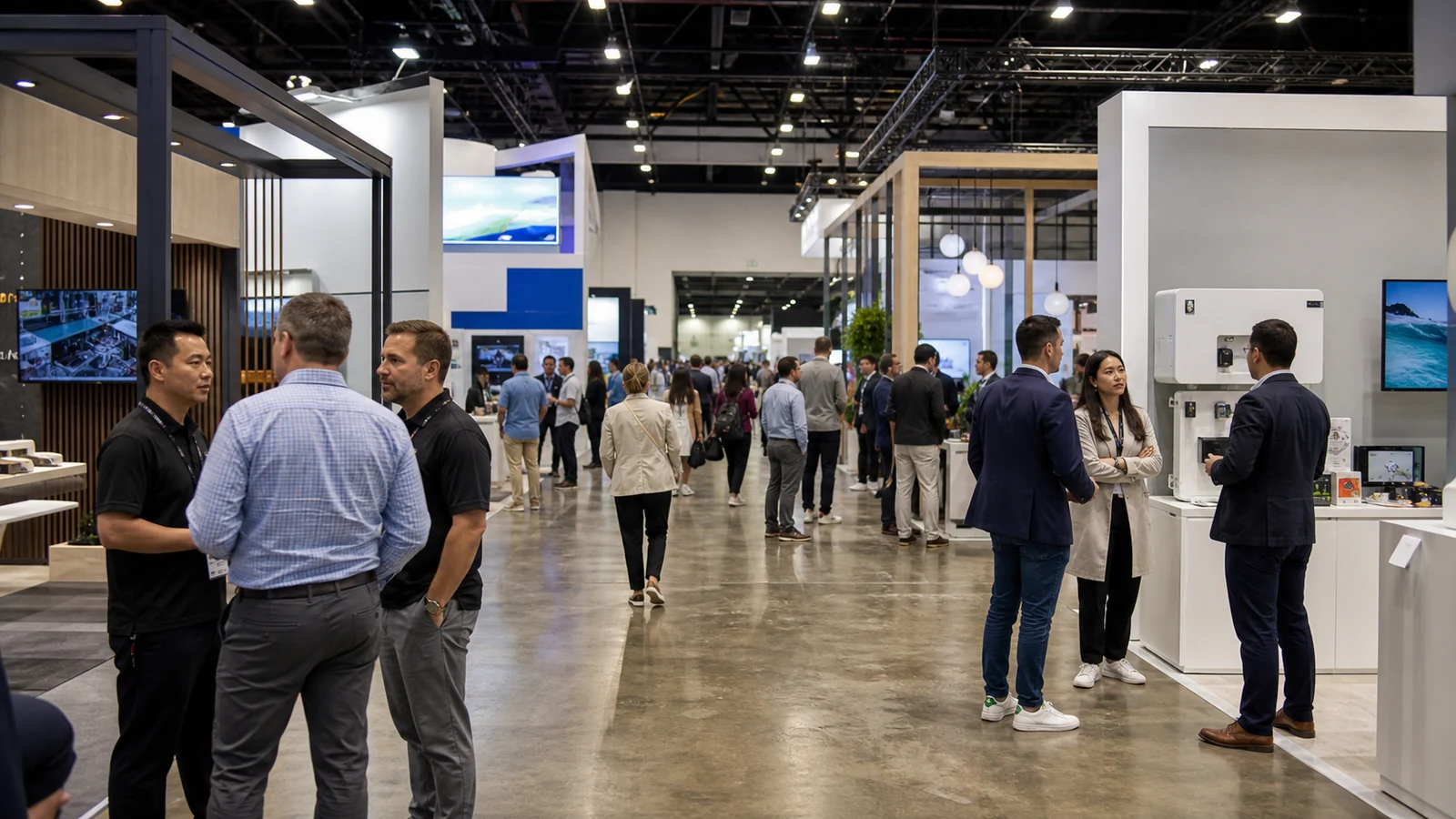
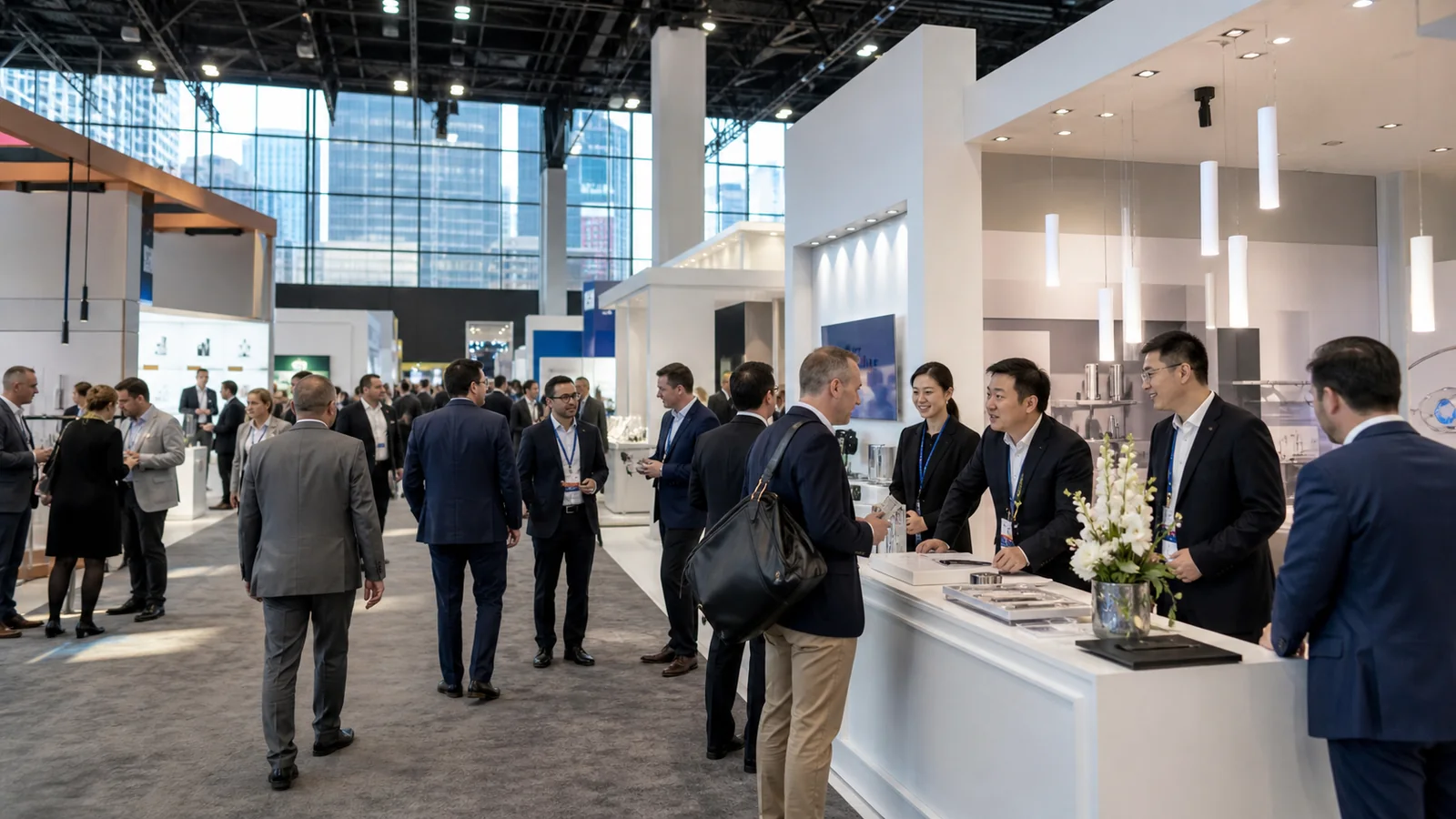
MD&M West can look like a medical-device show until you open the floor plan. It actually brings five manufacturing sectors together. If your company is considering the 2027 event, your first job is to find the part of that combined floor where your product and the people who specify it genuinely meet.
MD&M West 2027 at a Glance
MD&M West will run February 9–11, 2027, at the Anaheim Convention Center in Anaheim, California. The organizer lists the following expo hours:
| Day | Expo hours |
|---|---|
| Tuesday, February 9 | 10:00 a.m.–5:00 p.m. |
| Wednesday, February 10 | 10:00 a.m.–5:00 p.m. |
| Thursday, February 11 | 10:00 a.m.–4:00 p.m. |
Hall E opens at 9:30 a.m. each day. That earlier opening applies to Hall E, not to every hall. The venue address is 800 W Katella Avenue, Anaheim, CA 92802.
Those are public show hours. They are not exhibitor move-in hours. The organizer currently lists the 2027 target move-in and move-out dates as TBD, so do not build a freight or labor booking around the expo schedule.
What Kind of Event Is MD&M West?
The current MD&M West combines five sectors: MedTech, Automation, Design & Manufacturing, Plastics, and Packaging. Readers may still search for the legacy expanded name, Medical Design & Manufacturing West. The broader event was previously presented under the Informa Markets Engineering West umbrella; the organizer changed that umbrella name to MD&M West in 2025.
This matters because “medical device show” is too narrow a test for exhibitor fit. A sensor maker might meet device engineers in MedTech and controls engineers in Automation. A contract manufacturer may fit Design & Manufacturing, while a molding supplier may belong in Plastics even when many end applications are medical.
Use the sector as a routing decision, not a label for your company. The right sector is the one where the people walking that area are most likely to recognize the problem your product solves.
Match Your Offer to One of the Five Sectors
MedTech
The MedTech sector covers medical-device components, assembly, sterilization, packaging, sensors, power sources, motion control, tube processing, and test equipment. The organizer identifies R&D, product development, manufacturing, procurement, quality, compliance, and specialist engineering roles among the audience.

This is the strongest fit when your offer is tied directly to a medical-device development or production task. A generic industrial product does not become a MedTech product simply because it can be sold to a medical company. Your display should make the validated application, material boundary, cleanliness need, traceability requirement, or manufacturing step visible without making unsupported regulatory claims.
Automation
Automation includes robotics, controls, motion systems, machine vision, assembly equipment, material handling, fabrication, and production software. It attracts plant, operations, engineering, integration, procurement, quality, and reliability roles across multiple industries.
Exhibitors here benefit from a working sequence rather than a static equipment shell. Decide early what visitors need to see move, detect, measure, or control. That decision determines electrical load, network service, guarding, noise control, staffing, and the amount of reset time between demonstrations.
Design & Manufacturing
This sector connects product development with production. Official examples include CAD/CAM, additive manufacturing, prototyping, testing equipment, materials, and design-to-production services.
It is often the better home for an offer that helps engineers turn a design into a manufacturable part, rather than for a component aimed at one regulated end market. Bring evidence that supports the handoff: drawings, tolerances, sample stages, inspection logic, or a clear before-and-after production decision. Avoid reducing a complex service to a wall of application logos.
Plastics
The Plastics sector spans materials and processing, including molding, 3D printing, coatings, and related production technologies. Medical applications are present, but the sector is not limited to medical devices.
Your sector choice should follow the buyer's question. If the conversation begins with resin behavior, tool design, molding capability, processing stability, or part quality, Plastics is usually more direct than MedTech. If it begins with a device function and a regulated assembly, MedTech may be the more natural starting point.
Packaging
Packaging covers machinery and materials for forming, sealing, labeling, coding, identification, and product protection. It can serve medical and nonmedical manufacturing teams.
Do not present every packaging capability at equal depth. A running line, inspection station, or sterile-barrier sample requires a different conversation from a label or protective-material portfolio. Pick the one process decision you want a visitor to understand, then list the utilities and floor conditions needed to show it truthfully.
Who Will You Be Exhibiting For?
The organizer describes an audience that includes engineers, R&D teams, manufacturing and operations professionals, quality specialists, executives, and purchasing professionals. That mix creates access to both technical evaluators and commercial decision-makers, but it does not mean every visitor has purchasing authority.
Build two connected conversations. The first should let a technical visitor test whether your solution fits an application. The second should let a commercial visitor understand the sourcing route, implementation scope, and next evidence needed. One clear demonstration can support both conversations if the booth team agrees on what it proves—and what it does not.
Before reserving space, write down three target roles and the question each role should be able to answer at your booth. If those questions belong to different sectors, choose the sector that owns the primary problem and arrange meetings with the adjacent audience instead of trying to make the display speak equally to everyone.
How to Start the 2027 Exhibiting Process
The public reservation path has three steps:
- Review the 2027 floor plan.
- Choose a booth size and your top three location preferences.
- Contact the event sales team through the official form or phone number on the organizer's “Become an Exhibitor” page.
Treat the floor plan as an inventory and adjacency tool. Check the sector, hall, entrances, education areas, service desks, and nearby exhibitors before ranking locations. A large space in the wrong traffic context is not automatically better than a smaller space beside the audience you need.
Ask show sales to confirm the sector assignment, space terms, current availability, payment schedule, and any restrictions attached to the proposed location. The exhibitor FAQ says square-foot pricing varies by show brand and booth option; it does not publish one universal 2027 rate.
What Is Public for 2027—and What Is Still Pending?
As of September 7, 2026, the event has published its 2027 dates, venue, expo hours, floor-plan route, and exhibit inquiry path. The public Exhibitor Center, however, still sends exhibitors to a 2026 portal and describes a 2026 checklist.

The MD&M West 2027 exhibitor manual, move-in and move-out assignments, booth-review deadline, service-order deadlines, freight instructions, and full operational schedule are not yet available on the public pages reviewed for this guide. One FAQ still displays an old January 2025 booth-review date. It is historical page content, not a deadline for 2027.
Create a live planning register instead of copying last year's dates. Give one owner responsibility for checking the official Exhibitor Center and portal. Record each new deadline, the source page, the date checked, and the person responsible. Recheck after any floor-plan or booth-size change because those changes may alter labor, rigging, utilities, and freight needs.
Read the Current Manual Before Freezing the Booth
When the 2027 resources open, review them before approving production drawings. At minimum, locate the current rules for:
- booth type, height, sightlines, setbacks, hanging signs, and enclosed areas;
- fire and life-safety documentation, flame resistance, covered areas, and demonstration hazards;
- electrical, internet, plumbing, compressed air, A/V, and rigging orders;
- material handling, labor jurisdictions, personally operated vehicles, hand carry, and empty-container handling;
- insurance, exhibitor-appointed contractors, badges, cleaning, waste, food, beverage, and sampling;
- advance warehouse and direct-to-show shipping labels, receiving windows, move-in targets, and move-out procedures.
The exact requirements must come from the current show documents, not from a general U.S. trade show checklist. If your exhibit includes a machine, laser, pressure, heat, liquid, medical demonstration, overhead element, or large battery, send the relevant details through the organizer's review route early. A booth drawing alone may not show the operational risk.
Map Every Demonstration to an Official Service
The organizer's Exhibitor Center describes the official show-contractor scope as booth furnishings, material handling, labor, rigging, freight, signage, cleaning, electricity, and other utilities. It also tells exhibitors to use the approved vendor list and warns about unaffiliated hotel and attendee-list solicitations.

Anaheim Convention Center identifies Smart City Networks as its exclusive provider for exhibitor voice, data, internet, cable television, and networking services. The venue also publishes service channels for catering and for A/V or rigging support. Show-specific ordering instructions and exclusivities may be refined in the 2027 portal, so route each request through the current official list.
Build a demonstration service map with five columns: equipment, operating requirement, service provider, order deadline, and backup plan. A cloud-connected demo, for example, needs more than “Wi-Fi.” Record bandwidth, wired or wireless connection, device count, security constraints, and what the team will show if the live connection fails.
Keep Expo Planning Separate from Conference Planning
MD&M West's exhibition floor and its education programs overlap in subject matter but are not the same product. The expo contains the five sectors, exhibitors, demonstrations, show-floor education, and event experiences. The organizer separately presents conference and workshop programs, including the MedTech Conference and Sustainable Manufacturing Conference, with their own access and pass structures.
The 2027 public show-information page lists workshop, MedTech Conference, and Sustainable Manufacturing Conference hours as TBD. Do not schedule booth staff around a prior-year conference agenda. When the 2027 program is published, decide which sessions matter, who can leave the booth, and whether the required pass is included or must be purchased.
A Practical Pre-Show Decision Check
Before you move from space reservation to production, make sure your team can answer these questions:

- Which of the five sectors owns the problem our product solves?
- Which three job roles do we need to meet, and what evidence does each role need?
- What will run, move, connect, dispense, heat, cool, or require special handling?
- Which booth rule or approval could change the current design?
- Which official provider handles each required service?
- Which 2027 dates are confirmed, and which are still waiting for the manual or portal?
- Who owns every service order, shipment, approval, and on-site handoff?
If the first two answers are weak, pause the exhibit decision. If the remaining answers are incomplete, keep the concept flexible until the 2027 operational documents are available.
Frequently Asked Questions
Is MD&M West only for medical-device companies?
No. MedTech is one major sector, but the event also includes Automation, Design & Manufacturing, Plastics, and Packaging. A company's best fit depends on the manufacturing problem it solves and the professional audience it needs to meet.
Can we use an outside exhibit contractor at MD&M West?
The current public pages refer to exhibitor-appointed contractors but do not publish the full 2027 process. Check the 2027 exhibitor manual for authorization, insurance, access, labor, and deadline requirements. Using an outside contractor does not remove the need to order exclusive or official services through the designated providers.
When should international freight be sent for MD&M West 2027?
Do not choose a ship date until the 2027 manual publishes the advance-warehouse and direct-to-show addresses, receiving dates, labels, and move-in target. Work backward only after those details are confirmed, allowing time for export documents, customs clearance, final delivery, and exception handling.
Are the MedTech Conference and workshops included with an expo badge?
Do not assume they are. The organizer separates expo access, conferences, and workshops into different pass structures, while some show-floor education is included with expo access. Check the 2027 pricing and program pages for the session you want before assigning staff.
What should we do if our equipment specifications change after ordering services?
Update the service map and contact the affected official provider immediately. A higher electrical load, new network connection, added compressed air, or heavier shipment can change the order, placement, labor, and approval requirements. Also check whether the revised setup requires a new booth or safety review.
Final Thoughts
MD&M West is a strong candidate only when one of its five sectors contains both your product problem and the people who can evaluate it. Confirm that match first. Then reserve through the organizer and keep the operating plan flexible until the 2027 manual, service dates, and move-in instructions are current and complete.