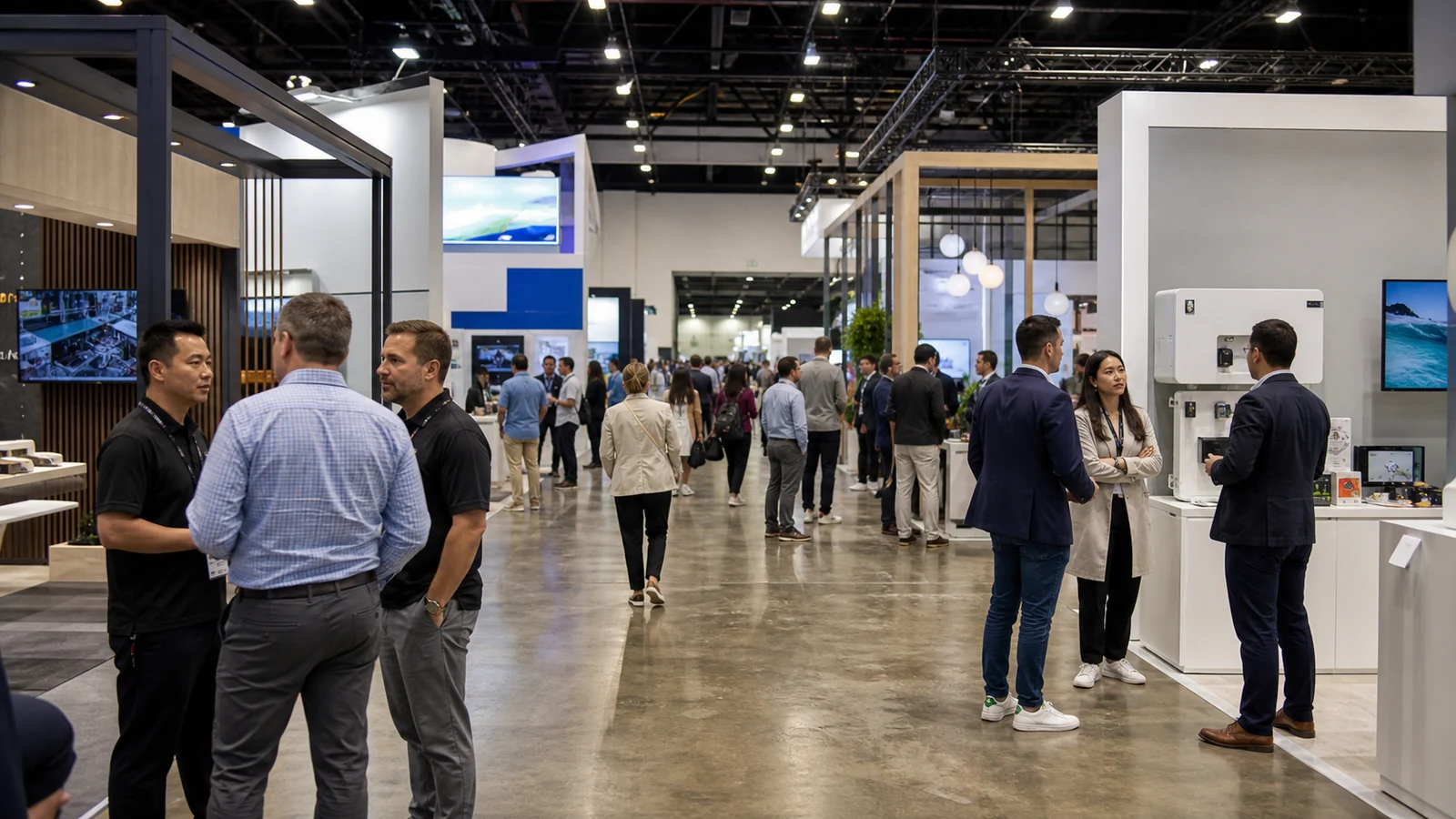
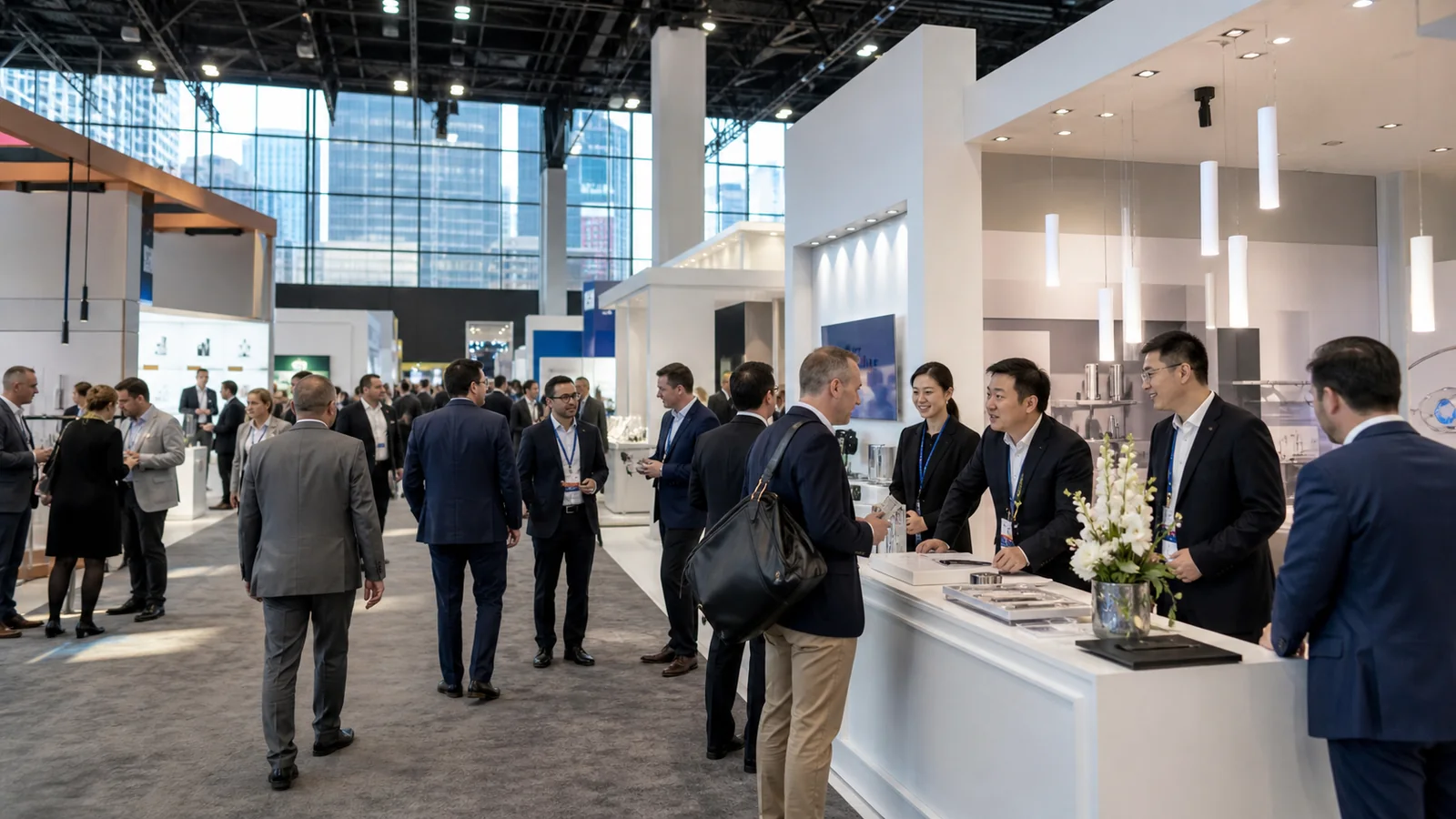
If your company is considering Gem Capitol Shows, start by matching the event format to your product and sales plan. Gem Capitol uses a regional, table-led weekend format. A firearms dealer will need a sales plan that fits its licenses in each state, while a knife or accessory brand can focus more on product-category approval and how customers will interact with the display.
The organizer’s public brand is Gem Capitol Shows, while individual event pages and venue calendars often use Gem Capitol Gun & Knife Show. Searchers may also encounter the phrase “Gem Capitol Guns & Knife Show.” This guide follows the official brand and uses the individual-show name where it helps identify the event.
As of September 9, 2026, the organizer lists a changing schedule across Georgia, South Carolina, North Carolina, and Tennessee. This guide explains the remaining 2026 stops, the event format, and the details a vendor can use when considering tables, travel, and a branded display.
What Kind of Event Is Gem Capitol Shows?
Gem Capitol Shows runs a series of regional consumer events rather than one annual national trade show. The organizer describes the show floor around buying, selling, and trading guns, ammunition, knives, and shooting and hunting supplies. Its event flyers also say that flea-market merchandise is not allowed.
That format is strongest for businesses that want direct product conversations and weekend retail activity in southeastern cities. Companies focused on scheduled meetings with national distributors, government buyers, or large retail chains will usually gain more from a conventional B2B event with a published appointment or hosted-buyer program.
Each city works best as a separate market test because Covington, Brunswick, Richburg, and Waynesville may attract different visitor mixes. Territory coverage, license position, existing customers, travel cost, and follow-up capacity provide a practical basis for choosing the first stop.

Remaining 2026 Schedule Published on September 9
The table below reflects the organizer’s live homepage on September 9, 2026. The website says dates can be added and directs readers to its own calendar for current event information. A city-specific confirmation keeps table reservations, merchandise, and travel tied to the same date and venue.
| Date | City | Venue currently listed | Confirmation note for vendors |
|---|---|---|---|
| September 12–13 | Covington, Georgia | Newton County Ag Center, 120 FFA/FHA Camp Road | Listed as verified. Ask for the vendor confirmation and setup instructions before traveling. |
| September 2026 | Dublin, Georgia | To be announced | Official versions of the homepage disagree on whether September 12–13 is firm, so the date and venue remain provisional. |
| September 26–27 | Baxley, Georgia | Appling County Ag Center | The date is listed, but the organizer’s address conflicts with Appling County’s official Ag Center address. Obtain the load-in address in writing. |
| October 10–11 | Grovetown, Georgia | Columbia County Exhibition Center, 212 Partnership Drive | The current homepage and event flyer agree on the date and venue. |
| October 17–18 | Douglas, Georgia | Central Square Complex, 200 S. Madison Avenue | Listed as a new venue. A new venue deserves a fresh check of access, security, power, and display limits. |
| October 31–November 1 | Albany, Georgia | Hasan Shrine Temple, 1822 Palmyra Road | The homepage lists limited tables; the organizer can confirm current availability. |
| November 7–8 | Brunswick, Georgia | Exchange Club Fairgrounds, 101 Emory Dawson Road | The homepage and current Brunswick page agree on the date and venue. |
| November 21–22 | Conyers, Georgia | Georgia International Horse Park, 1996 Centennial Olympic Parkway NE | Listed as verified on the organizer’s current homepage. |
| December 5–6 | Clayton, Georgia | Rabun County Civic Center, 201 W. Savannah Street | The homepage and current Clayton page agree on the date and venue. |
| December 5–6 | Richburg, South Carolina | Gateway Conference Center, 3200 Commerce Drive | This runs on the same weekend as Clayton; covering both calls for separate staff and inventory. |
| December 19–20 | Waynesville, North Carolina | Haywood County Fairgrounds, 758 Crabtree Road | Listed as verified on the current homepage. Confirm winter delivery, access, and overnight procedures with the venue and organizer. |
The current homepage also lists January 2027 stops, although several entries use TBA and at least one date contains an apparent year error. Those entries can support early sales planning; production scheduling can follow once the organizer issues a clean confirmation.

Hours, Tables, and Setup: What Is Published and What Still Needs Confirmation
The current homepage gives a standard pattern: Saturday 9:00 a.m.–5:00 p.m., Sunday 10:00 a.m.–4:00 p.m., and dealer setup from noon to 6:00 p.m. on the prior day for most shows. It currently lists prepaid tables at $80 for gun-related vendors and $90 for non-gun-related vendors, with a $5 per-table increase when paying at the show.
The published rates provide a useful starting point for an initial estimate. Because the current homepage and an older vendor page show different figures, the final budget becomes clearer once the organizer confirms the current price, table size, setup window, cancellation terms, and included services for the selected city.
General adult admission is listed at $12–$15 for most shows, with cash payment at the door and ATMs available.
Is This Show a Good Fit for Your Product?
A useful first screen is how naturally the product fits a table-led consumer show.
A firearm or ammunition seller will find that licensing and transaction eligibility shape which states can support sales. Current ATF guidance generally limits temporary gun-show sales by a licensed manufacturer, importer, or dealer to a qualifying event within the state of licensure. A table reservation confirms space; sales authority continues to depend on the company’s licenses, products, transactions, and current federal, state, and local rules.
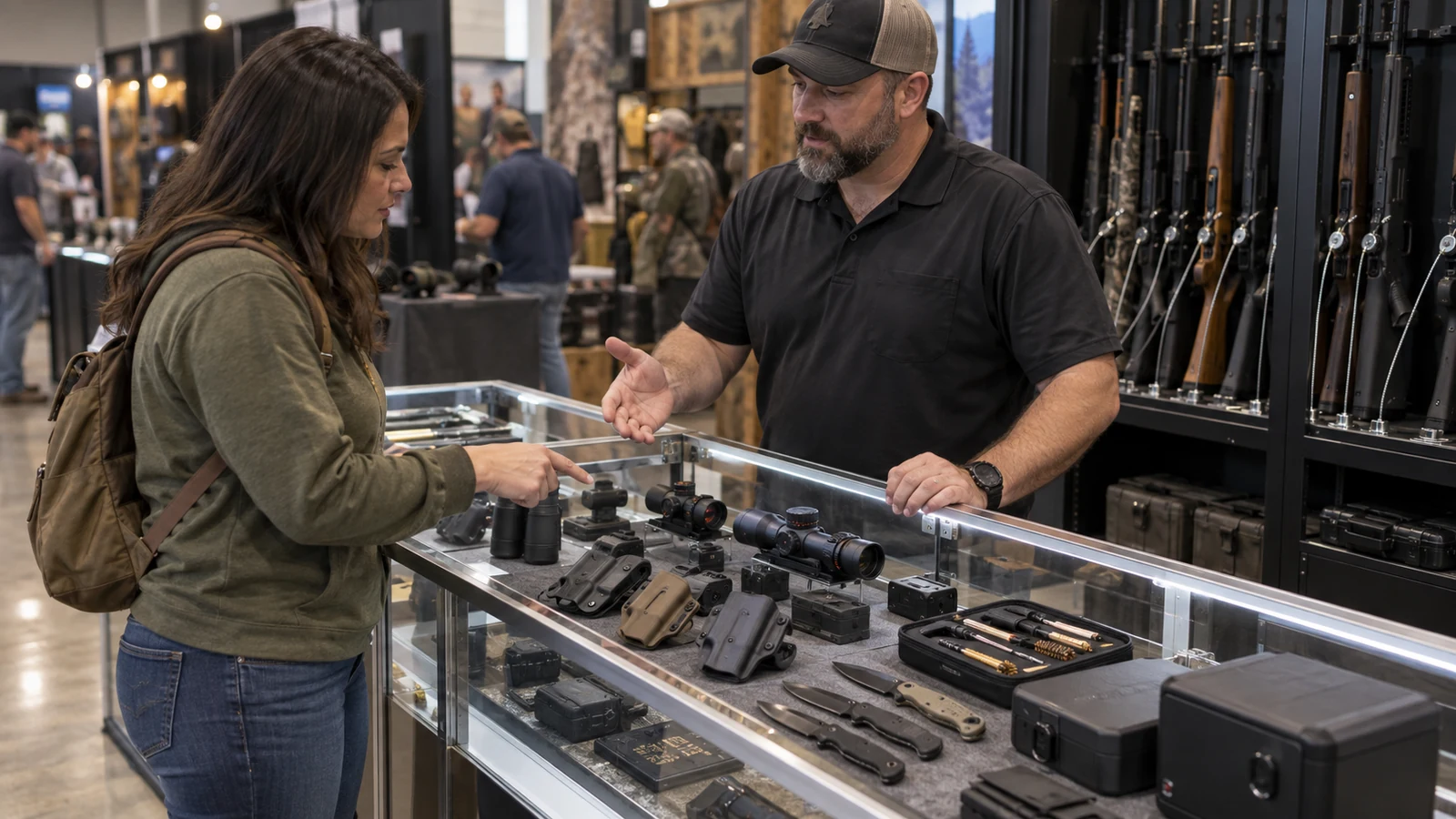
A knife, optics, safe, holster, cleaning, shooting, or hunting accessory company may find the table format straightforward to test. Sharing the product category and any planned demonstration early gives the organizer a clear basis for approving blades, batteries, sprays, tools, or customer handling.
A non-gun-related vendor can use the published $90 category as evidence that the series accepts some products beyond firearms. Eligibility still varies by product and city, so an early product list and photographs help align the approved category with signs and show inventory.
A company seeking distributor meetings or a national launch may gain more value from an event that publishes its buyer profile and meeting program. Gem Capitol’s consumer format is better suited to regional product conversations, retail testing, and learning how customers respond in person.
Use the First City as a Market Test
A single-city pilot usually gives a team clearer evidence before it expands to several stops. A logical first market combines a workable license position with customers and follow-up capacity in the surrounding territory.
For firearms activity, the state and the company’s license position form the first boundary. Ammunition, knives, transport, tax, and other products may add their own state or local requirements, so the decision should reflect the actual company, product, and transaction.
A useful first city also sits inside a territory the team can support after the show. Weekend sales create the initial signal; repeat orders, dealer follow-up, service questions, and returns show whether the market can support a longer program.
The first show becomes easier to evaluate when the team defines an observable result. That may be qualified consumer conversations for a new optic, on-site accessory sales, dealer introductions, permission-based email sign-ups, or questions that reveal a product problem. These observations are more useful for expansion decisions than promotional phrases such as “great venue” or “few tables left.”
A complete test budget brings together tables, staff time, travel, lodging, card processing, insurance, licenses, inventory handling, display materials, and follow-up. This shows the real cost of learning from one city, rather than judging the opportunity by the table fee alone.

How to Build a Branded Display for a Table-Led Show
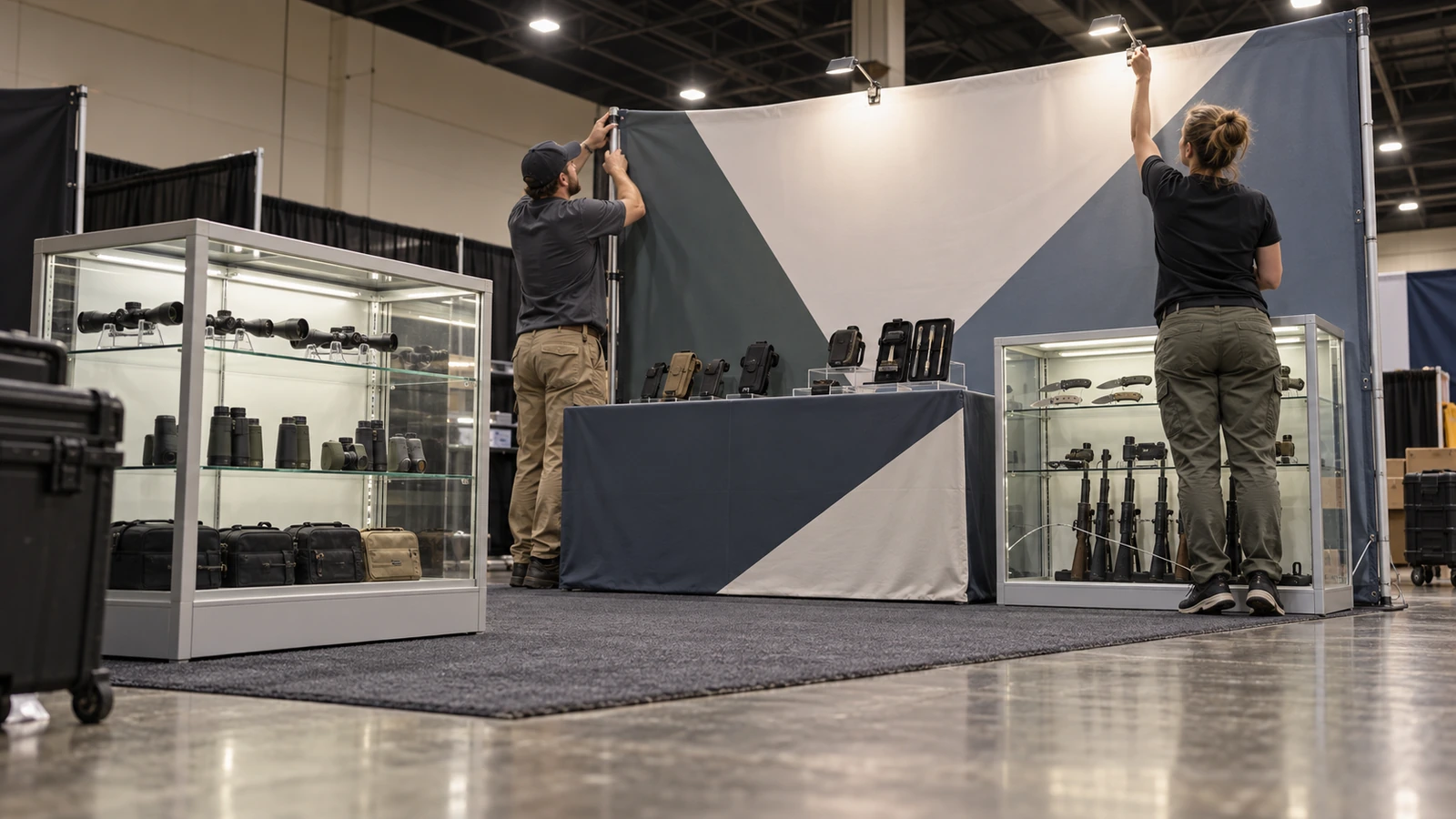
Gem Capitol’s published vendor model is centered on tables. That still leaves room for professional exhibit design; it changes the scale and priorities. An effective setup may combine a fitted table cover, a portable branded backwall where permitted, clear product and price graphics, secure product presentation, and an open area for customer conversations.
Venue rules shape how far that system can expand. The allocated footprint, table size, height limits, aisle setbacks, power access, fire rules, sign restrictions, approved fixings, overnight security, and installer access determine whether the best solution is a graphic table package, a portable backwall, or a fuller modular display.
A larger modular display becomes valuable when the approved footprint supports it, the same components can travel to several compatible stops, and the added structure improves product access, security, demonstrations, or conversation flow. This keeps the investment connected to how the team will actually use the display.
The December 5 schedule also shows why planning goes beyond the exhibit itself: Clayton and Richburg run at the same time. Covering both markets calls for separate staff, compliant inventory, payment equipment, and display assets; otherwise, the team can select the stronger first market.
Turn the Chosen City Into One Working Plan
Once the team selects a city, one short organizer email can bring the scattered details into a usable plan. The starting points are the confirmed date and load-in address, approved product category, current table rate, table size, location, and what the reservation includes.
The same message can connect those booking details to the display. Footprint, height, signage, lighting, electrical access, customer handling, overnight security, and installer access show what can be designed and how it will move through the venue.
Setup and move-out times, cancellation terms, insurance, licenses, tax documents, and venue forms complete the operating picture. If the website, flyer, venue document, and phone guidance differ, recording the organizer contact whose written answer controls gives the whole team one reference. With that confirmation in place, travel, freight, print, and fabrication can move forward against the same plan.
FAQ
Final Thoughts
Gem Capitol Shows makes the most sense as a sequence of regional market tests. The right first city is one where the date, venue, product category, legal position, written price, and floor rules support both the sales plan and the team behind it.
KingExhibits can provide display design and build services for companies exhibiting at Gem Capitol Shows. If you need table graphics, a portable backwall, or a modular booth, please contact us.