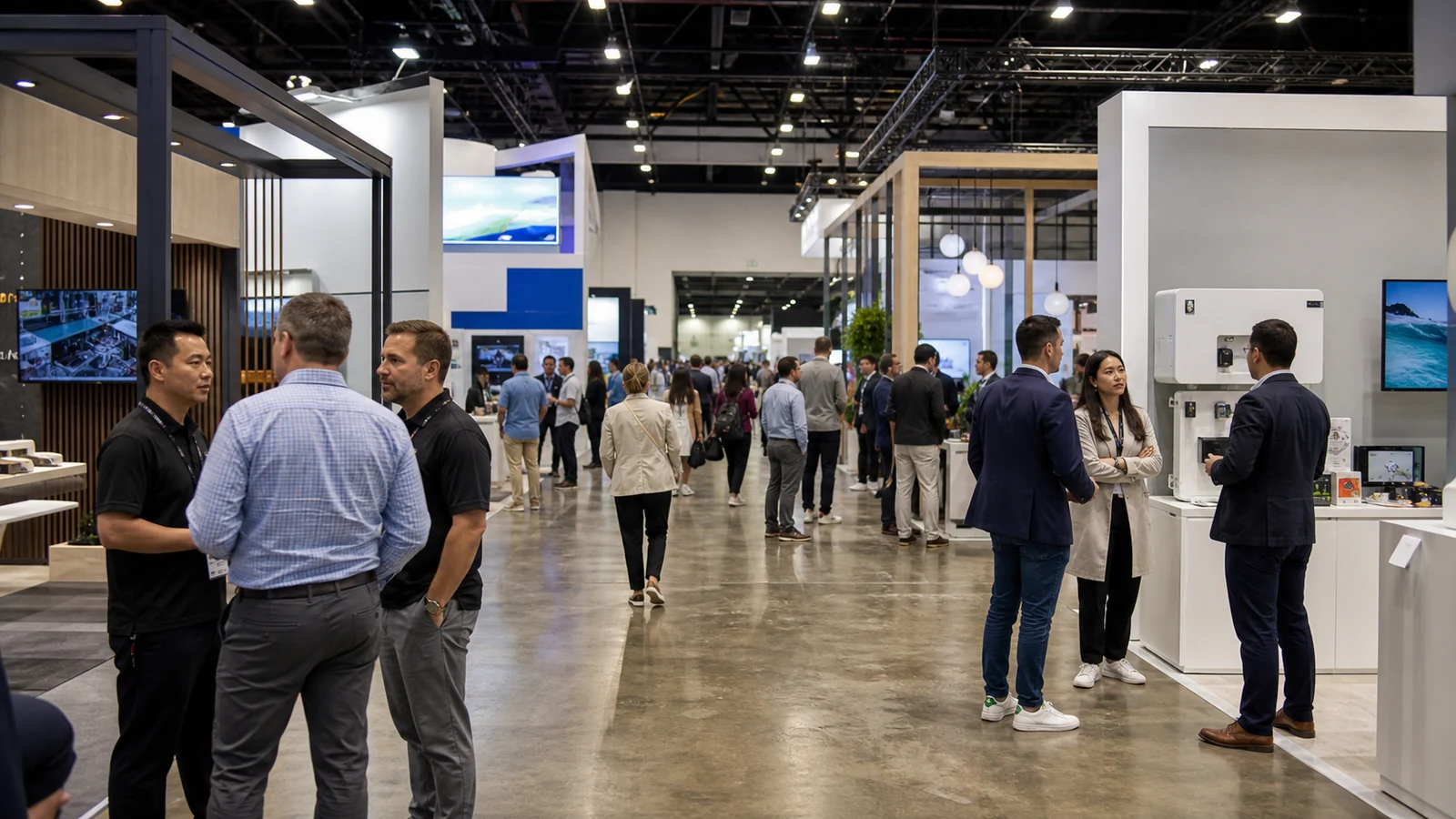
If you are deciding whether to exhibit at the Chicago RV Show, start with the kind of sale you need to make. The official event is the 58th Annual Chicago RV & Camping Show, scheduled for February 18–21, 2027, at the Donald E. Stephens Convention Center in Rosemont, Illinois. The organizer presents it as an RV show and super sale built around new model-year vehicles, floorplans, dealers, special show prices, and campground-related displays.
That positioning makes the show a plausible fit for an RV dealer, campground, resort, towing or storage service, or accessory brand that needs face-to-face conversations with consumers. It is a weaker fit if your offer depends on scheduled technical meetings with industrial buyers or on a quiet conference setting. This guide gives you the current event facts, the exhibitor questions that are still open, and a practical way to decide whether to request space before anyone approves a booth design.
What is confirmed for the 2027 Chicago RV Show?
| Item | Current official information | Why an exhibitor needs it |
|---|---|---|
| Official name | 58th Annual Chicago RV & Camping Show | Use the organizer’s name in contracts, artwork and staff instructions. |
| Dates | Thursday, February 18 through Sunday, February 21, 2027 | Sets the sales window, travel plan and staffing rotation. |
| Venue | Donald E. Stephens Convention Center, 5555 N. River Road, Rosemont, IL 60018 | Determines delivery address, access route and nearby lodging. |
| Published hours | Thu noon–8 p.m.; Fri 10 a.m.–8 p.m.; Sat 9 a.m.–8 p.m.; Sun 10 a.m.–5 p.m. | A four-day public schedule requires opening, handoff and close-down coverage. |
| Organizer positioning | “The Midwest’s largest RV show and super sale”; new 2027 models, show prices, brands, dealers, floorplans and campground-related booth displays | Signals a consumer comparison and purchase environment. |
| 2027 exhibitor count and booth price | Not posted on the public pages checked on September 9, 2026 | Request the current prospectus instead of budgeting from an old rate or an estimate. |
The official Chicago RV & Camping Show homepage is the controlling source for the 2027 date, venue and hours. Its promotional language explains the event’s commercial character, but it does not establish a guaranteed number of buyers, leads or sales. Treat those as outcomes to measure after your own participation, not as promises made by the event name.
The venue is in Rosemont, next to O’Hare, rather than at McCormick Place in downtown Chicago. The show’s directions page lists a convention-center parking garage, CTA Blue Line and Pace connections, and hotels within walking distance. Those details help with travel planning; they do not replace the exhibitor packet’s delivery entrance, marshaling, loading hours or vehicle restrictions.
Decide whether your offer belongs on this floor
The show’s product mix is broader than a row of RV manufacturers. The organizer’s dealer and booth-exhibitor sections show categories such as full-service RV dealers, park-model and golf-cart sales, Sprinter dealers, campgrounds and resorts, RV storage and service, roofing, batteries, trailer dollies, insurance, food and other consumer offers. These categories describe the event context; they are not a confirmed 2027 roster.
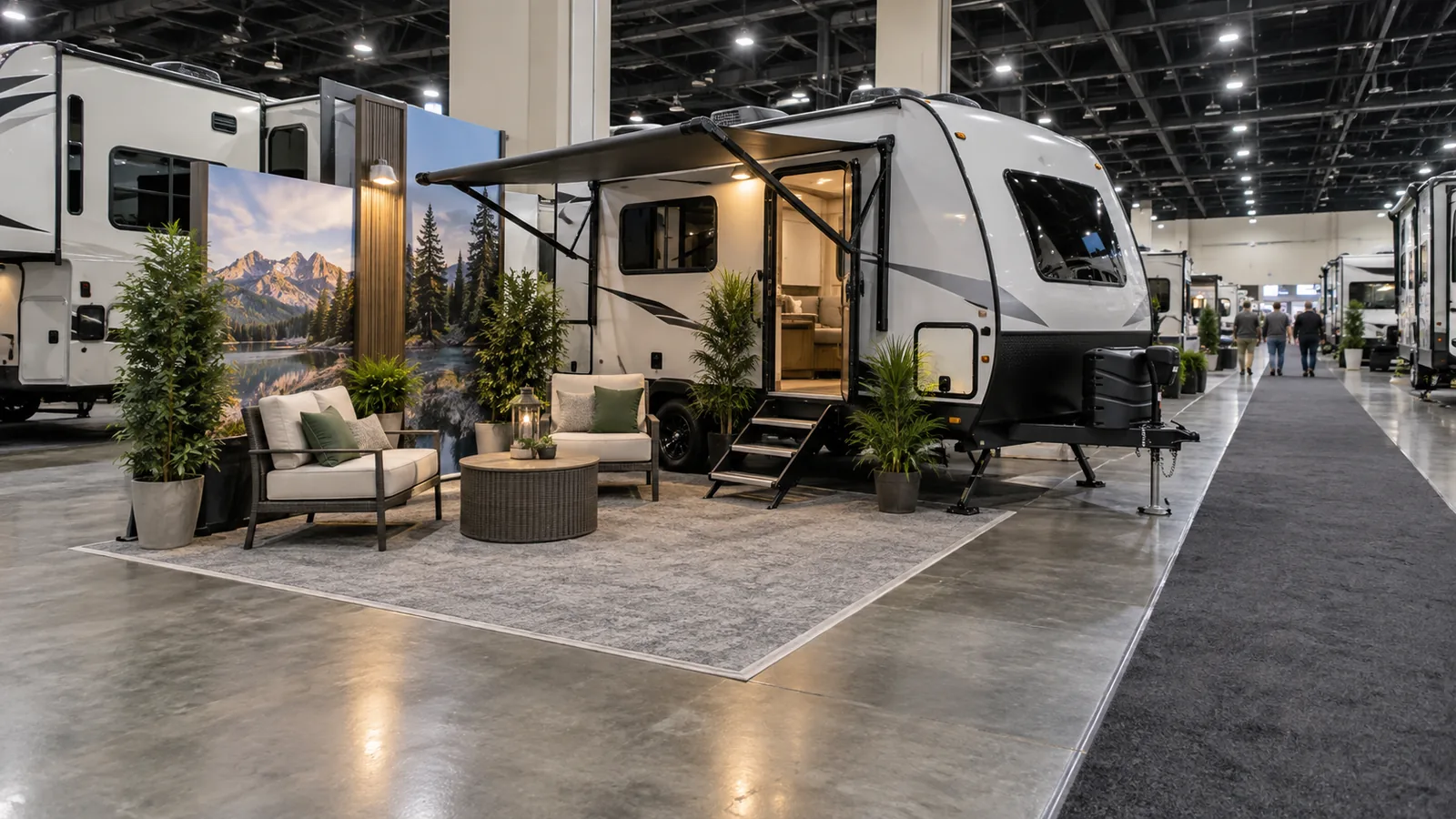
That range matters because a visitor may arrive to compare a vehicle and then look for the services that make ownership possible. A campground can turn a location conversation into a seasonal-site inquiry. A storage provider can show how indoor protection solves an off-season problem. An accessory brand can use a product demonstration to answer a question that a static sign cannot. Each offer still needs a clear next action: a quote request, a booked consultation, a dealer referral, a sample order or a scheduled follow-up.
A large display is not automatically the right display. If your product is an RV, trailer or other large unit, the unit’s length, turning path, open doors, stairs, awnings and visitor circulation will determine whether the space works. If your product is small, the challenge changes: you need a visible demonstration and a short explanation that can survive the noise and traffic around vehicle displays. Write down the one question a visitor should answer before leaving your space, then make the layout support that question.
Request the exhibitor information before approving a design
Public event pages provide the date and broad positioning, but they do not show the 2027 floor plan, booth packages, move-in windows, service contractor, electrical order form, insurance language or material-handling rates. Ask the show office for the current exhibitor prospectus and keep the received file with your project record.

Use this request list:
- assigned hall, booth or bulk-space dimensions, including height and sightline limits;
- vehicle and trailer rules, fuel or battery requirements, wheel chocks, drip protection and permitted demonstrations;
- move-in and move-out dates, target time slots, loading-door instructions and empty-crate handling;
- decorator, freight, forklift, electrical, internet, cleaning and waste contacts, with each service’s ordering deadline;
- required certificates of insurance, fire-safety documents, permits and signed agreements;
- what the exhibit fee includes: pipe-and-drape, carpet, badges, listing, power, furnishings or none of these;
- cancellation, weather, damage and responsibility terms; and
- the organizer’s 2027 dealer or booth-vendor application and payment schedule.
Do not treat category pages as proof that a particular brand will exhibit in 2027. The official dealer page and booth-exhibitor page are useful for understanding the event’s categories, but your sales team should verify the 2027 roster through the organizer.
Plan a display that supports comparison and conversation
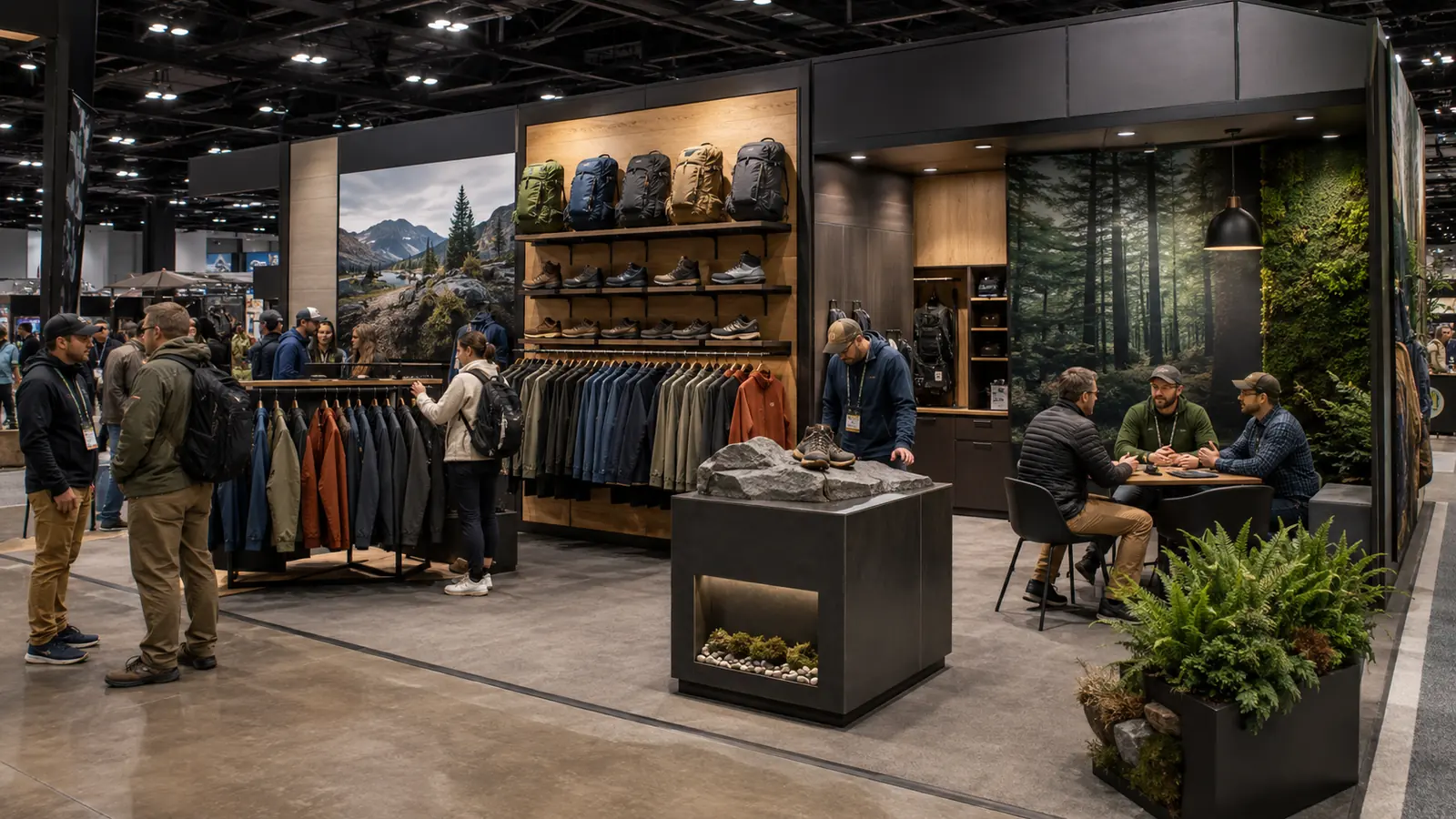
A consumer-sale show rewards fast orientation. Use a headline that states the product and the buyer problem in plain language. Group one vehicle, service or product family together so a visitor can compare options without asking where the explanation starts. Keep pricing, financing, eligibility, warranty or installation conditions legible and current; a vague “ask us” sign creates a queue without answering the first question.
For an RV or trailer, build the floor plan around the unit schedule rather than around a graphic wall. Mark the footprint, required clearance, open components and the route for visitors. Confirm whether the venue permits a vehicle to remain connected to a tow vehicle during public hours and whether fuel, propane, batteries or generators have special rules. Those are organizer and venue decisions. Your design team should show the assumptions on the drawing, not quietly fill gaps from another event.
For a campground, resort or service business, the useful exhibit may be a map, booking conversation, model-site comparison or short consultation area rather than a large structure. Give staff a way to capture dates, location preferences, vehicle type, budget range and follow-up permission. For an accessory or technology supplier, a working demo should have a safe power plan, a reset procedure and a visible explanation of what the visitor will learn in two minutes.
Connect the four public days to an operating plan
The published hours create four different staffing moments. Thursday opens at noon, giving you a shorter first shift but a full evening. Friday and Saturday run until 8 p.m.; Saturday also opens at 9 a.m. Sunday closes at 5 p.m., so lead capture and packing decisions must happen before the hall is empty. Build handoffs around those changes instead of assigning one person to every hour.
| Moment | What your team should control |
|---|---|
| Before opening | Working displays, clean graphics, price or specification sheets, charged devices, lead form and a named opener. |
| During busy periods | One person greeting, one person demonstrating or discussing fit, and a reliable way to record the promised next action. |
| Shift change | Open questions, booked follow-ups, stock or sample count, incident notes and who owns each conversation. |
| Sunday close | Final lead export, customer commitments, product count, damage photos, dismantling authorization and carrier handoff. |
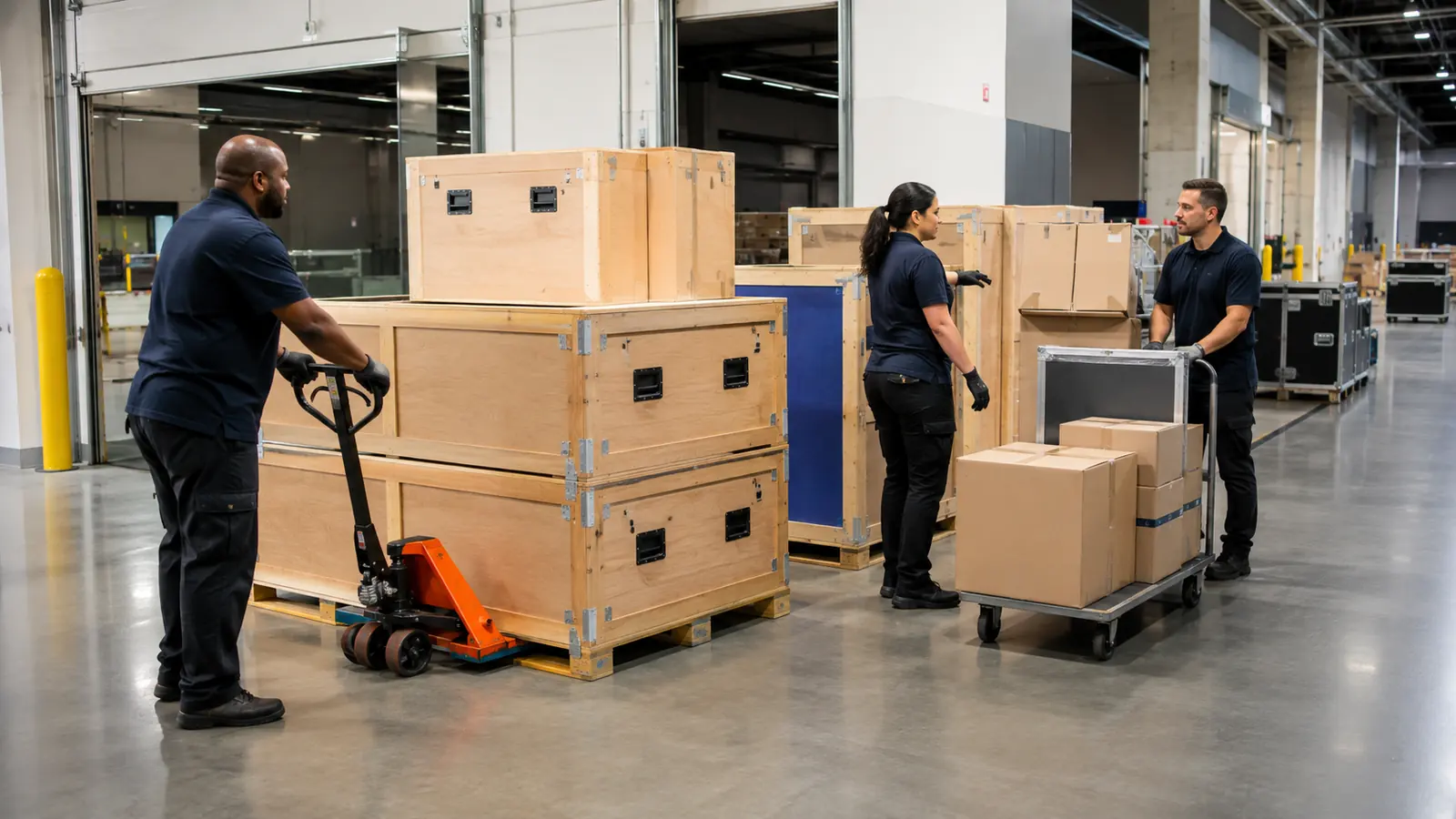
If you are shipping a vehicle or large display from outside Illinois, do not set a freight date from the public show hours. The carrier needs the official target window, dock rules and receiving address. A venue address is not the same as an advance warehouse address, and a public opening time is not a delivery appointment.
Make the go, pause or clarify decision
Choose go when your offer serves the consumer RV and camping decision, you can explain the next action in one conversation, and the organizer confirms space, access and services that support your display. Choose pause when your sales model needs private technical meetings, a professional-buyer program or a different audience than the public show appears to provide. Choose clarify when the fit looks promising but a missing fact could change cost or feasibility—such as a vehicle clearance, electrical load, demonstration rule, insurance limit, booth price or move-in slot.
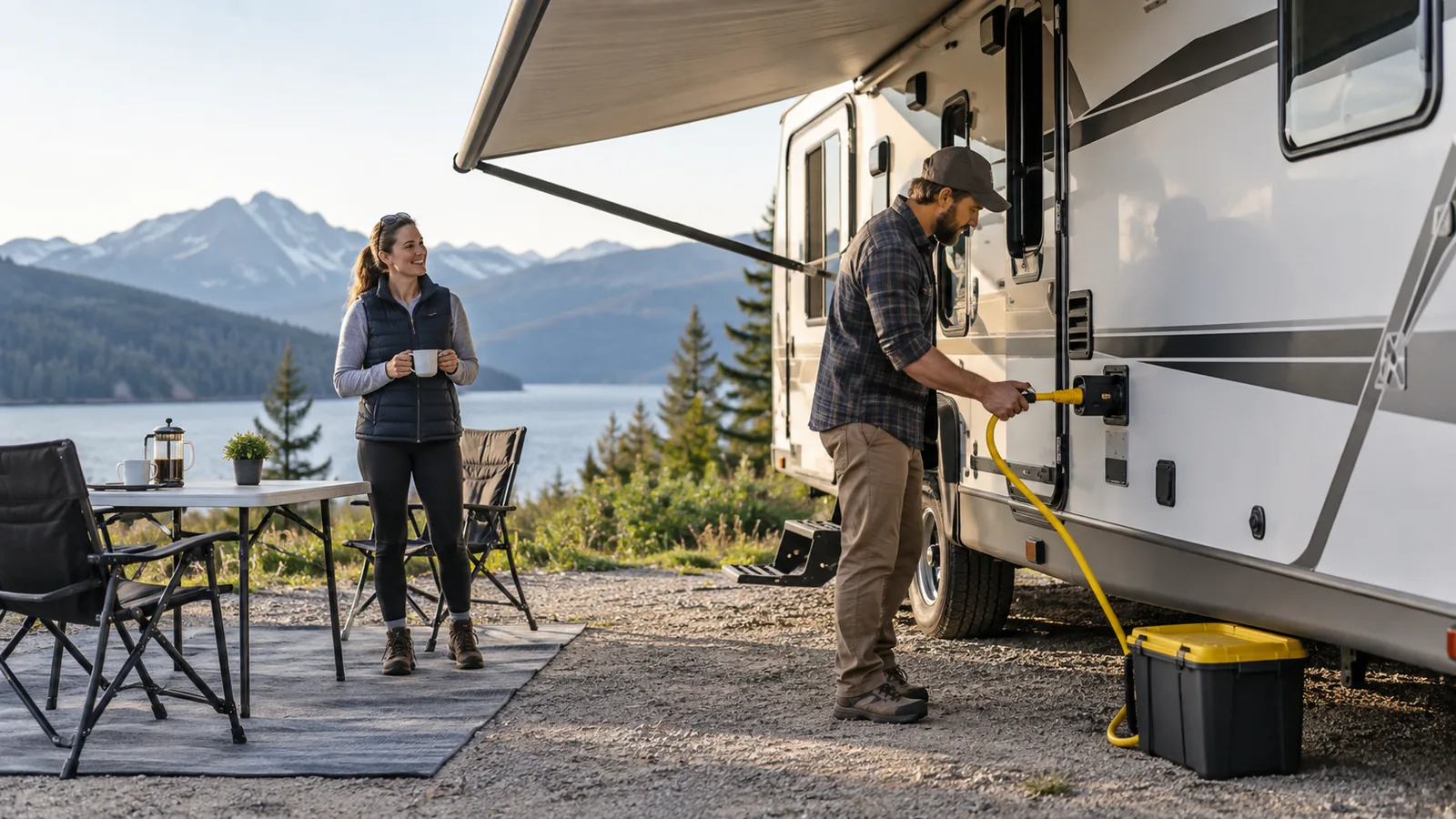
Keep those three outcomes visible in the project record. A “clarify” decision is productive when it names the owner and question: the show office confirms the floor plan; the venue or service contractor confirms power; your insurer reviews coverage; your carrier confirms the route and appointment. Design and production can start after the conditions that affect them are written down.
Chicago RV Show FAQ
What should you include when asking the show office about a booth?
Send your product category, the footprint or vehicle dimensions, preferred demonstration, estimated power load, staffing plan, and the visitor action you want to support. Ask the office to reply with accepted categories, available space, current fees, move-in rules, insurance requirements, and the correct service contacts. A complete first message reduces the back-and-forth that can delay a design decision.
Are propane, batteries, or generators allowed inside the exhibit hall?
The public pages do not establish a 2027 rule for propane, batteries, generators, or fuel. Describe the exact equipment and whether it will be live, disconnected, or used only as a display, then request written approval from the organizer and venue. Keep that approval with the booth drawings and safety plan.
How can a small accessory brand stand out beside full-size RVs?
What information should staff capture from a campground or storage inquiry?
Record the visitor's travel dates or storage season, RV type and approximate length, preferred location, budget range, and permission for follow-up. Ask one qualifying question about access or amenities that affects availability. These fields let the team respond with a relevant option instead of sending a generic brochure.
How do you know whether the show is worth a four-day staffing commitment?
Set a target for completed conversations and booked next steps by day, then compare that target with your staff capacity and follow-up time. Before the show, ask the organizer for the current audience profile and public-hour schedule; after the show, separate qualified actions from brochure-only contacts. Continue only if the quality and cost of those actions fit your sales process.
You can use the first morning to test whether your opening question attracts owners, dealers, or casual visitors. You should note which product proof earns a second question and which explanation loses attention. If you change the display, you can compare the next block of conversations with the first one. Your team can then decide whether the issue is message, placement, or audience. You can protect the budget by recording the cost of each booked next step. You should leave the show with a list that another salesperson can understand. That record helps you decide what to repeat at the next event.
Final Thoughts
The Chicago RV Show is a 2027 consumer-sales opportunity when your offer helps people choose, equip, service or use an RV or camping lifestyle. Its official date, Rosemont venue and public hours are available now; the commercial terms that control a real exhibit—space, access, services, insurance and move-in—still need confirmation. Make the go, pause or clarify decision from those documents, then design around the product and conversation you can actually deliver.
If you are shortlisting this show, send KingExhibits the current exhibitor agreement or application, assigned or proposed space, product or vehicle dimensions, demonstration and power needs, and the sales action you want visitors to take. We can use those inputs to identify booth-planning questions and the facts that still require organizer or venue confirmation.