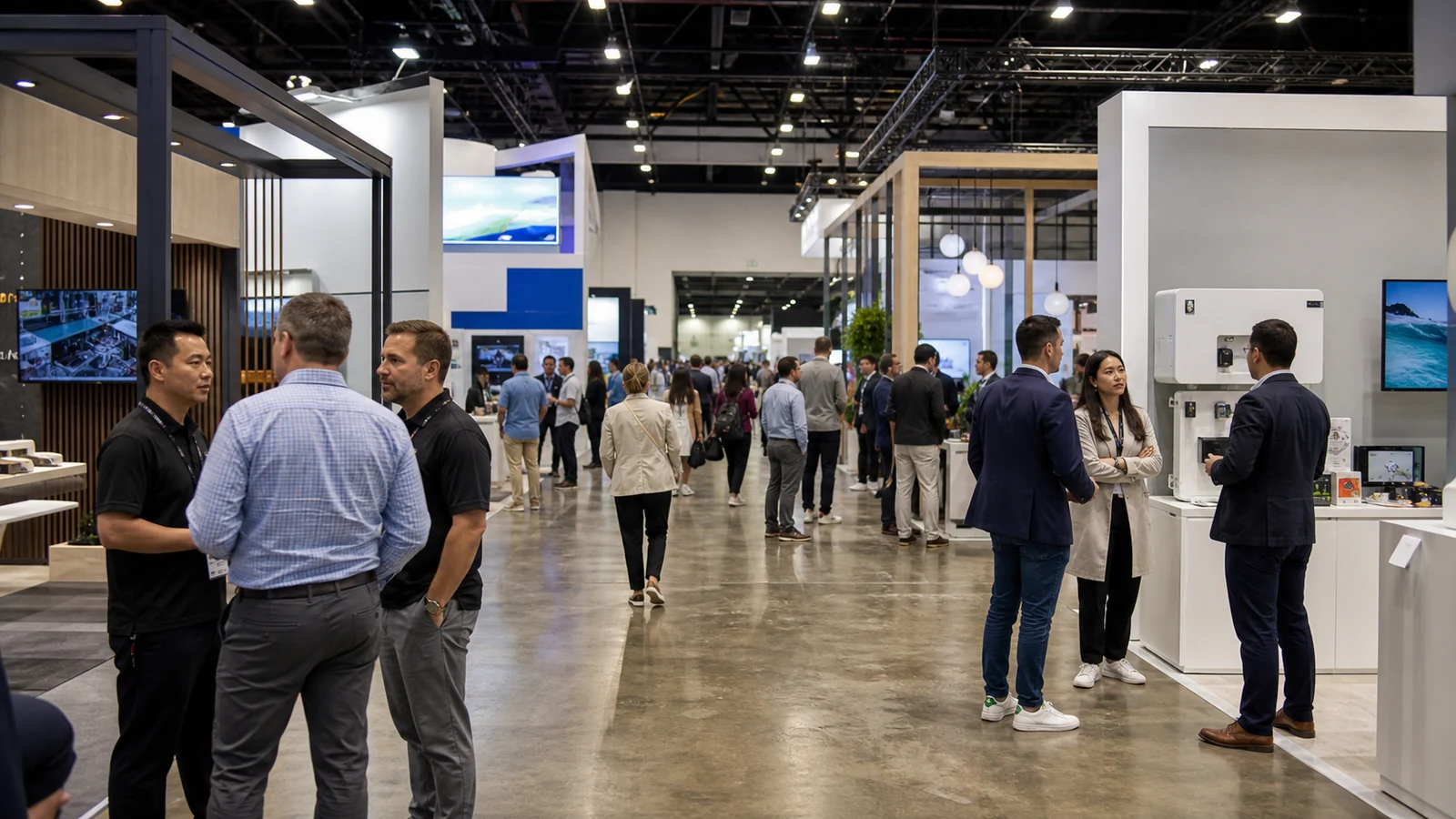
If you are deciding where to spend a homeowner-marketing budget, you need more than a busy-event promise. You need to know whether the JOCO Home + Remodeling Show can create the project conversations your company can actually serve. The 2026 show is scheduled for October 23–25 at Overland Park Convention Center in Overland Park, Kansas. It is a consumer home show, not a B2B buyer expo, so your decision should start with your homeowner offer and follow-up capacity.
What Is the JOCO Home + Remodeling Show?
Marketplace Events presents JOCO as a home-improvement marketplace where homeowners can compare home-related products and services, see displays, and speak with experts. For an exhibitor, that means your booth is competing for attention from people who may have a room, repair, replacement, or outdoor project in mind. It does not mean every visitor is a qualified buyer, nor does it create distributor, architect, or procurement meetings by default.
Use this format when you can help a homeowner take one clear next step: request an assessment, send project photos, compare materials, or book a follow-up conversation. If your sale depends on a professional channel rather than a homeowner decision, you should test another event before committing a booth budget.
What Exhibitor Categories Can You Find at the JOCO Home + Remodeling Show?
The official 2026 JOCO guide is not yet available, so do not treat a generic category list as a confirmed exhibitor roster. Marketplace Events’ current consumer-home-show categories provide the most reliable public category framework: Building & Remodeling; Kitchens & Bathrooms; Outdoor Living; Interior Design & Decorating; Furnishings & Accessories; Green Living; Shopping & Lifestyle; and Financial & Professional Services.
For you, the useful question is not whether a broad category exists, but whether your offer makes sense beside the homeowner projects that category represents. The organizer’s category framework includes windows and doors, flooring, roofing, building services, fixtures, appliances, cabinets, countertops, landscaping, patios, fencing, lighting, furniture, décor, and lending-related services. Confirm the actual 2026 category availability and any restrictions in writing before you apply.
Is the JOCO Home + Remodeling Show Right for Your Company?
You sell a residential project with a clear homeowner trigger
You are a stronger fit when a homeowner can quickly recognize the problem you solve and your staff can name a useful next action. This usually suits remodeling, windows, roofing, HVAC, flooring, kitchen and bath, outdoor living, and related residential products. Your booth should make the project visible from the aisle, then help the visitor move to an assessment, comparison, or appointment. A polished display alone is not the offer.
You need professional buyers, channel partners, or commercial specifications
You are a weaker fit if your primary sale depends on distributors, commercial procurement teams, architects specifying commercial work, or installers you must recruit. Homeowners may enjoy the display without being able to advance that sale. Before you book, ask whether you have a distinct homeowner-facing offer and whether your team can handle it without distracting from the core channel. If not, pass rather than treating consumer traffic as proof of fit.
You have a homeowner offer but cannot yet prove local follow-up capacity
You should pause if your company cannot state its service area, response owner, appointment process, and realistic next step. A homeowner show creates immediate expectations: people will ask whether you serve their address, when you can visit, and what happens next. Your staff need consistent answers and a way to record them. Confirm those operational inputs before you approve a design; otherwise, the booth may create demand your team cannot handle well.
What Kind of Homeowner Projects Does JOCO Serve?
Start with the homeowner problem, not your product catalog. The public category framework points to projects such as replacing windows, doors, roofing, flooring, fixtures, cabinets, countertops, or outdoor features; improving a kitchen, bath, patio, landscape, or fence; and selecting furnishings, lighting, décor, or finance support. These are project types reflected in Marketplace Events’ current consumer-home-show framework, not a confirmed 2026 JOCO exhibitor list.
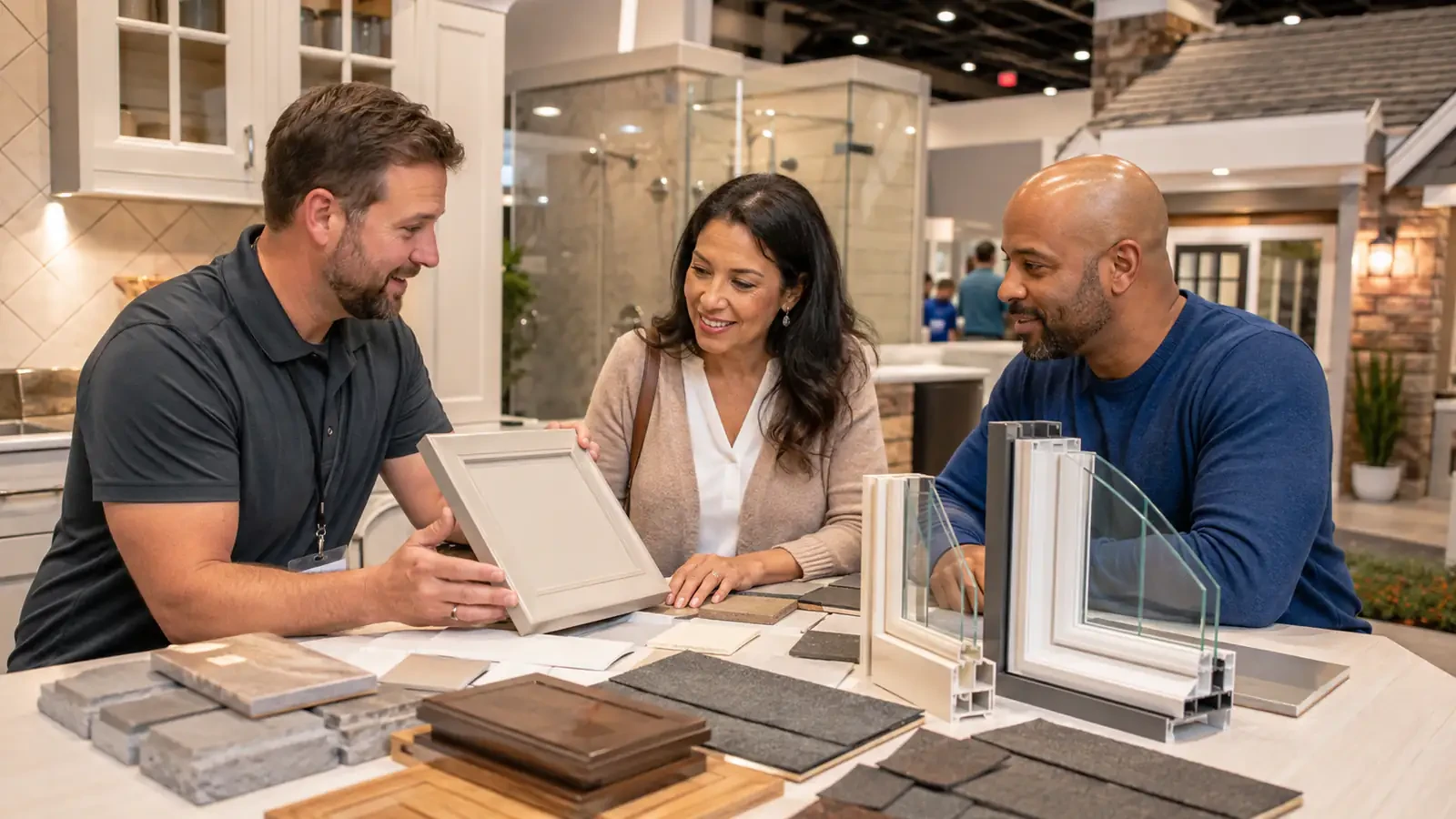
Your offer is easier to understand when it is tied to one project trigger: a failing roof, a dated kitchen, an inaccessible bath, a drafty window, a new patio plan, or a need to compare materials. Write that trigger on your briefing sheet. Then ask whether a visitor can see the outcome, understand the geographic service boundary, and take a next step without asking your staff to explain the entire company. If the answer is no, the show may expose a positioning problem before it exposes a lead-generation problem.
How Does JOCO Compare with Other Kansas City Home Shows?
Do not select a show by name recognition or a generic claim of local traffic. Compare only confirmed event information and score each candidate against the same five conditions: your service territory, timing in the homeowner project cycle, fit with your project trigger, likelihood that a homeowner can take your next step, and your team’s ability to follow up locally. A competing event may be the better choice when its confirmed date, venue, or audience geography fits your sales coverage more closely.

| Decision test | Prioritize JOCO when | Prioritize another confirmed home show when |
|---|---|---|
| Territory | Johnson County and the Overland Park area are areas you can serve | Your usable service area is better aligned with the other show’s confirmed location |
| Timing | An October conversation can convert within your normal sales and installation window | Another show better matches your seasonal selling or installation cycle |
| Offer | You can lead with one residential project action | Your offer is better explained through a different homeowner project context |
| Operations | You can staff the event and respond after it | The other date gives you stronger local staffing and follow-up capacity |
This is a decision framework, not a claim that JOCO is categorically better or worse than another Kansas City event. The public 2026 guide and exhibitor roster are not yet available, so you cannot credibly rank shows by actual JOCO competitor count, traffic quality, or category mix today.
What Does Current Public Information Confirm—and Leave Open?
The current public record confirms the planned 2026 dates, the Overland Park Convention Center venue, and the show’s consumer-home-show positioning. It also confirms that the detailed 2026 show guide is expected closer to the event. That is enough to decide whether to investigate the show; it is not enough to release a booth build or promise a return.

Keep an explicit “confirmed / not yet confirmed” decision sheet. Confirmed information can support your first fit decision. Unconfirmed items—including the detailed guide, final exhibitor roster, actual category availability, booth allocation, rules, deadlines, and the final daily schedule—must remain open gates. Current official venue and ticket pages also show conflicting Friday/Saturday hours. Use the organizer’s written assignment and instructions for execution, and do not turn public-page ambiguity into a planning assumption.
How Much Competitive Overlap Can Your Offer Handle?
Competition is not automatically a reason to avoid a consumer home show. It becomes a problem when a homeowner sees several similar choices and your booth gives them no reason to start a conversation with you. Because the 2026 JOCO roster is not public, do not estimate competitor numbers. Instead, test whether your offer can remain distinct if direct substitutes appear beside you.
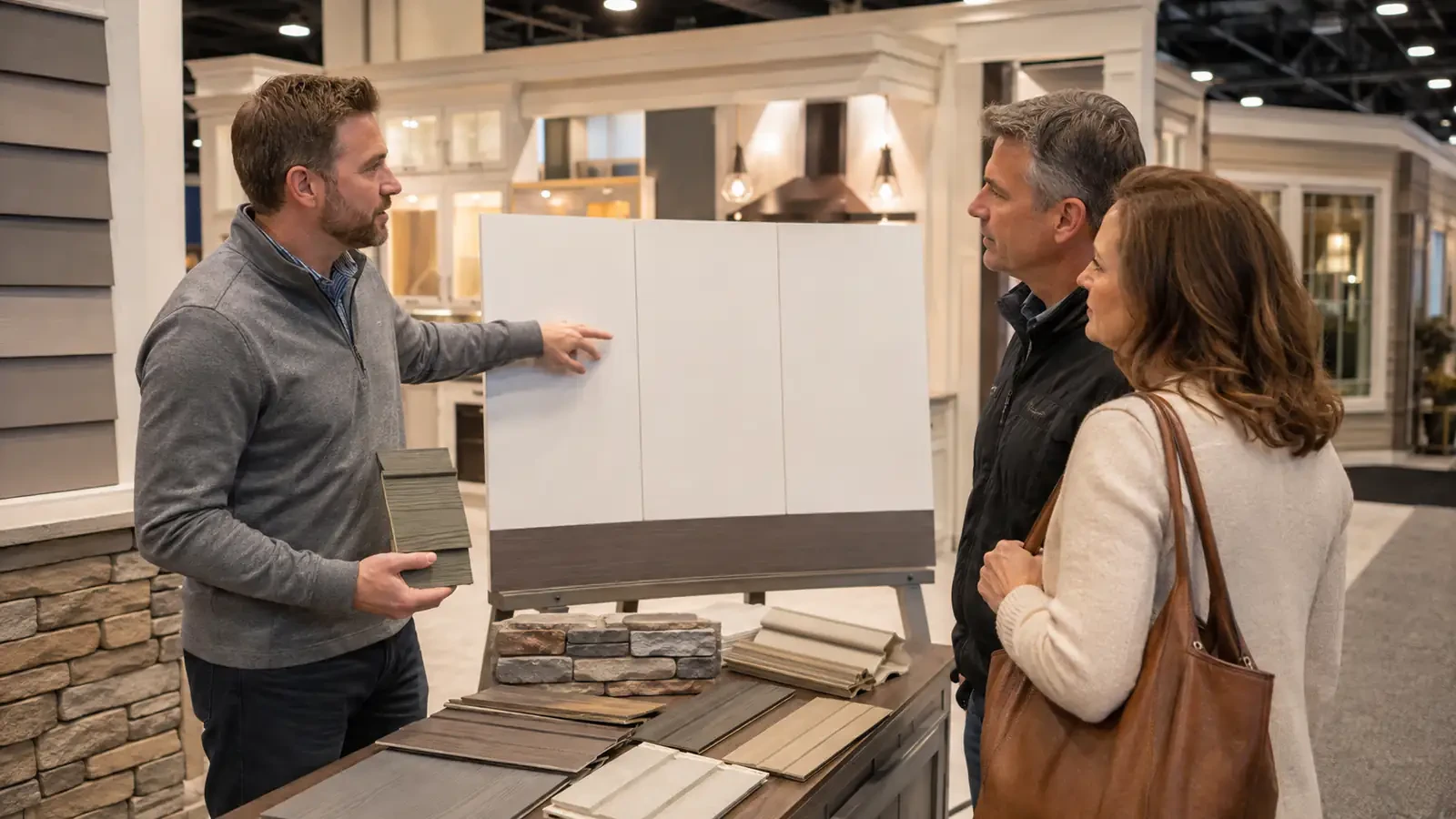
Your team should be able to state the project problem you solve, the proof you can show, the local condition that makes your approach relevant, and one next action a visitor can accept. Bring comparison evidence that is useful rather than theatrical: material samples, before-and-after project logic, a simple scope explanation, or a consultation process. If your only distinction is “better quality,” you have not yet built a defensible show message. Improve the offer before you spend on a larger display.
Which Show Should Your Company Prioritize First?
Prioritize JOCO first when all four conditions are true: you serve the relevant homeowner geography; the October timing fits your sales and installation cycle; your offer leads to one clear residential-project action; and a local owner can respond to leads promptly. Those conditions turn a consumer show into a measurable local marketing test.

Prioritize a different confirmed home show when its documented location or timing fits your service coverage and customer decision window better. Pass on consumer home shows altogether when your purchase path requires B2B buyers, channel recruitment, commercial specifications, or follow-up capacity you do not have. This is the decision hierarchy: customer fit first, local execution second, event logistics third, and booth design last. A visually strong booth cannot correct the first three failures.
How Should You Build a Budget Decision?
Do not build a budget from one advertised space figure or assume every exhibitor has the same cost. Ask the organizer for a written quote and then compare the full commitment: space and applicable fees; exhibit design, fabrication or rental; graphics; flooring and furnishings; utilities and internet; material handling or shipping; installation and dismantle labor; insurance; travel and lodging; staffing; lead capture; and post-show follow-up.
Use two triggers. First, your documented qualified-conversation target must be realistic for the project value and margin you sell. Second, the budget must still work after you include the costs that are outside the space quote. Compare the show with another channel by using the same definition of a qualified conversation, the same follow-up window, and the same total-cost view. Do not convert organizer marketing, a crowd estimate, or a badge scan into a return claim.
What Should You Confirm Before You Exhibit?
Before you release design, freight, labor, or travel, obtain current written confirmation of your footprint, open sides, floorplan, booth rules, product restrictions, utilities, insurance, payment and cancellation terms, setup assignment, and deadlines. Your assignment and organizer instructions—not a general listing—must control execution.
Prepare your team for one conversation path. Decide who greets, who handles technical questions, who records the project, and who owns follow-up. Your short record should capture the project, service area, timing, agreed next action, and owner. That makes your post-show decision evidence-based: you can see whether the show produced the conversations your company needs.
Event facts and category boundaries were checked against current organizer, venue, ticketing, and Marketplace Events category pages on September 8, 2026. Recheck official documents before booking or exhibiting.
FAQ
Can a building-product company exhibit if it sells through dealers?
Yes, if you can give homeowners a useful, honest next step without implying you sell or install directly when you do not. Define how a homeowner will be referred, what information can be shared, and how the dealer handoff will be tracked.
Should we bring a full-size product display?
Bring it only when scale, operation, or a material transition answers a homeowner question that a smaller sample cannot. Otherwise, use the space for a clearer comparison and a conversation area.
Can two related brands share one booth?
Only if a visitor can immediately understand which brand solves which project problem and which team owns the next action. Shared space that mixes offers, sales paths, or service territories makes lead ownership unclear.
What should a post-show follow-up email include?
Refer to the visitor’s project, restate the next action agreed at the booth, and explain what information will make that action productive. A generic brochure email wastes the context your staff collected.
When should we decide not to return next year?
Pass when your records show that the event does not create the homeowner conversations your offer requires after you have tested a clear offer, staffing plan, and follow-up process. That is a channel decision, not a display-design failure.
Final Thoughts
JOCO is worth testing when you can connect a consumer home-show audience to a specific residential-project action and support it with disciplined follow-up. If you have a confirmed footprint, project action, product dimensions, and staffing plan, KingExhibits can use those inputs to begin an exhibit-planning conversation.