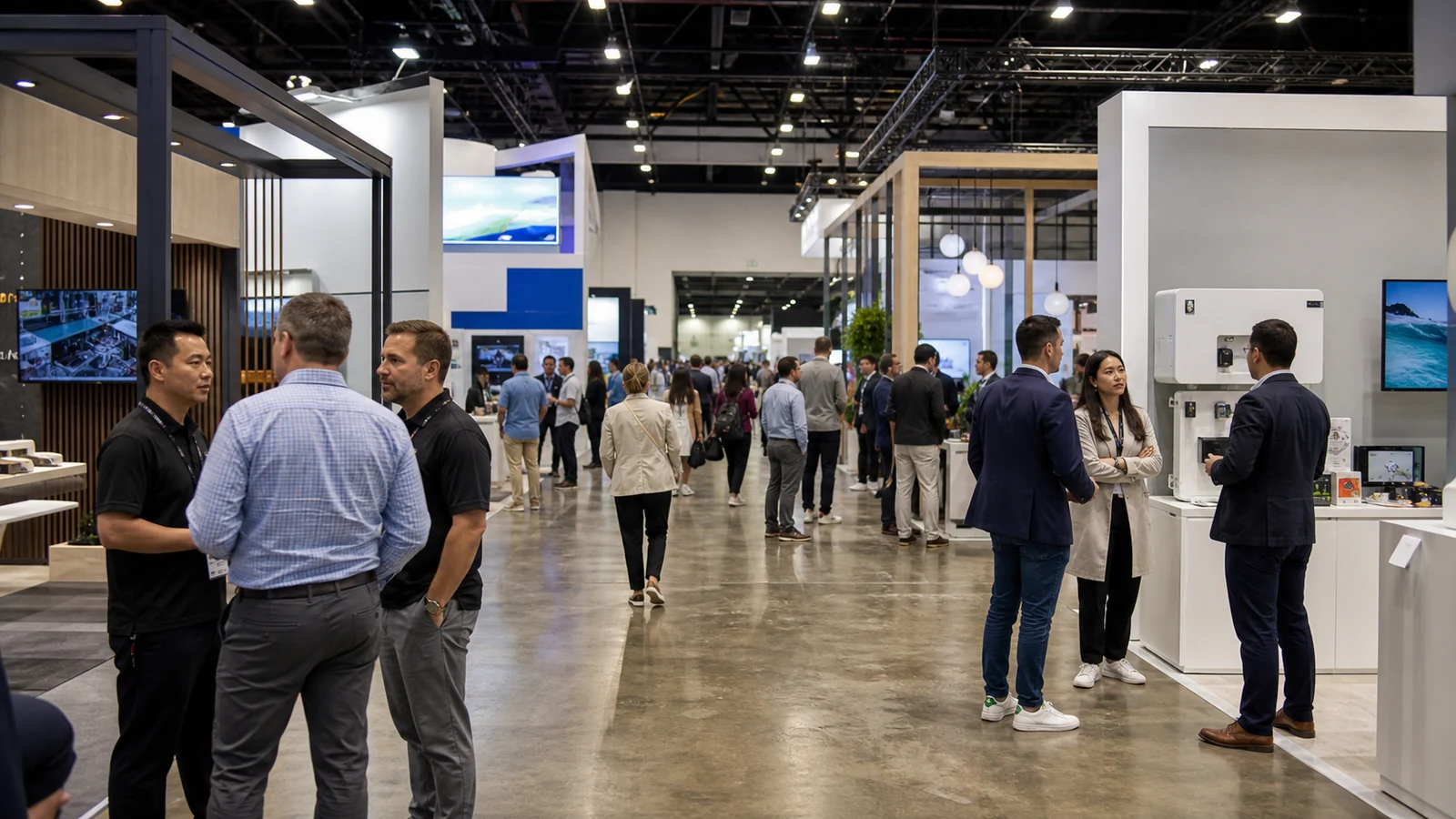
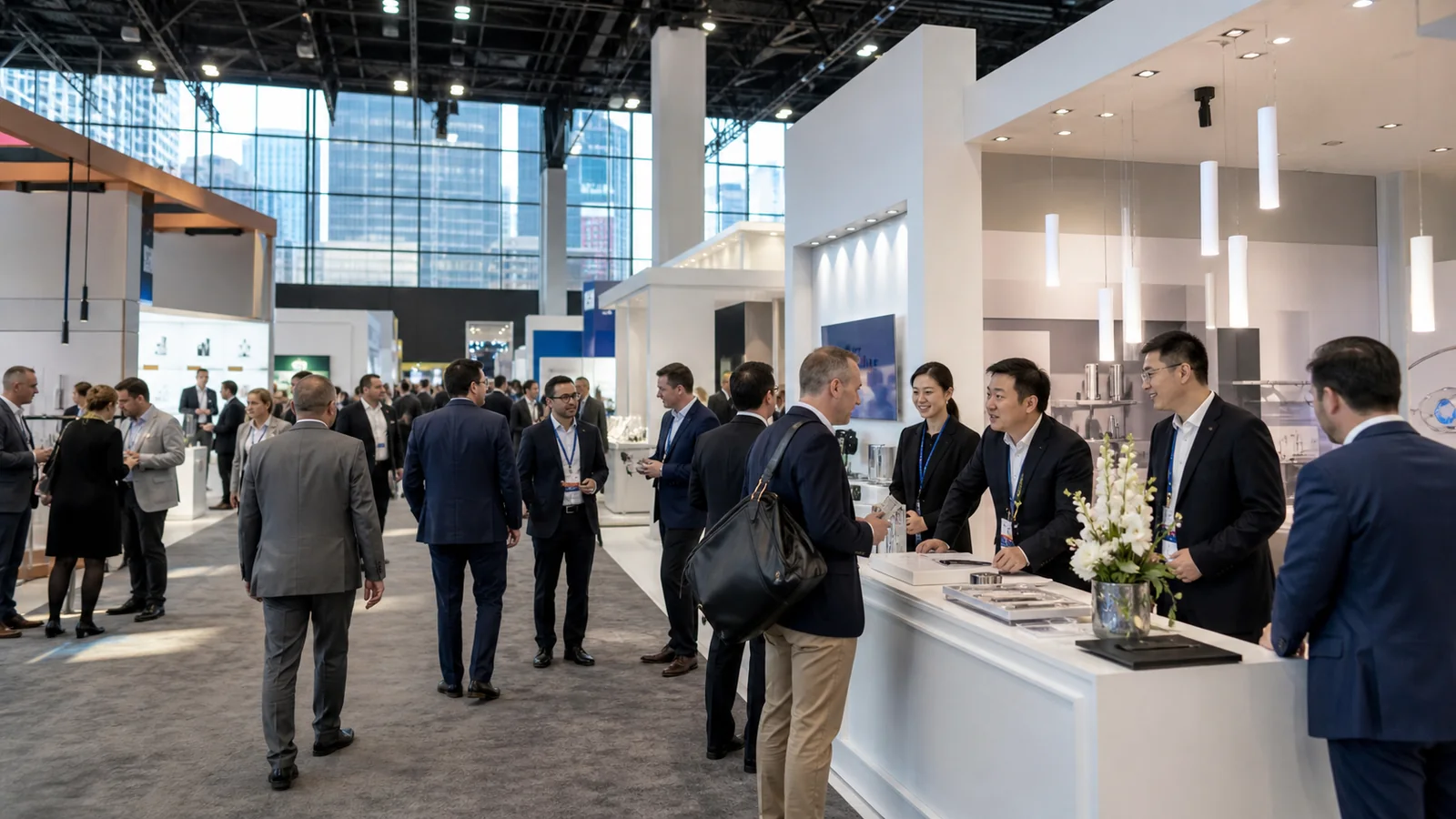
If you lead exhibit planning for a packaging, labeling, fulfillment, or packaging-technology supplier, your first risk is briefing or booking a booth from the wrong edition record. A search for a U.S. e-commerce packaging expo can still surface pages that place this event in Las Vegas. Those listings are not a safe basis for your 2026 decision. As of September 7, 2026, the organizer’s current U.S. event page and visitor information place it at the Jacob K. Javits Convention Center in New York on September 30 and October 1, 2026.
That correction changes your venue rules, booth format, approved contractors, delivery route, service orders, and crew plan. This guide helps you decide whether the show fits your offer and identify what you must settle before design or booking begins.
Start with the correct 2026 U.S. edition
The current U.S. event page uses the name E-commerce, Packaging & Labeling Expo and describes a New York show. Another page in the organizer’s network uses the British spelling “Labelling.” The spelling difference does not identify a separate U.S. event. The date, city, venue, and current booking record do.
| Item | Current 2026 information | Why it changes your plan |
|---|---|---|
| Event dates | September 30–October 1, 2026 | Sets the staff, demo, travel, and show-service schedule |
| Venue | Jacob K. Javits Convention Center, 655 W 34th Street, New York, NY 10001 | Makes the current Javits and show instructions controlling for access and utilities |
| Public show hours | September 30, 10:00 a.m.–5:00 p.m.; October 1, 10:00 a.m.–4:00 p.m. | Gives you 13 public show hours in which the exhibit must qualify and serve visitors |
| Exhibiting route | The official interest form lets you choose New York and this specific show | Starts a commercial inquiry; it does not reserve space or establish a price on its own |
| Sponsorship route | The organizer handles sponsorship as a separate inquiry | Sponsorship inventory and booth space should not be treated as the same purchase |
The organizer’s exhibitor interest form currently offers New York and this specific show, but the form is only the beginning of a paid commercial inquiry. Save the organizer’s written reply, the current floor plan, your booth assignment, and the commercial terms together. If any of them still says Las Vegas, ask the organizer to resolve the conflict before you approve travel, freight, graphics, or a booth drawing.
Understand the event as one part of a four-show marketplace
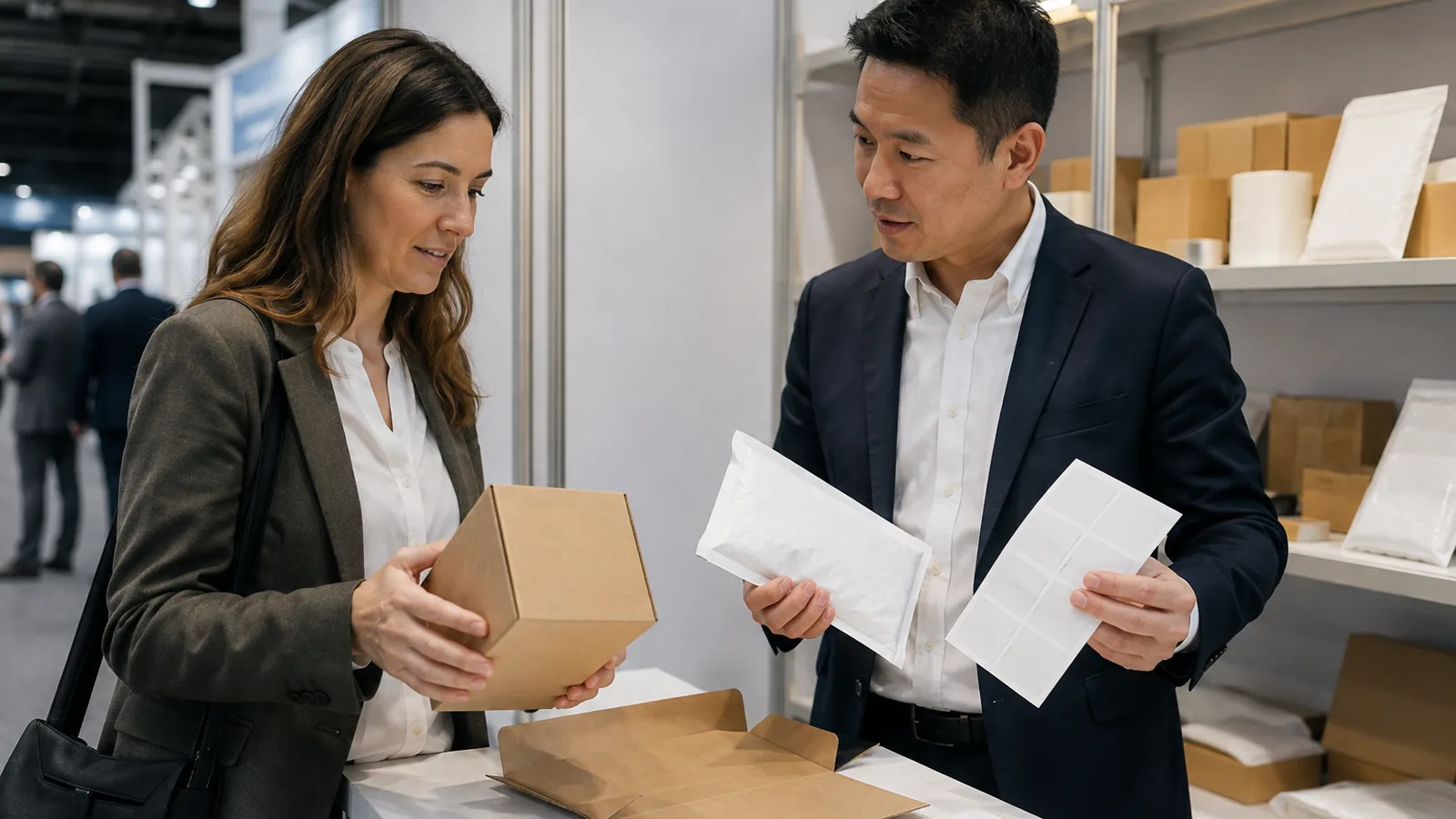
The E-commerce Packaging & Labeling Expo is focused on packaging, labeling, branding, fulfillment, and supply-chain solutions for online sellers, retailers, and e-commerce brands. It is not presented as a standalone hall that every visitor enters for the same reason. The current event page says a ticket also gives access to three co-located events:
- White & Private Label Expo;
- Smart Retail Tech Expo; and
- Retail Supply Chain & Logistics Expo.
That mix can be valuable, but it also creates a qualification problem. A private-label founder may be looking for finished-product manufacturing. A retail technology buyer may be comparing software. A logistics operator may care about throughput and carrier handoffs. A packaging buyer may be trying to reduce damage, material use, or label changes. They may all pass the same booth, yet only some have the problem your solution solves.
The organizer names roles such as COOs, packaging buyers, senior packaging innovation managers, product innovation directors, senior packaging technologists, and brand designers. It also promotes a 3,000-person retail and e-commerce audience. Use those statements to form interview hypotheses, not as a promise of 3,000 relevant prospects. Ask the organizer for the current registration profile or a report that separates the four shows if audience concentration will determine your investment.
Decide whether your offer has a strong reason to be there
A good fit is not simply “we sell packaging.” Your offer should solve a problem that an e-commerce or retail team can recognize, compare, and discuss at the booth.
| Your offer | Buyer problem that belongs at this event | Useful booth proof |
|---|---|---|
| Mailers, cartons, inserts, protective packaging | Damage, dimensional weight, packing time, presentation, or material use | Packed product, before-and-after pack, drop-test record, pack-out sequence, or cost model with stated assumptions |
| Labels, printers, software, inspection, or track-and-trace | Label changes, short runs, accuracy, compliance workflow, application speed, or data connection | Printed samples, live changeover, scan result, error detection, or a short workflow from file to applied label |
| Filling, sealing, coding, packing, or automation equipment | Labor, throughput, changeover, consistency, or space pressure | A controlled cycle, sample output, cycle record, change-part display, or video linked to the exact machine configuration |
| Fulfillment technology and services | Order routing, inventory visibility, packing decisions, returns, or delivery handoff | A defined order scenario, screen-to-package workflow, integration map, or measurable service boundary |
| Packaging design, testing, or sustainability support | Unclear specifications, excessive material, damage risk, or unsupported claims | A decision sample set, test method, material comparison, or documented reuse/recovery route |
Pause if the booth can only say “custom solutions,” “high quality,” or “sustainable packaging” without showing what changes for the buyer. Also pause if the people you need are mainly plant engineers, converters, or specialized print-production teams and the organizer cannot show that those roles are present in useful numbers. A smaller audience with the right operating problem is more valuable than broad co-located traffic.
Choose one buyer proof before you choose the footprint
The booth should help the right visitor verify one important claim. Select that proof before discussing towers, screens, lounges, or decorative packaging walls.
Let physical packaging be handled and compared
For mailers, cartons, inserts, closures, or protective systems, a useful display lets a visitor connect the package to a product, shipping condition, and commercial tradeoff. Arrange samples by the question they answer rather than by color or size alone. A damage-reduction story needs the original failure, the revised pack, and the test or field evidence behind the change. A right-sizing story needs the product, the packed dimensions, the material difference, and the assumptions used in the calculation.
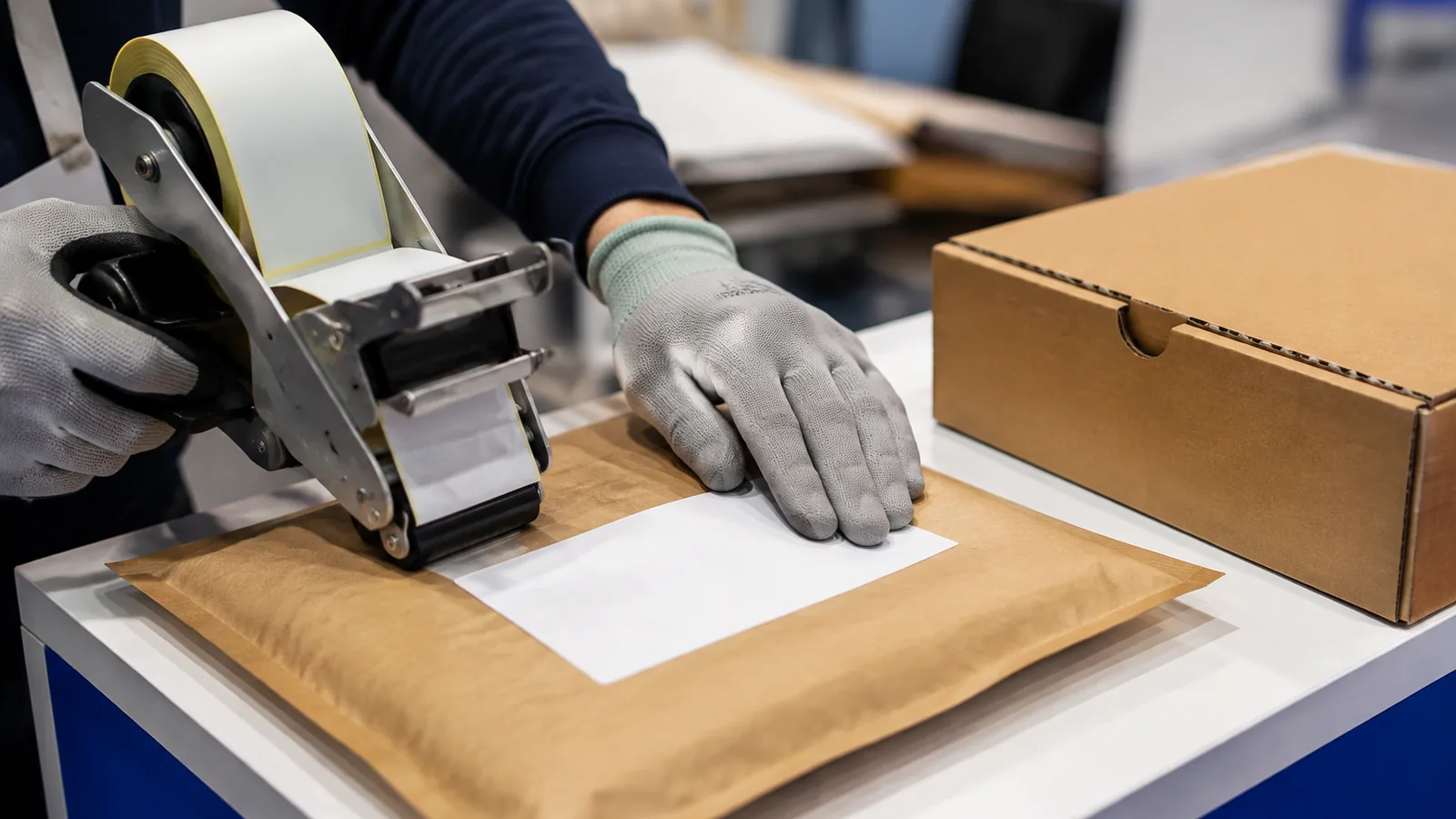
Do not let a large sample library become a wall of unexplained objects. Give staff a clear route: identify the visitor’s product and shipping problem, choose the relevant comparison, then record the next test, sample, or specification review.
Make a labeling demonstration short enough to repeat
A labeling or coding demo often fails because the team tries to recreate a production line in a small booth. The visitor does not need to watch every setup step. They need to see the point at which your solution changes speed, accuracy, data, or flexibility.
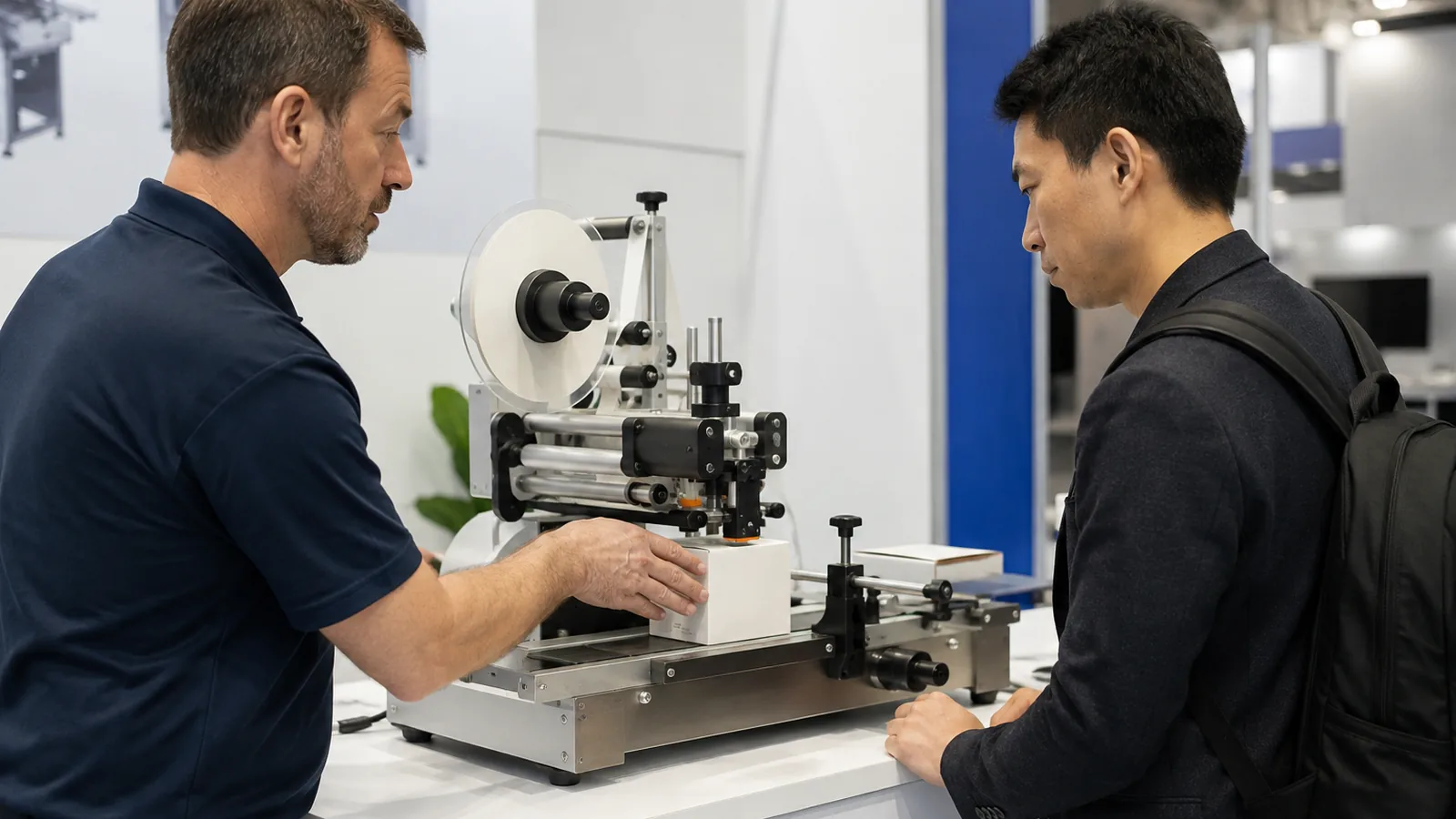
Test the full cycle with the actual media, printer, applicator, scanner, network condition, and operator who will be at the show. Record how long it takes, what must be reset, what consumables are used, and what happens if the internet drops. If the reliable proof is a label change, print result, scan, or inspection decision, build the presentation around that moment.
Show automation or fulfillment as a controlled workflow
Large equipment and software can attract very different visitors. Define one input and one output. For equipment, that might be an unformed carton entering and a sealed package leaving. For software, it might be an order profile producing a packaging or routing decision.
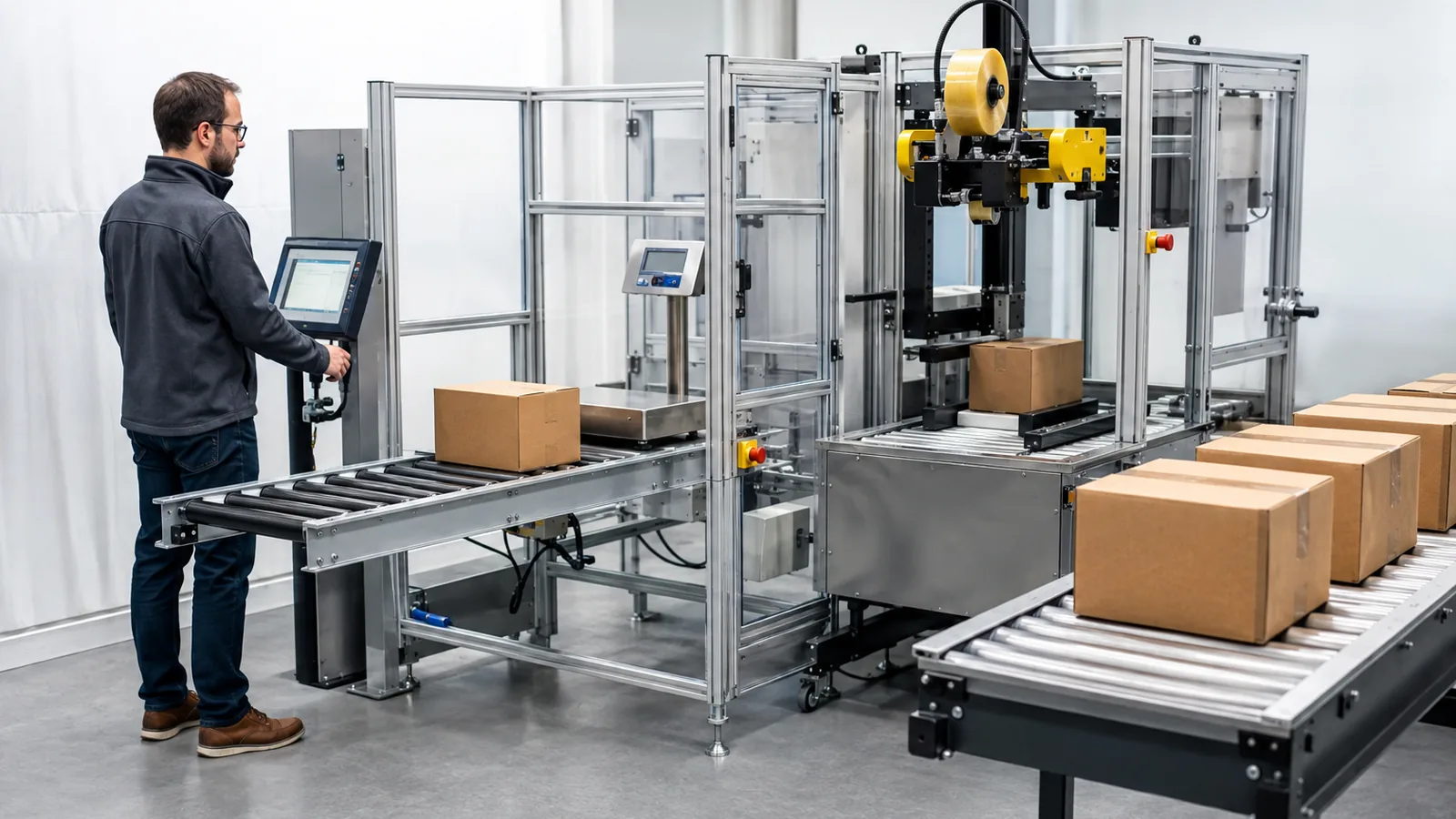
The physical plan follows from the workflow: operator space, safe viewing, product queue, finished-output collection, power, compressed air, water, internet, waste, sound, and reset access. If the real machine cannot run reliably at the show, use a smaller working module, physical outputs, and a specific recorded sequence. A polished loop video without an inspectable result will not carry a technical conversation by itself.
Match the proof to the assigned booth type
The current New York booth specifications describe two main formats: pipe-and-drape and space-only. Do not design them as if they come with the same structure or contractor freedom.
| Booth type | Current show condition | Design consequence |
|---|---|---|
| Pipe-and-drape | Pepper-gray carpet, ID sign, 8-foot back drape, and side drape depending on placement; this show is identified with white drape | Use freestanding displays and graphics that work with the assigned drape and open sides; verify what can attach to the supplied system |
| Space-only | No carpet or drape unless the booth backs onto another stand; flooring is mandatory | Include floor, structure, graphics, assembly method, and every service connection in the scope |
The page also says space-only booths must use an exhibitor-appointed contractor from the approved Javits list. A builder that is suitable in another city is not automatically authorized for this hall. Confirm the EAC path before you commit to a custom build or promise a crew.
For an inline pipe-and-drape booth, the current page limits displays above four feet within the front five feet and gives an eight-foot maximum height. Those limits directly affect sample shelving, equipment, monitor placement, and sight lines. Your assigned configuration and latest rule document still control, so mark the date and version on the drawing used for approval.
Separate organizer, venue, contractor, and exhibitor responsibilities
Many expensive errors begin when a booth proposal quietly assumes that another party will supply power, move freight, approve the structure, or store crates. The current New York supplier and deadline page divides those responsibilities more clearly.
| Party | Current role to verify | What your team should keep in writing |
|---|---|---|
| Show organizer / account manager | Exhibit agreement, show selection, booth assignment, floor plan, approvals, badges, show-specific questions | Signed commercial terms, assigned space, current rules, approval replies, deadlines |
| Javits Center | Electric, internet, air, water, venue access, and venue rules | Ordered capacities, service locations, connection dates, venue confirmations |
| GES | Official contractor; current page lists exclusive material handling, in-booth cleaning, overhead sign hanging, labor, and mechanized equipment rental | Freight route, handling estimate, empty-storage plan, labor orders, hanging or lift orders |
| Approved EAC | Space-only booth build under the current approved-contractor rule | EAC approval, drawings, crew access, build scope, handoff to official suppliers |
| Exhibitor | Product, graphics, samples, demo, staff, insurance, lead process, and final approvals | One owner for each item, packed quantities, test record, staffing plan, proof of insurance |
The supplier page currently requires general liability coverage of at least $1 million per occurrence and $2 million aggregate for the September 28–October 1 lease period, with named parties specified by the organizer. Treat that page as a checklist, then have your insurer confirm the certificate against the current contract. A booth drawing is not ready for release if the required services, certificate, or approved contractor are still unknown.
Build the booth plan around the real show-week clock
The current New York access schedule gives pipe-and-drape exhibitors a setup window from 11:00 a.m. to 4:00 p.m. on Tuesday, September 29. The page has a legacy “lv25” URL slug, but its visible content explicitly identifies New York 2026. Space-only EAC access is not published as one universal time; the page tells exhibitors to confirm it with their account manager. Exhibitors can enter at 8:00 a.m. on both show days, while public hours run from 10:00 a.m. to 5:00 p.m. on September 30 and from 10:00 a.m. to 4:00 p.m. on October 1.
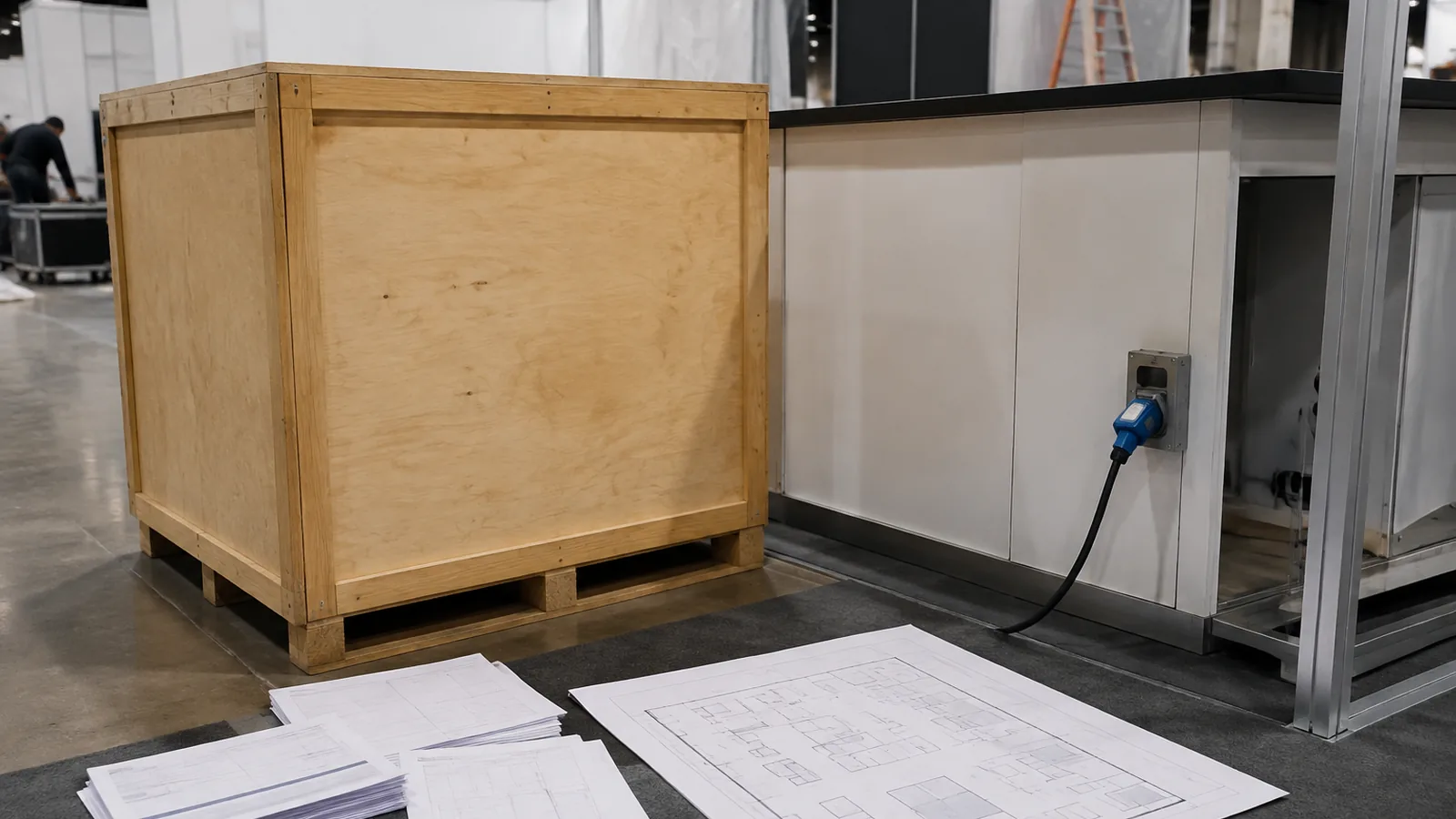
Move-out begins when the show closes on October 1. The listed window ends at 7:00 p.m. for pipe-and-drape exhibitors and 8:00 p.m. for space-only EACs. Those short windows affect how much equipment, product, and custom structure your team can safely reset, pack, and release.
Two logistics details deserve an early decision:
- GES handles empty-container storage, and the schedule warns that returned empties may take up to four hours after closing. Do not store access-critical samples or tools in a crate that you cannot reach during show hours.
- Hand carry is restricted to the Javits Inner Roadway during published periods. It is limited to exhibitor employees, appropriately sized vehicles, and items that one person can carry or move on an approved two-wheel baggage cart. Do not plan ordinary curb unloading or use hand carry as a substitute for commercial freight handling.
Write separate routes for commercial freight, employee-carried materials, high-value demo components, consumables, and return shipping. Then assign each route to a named person before anything leaves your facility.
Use a go-or-pause decision before releasing design
Proceed to detailed booth work when all of the following are true:
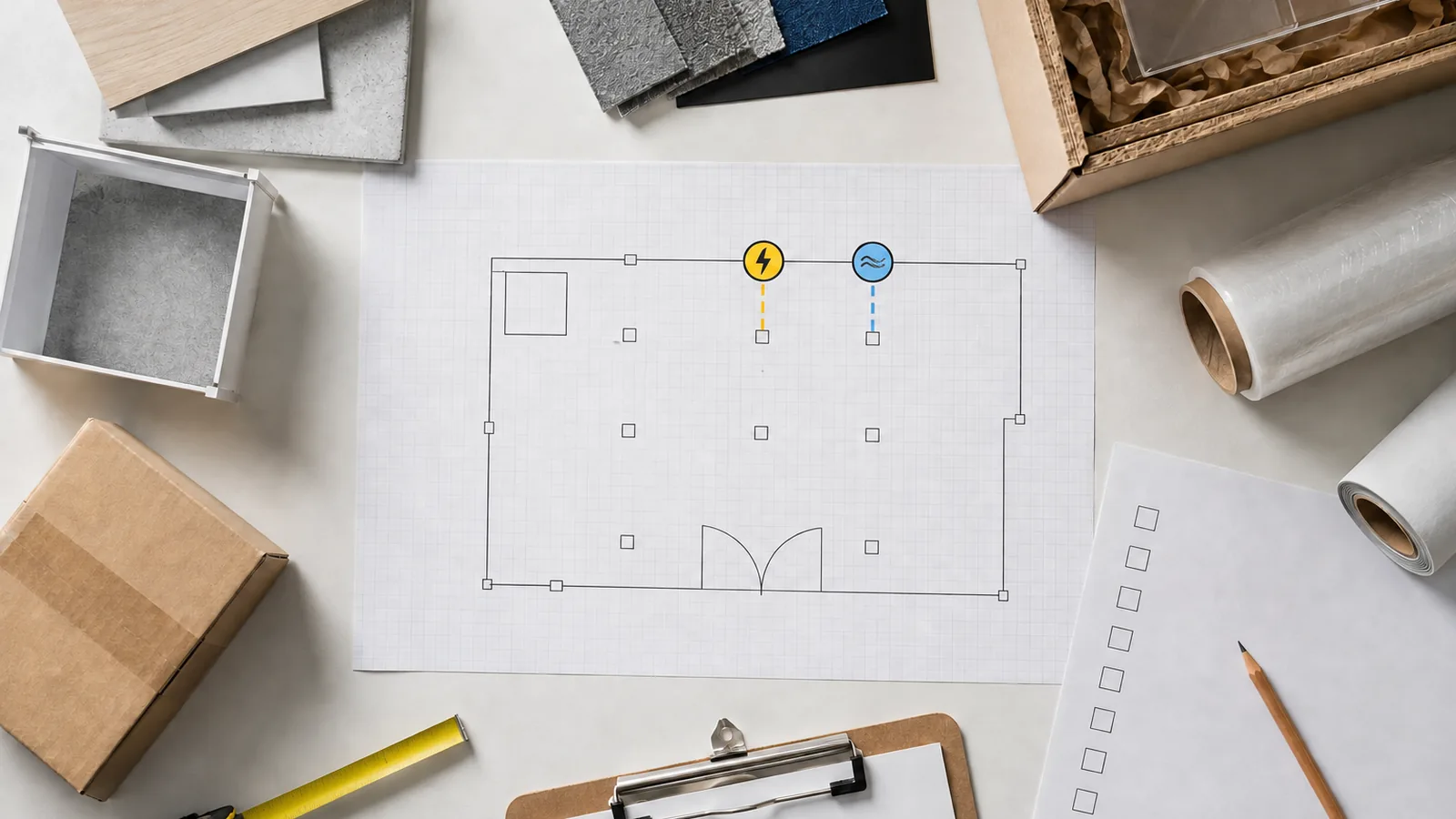
- the organizer has confirmed the New York edition and the correct show selection in writing;
- your target buyer and one demonstrable problem are defined;
- the current booth assignment, dimensions, open sides, and floor-plan revision are saved;
- pipe-and-drape or space-only scope is confirmed, including the approved EAC path where required;
- samples, demo cycle, product quantities, staffing, lead handoff, and follow-up owner are documented;
- power, internet, air, water, material handling, storage, labor, insurance, and approvals have owners;
- the organizer’s quote separates booth space, sponsorship, inclusions, exclusions, and payment terms; and
- the booth proposal identifies official services and assumptions instead of hiding them in an “all-in” number.
Pause if you still have a Las Vegas date, a floor plan without a revision date, an unapproved builder, an untested demo, an unexplained audience claim, or a quote that does not separate official show charges. Each is a solvable input problem. None should be covered by a more elaborate rendering.
Preparing your 2026 New York brief for KingExhibits
KingExhibits can discuss a booth scope from the facts that are already controlled: your current New York booking record, assigned footprint, open sides, product proof, demo cycle, samples, utilities, service orders, approved-contractor route, graphics, meeting needs, and working budget. That conversation should show which elements belong to the booth builder, which must be ordered through the organizer, GES, or Javits, and which still depend on written confirmation.
For this event, send the floor plan and rules with the products or outputs you want a buyer to inspect. Add the buyer question that each display answers and the next action staff should record. That gives the layout a commercial job and exposes missing services before production begins.
Frequently asked questions
Can two product teams share one booth across the co-located shows?
They can share a booth only if the organizer approves the exhibiting identity and the stand gives visitors one clear reason to stop. Give each product team a defined proof zone, but use one entry message and one lead record. If the two offers need different buyer roles or different show placement, separate meetings or separate stands may be easier to qualify than a divided booth.
When should a demonstration be appointment-only?
Use appointments when a useful demonstration is slow, technically complex, noisy, safety-sensitive, or dependent on private operating data. Keep a short, repeatable proof at the aisle for qualification, then move the detailed workflow to a scheduled session. Confirm any sound, machinery, connection, or safety restrictions before inviting visitors.
What if my company could fit more than one of the four shows?
Use the buyer problem, not the broadest company description. The live interest form lets an applicant select the E-commerce Packaging & Labelling Expo or one of the other co-located shows. Ask which placement puts your proof in front of the right operating role, and get the final show and booth assignment in writing.
How many samples and consumables should we bring?
Base the quantity on a tested cycle, not on expected footfall alone. Multiply the number used in one demonstration by the number of cycles your staff can realistically run during the 13 public show hours, then add a documented reserve for setup, failures, and priority meetings. Separate display-only samples from items that will be printed, sealed, scanned, damaged, or given away.
What evidence should we request behind the 3,000-person audience claim?
Ask whether the number is an audited prior attendance figure, a current registration count, or a forecast. Request the split by show, job function, company type, geography, and attendee versus exhibitor or staff. Use the result to estimate relevant conversations; do not multiply a headline audience number by an assumed conversion rate.
Final thoughts
The first exhibitor decision for the 2026 U.S. E-commerce Packaging & Labeling Expo is not how the booth should look. It is whether your team is working from the current New York edition and whether the booth can prove one useful change for a packaging, labeling, or fulfillment buyer.
Once that answer is clear, you can scope the footprint, demo, services, and crew plan without hiding unresolved inputs. Use the organizer’s current documents to close the remaining gaps before you release the project.
If you want a proposal based on those controlled inputs, send KingExhibits your dated floor plan, booth assignment, product proof, utility needs, and unresolved questions. KingExhibits can then discuss a booth scope that keeps your buyer proof visible and separates builder work from services controlled by the organizer, GES, or Javits.