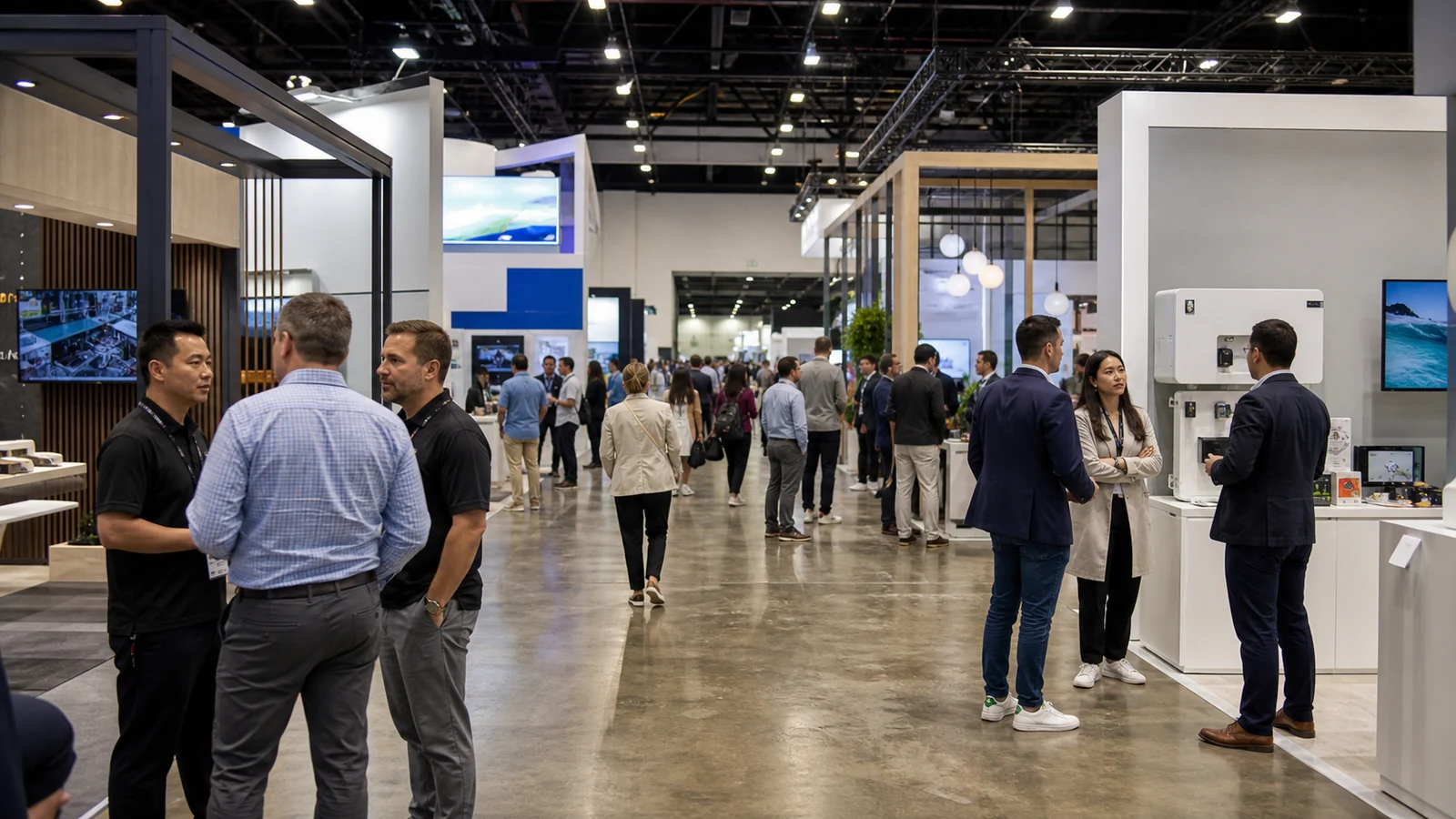
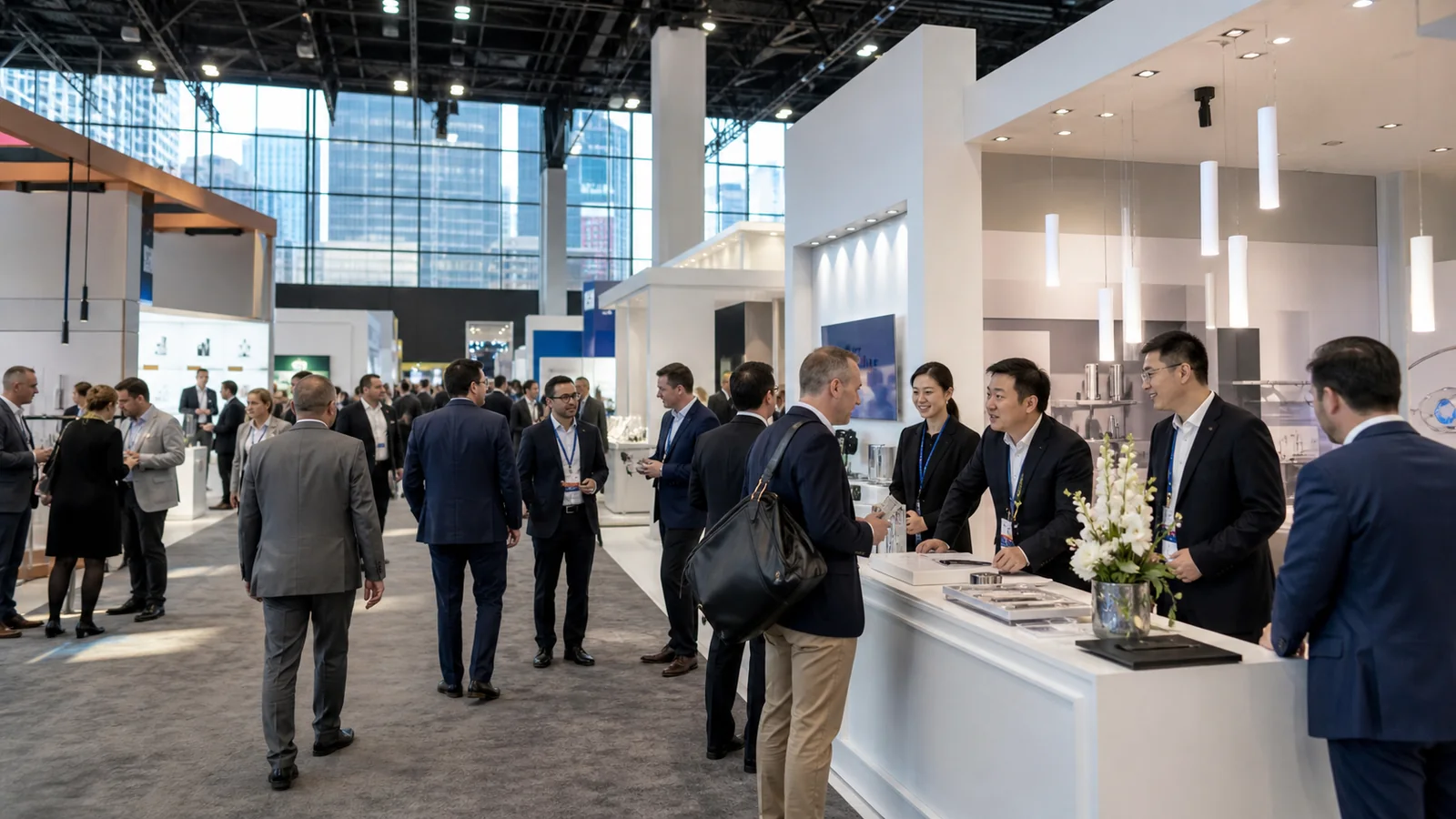
Before you reserve an AIA27 booth, answer one question: can an architect leave with enough useful information to bring your product into a live project review? This guide gives you the confirmed 2027 event facts, a practical exhibit-or-attend test, and a booth plan built around samples, technical documents, and named follow-up.
The 2027 event at a glance
| Item | Current 2027 information |
|---|---|
| Official name | AIA Conference on Architecture & Design® 2027, shortened to AIA27 |
| Full conference dates | May 19–22, 2027 |
| Expo dates | May 20–21, 2027 |
| City | Philadelphia, Pennsylvania |
| Expo venue | Pennsylvania Convention Center |
| Stated expo audience | Architects, engineers, contractors, and design professionals seeking technical expertise, products, and project solutions |
| Current exhibit focus | Products, materials, technologies, technical expertise, and project solutions for architecture, engineering, and construction |
| Detailed expo hours | Not published on the current AIA27 pages as of September 7, 2026 |
Many people still search for the event as the AIA Convention. The current official name is the AIA Conference on Architecture & Design, and the 2027 edition is marketed as AIA27. Use the official name in customer invitations, travel documents, and show materials so people can match your message to the current program.

The four-day conference and the two-day expo are not interchangeable. The current official pages place the AIA27 Expo on May 20 and 21. Do not offer a booth meeting on May 19 or 22 unless the detailed schedule later confirms exhibitor access. Daily expo hours had not been posted when this guide was checked.
Test the exhibit decision before you book
Write down the project question your booth will answer. It could be, “Can this rainscreen detail work on our substrate?” or “Which finish can tolerate the cleaning method in this facility?” A claim such as “innovative building solutions” gives the visitor nothing to check and gives your staff no clear conversation to prepare.
Next, place the answer on the booth. Show the relevant joint, finish, attachment, control screen, or installation step, then place the supporting file beside it. The visitor should be able to see what was tested, which configuration the result covers, and what still needs a project-specific review.
If your U.S. team cannot supply that answer, the matching document, and a person who owns the follow-up, postpone the exhibit. Attend first and listen to the questions architects ask. That choice is cheaper than building a booth around claims your team cannot support after the show.
Choose the visitor and the opening question
AIA describes the expo audience broadly as architects, engineers, contractors, and design professionals. The exhibitor page says they come looking for technical expertise, new products, and project solutions. That is organizer positioning, not a promise that every visitor controls a specification or purchasing decision.

Plan the booth for one primary visitor: an architect or design professional evaluating a real application. Choose an opening question that reveals the condition behind the interest. “What are you detailing?” or “Which performance condition is holding up the selection?” is more useful than “Would you like to hear about our product?”
Record only what the follow-up team can use: firm, project type, project stage, location, application, the visitor’s role, and the unanswered question. A badge scan without this note cannot tell sales whether to send a sample, ask for a drawing, or arrange a technical call.
Show the detail that decides the application
Let the visitor inspect the condition that changes the product’s use. Show the edge when edge treatment affects installation. Expose the joint, fastener, backing, or transition when it affects performance. Use a mockup large enough to reveal the detail when a small sample would hide it.
Label each sample with its product code, finish, and status. Beside it, name the exact report or technical sheet and the configuration that document covers. Keep test wording separate from marketing copy: a result for one thickness, substrate, or fastening method does not automatically apply to the rest of the range.
When a requested condition falls outside the file, say so. Record the condition and route it to the person who can confirm it. Guessing at compliance may keep a booth conversation moving for two minutes, but it can stop the product review as soon as the project team opens the report.
Make comparison easy to verify
Use the same headings across comparable samples. Start with the few fields that affect the application: dimensions, weight, substrate, installation method, finish, maintenance, and the document available for review. Add another field only when it changes the selection.

Mark each value as standard, optional, or subject to project review. Label a prototype as a prototype. If lead time, certification, warranty, or regional availability changes by configuration, print the condition beside the number instead of making staff retract a blanket promise later.
Give booth staff a short “not a fit” sheet. List the exposures, substrates, project locations, or installation conditions that require another review. A direct limitation saves both teams from sending drawings and samples into a review that cannot succeed.
Build the real booth budget before production
The current AIA27 booking page lists standard exhibit space from $48.50 per square foot. Each 100 square feet includes four expo badges. Non-island booths include an eight-foot back drape, three-foot side drape, and an identification sign. Furniture and utilities are not included in the space rental.
Treat the starting rate as space cost, not a finished-booth budget. Keep separate lines for the exhibit structure, graphics, flooring, furniture, electrical service, material handling, labor, shipping, storage, and cleaning. The official page says optional items will appear in the 2027 Exhibitor Service Manual, expected in January 2027; leave those lines provisional until the current rates are available.
A digital marketing package is also required for the AIA27 mobile app and online directory, with packages starting at $500. Use that listing to keep the company name, product category, booth number, and promised documents consistent. Do not treat a directory entry as a substitute for invitations or qualified meeting outreach.
All booths must follow the official booth specifications. AIA asks exhibitors to submit a dimensioned rendering when a design falls outside them. Obtain written approval before production or construction. Otherwise, an overhead element or enclosed display can become a redesign or removal cost.
Assign the conversation and the follow-up
Name the person who will answer product questions and the person who will capture the next step. The technical lead must know the product codes, application limits, available documents, and installation dependencies. The host can receive new visitors and complete the lead note while the technical lead stays in the conversation.

Brief both people on the difference between interest and project fit. Someone collecting ideas for a future material library needs a useful reference and permission-based follow-up. A visitor with a current drawing, condition, and review date needs a named technical owner. Do not force both conversations into the same sales score.
Use one shared lead note. Capture the question in the visitor’s words, what your team showed, what the visitor requested, who owns the response, and the promised date. Labels such as “hot” or “qualified” are not useful unless the note explains the project condition behind them.
Agree on the next review before the visitor leaves
Choose one next action that matches the project stage. Send a sample when the team must judge finish or texture. Request a drawing when the attachment or transition needs review. Schedule a technical call when the requested answer sits outside the booth team’s authority.
Prepare those routes before the expo. Use the same product code on the sample, technical sheet, web page, and follow-up email. Give every file an owner and revision date. Remove superseded files from the booth devices so staff do not send the wrong version.
The follow-up message should restate the visitor’s question, attach or link the promised item, and confirm the next date. A generic “nice to meet you” email leaves the recipient to reconstruct the conversation and does not advance the review.
Decide whether to exhibit or attend first
| Exhibit when | Attend first when |
|---|---|
| A physical detail or guided demonstration helps an architect judge the application. | Your team still does not know which project question the display should answer. |
| The displayed configuration matches what you can supply in the target market. | The sample or prototype differs from the product you can deliver. |
| Current documents support the claims printed on the booth. | U.S. documentation or installation support is still unclear. |
| Your team has a named owner and due date for each promised follow-up. | No one owns technical questions after the event. |
If the left column describes your position, turn the booth plan into a budget and production brief. If the right column is closer, visit AIA27 and record the details architects inspect, the files they request, and the questions that keep them in a conversation.

Frequently asked questions
What should the booth QR code open
Open a page for the displayed product, not the company homepage. The page should repeat the sample’s product code and provide the documents promised at the booth. Test the link on a phone before the show and keep a short printed URL available in case venue connectivity is poor.
How should you show a product that cannot travel at full scale
Build a cutaway or partial mockup around the detail the visitor must judge. Mark its scale and identify anything omitted. A short video can show movement or installation, but it should support the physical sample rather than disguise a miniature display as a full assembly.
What should staff do when a requested document is not at the booth
Record the exact document and the product condition behind the request. Give the visitor the owner’s name and a realistic delivery date. Do not substitute an older file or improvise a performance answer just to close the conversation.
How can staff discuss a confidential project at a public booth
Discuss the application without photographing drawings or recording names that the visitor has not approved. If the detail requires confidential plans, agree on a private follow-up and a secure way to exchange files. The lead note can describe the technical condition without exposing the project identity.
When is a large physical mockup worth the freight
Use one when size, joint movement, attachment, surface change, or installation sequence affects the judgment and cannot be understood from a hand sample. If the same decision can be made from a cutaway, bring the cutaway and spend the saved budget on clearer documents or scheduled meetings.
Is a submitted booth application a confirmed reservation
No. AIA says the primary contact will receive an email after submission and that the application remains pending until confirmation. Do not release booth-specific artwork, invitations, or shipping instructions until the space and exhibitor details are confirmed.
Final thoughts
AIA27 is worth exhibiting at when your team can answer one real project question, show the detail and document behind the answer, and complete the promised follow-up. Build around the May 20–21 expo window. If the product, proof, or U.S. response path is not ready, attend first and return with the questions your next booth must answer.