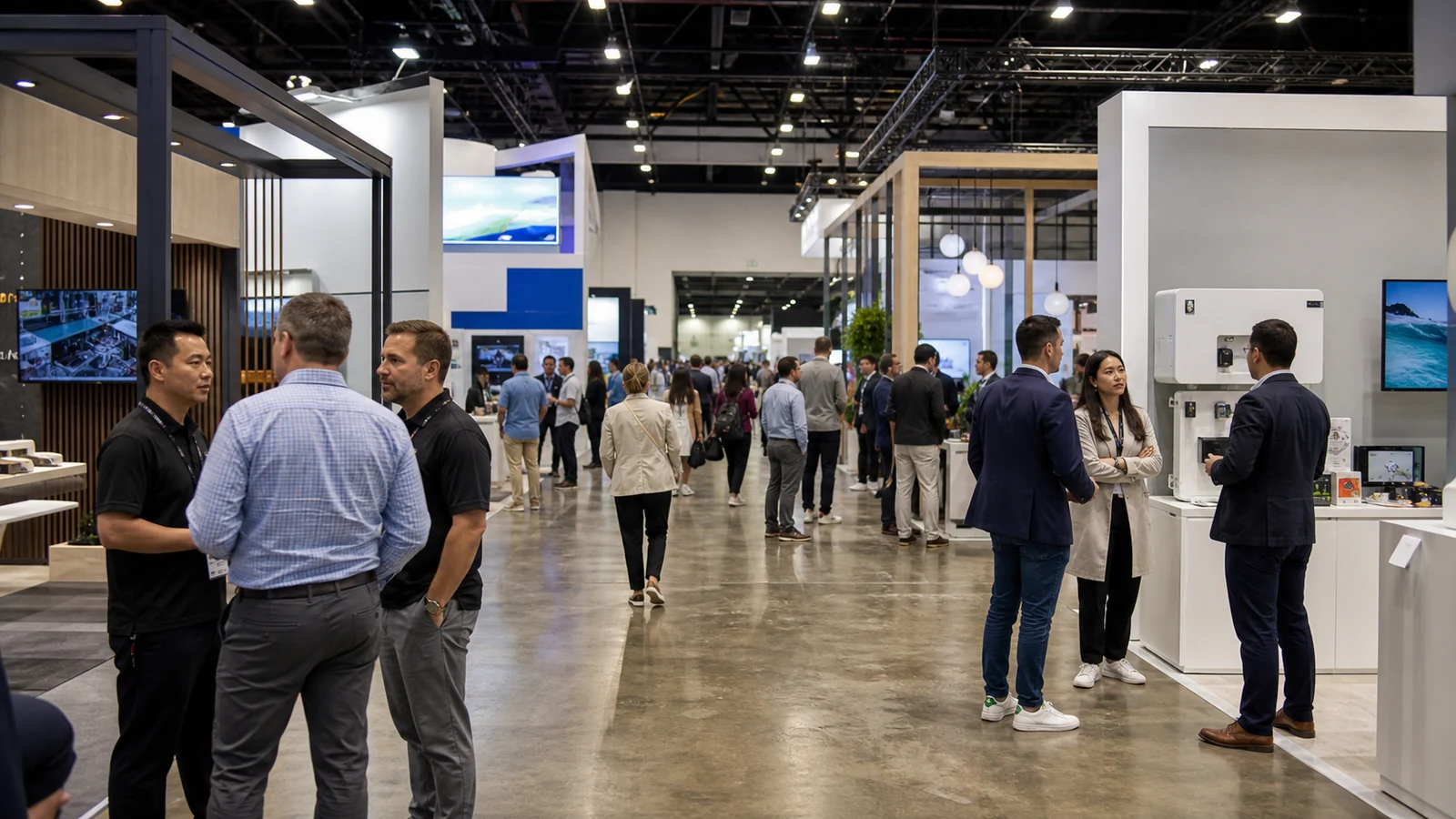
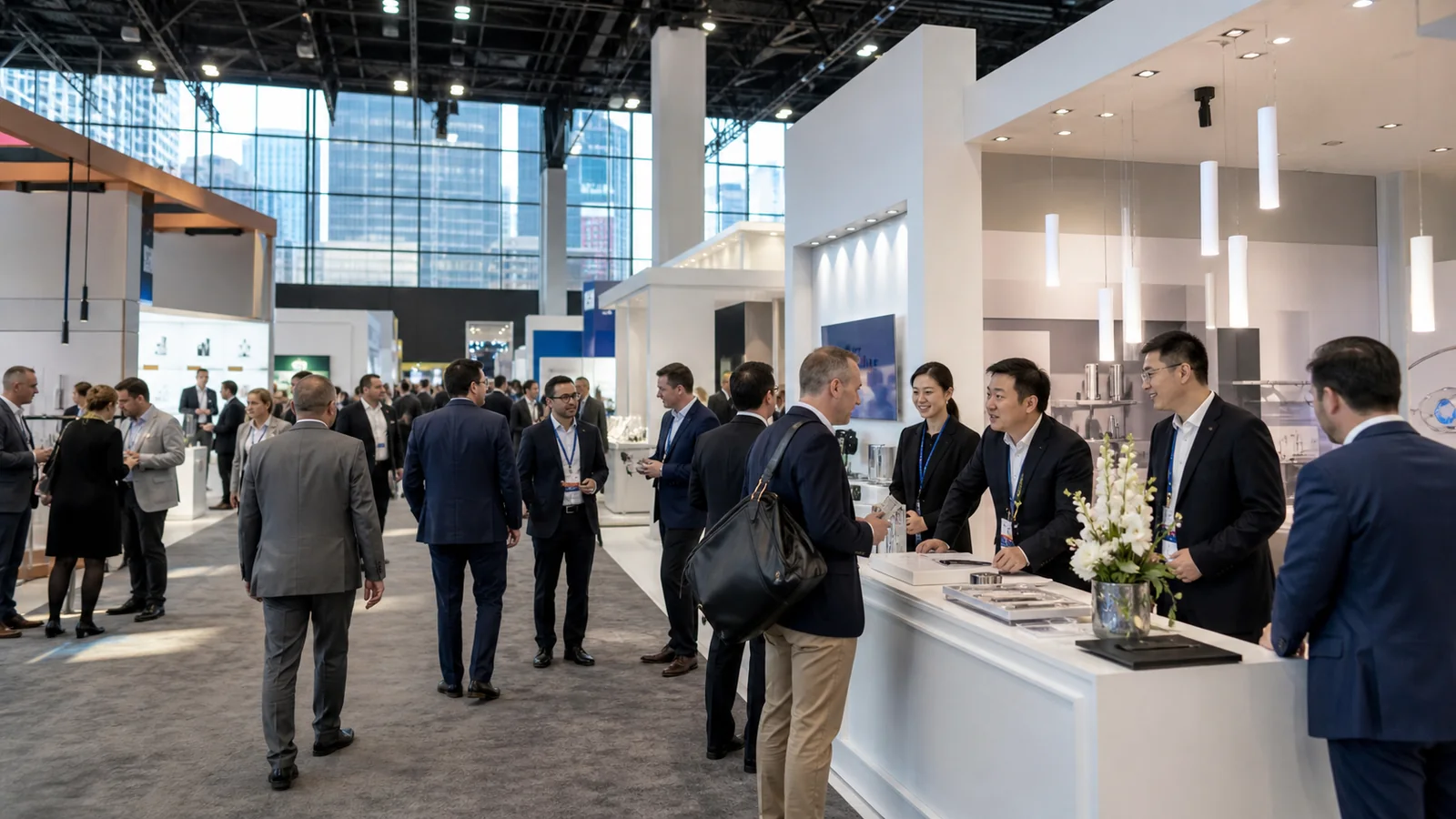
ProMat rewards exhibitors who can make a supply-chain problem visible. If your team plans to run equipment, robotics, or connected software in Chicago, your first task is not choosing graphics. It is confirming what the buyer will see, what the demonstration needs, and which 2027 operating details are still waiting on the official exhibitor manual.
What Is ProMat?
ProMat is MHI's manufacturing and supply-chain trade show. ProMat 2027 runs April 19–21 at McCormick Place in Chicago. The exhibit floor is open from 9:00 a.m. to 5:00 p.m. on all three days.
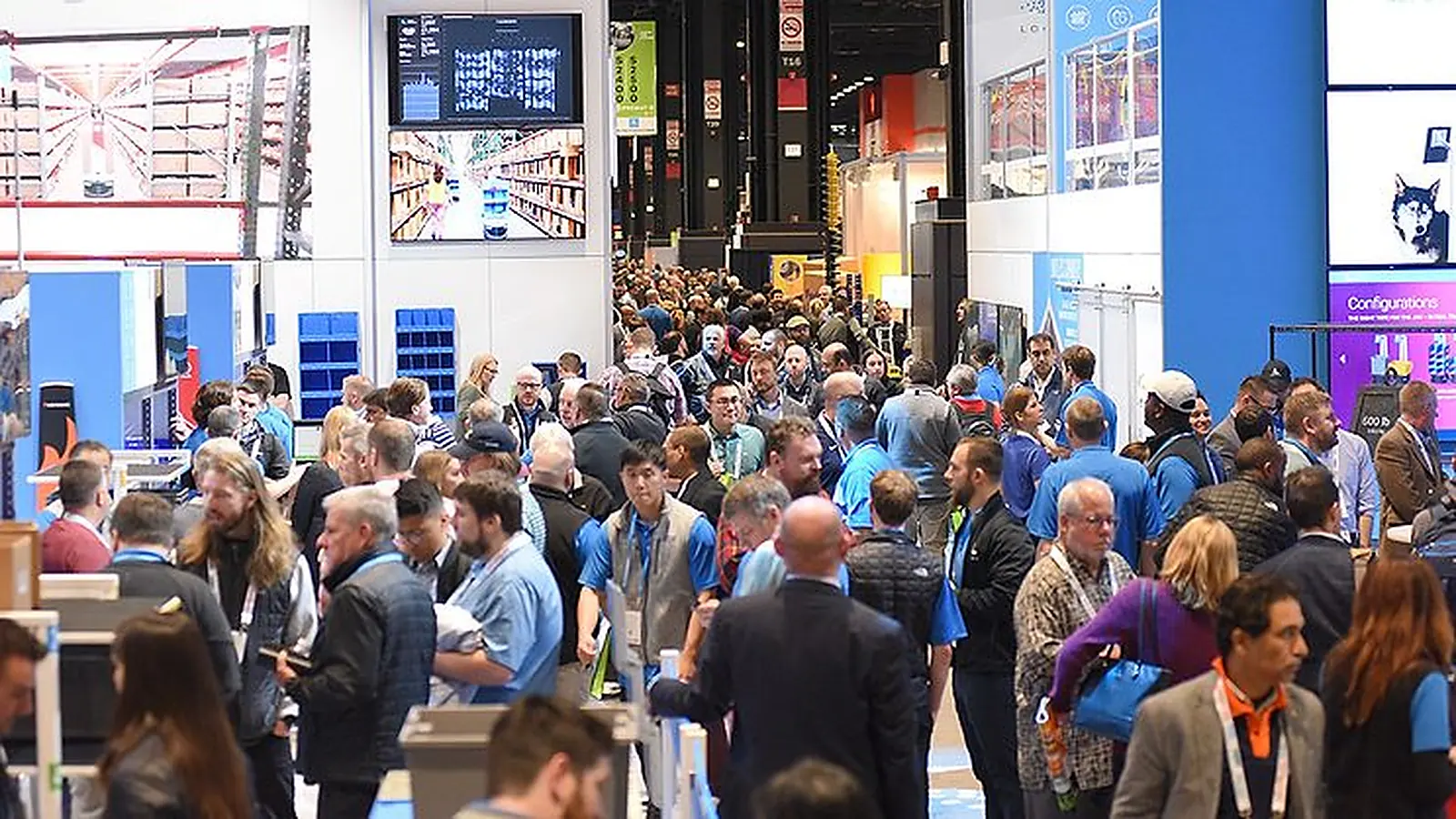
The exhibition is built around working solutions for manufacturing, material handling, warehousing, distribution, fulfillment, transportation, and supply-chain management. MHI currently promotes more than 1,200 exhibits and an expected audience of more than 50,000 buyers. Those are organizer projections for a future event, not final attendance results.
Education is part of the event, but it is not the exhibit itself. MHI separately promotes 200 educational sessions and three keynotes. Exhibitors should therefore plan for two different visitor behaviors: people moving through the halls to compare solutions, and people leaving or returning around scheduled education.
Decide Whether the Audience Matches Your Solution
ProMat is strongest when your offer affects how goods, data, equipment, or labor move through an operation. The current show-floor plan groups solutions across three buildings:
- North Hall covers emerging supply-chain technology, automation and robotics, sustainability and risk management, plus transportation, distribution, and warehousing.
- Lakeside is centered on last-mile supply-chain solutions.
- South Hall covers manufacturing, planning and sourcing; fulfillment and workforce; and data capture, analytics, and information management.
That range accommodates conveyors, lift equipment, storage systems, robotics, packaging and labeling, software, controls, identification systems, consulting, transportation, and related services. Product fit alone is not enough, however. Your exhibit must let a visitor quickly connect the product to an operating problem.
MHI's current exhibitor brochure describes 60% of the audience as end users or purchasers of material-handling and logistics equipment and systems. It lists another 23% as dealers, distributors, representatives, importers, or exporters, and 13% as systems integrators or consultants. The brochure attributes its attendee statistics to a Freeman study. Treat that profile as the organizer's planning evidence—not a guarantee that a particular account or job title will visit your booth.
Before reserving space, write down one operational result your exhibit can prove. A robot might show the handoff between input, control decision, motion, and output. Warehouse software may need a screen sequence tied to a physical scan or task. A rack, lift, or dock product may be better served by a controlled comparison than a full operating cycle. If you cannot define the proof, a larger exhibit will only create more space around an unclear message.
How to Enter as a ProMat Exhibitor
MHI says membership is not required to exhibit, although an exhibiting company must be eligible for MHI membership. Confirm that eligibility with MHI before you treat a booth selection as complete.

The early ProMat 2027 Space Draw has already passed. Its official FAQ required an electronic lease, the rules and regulations document, and a 10% deposit by November 5, 2025; booth selection took place November 18–21, 2025. That deadline describes the early selection process, not the current application deadline.
Companies looking for space now should use the live official floor plan. It marks booths as available, on hold, or reserved and provides MHI sales contact details for available space. Availability changes, so record the booth number, size, hall, open sides, and any operational label shown on the current plan when you contact sales.
Some floor-plan labels affect what you can build or how much setup time you receive. The 2027 Space Draw FAQ identifies Island Only spaces as four-side-open booths. It also identifies Last In/First Out spaces as booths in critical operational areas; these spaces are 400 square feet or smaller and have shorter setup and dismantling windows. The same document says a booth must be at least 600 square feet to be eligible for a hanging sign. These points help screen a location, but final construction and approval still depend on the current lease, show rules, and exhibitor manual.
Build the Demonstration Brief Before the Booth Design
A ProMat demonstration often connects equipment, controls, software, utilities, and people. Lock those dependencies before approving the floor plan.
Start with the equipment footprint and include doors, service panels, guarding, loading points, operator positions, and the space needed to recover from a fault. Then mark every moving envelope. A robotic arm, autonomous vehicle, conveyor transfer, lift, or rotating component needs a boundary that remains clear when visitors stop to watch.
Next, map what the visitor must see. A technically complete demo can still fail if the decisive action is hidden behind the machine or if a screen faces away from the aisle. Place the problem, machine response, and visible result in a sequence that can be understood without blocking the operating zone.
Finally, list the services at their points of use. Record power by equipment item, network connections by device, compressed air or water where applicable, heat output, floor loading, rigging needs, and the location where freight must be placed. Do not leave these as a general note such as “power and internet required.” A service provider needs a marked plan, and your booth team needs to know which system cannot run if one connection arrives late.
What Is Confirmed—and Not Yet Confirmed—for 2027
As of September 7, 2026, the ProMat 2027 dates, venue, exhibit hours, show-floor themes, live booth map, and exhibitor marketing brochure are public. The official Exhibitor Resource Center, however, still says “Coming Soon.”

That distinction matters. The following event-specific operating details were not publicly available from the 2027 resource center at the time of this review:
- the complete exhibitor service manual and order forms;
- official service-contractor assignments for each scope;
- discounted and standard service deadlines;
- advance-warehouse dates, labels, and addresses;
- targeted freight move-in dates and installation hours;
- dismantling windows, carrier check-in rules, and final freight-removal times;
- 2027 service rates and late-order charges;
- final booth-construction, EAC, fire-safety, and demonstration-submission procedures.
Do not fill those gaps with a ProMat 2025 FAQ or an older service manual. Past material can warn you which categories may appear, but it cannot set a 2027 shipment date, price, labor call, or approval deadline. Assign one person to monitor the official Resource Center and replace each placeholder in your project schedule only when the current document appears.
Use the Right Information Source for Each On-Site Service
McCormick Place directs exhibitors to the show organizer and the event's general service contractor for event-specific move-in, show, and move-out information. Building-specific services come through the venue and its approved channels. Keeping those roles separate prevents a booth builder's assumption from becoming a shipping instruction.

For internet and telecommunications, McCormick Place identifies its Technology Services Department as the exclusive provider. The venue asks exhibitors to submit detailed floor plans with technology orders and to check in at the Exhibitor Service Center when they arrive. Its guidance also notes that Lakeside internet wiring may need to drop from the ceiling, so changing a connection point after installation can add labor.
The venue's labor information divides work among communication technicians and trades hired through event service contractors, including carpenters, decorators, electricians, plumbers, riggers, and Teamsters. Your 2027 exhibitor manual should determine which provider receives each order, what an Exhibitor Appointed Contractor must submit, and what work your own staff may perform.
Use one responsibility matrix with four columns: scope, responsible party, official form or portal, and confirmed deadline. Include at least freight, material handling, electrical, internet, plumbing or compressed air, rigging, cleaning, badge registration, and EAC paperwork. Leave a deadline blank rather than copying an old date, but give every blank an owner and review date.
Plan Freight and Move-In Around the Current Manual
Your freight plan should start with the booth number and hall, then separate shipments by handling need. Machinery, booth structure, fragile controls, graphics, tools, and consumables may not share the same arrival risk or unloading method. A single packing list is useful for customs or the carrier, but the site team also needs a sequence showing what must be placed first.
Do not book against assumed move-in hours. Wait for the 2027 targeted schedule and freight instructions, then confirm whether each shipment goes to an advance warehouse or directly to the marshalling process. Match labels to the official format and preserve weights, dimensions, piece counts, and tracking details.
The installation sequence should follow physical dependency. Flooring and under-floor services precede equipment that blocks access. Heavy placement precedes guarding and finish work. Network and control tests happen before tools, crates, and spare parts leave the booth. If the exhibit uses live motion, run the full cycle and a safe-stop recovery with the actual show configuration.
Move-out needs its own plan. Keep return labels, carrier contacts, bills of lading, crate inventory, and the person authorized to release freight accessible during the show. The exact 2027 dismantling and removal times are not yet public in the Resource Center, so they remain a release gate—not a field to estimate from the previous edition.
Run the Exhibit for Technical Buyers
The show is open nine hours per day, but your demo does not need to run continuously. Use a repeatable cycle with a clear start, visible result, and reset point. Publish the run times at the booth when startup, safety checks, product replenishment, or data reset make continuous operation impractical.

Separate the person controlling the demonstration from the person answering commercial questions when the equipment demands attention. The operator protects the sequence and safety boundary. A second team member can qualify the application, capture technical inputs, and schedule a deeper conversation without stopping the machine in the middle of a proof.
Prepare a fallback that still explains the operating result if a connection or component goes down. That might be a recorded cycle, a guided interface, or a component-level explanation. It should support the same claim as the live demonstration, not introduce a second, unrelated message.
Finally, compare your demo schedule with the published education agenda once MHI releases it. Sessions and keynotes are separate from the exhibition, yet they change traffic patterns. Protect staff breaks and critical demonstrations around those movements rather than treating every hour as identical.
Frequently Asked Questions
Is MHI membership required to exhibit at ProMat?
No. MHI says membership is not required, but exhibitors must be eligible for membership. Because eligibility affects whether your company can exhibit, confirm it directly with MHI before committing nonrefundable production or travel costs.
Can an exhibitor still reserve space after the ProMat 2027 Space Draw?
The official floor plan currently shows available, on-hold, and reserved spaces and directs companies to MHI sales for available booths. The Space Draw was the early selection process; it should not be confused with a statement that all later applications are closed. Current availability must be checked on the live map.
Are ProMat educational sessions part of the exhibit hall?
They are part of the overall ProMat program, but they are not the same as the exhibition. MHI promotes keynotes and educational sessions separately, including seminars in theaters on the show floors. Exhibitors should use the agenda to anticipate traffic without counting sessions as exhibits.
Can I use ProMat 2025 move-in dates to schedule a 2027 shipment?
No. The 2027 Exhibitor Resource Center had not published the current service manual at the time of this review. Targeted move-in, warehouse, direct-shipping, dismantling, and service deadlines must come from current 2027 documents.
What should an international equipment exhibitor prepare before the service manual is released?
Lock the equipment list, packed dimensions and weights, demonstration sequence, electrical and data needs, installation order, and the U.S. contact responsible for official forms. You can prepare those inputs now without guessing the carrier deadline, warehouse address, labor assignment, or service price.
Final Planning Check
A useful ProMat plan separates stable decisions from dates that can still change. You can confirm the audience fit, choose from current booth availability, define the demonstration, and map every utility today. Freight labels, service orders, labor assignments, and move-in or move-out times should remain open until the 2027 Resource Center supplies the current documents.
Before releasing the booth for production or booking freight, require one internal review that binds the latest floor plan, equipment list, service drawings, responsibility matrix, and official 2027 manual to the same revision. That is the point when a promising demonstration becomes an executable exhibit.