
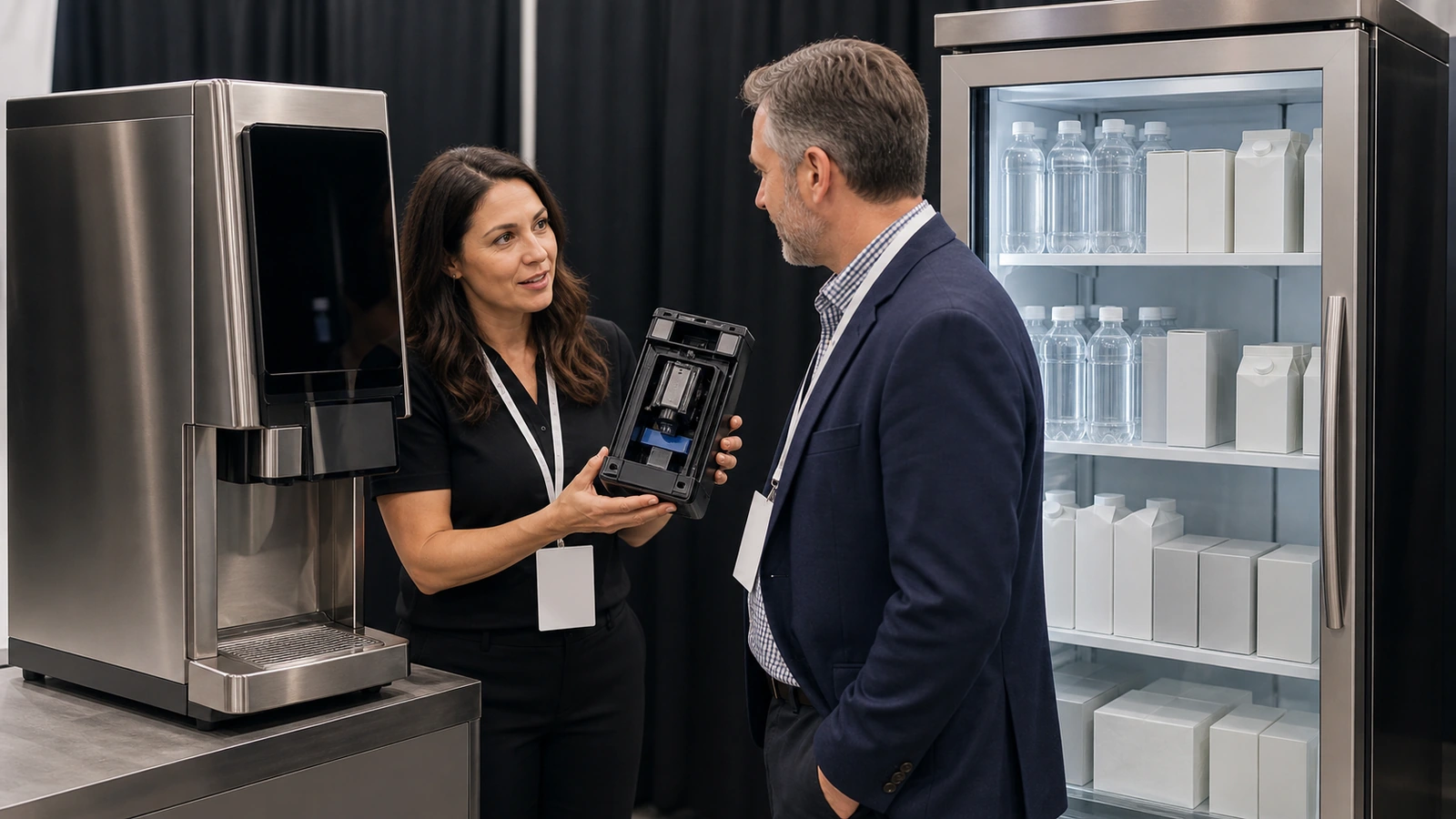
If you are deciding whether to exhibit at the Sweets & Snacks Expo, the first risk is committing to a booth before you know which audience, application category, and budget apply to you. The 2027 show is currently scheduled for May 18–20 at the Indiana Convention Center in Indianapolis, with the Supplier Showcase listed for May 17–18. Last verified September 7, 2026.
This guide explains the current exhibitor path, published space rates, and the information your booth team needs before design, sampling, and freight are committed. It also points out where an old 2026 Las Vegas page or a generic booth estimate can send your project in the wrong direction.
Pricing, dates, eligibility, and program details should be rechecked against the latest official prospectus before publication or payment.
Quick answer
The Sweets & Snacks Expo is a trade-only National Confectioners Association event for the confectionery and snack industry. Finished candy, chocolate, and snack products generally belong on the main Expo floor; companies supplying ingredients, packaging, equipment, technology, or services should review the separate Supplier Showcase. You must submit the organizer’s application and receive approval before reserving exhibit space. Treat the current 2027 prospectus, floor plan, exhibitor manual, and service kit as the controlling documents for your booth.
What is the Sweets & Snacks Expo?
The Sweets & Snacks Expo is a focused business event where confectionery and snack companies present products and meet people working across retail, distribution, brokerage, and related supply chains. It is organized by the National Confectioners Association (NCA), and the organizer describes the event as trade-only rather than a public candy festival. The official FAQ says attendance is restricted to companies in the confectionery and snack industries and is not open to the general public.
That boundary changes how you plan. Your booth does not need to entertain casual visitors for an entire afternoon. It needs to help qualified industry contacts understand your product, decide whether it fits their channel, and know what the next conversation should be. That usually means a clear product hierarchy, a sampling process that does not block the aisle, and a place where a useful commercial discussion can continue.
The Expo is also not a generic food-and-beverage show list. Its program, application categories, and exhibitor areas are built around candy, chocolate, confectionery, snacks, and the businesses that supply those categories. If your company is a supplier rather than a finished-product manufacturer, choosing the correct area matters before you ask anyone to draw a booth.
Sweets & Snacks Expo 2027 dates, venue, and show-week layout
The main 2027 Expo is planned for May 18–20 at the Indiana Convention Center in Indianapolis, Indiana. The co-located Supplier Showcase is scheduled for May 17 and May 18. The organizer’s 2027 homepage and future-locations page show the Indianapolis and Las Vegas rotation, so a 2026 Las Vegas layout or service assumption should not be copied into your 2027 brief.
| Item | 2027 information | What you should do |
|---|---|---|
| Main Expo floor | May 18–20, Indiana Convention Center, Indianapolis | Plan product display, sampling, meetings, staffing, and show-floor hours around the main event |
| Supplier Showcase | May 17–18, co-located | Confirm whether your offer is a supplier solution and plan a compact, focused presentation |
| Application and approval | Application first; space reservation follows approval | Keep your category description and qualification documents aligned with your booth brief |
| Venue and city | Indianapolis for 2027 | Wait for the current floor plan, hall assignment, service kit, and move-in targets before finalizing drawings |
Public show dates do not tell you when your booth can be delivered, installed, or dismantled. Move-in windows, target times, freight instructions, electrical orders, labor rules, and dismantle arrangements come from the current exhibitor manual and official service contractor. The organizer’s public pages do not establish one universal installation schedule for every booth.
Can your company apply, and where should you apply?
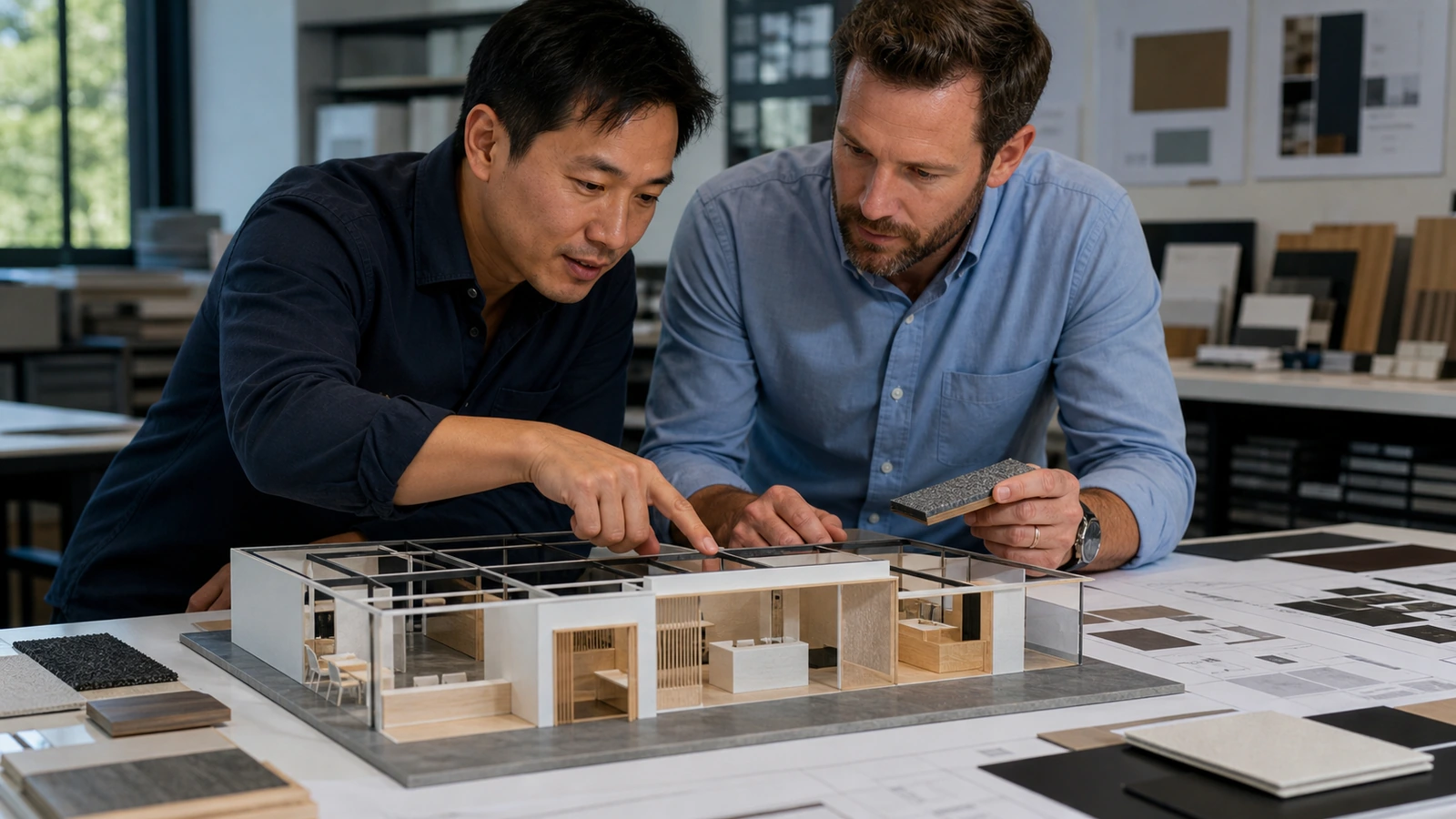
You start with the official 2027 exhibitor application. The page states that all companies go through an approval process and that submitting the form does not reserve space. After approval, show management contacts you with the next steps for reserving a booth.
Prepare the following information before you submit:
- company name, address, website, start date, and primary contact;
- whether you are a new or returning exhibitor;
- whether you are applying for the Show Floor or Supplier Showcase;
- your main category: confectionery, snack, both, supplier, or another category accepted by the form;
- whether you want to be considered for the Specialty Market;
- NCA membership status;
- the booth size or package you are considering, subject to the live application.
The application is a classification and approval step, not a design brief. Your product description should be specific enough for the organizer to understand what you sell and where you fit. Keep a copy of the submitted description. If your booth later presents a different business category from the approved application, resolve that mismatch with show management before production.
What may the organizer review?
Expect the review to compare:
- product category;
- company role in the supply chain;
- finished product versus supplier solution;
- NCA membership status;
- previous participation;
- program-specific eligibility.
A company selling only unrelated consumer goods may not fit this show, while a supplier with no confectionery or snack-industry use case may be directed away from the Supplier Showcase. Membership can change a published rate, but it does not replace category approval. If you are declined, placed in the wrong category, or unsure whether Specialty Market needs a separate submission, ask show management for the decision in writing and request the correct application route before you order a booth. Supplier Showcase participation still follows the organizer’s own package and approval instructions; do not assume main-floor rules automatically apply.
Main Expo floor or Supplier Showcase: which path fits your offer?

The main Expo floor is built around finished confectionery and snack products. The Supplier Showcase is a separate marketplace for companies that provide inputs or services to the industry. The official Supplier Showcase page describes providers of technology, business and marketing services, and other essential inputs, with a separate schedule and package structure.
If your primary offer is a finished consumer product, start with the Main Expo floor. If your primary offer is an ingredient, package, machine, technology, or service sold to industry participants, start with the Supplier Showcase.
| Decision point | Main Expo floor | Supplier Showcase |
|---|---|---|
| Primary offer | Finished candy, chocolate, confectionery, or snack products | Ingredients, packaging, equipment, technology, business, or marketing services |
| Main conversation | Product discovery, assortment, packaging, sampling, and retail discussion | A manufacturer or industry partner’s process, cost, quality, or capability problem |
| 2027 timing | May 18–20 | May 17–18 |
| Space and rate logic | Published by manufacturer type and membership; verify the current agreement | Separate package and rate structure; verify the current package terms |
| Booth emphasis | Shelf-ready product story, sample flow, replenishment, and buyer meetings | One clear solution, proof or demo material, and targeted technical conversations |
If you sell both finished products and services, do not choose the area by looking at your booth size. Describe the primary offer to the organizer and ask which application path governs. A finished-product brand may need the main-floor context even when it also offers private label or manufacturing services. A packaging or equipment company may get a more relevant audience in the Supplier Showcase even if it wants a larger custom exhibit.
What does 2027 exhibit space cost, and what is not included?
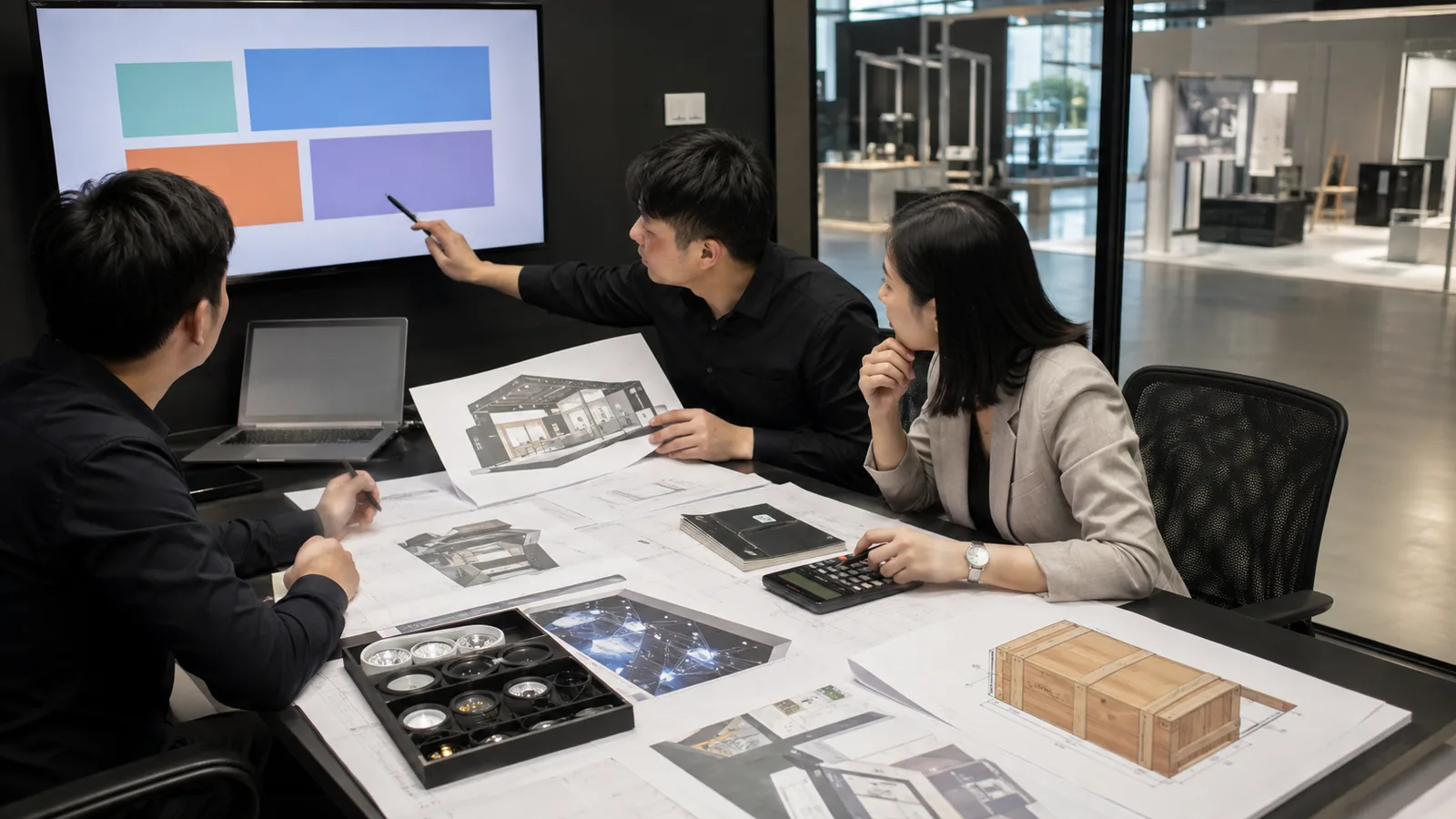
The official 2027 prospectus publishes main-floor space rates by manufacturer type and NCA membership. The current Spanish prospectus lists the following rates:
| Main-floor category | Published rate |
|---|---|
| Confectionery manufacturer, NCA member | $49.00 per sq ft |
| Confectionery manufacturer, non-member | $68.00 per sq ft |
| Snack manufacturer | $55.00 per sq ft |
| Corner fee | $850 |
See the official 2027 prospectus for the organizer’s current wording. The Supplier Showcase page currently lists these packages:
| Supplier Showcase package | Published price | Listed inclusions | Still separate or to confirm |
|---|---|---|---|
| 8×6 member | $2,975 | Turnkey 8×6 exhibit with 6-ft draped table, two chairs, wastebasket, ID sign; two registrations; map/app listing and marketing support | Extra services, upgrades, freight, labor, utilities, and any custom build |
| 8×6 non-member | $5,050 | Same listed package structure; confirm the live agreement | Extra services, upgrades, freight, labor, utilities, and any custom build |
| 10×10 member | $5,925 | Price listed; the public page does not itemize a separate 10×10 inclusion set | Confirm the live agreement, then price registrations, exhibit furnishings, upgrades, freight, labor, utilities, and any custom build |
| 10×10 non-member | $10,250 | Price listed; the public page does not itemize a separate 10×10 inclusion set | Confirm the live agreement, then price registrations, exhibit furnishings, upgrades, freight, labor, utilities, and any custom build |
The package page is the source for the listed inclusions; request the live agreement if you need a like-for-like comparison with a custom main-floor exhibit or if the package wording changes before you pay.
These figures describe exhibit space or a defined supplier package. They do not answer the cost of your complete project. Before comparing proposals, ask each provider to separate design, fabrication or rental structure, graphics, electrical and AV, refrigeration or prep equipment where needed, storage, freight or material handling, installation, dismantle, cleaning, waste, and return handling. Mark each line as included, excluded, estimated, or controlled by the organizer.
A lower space-only number cannot tell you whether your sampling, meeting, or replenishment process will work. It also cannot tell you whether a service order, utility, or labor requirement is still pending in the 2027 manual.
Turn your product and buyer conversation into a booth brief
Start with the work your booth must support, then assign space and equipment to that work. A useful brief answers the following questions before a designer develops a final layout:
- Which product family or launch has priority, and what should a visitor understand in the first few seconds?
- Which package sizes, flavors, ingredients, or claims need to be seen together?
- How will sampling work from arrival through preparation, handoff, replenishment, cleaning, and waste removal?
- Do you need refrigeration, temperature control, water, drainage, power, or other utilities? List only what your product actually requires and verify each item with the organizer or official service kit.
- Will conversations happen at an open counter, a semi-private table, or an enclosed room? How many conversations may happen at once?
- Where will you store sample cases, packaging, literature, personal items, and replenishment stock?
- Which screens, demonstrations, sell sheets, or lead-capture tools have an owner and a clear purpose?
- How many staff members will be working, and does the plan still function when staff and visitors occupy it?
Sampling is a workflow, not a counter
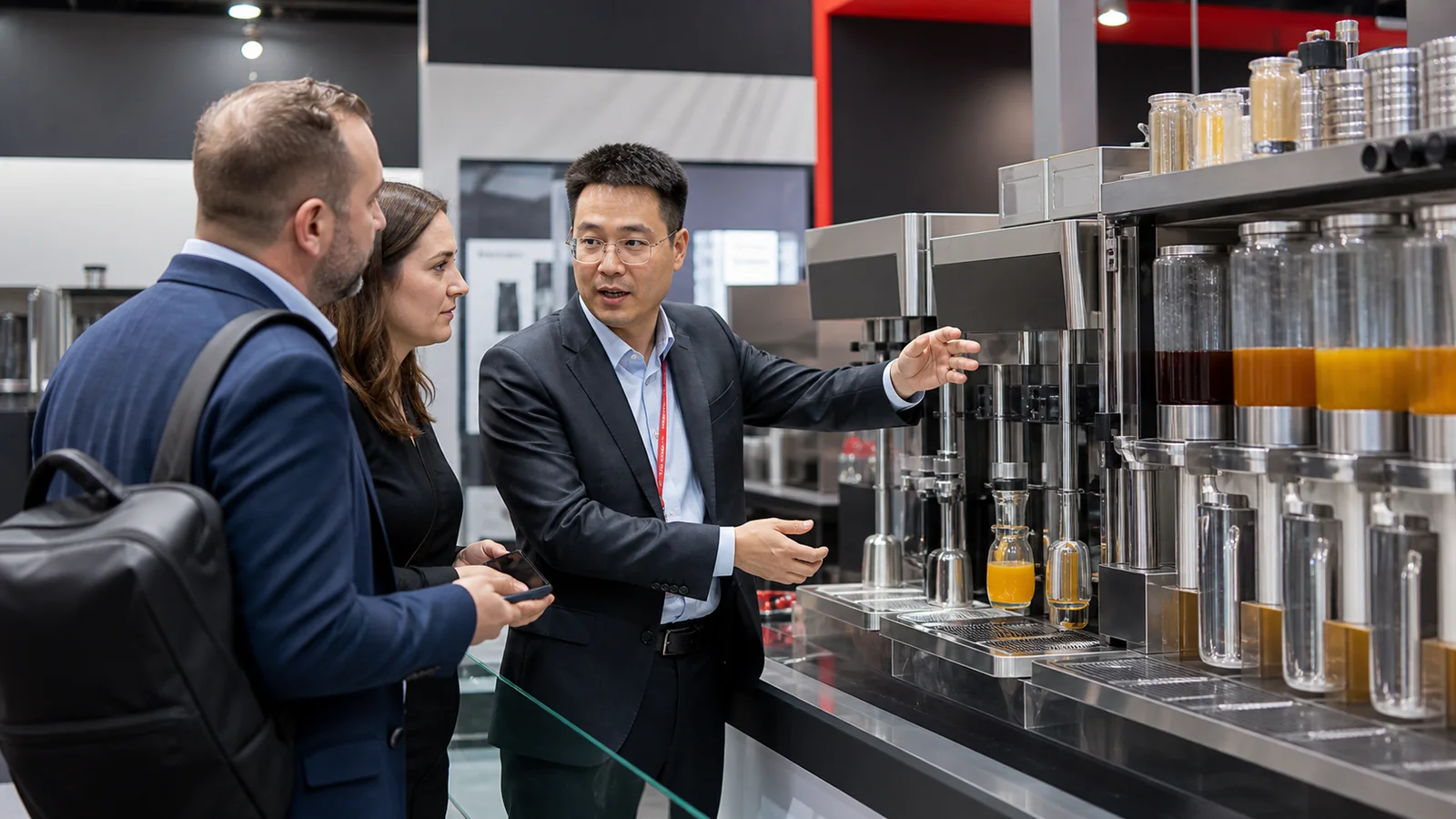
A tasting counter is only one part of the path. Map where product arrives, where it is prepared, how people queue, how staff restock it, and where used materials go. If the queue crosses the meeting area or blocks the aisle, the booth will feel busy even when the graphic design looks clean. If a sample needs cold storage or special handling, write that requirement into the brief before the floor plan is approved.
Sampling requirements may include allergen communication, temperature control, hand hygiene, approved preparation methods, and venue-specific food-service rules. Decide whether you will hand out sealed, pre-portioned samples or portion product on site; the second option adds equipment, cleaning, staff, and waste decisions. Include disposable supplies, expired-product disposal, and a named food-safety owner in your plan.
Packaging belongs in the sales conversation
Retail conversations often depend on how a product appears on a shelf, in a seasonal set, or beside competing pack sizes. Use the booth to show the package hierarchy and the information your contact needs to judge fit. The purpose is to make the next discussion easier; it is not to promise shelf placement, purchase orders, or sales results.
Which KPIs should you set before the show?
Set targets your team can record at the booth: scheduled buyer meetings, priority buyer types, qualified retailer or distributor leads, sample requests, sampling-to-conversation conversion, private-meeting count, and the percentage of leads receiving follow-up within 48 hours. Give each target an owner and a simple definition. For example, count a qualified lead only when you record the company, channel, product interest, and next action. These numbers help you decide whether a larger footprint or more sampling capacity is justified.
Which official programs may change your application or presentation?
The Expo offers several programs that may affect where or how you present a product. They are optional organizer programs, so confirm eligibility, space, deadlines, and 2027 instructions before you include them in the booth plan.
Startup Street
The official Startup Street page describes an area for candy and snack companies that have been in business for three years or less and have not previously exhibited in Startup Street or the Expo. The page still contains 2026 application language, so treat the eligibility description as a prompt to confirm the 2027 application rather than a guaranteed space, discount, or award entry.
Specialty Market
The Specialty Market page positions the area around allergen-free, organic, sustainable, premium, plant-based, and other specialty products. If your product fits one of those directions, check the current program criteria and application route. Do not assume that a product will be placed there because its packaging uses a “better-for-you” message.
Featured products and awards
The Featured Product Showcase and Most Innovative New Product Awards can give a launch an additional presentation route. They require their own submission details and deadlines. Do not treat promotional language as a guarantee of retailer feedback, media exposure, or purchase orders.
What documents and service details must you verify before design approval?
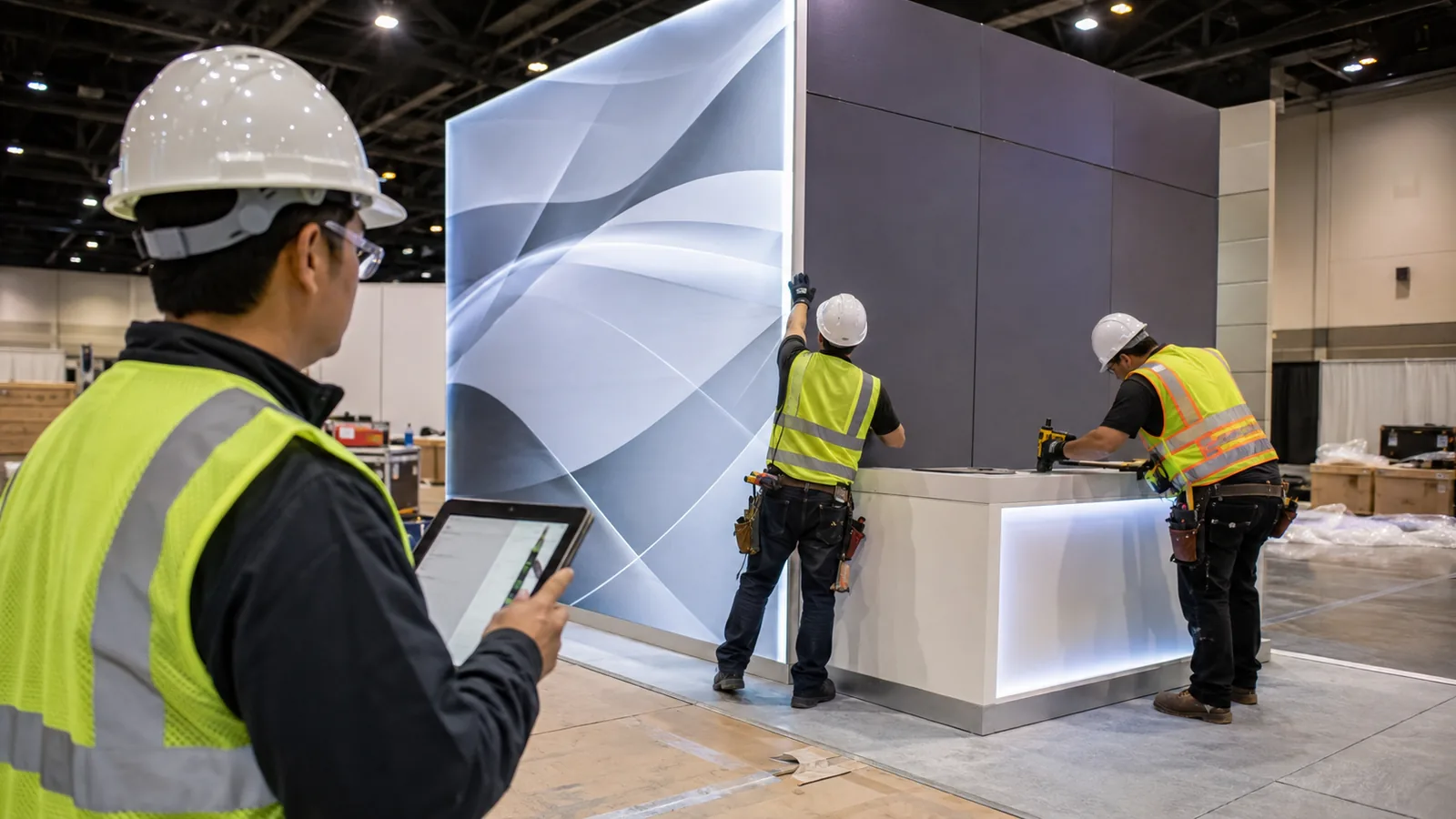
Use the current organizer documents as your control set. Before approving a drawing or releasing production, collect:
- the approved application and category confirmation;
- the 2027 prospectus and current floor plan with your booth number and open sides;
- the exhibitor manual and service kit, including official contractor contacts;
- height, sightline, hanging-sign, electrical, AV, rigging, and accessibility rules for your exact location;
- sampling, food handling, refrigeration, water, drainage, cleaning, and waste requirements that apply to your product;
- freight, material handling, advance-warehouse, target move-in, and dismantle instructions;
- insurance, permits, or documents requested by the organizer or venue;
- order deadlines and late-rate warnings;
- a responsibility list showing whether the organizer, official contractor, EAC, exhibit builder, or your team owns each item.
Mark every item as confirmed, pending, or excluded in your project tracker. A pending utility or height answer should not appear as an approved feature in the render. Because the 2027 venue is Indianapolis, do not transfer Las Vegas labor, dock, hall, or service assumptions from the 2026 show. Recheck dates, rates, eligibility, and program terms against the latest official prospectus before publication or payment.
A final go or pause check for your 2027 exhibit
Move into detailed design when the participation path, category, booth location, product workflow, and controlling documents are clear enough to price and approve.
Proceed when:
- the organizer has approved the application path or confirmed the correct category;
- the current floor plan and booth dimensions are available;
- sampling, storage, meetings, staffing, and utility assumptions are written down;
- the proposal separates floor space, build or rental, show services, freight, and labor;
- each unresolved item has an owner and a date for confirmation.
Pause when the only evidence is a 2026 Las Vegas page, a competitor’s all-in estimate, or a render with unresolved sampling, utility, height, or service requirements. Resolve that missing input first. It is cheaper to change a brief than to redesign a booth after production or move-in has started.
What can KingExhibits do for this project?
KingExhibits is useful when you already have the approval path but still need a booth brief that matches what the event will actually allow. For this show, that means translating the approved category, current prospectus, floor plan, service deadlines, sampling rules, and KPI targets into one working scope. It also means separating what the organizer controls from what your team controls, so you do not price a booth against guessed dates, guessed utilities, or a guessed service package. If you need a concept, layout, or build plan, start with the controls that are already fixed and let the rest follow.
What product advantage should your booth show?
Do not describe your product as “high quality” and stop there. Show the advantage that matters to this show: shelf-ready packaging, a clear flavor or format hierarchy, sample stability, cold-chain needs, ingredient or equipment proof, or a service that solves a real supply-chain problem. If the buyer needs to understand retail fit, show the package stack. If the buyer needs to understand manufacturing fit, show the process proof, cost logic, or performance data. The right booth advantage is the one a qualified buyer can verify in under a minute.
Frequently asked questions
What should you recheck if the 2027 prospectus changes?
Treat the newest prospectus as the source of truth for dates, rates, eligibility, corner fees, and package terms. If a later version conflicts with the page you saved, follow the newer document and update the brief before paying.
How do you compare Supplier Showcase pricing with main-floor space?
Compare the package price, included registrations or furnishings, and the extra items you still need to buy. Then compare the all-in cost of sampling, freight, labor, utilities, and storage, not just the published line rate.
What should you ask if your category fit is unclear?
Ask show management which application path applies, whether membership changes the rate, and whether Specialty Market or Startup Street needs a separate submission. Get the answer in writing before design or payment.
How should you decide between Startup Street and Specialty Market?
Use Startup Street for a young company that meets the organizer’s age and first-time criteria. Use Specialty Market only if your product really fits that program’s specialty positioning and current application rules.
What should you send before requesting a booth layout?
Send the approved application path, booth size, open sides, product list, sampling and utility needs, meeting plan, storage plan, staff count, service deadlines, and the current prospectus. That gives the builder something real to solve.
Final thoughts
The Sweets & Snacks Expo becomes easier to plan when you settle the participation path and current show documents before discussing finishes or large screens. KingExhibits can turn your approved category, product priorities, sampling workflow, meeting needs, and service scope into a booth brief your team can price and use. Send KingExhibits your current prospectus, floor plan, and target KPIs for a practical design-and-build conversation before you commit to production.