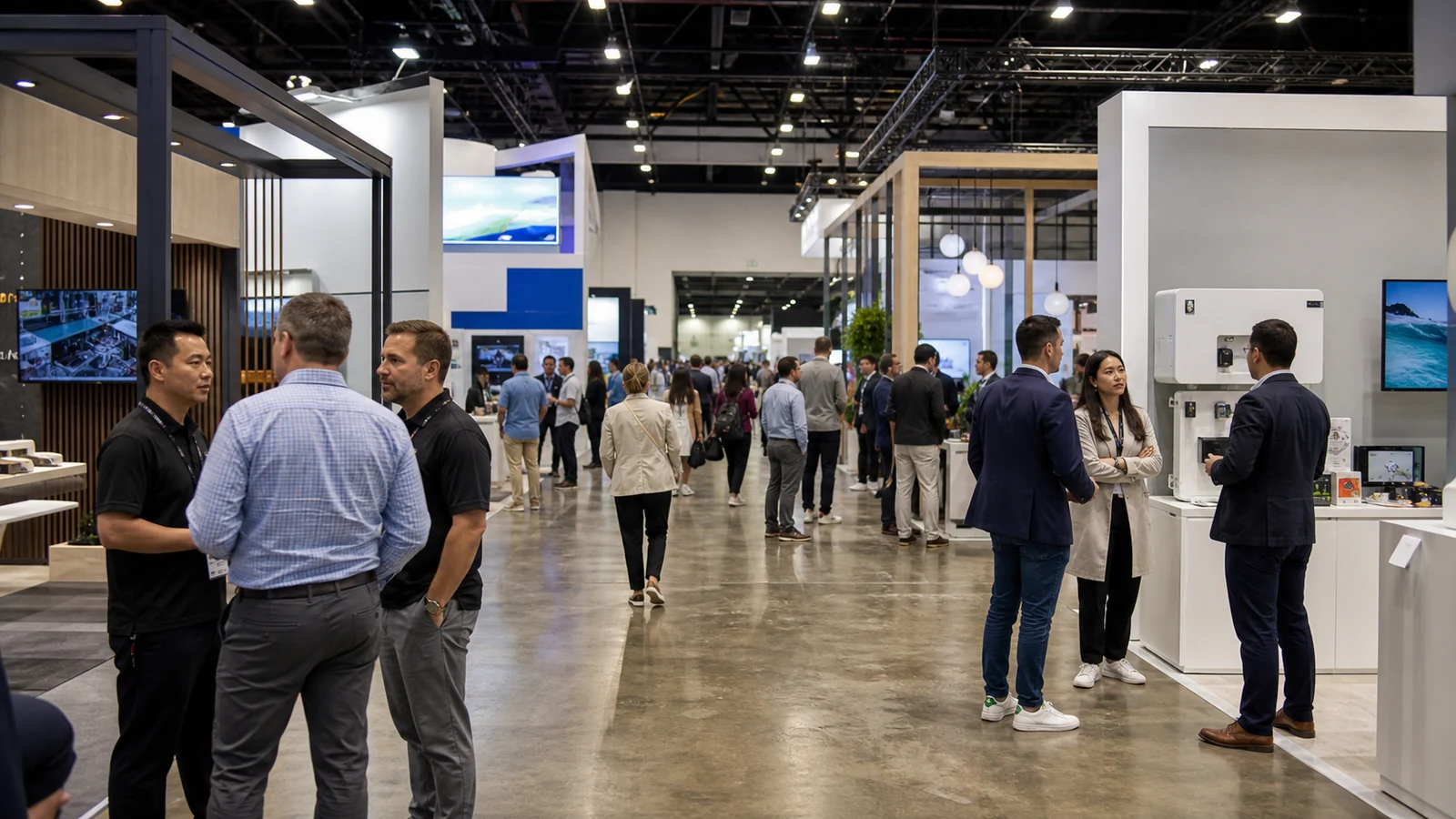
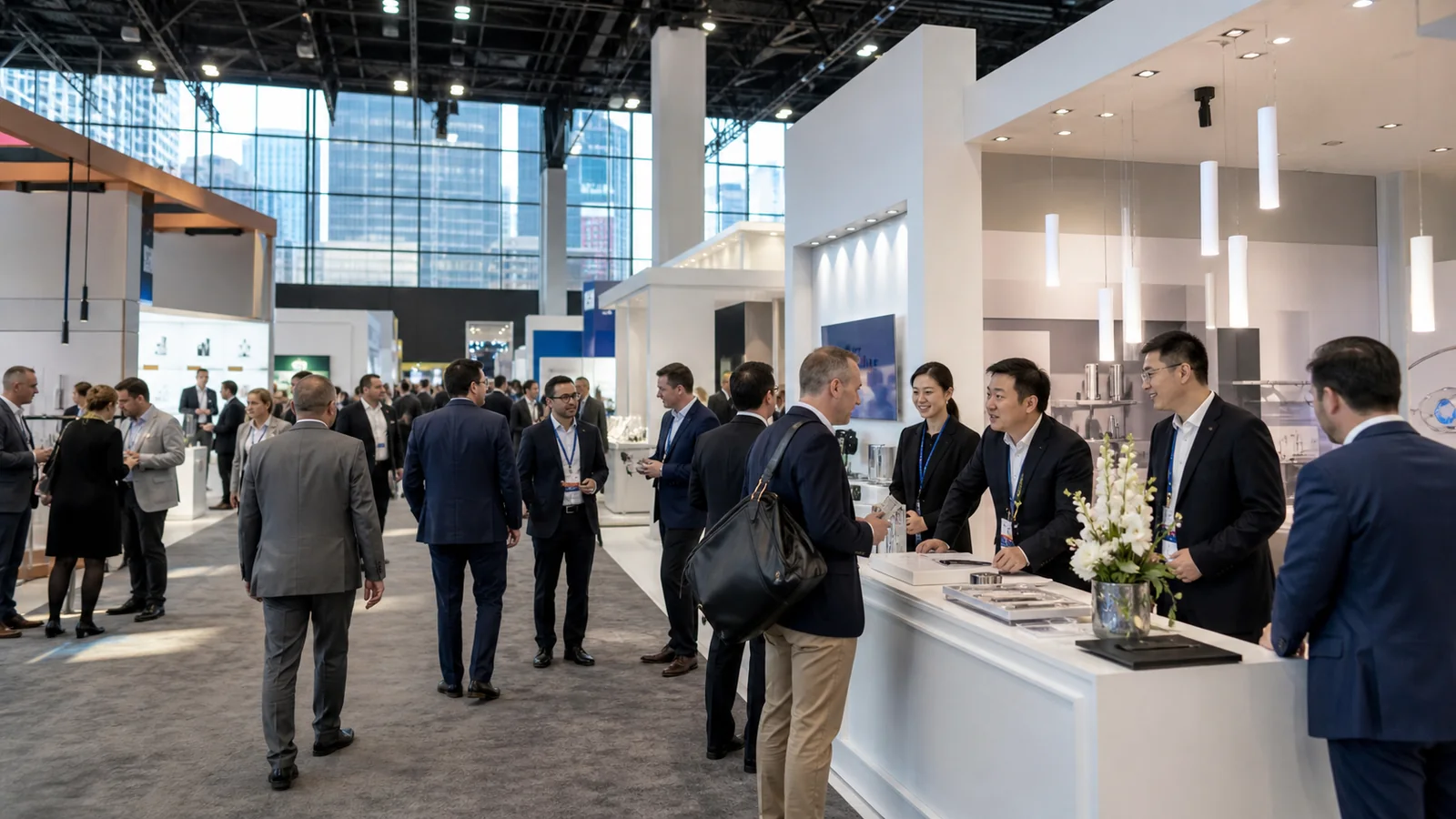
If the people you most want to meet never reach the booth, more aisle traffic will not rescue the campaign. Effective booth marketing gives named accounts a reason to visit before the show, makes the offer easy to recognize onsite and protects the follow-up after everyone travels home. These nine methods cover that complete marketing path, from invitation list to qualified outcome.
The first budget decision is therefore not which screen, game or giveaway to buy. Until the campaign names the audience, the reason to visit, the action in the booth and the owner of the next step, those items only amplify an unfinished plan. Fix the missing link first; spend on traffic and production after the path can be explained in one minute.
Before the Show: Build Demand Before the Aisle Opens
1. Define One Audience and One Measurable Visitor Action
“Manufacturers” is too broad to guide your campaign when several roles influence the purchase. Name the person whose problem your show message can address, then choose one action that would prove a meaningful interaction occurred.
That action might be booking a technical demonstration, reviewing a sample, comparing a current process, completing a short assessment or discussing an active project. It should be more specific than “engage with the booth” and earlier than “make a purchase.” For a new industrial product, ten qualified evaluations may be more valuable than hundreds of quick scans.
Write the campaign objective in one sentence: We want [target role] to complete [observable action] because it advances [commercial next step]. If the sentence needs three audiences and four actions, the campaign is not focused yet.
2. Build a Target-Account Invitation List
Build your invitation list from people who already have a reason to recognize the business: current customers, open opportunities, past inquiries, dormant accounts, distributors and partners. Then add named target accounts that match the show and territory. Use organizer-approved outreach or matchmaking channels; ignore the unsolicited “attendee lists” commonly sold by unknown senders.
Segment the list by reason to meet. An existing customer may need a product update. A dormant lead may have a project worth reopening. A target account may need evidence that the product solves a problem in its industry. Those groups should not receive the same invitation with only the first name changed.
The list also tells the sales team what success could look like before the doors open. If nobody can name the companies or roles they hope to see, the booth is relying on the aisle to define the market.
3. Book Priority Meetings Before Travel Starts
A useful invitation gives the recipient your event and booth number, a reason relevant to their work, two or three realistic time options, and the next action required to confirm. “Come see us at the show” transfers all the effort to the customer and usually disappears among other announcements.
Try a more concrete proposition: review the new sample range, compare output from two processes, bring a current drawing for a ten-minute assessment, or see a scheduled demonstration. The activity should be short enough to fit the event day and valuable without requiring an immediate purchase.
Leave walk-up capacity and transition time, especially when one specialist serves several meetings. Filling every hour looks productive on paper and collapses as soon as the first conversation runs long.
4. Turn the Show Into a Specific Campaign
Give your event one campaign idea made of three parts: a message, proof and an offer. The message identifies the problem or opportunity. The proof shows why your company can address it. The offer gives the visitor something relevant to do next.
For example, a packaging-equipment exhibitor might build the campaign around reducing changeover time. The proof could be a live or recorded sequence with actual output, while the offer is a scheduled review of the visitor's current line. That same story should appear in the invitation, landing page, salesperson's outreach and booth—not as identical copy, but as one recognizable promise.
A product launch becomes a campaign when it connects the new product to a defined buyer problem and action. “See our new product” alone asks the audience to decide why the launch matters.
During the Show: Convert Attention Into a Useful Next Step
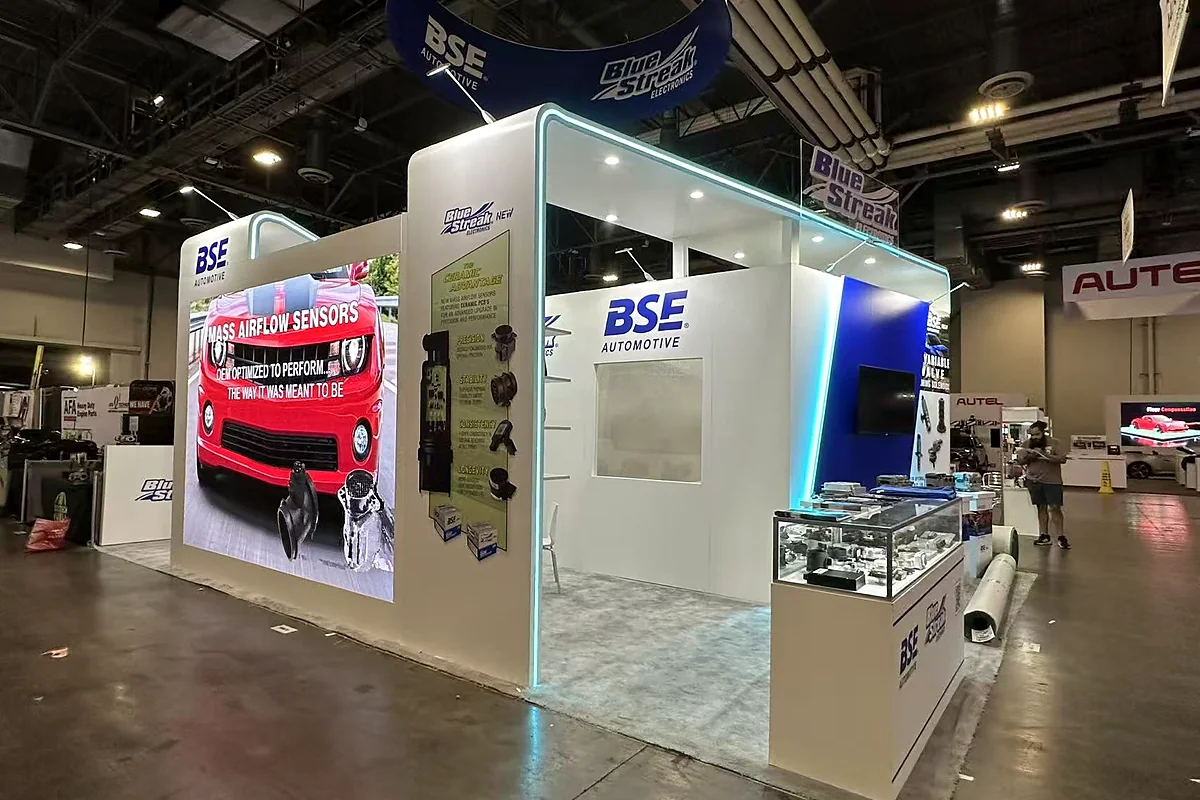
5. Make the Booth Message Work in the First Five Seconds
At aisle distance, your message has one small job: help the right person recognize what you offer and decide whether to stop. Features, certifications and secondary markets can wait for the closer product discussion.
Use one readable statement supported by a product, application image or demonstration that makes the claim easier to understand. “Automation solutions for the future” is broad enough to fit hundreds of booths. “Inspect 200 caps per minute without stopping the line” tells a packaging engineer what the discussion is about—provided the number is verified and applicable to the displayed system.
Move detailed specifications to the place where the product discussion happens. When every layer of information competes at aisle distance, none of it establishes a priority.
6. Give Visitors a Relevant Reason to Participate
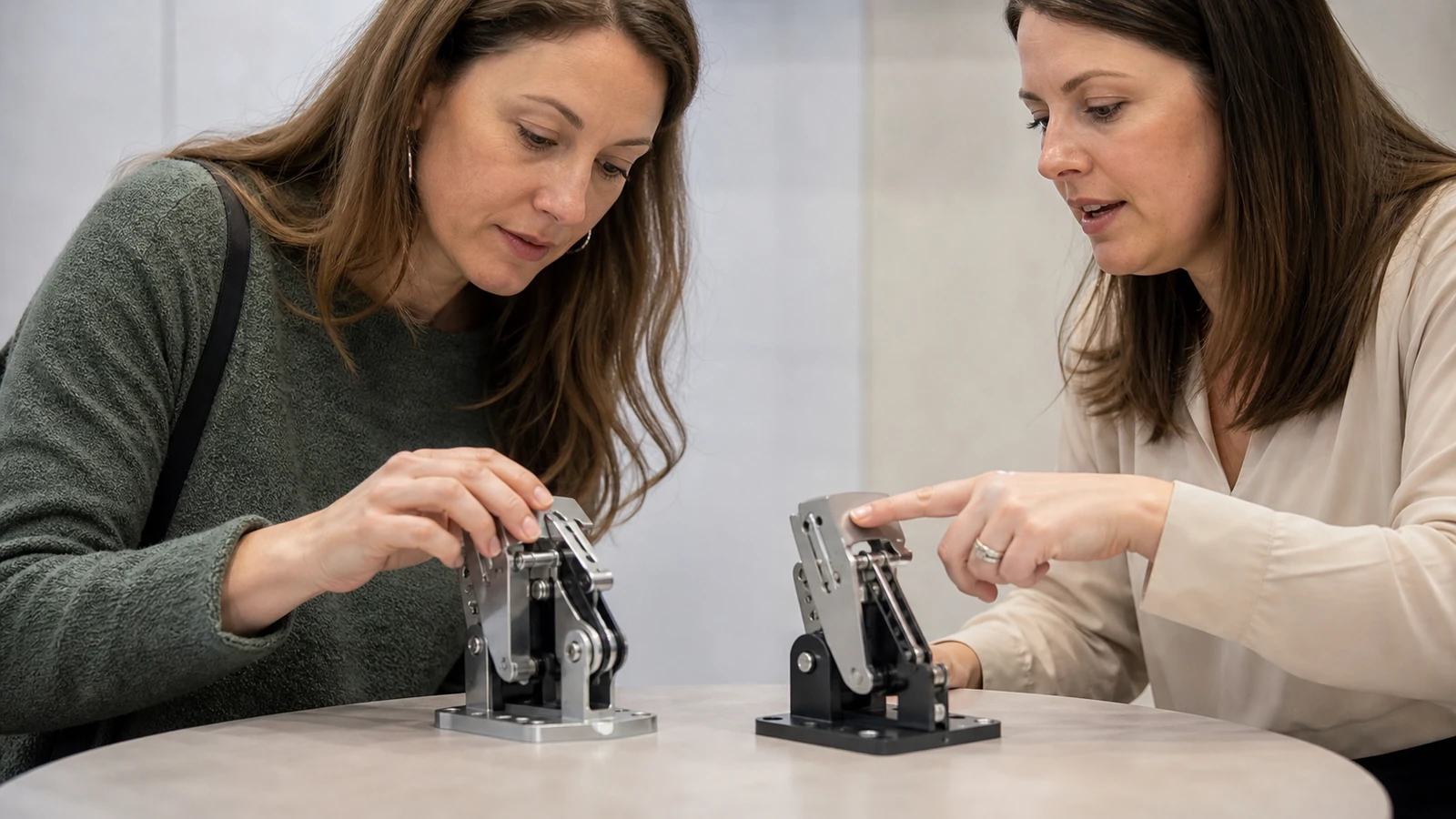
Participation works when it helps the visitor evaluate something. A sample can reveal taste, texture or finish. A demonstration can show speed or workflow. A comparison can make a difference visible. A short assessment can turn a general concern into a useful next question.
Participation should connect naturally to your campaign. A random game may collect names but tell your sales team nothing about need or fit. If you use a giveaway, connect entry to a relevant action—such as completing a product comparison or selecting a business problem—so the prize is not the only reason to stop.
Design the reset as carefully as the interaction. Samples must be replenished, surfaces cleaned, devices returned to the starting screen and demonstration materials prepared again. An activity that works for the first ten visitors but not the next hundred is not ready for a show floor.
7. Train Staff to Qualify and Record the Next Step
The people in your booth need roles, not just matching shirts. A greeter can identify the reason for the visit. A qualifier can determine need and fit. A specialist can handle the technical or commercial discussion. A meeting owner is responsible for what happens next. In a small team one person may perform several roles, but your handoff should still be clear.
Give staff a short opening question tied to the campaign. “What brings you to the show?” often produces a polite answer. “Are you currently printing this in-house or outsourcing it?” moves directly toward a relevant situation.
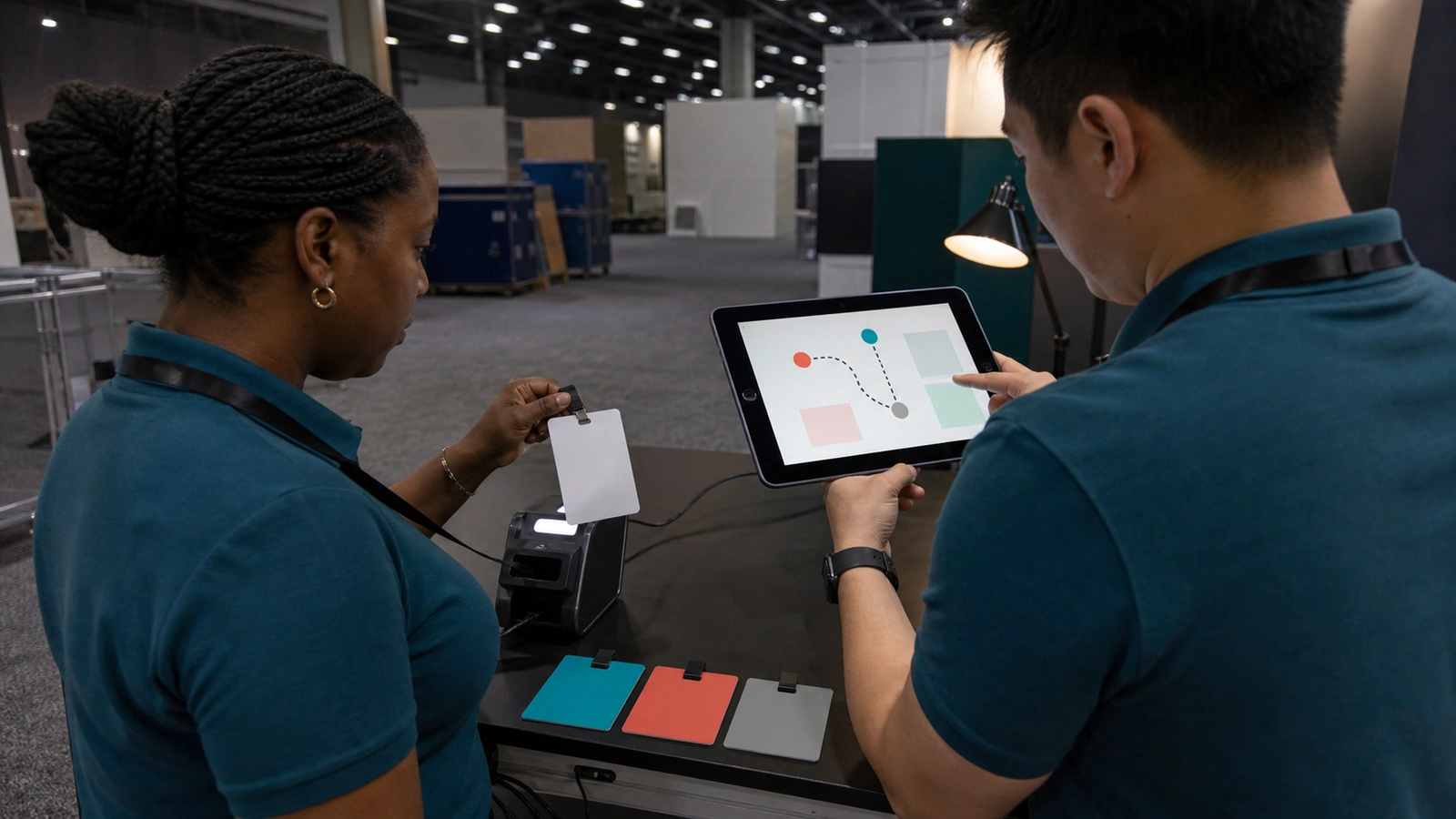
Capture only the information that changes follow-up: need, fit, timing, promised action and owner. Add one or two product-specific fields if sales will actually use them. A badge record without context leaves the post-show team guessing which conversation took place.
After the Show: Turn Interest Into Follow-Up
8. Follow Up While the Context Is Still Fresh
Follow up first on the promises your team made on the floor. If a visitor asked for a drawing, sample, specification or meeting, send that item with a brief recap of the actual discussion. High-priority follow-up should come from the person who owns the next step, not from an anonymous campaign address.
Separate the records before sending anything. An active project, a qualified future need, a distributor inquiry and a giveaway entry each need a different follow-up path. Automation can deliver those paths efficiently without flattening every contact into one message.
Set the internal due time before the show. A practical standard is to complete promised high-priority actions within one or two business days and route lower-priority nurture records into the appropriate sequence. This is a working recommendation, not a universal event rule; the point is to prevent the context and commitment from disappearing while the team travels home.
9. Measure Qualified Outcomes and Reuse What Worked
Raw traffic and badge scans describe volume. Qualified actions show whether the campaign reached the intended people and created a next step.
Report the measures that connect to your original objective: priority meetings held, target accounts reached, qualified product evaluations, agreed follow-up actions, opportunities created and promised actions completed. Then record the cost and staff time your campaign required to produce those outcomes.
The debrief should preserve decisions. Which invitation earned replies? Which message attracted the intended role? Where did the demonstration lose time? What qualification field helped the sales team act? Carry those answers into the next campaign so the next plan begins with evidence rather than memory.
A Simple Booth Marketing Measurement Map
| Goal | Target visitor | Booth action | Data captured | Next step |
|---|---|---|---|---|
| Generate distributor discussions | Regional distributor principal | Review channel and territory fit | Market, categories, current brands, timing | Distributor call with sales owner |
| Create equipment opportunities | Plant or engineering lead | Complete a product demonstration | Application, current process, requirement, project timing | Technical review |
| Introduce a new product range | Retail or sourcing buyer | Review selected samples | Category, price position, volume, delivery window | Sample and line-sheet follow-up |
| Build qualified software demand | Operations decision-maker | Run a short workflow assessment | Current system, users, problem, buying stage | Scheduled discovery meeting |
Frequently Asked Questions
When should trade show marketing start?
For a standard U.S. booth campaign, begin roughly three to six months before the show: define the audience and action first, then build the list, message, content and meeting outreach. Large custom exhibits, machinery demonstrations and overseas programs often need six to twelve months because production and logistics decisions begin earlier. These are planning ranges; the organizer's contract and deadlines control the actual schedule.
How do you attract the right visitors to a trade show booth?
Use four connected elements: a named target-account list, a specific reason to meet, an aisle message the right role can recognize, and a product interaction tied to that person's work. More noise may attract more bodies; better alignment attracts more useful visits.
What booth marketing metrics matter most?
Measure the qualified action defined before the show. Useful metrics include target accounts reached, scheduled meetings held, qualified demonstrations, agreed next steps, opportunities created and follow-up completion. Report raw scans separately as traffic volume, not as the main result.
Should you use giveaways at a trade show booth?
Use a giveaway when it reinforces the campaign or rewards a relevant action and the team can separate participants from sales leads. Skip it when the prize attracts people outside the target audience, creates a queue that blocks qualified visitors or becomes the only memorable part of the booth.
Turn the Campaign Goal Into a Booth Brief
Tell us the show, target visitor, product and the useful action the campaign should generate. We will translate that goal into the message hierarchy, product presentation and visitor flow the booth needs to support.
Contact Kingexhibits to discuss your booth marketing objective.