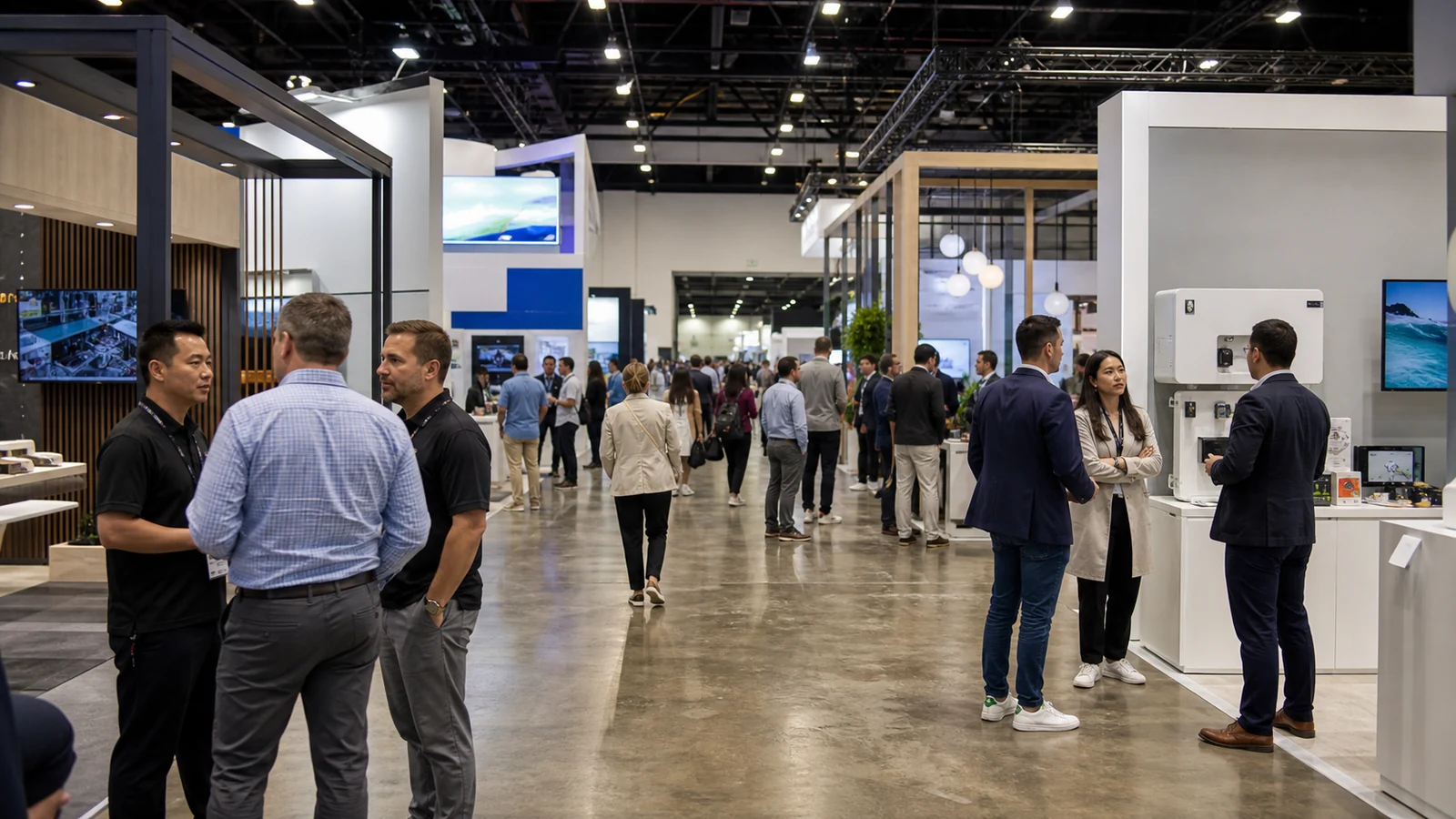
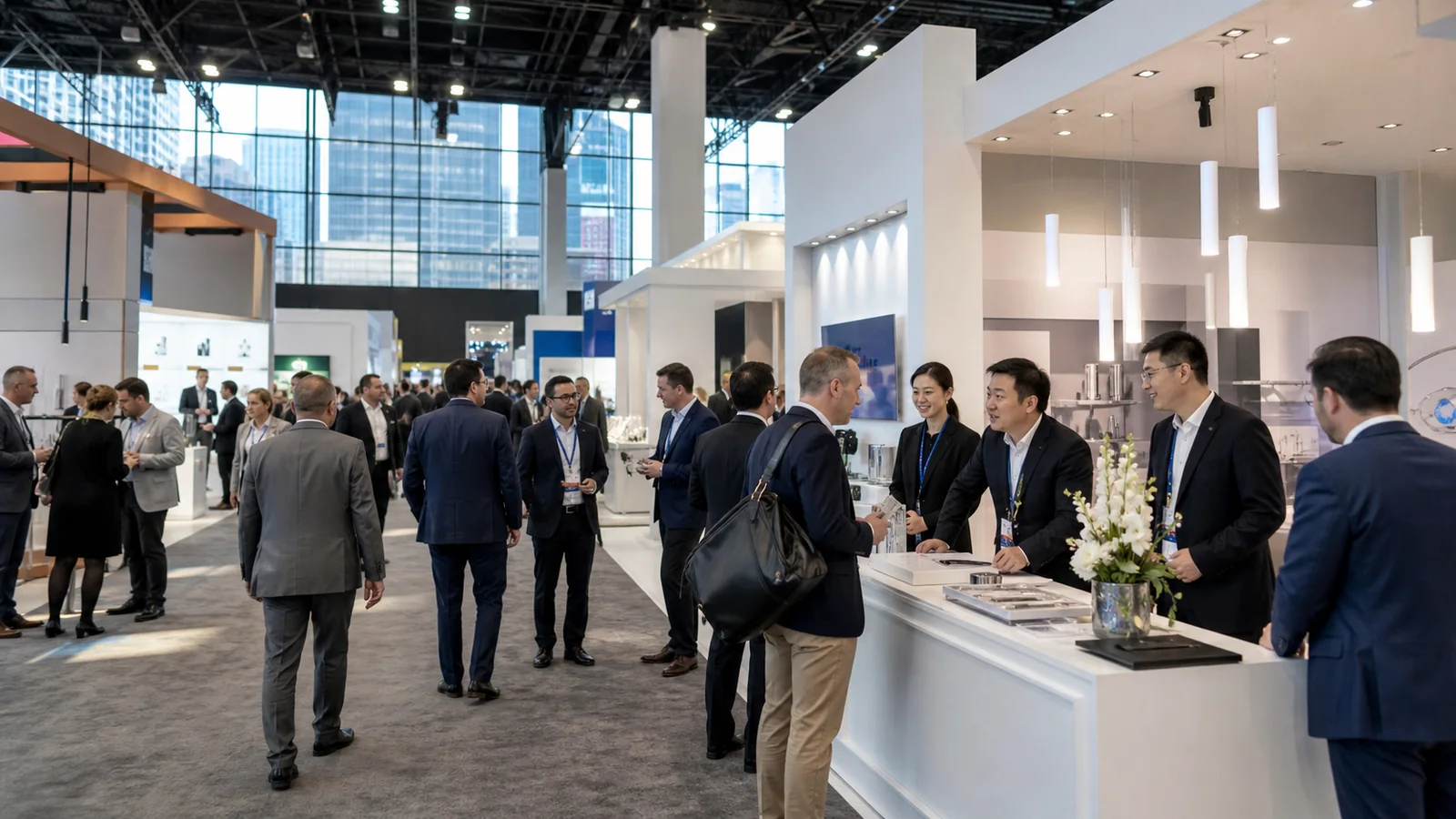
Choosing your first trade show display gets confusing when portable, modular, rental and custom are presented as points on one price scale. Some terms describe construction, others describe ownership, and each choice changes freight, labor, storage and what visitors can do in the booth. This guide shows what fits 10×10, 10×20 and island spaces and how to compare the installed cost before you rent or buy.
What Is a Trade Show Display?
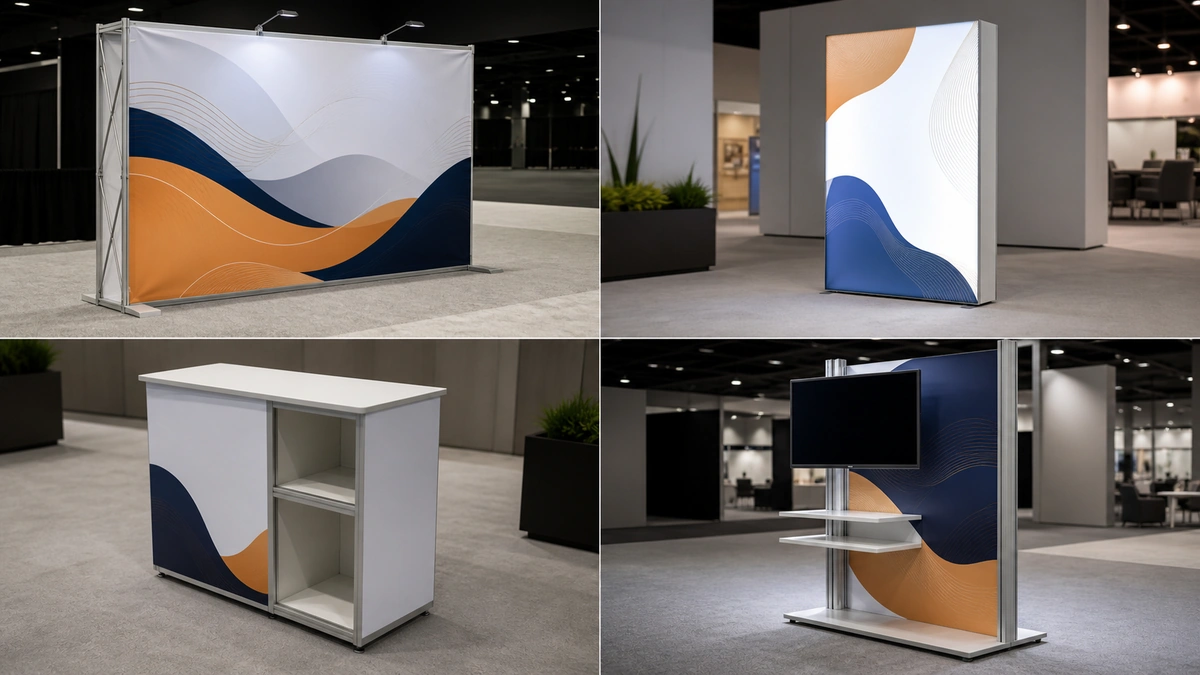
A trade show display is the combination of structures, printed graphics and presentation components used inside rented booth space. It may be as simple as a fabric backwall and counter or as complete as a multi-room island exhibit with lighting, product fixtures, storage and meeting areas. If the main need is a branded wall behind a compact product presentation, compare trade show backwall display options before adding more structure. For the branded printed surfaces in a complete display, review trade show graphics alongside the selected backwall and counter.
The booth space is the empty footprint purchased from the organizer. The display is what you put inside it. A custom exhibit describes a design and production approach, while a rental exhibit describes an acquisition method. Keeping those terms separate prevents a common first-time error: comparing the online price of a portable backwall with the installed cost of a complete rental booth.
Define the Selling Task Before Choosing Hardware
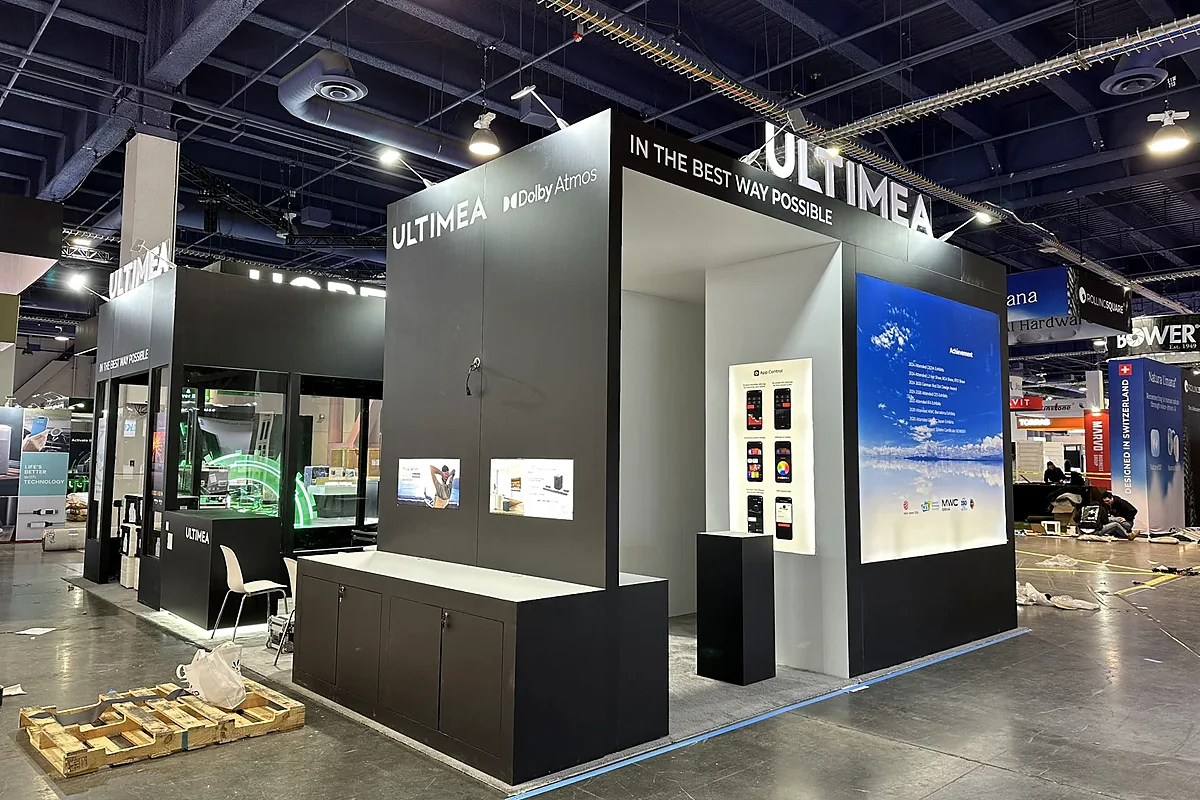
Write down what must happen in the booth before choosing hardware. A visitor may need to inspect a product, watch a demonstration, taste a sample, compare options or hold a short technical meeting. Those activities need different viewing distances, counters, utilities, storage and staffing.
Then place the real constraints around that action:
- booth size and number of open sides;
- product dimensions, weight and handling;
- number of staff and visitors involved at one time;
- utilities, screens, sampling or demonstration equipment;
- who will install the display and what tools they can use;
- how it will ship, where it will be stored and how often it will return.
A 10×10 booth usually does not fail because 100 square feet is unusable. It fails because the plan asks the same space to be a showroom, theater, storage room, reception desk and private meeting room. Decide which job earns the floor area and let the display support it.
Main Types of Trade Show Displays
| Display type | Best for | Setup and shipping | Main limitation |
|---|---|---|---|
| Banner and tabletop displays | Small events, supporting messages, solo travel | Very compact; product-specific self-setup may be possible | Limited visual depth and storage |
| Pop-up displays | Fast full-width backwalls in 10×10 spaces | Folding or expanding frame, compact cases | Fixed shape; limited reconfiguration |
| Tension-fabric and backlit walls | Clean large graphics and stronger visual presence | Aluminum frame plus fabric; backlit units need power | Graphic-led rather than product-led unless carefully planned |
| Modular exhibit systems | Repeat use across layouts and changing booth sizes | More components and cases; planned assembly | Higher complexity than one backwall |
| Custom-built exhibits | Product-specific experiences, large booths and distinctive architecture | Professional production, freight and installation | More planning, service coordination and budget |
Choose the simplest of these five systems that can perform the selling task without creating a new operating problem. If one person must carry and assemble everything, portability is a hard constraint. If booth sizes change during the year, reconfiguration is more valuable than owning a perfect 10×10. A product that requires load-bearing supports, utilities or controlled access has already moved beyond a graphic-kit decision, even in a small footprint.
Banner and Tabletop Displays
A retractable banner or tabletop unit works when the event is small, the offer is simple and the representative must travel light. It can identify the company and support one message without consuming much floor area. It cannot carry an entire product catalog. Two or three banners filled with small text often look cheaper and communicate less than one well-edited panel.
Use portable banners as a complete display only when the sales task truly is portable. They also work as supporting signs inside a larger booth, provided they do not create extra visual competition.
Pop-Up Displays
Pop-up frames expand into a wide backwall and pack into rolling cases. They are popular for 10×10 spaces because they provide a large branded surface without a built exhibit. The strongest use is a simple, repeatable booth where the graphic can do most of the distant communication.
The fixed footprint is the trade-off. A ten-foot frame stays ten feet wide, and a curved unit does not become a different layout when the next show provides a corner or 10×20 space. Check the packed dimensions and replacement-graphic method before buying, not only the assembled photograph.
Tension-Fabric and Backlit Walls
Tension fabric stretches over a tube or extrusion frame to create a clean graphic surface. Backlit versions place LEDs behind a translucent graphic and increase contrast in a visually crowded hall. That extra visibility also exposes a weak message, so edit the graphic before paying to illuminate it. For a booth-specific fabric surface, review tension fabric trade show display options against the planned frame, lighting and graphic changes.
Choose backlighting when one image or proposition deserves the attention and power is practical. Backlit systems generally cost more than standard fabric walls, add packed weight and require show-site power. The full price comparison appears in the budgeting section, where the equipment cost can be viewed beside the services it does not include. For a complete booth built around fabric surfaces, compare fabric exhibition stands with a portable wall after the footprint and support needs are defined.
Modular Exhibit Systems
Modular systems combine reusable frames, panels, counters, shelves and graphics. Useful components can form a 10×10 booth at one show and a wider or more dimensional arrangement at another, which makes reconfiguration the reason to choose the system.
Ask to see every intended configuration and its packing list before committing. “Modular” is only valuable when the team can identify which parts, graphics and cases belong to each footprint. Otherwise, flexibility becomes warehouse confusion.
Custom-Built Exhibits
A custom exhibit begins with the product, audience and experience rather than a catalog kit. It can support machinery, hospitality, controlled demonstrations, architectural branding or multiple meeting zones. Custom does not necessarily mean every component is disposable; rental frames and reusable elements can still sit inside a custom-designed solution.
The advantage is fit. The burden is coordination. Engineering, approvals, freight, labor, utilities, installation and dismantling become part of the design, so the planning schedule must include more than graphic production.
How to Choose a Display by Booth Size
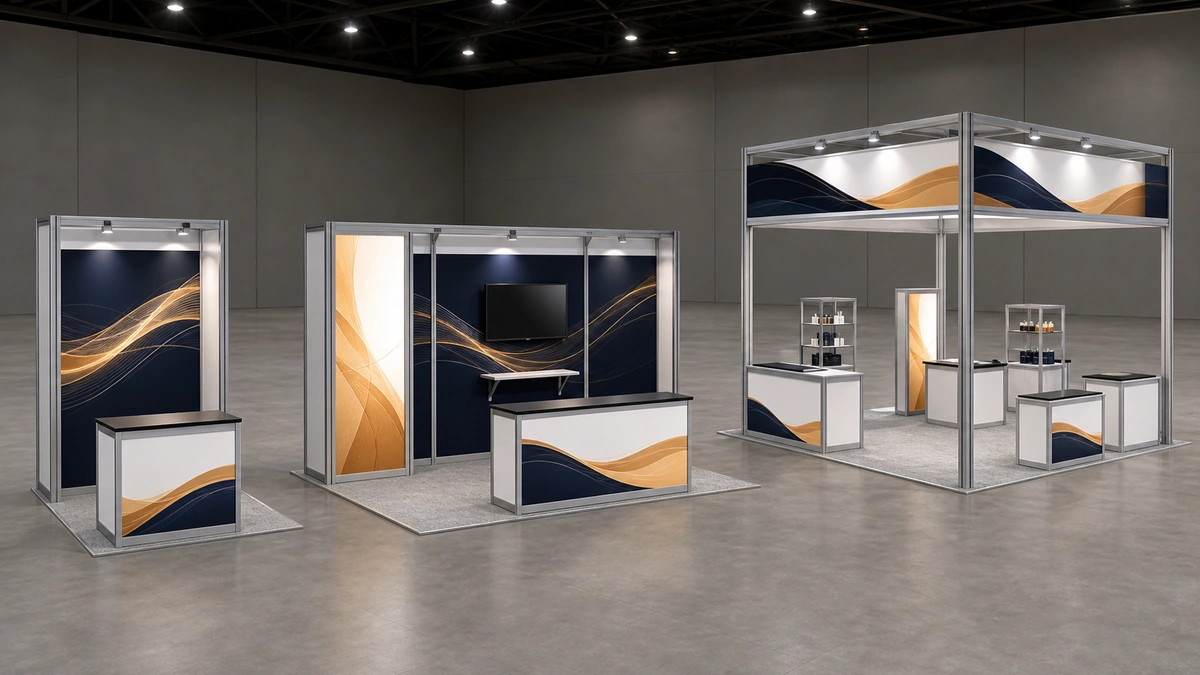
10×10 Inline Booth
Keep the entrance open, put one clear message on the backwall and choose one principal product or interaction point. A small counter can support greeting or lead capture, but placing a six-foot table across the front turns the booth into a barrier. Storage must be deliberate because shipping cases and staff bags can consume the only usable standing area.
For a product that fits in the hand, give it the foreground and let the wall explain why it matters. For software, make the screen visible without forcing the operator to stand with their back to the aisle. If the visit requires privacy or a seated meeting, a 10×10 may be the wrong footprint rather than a design puzzle that needs more furniture.
10×20 Inline or Corner Booth
Two hundred square feet allows a product zone and a short discussion area, but it does not support every function at full scale. A corner's second open side can improve entry and sightlines; it also exposes more of the working area, so storage and unfinished backs cannot simply move sideways.
Use the extra width to create sequence. Visitors should understand what to see first, where the demonstration happens and where a qualified discussion continues. Two unrelated 10×10 displays placed side by side rarely produce that flow.
20×20 and Larger Island Booth
An island can receive people from four directions and support demonstrations, product groups, storage and meeting space. It also removes the conventional backwall, which means the design must establish orientation without closing off the perimeter.
Higher structures, hanging signs, rigging, floor loading, fire rules and multiple service drops may enter the project. Add a lounge only when the sales process requires longer seated discussions. Equipment exhibitors usually need the square footage for operating clearances, waiting visitors and technical discussion first.
Should You Rent or Buy a Trade Show Display?
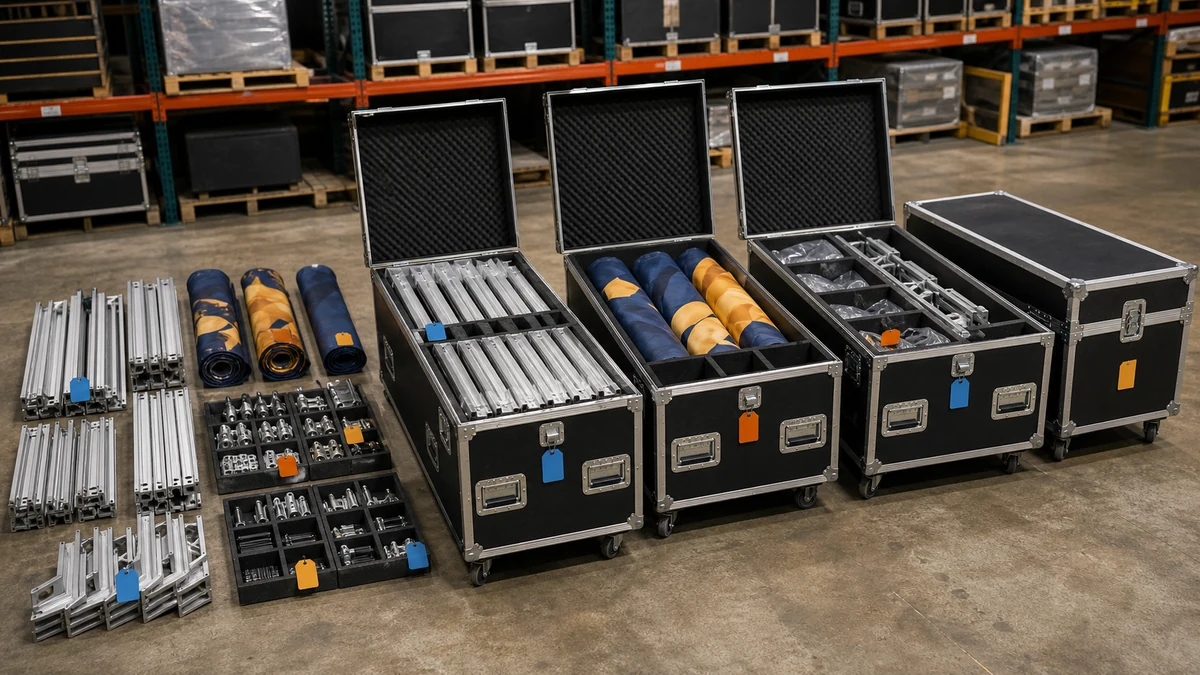
Renting is often practical when booth sizes change, the company exhibits in the United States from overseas, storage is limited or the design has not yet been tested across several shows. It converts more of the physical exhibit into a per-event project and can reduce the need to own, store and repair hardware.
Buying makes more sense when the footprint stays stable, the same system will be used repeatedly, and the company has a workable plan for shipping, storage, maintenance and graphic updates. Ownership is not free after purchase.
Compare the two with complete formulas:
Ownership cost = hardware + initial graphics + replacement graphics + storage + repair + shipping + show services
Rental cost = rental structure + project graphics + freight + installation/dismantling + utilities and other show services
Do not use a universal “buy after three shows” rule. A lightweight backwall, a custom island and an overseas program have different costs and operational risks.
Budget for Shipping, Setup, and the Installed Booth
Separate the budget into five groups:
- Space: the organizer's booth-space charge and any corner or location premium.
- Display and graphics: rented or purchased structures, printed graphics, fixtures, flooring and AV equipment.
- Freight and material handling: transport to the advance warehouse or show site and movement between the dock and booth.
- Labor and utilities: installation, dismantling, electrical, internet, rigging, plumbing, compressed air and cleaning as required.
- Travel, storage and reuse: staff travel, off-site storage, repairs, replacement graphics and return shipping.
Published online display prices usually cover a defined hardware-and-graphic package. The following snapshot came from one U.S. supplier in September 2026 and is useful for distinguishing product tiers—not for estimating a complete event or representing a Kingexhibits quotation.
| Display hardware category | Published purchase range | Common items still outside the price |
|---|---|---|
| Banner stand | $200–$500 each | Booth space, freight, floor services and travel |
| 10×10 backwall | $765–$1,500 | Counter, flooring, show labor and utilities unless listed |
| 10×10 pop-up | $765–$1,800 | Event services and any accessories not in the kit |
| 10×10 multi-frame kit | $1,800–$4,500 | Freight, material handling, labor and utilities |
| 10×10 backlit display | $1,500–$9,000 | Venue power, freight, handling and installation as applicable |
Read the inclusion list line by line. The same-looking product can differ in case type, lights, counter, print coverage, replacement graphics, weight and setup. The installed cost—not the product thumbnail price—is the number that belongs in the event budget.
First-Show Display Checklist
- Name the one action the display should help a visitor complete.
- Read the floor plan, booth rules and current exhibitor manual.
- Put the real product, staff, visitors, cases and utilities into the layout.
- Choose the simplest display structure that supports the action.
- Compare rental and purchase using complete costs and future use.
- Add freight, handling, labor, utilities, travel and storage to the budget.
- Test the installation sequence and review the graphics at realistic viewing distance.
Frequently Asked Questions
What should a 10×10 trade show booth include?
A practical 10×10 booth usually starts with one full-width or dominant branded surface, one main product or interaction point, a compact lead-capture or reception surface, concealed storage and enough open floor for staff and visitors. Add a monitor only when it supports the demonstration. Remove the front table if it blocks entry. Do not try to fit a lounge, full showroom and live theater into the same 100 square feet.
How much does a trade show display cost?
The sourced 2026 examples in the budgeting table run from $200–$500 for a banner stand to $1,500–$9,000 for 10×10 backlit display hardware. Standard 10×10 backwalls in the same snapshot were $765–$1,500. These are product prices, not installed event budgets; booth space, freight, material handling, labor, power, flooring, travel and storage may be separate.
Can one person set up a trade show display?
Some portable products are specifically designed and documented for one-person setup. For example, one current ten-foot tension-fabric kit publishes a one-person, 45-minute assembly estimate. That does not apply to every display. Check the product weight, case size, instructions, tools and show rules; larger backlit, modular or custom exhibits may require two people or official labor.
Is a backlit display worth it?
It is worth considering when a large graphic is the main distant message and the hall is visually competitive. It is less valuable when the product itself should dominate, the artwork contains too much text, or electrical and shipping costs consume budget needed for the selling experience. Compare the added system price, venue power and packed weight with the value of stronger visual contrast.
Tell Us Your Booth Size and How Often You Plan to Use It
Send us the booth size, product or demonstration, intended visitor activity and the number of U.S. shows you expect to attend. We will compare portable, modular and custom-rental directions against those facts and explain which route is practical before you invest in the display system.
Contact Kingexhibits to discuss your first trade show display.
230 container
231