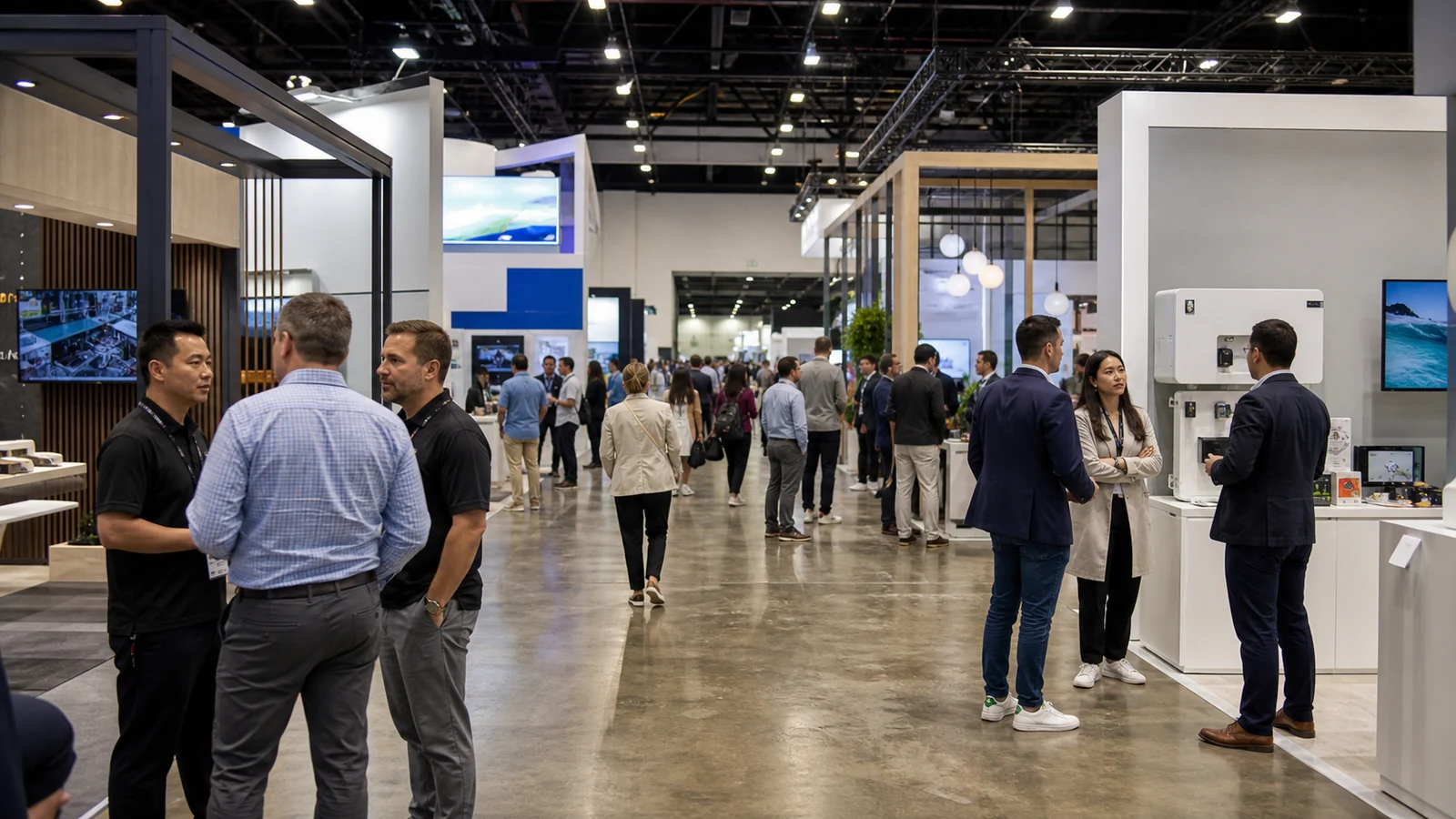
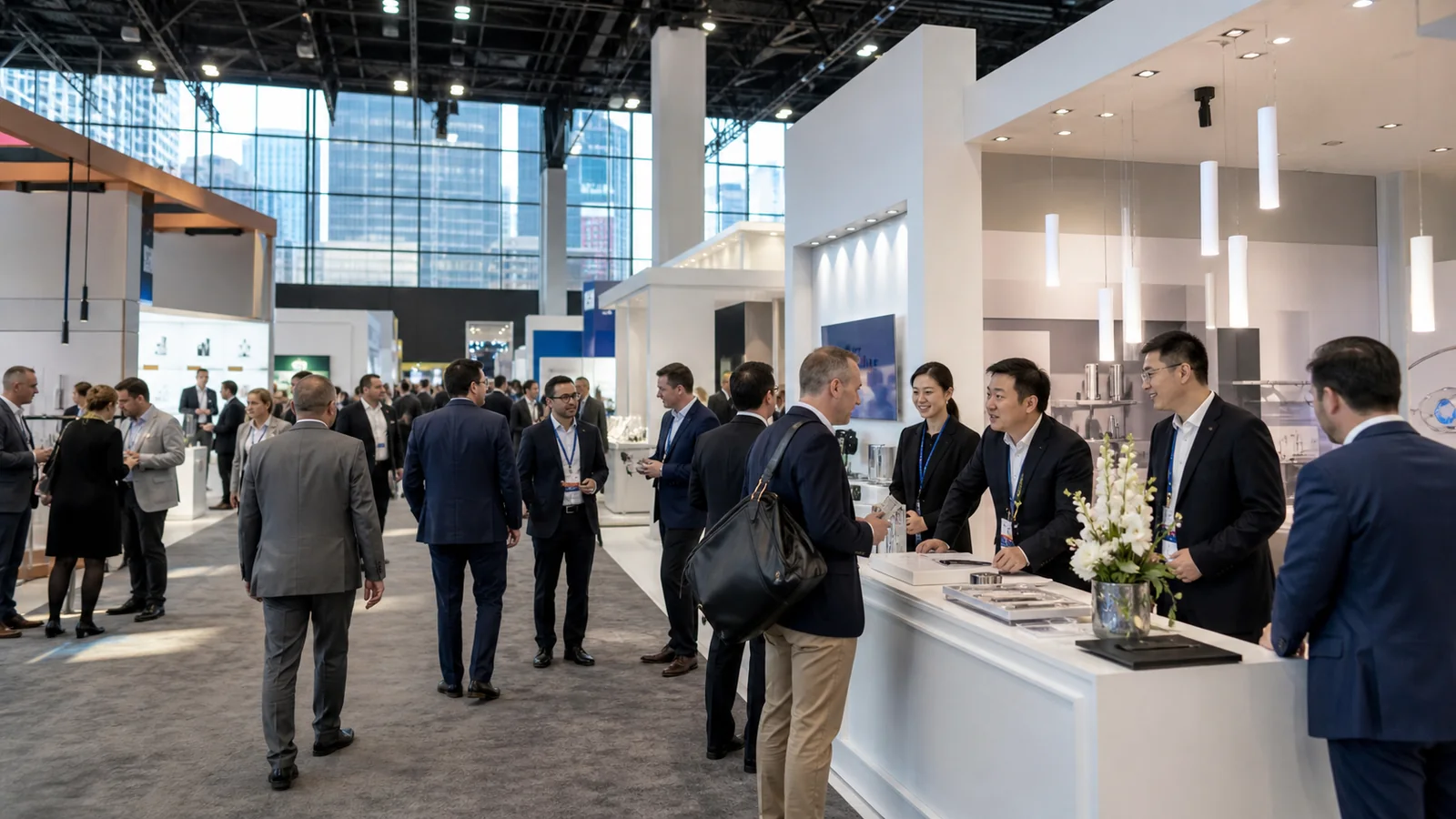
Automotive and trucking trade shows serve different parts of the vehicle market. A show built around performance parts is not the same as an event for dealership systems, work-truck equipment, fleet technology, heavy-duty trucking, trailers, racing, or batteries.
This guide introduces events still in progress or scheduled after its September 2, 2026 update, plus organizer-announced 2027 dates. It compares each event by location, show content, and market focus. Because schedules and exhibitor rules can change, confirm the current organizer information before booking travel or exhibit space.

Upcoming 2026 Events and Announced 2027 Dates
The calendar starts with events taking place or still ahead after the September 2, 2026 update, then lists organizer-announced 2027 dates. It is a planning reference rather than a ranking.
| Event | Date | City/venue | Main show content | Best fit |
|---|---|---|---|---|
| NATDA Trailer Show | Sep. 1–3, 2026 | Nashville, Music City Center | Trailers, parts, dealership operations, technical training, and industry education | Trailer manufacturers, dealers, component suppliers, and service providers |
| The Battery Show North America | Oct. 12–15, 2026; expo Oct. 13–15 | Detroit, Huntington Place | Battery cells and materials, pack manufacturing, EV technology, testing, thermal management, and charging | Battery, EV, engineering, manufacturing, and supply-chain companies |
| ATA Management Conference & Exhibition | Oct. 17–20, 2026 | Charlotte, Charlotte Convention Center | Executive programming, trucking policy, operations, technology, equipment, and services | Companies that need carrier leadership and senior management conversations |
| SEMA Show | Nov. 3–6, 2026 | Las Vegas, Las Vegas Convention Center | Specialty equipment, performance, customization, off-road, light truck, racing, collision repair, and accessories | Specialty automotive aftermarket products and services |
| AAPEX | Nov. 3–5, 2026 | Las Vegas, Venetian Expo and Caesars Forum | Replacement parts, repair, maintenance, distribution, shop equipment, and service technology | Vehicle service and repair aftermarket companies |
| PRI Show | Dec. 10–12, 2026 | Indianapolis, Indiana Convention Center and Lucas Oil Stadium | Racing components, engines, fabrication, machinery, simulation, safety, and motorsports services | Companies serving professional racing and motorsports businesses |
| NADA Show | Feb. 17–20, 2027; expo Feb. 18–20 | Orlando, Orange County Convention Center | Dealership management, technology, finance, fixed operations, marketing, training, and vendor solutions | Companies selling into franchised dealership operations |
| Work Truck Week | Mar. 9–12, 2027; exhibit hall Mar. 10–12 | Indianapolis, Indiana Convention Center | Chassis, bodies, upfits, equipment, commercial-vehicle technology, OEM updates, and Ride & Drive | Work-truck manufacturers, upfitters, fleets, dealers, and equipment suppliers |
| Mid-America Trucking Show | Mar. 18–20, 2027 | Louisville, Kentucky Exposition Center | Heavy trucks, parts, maintenance, accessories, carrier services, education, and truck-focused events | Heavy-duty trucking suppliers, carriers, and owner-operator solutions |
| ACT Expo | Conference May 17–20, 2027; expo May 18–19 | Las Vegas, Las Vegas Convention Center | Advanced powertrains, fuels, charging, commercial vehicles, telematics, automation, safety, and fleet operations | Fleet, shipper, OEM, energy, and transportation-technology companies |
| SEMA Show 2027 | Nov. 2–5, 2027 | Las Vegas | Next specialty aftermarket event cycle | Early planning; detailed show information should be rechecked |
| AAPEX 2027 | Nov. 2–4, 2027 | Las Vegas | Next vehicle service aftermarket event cycle | Early planning; detailed show information should be rechecked |
The list does not include every automotive expo or trucking conference in the country. Specialist events for independent dealers, fleet maintenance, private fleets, rental cars, car washes, and vehicle engineering may be stronger choices when your product belongs to one of those narrow markets.
Before You Choose: B2B Trade Event or Public Auto/Truck Show?
Confirm the event format before treating it as a sales or partnership opportunity. Industry expos usually qualify attendees or exhibitors; professional conferences combine education with a smaller exhibit component; public auto and truck shows focus more heavily on consumers, enthusiasts, entertainment, or vehicle display.
| Format | Typical content | What to check |
|---|---|---|
| Trade-only or qualified-industry expo | Products, supplier discovery, demonstrations, and professional meetings | Eligibility, attendee roles, and approved product categories |
| Conference with an exhibition | Executive, policy, technical, or education sessions plus supplier exhibits | Conference versus expo access and actual hall hours |
| Public auto/truck show | Vehicle displays, launches, entertainment, and enthusiast activities | Whether the public audience supports your commercial objective |
Public attendance can be useful for awareness or media activity, but it is not proof that dealers, distributors, fleets, carriers, or engineering teams will be available for business discussions.
Which Automotive Trade Show Fits Your Market?
The automotive events below cover five different markets: specialty aftermarket, vehicle service, dealership operations, motorsports, and battery/EV technology. Their content categories are more important than the shared word “automotive.”
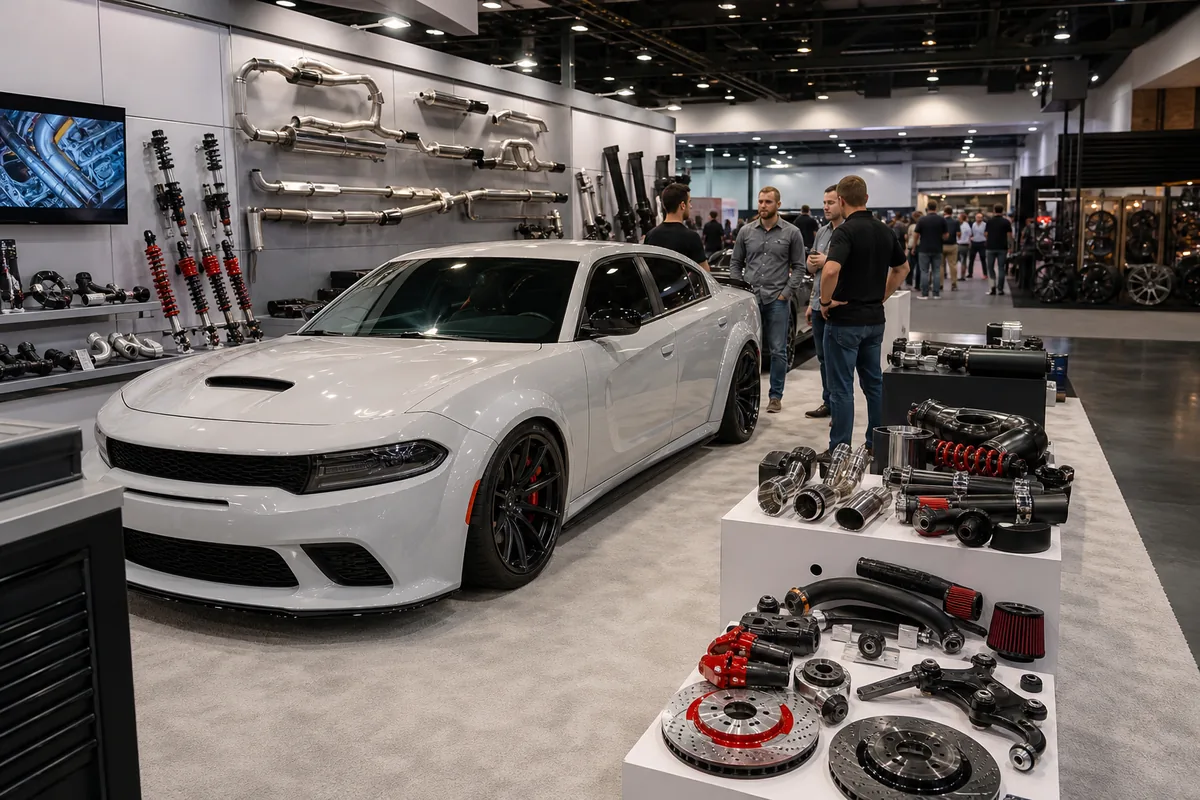
SEMA Show: specialty equipment, performance, and customization
Date and place: November 3–6, 2026, at the Las Vegas Convention Center.
What the show covers: SEMA’s current rules describe a marketplace for aftermarket parts and accessories, specialty equipment, performance, off-road, racing, restyling, light-truck products, powersports, collision repair, paint and body equipment, mobile electronics, and other automotive categories. The show is primarily trade-focused, while the organizer currently lists Friday, November 6 as open to the public.
Best fit: This event is relevant when your product needs a visually strong launch, a feature vehicle, distributor or installer conversations, or a clear place within a specialty aftermarket category. Check the floor section and eligibility rules before designing the booth because SEMA assigns exhibitors by market category and controls which products can be displayed.
AAPEX: replacement, repair, service, and distribution
Date and place: November 3–5, 2026, at the Venetian Expo and Caesars Forum in Las Vegas.
What the show covers: AAPEX centers on the vehicle service aftermarket. Its content is relevant to replacement parts, maintenance and repair products, diagnostic technology, tools, shop equipment, distribution, retailers, service chains, and independent service professionals. The organizer restricts attendance to business representatives of the automotive aftermarket.
Best fit: AAPEX is a stronger match when your commercial path runs through parts distribution, repair networks, service facilities, or technical aftermarket applications. Product application, compatibility, service value, and channel discussions usually matter more than a consumer-style vehicle reveal.
SEMA and AAPEX share dates and a city, but they are separate shows with different venues, floor plans, service orders, and market emphasis. A company considering both needs a separate staffing and follow-up plan for each venue.
NADA Show: franchised dealership operations
Date and place: February 17–20, 2027, at the Orange County Convention Center in Orlando; the expo runs February 18–20.
What the show covers: NADA combines dealership education and events with an expo serving franchised automotive retail. Common exhibit themes include dealership management systems, fixed operations, finance, marketing, customer experience, facility or shop equipment, training, digital retail, and other vendor solutions.
Best fit: The show is relevant when you can connect the product to a dealership workflow, management priority, revenue function, or service operation. A general automotive message is not enough. The booth should make the dealership use case easy to understand and discuss.
NADA also illustrates why current manuals matter. Its 2027 exhibitor FAQ requires at least 200 square feet for each display vehicle, a vehicle reporting form, and official coordination of vehicle move-in and move-out. Those are NADA requirements, not universal rules for every U.S. show.
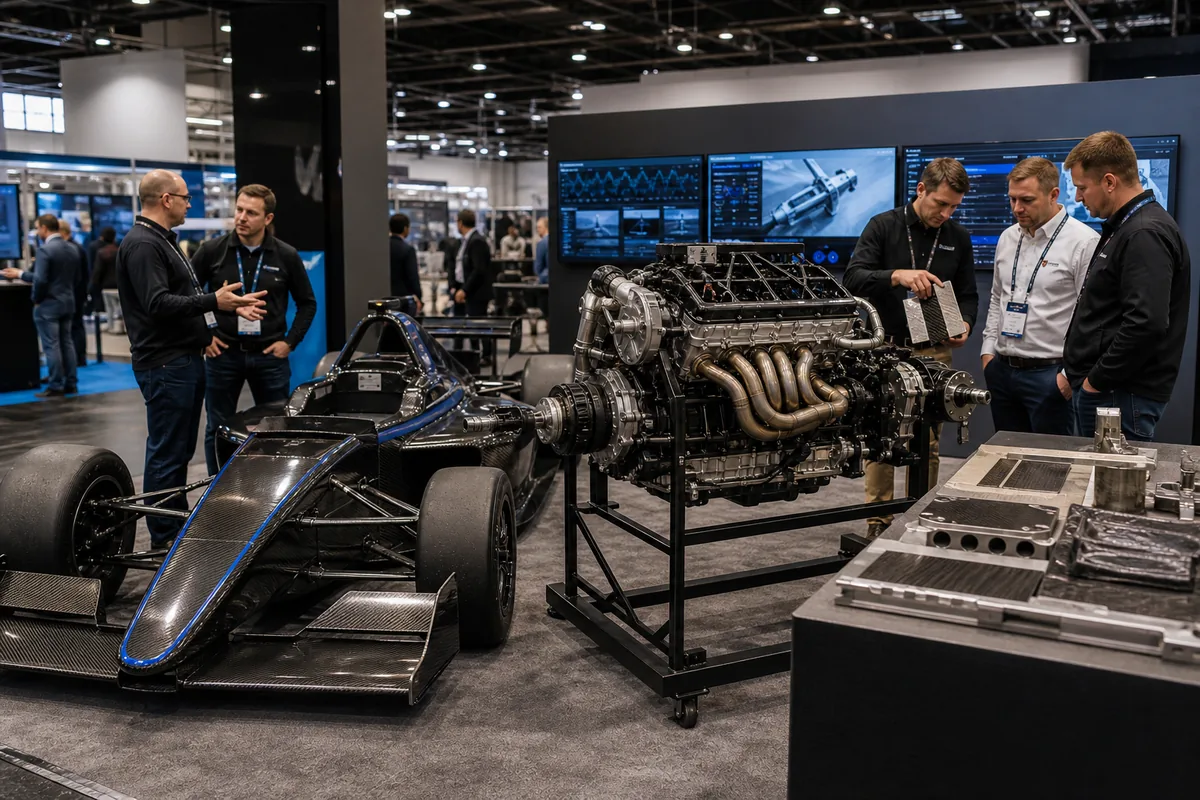
PRI Show: professional racing and motorsports business
Date and place: December 10–12, 2026, at the Indiana Convention Center and Lucas Oil Stadium in Indianapolis.
What the show covers: PRI is centered on the business and technology of racing. The exhibit mix can include engines and drivetrain components, racing parts, fabrication, machinery, tools, simulation and data, safety equipment, trailers, track services, and specialist manufacturing.
Best fit: It suits products and services that can stand up to technical questions from racing professionals. A display vehicle may attract attention, but components, applications, performance evidence, and engineering conversations still need to remain accessible.
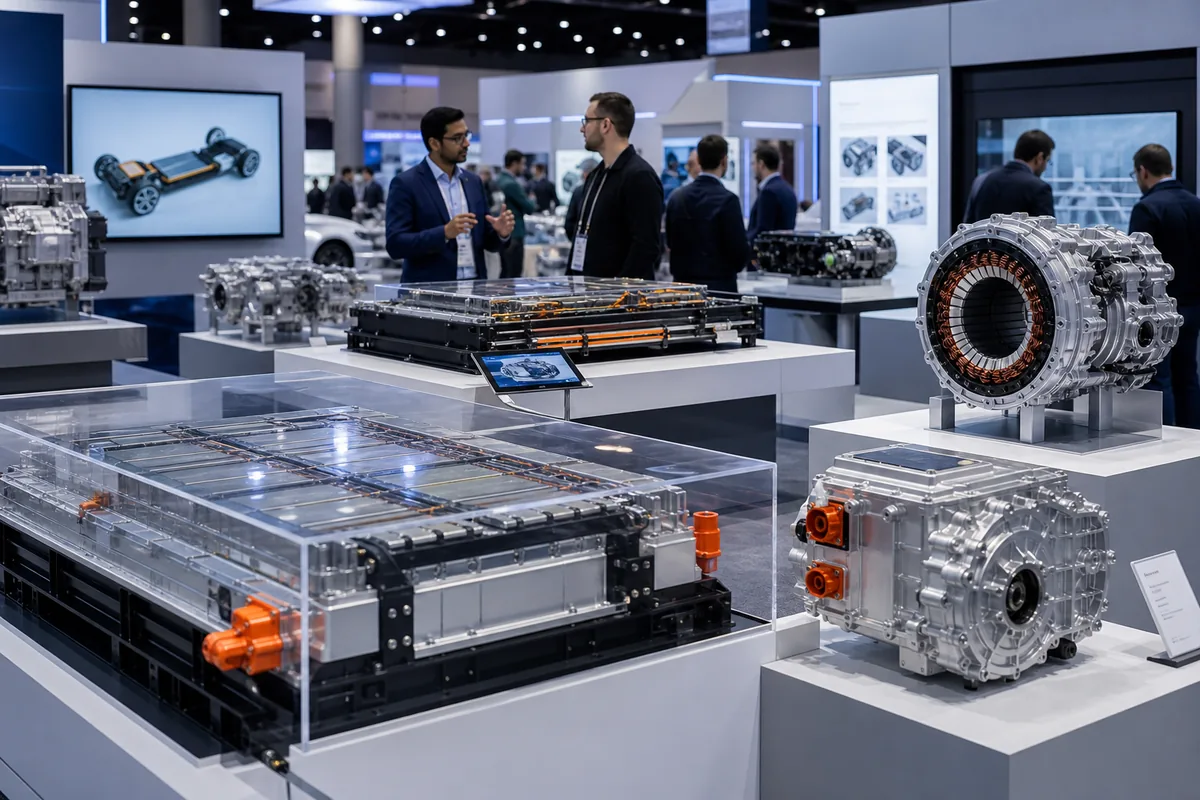
The Battery Show North America: batteries, EV systems, and manufacturing
Date and place: October 12–15, 2026, at Huntington Place in Detroit; the expo runs October 13–15.
What the show covers: The show spans battery materials and cells, pack design and assembly, manufacturing equipment, testing, quality, thermal management, power electronics, EV systems, charging, recycling, and energy-storage technology. Its program combines workshops, conference content, and an expo floor.
Best fit: It is most relevant when your product supports engineering, production, quality, sourcing, or EV development rather than dealer retail or the general replacement-parts channel. Decide whether the exhibit must support a component display, equipment demonstration, technical presentation, or private engineering meeting; each choice changes the AV, power, internet, storage, and floor-space plan.
Which Trucking or Commercial-Vehicle Event Fits Your Market?
The trucking events below divide into trailer distribution, carrier management, work trucks, heavy-duty trucking, and fleet technology. This distinction prevents a company from treating every “truck show” as the same audience.
NATDA Trailer Show: trailer dealers, manufacturers, and service operations
Date and place: September 1–3, 2026, at Music City Center in Nashville. The event is underway on this article’s September 2 update date, so check the organizer for next-edition information if you read this later.
What the show covers: NATDA focuses on the light- to medium-duty trailer channel. Its program combines trailer and component discovery with dealer education, technical training, service operations, and industry discussion.
Best fit: It is relevant to trailer manufacturers, parts and accessory suppliers, dealership systems, repair/service tools, finance or insurance services, and other products sold through the trailer dealer network. If a complete trailer or heavy item is part of the display, confirm floor loading, access, freight, and move-in requirements before finalizing the booth.
ATA Management Conference & Exhibition: trucking leadership and policy
Date and place: October 17–20, 2026, at the Charlotte Convention Center.
What the show covers: ATA MCE combines executive-level programming, policy discussions, trucking business issues, networking, and an exhibit hall featuring transportation technology, equipment, and services. It is more management- and leadership-led than a general truck-product show.
Best fit: The event works best for solutions that need conversations about carrier operations, strategy, regulation, safety, finance, workforce, technology, or enterprise performance. Confirm who from your target accounts attends, when the exhibit hall is active, and whether your sales team can convert a senior-level conversation into a clear next step.

Work Truck Week: chassis, upfitting, equipment, and vocational vehicles
Date and place: March 9–12, 2027, at the Indiana Convention Center in Indianapolis; the exhibit hall runs March 10–12.
What the show covers: Work Truck Week brings together chassis OEMs, fleets, upfitters, equipment manufacturers, distributors, truck dealers, engineers, and product teams. Content includes OEM updates, vehicle specification, body and equipment integration, commercial-vehicle technology, education, the Future Truck Summit, and Ride & Drive programming.
Best fit: It is a strong match for work-truck bodies, vocational equipment, upfits, fleet applications, integration components, safety systems, and commercial-vehicle technology. If you plan to show a vehicle, distinguish a static booth display from the organizer’s Ride & Drive program; they have different space, scheduling, and participation requirements.

Mid-America Trucking Show: heavy-duty trucking and owner-operator market
Date and place: March 18–20, 2027, at the Kentucky Exposition Center in Louisville.
What the show covers: MATS combines a large truck-industry exhibit environment with educational seminars, a Ride & Drive, and truck-focused events. Relevant exhibit categories can include heavy trucks, engines and components, maintenance, tires and wheels, accessories, safety, technology, finance, recruiting, and carrier services.
Best fit: It is useful when the product needs visibility across the heavy-duty trucking ecosystem, including carriers, maintenance teams, professional drivers, and owner-operators. The broad audience makes product positioning important: the booth should state whether the offer solves an equipment, operating-cost, maintenance, safety, driver, or business problem.
ACT Expo: advanced commercial vehicles and fleet technology
Date and place: The conference runs May 17–20, 2027, and the expo runs May 18–19 at the Las Vegas Convention Center.
What the show covers: ACT Expo focuses on commercial transportation technology. Current program themes include advanced powertrains and vehicles, diesel efficiency, hybrid and battery-electric systems, hydrogen and renewable fuels, charging and fueling infrastructure, telematics, automation, software-defined vehicles, safety, maintenance, and fleet productivity. Vehicle displays and Ride & Drive programming are also part of the event format.
Best fit: It suits OEMs, fleets, shippers, energy and infrastructure providers, software companies, and component suppliers working on fleet performance or vehicle transition. A company exhibiting hardware, software, and a vehicle at the same time should plan distinct demonstration zones so one product does not hide the others.
How to Choose the Right Show for Your Company
Use four checks to reduce the list:
- Audience: Identify the role you need to meet—dealer, distributor, installer, engineer, fleet team, carrier leader, driver, or manufacturer.
- Product category: Confirm that the organizer accepts and groups products like yours.
- Desired action: Decide whether the exhibit should support a product launch, technical comparison, demonstration, scheduled meeting, or channel-development conversation.
- Event format: Compare trade-only access, conference/expo hours, public attendance, and vehicle-program rules.
A well-known show is still a poor choice when its core audience cannot use, specify, distribute, or approve your offer.
What Your Company Can Learn or Validate at These Shows?
Choose two or three questions before the show: which applications attract serious interest, what proof visitors request, how clearly the channel understands the product, and which conversations justify a next meeting. Give the team one recording method so recurring feedback can guide messaging, demonstrations, and the next event decision.
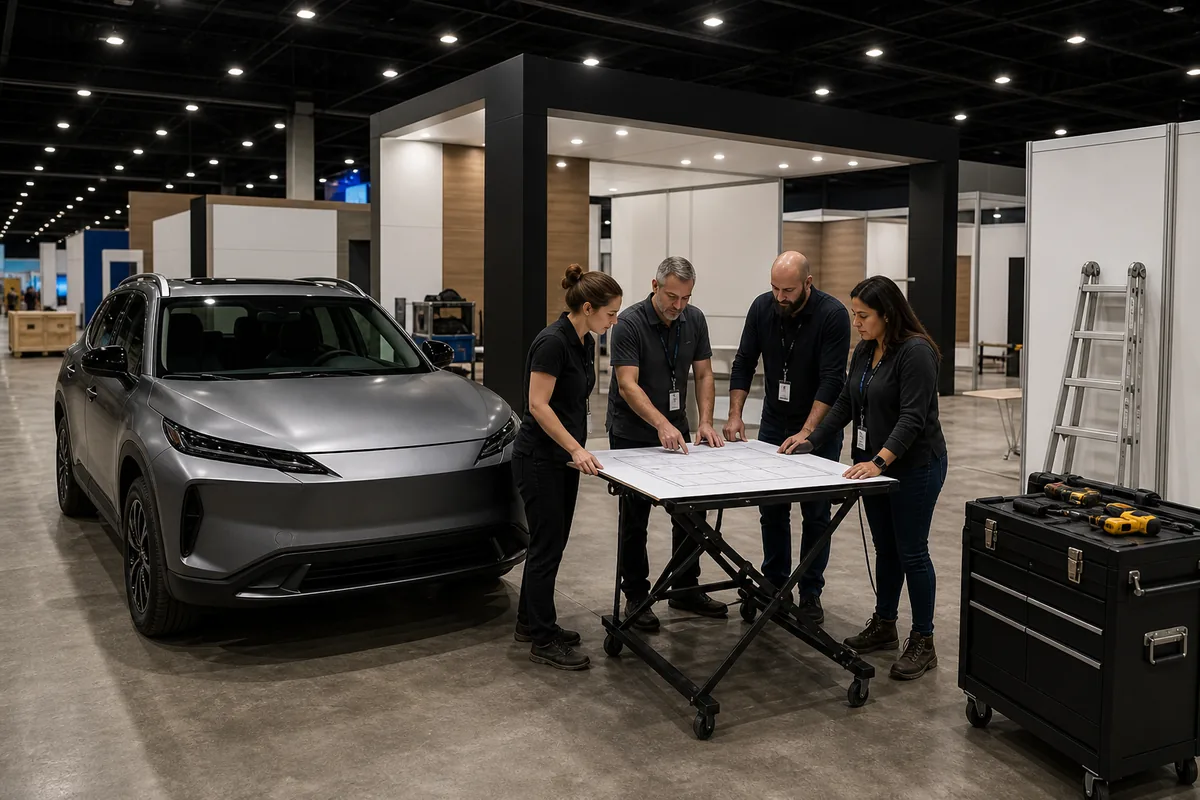
Vehicle and Heavy-Product Exhibit Planning Checklist
Automotive and trucking exhibits often include vehicles, trailers, engines, batteries, machinery, or heavy components. Before approving a booth design:
- Collect the current exhibitor manual, display rules, floor plan, vehicle form, and service deadlines.
- Record dimensions, weight, turning radius, access points, final position, and the space needed to inspect the product safely.
- Verify event-specific fuel, battery, charging, wheel-chock, key, fluid, fire-safety, and inspection rules.
- Map freight targets, docks, crates, forklifts, rigging, material handling, and move-in order.
- Separate static display needs from organizer-run outdoor demos or Ride & Drive programs.
- Assign design, production, official services, installation, onsite, and closeout responsibilities in writing.
Do not copy one event’s vehicle or labor rules into another show plan.
What Costs Belong in the Exhibit Budget?
Separate exhibit costs from event and venue charges before comparing proposals.
Booth Space and Exhibit Production
Include space rental, exhibit rental or purchase, design, engineering, graphics, furniture, lighting, AV, and storage. Confirm what the booth package includes and what must be ordered separately.
Show Services and Product Handling
Budget for power, internet, cleaning, freight, drayage, forklifts, rigging, installation, and dismantling. Vehicles, trailers, batteries, or machinery may also require approval, special move-in, material handling, and labor.
People, Travel, and Contingency
Include staff travel, accommodation, shipping insurance, permits, and an allowance for late changes or onsite orders. Identify which charges come from the organizer, venue, general contractor, and exhibit provider so a booth quotation is not mistaken for the total show cost.
What to Prepare Before Requesting a Booth Quote?
- Event name, city, dates, booth number, size, and configuration
- Target audience and primary exhibit objective
- Rental or purchase preference
- Budget and internal approval deadline
- Vehicle, machinery, component, or demo dimensions and weights
- Graphics, AV, lighting, power, internet, and storage requirements
- Current exhibitor manual and service deadlines
- Freight origin and return destination
- Installation, dismantling, and onsite support requirements
- Planned reuse at future shows
This gives the project team enough information to separate booth design from venue services, logistics, installation, and post-show responsibility.
Frequently Asked Questions
Can you display a vehicle in a standard trade show booth?
Often, yes, but only when the event approves the plan and the booth, access route, and safety requirements support it. Check minimum space, floor-plan approval, vehicle forms, move-in coordination, fuel or battery conditions, and final placement for that specific show.
Should your company exhibit at both SEMA and AAPEX?
Only when both aftermarket audiences matter enough to support two exhibit operations. They share a city and dates but have separate venues, market emphasis, service orders, staffing needs, and follow-up requirements.
Can one exhibit be reused across several automotive or trucking shows?
Yes. Modular structures, graphics, furniture, and AV can be reused, but floor dimensions, height limits, vehicle placement, utilities, labor rules, and audience objectives may require changes at each event.
How early should exhibit planning begin?
Work backward from organizer deadlines instead of relying on one universal lead time. Vehicle approvals, engineering, production, graphics, service orders, freight targets, and multi-show reuse add decisions that must be completed before move-in.
Should a small or specialized company choose a large national show?
Only when the event concentrates the roles and product category you need and your team can support the booth, travel, meetings, and follow-up. A focused demonstration and scheduled meetings can make a smaller exhibit effective, but a specialist event may be a better choice when a large show includes too much unrelated traffic.
Final Thoughts
The best event is the one whose content categories and audience match what you sell and what you need the booth to accomplish. Use the calendar to build a shortlist, study each show’s actual program and exhibitor rules, and only then compare booth scope and delivery requirements.
Planning to exhibit at one of these events? Prepare the show details, audience, budget, vehicle or demo requirements, exhibitor manual, logistics, onsite scope, and reuse plan. KingExhibits can review the brief and identify the design, production, show-service, and delivery responsibilities that should be resolved before quotation.