
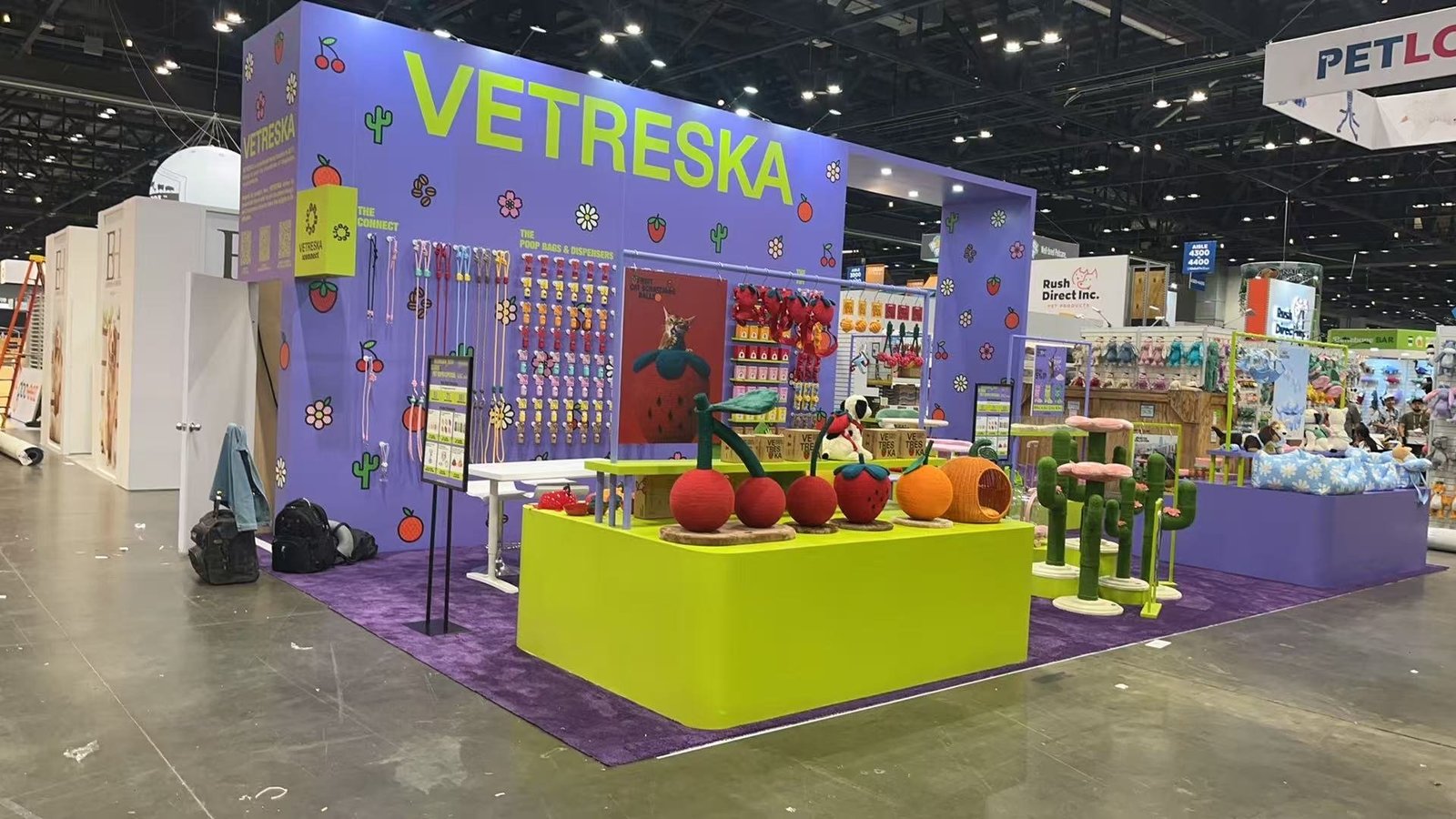


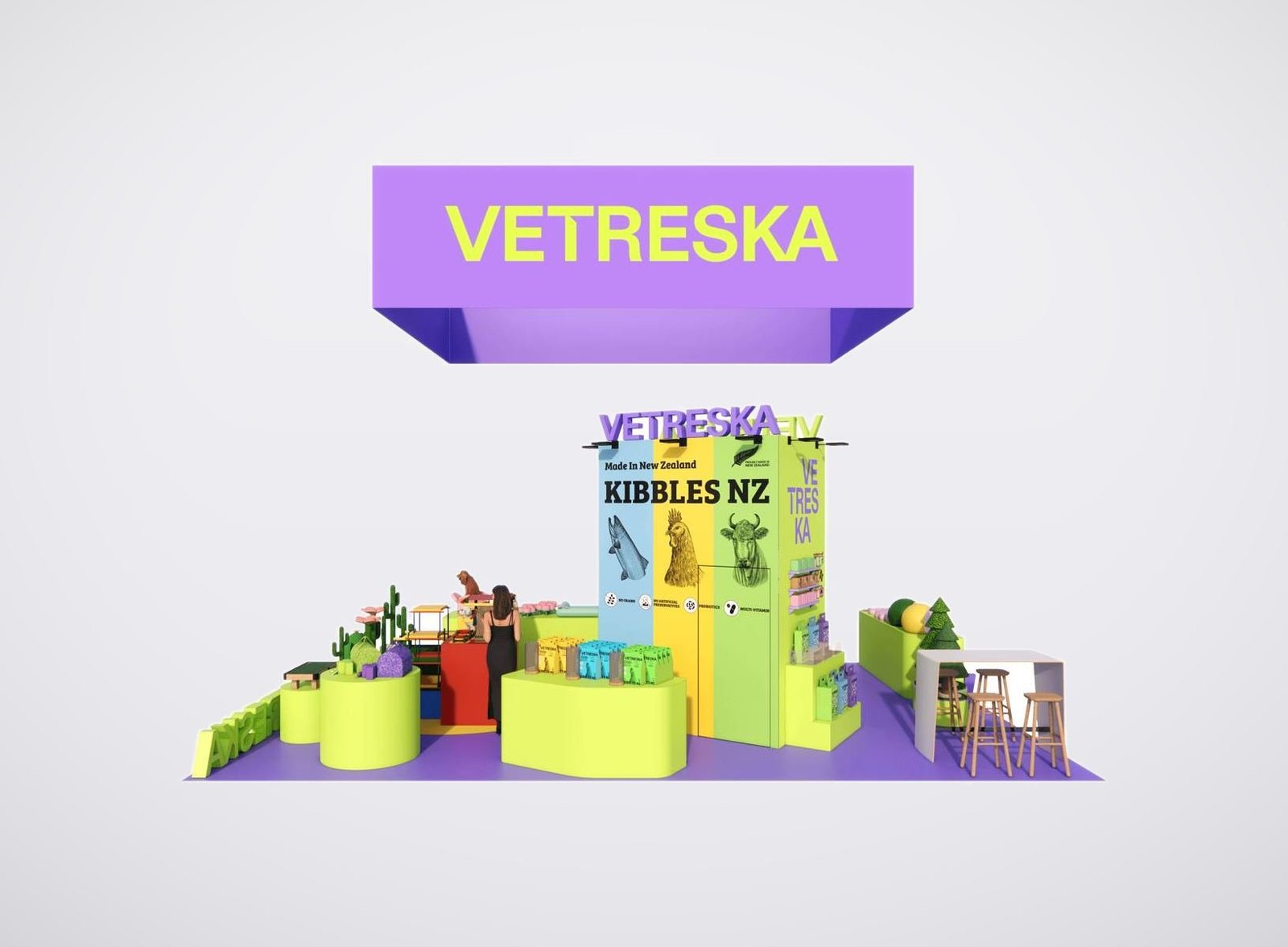
Plan the VMX Exhibit Around What Your Team Must Show
Pharmaceuticals, Biologics and Therapeutics
Diagnostics, Imaging and Laboratory Systems
Clinic, Surgical and Dental Equipment
Practice Software, Services and Connected Care
Nutrition, Supplements and Pet-Health Products
A Veterinary Meeting & Expo Exhibit Built from the Demo Schedule
The Veterinary Meeting & Expo (VMX) brings many veterinary buying conversations into one hall, but a booth should not treat them as one audience. A clinician may want performance and use detail. A practice owner may ask about workflow, staffing and return. A distributor may need range, launch and support information. A technical buyer may need integration, service or installation answers. The exhibit should make the first useful task visible and give each serious conversation a place to continue.King Exhibits develops the product route and physical environment together. The 3D direction can locate equipment, screens, sample displays, an approved animal area, storage, meetings and staff movement before rental walls, towers, lightboxes, counters, flooring, lighting and furniture are released. Confirmed dimensions and use conditions can support quoted custom mounts, openings, surrounds or work surfaces.NAVC controls VMX participation and show approvals. OCCC, Freeman and other current official providers may control utilities, rigging, material handling or other services. The accepted King Exhibits proposal defines only our design, rental, fabrication, graphics, coordination and onsite responsibilities; it does not replace an exhibitor manual, service order or organizer approval.
Give Each VMX Visitor the Right Next Conversation
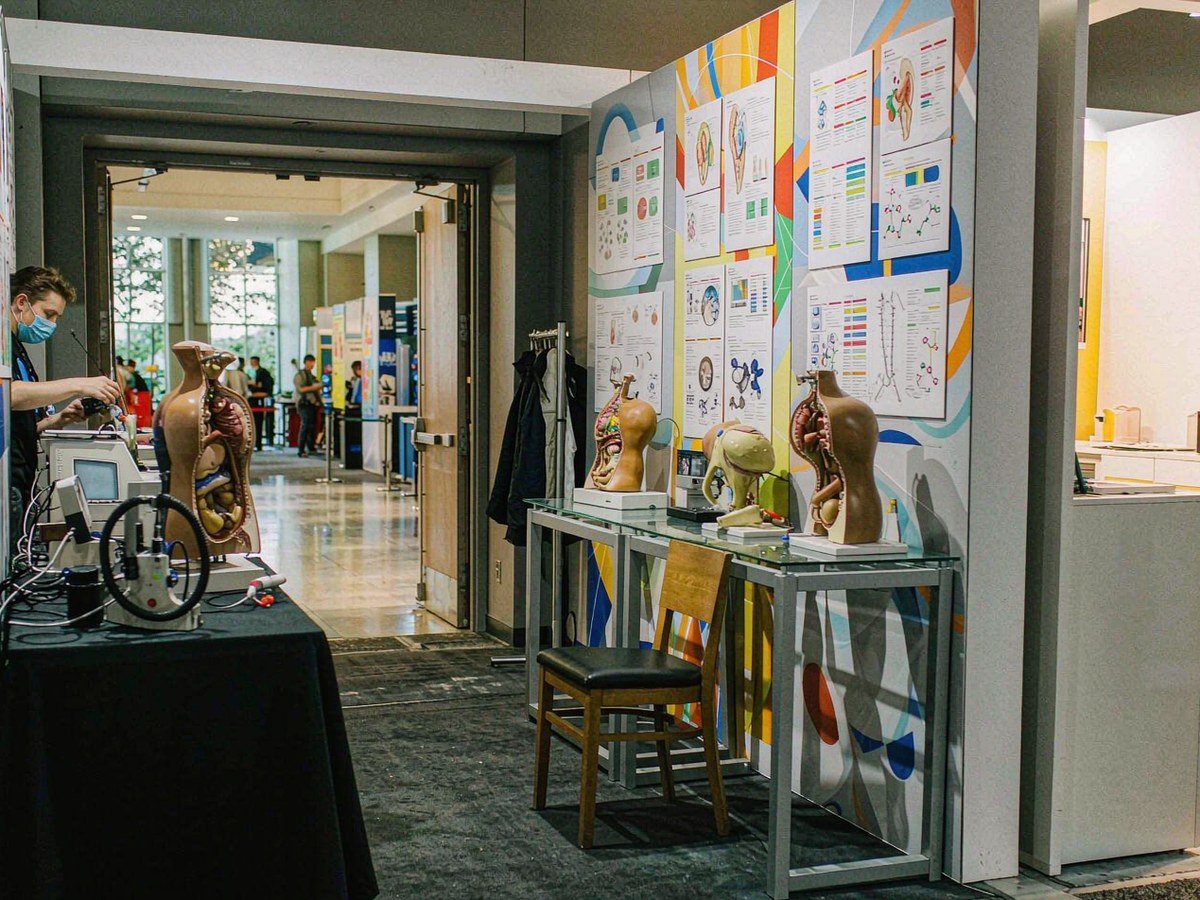
Put the product, procedure or workflow close to the approved technical explanation. Let visitors see the operating step without standing in the aisle, then direct detailed questions to the correct clinical or product specialist.
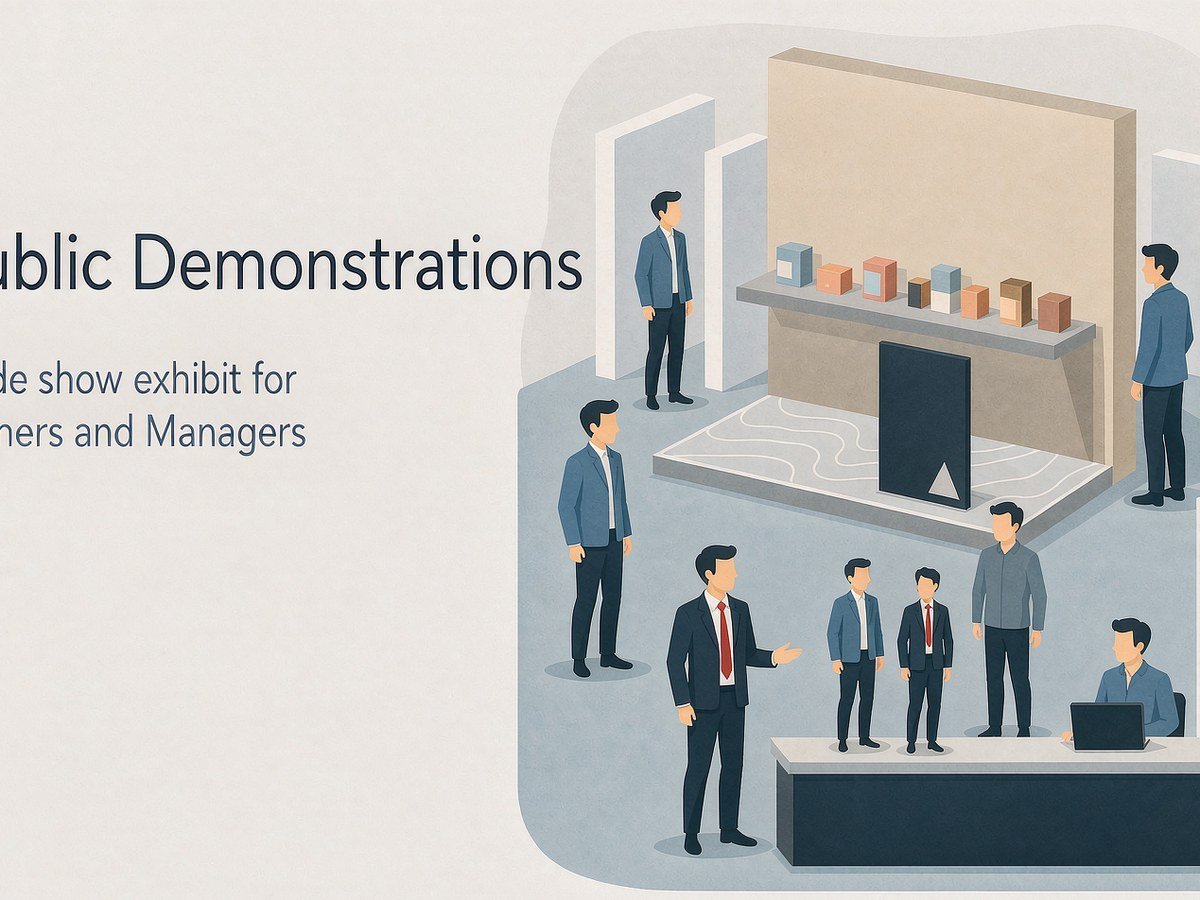
Connect the public demonstration to staffing, training, implementation, service and purchasing questions. A small seated or standing consultation point helps the business conversation continue without occupying the active demo station.

Keep the relevant range, positioning, packaging and support information together. Provide a meeting point for launch, territory, training and supply discussions away from the main product queue.
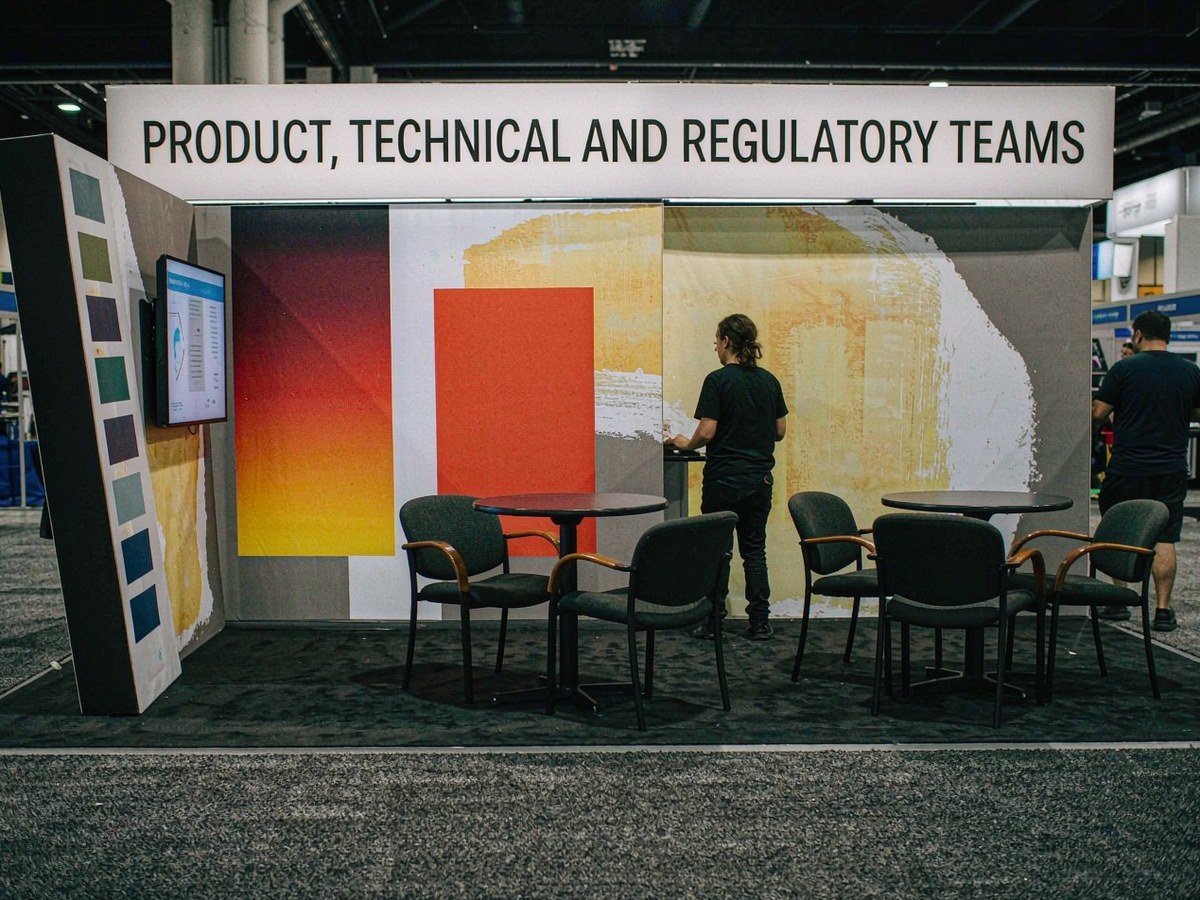
Give internal reviewers a clear relationship between each product, claim, screen, utility and operating mode. Changeable graphic positions and a controlled media list make final approvals easier to trace.
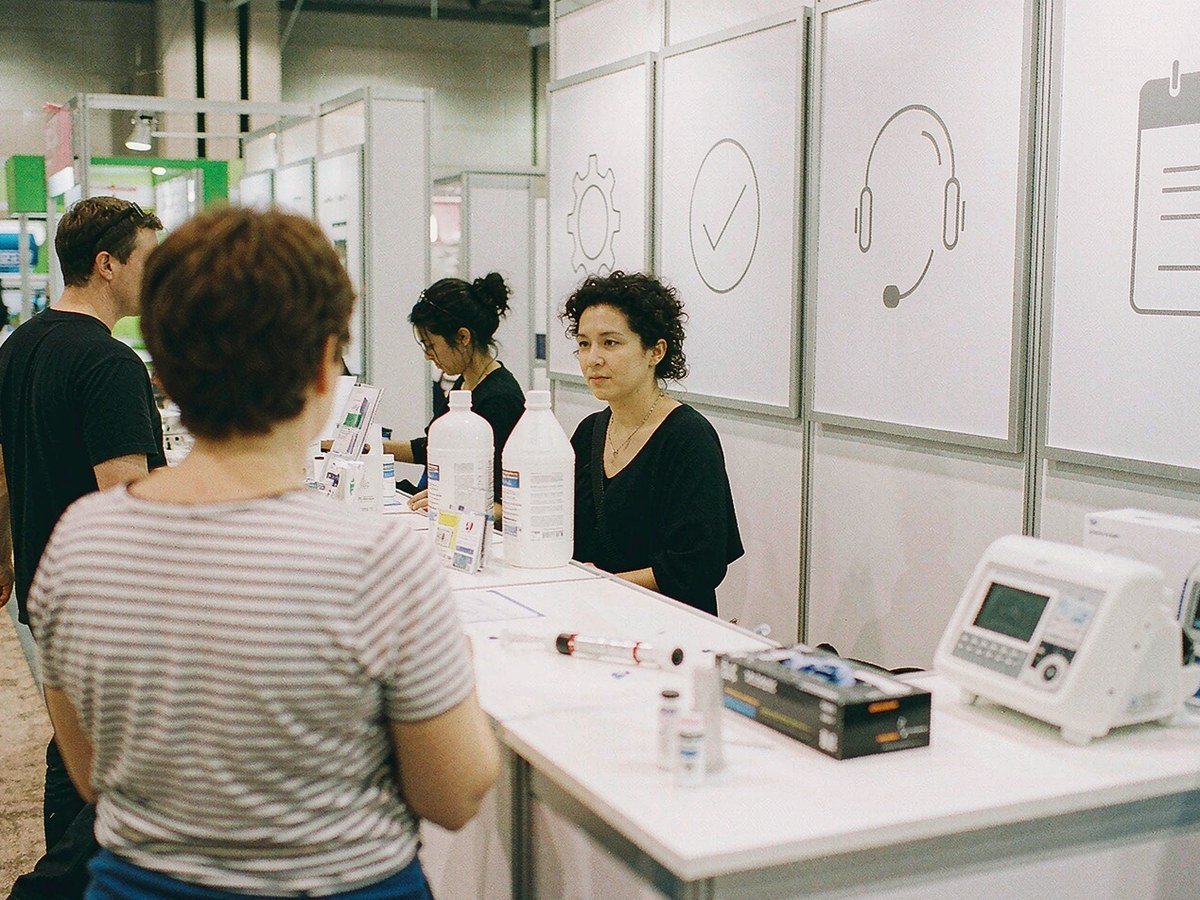
Place specifications, compatibility, service access and implementation owners near the product conversation. The booth should help them identify what needs a follow-up meeting, document or site review after VMX.
Draw the Demo Audience Before the Counter
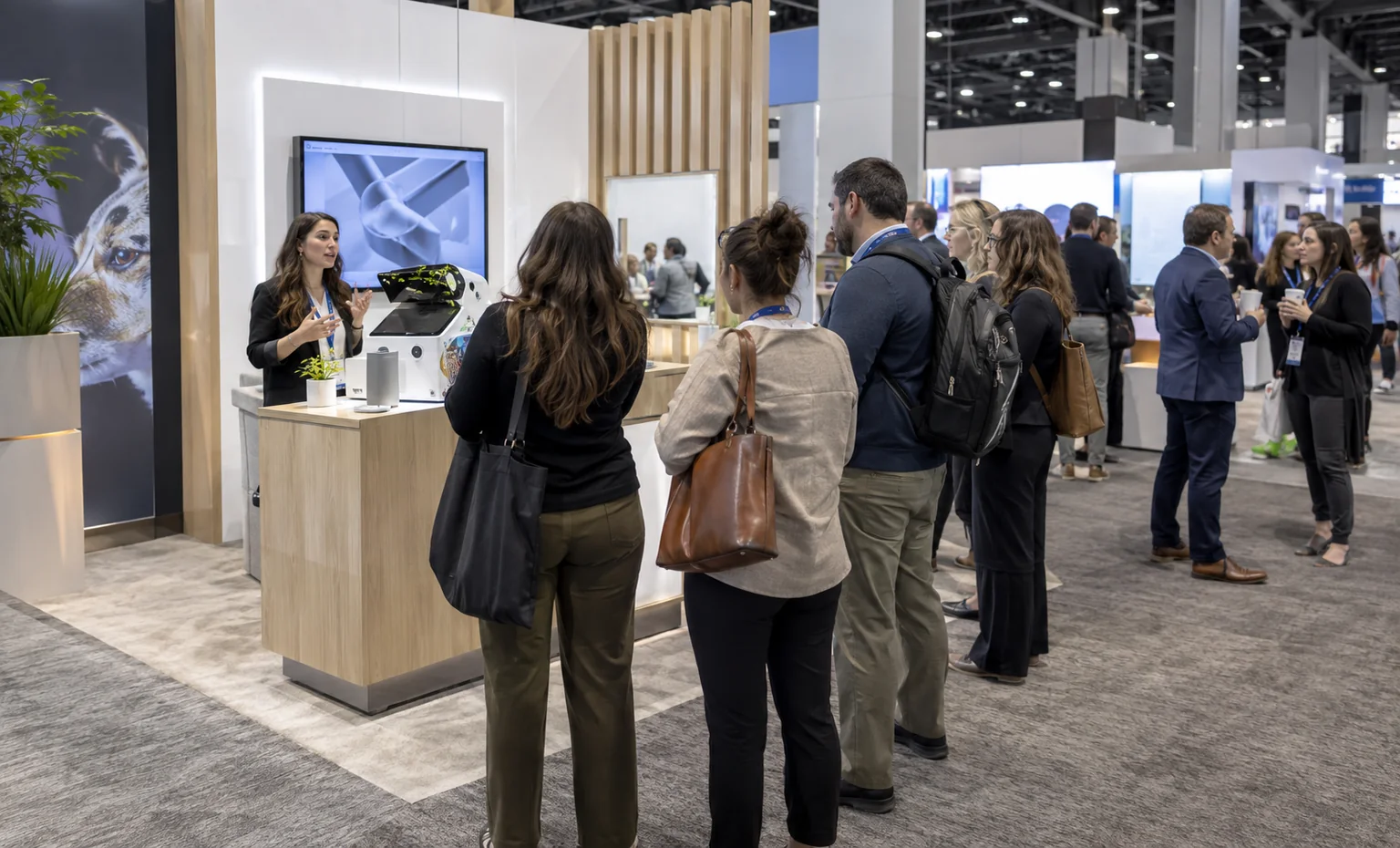
Mark the presenter, equipment, first viewing line, expected audience, queue and next conversation on the floor plan. Current VMX rules require demonstrations to avoid blocking aisles and direct sound into the exhibit, with an 85-decibel limit measured from the aisle. King Exhibits can shape the counter, screen and speaker positions around that plan. Your team remains responsible for the presentation, operating method and onsite compliance.
Treat a Live Animal as an Approved Operating Plan
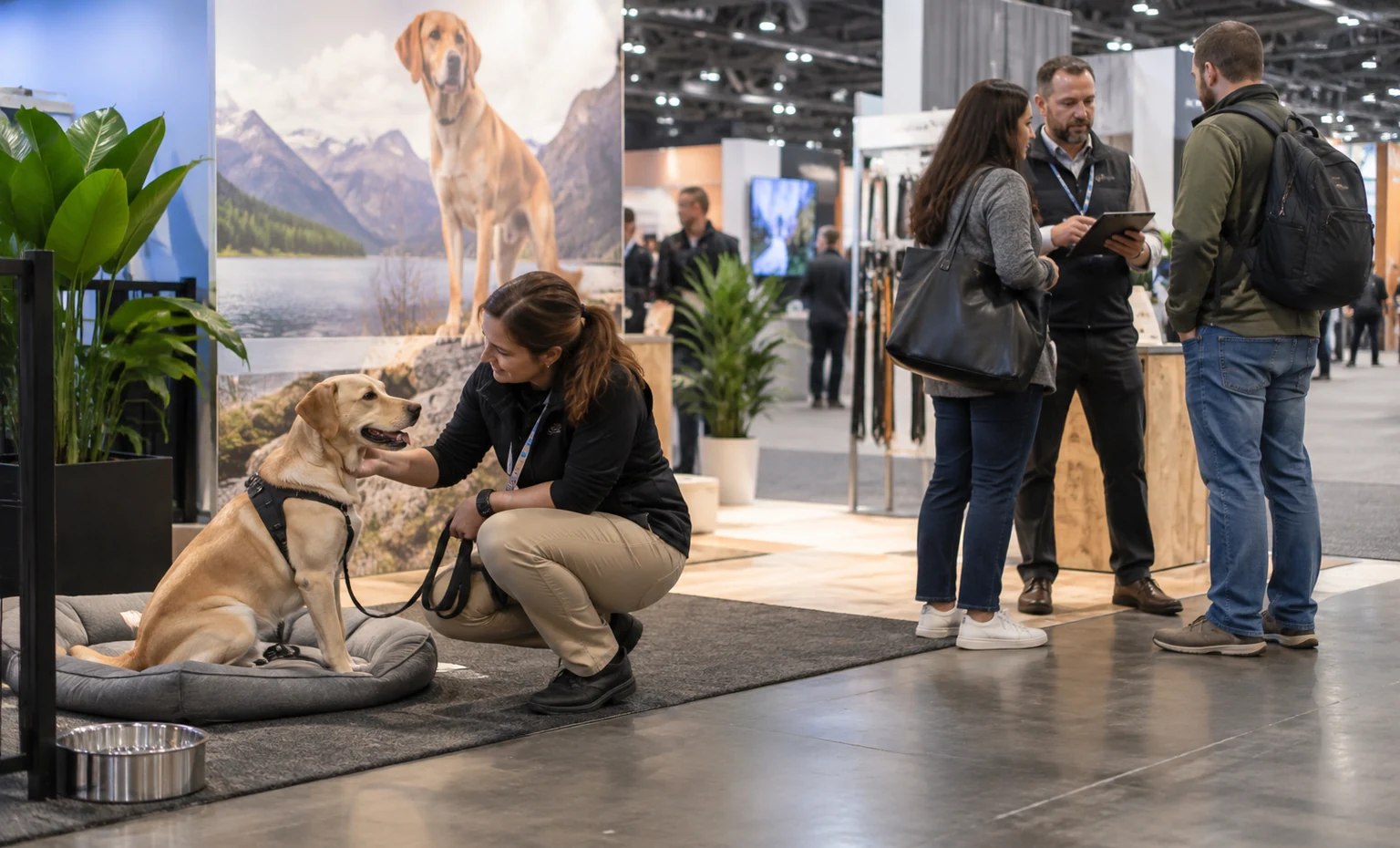
Do not add an animal after the exhibit has been designed. Record the species, number, enclosure or leash method, handler, visitor contact, rest period, cleaning, waste, water and emergency route. VMX currently requires advance written permission and IACUC review before animals enter the event. King Exhibits can reserve the confirmed physical area, storage and barrier details; the exhibitor must secure approval and manage all animal-care documents and procedures.
Release One Interface Sheet for Every Working Device
List the exact model, installed dimensions, weight, controls, moving parts, service clearance, power, data, heat, ventilation, water, waste and cleaning method. Add who ships, places, connects, tests and removes each item. King Exhibits uses the confirmed sheet to size quoted counters, mounts, openings and cable access. The equipment owner and current show providers control operating approval, utility connections and specialized handling that fall outside our written scope.

Keep the Veterinary Product Connected from 3D Review to Move-In
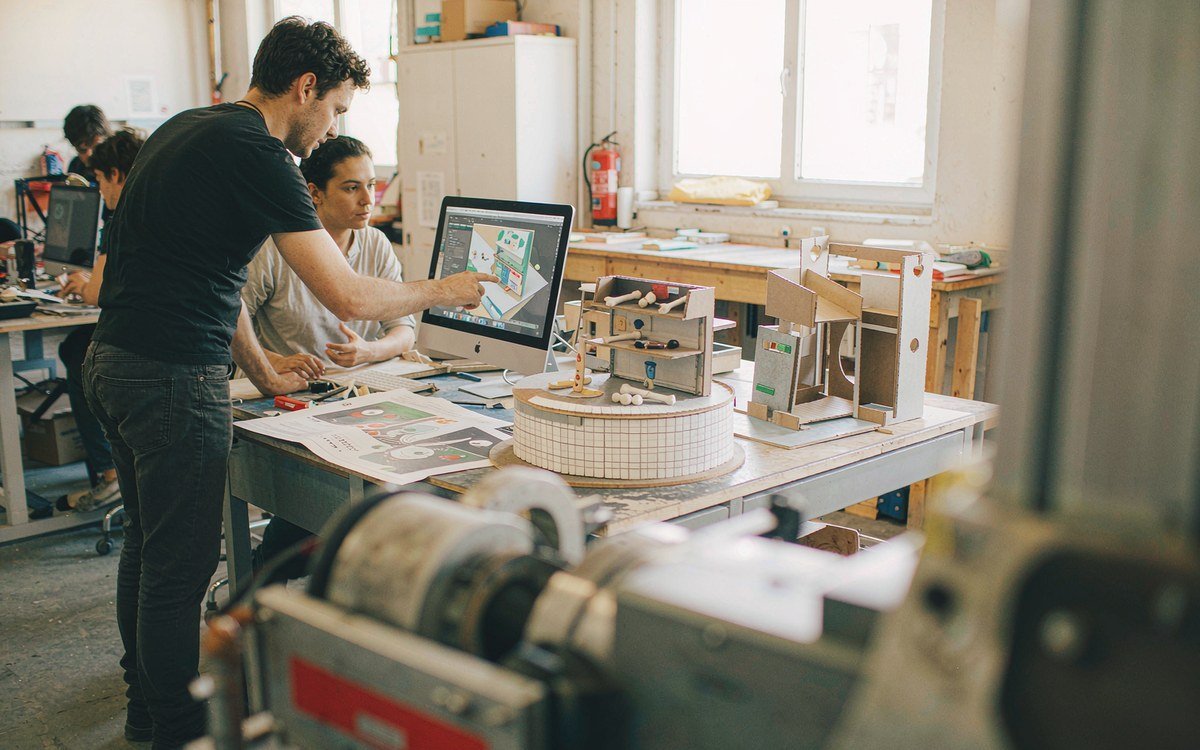

King Exhibits puts the product list, demonstration schedule, equipment interfaces, animal area if approved, graphics, storage and meetings into one 3D direction. Marketing can review the visitor route while product, technical and regulatory teams check the content and operating conditions. Confirmed details can then guide rental architecture, CNC and wood fabrication, graphic production, fitted counters or mounts, and pre-build checks within the accepted scope.The same project record can identify what is packed with the exhibit, what ships from the customer, what must be ordered through current official providers and what onsite work King Exhibits is asked to perform. Transportation, installation, dismantling, LED/AV and storage are included only when the proposal lists them. This gives procurement a defined scope to compare and gives the event team clearer interfaces before move-in.
Close the Current VMX Rules Before Build Release
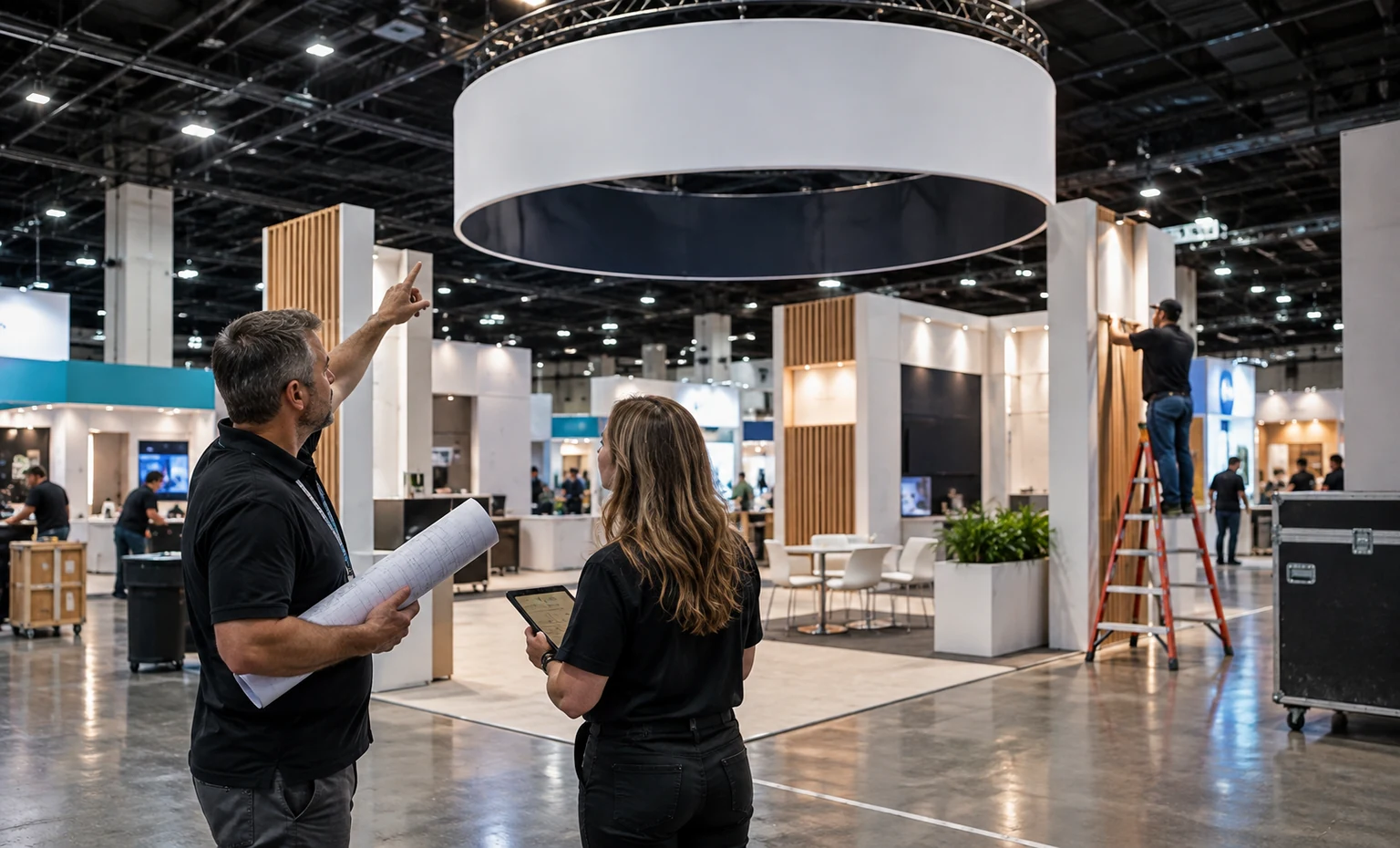
Use the assigned configuration and open sides, not a generic footprint. The current rules treat inline, end-cap, peninsula and island exhibits differently and limit where hanging signs may be used. Submit exceptions to NAVC before construction is ordered.
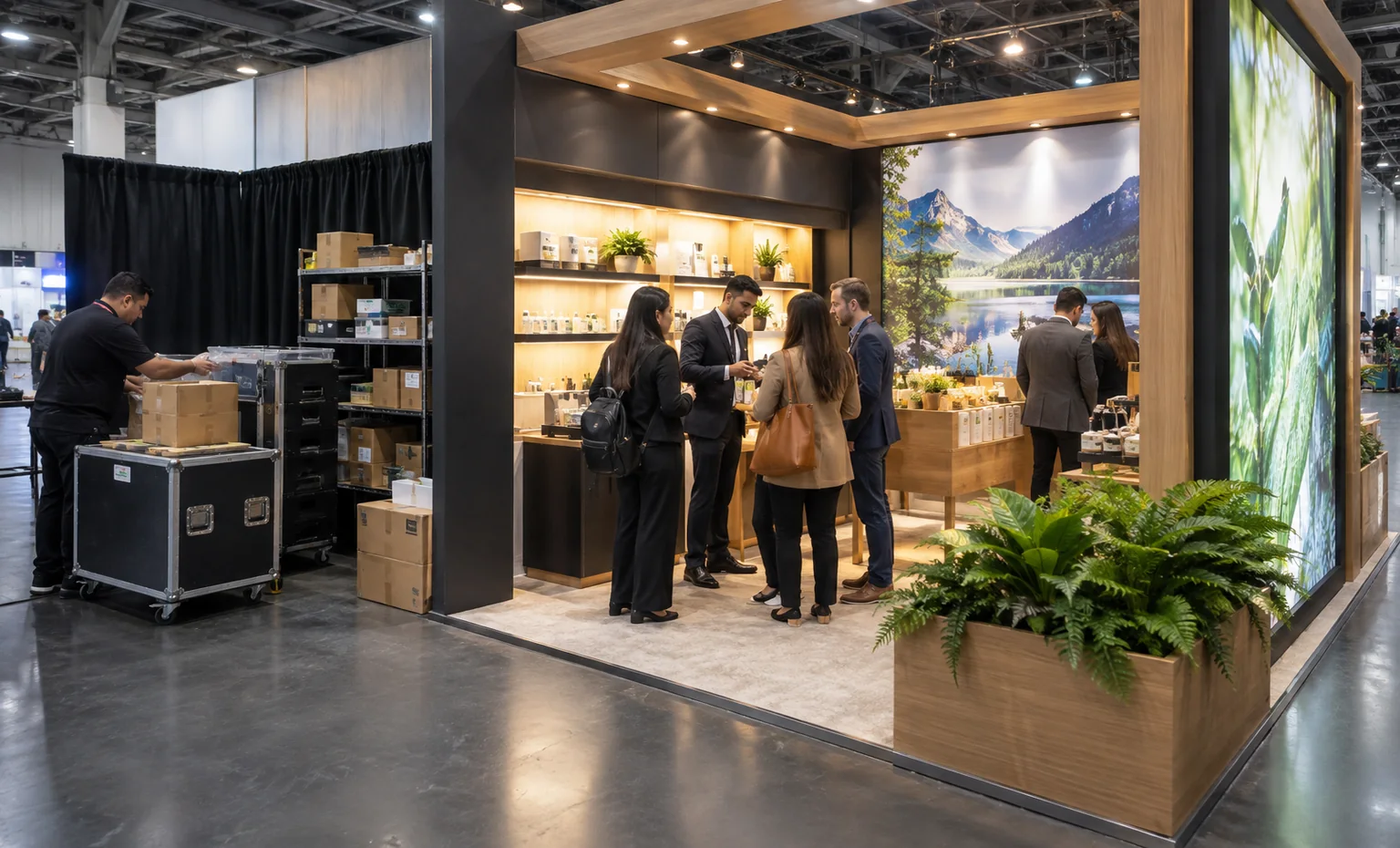
Products must fit the contracted space, booths need floor covering and viewing audiences should remain inside the exhibit. Mark replenishment, waste, crates and secure storage before the public product area is fixed.

Describe any animal, working device, sound, food or unusual activity accurately. Organizer approval, animal documentation, permits and operator responsibilities belong to the exhibitor even when the physical environment is designed around them.
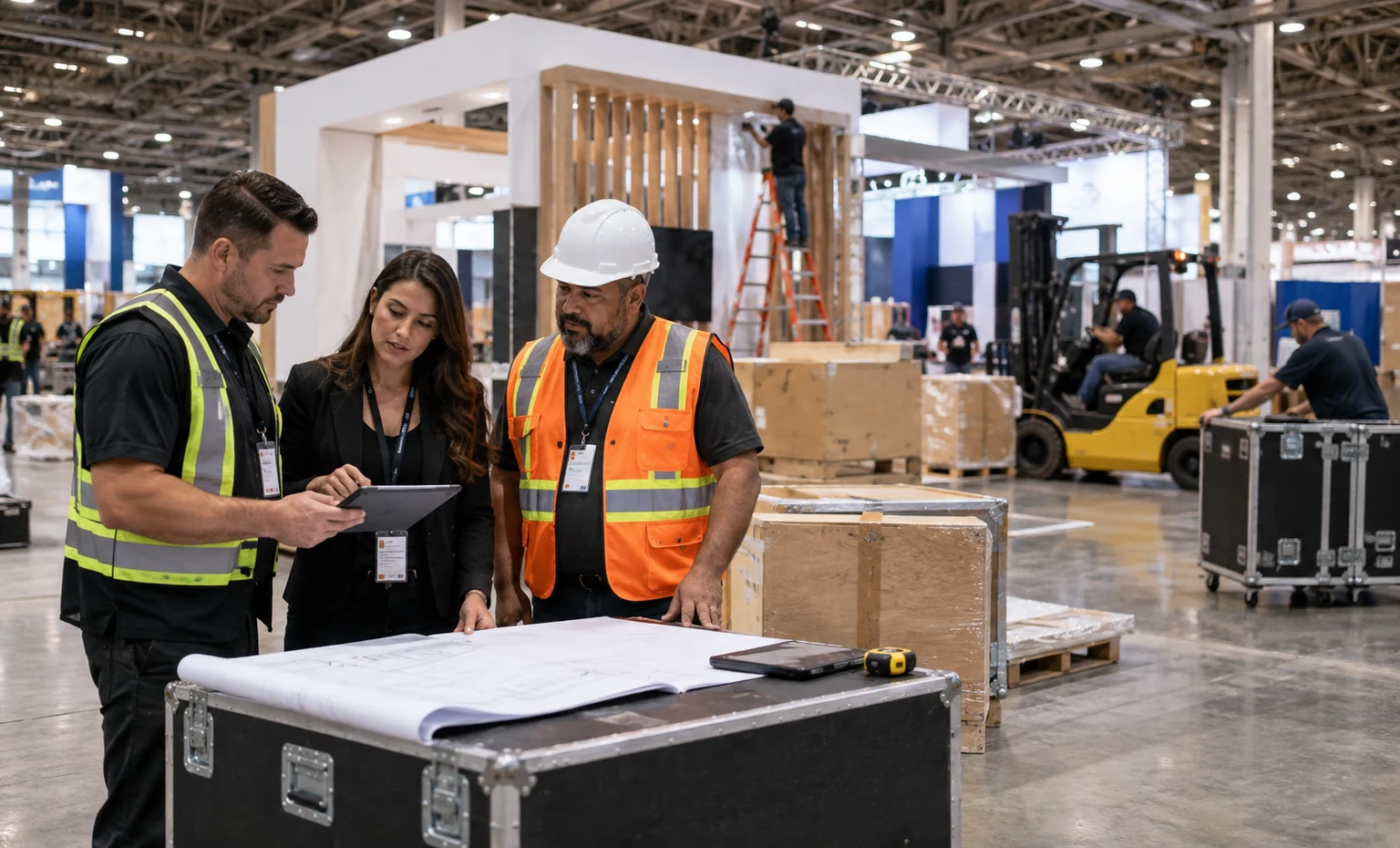
Name the contractor, supervisor, work, insurance record, freight pieces and service orders. Current VMX and OCCC materials control EAC acceptance, material handling, utilities, rigging, electrical work and other official services.

From VMX Product Brief to an Assigned Onsite Scope
Send the VMX edition, booth number, dimensions, configuration, open sides, move-in information, budget and requested services.
List each product, device, sample, presenter, audience, operating mode, utility and animal plan, including the approvals your team must obtain.
Check visitor flow, equipment interfaces, approved content, storage, meetings, flooring, height and the responsibilities connected to each area.
The accepted proposal defines King Exhibits work. Your team completes NAVC, OCCC, Freeman and other current provider submissions and orders.
Rental components, custom items and graphics are prepared against the approved project record, with agreed pre-build and packing checks.
King Exhibits completes the onsite scope listed in the proposal. Customer equipment, animals and official-provider work stay with their assigned owners.
No. King Exhibits is an independent exhibit design, rental and fabrication provider. NAVC, OCCC, Freeman and the providers listed in current VMX materials control official approvals and services. Our proposal identifies the work assigned to King Exhibits without suggesting organizer affiliation.
Only with the required approval and animal-care documentation. Current VMX rules require NAVC advance written permission and IACUC review. Send the proposed animal plan before design release; the exhibitor remains responsible for approval, health records, handlers, welfare, cleaning and onsite procedures.
It depends on the equipment, operating method and current show conditions. Provide the exact model, footprint, weight, operator, audience, power, data, heat, ventilation, water, waste and safety requirements. King Exhibits can design around confirmed inputs but does not approve operation.
Only when an accepted proposal explicitly lists a service within King Exhibits’ scope. Many utilities, rigging, material handling and other show services may be ordered or billed through the venue or current official providers. Assign every item before project approval.
They depend on the assigned booth configuration. Current rules set different limits for inline, end-cap, peninsula and island exhibits, and hanging signs are not permitted for every type. Share the confirmed floor-plan assignment before approving towers, backwalls or overhead identity.
The assigned footprint, rental structure, custom interfaces, graphics, flooring, lighting, furniture, equipment supports, screens, storage, meetings, packing, freight coordination and requested onsite work all affect scope. Official-provider charges may be separate.
Send the booth assignment, products, approved content, devices, demonstration schedule, animal plan if any, utilities, meetings, storage, freight, budget, brand files and the design, production or onsite services you want King Exhibits to quote.
Compare Booth Sizes for Veterinary Product Demonstrations
-
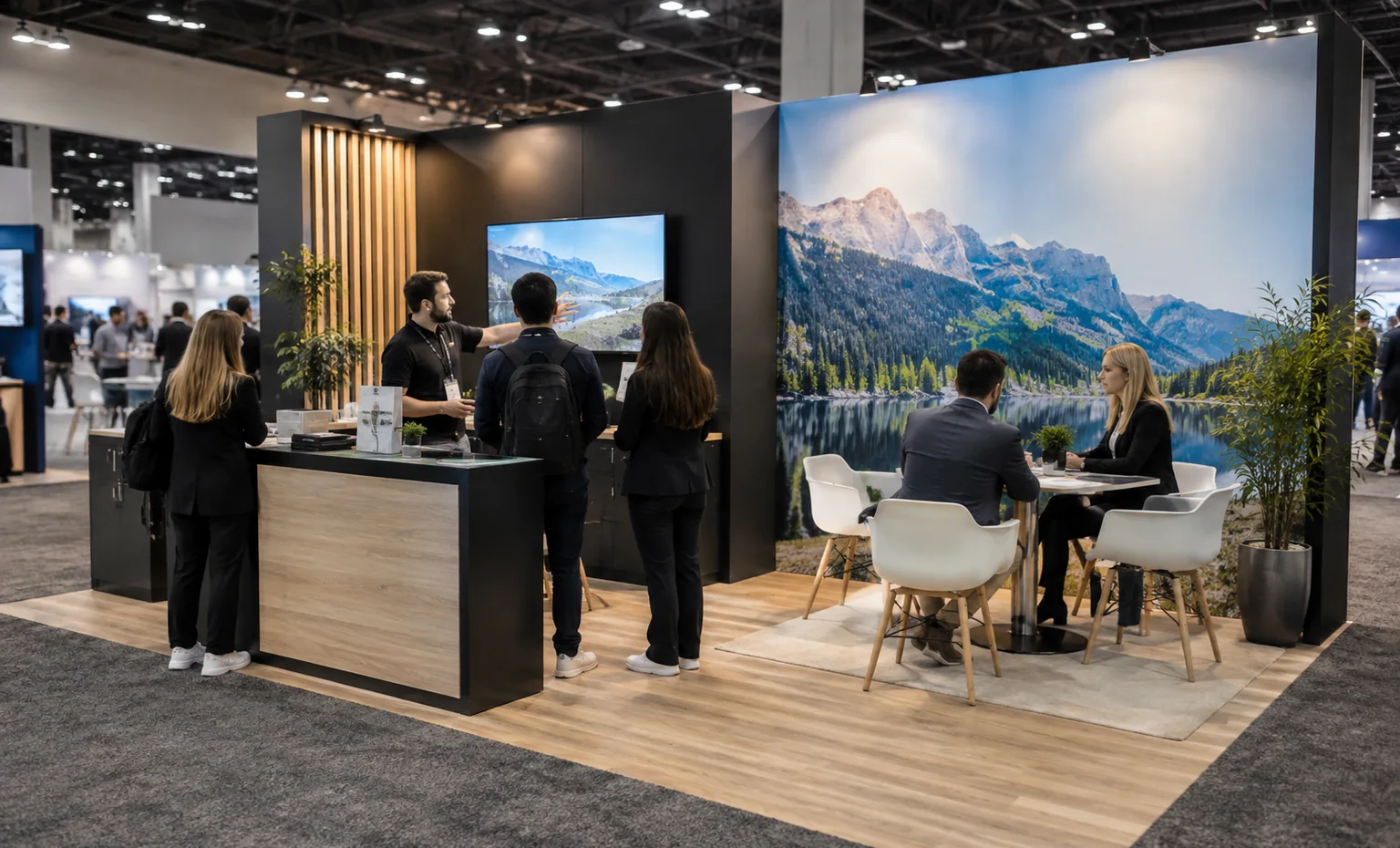
Supports one focused product or software demonstration, working storage and a compact follow-up conversation when the audience stays inside the footprint.
-

Creates access around a device or several product stations while preserving a demonstration boundary, storage and a meeting point.
-

Allows several veterinary product or workflow zones, equipment interfaces, enclosed support space and longer clinical, distributor or procurement meetings.