
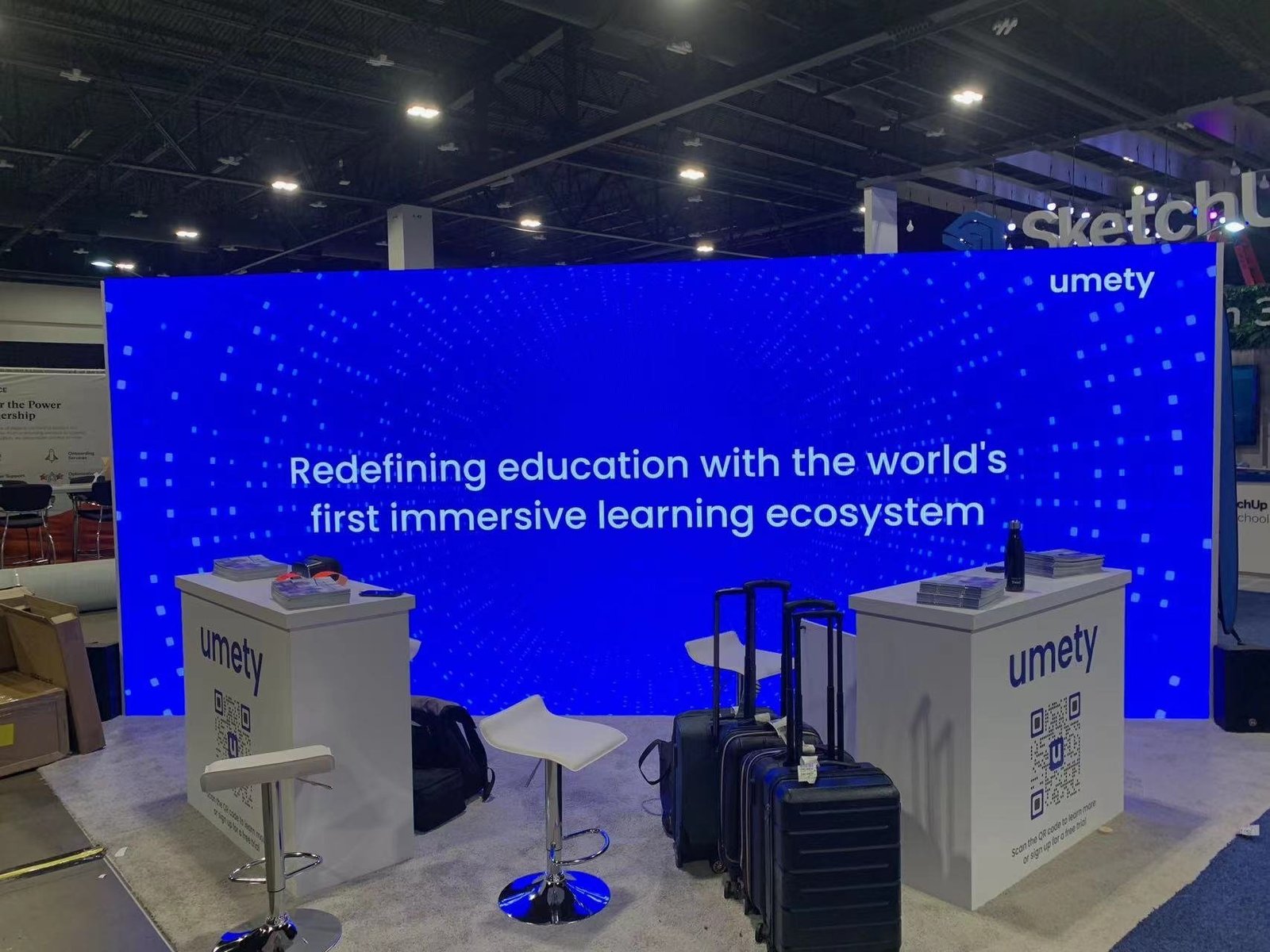


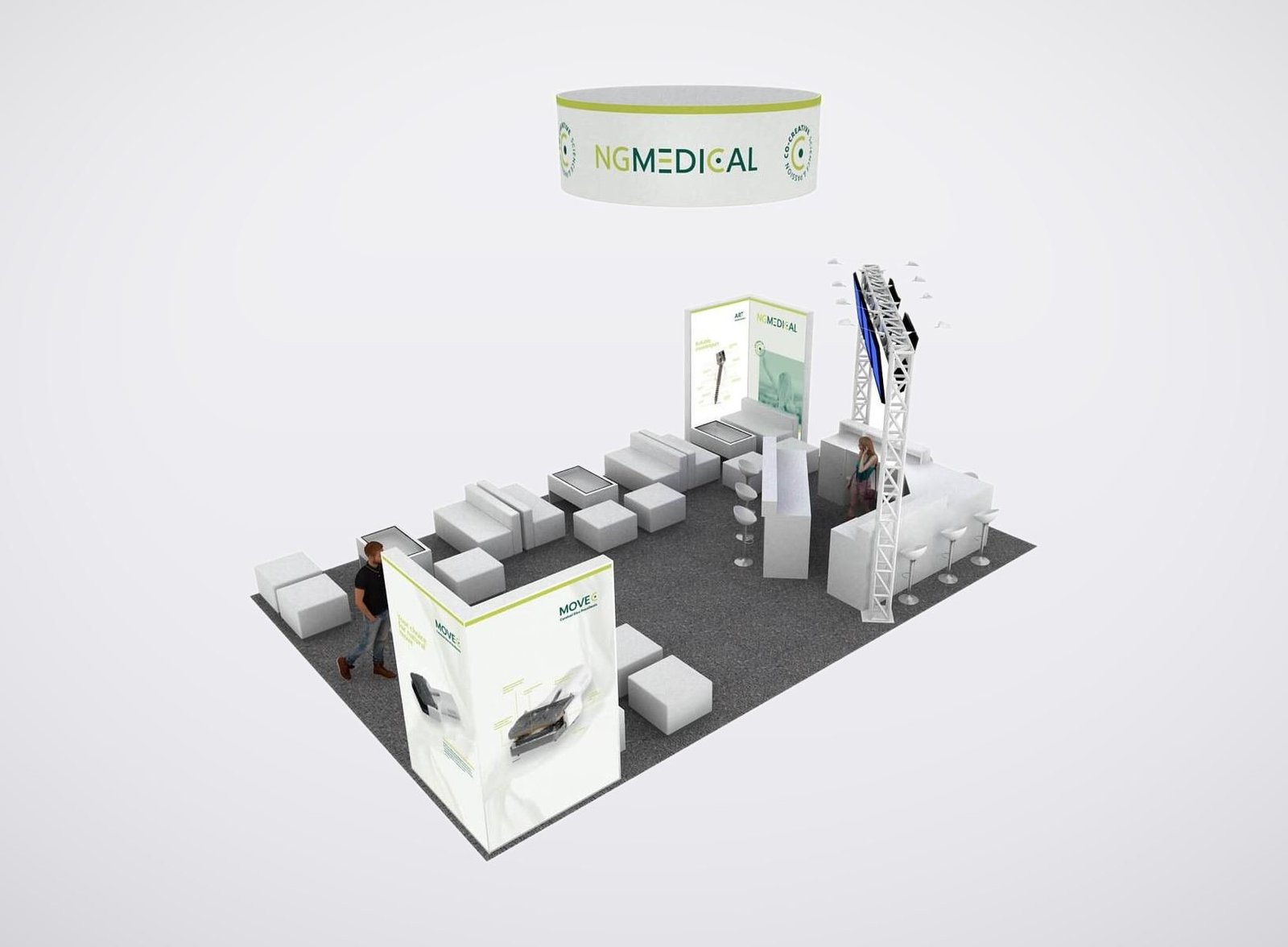
Plan the Exhibit Around What TMEA Visitors Will Handle or Decide
Instruments, Mouthpieces and Playable Accessories
Music-Education Software, AV and Classroom Technology
Sheet Music, Publishing, Apparel and Teaching Resources
Travel, Fundraising, Professional Organizations and Colleges
TMEA Exhibit Rentals Built from the Product and Sound Plan
TMEA combines music educators, students, families, exhibitors and higher-education programs, but every booth should still lead with one clear visitor task. A band director may compare instruments, a teacher may test classroom software, a student may explore a college program and a dealer may discuss product availability. The exhibit needs to support the first useful interaction and the next commercial or program conversation.The current TMEA booth process also affects design. Instrument manufacturers and retailers select within the Instrument Marketplace, where the floorplan separates quieter, louder and mixed instrument groups. Sound must stay controlled, materials and solicitation stay within the rented space, and the exhibitor remains responsible for copyright, sales, product use and approvals. Those conditions should shape the floor plan before graphics and furniture are released.King Exhibits can develop the 3D environment from the confirmed assignment, product list, demonstration map, storage, sales plan and meeting needs. Rental walls, lightboxes, counters, flooring, lighting and furniture form the main environment; quoted custom work can address instrument racks, product supports, fitted counters, secure storage or brand-specific interfaces. The accepted proposal defines the design, production, coordination and onsite work assigned to King Exhibits.
Give Each TMEA Visitor a Useful Next Step
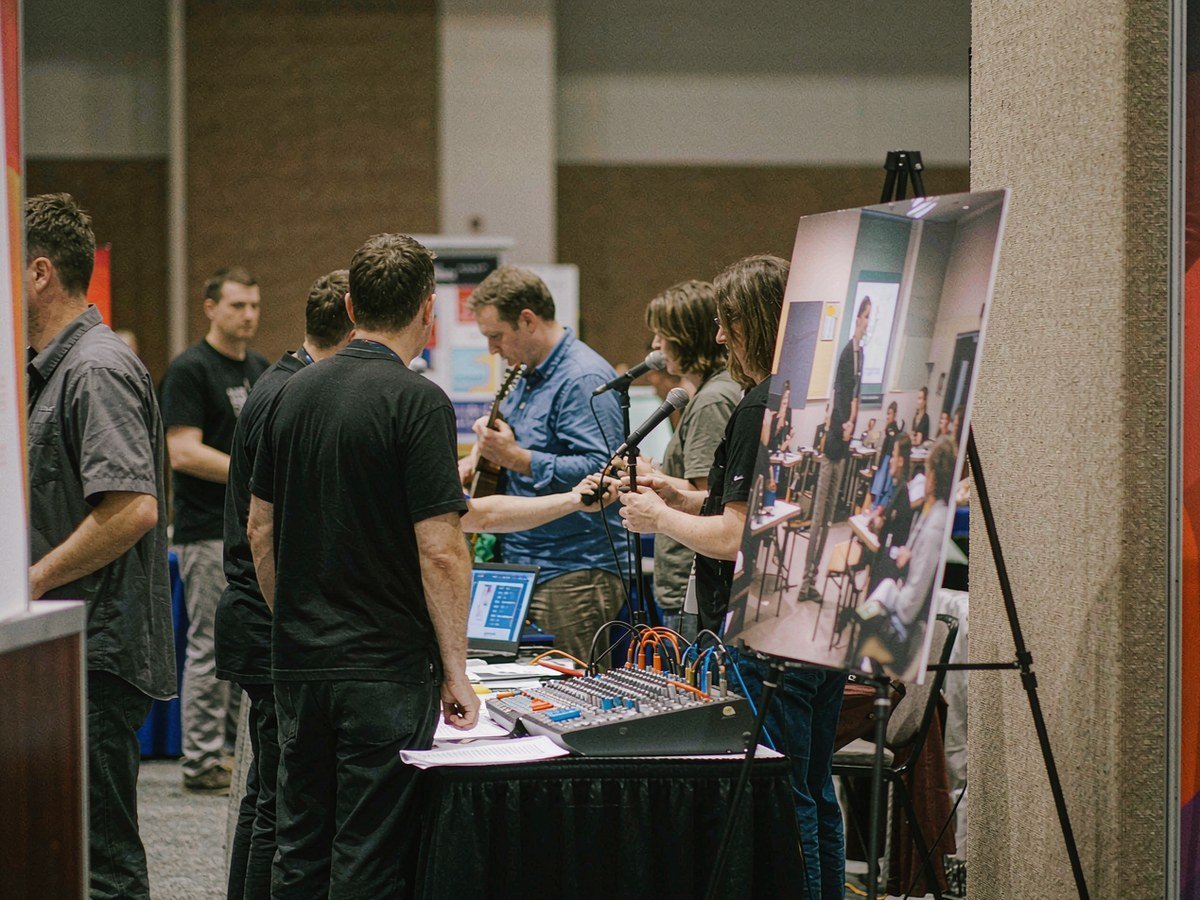
Start with the ensemble, classroom or program task they recognize. After a focused trial or demonstration, make specifications, curriculum fit, purchasing information and the correct product specialist easy to find.
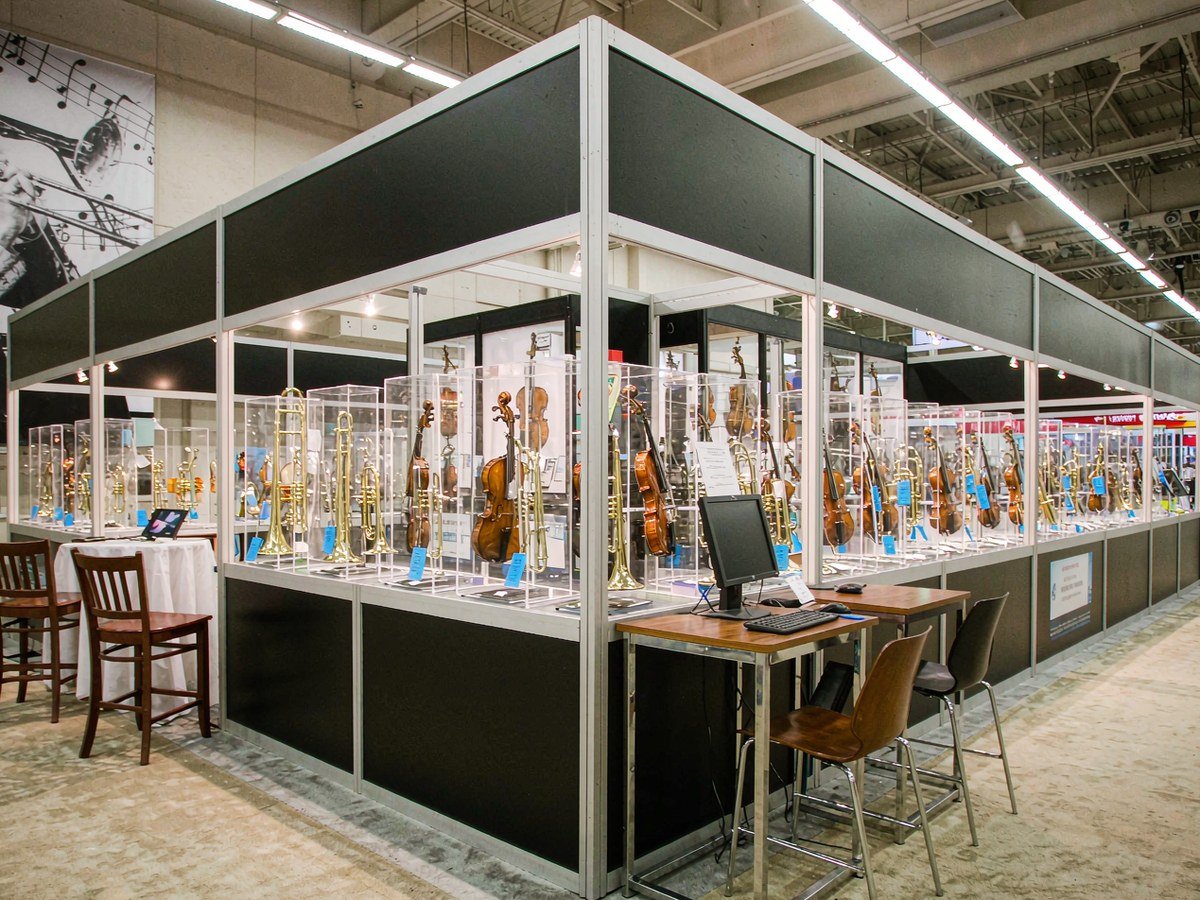
Keep comparable instruments, accessories or professional tools close enough for a practical review. Route distribution, availability, service and product-line questions away from the busiest trial position.
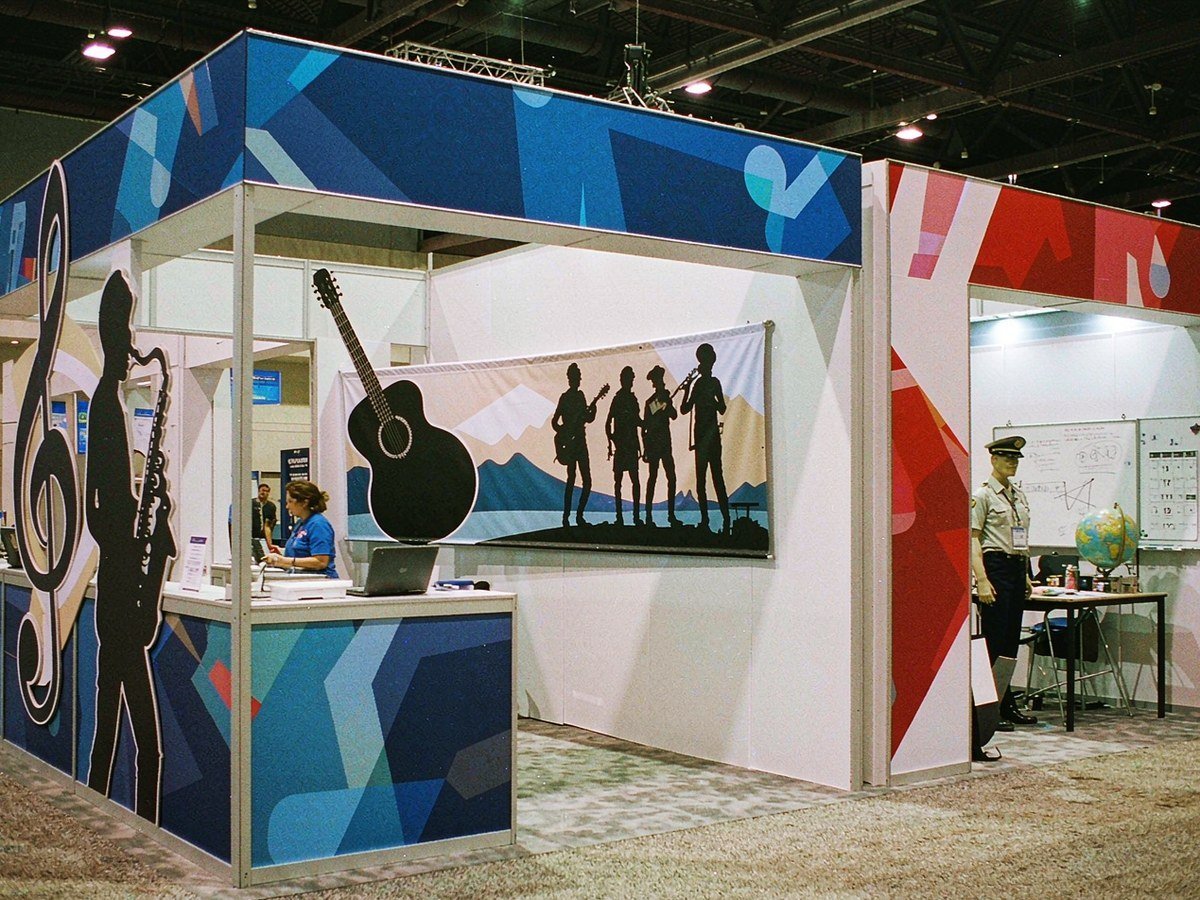
Use plain program, instrument or education-language cues and a staffed next step. Literature, QR actions and appointment information should remain inside the booth rather than relying on aisle solicitation.
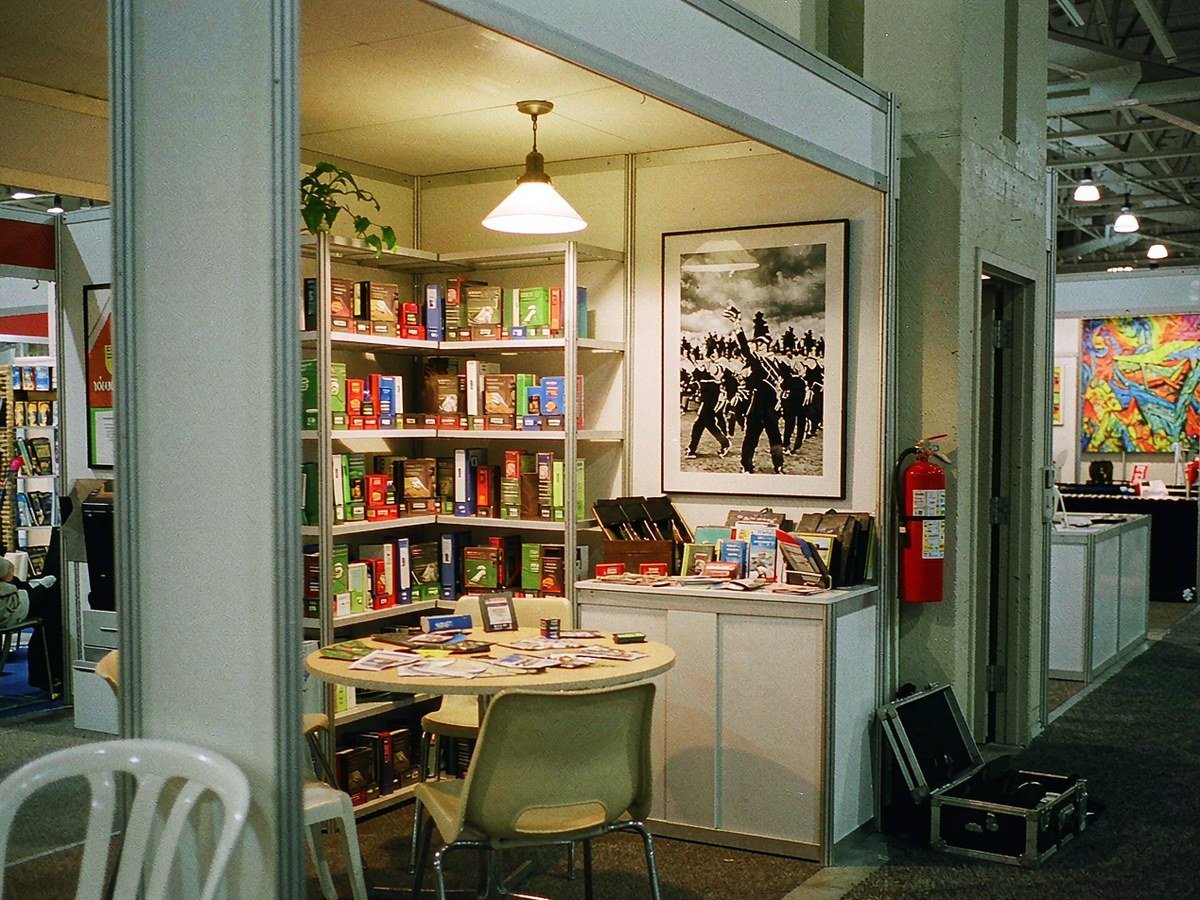
Provide a visible program identity, a place for focused questions and a clear follow-up action. Store course materials, audition information and giveaways without crowding the conversation edge.
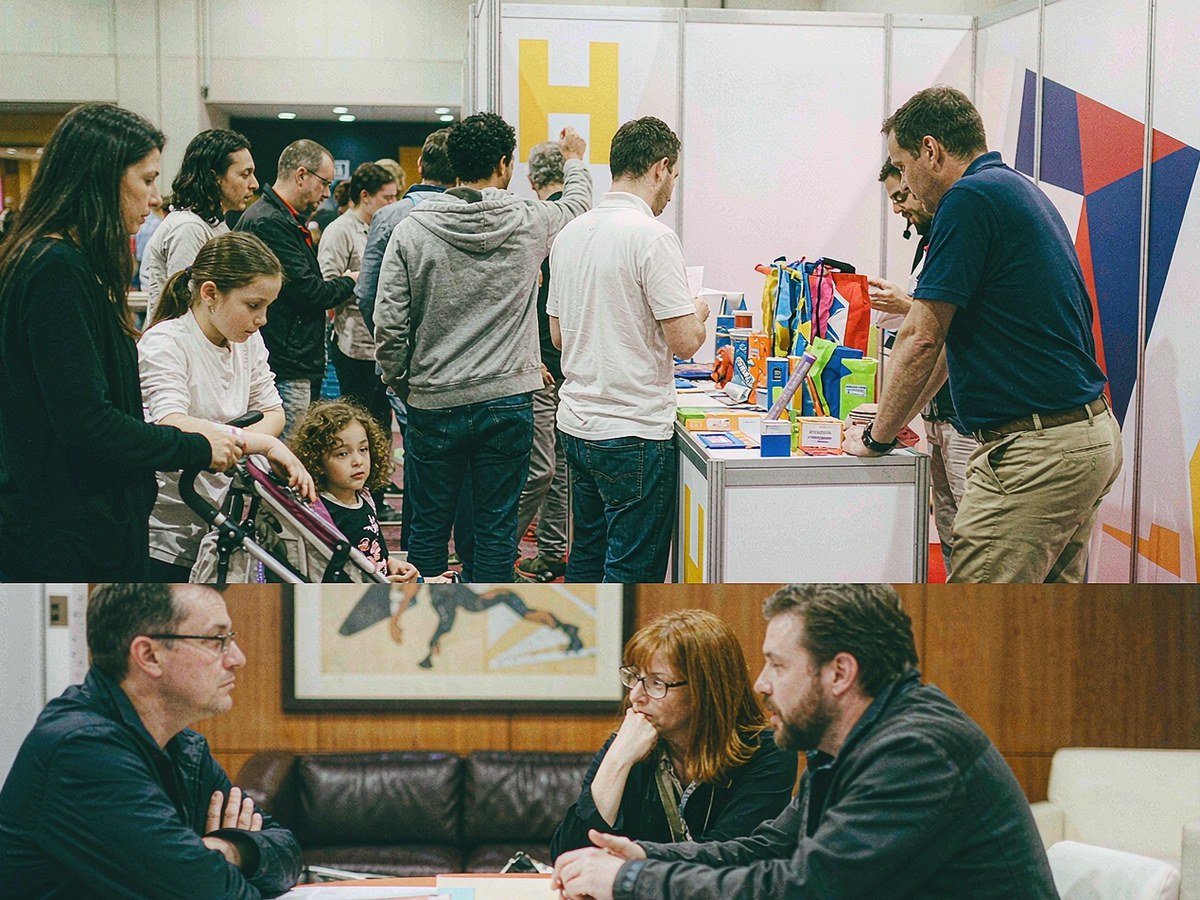
Move qualified visitors from a quick public experience into a deeper discussion about orders, distribution, school programs, tours, fundraising or institutional adoption.
Draw the Sound Field Before Placing the Demo
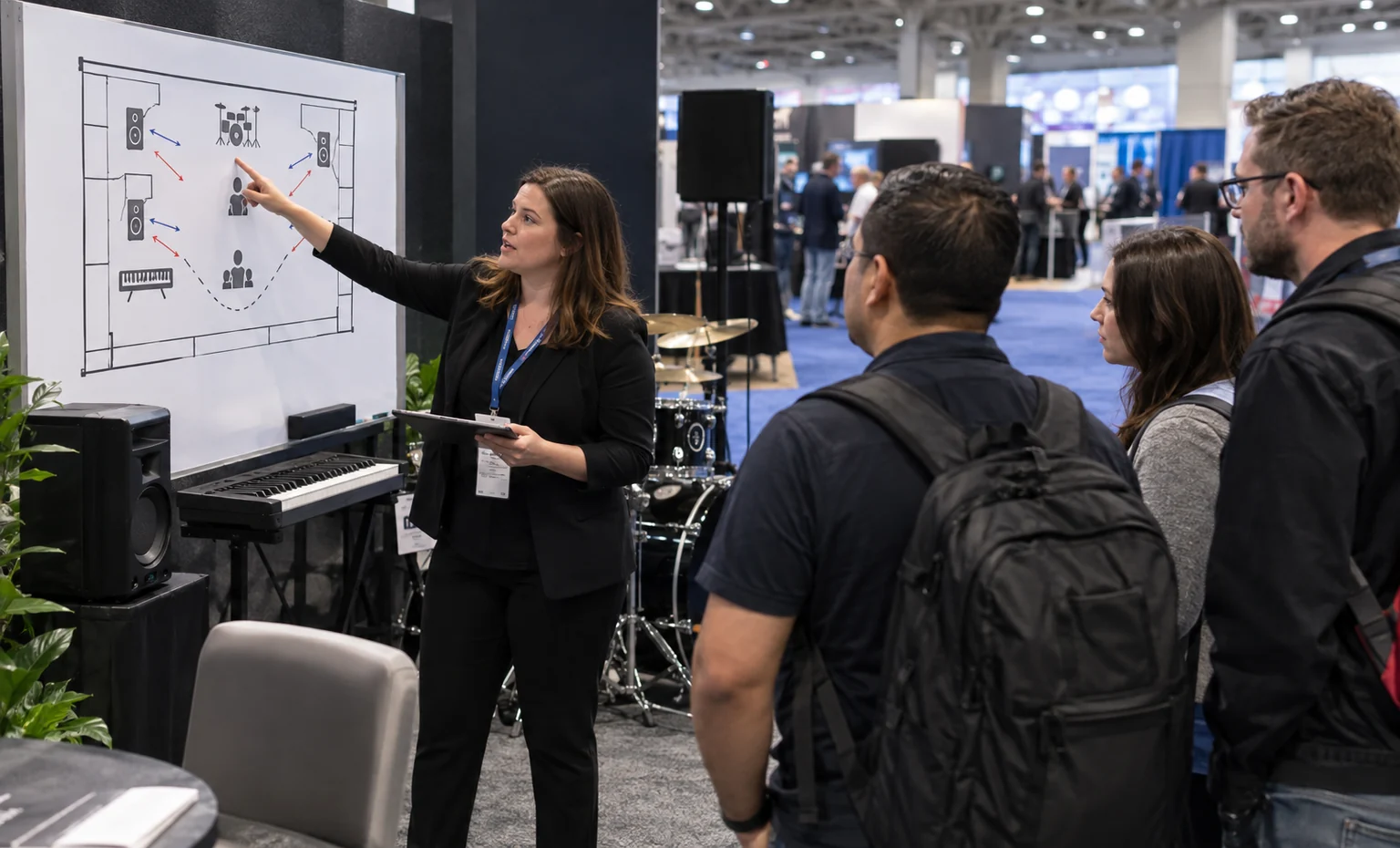
Mark every speaker, amplified instrument, playable product and listening point on the floor plan. Add its direction, expected audience, operator and demonstration length. Current TMEA rules say sound should not disrupt neighboring exhibitors, speakers should face into the booth, performance demonstrations must stay within five minutes, and the aisle reading should not exceed the stated 85 dB rule of thumb. The plan must still work when several nearby booths are active.
Separate the Playable Product from the Backstock
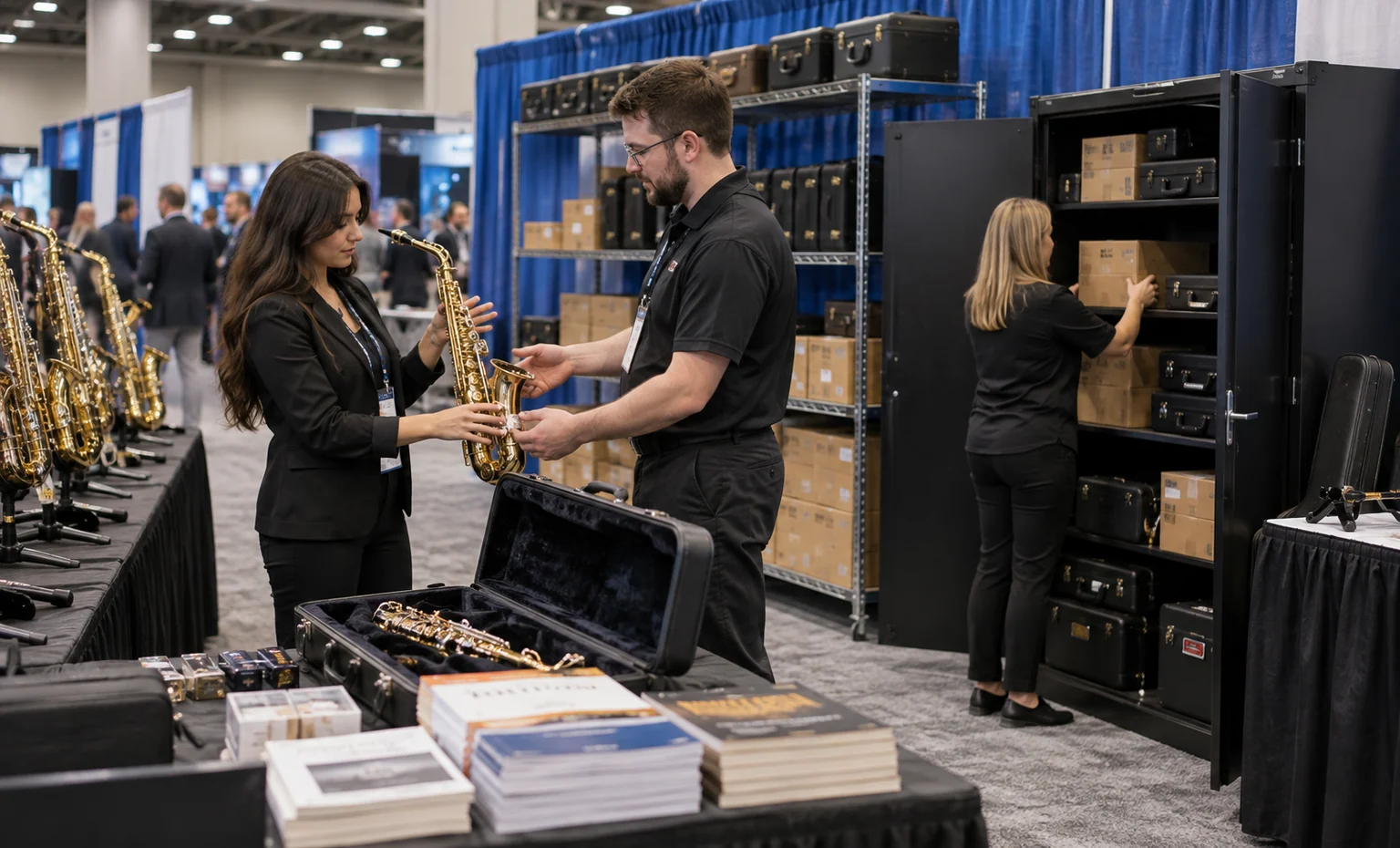
Record which instrument, accessory, book or sample may be handled, who releases it and where it returns. Give display pieces, sealed sale inventory, empty cases, personal items and damaged or used materials separate locations. A lockable cabinet or staff-controlled room may be more useful than another open shelf. Confirm the weight and dimensions of racks, stands and boxed stock before custom supports, freight labels or the replenishment route are approved.
Design the Onsite Sale and Follow-Up as One Route
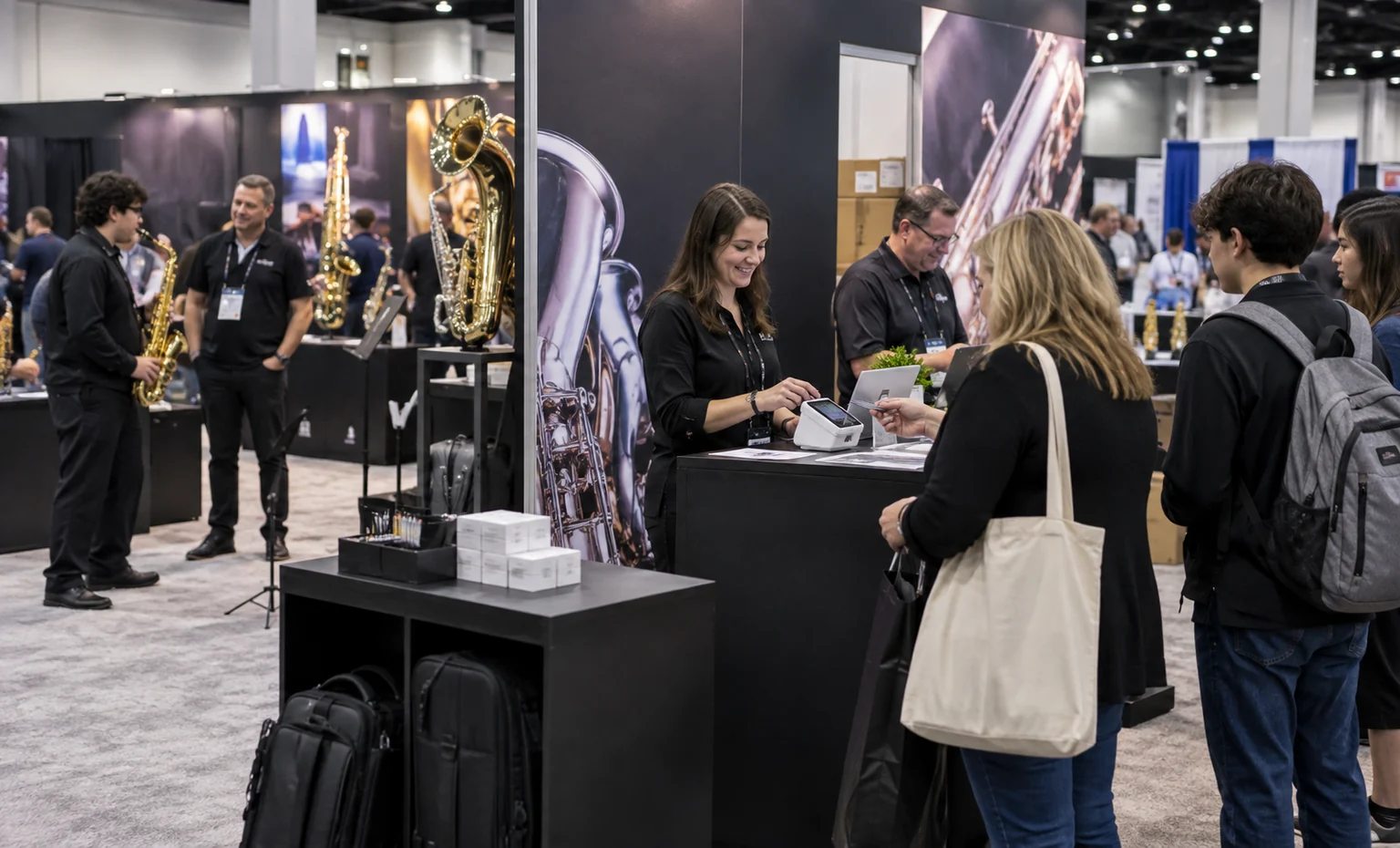
TMEA currently allows selling on the show floor, while the exhibitor remains responsible for tax collection and remittance. Decide whether the booth will take payment, write orders, scan leads, book appointments or send visitors to a later purchase step. Then confirm the counter, devices, network, power, bags, receipts, inventory and staff roles. Keep the transaction queue inside the booth and separate it from the instrument or software demonstration.
Keep the Product, Sound and Service Decisions in One Project Record
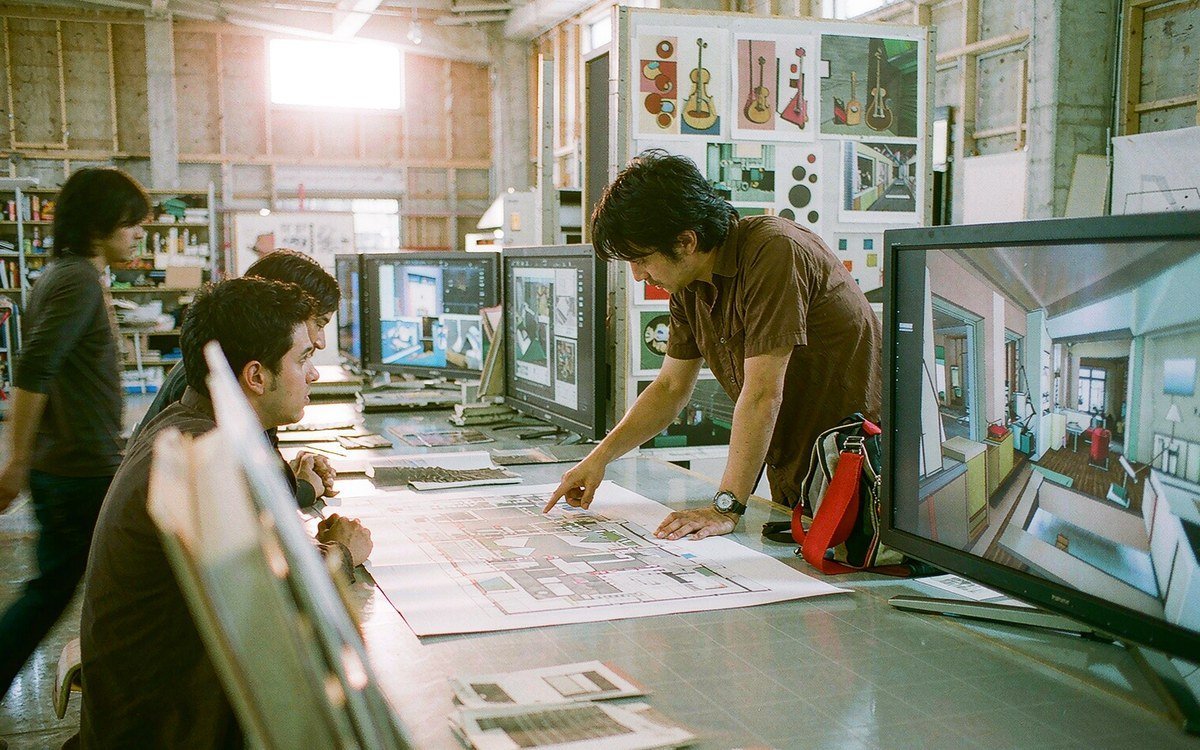
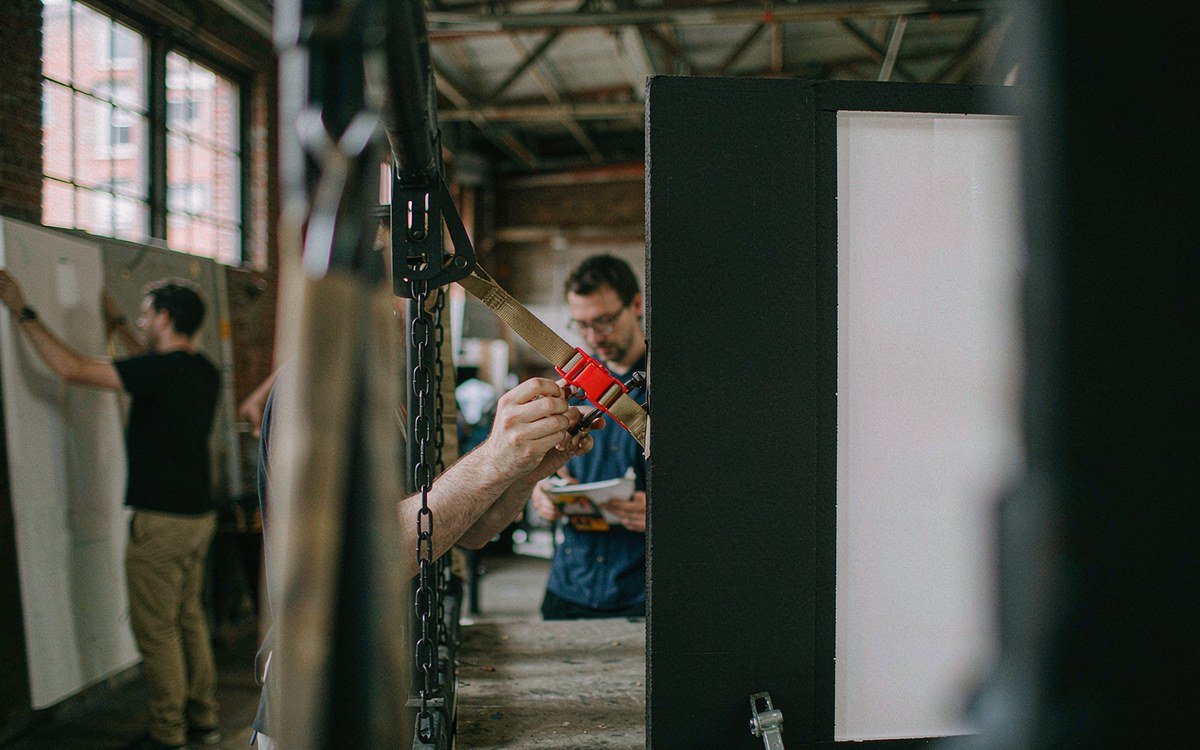
King Exhibits can turn the assigned space and product brief into one 3D direction covering rental structure, quoted custom interfaces and graphics. Instrument positions, listening points, screens, counters, storage and meetings remain visible in the same review, so marketing, product, artist-relations, sales and operations teams can resolve conflicts before fabrication and artwork release.The same record can identify rental components, customer products, graphics, cases, freight, Freeman orders and the work assigned to each party. Confirmed items can be connected to the packing and installation plan. The accepted proposal states King Exhibits’ design, production, coordination and onsite scope without representing the company as TMEA, Freeman, the venue, a licensing organization, a tax adviser or another official provider.
Close the Current TMEA Rules Before Production Release
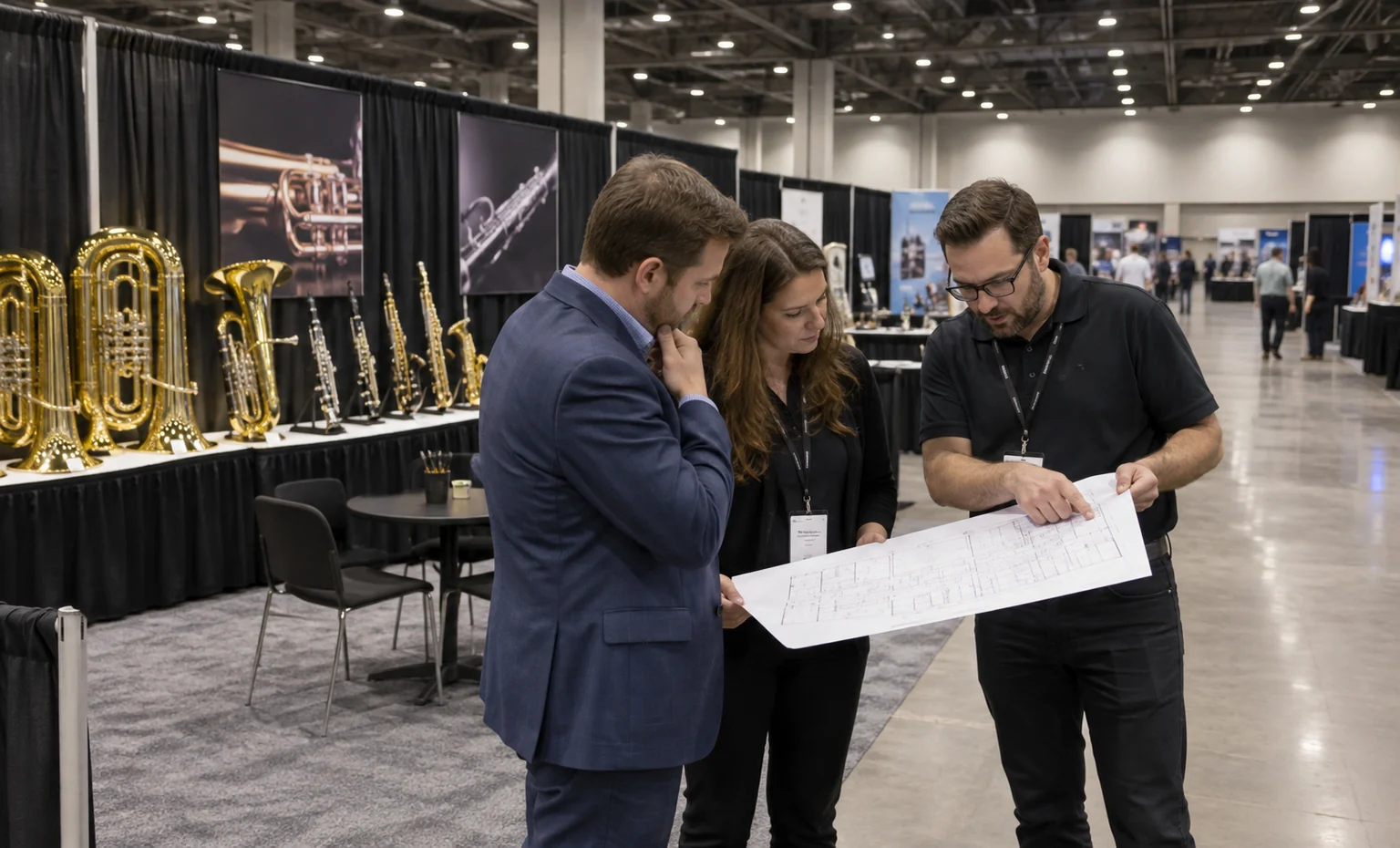
Use the current assignment, dimensions, open sides and floorplan. Instrument manufacturers and retailers must follow the current Instrument Marketplace zone system; other exhibitors follow the zones available to their category. Do not build from a preferred zone or an old assignment.
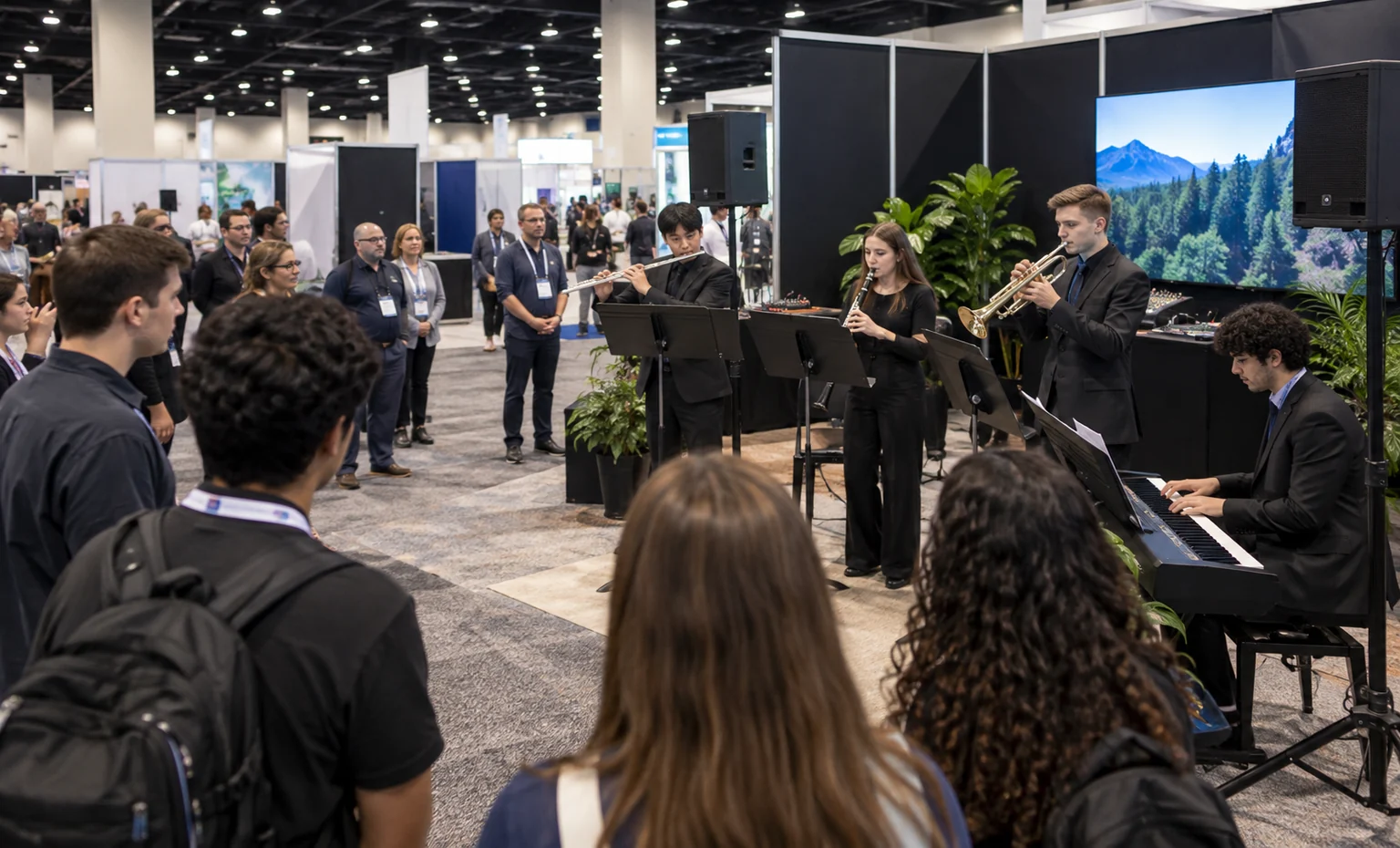
List every instrument, performer, speaker, listening point, audience and demonstration length. Direct sound inward and check the current five-minute performance limit and 85 dB rule of thumb before the AV and floor plan are released.
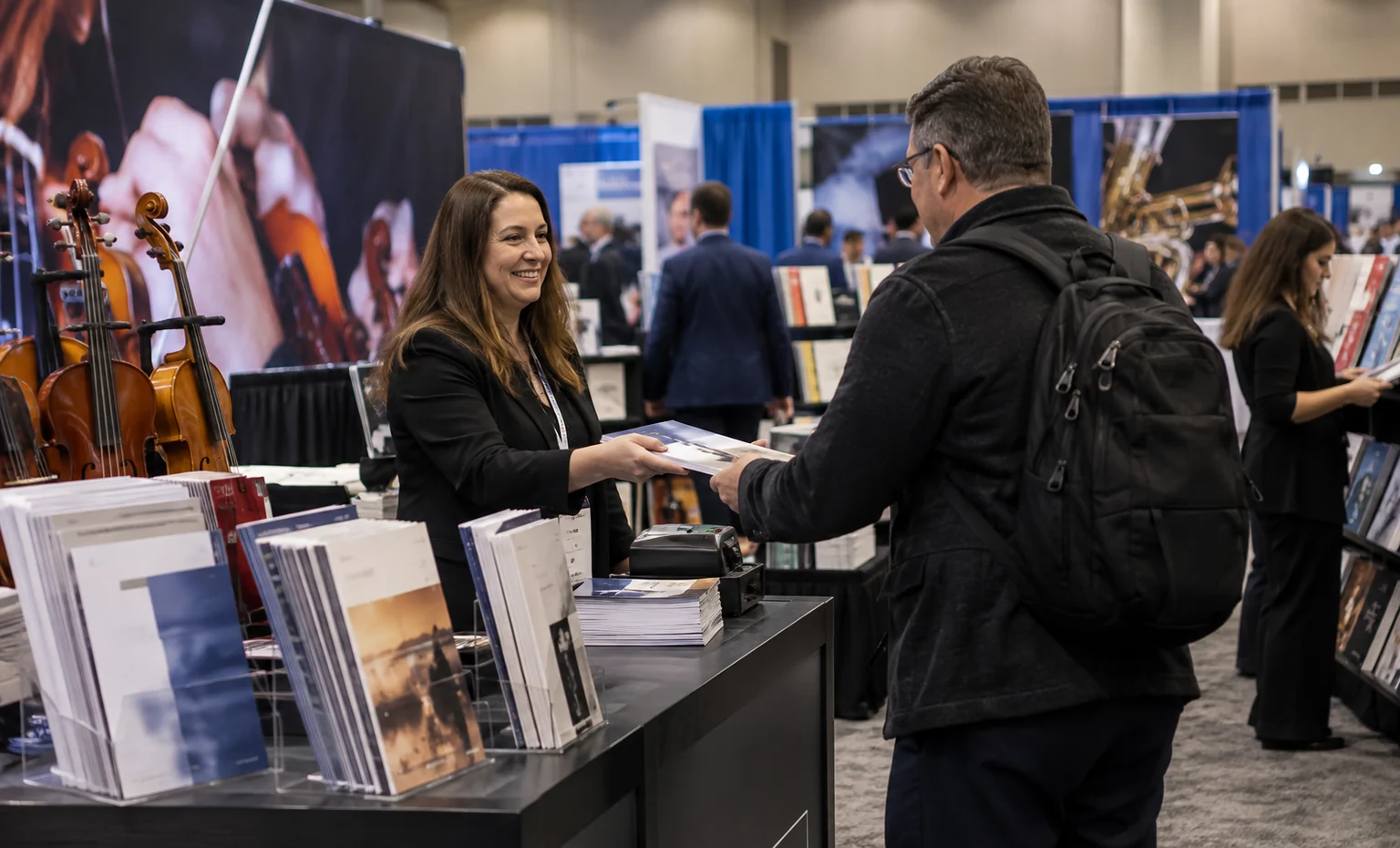
The exhibitor obtains the required licenses for music or literature used in the space and remains responsible for product sales and applicable taxes. King Exhibits works from released content and the confirmed sales method; it does not grant licenses or tax approval.
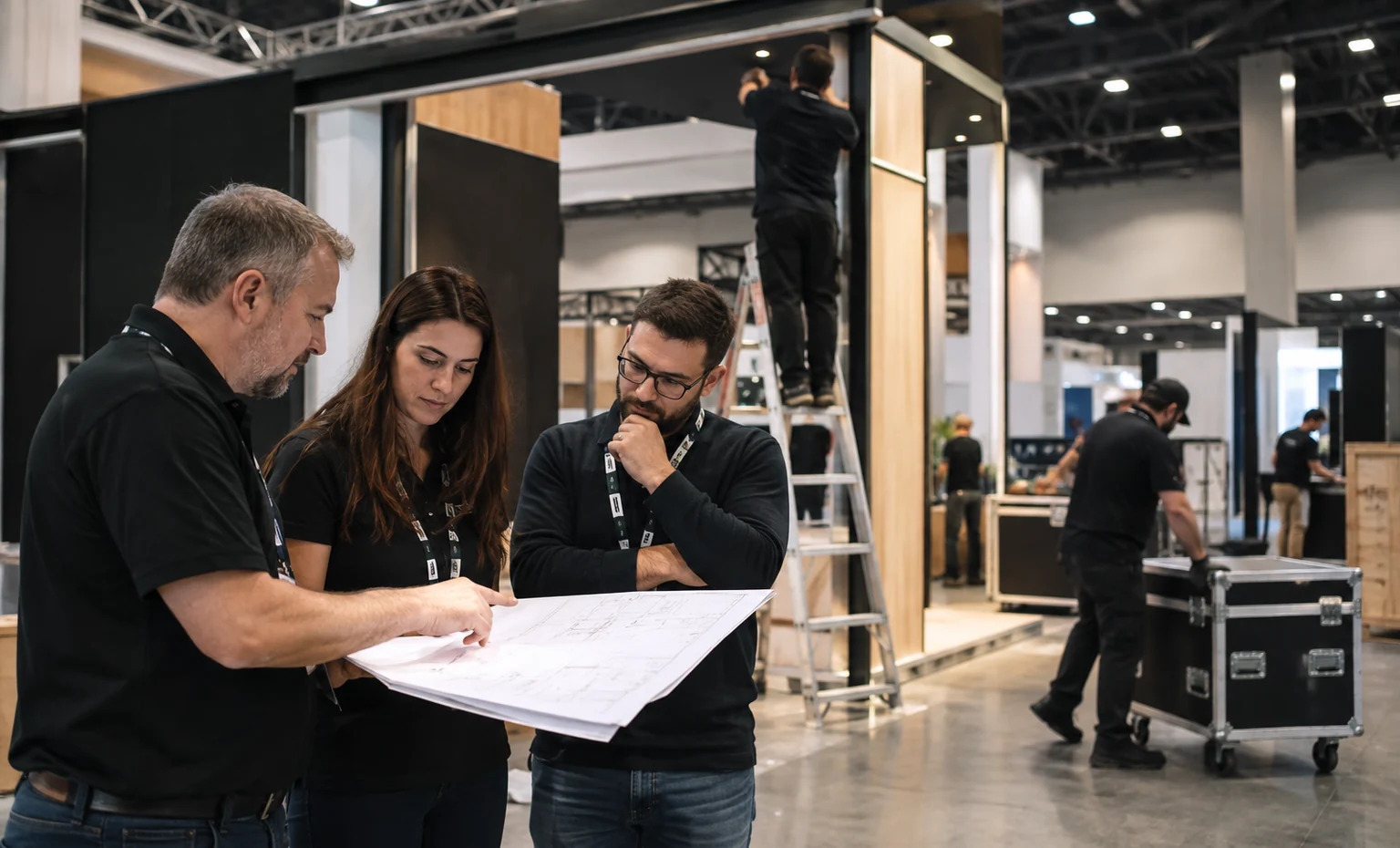
Keep all activity and materials within the purchased space. Confirm booth-description limits, flameproof or non-combustible materials, electrical requirements and any hanging sign with the current TMEA, venue and official-provider documents before production.
Freeman is the current official show decorator. If King Exhibits or another provider requires EAC access, the exhibitor must complete the current notice and insurance process. The proposal and service-order list should state who supplies, orders, receives, installs, connects and removes every item.
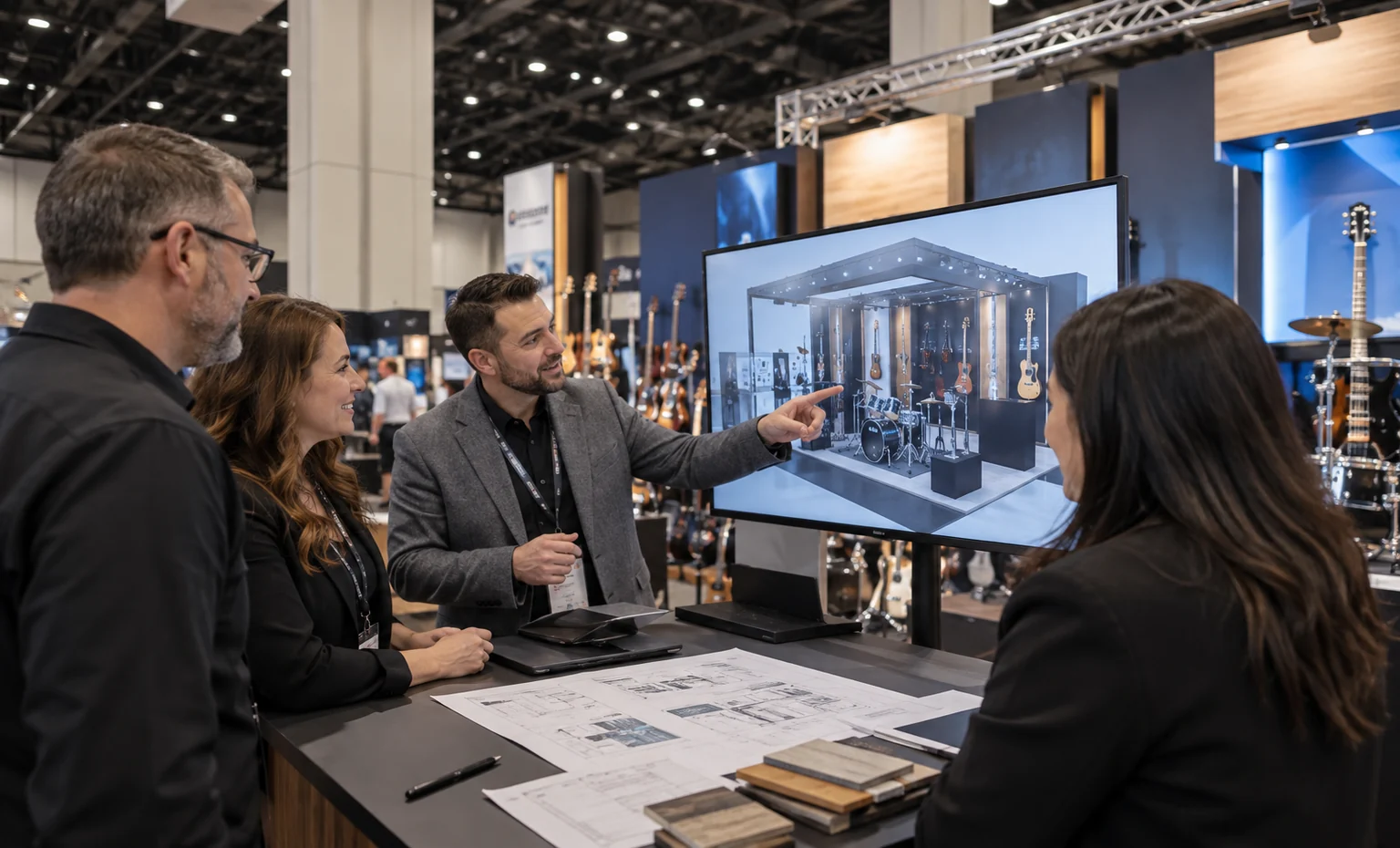
From Music-Product Brief to an Installed TMEA Exhibit
Send the show edition, booth number, dimensions, open sides, assigned zone, instruments or services, budget and requested design, production and onsite scope.
Record every playable item, presenter, audience, speaker, headset, screen, transaction method, inventory group, utility and meeting need.
Check aisle identification, demo positions, sound direction, visitor flow, product supports, storage, sales counter and conversations. The accepted proposal defines King Exhibits’ responsibilities.
Confirm the assignment, rules, EAC documents, official-service orders, copyright responsibility, sales process, internet, electrical and freight arrangements with the responsible parties.
Approve artwork, equipment data, rack and shelf loads, product quantities, case dimensions and the components included in the quoted scope.
King Exhibits completes only the onsite work stated in the accepted proposal. The exhibitor keeps responsibility for its products, approvals and orders; TMEA, the venue, Freeman and other providers retain their own work.
Yes, subject to the current TMEA sound and demonstration rules. Provide the instruments, performers, amplification, audience and schedule. The current rules direct sound into the booth, limit individual or group performance demonstrations to five minutes and use 85 dB at the aisle as a rule of thumb. TMEA management makes the final determination.
The current industry-exhibitor package includes back and side drape, an undraped table and two chairs per 100 square feet, an identification sign for non-island booths and badges based on booth size. Carpet, upgraded furniture, electrical, AV, signage, cleaning, Wi-Fi, rental exhibits and drayage are separate services. Recheck the current package for your exact assignment.
Yes. Current TMEA rules allow show-floor sales, but the exhibitor is responsible for applicable tax collection and remittance. Confirm the products, inventory, payment device, network, bags, receipts and queue so the booth supports the transaction without blocking demonstrations or the aisle.
Potentially, when the accepted scope requires EAC access and the current TMEA process is completed. The exhibitor must notify TMEA and ensure the required insurance and contractor documents are submitted. Confirm current forms, limits and deadlines before treating access as approved.
Only when a specific item is expressly included in the accepted proposal. Freeman is the current official show decorator, and current TMEA resources direct exhibitors to official sources for many decorator, electrical, internet and freight services. The scope should show what King Exhibits supplies or coordinates, what the exhibitor orders and what another provider bills.
Send the show edition, booth assignment, products or programs, instrument and technology dimensions, demonstration and sound plan, sales and inventory needs, storage, meetings, utilities, freight, budget, brand files, exhibitor documents and the design, production or onsite services you want King Exhibits to include.
Booth Sizes for TMEA Product Demonstrations and Sales
-
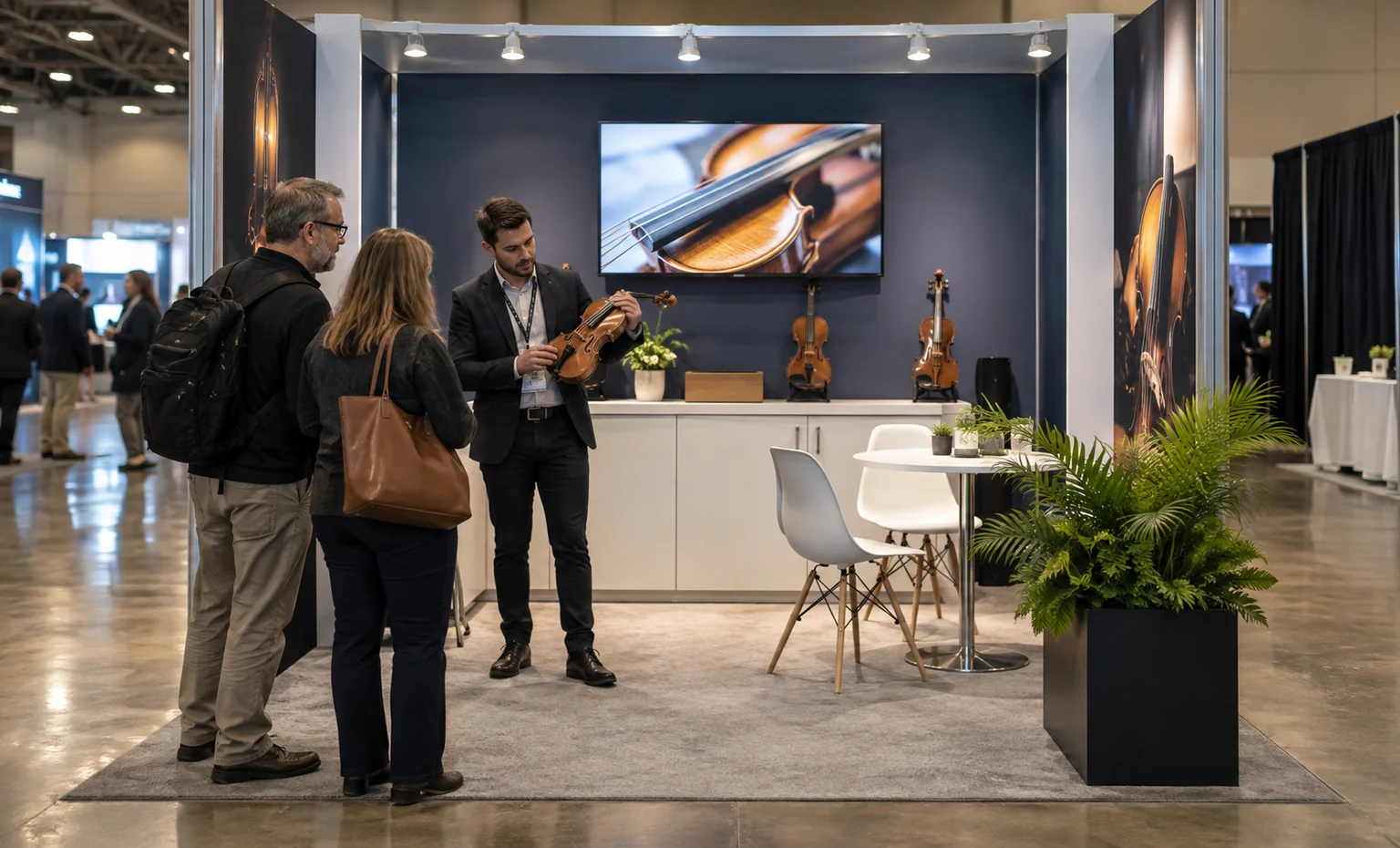
Fits one focused product family, a controlled listening or technology demonstration, compact storage and a staffed next step.
-
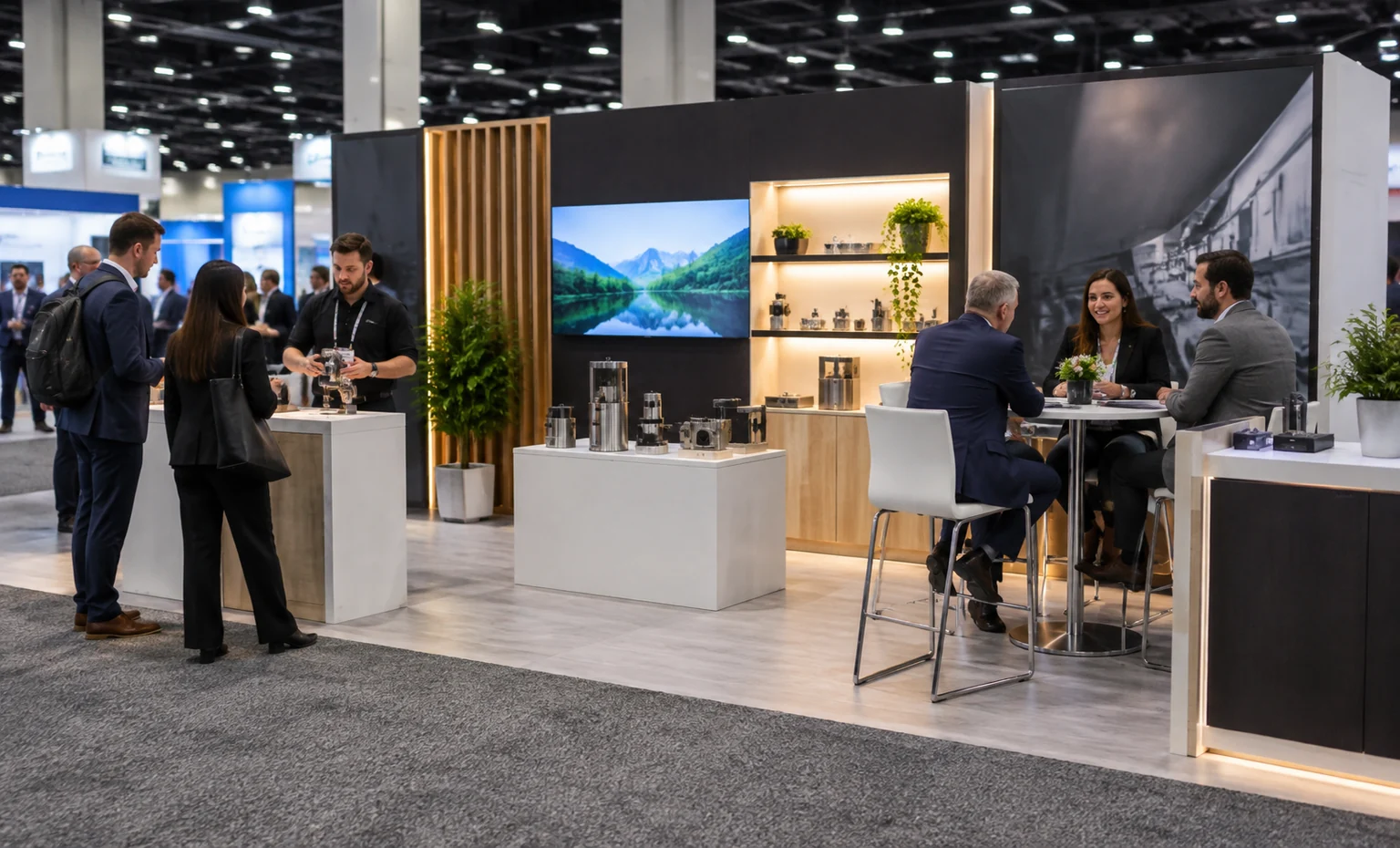
Supports separate demonstration and sales positions, additional product display, accessible storage and a short dealer or program conversation.
-
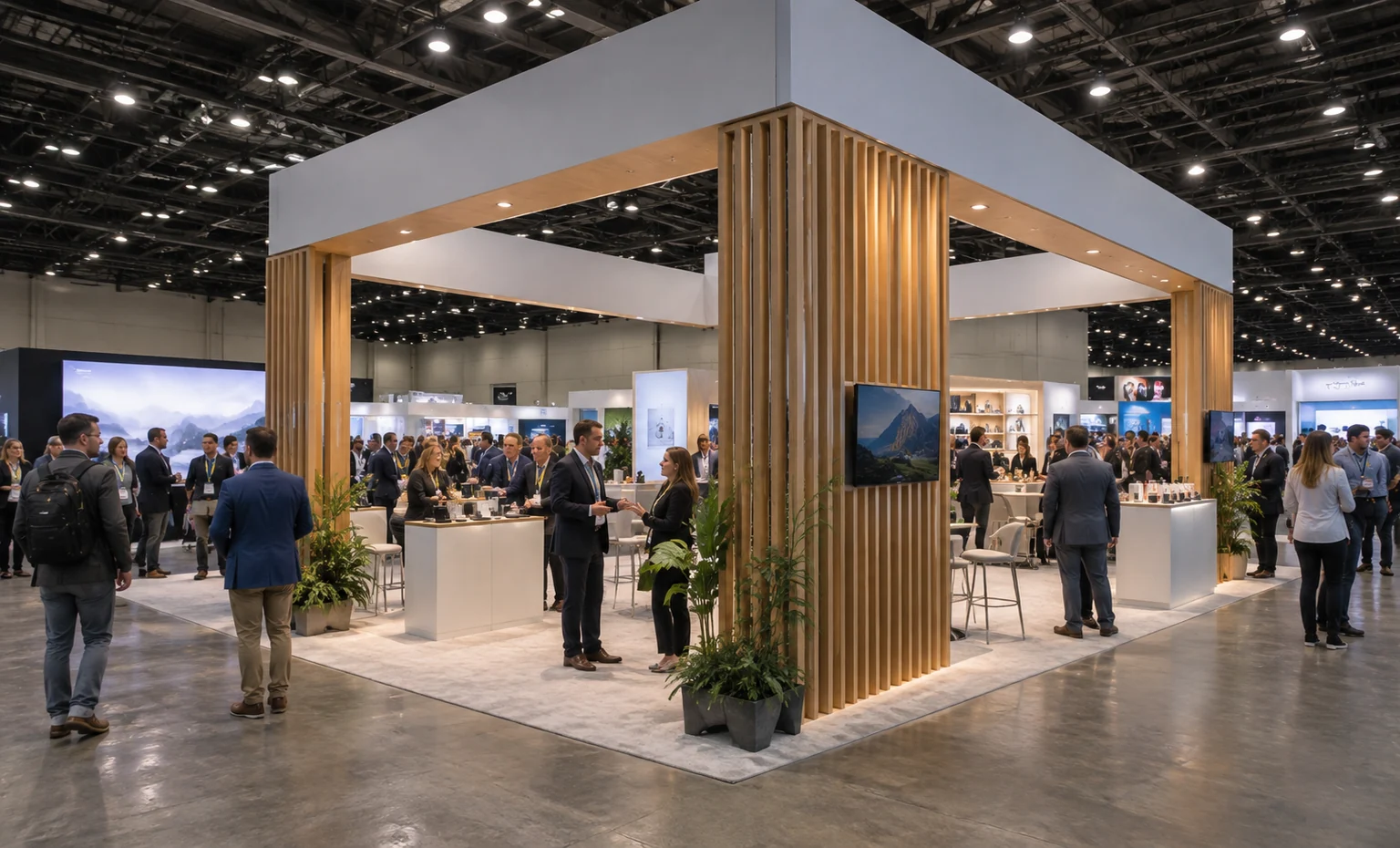
Creates four-sided access for multiple product zones, directed sound, inventory support and deeper education, distribution or recruitment meetings.