


Put the instrument, controller, plug-in or audio product in a clear ready state with a short cue that tells visitors what to try.

Use headphones, product orientation, absorption and timed demonstrations to keep the listening experience useful inside NAMM's current sound policy.

Give buyers a fast route from the launch item to the assortment, accessories, applications and support details that affect an order.

Locate commercial meetings away from the loudest trial point so pricing, distribution, training and launch plans can be discussed without shouting.
Select the Demo Environment by Product
Acoustic and Electric Instruments
Provide stable stands, playing clearance, staff-side access and a return routine. Amplification, headphones and demo length should match the actual instrument experience.
Pro Audio and Recording Equipment
Organize source, processing, control and output so the buyer understands the signal purpose without tracing loose cables across the counter.
Software, Controllers and Music Technology
Use a prepared project, reliable input devices, readable screens and a reset path. The demonstration should reach the differentiating action quickly.
Accessories and Retail Assortments
Merchandise enough range to support buyer selection, but keep replacement stock, samples and small valuable items in controlled storage.
A Music-Product Exhibit Built for Trial and Trade
The NAMM floor asks one booth to do two jobs at once. Musicians and creators want to feel and hear new products. Retailers, distributors, educators and production professionals need to discuss assortment, launch timing, training, compatibility and support. Excess sound, unplanned jams or a crowd at the aisle can interrupt both.
King Exhibits develops the rental structure around confirmed demo instruments, listening positions, screens, graphics, product storage and meeting needs. The 3D review shows how a visitor enters the trial, where the brand explains the product and where a qualified buyer continues the conversation.
The accepted quotation identifies King’s design, rental, production, packing, freight-coordination and onsite responsibilities. Instruments, demo content, artist/talent arrangements, music rights, official utilities, sound monitoring and show approvals remain with the named party unless specifically included.
Give Each Music Buyer a Useful Next Step
Move from hero-product trial to assortment, packaging, merchandising, availability and commercial discussion without searching for a separate sales deck.

Make the product quick to understand, enjoyable to try and easy to reset while staff capture the intended collaboration or follow-up.

Show signal role, workflow, control and compatibility, then provide a technical conversation point for integration questions.

Support group use, durability, curriculum, accessibility, deployment and service conversations with the relevant products and materials nearby.
Build a Listening Bar That Can Run All Day
Give each position one clear source, product and control path. Set comfortable screen and headphone reach, conceal the supporting hardware and keep staff access to connections. Decide how the station returns to a known volume, track or preset after every visitor. Independent listening positions reduce sound spill and let several buyers compare products at once, but they still need cleaning, charging and a visible way to request help.

Make Instrument Tryout Easy to Supervise
Select the instruments that should remain playable and the models shown only for range. Record stand, cable, amplification, seating and handling needs for each active unit. Keep cases and replacement stock away from the trial path, yet close enough for staff to respond. A defined pickup and return point protects the display, keeps accessories together and stops an informal jam from taking over the booth’s main buyer route.
Schedule Demonstrations as Product Proof
Name the product feature, presenter, setup time, audience position and sales handoff for every demonstration. The current NAMM policy treats a product demonstration differently from a booth performance, limits duration and controls sound, so the program must fit the approved format. Place the audience inside the booth rather than in the aisle. Between sessions, return the area to normal trials and keep booked dealer meetings running elsewhere.

Review Every Demo Position Before the Booth Is Built

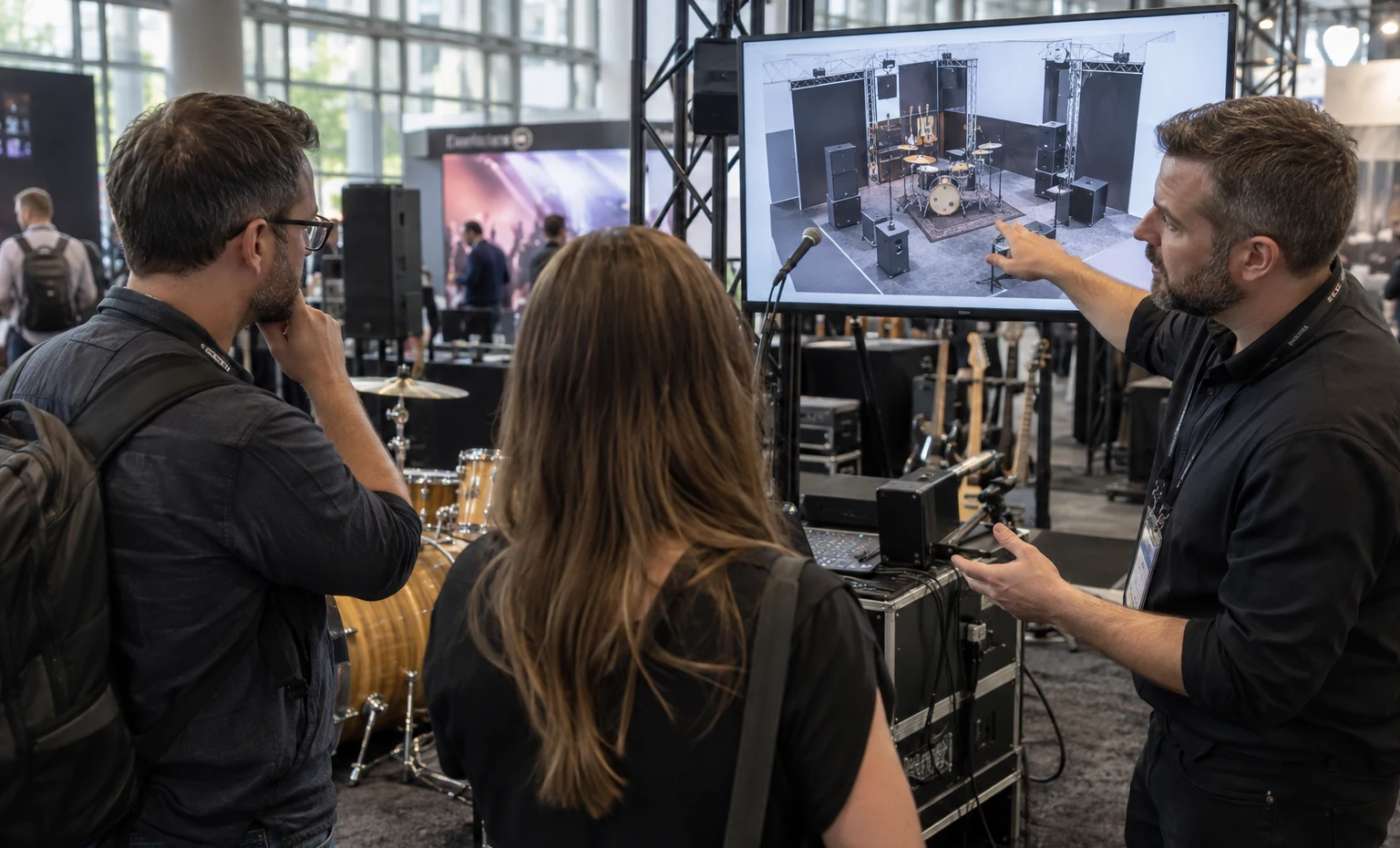
King Exhibits can place the real instrument envelope, listener position, screen, speaker direction, cable path and staff access into the 3D design. The review therefore covers the product experience as well as the booth appearance.
Rental components establish the main walls, lighting and meeting areas. Quoted custom details solve the points where instruments, controllers or audio equipment meet the structure. A named demo register can carry from approval into production and packing so each station arrives with its intended support elements.
Release the NAMM Booth with Sound Under Control

The current policy permits product demonstration within its conditions and prohibits public entertainment performances in booth space. Confirm the format before promoting a schedule.

Design to the current 85 dB ceiling and five-minute demonstration limit, then recheck the 2027 rule before upload and onsite operation.

Keep demonstrations and stages away from the aisle, point speakers inward and provide a staff plan for managing listeners.

Use the 2027 Exhibitor Resources for demo rooms, sound materials, freight, electrical, internet, labor, EAC and all deadlines.
From Product Playlist to NAMM Show Floor
Provide active products, passive displays, audio path, screens, presenters, meetings, utilities, graphics and freight.
We locate instruments, headphones, commercial meetings, storage and staff access around the show assignment.
Review product supports, sound-control choices, graphics, meeting capacity and responsibility boundaries.
Finalize demo files, schedules, approvals, official orders and technical inputs.
King completes the quoted exhibit elements and checks them against the named product plan.
King performs the agreed exhibit scope while product teams operate demos and manage sound.
Yes, within the current NAMM Show Floor Sound & Booth Demonstration Policy. The product, duration, sound level, speaker direction, audience position and crowd plan should be confirmed before design release.
Yes. Send the number of listeners, sources, devices, screens, power, cable connections, cleaning routine and storage needs so the station can be designed and quoted accurately.
The current NAMM policy prohibits public entertainment performances in booth space and distinguishes them from product demonstrations. Use current organizer guidance before announcing any appearance or activity.
Send the 2027 assignment, products, demo plan, sound approach, screens, meetings, utilities, graphics, storage, freight, budget and requested onsite services.
Booth Sizes for Music Demonstrations and Dealer Meetings
-

Fits one focused launch, several headphone positions or a compact instrument trial with buyer conversation space.
-
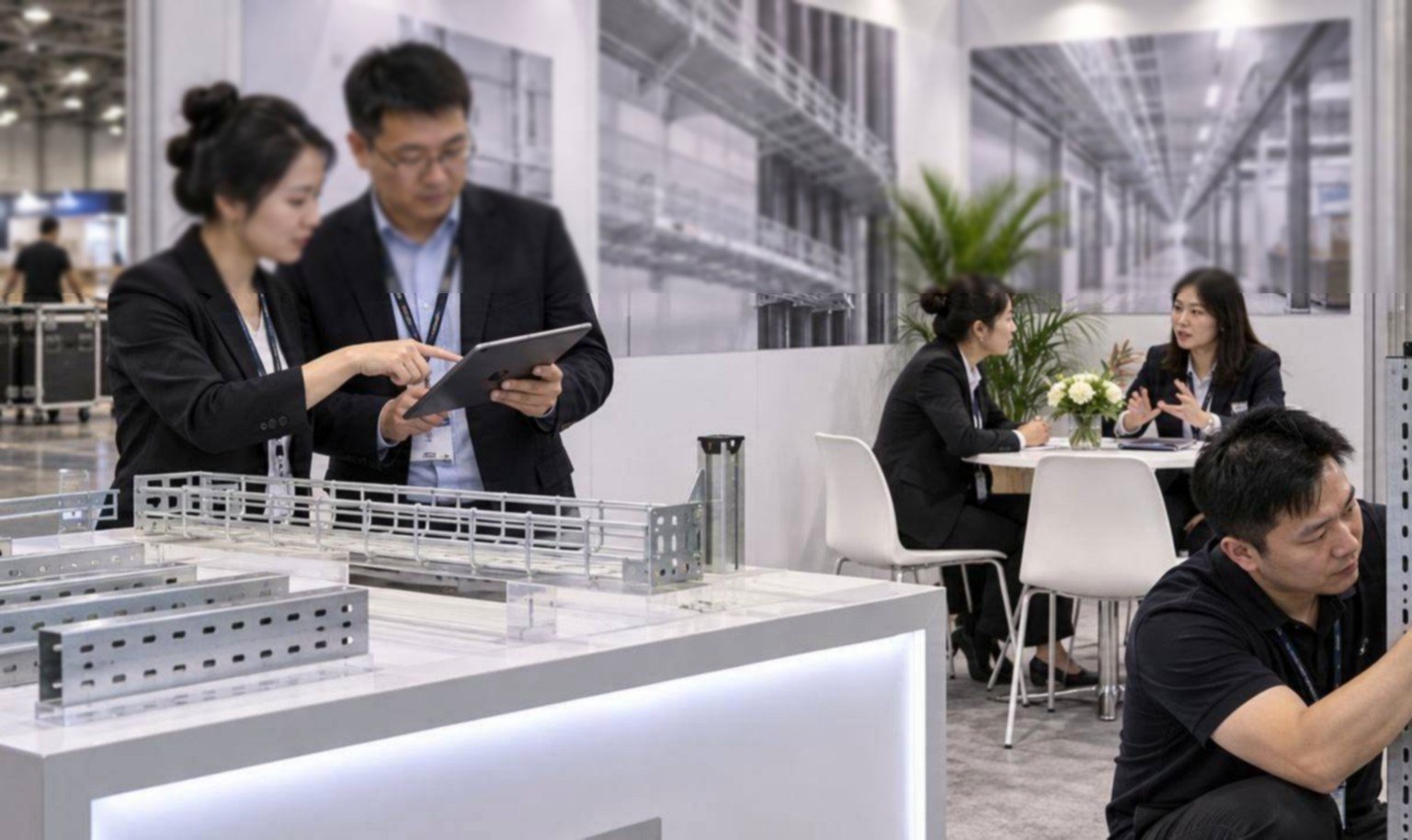
Supports separate trial and listening zones plus a dedicated table for retailer or distributor meetings.
-

Allows multiple product families, managed demonstrations, scheduled meetings and controlled support storage.