


Choose the Booth by How the Product Is Served
Shelf-Stable SamplesPlan fast portioning, package display, back stock, serviceware and waste. The simplest sample still needs a clean replenishment route.Chilled and Frozen ProductsRecord holding temperature, refrigerator/freezer size, power, refill schedule, condensation and the distance from storage to service.Heated or Prepared FoodsConfirm the cooking method, equipment, extraction or open-flame issue, approvals, protection and qualified operator before counter design.Beverage and Alcohol ProgramsDefine portion, temperature, water/ice, cups, queue and official service requirements. Alcohol handling follows current show and venue rules.
A Sampling Booth That Still Works as a Sales Booth
The busiest tasting counter is not automatically the most productive exhibit. Samples can attract visitors who never see the package, understand the assortment or meet the sales team. Meanwhile, a qualified retail or foodservice buyer may leave if the only conversation space sits inside the serving line.King Exhibits develops rental walls, graphics, shelves, counters, equipment openings, storage and meeting areas from the actual tasting sequence. The 3D plan shows where food moves, where packaging is seen and where staff take the next commercial step.The accepted proposal identifies King’s design, rental, fabrication, packing, freight-coordination and onsite work. Product safety, labeling and claims, permits, cooking, alcohol service, official utilities, samples and qualified food staff remain with the named party unless expressly included.
Prepare the Follow-Up for Every Buyer Type

Keep assortment, shelf placement, package sizes, launch support and reorder information close to the product the buyer just sampled.
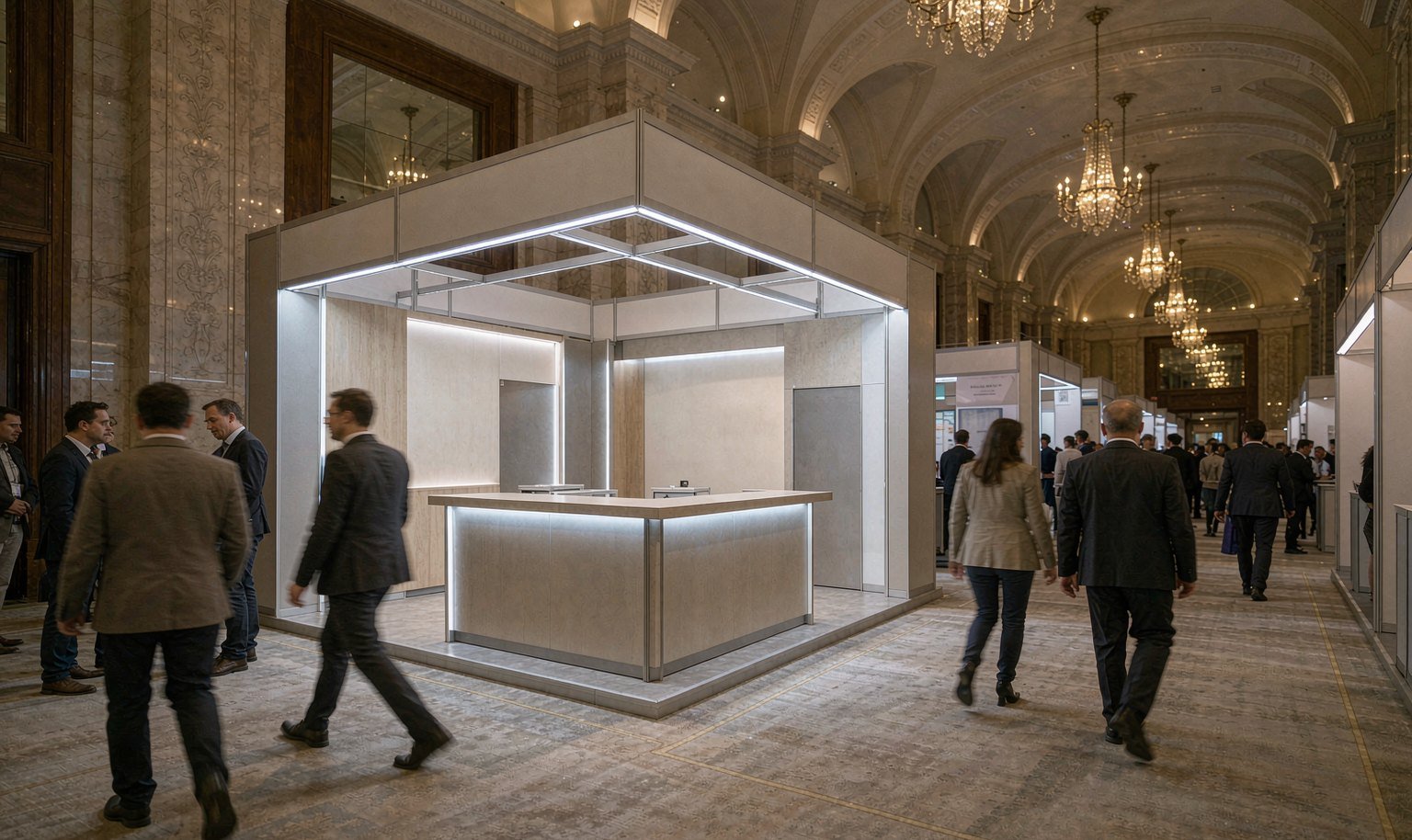
Provide a place to discuss scale, category fit, distribution, merchandising and the broader line without blocking trial traffic.
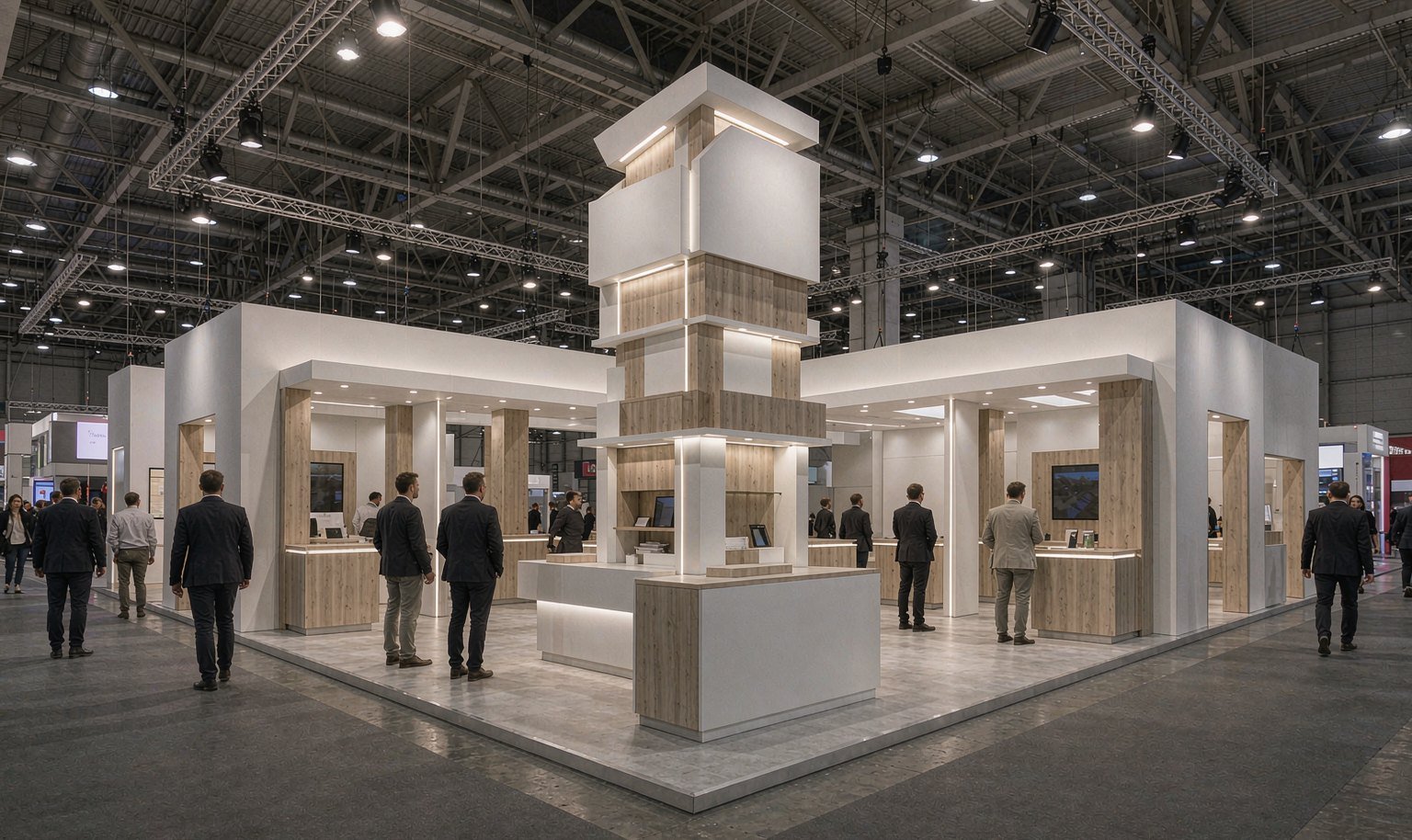
Show the working format, preparation, yield, application and menu role, then continue into operational and supply questions.
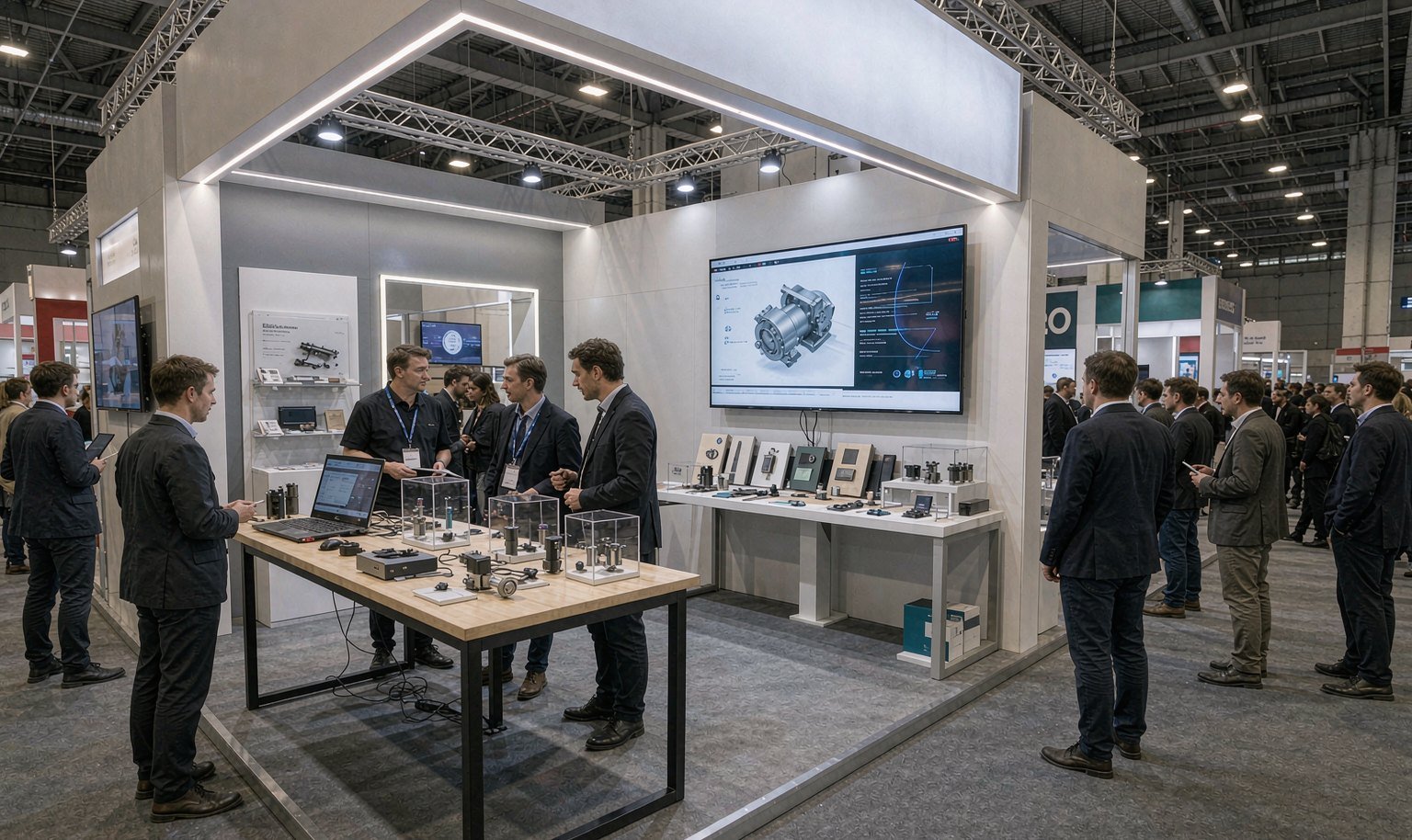
Use scheduled meetings for territories, channel fit, logistics, regulatory responsibility and portfolio discussions.
Write a Service Recipe for Every Sample
List serving temperature, portion, preparation step, equipment, serviceware, allergen message, clean stock, waste and reset time for each sampled product. Add the number of simultaneous servings and the staff position. This record turns a tasting idea into dimensions, utilities and storage the booth designer can use. It also exposes menu combinations that ask one counter, circuit or employee to do more work than the show schedule allows.
Protect the Cold Chain Inside the Booth
Record what arrives frozen, refrigerated or ambient and what temperature it requires during storage, preparation and service. Size equipment from the daily stock plan, not the package dimensions alone. Keep doors and refill access on the staff side, allow for heat and condensation, and define the end-of-day destination. Official cold storage may sit outside the booth, so replenishment timing and responsibility need to be confirmed with current show services.
Answer the Question the Taste Creates
Prepare one short response path for flavor, ingredients, allergens, sourcing, certification, package, shelf placement and foodservice use, based on approved company information. The counter graphic should answer only the questions that help a visitor self-qualify. Trained staff handle the rest and route buyers to the right specialist. This keeps the tasting fast while preventing unsupported product claims or a wall of fine print from replacing the sales conversation.

Turn the Tasting Menu into a Buildable Equipment Plan
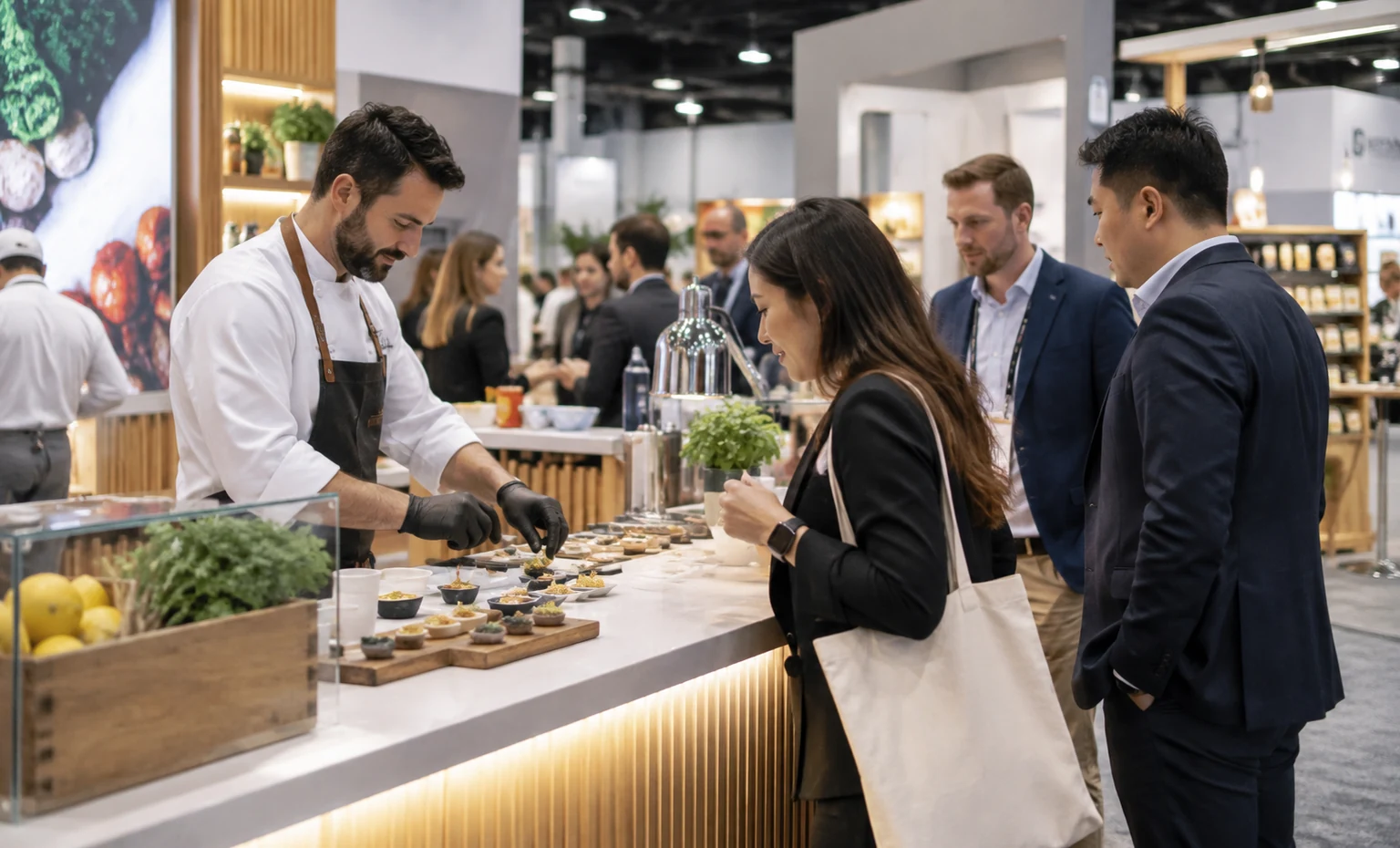
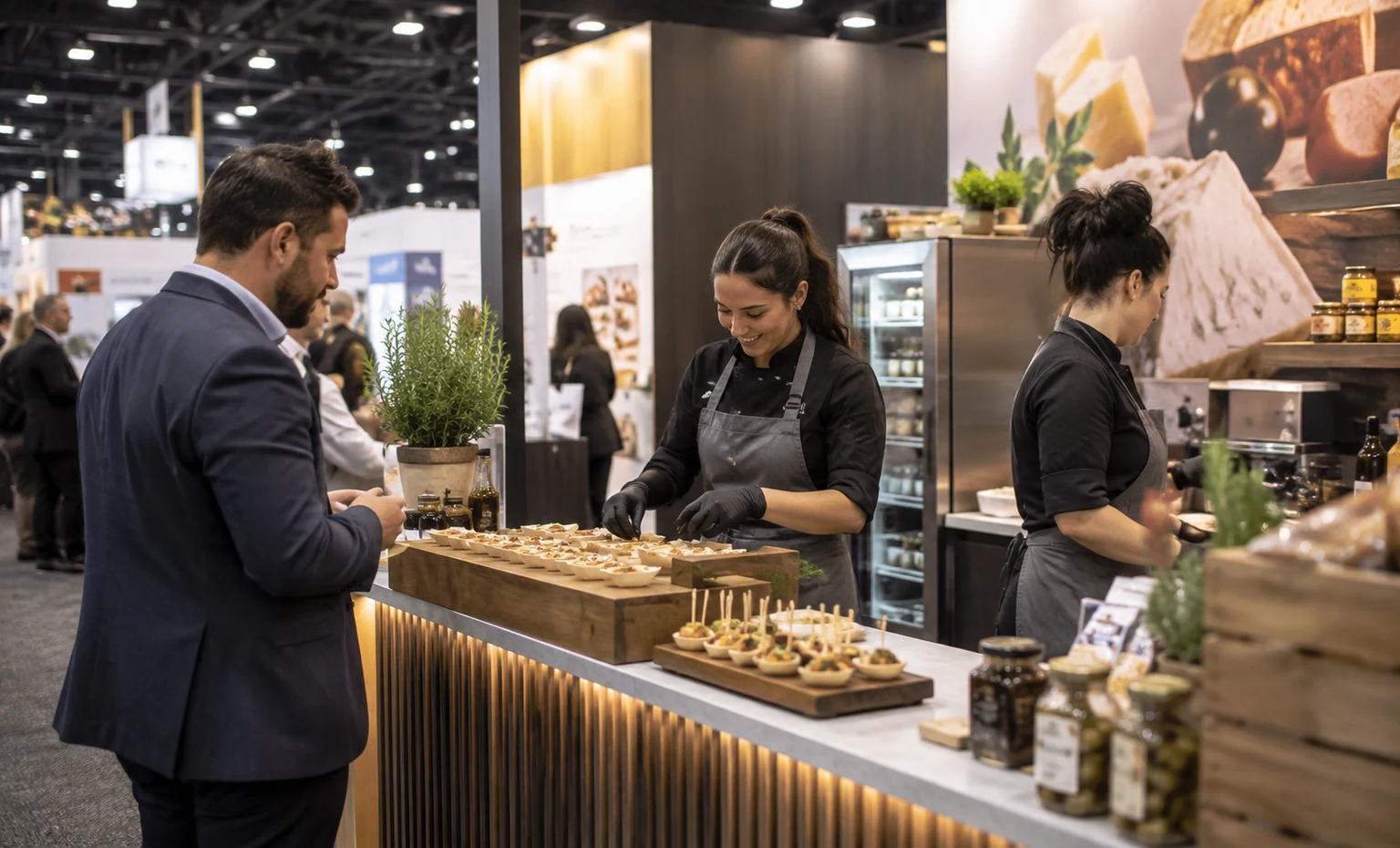
King Exhibits can assign each sample its counter position, equipment envelope, power or plumbing interface, package display and back-stock location during 3D review. The tasting menu becomes a physical service plan rather than a late note added after booth design.Rental architecture carries the brand and buyer meetings. Quoted custom fabrication handles the product-specific counter or fixture details. Matching station names across graphics and packing helps the onsite team identify what belongs at each service point.
Close the Fancy Food Show Service Requirements
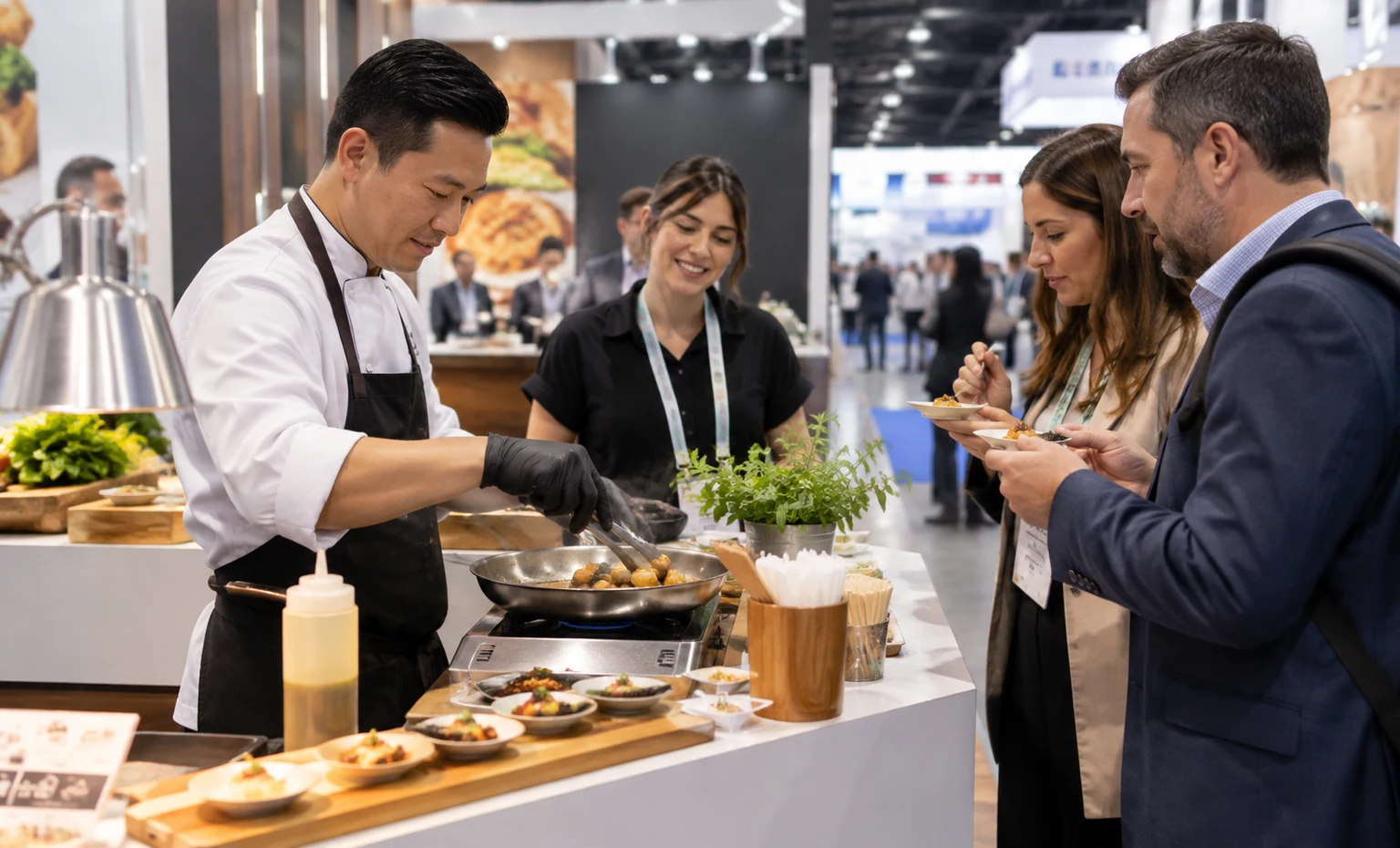
Submit the current form and cooking method. Confirm qualified staff, equipment, safety protection and any open-flame permission.

Reserve the equipment and external storage needed for the approved daily product plan, including power and access.

Electricity is ordered separately under current guidance. Verify plumbing, floor covering, labor and all building requirements.
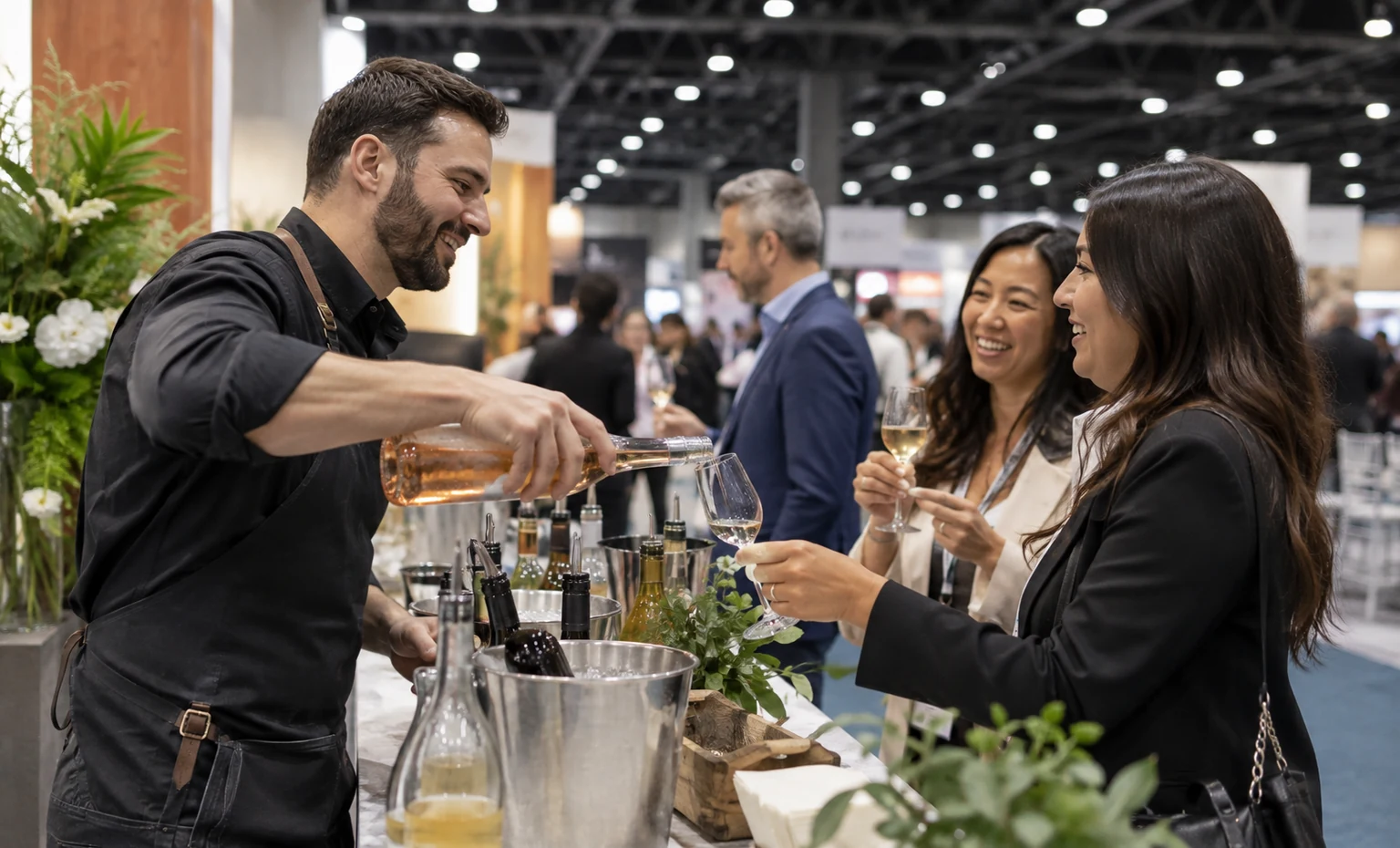
Use the current exclusive-provider process for any alcohol service and confirm every sample responsibility before promotion.
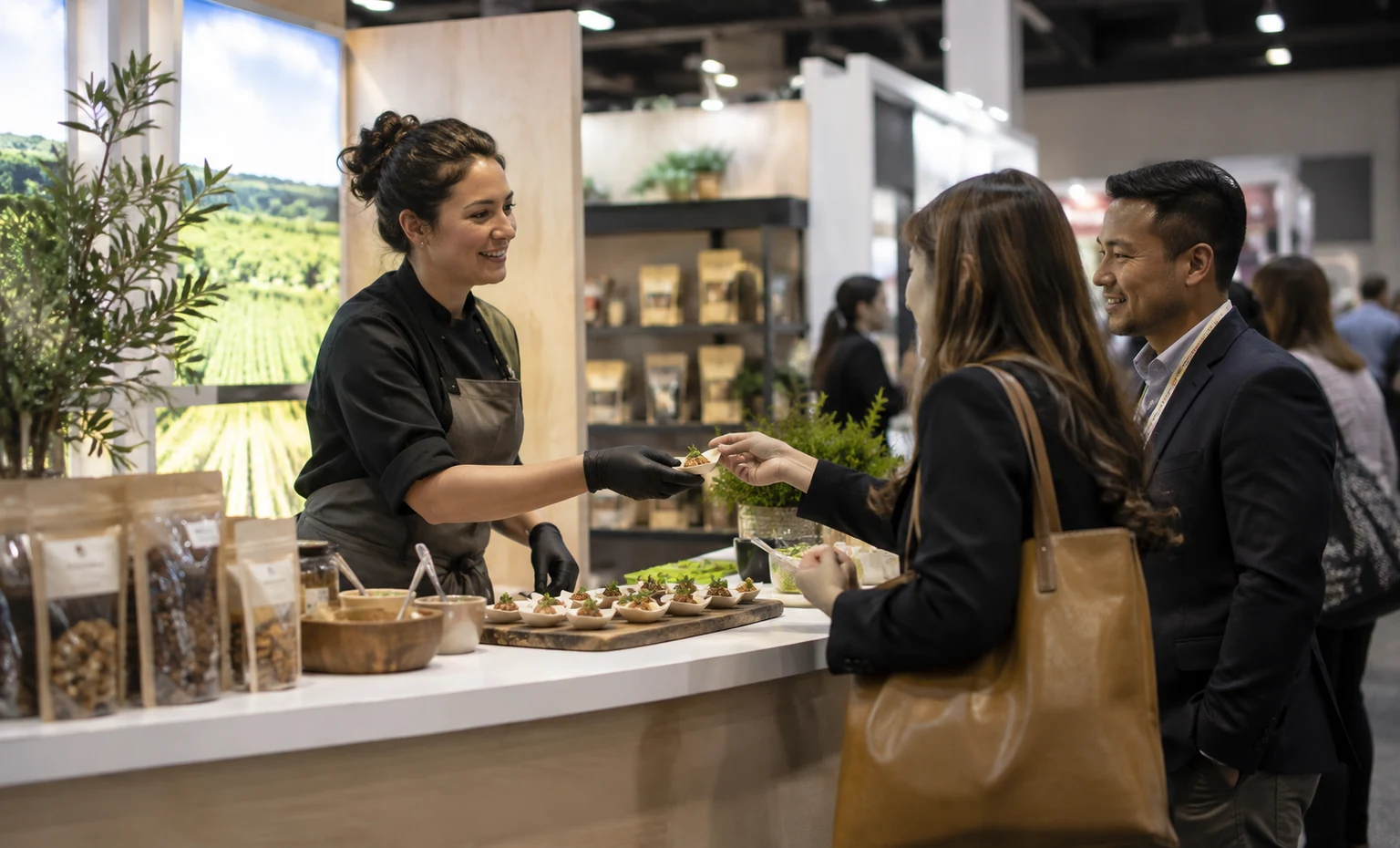
From Tasting Menu to Buyer-Ready Booth
Provide samples, packages, temperatures, preparation, equipment, buyers, meetings, graphics, freight and scope.
We place preparation, service, merchandising, storage, waste and buyer conversations within the assigned space.
Review counters, equipment interfaces, graphics, traffic and responsibility boundaries.
Finalize sampling/cooking approvals, utilities, storage, files, services and delivery information.
King checks the quoted booth elements against the approved tasting plan.
King performs its contracted work while the food team controls preparation and product safety.
Yes, after the current sampling form, product eligibility, preparation method and service requirements are approved. Send the full tasting menu before the counter design is released.
Yes. Provide equipment models, dimensions, heat, ventilation, power/plumbing, access and operator position. Equipment rental and official services are included only when the accepted quote says so.
Yes, when the footprint lets the tasting line and replenishment route stay clear of the quieter retail, distribution or foodservice conversation area.
Send the 2027 assignment, products, packages, samples, equipment, utilities, buyer meetings, graphics, storage, freight, budget and requested onsite services.
Booth Sizes for Sampling and Buyer Meetings
-
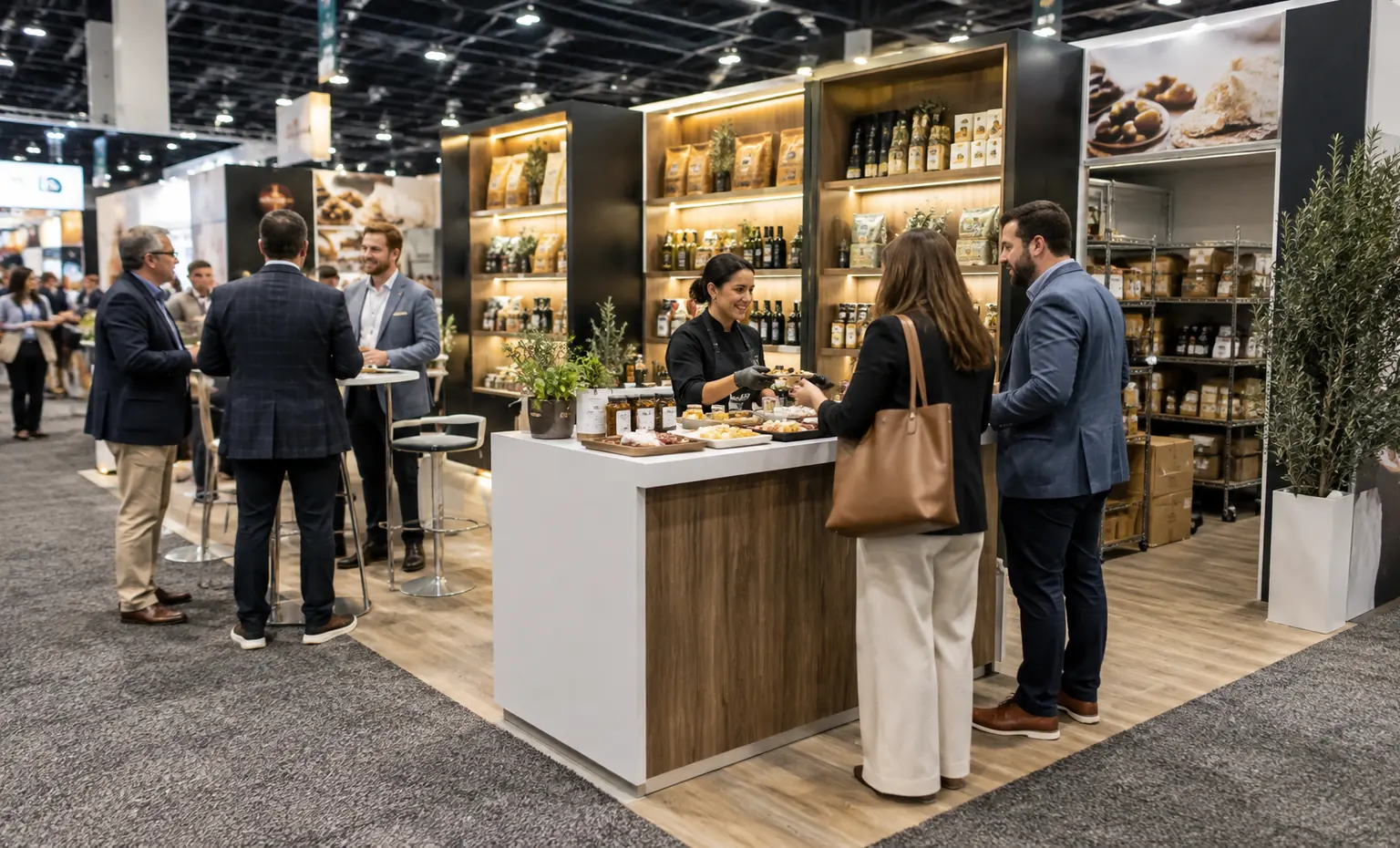
Supports a focused tasting menu, package wall, stock storage and standing buyer conversations.
-
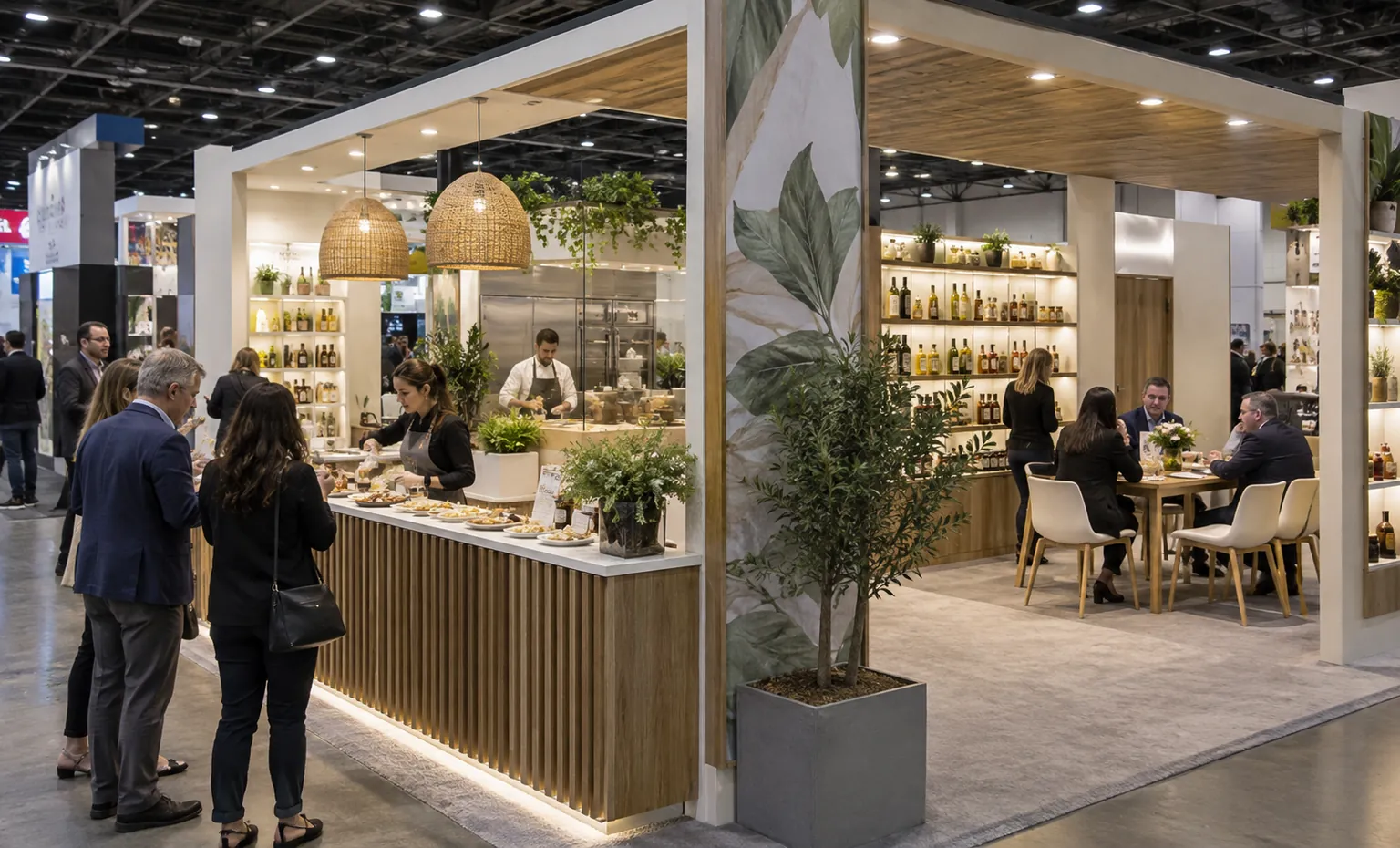
Adds separate sampling, preparation, merchandising and seated line-review areas.
-
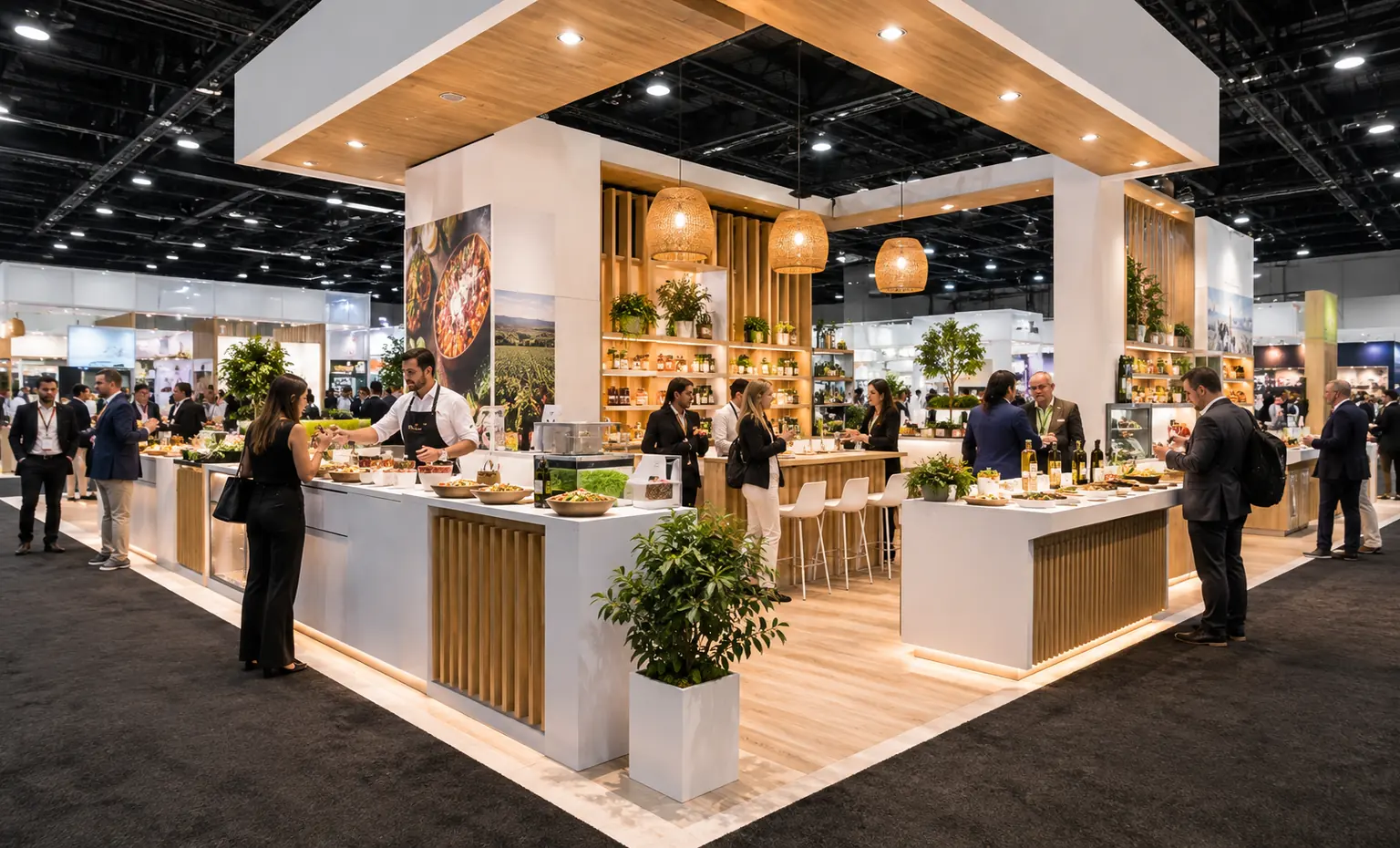
Provides multiple serving sides, equipment capacity, product zones and scheduled retail or foodservice meetings.