
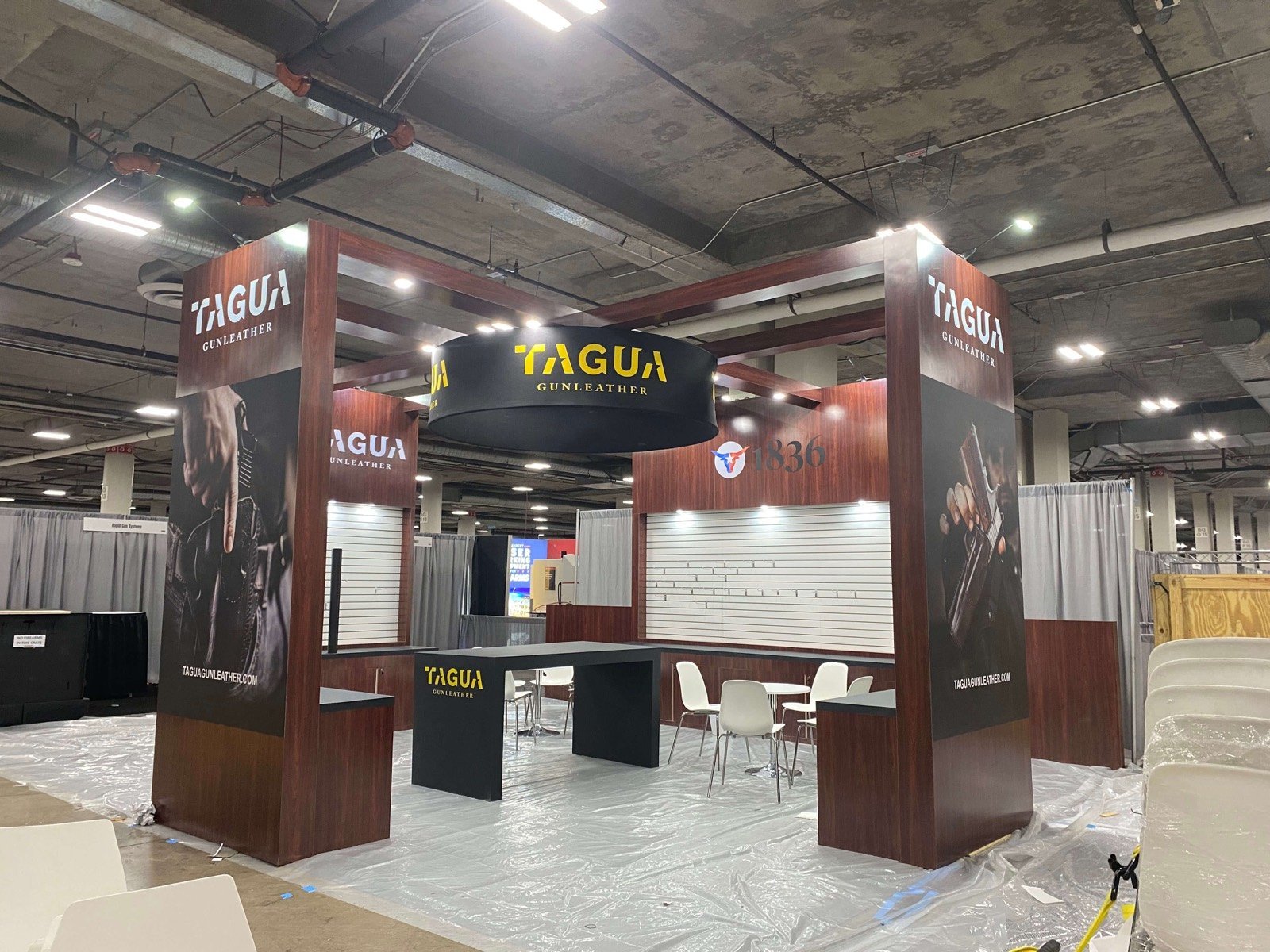

Use destination photography, species, season and lodge details to help qualified visitors identify the right hunt before the longer consultation begins.

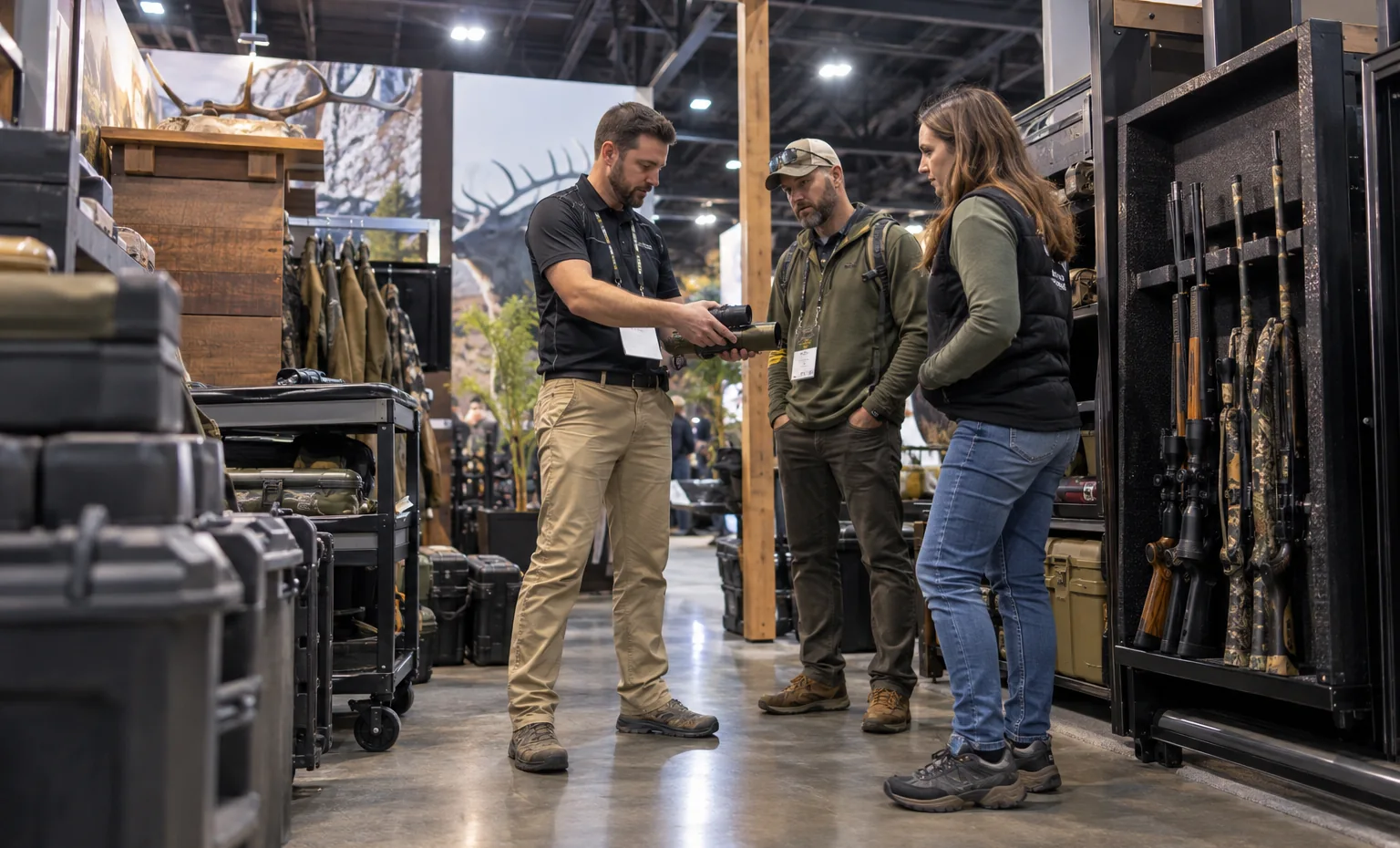
Lighting, height and visitor distance should support close inspection of firearms, optics, knives, apparel, artwork or mounts without turning valuable pieces into aisle decoration.

Trip planning, dealer terms, custom work and collector purchases need seating, documents and enough separation from walk-up traffic to reach a decision.

Name who receives, places, secures, removes and transports controlled or valuable items before cases, supports, storage and access panels are finalized.

Match the Exhibit to What Your Company Sells
Outfitters, Lodges and Destinations
Combine a fast visual introduction with seated itinerary discussions, calendars, maps and private commercial details. The booth should qualify interest before a specialist spends time on dates and packages.
Firearms, Optics and Field Equipment
Build around confirmed product dimensions, viewing angles, controlled access and knowledgeable staff. Product custody and show permissions remain named responsibilities rather than assumptions in the exhibit design.
Wildlife Art and Taxidermy
Give each piece enough sightline, lighting and physical protection. Supports, wall loads, crate order and handling access need to be resolved with the actual artwork or mount list.
Associations and Conservation Programs
Separate membership, education, advocacy and donor conversations so the booth explains the mission while still giving staff a practical place to enroll or meet visitors.
SCI Booth Design That Supports Real Transactions
The SCI Convention is both a marketplace and a relationship event. A visitor may arrive ready to compare a safari, inspect a rifle, commission artwork, discuss dealer terms or support a conservation program. Those actions require different viewing distances, staff knowledge, documents and time. One open counter cannot serve all of them well.
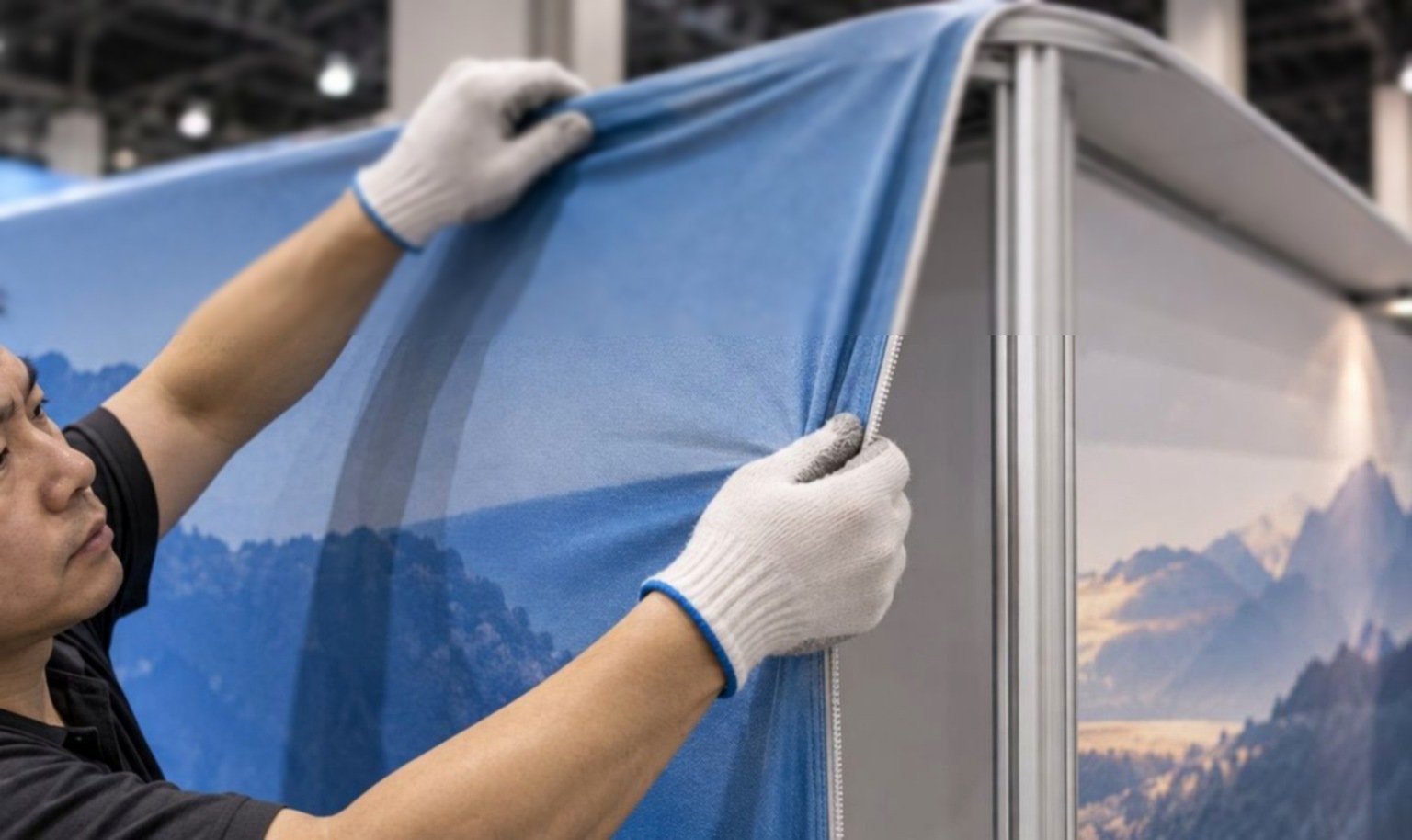
King Exhibits translates the selling plan into rental walls, branded graphics, lighting, product supports, lockable storage, screens and meeting areas. During 3D review, the team can see which displays draw attention, where longer conversations take place and how staff reach merchandise without crossing the visitor path.
The accepted proposal defines King’s design, rental, production, packing, freight-coordination and onsite scope. Organizer approvals, venue services, product legality, safes, guards, insurance, specialist handling and custody stay with the named party unless the quotation explicitly includes them.
Build a Clear Sales Route Across the Booth
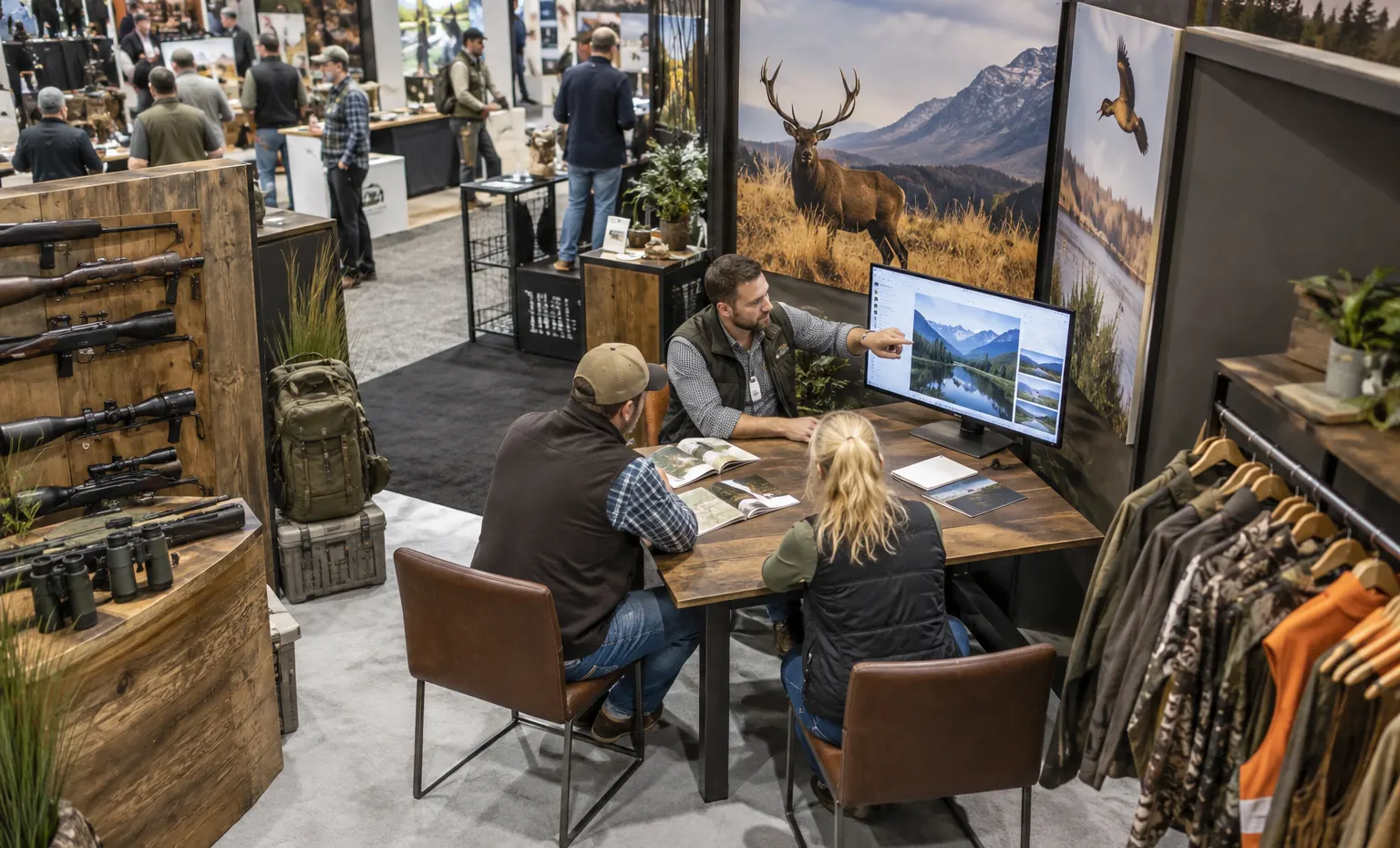
Let visitors sort by region, species, season, accommodation or experience level before entering a detailed booking conversation.
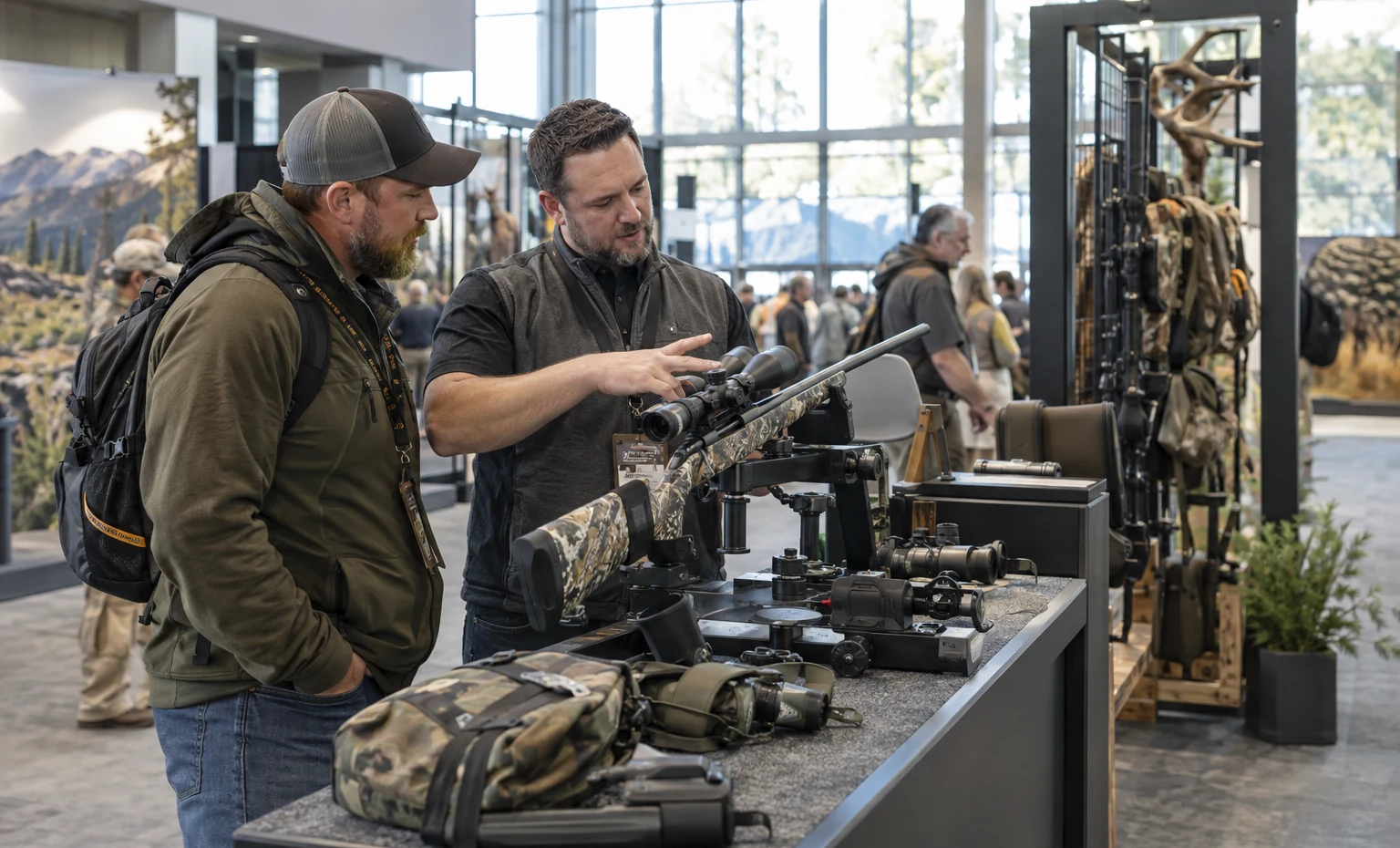
Set the correct eye level, reach, lighting and staff-side access for premium equipment. Keep technical information close to the physical item.
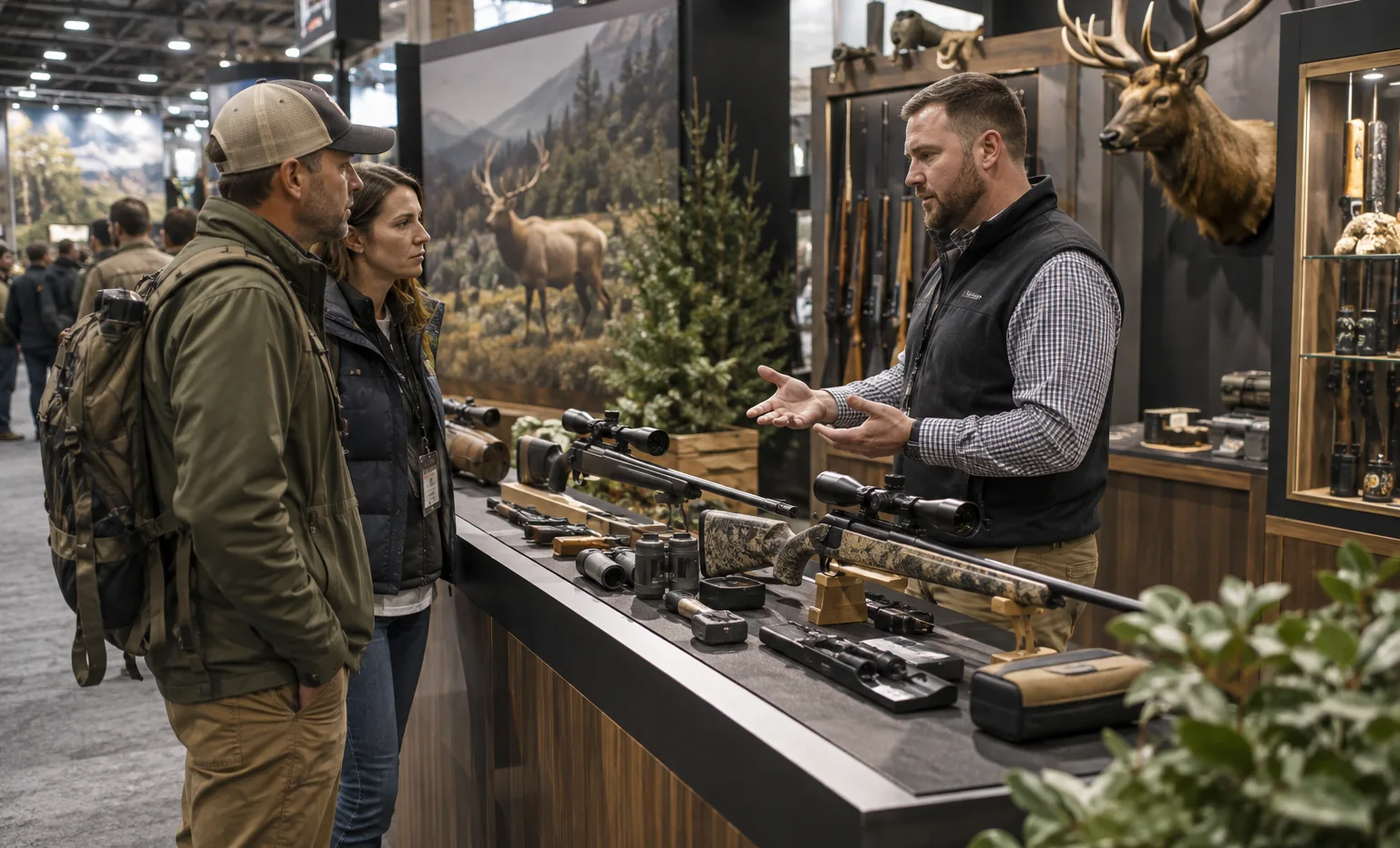
Use deliberate spacing for art, firearms and mounts so craftsmanship can be seen without crowding valuable pieces or their protection zone.
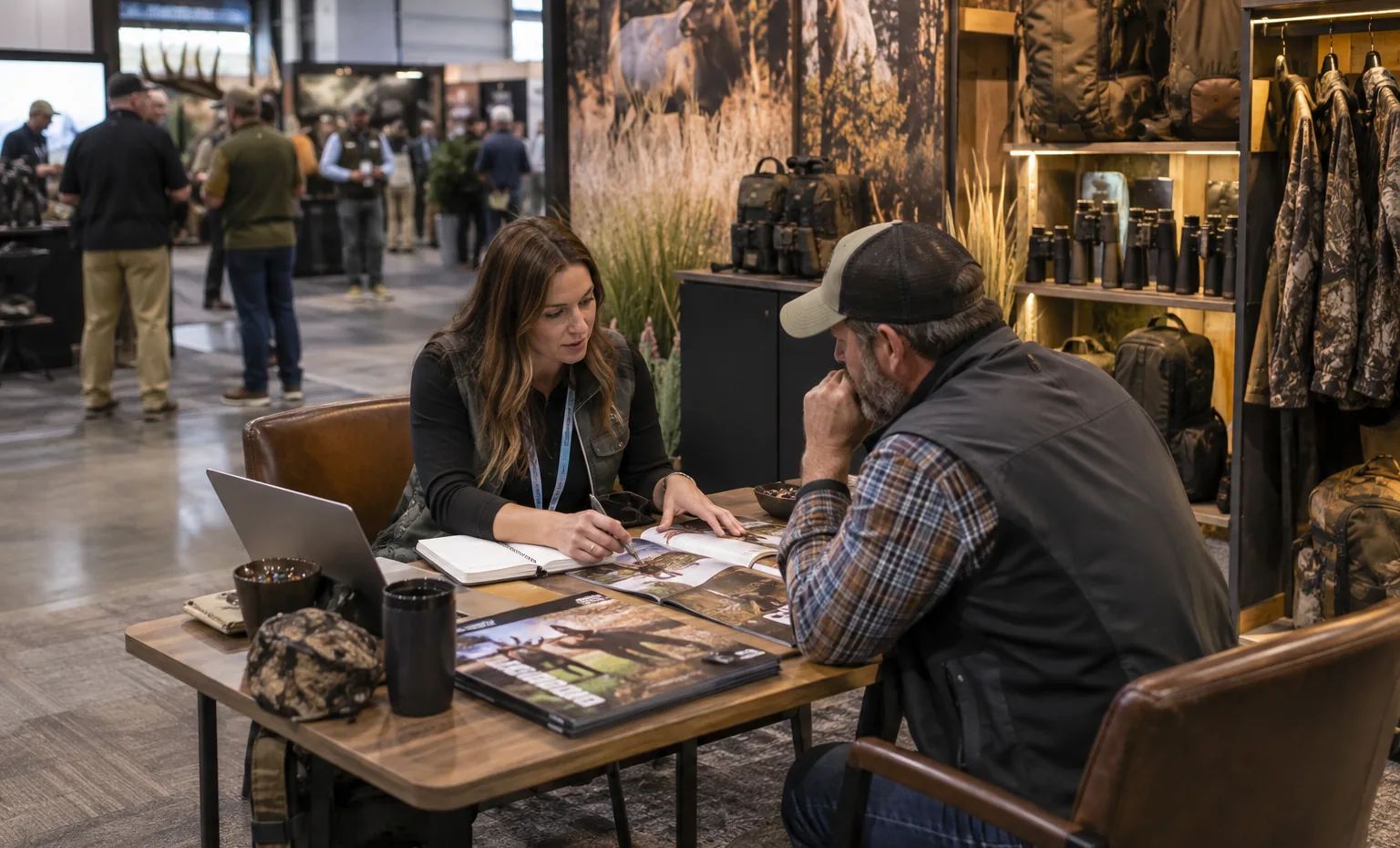
Provide a quieter table for distribution, inventory, custom programs, sponsorships and partnerships that should not be negotiated in the aisle.
Turn a Destination Wall into a Booking Tool
Organize destinations by the questions hunters ask first: region, species, season, physical demands, accommodation and available dates. Use the wall to qualify interest, then move serious prospects to a table with the right outfitter. Maps, photography and a concise trip summary should shorten the first conversation rather than cover every package. Keep calendars, pricing sheets and personal travel details at the meeting area instead of exposing them in the aisle.
Design Valuable Displays from the Staff Side
List each firearm, optic, knife, artwork or collectible with its dimensions, support method, viewing side and person responsible for custody. Then locate cases, brackets, lighting and lockable storage around that record. Staff should reach an item without moving through the visitor line or leaving another display unattended. This approach also reveals which elements require organizer approval, specialist handling or security arrangements outside the booth-construction scope before production begins.
Keep the Exhibit Sales-Ready for Four Days
Plan daily quantities for brochures, catalogs, booking forms, membership materials and small merchandise, then give each item a named storage position. Separate supplies needed at opening from valuable stock that should remain controlled. Add charging, waste and staff belongings without consuming the buyer-facing counters. A simple closing and morning reset list helps the team restore displays, replace documents and prepare appointments before visitors return to the show floor.

Coordinate the Booth from One Approved Display List
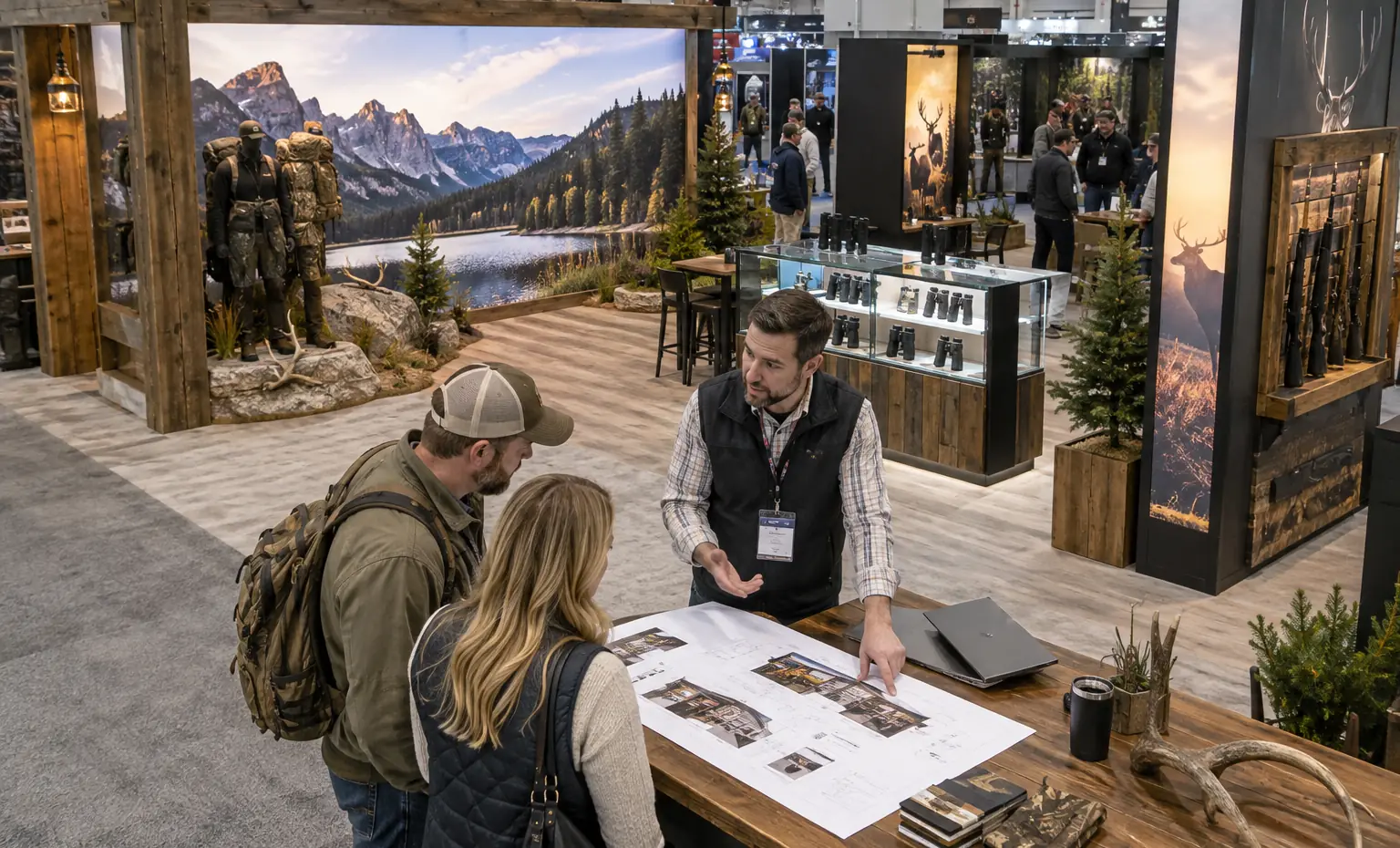

King Exhibits can use the same display names in the 3D plan, graphic schedule, fabrication details and packing record. An outfitter’s destination wall, an optics counter and a collector display therefore remain identifiable from approval through setup.
Rental components control the main architecture while quoted custom work handles the fittings the merchandise actually needs. That shared record makes review more concrete for the exhibitor and gives the production team a clearer basis for building, checking and packing the accepted scope.
Resolve These SCI Exhibit Details Before Release

Check the assigned space against SCI’s current inline, perimeter, peninsula or island rules. The published policy uses configuration-specific limits and requires approval for exceptions.

Submit any required drawings or display information early. Do not assume that product type, mount, support, demonstration or activity is automatically approved.
Name responsibility for valuable or controlled products, artwork, safes, guards, insurance, transport and overnight procedures outside normal booth construction.
Use the current exhibitor kit to confirm receiving, material handling, electrical, rigging, labor, internet and other official orders before the quote is finalized.
From Merchandise List to SCI Convention Floor
Provide the booth assignment, offer, products, displays, meetings, graphics, utilities, freight and requested scope.
Confirm dimensions, weight, value, support, access, power, custody and approval needs for each important item.
Approve visitor routes, display positions, meeting areas, storage, graphics and the responsibility split.
Provide final files and current organizer or venue information needed by the accepted work.
King completes the quoted exhibit elements and checks them against the approved display record.
King performs the accepted work while the named parties control merchandise, security and official services.
The exhibit structure can be planned around confirmed items, but product eligibility, approvals, custody, security and specialist handling must follow current SCI, venue and legal requirements. Send the complete display list before design release.
Yes. The footprint can combine a visible destination overview with seated consultations when expected traffic, staff count, appointment length and storage needs support the layout.
Do not assume those services are included. The accepted quotation must name every supplied item and responsibility. Security, legal compliance and product custody remain with the designated party unless expressly contracted.
Send the booth size and configuration, products or destinations, display inventory, visitor actions, appointments, graphics, screens, utilities, storage, freight, budget and requested onsite services.
Booth Sizes for Products, Destinations and Meetings
-

Supports a focused product line or destination story with a compact consultation point and secure storage.
-

Provides separate discovery, product-inspection and seated-sales areas for a broader offer.
-

Creates room for multiple collections or destinations, private appointments, hospitality and controlled support space.