


Choose the Display Format That Can Travel to Houston
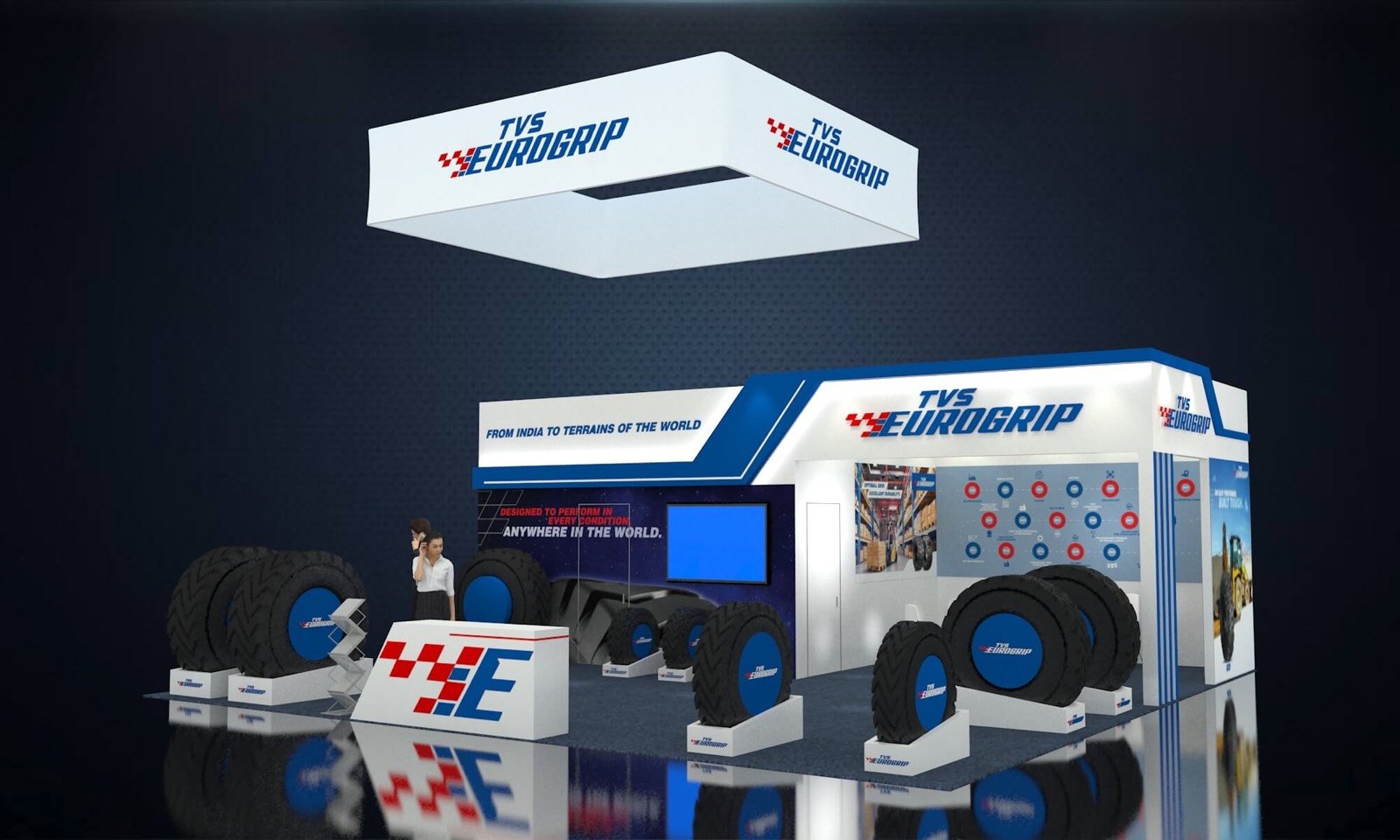
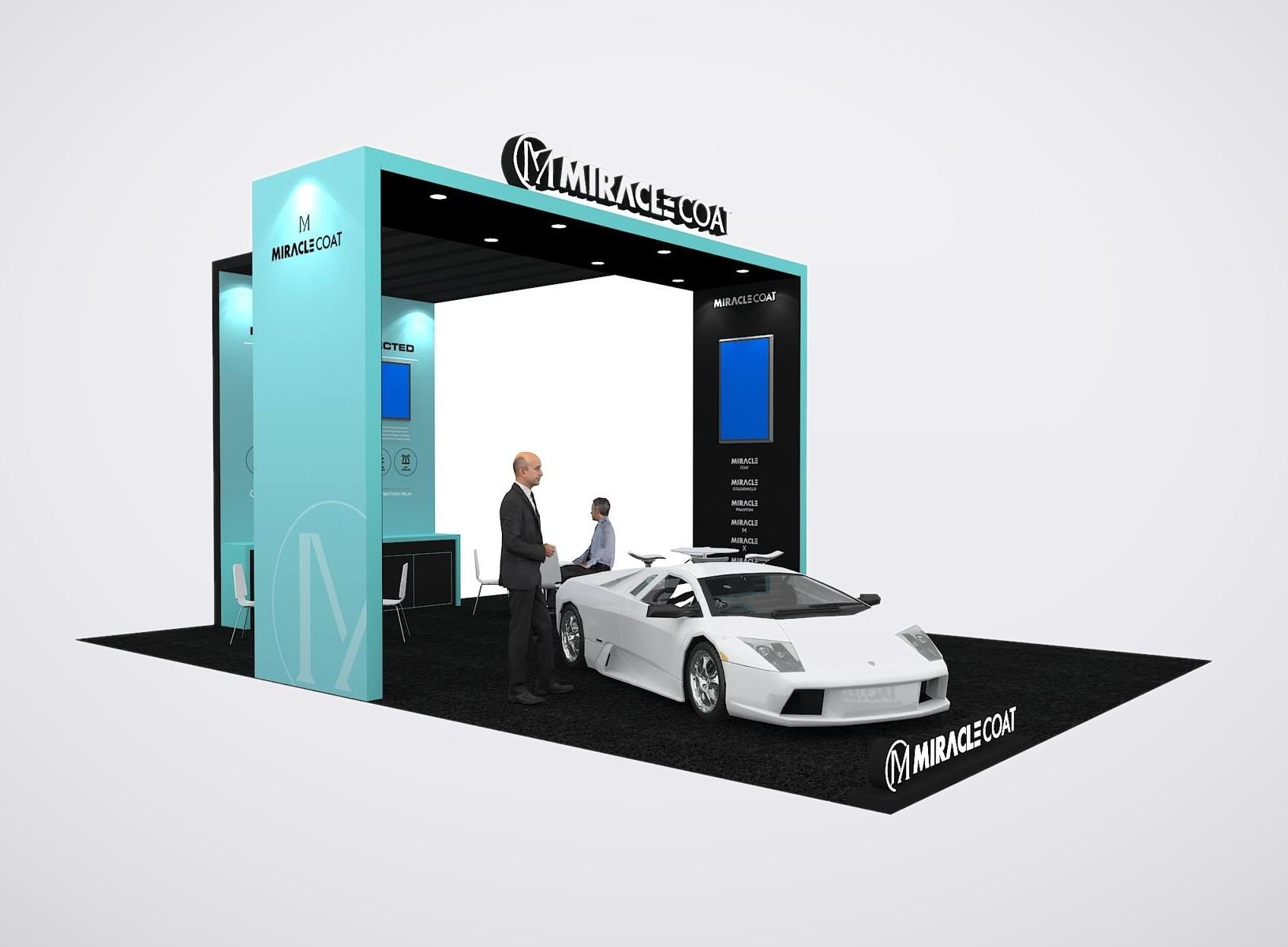
Detail 1 — Full-Size Equipment or ComponentBest when scale, construction, connections, service access, or ruggedness matters. Provide exact dimensions, weight, center of gravity if relevant, packed condition, preferred orientation, access sides, and handling assumptions before the floor plan is fixed.Detail 2 — Cutaway, Section, or Material SampleBest when internal geometry, sealing, coatings, wear surfaces, flow paths, or interfaces make the value visible. The exhibit should protect the sample while keeping the important surface easy to see and explain.Detail 3 — Scale Model or System MockupBest when the real asset is too large or cannot travel. Pair the model with a clear application map and a short explanation of what is simplified, so scale does not create a misleading impression.Detail 4 — Digital Solution or Project ServiceBest when value comes from monitoring, engineering, inspection, automation, or lifecycle support. Build the story around one operating decision, then use dashboards, animation, or project workflow to demonstrate how the service informs it.
A Booth for Technical Evaluation, Not Just Brand Visibility
OTC brings together offshore oil and gas, subsea, marine technology, offshore wind, hydrogen, carbon capture, digital innovation, and related engineering fields. Across these categories, visitors often need to understand technology that is too large, remote, complex, or project-specific to experience as a complete system on the show floor.That is why an OTC booth needs more than a branded wall. It needs a clear link between the offshore application, the proof you can display, the data or explanation that supports it, and the people who can continue the discussion. We organize those elements before deciding how much space goes to architecture, hospitality, or screens.King Exhibits can scope 3D design, rental structures, graphics, selected custom fabrication, LED/AV integration, pre-build checks, staging, transportation, and installation/dismantle. Your proposal should identify which items are in our scope and which show-controlled or third-party services remain separate.For planning context, OTC 2027 is currently scheduled for May 3–5 at Reliant Park in Houston, with the exhibition listed in NRG Center Level 1. The organizer notes that details are still being finalized, so the current exhibitor manual and service rules must be checked before production or release.
Organize Each Technology Around Its Operating Context

Show the component’s position, neighboring interfaces, access constraints, and role in the operating sequence. A cutaway or connection point may tell the story faster than a large background photograph.
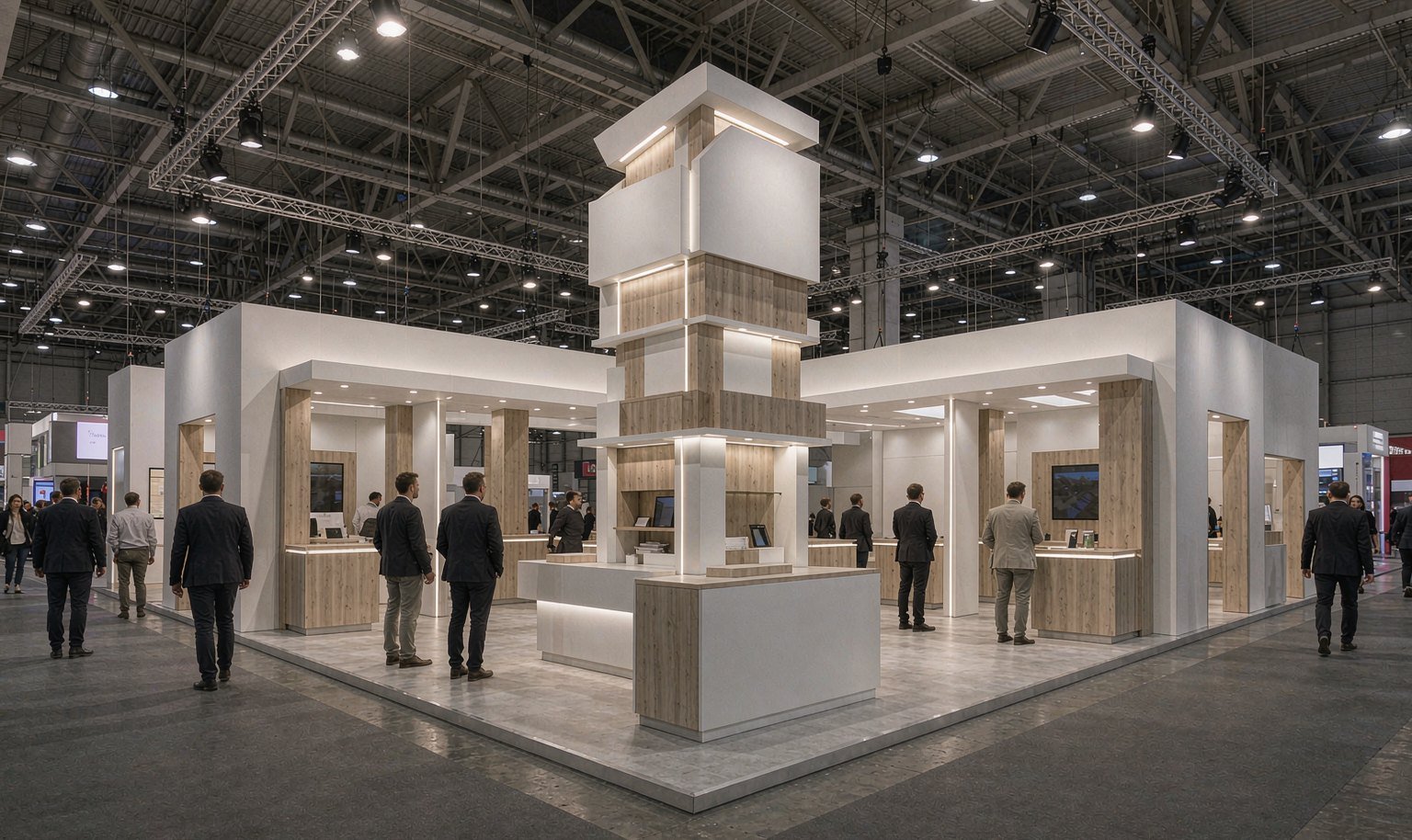
Use a project-stage or operating-zone graphic to locate the offer. If the real structure cannot travel, pair a model or sample with the installation, inspection, maintenance, or service decision it supports.
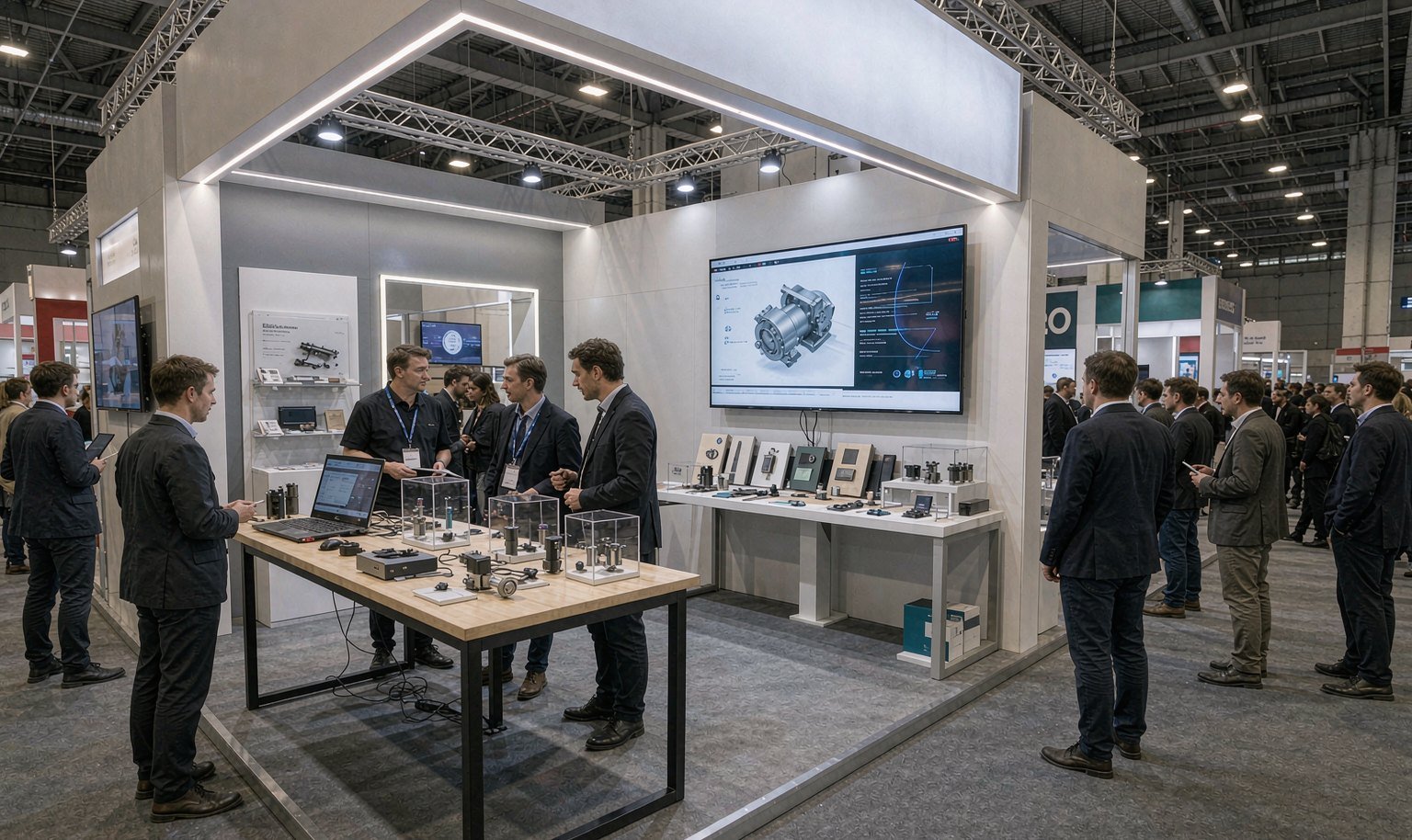
Anchor the screen to a specific asset and user decision. A short live path—from condition or event to alert, interpretation, and action—is easier to evaluate than a looping software overview.
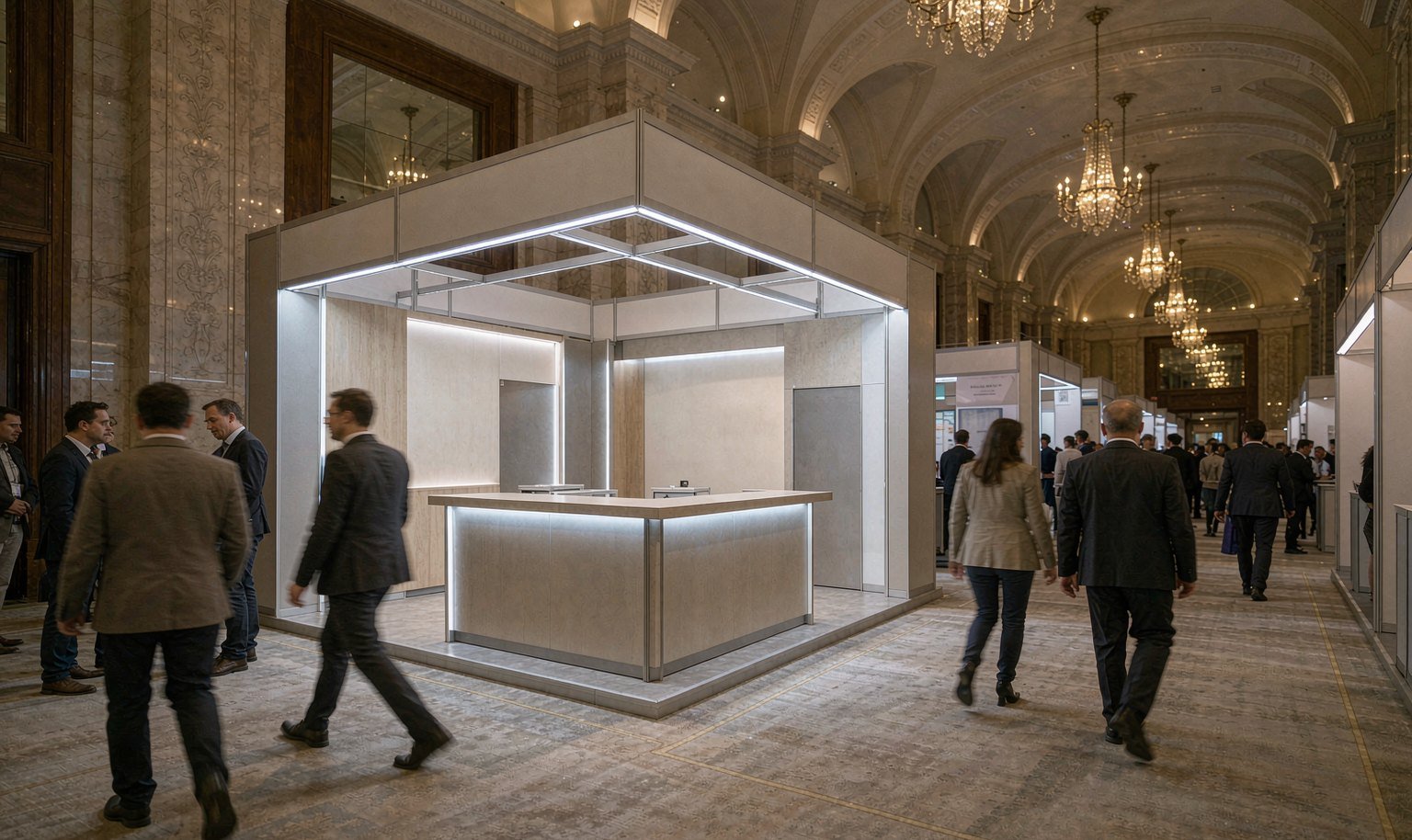
Clarify which project phase, asset, or operating challenge the solution addresses. Use diagrams and evidence to connect a new-energy claim to a concrete technical or commercial conversation.
Show Where the Component Works Before Listing Features
A subsea component on a pedestal may attract attention without explaining where it works. Place a restrained system graphic beside the item, mark the operating location, and name the decision it affects. Keep the path from context to component to supporting evidence within one sightline. Visitors can then begin a technical conversation without crossing the booth or reading a dense engineering poster. Use labels only where they clarify the application, interface, or next question.
Resolve Equipment Interfaces Before Walls and Counters
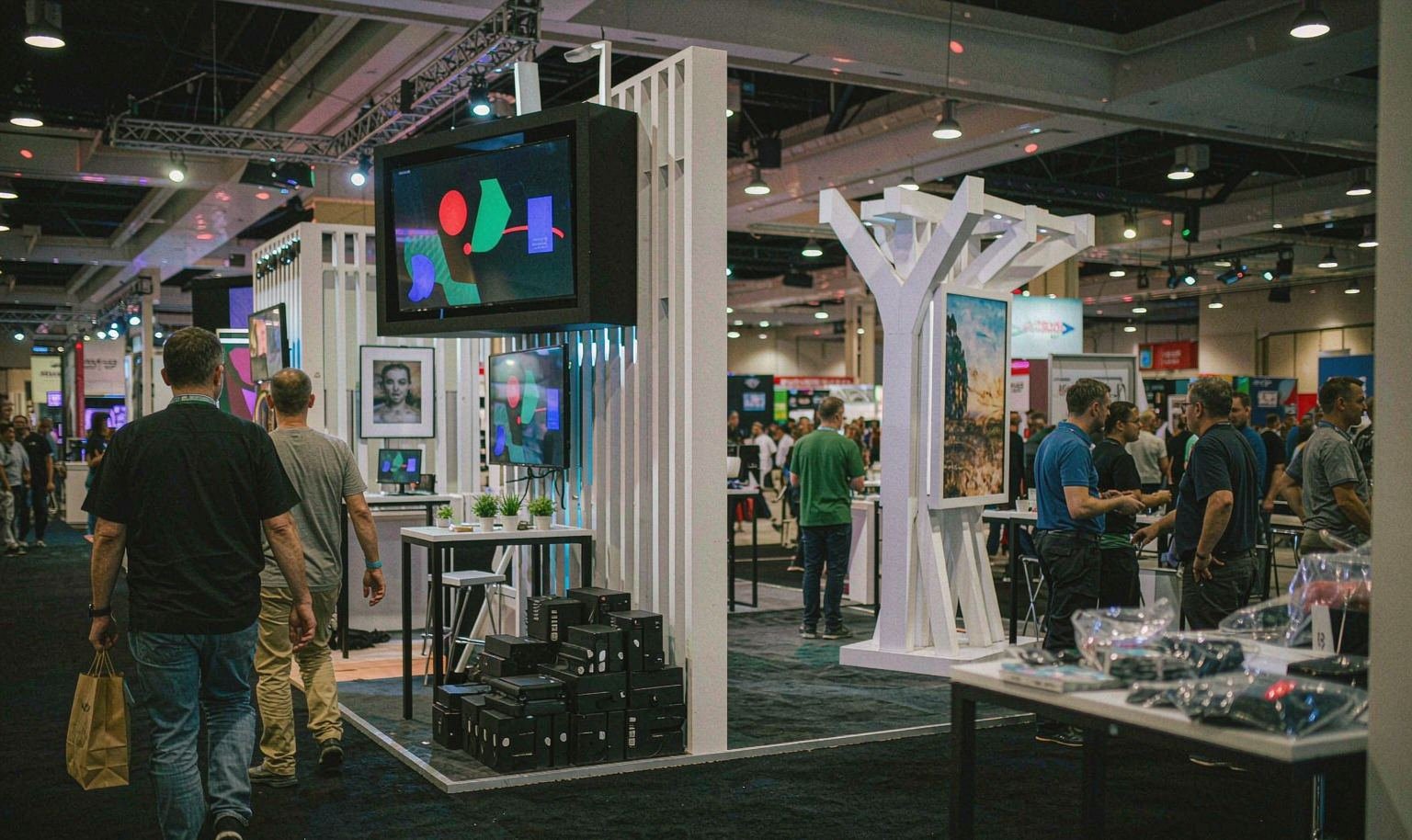
Record the item’s weight, packed size, orientation, placement method, viewing sides, service clearance, power, data, guarding, and route into the booth before approving the 3D layout. These inputs can change the floor plan, structure, handling order, and official-service needs. King Exhibits can then separate our build scope from organizer, venue, rigging, electrical, material-handling, or specialist responsibilities. Current OTC and venue requirements still need project-specific verification before production.
Separate Open Technical Proof From Project Meetings
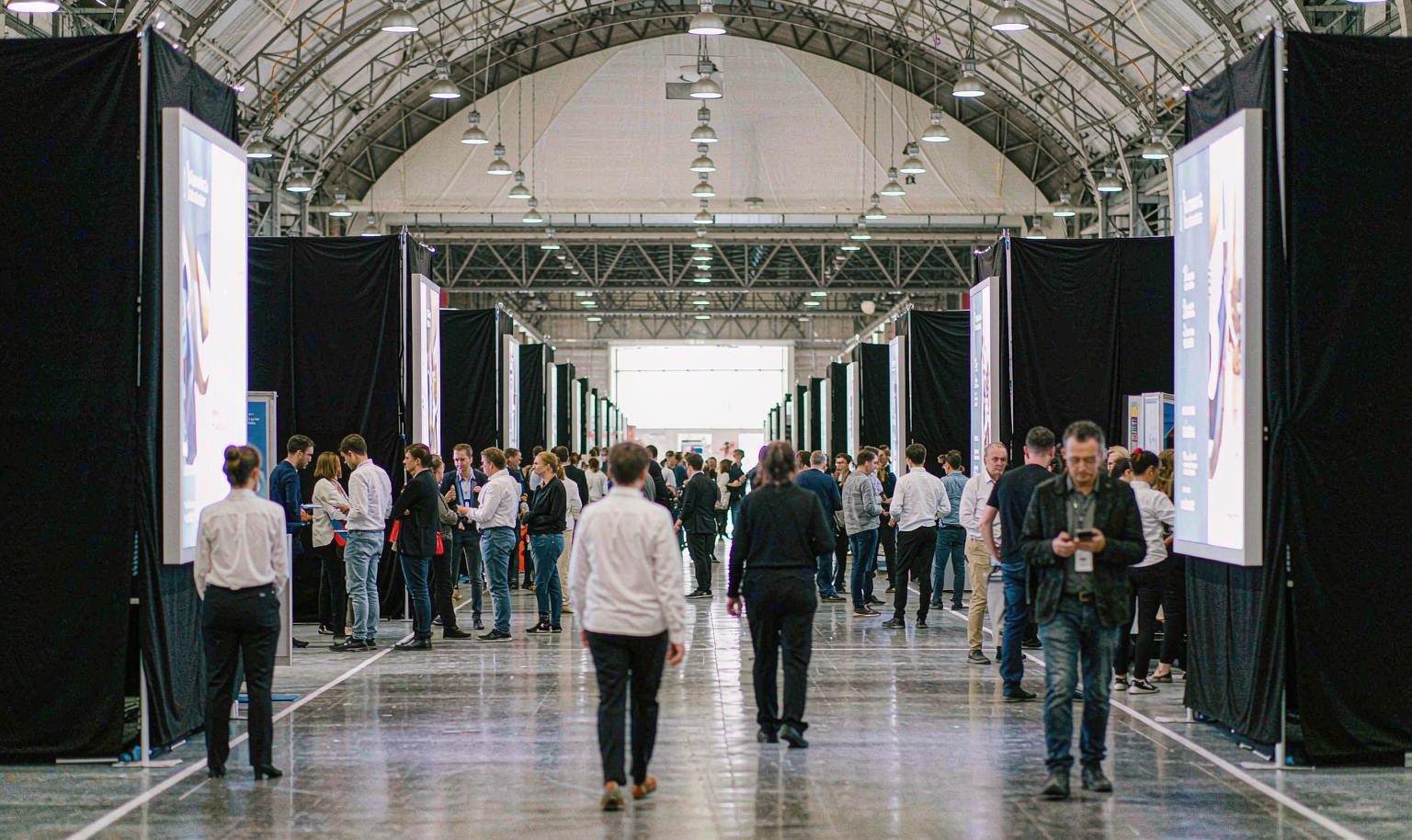
OTC conversations range from a brief component question to a longer discussion about specifications, qualification, partnerships, or project timing. Keep the display and first explanation open to the aisle, then place a semi-private meeting area nearby. Visitors should reach the product without crossing a private meeting, and scheduled discussions should not stop the demonstration. This separation lets the same booth support fast technical screening and deeper project conversations without forcing both activities onto one counter.
One 3D Review Connects the Offshore Story to the Physical Booth
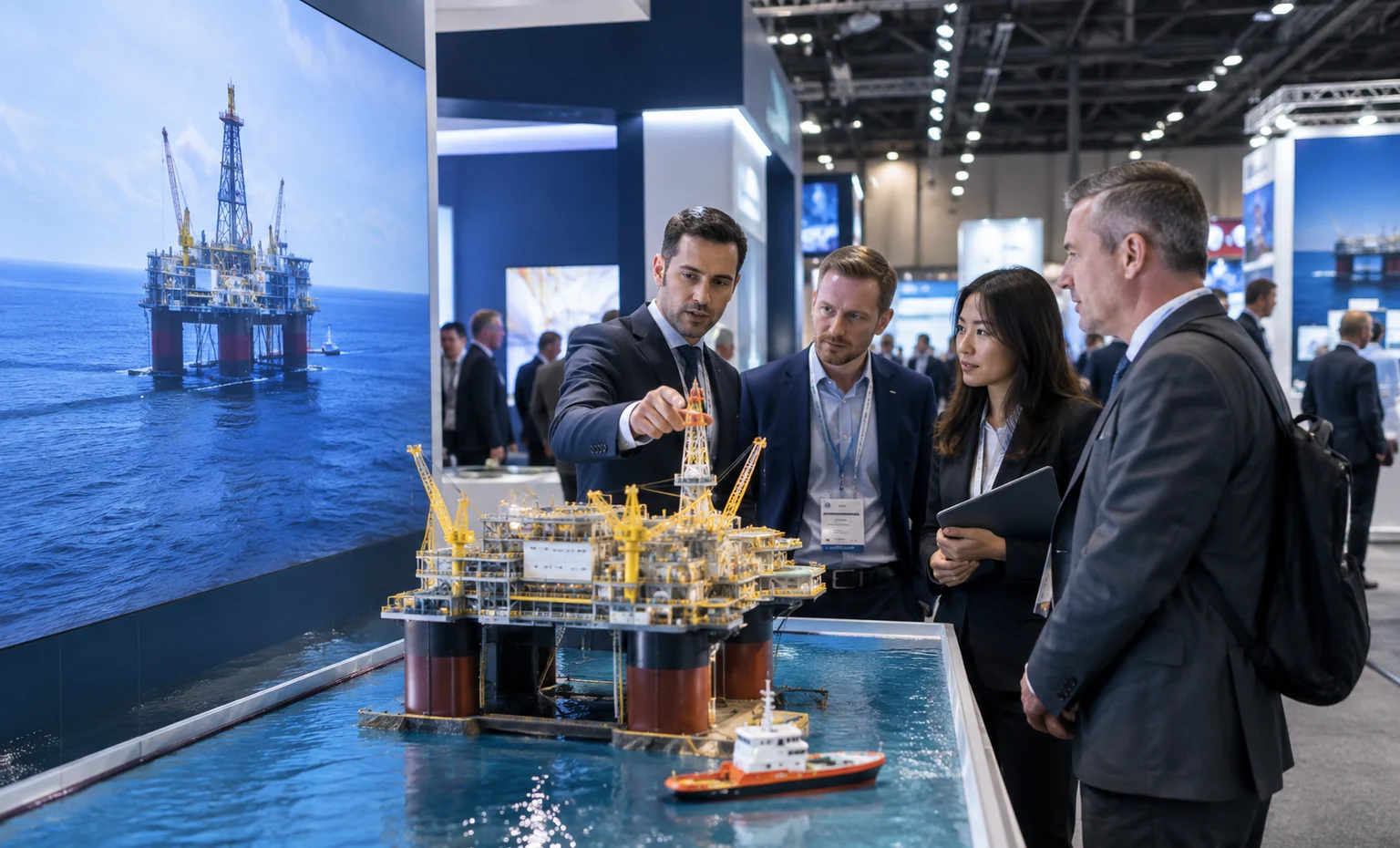
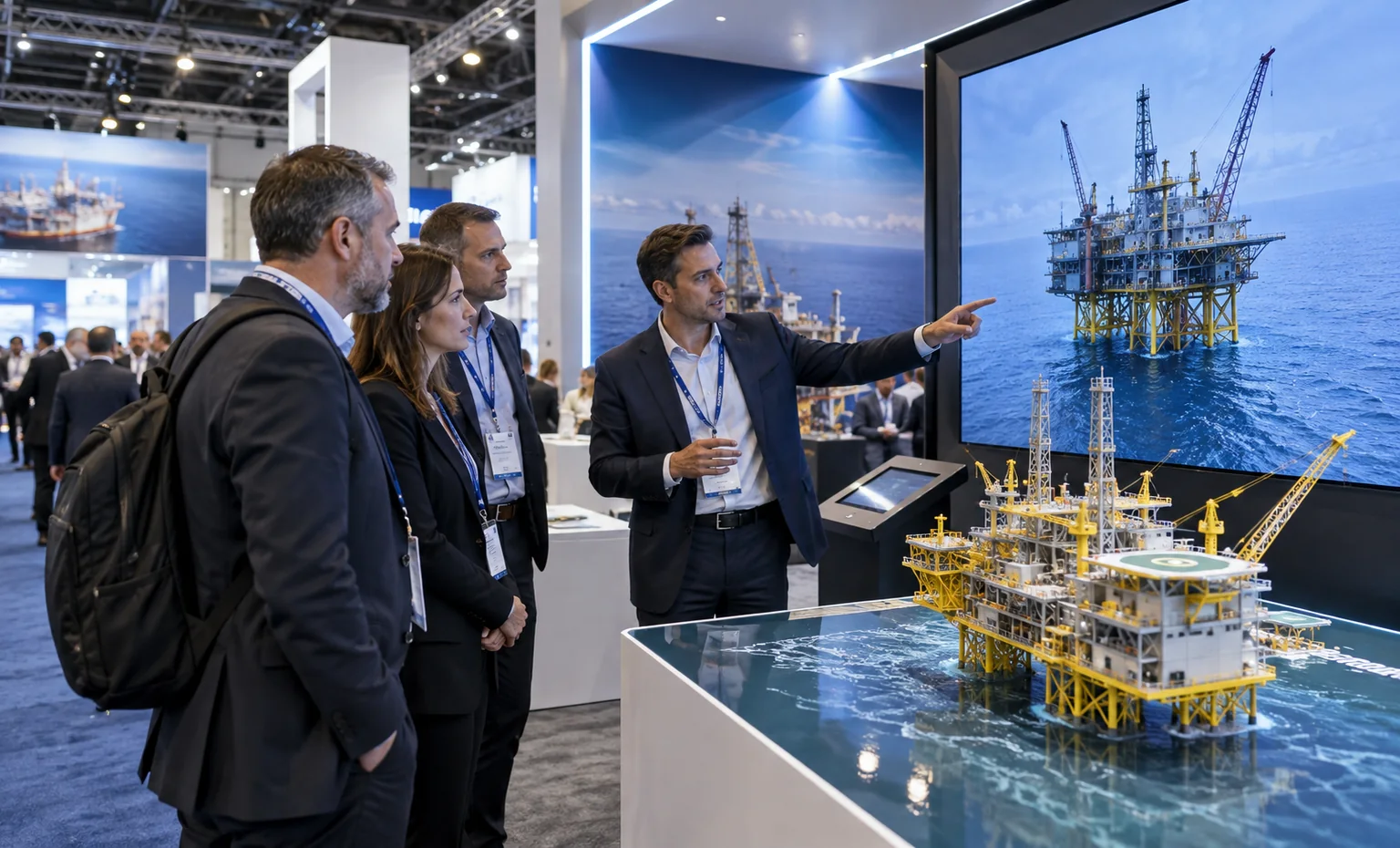
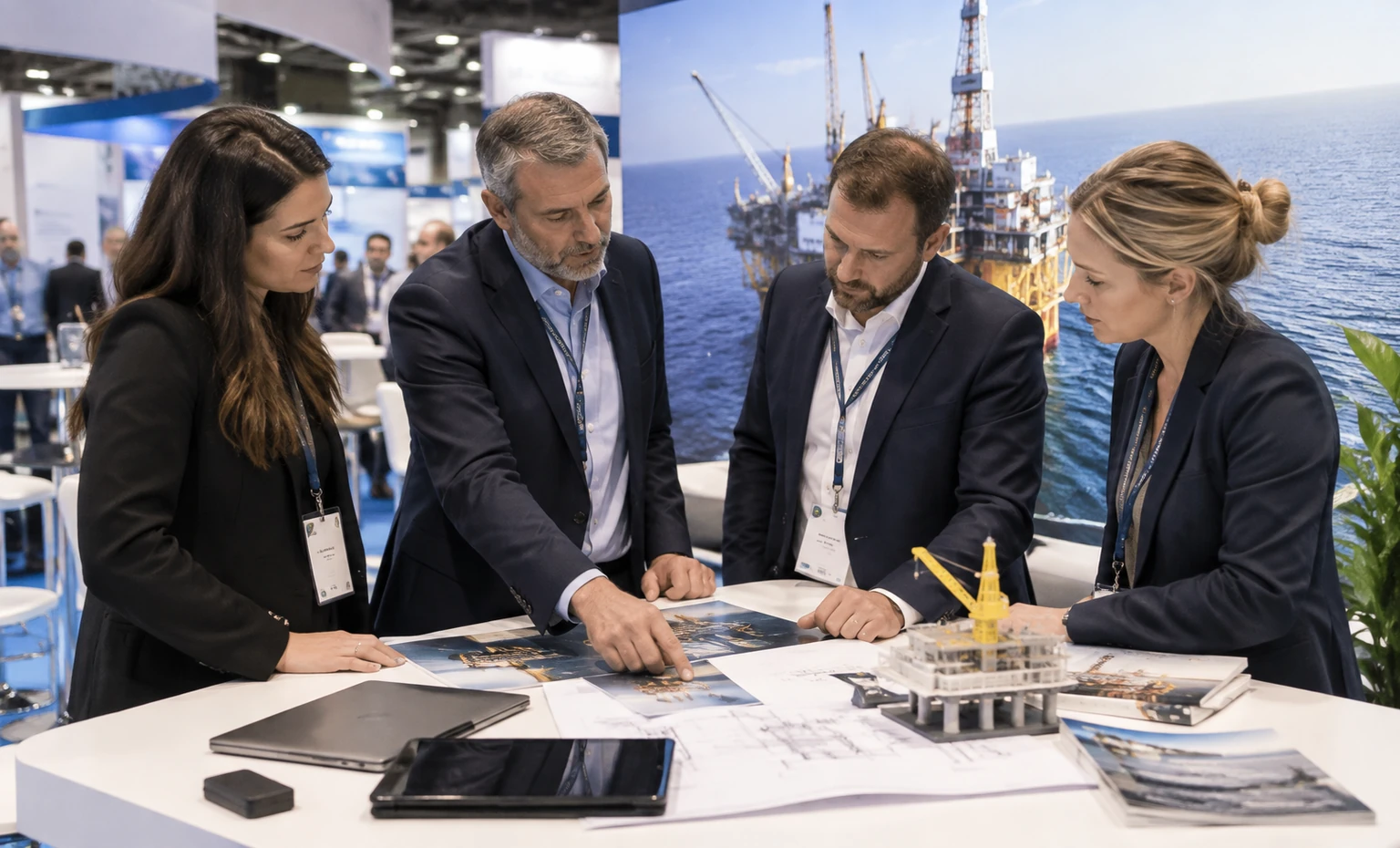
From Product Inputs to a Buildable OTC Booth
What You Provide: target accounts, visitor roles, priority application, product or service, and the action you want a qualified visitor to take.What We Do: reduce the message to one primary offshore problem and proof path.
What You Provide: product list, dimensions, weights, drawings, photos, display orientation, access sides, utilities, data, demo method, and shipping condition.What We Do: map the physical and digital interfaces that can affect the layout and scope.
What You Provide: booth assignment, size, open sides, brand files, meeting needs, budget, and current show documents.What We Do: develop the layout, visual direction, and itemized proposal; identify third-party and show-controlled dependencies.
What You Provide: final artwork and content, approvals, shipping details, onsite contacts, and required third-party orders.What We Do: fabricate and prepare the King-supplied elements, complete the agreed checks, stage and load, and perform logistics and I&D when included.
It may be possible, but the concept cannot be confirmed from a photo or product name. We need dimensions, weight, packed condition, preferred orientation, access sides, handling assumptions, and any guarding or utility needs. The current OTC manual, venue conditions, and relevant official or specialist providers must also be checked before the display is approved.
Use the strongest proof that can travel: a component, cutaway, interface assembly, material sample, scale model, test result, monitored data path, or engineering animation. The booth should state what the proof represents and connect it to the real application, so the visitor does not mistake a simplified model for the complete system.
Yes, LED and AV integration can be included in the project scope. Confirm the device, content format, screen size, interaction method, connectivity, power, audio, mounting, backup content, and who operates the demo. Electrical, internet, and other show-controlled services are separate unless specifically itemized.
Only items listed in the proposal are included. Organizers, venues, official contractors, carriers, riggers, and other specialists may control or bill services separately. We will identify known dependencies during scope review, but the exhibitor should verify the current OTC service rules and orders before deadlines.
We can discuss the objective, proof format, product interfaces, content, and budget range. The final layout needs the confirmed booth dimensions, open sides, neighboring or structural restrictions when available, and current show rules. A provisional concept should not be released to production as if those inputs were final.
King Exhibits serves global companies coming to US shows. Send the shipping origin, product or sample plan, freight responsibilities, customs status, receiving needs, onsite contacts, and requested installation/dismantle scope. Freight, customs, material handling, storage, and official services must be assigned explicitly rather than assumed to be part of the booth price.
Send the event edition, city, dates, booth number and size, open sides, target visitors, products or services, dimensions and weights, display method, utilities, demo and media needs, meeting goals, brand files, budget, key dates, shipping plan, and the scope you want King Exhibits to provide. Mark any detail that is still provisional.