
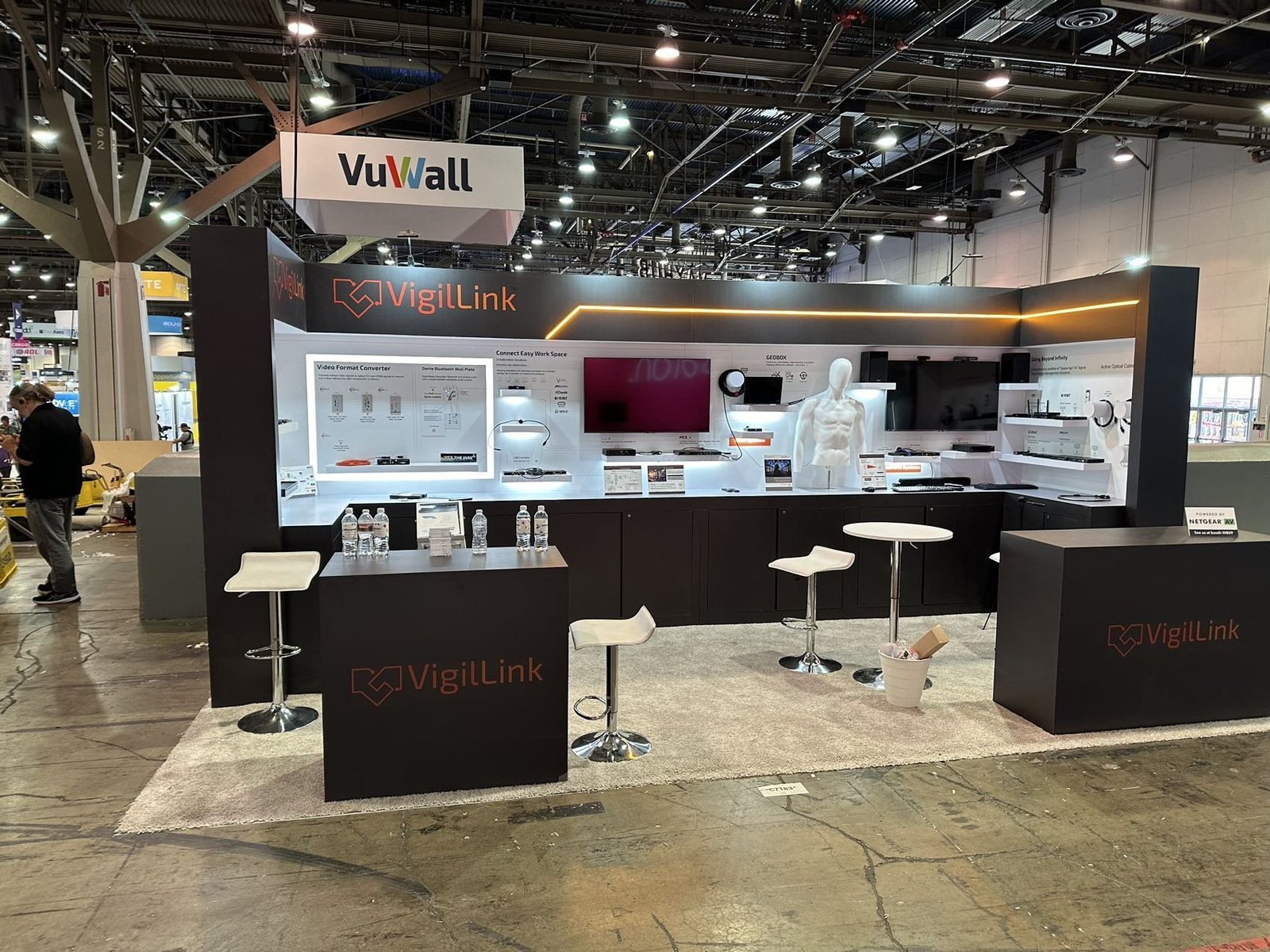


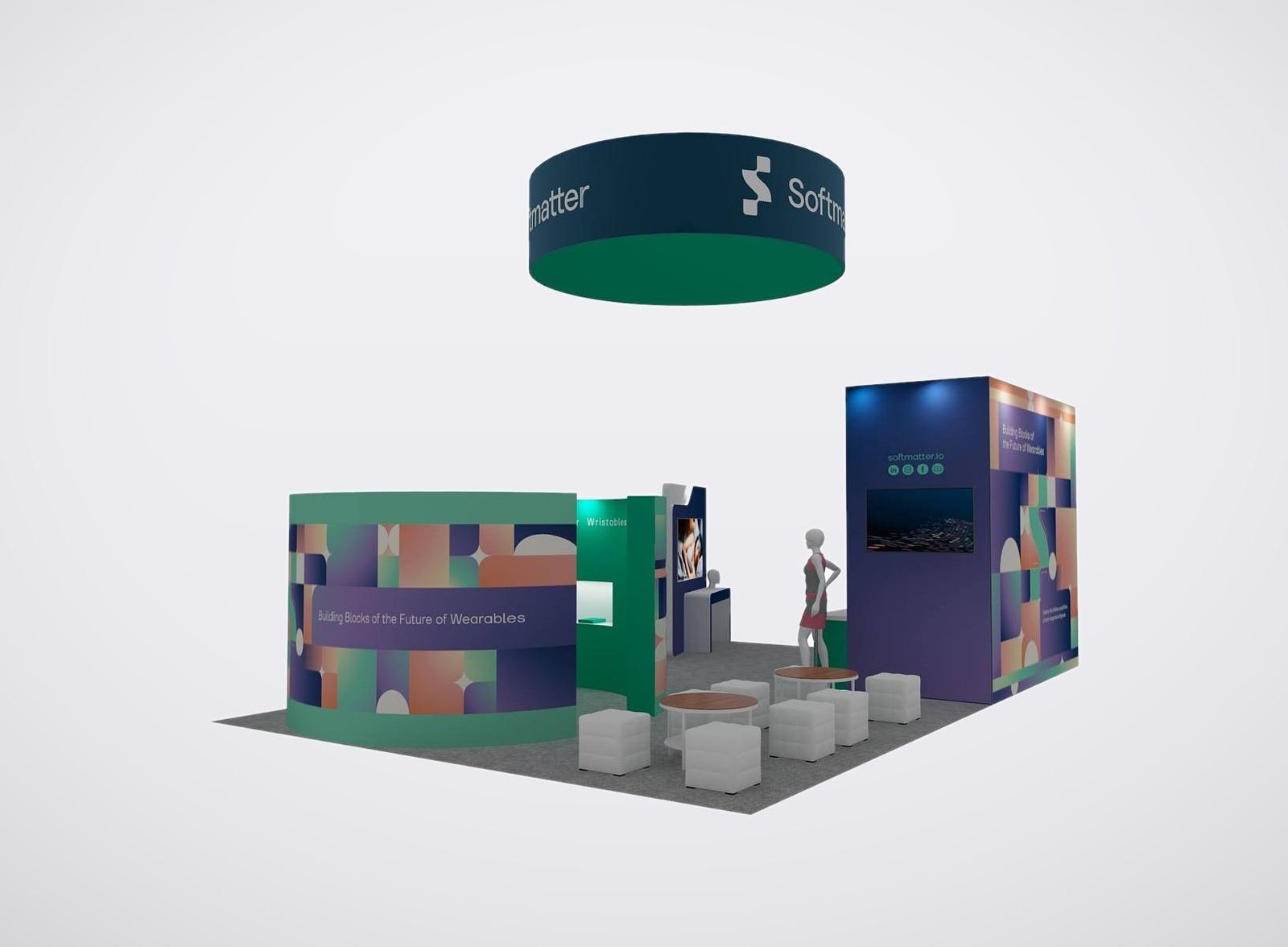
Plan for OFC 2027 at the Los Angeles Convention Center
Plan for OFC 2027 at the Los Angeles Convention Center
The current official schedule lists the OFC technical conference for 7–11 March 2027 and the exhibition for 9–11 March 2027 at the Los Angeles Convention Center. These details can change and must be rechecked against the current Exhibitor Service Center before release or production.OFC’s current exhibitor material spans active and passive components, optical fiber and cabling, network equipment and software, data-center infrastructure, test equipment, AI and machine-learning applications, space optics and emerging quantum networking. A useful booth does not repeat that broad category list. It identifies the one product decision your priority visitor should understand first.The current service center also separates official show services from an exhibitor-appointed contractor’s work. If King Exhibits is appointed for a project, your team must follow the current EAC, insurance, submission and venue rules. The proposal should identify who handles structure, graphics, freight, labor, electrical, internet, material handling, AV, rigging and any permit-related work.
Rental Exhibits for Optical Networking and Communications Companies
An OFC conference booth rental may need to explain a component that fits in one hand, a test workflow that depends on several devices, or a network result produced somewhere beyond the hall. The booth has to make that proof understandable without flattening a technical product into a slogan.King Exhibits plans rental environments for component and device manufacturers, fiber and cable suppliers, network equipment and software companies, test-equipment makers, data-center technology providers, photonics teams and other OFC exhibitors. We use the product list, demo sequence, audience and meeting goals to shape the architecture, graphics, counters, media and support space.Our confirmed service range includes booth design, 3D visualization, rental structures, graphics production, selected CNC and wood fabrication, LED/AV integration, pre-build checks, staging, transport and installation/dismantle when written into the proposal. Show-controlled services and third-party responsibilities remain separate unless the accepted scope states otherwise.
Choose the Proof Format Before the Architecture
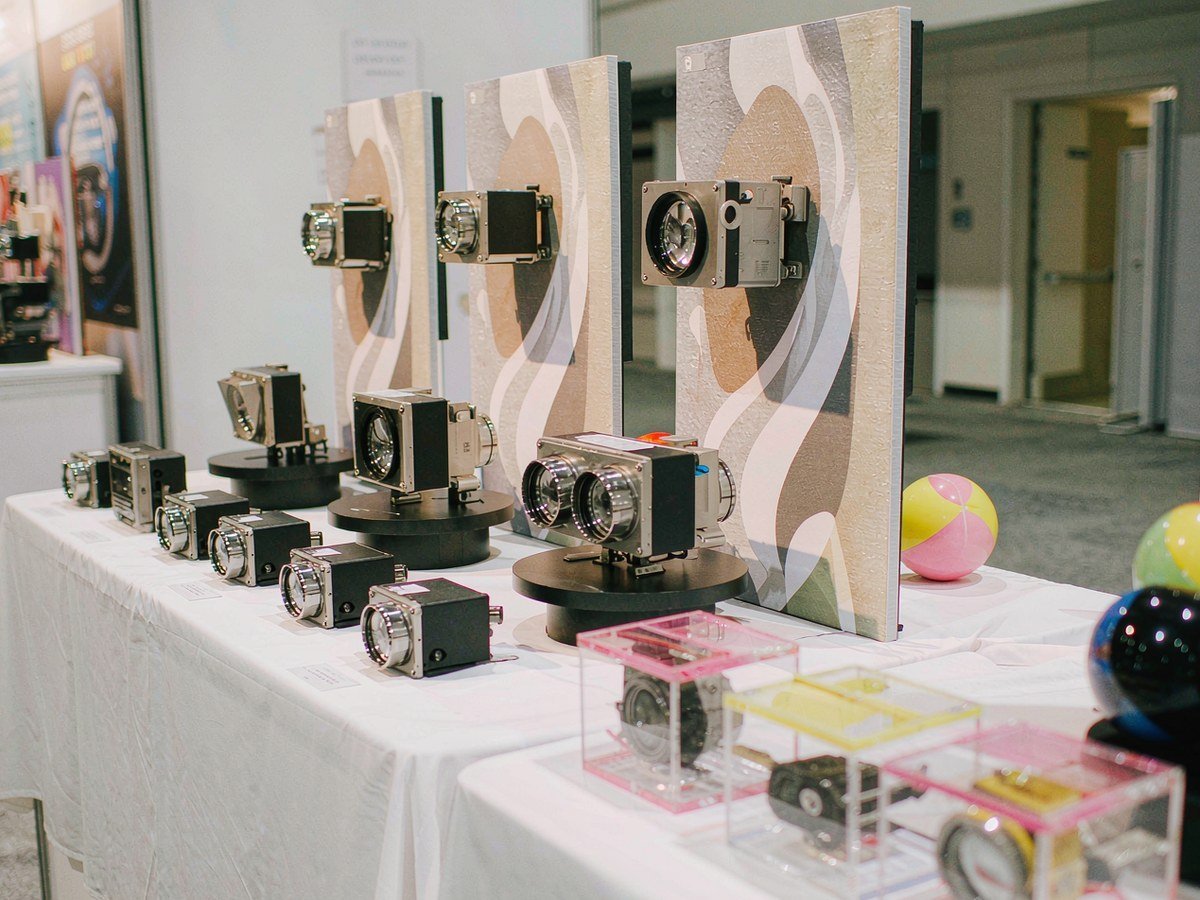
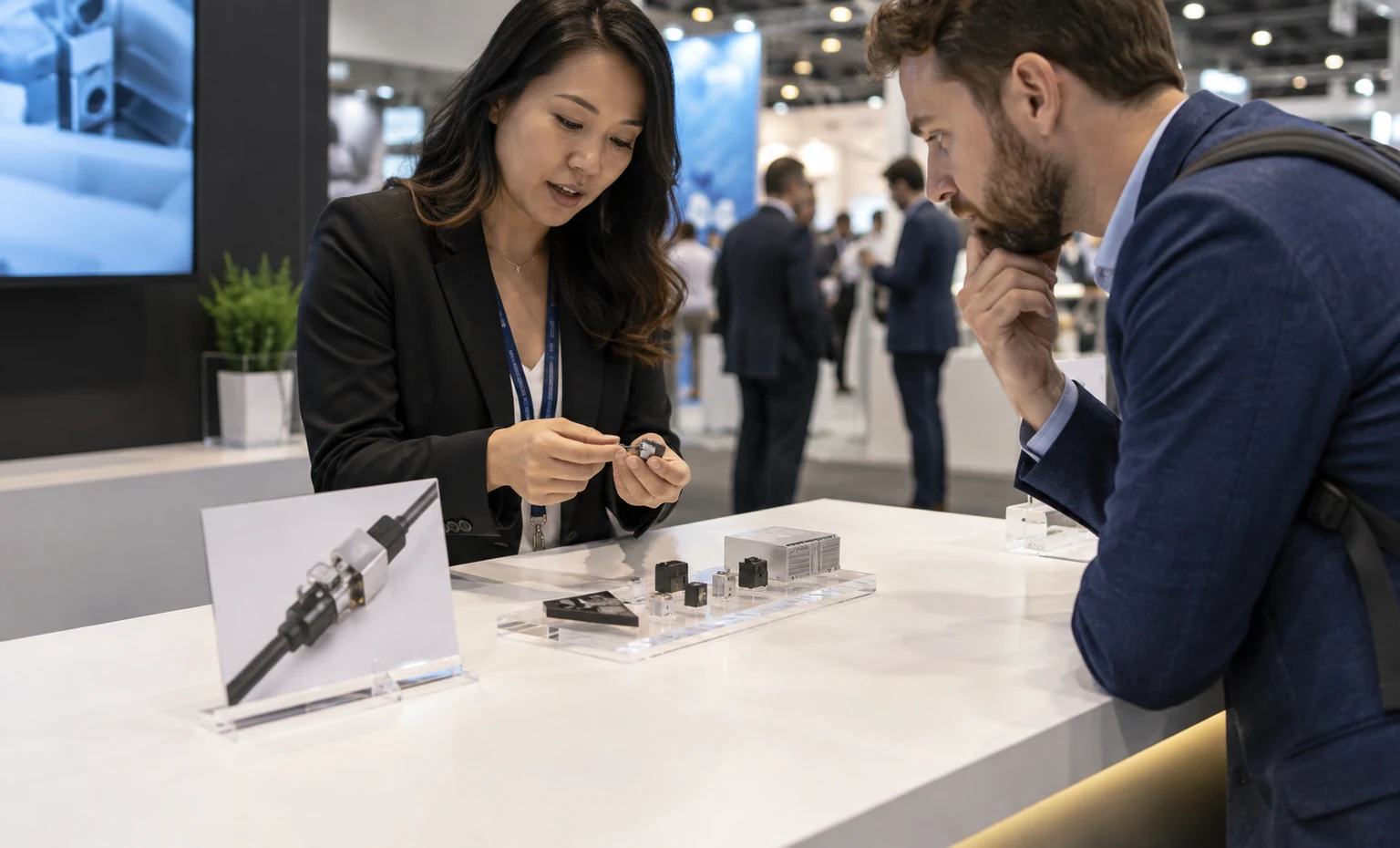
Use controlled lighting, clear labels and reachable samples for transceivers, connectors, fiber assemblies, photonic devices or other compact products. Organize them by the comparison a buyer actually makes, not by a catalogue page copied onto a wall.
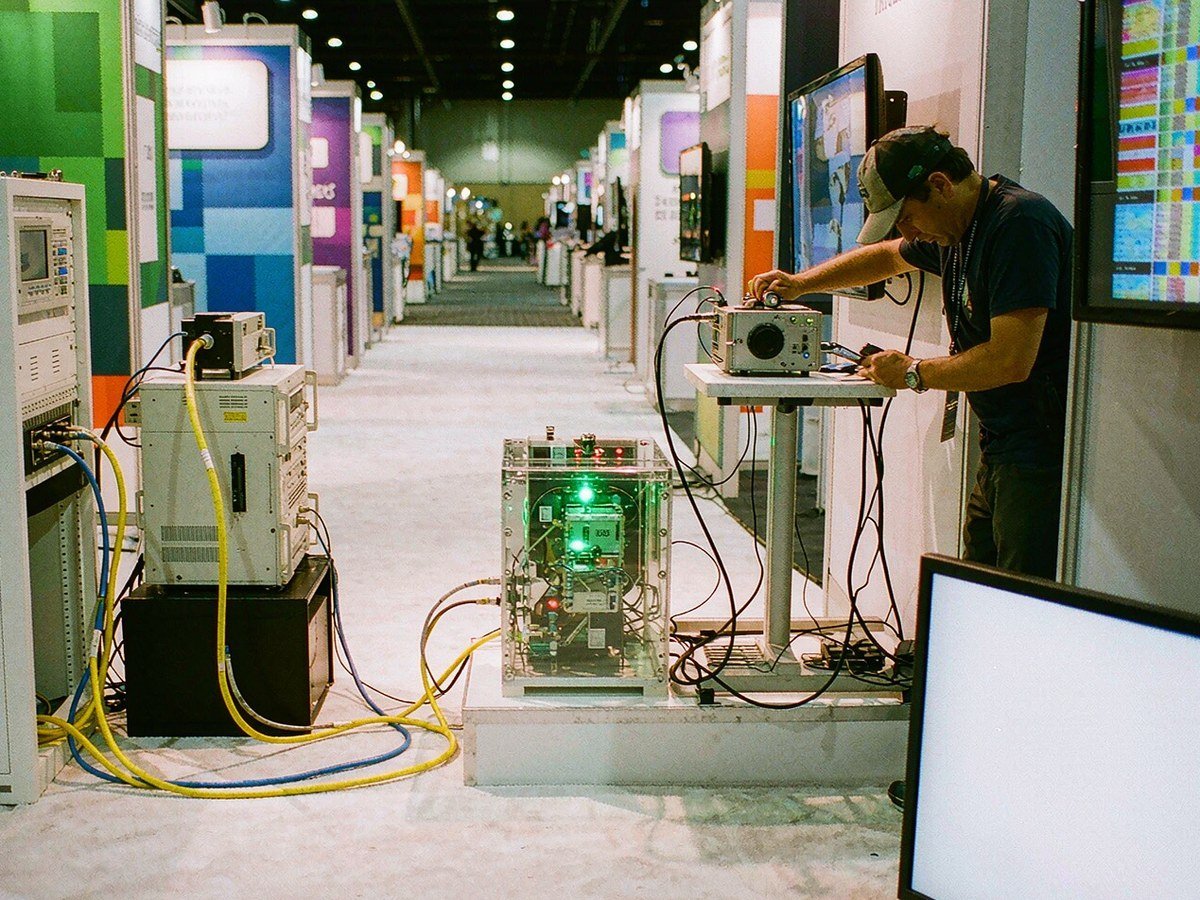
Map the signal path from source to device to measurement or dashboard. The physical equipment, cable access, operator position, latency-sensitive connection, screen content and fallback mode all belong in the design brief.
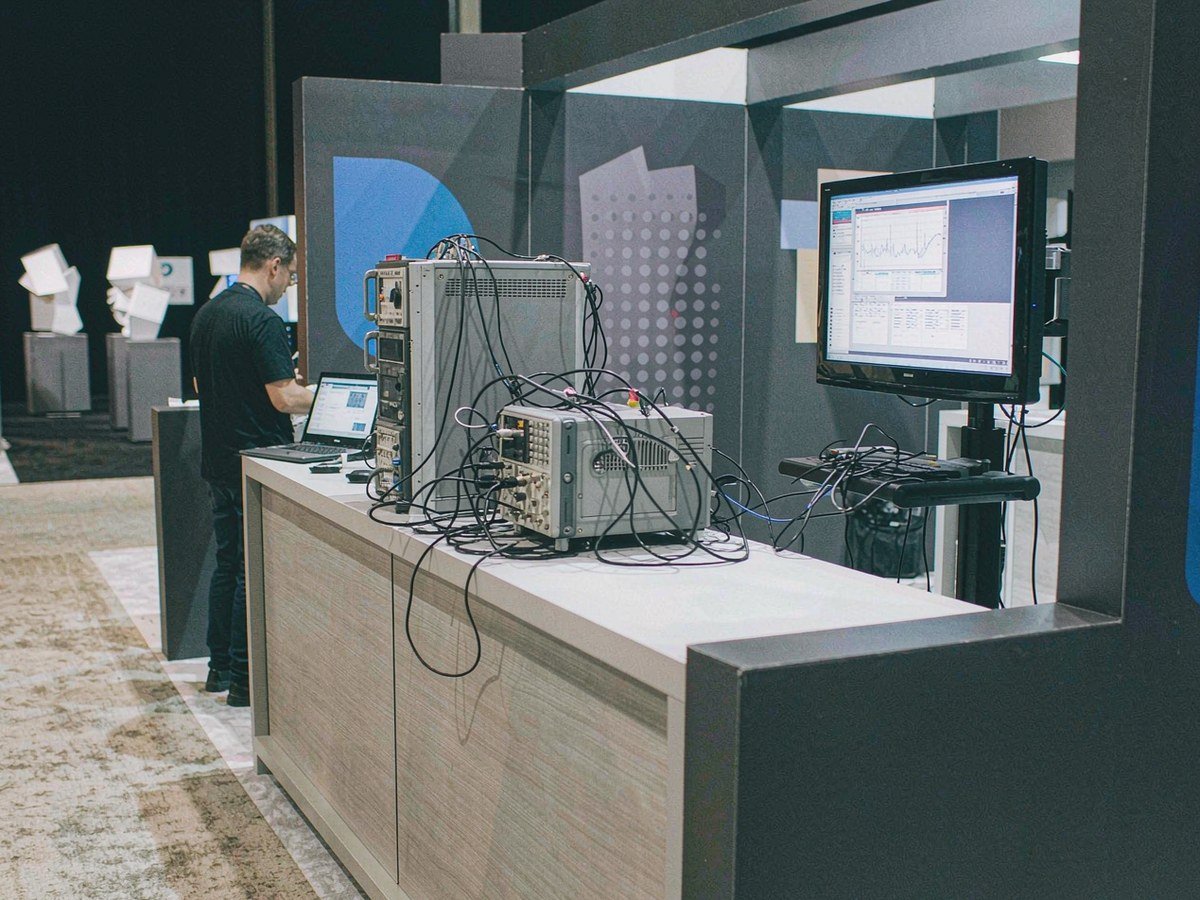
Give the instrument, device under test, control laptop and result screen a readable sequence. Allow the application engineer to reach interfaces without turning the visitor side into a service bench.
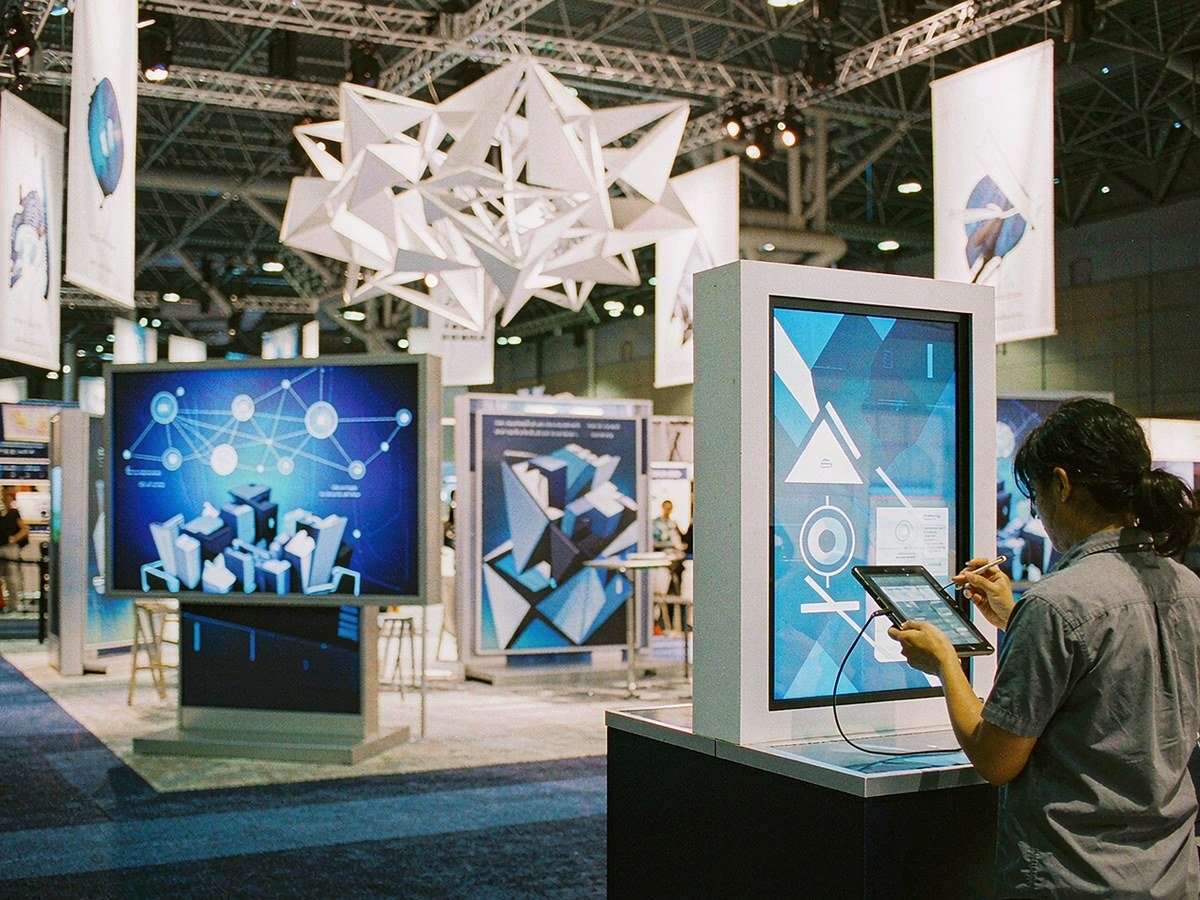
Use a network diagram, rack view, deployment sequence or short interface demonstration to connect a less visible offer to the operating environment and the next technical question.
Give Small Components a Clear Comparison Point
Tiny products disappear when they sit behind a deep counter or below a large screen. Bring the sample to a comfortable viewing position, then place one application cue and one useful comparison beside it. The supporting graphic might show a link, interface, density, form factor or installation point, but it should not compete with the real item. Visitors can inspect the hardware first and ask the application engineer for the next level of detail.
Draw the Demo Signal Path Into the Floor Plan
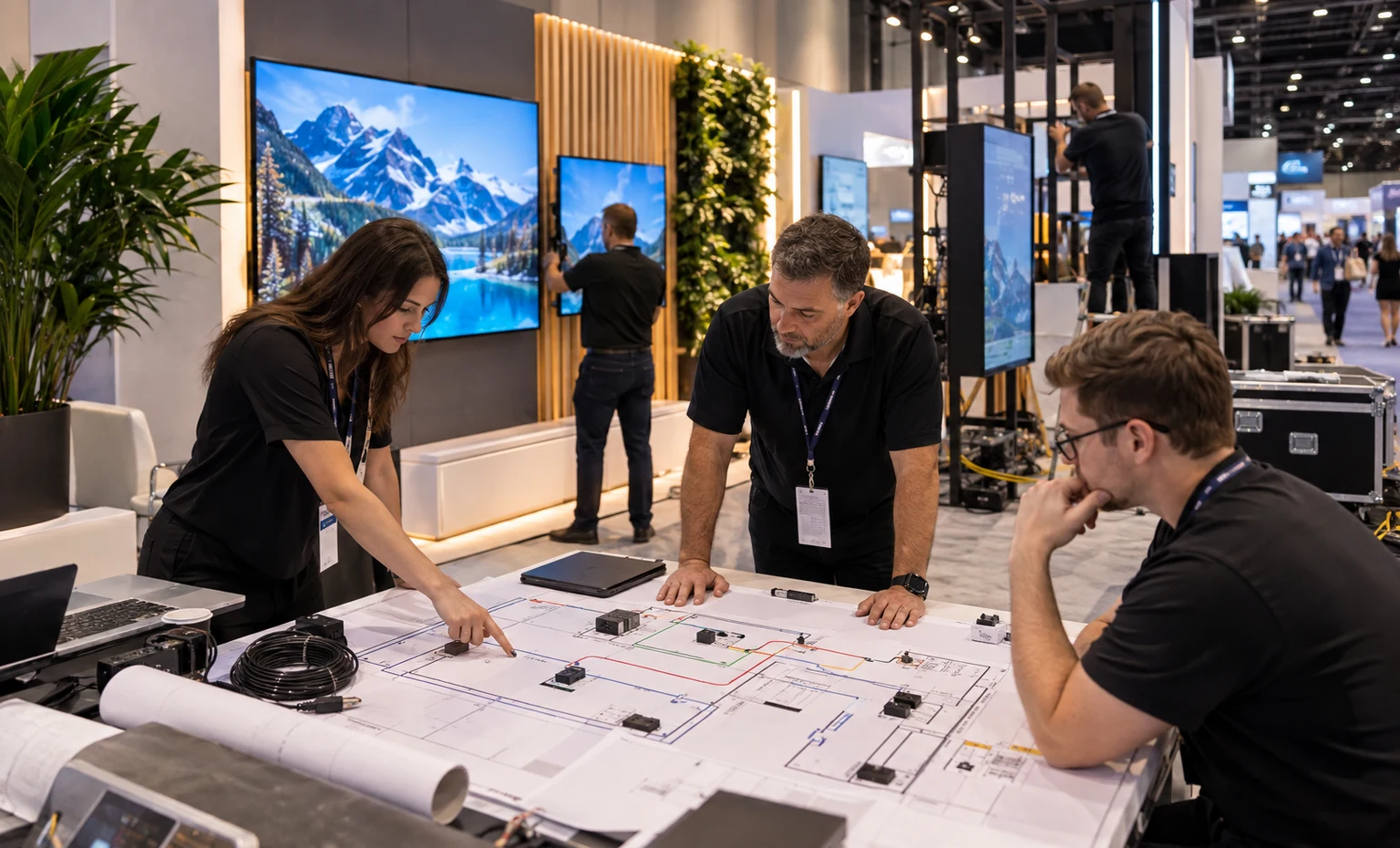
A live link is also a physical system. Record every device, cable, connector, screen, power feed, network dependency, operator position and access panel before approving the booth. Show where the visitor begins and what result appears at the end. Add a local video or recorded output for any remote dependency that may fail. This mapping lets the 3D review expose blocked access, exposed wiring and missing show services before installation begins.
Move From a Fast Demo to a Deeper Technical Meeting
The aisle station should answer one question quickly: what changed, where it fits, or why the result matters. Place longer application and deployment conversations one step away, with a screen or document surface the engineer can use. A semi-private table can support sourcing, roadmap or partnership discussions without closing the demonstration. The layout should let a scheduled meeting continue while another visitor reaches the product and the staff member responsible for it.
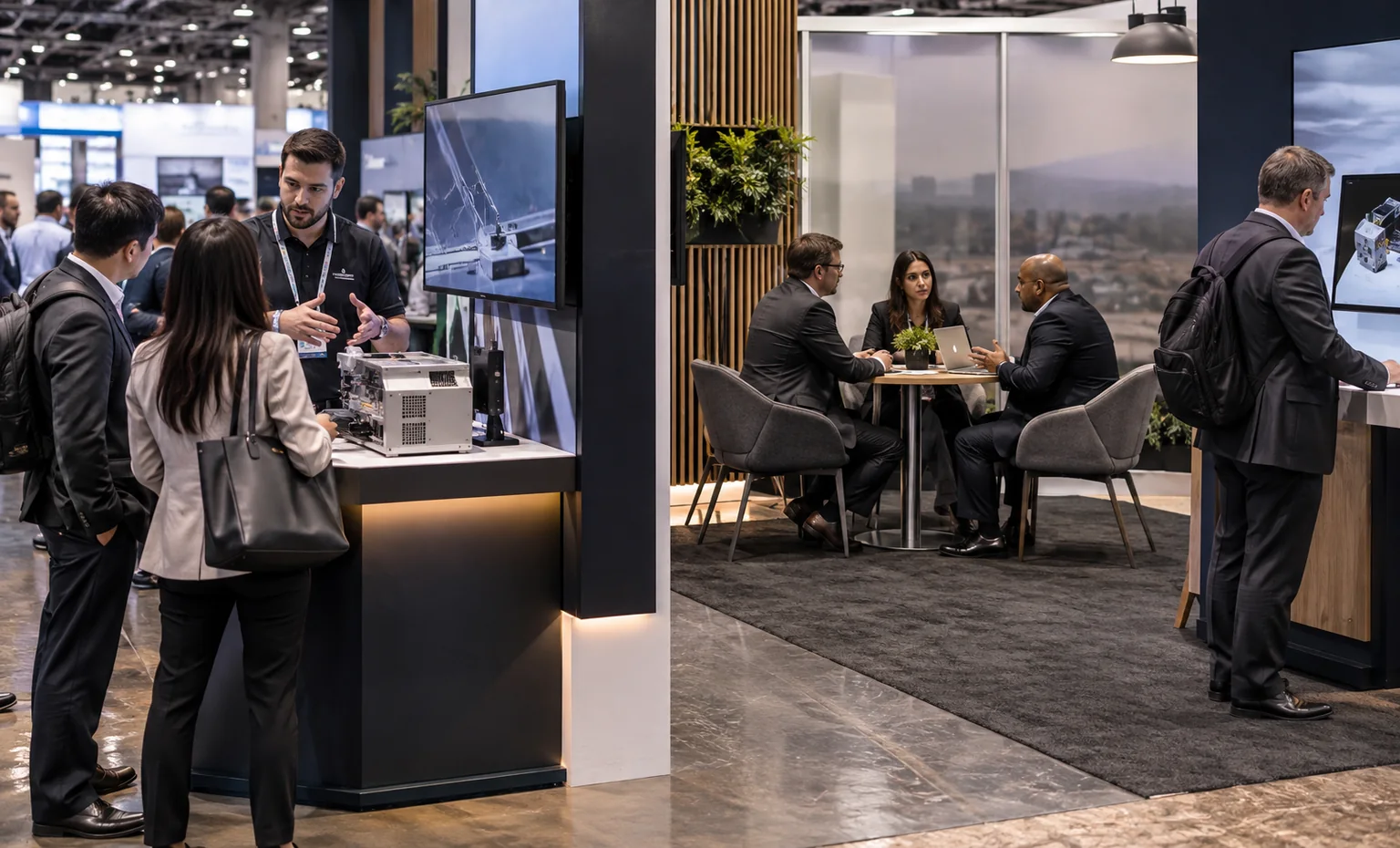
Why King Exhibits for an OFC Rental Booth
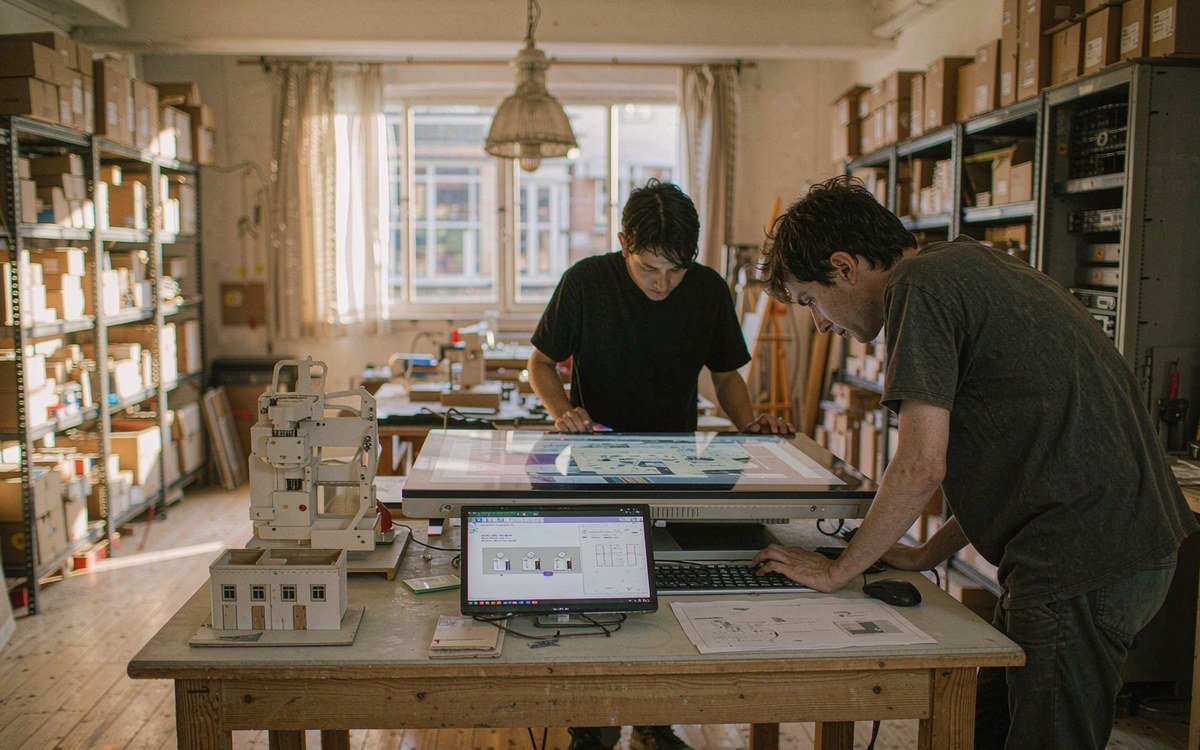
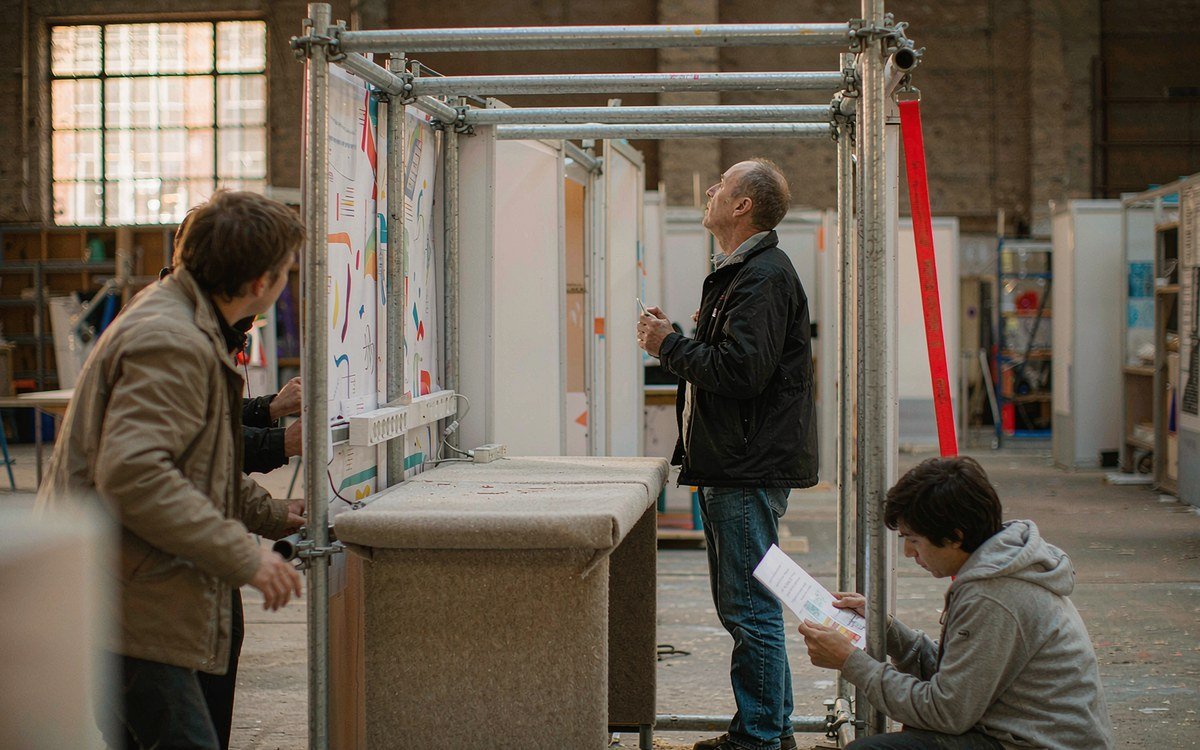
King Exhibits turns your space assignment and product brief into one build plan: 3D design, fabrication, graphics, show services and install — coordinated by a single project lead from bid to dismantle.
Four Zones That Support the OFC Sales Conversation
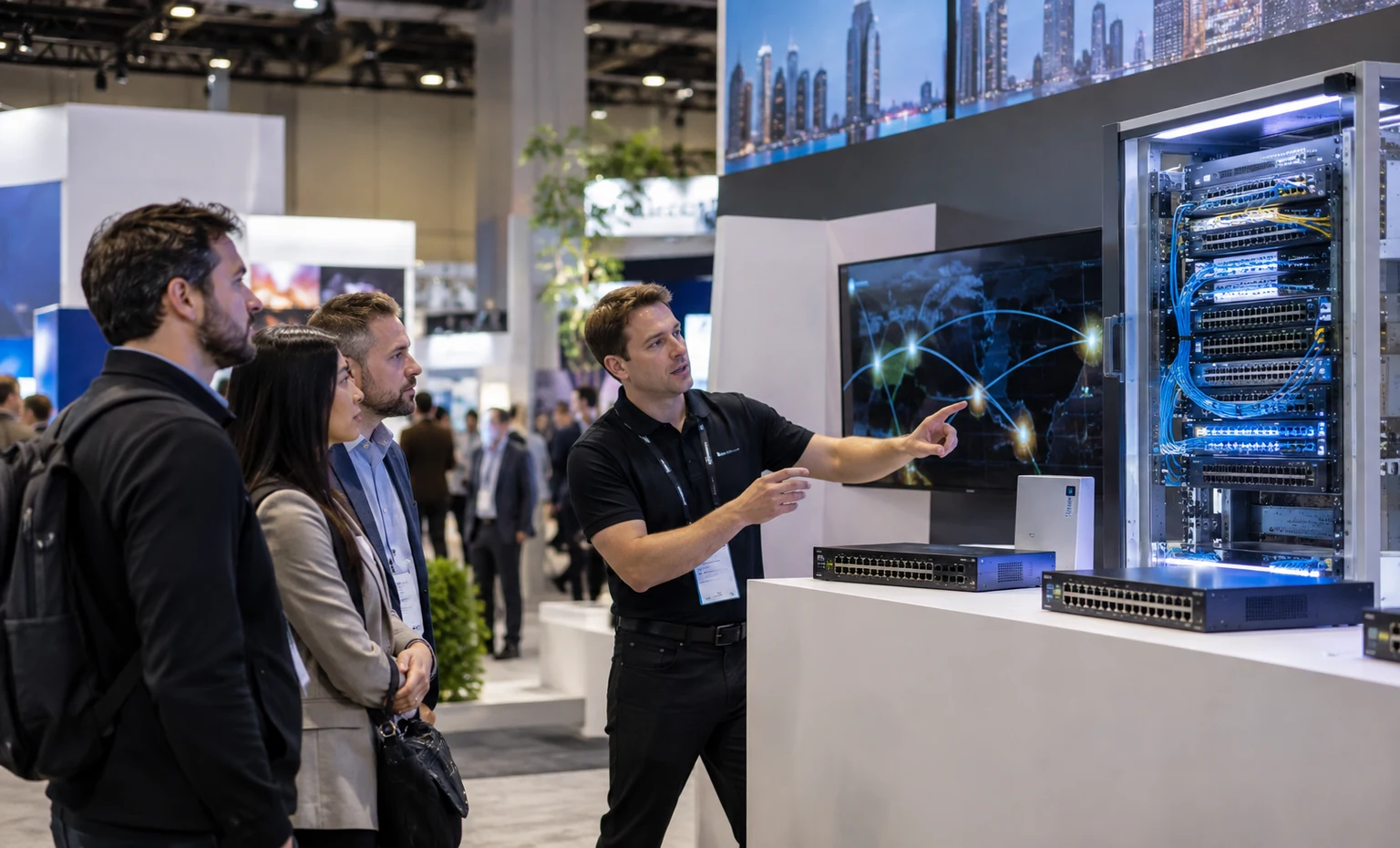
Name the optical or network problem and the product category in language a technical visitor can place quickly. Keep the first view open enough to reveal the real proof behind the message.
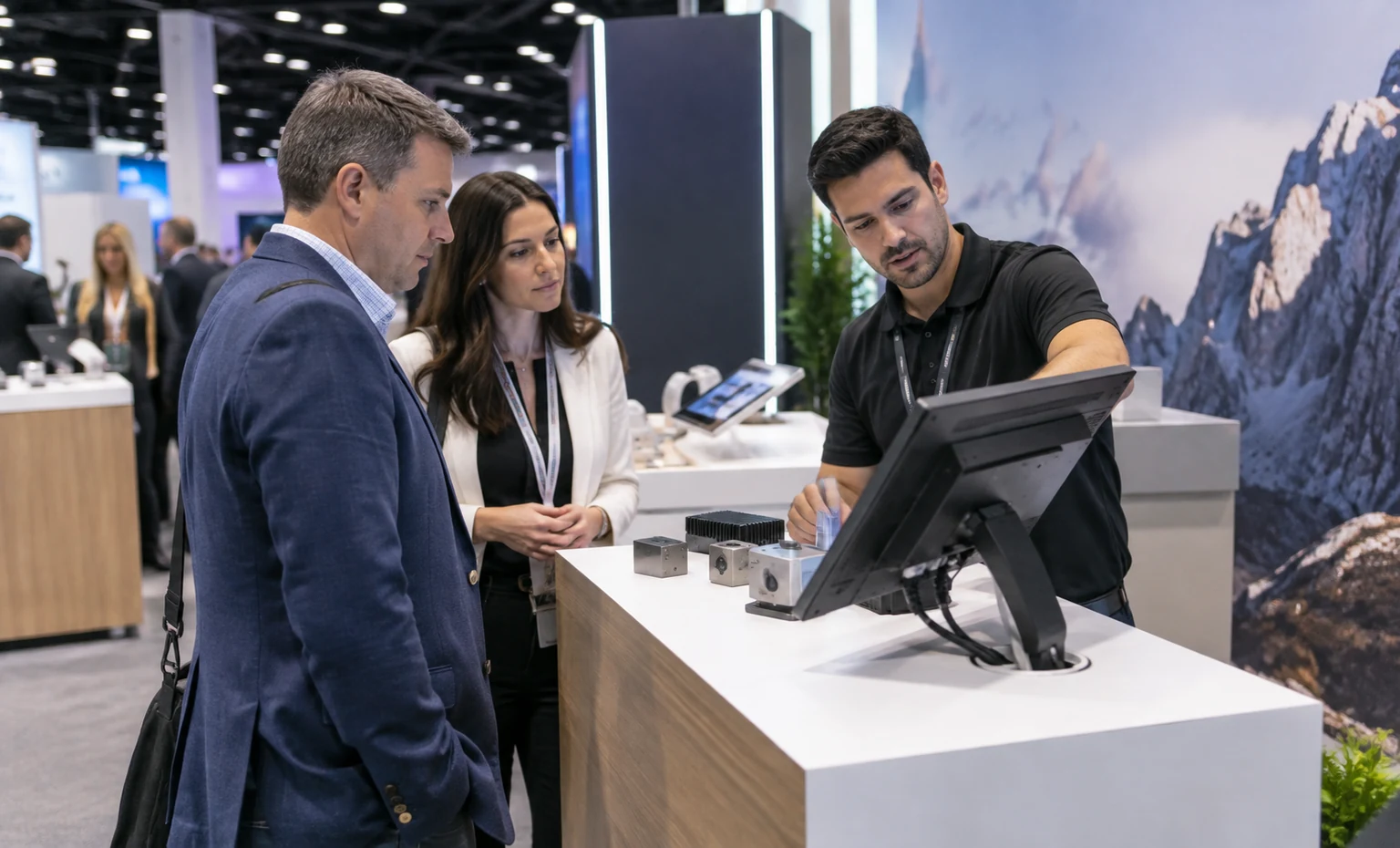
Provide stable samples, readable interfaces, an operator position and protected cable access. Match the depth of the counter and the screen angle to the actual demonstration.
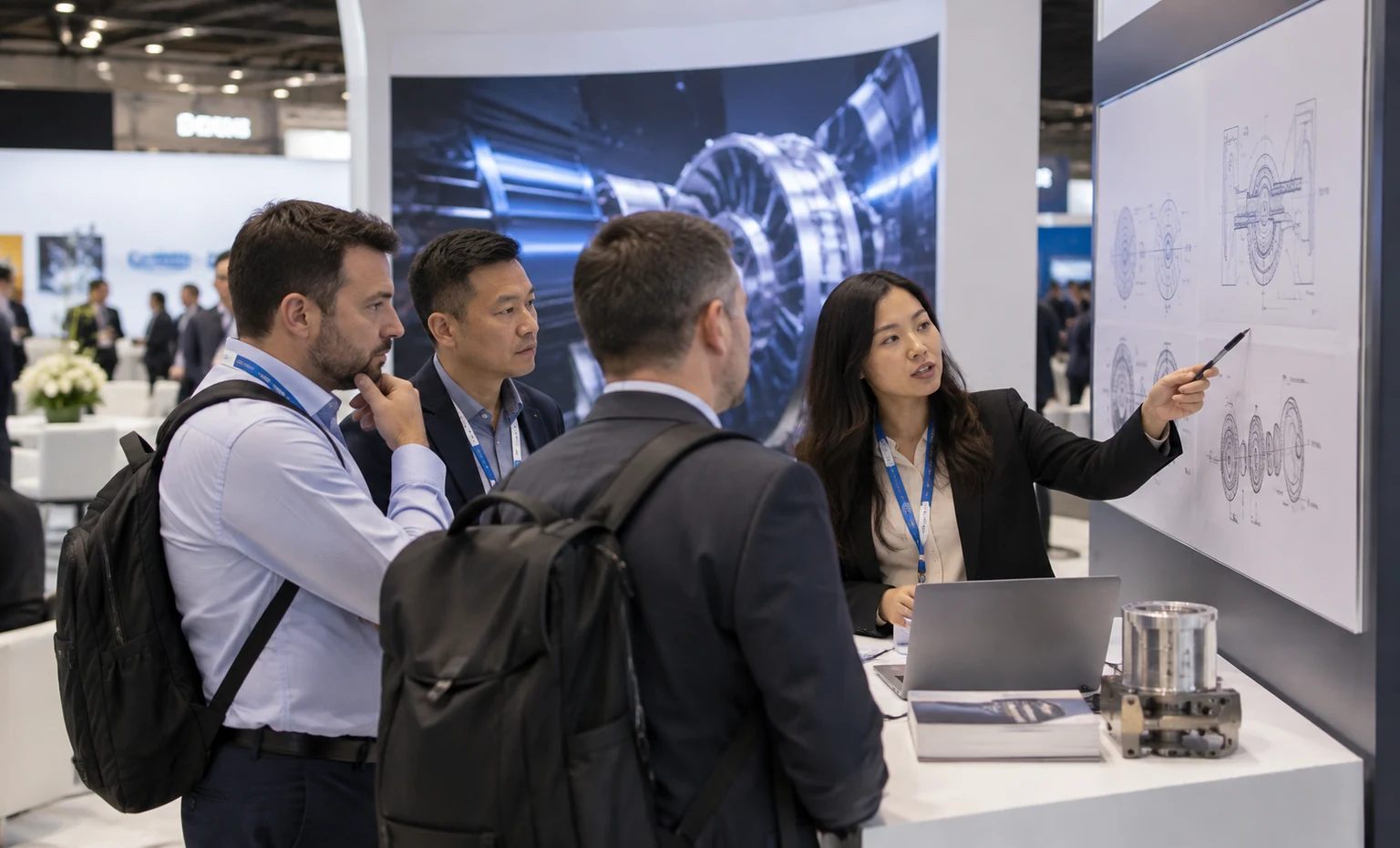
Give engineers and product teams a surface for diagrams, specifications, deployment examples or qualification questions without blocking the main display.
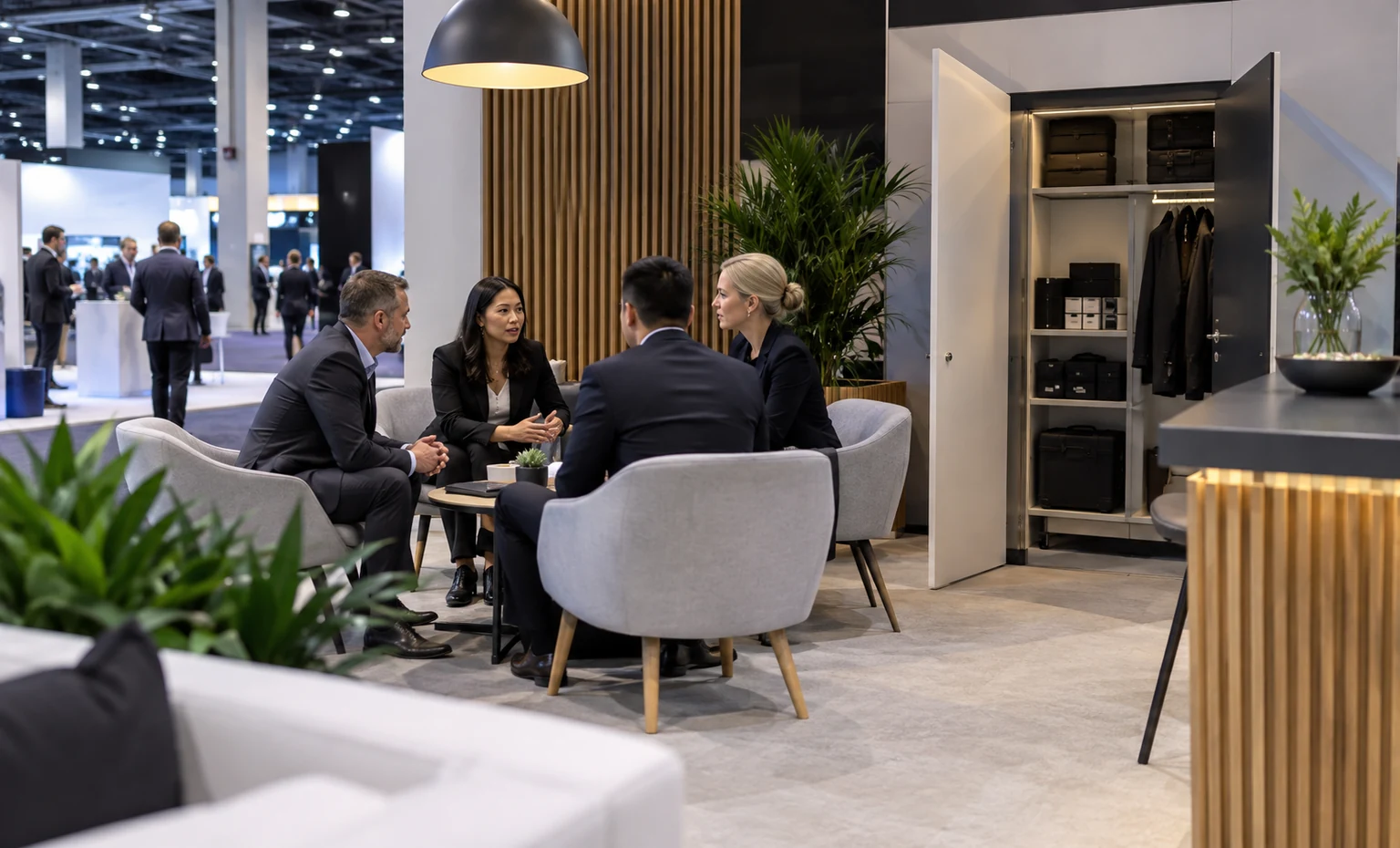
Set aside an appropriate meeting area, secure storage, staff belongings and demo spares. The footprint and privacy level should follow the real meeting program rather than a fixed package.
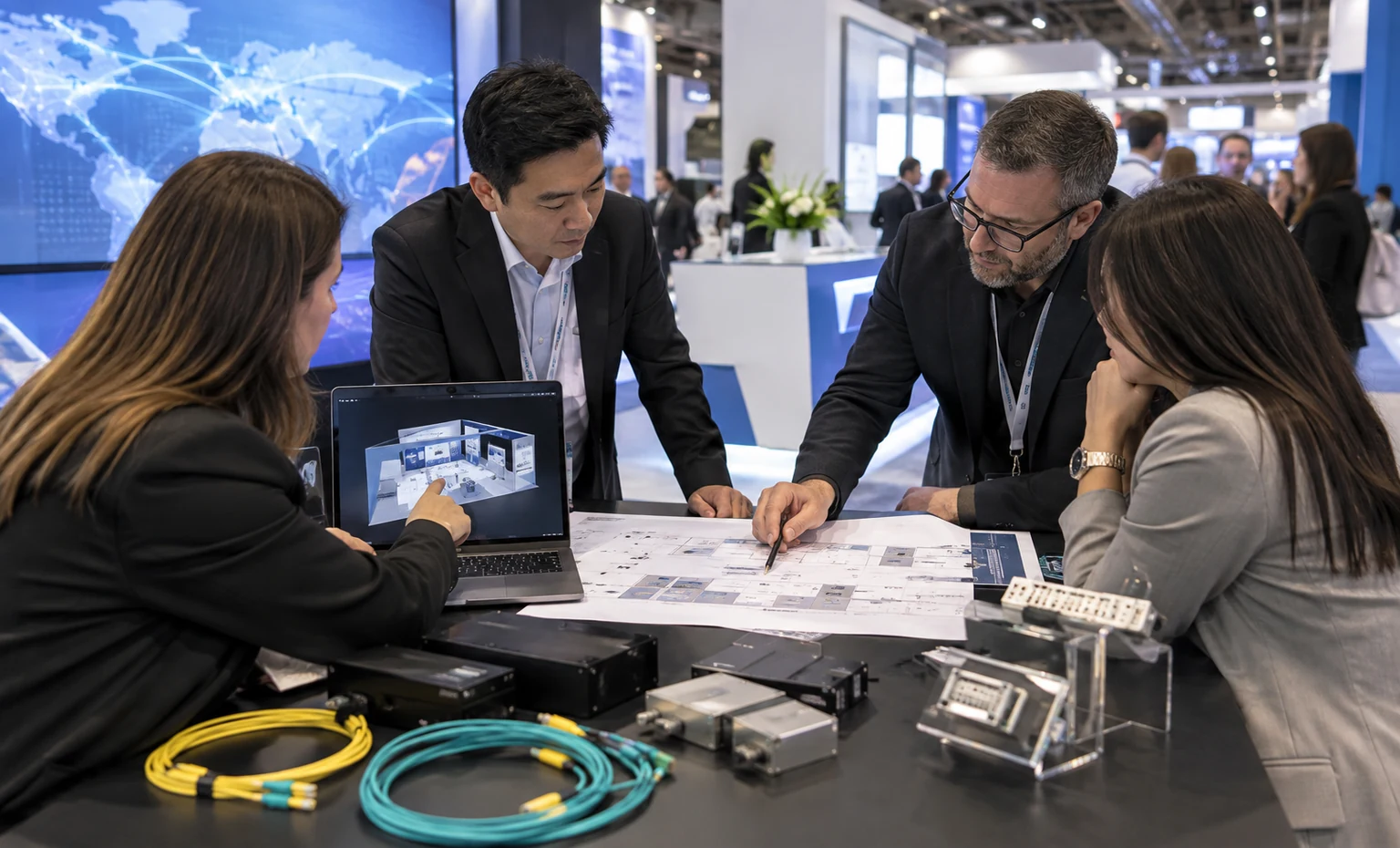
From OFC Product Brief to Show-Floor Scope
What You Provide: target accounts, visitor roles, primary product, launch or meeting objective and the desired next action.What We Do: define the first product question the booth must answer.
What You Provide: product dimensions, weights, support method, test equipment, cable paths, power, internet, heat, access, operator and backup-content requirements.What We Do: place every interface and flag missing inputs or show-service dependencies.
What You Provide: booth assignment, size, open sides, current show documents, brand files, meeting program, budget direction and approvers.What We Do: develop the layout and visual direction, then separate King, exhibitor, organizer, venue, official-vendor and other specialist responsibilities.
What You Provide: final content, artwork, decisions, shipping details, onsite contact and required third-party orders.What We Do: prepare the King-supplied work, complete the agreed checks, stage and load, and perform freight or I&D work when included.
Yes, when the devices and dependencies are defined before the layout is approved. Send the equipment list, signal path, interfaces, power, connectivity, screen output, operator position, access and backup plan. King can integrate the physical display and agreed AV work; official electrical, internet and other show services remain separate unless listed in the proposal.
Send the name, dimensions, weight, viewing sides, support method and handling condition for every sample or device. Add the application, comparison or result each item must explain. For working equipment, include cables, connectors, ventilation, power, data, access panels, control devices, operator needs and any restrictions on visitor contact.
King Exhibits is not presented as an OFC official vendor. The current official list assigns services such as material handling, labor, electrical and internet to named providers. If your company appoints King as an exhibitor-appointed contractor, the project must follow the current OFC and venue process, insurance, documentation and work rules.
Potentially, but the design cannot be promised before the current venue and show requirements are checked. OFC’s current 2027 service information identifies review and permit conditions for certain tall, two-story, elevated, long-span and high video-wall structures. Send the booth assignment, proposed height, spans, overhead elements and AV concept early so the required review path can be identified.
Only the items named in the accepted proposal are included. OFC and the Los Angeles Convention Center use official providers or controlled processes for several services. King will identify known dependencies during scope development, while your team retains responsibility for reviewing current orders, rates, deadlines and organizer instructions unless the contract assigns a specific task to us.
Yes. We can define the audience, product story, samples, demo, meeting plan, brand direction and preliminary budget. Final architecture, open sides, height, utilities, placement and production release need the confirmed booth assignment, current floor plan and applicable show rules. Early work should remain a planning direction until those inputs are verified.
The main variables include space and configuration, rental architecture, custom displays, graphics, product supports, flooring, lighting, AV, demo hardware integration, storage, freight, I&D and the services ordered from official or third-party providers. A useful comparison separates the King exhibit scope from exhibit space and show-site charges rather than treating one headline price as the total project cost.
Send the OFC edition, booth number, dimensions and open sides; target visitors; product and demo inventory; device interfaces; graphics and media; meeting and storage needs; brand files; budget direction; key approvals; shipping origin; and the design, build, freight and I&D work you want quoted. We will use these inputs to prepare a 3D direction and itemized scope.