


Inputs for a Music City Center Exhibi
Send the run-of-show and buyer goal together:
• Event, hall, booth and current manual
• Products, buyers and presentation outcome
• Run time, schedule and audience capacity
• Screens, sound, lighting and presenter positions
• Power, data, rigging and freight requirements
• Budget, approvals and requested King scope
Use Presentation Discipline to Make the Product Easier to Buy
Music City Center’s Level 3 exhibit hall totals 353,143 square feet and is divided into Halls A through D. The venue publishes dense utility floor-box coverage, a pre-scored 10×10 grid, strong rigging points and multiple docks. Those resources can support a product presentation with real presence. King Exhibits begins with the buyer outcome, then scripts the physical sequence: recognition, demonstration, visible result and next action. Product, presenter, screen and audience positions are developed together. Sound is kept intelligible within the booth rather than used as general attraction. Technical locations follow the approved show cues. The sales team gains a repeatable presentation, and procurement receives a scope linked to specific equipment and buyer value.
Write the Physical Run-of-Show before Designing the Stage
Break the presentation into arrival, context, product action, result and buyer handoff. Set the time for each step and identify what changes physically: presenter position, product movement, screen content, lighting or sample. King Exhibits can design the architecture and equipment relationships around that run. The result does not need theatrical complexity. It needs a sequence the staff can repeat accurately and a visual proof the audience can understand without standing in the first row.


Design Sound for Understanding, Not Distance
Define the audience boundary and place speakers so the presentation is clear there. A louder system can reduce conversation quality, create neighbor conflict and require more operational control. Use screens and product sightlines to carry information that does not need amplification. King Exhibits can position the visible equipment and acoustic boundaries within the booth design. The event, venue and authorized AV provider determine current sound limits, installation, labor and operating requirements.
Give Buyers a Place to Continue after the Applause
The end of the demo should reveal the next action immediately. A technical buyer may need product access, a distributor may need a commercial table and a casual visitor may need a short digital follow-up. Place staff at the audience exit and keep samples or screens ready for the qualified route. King Exhibits can shape that transition with openings, counters and storage. The exhibitor defines qualification, claims, offers and post-show response.


Use Music City Center Infrastructure with a Precise Plan
Music City Center publishes floor boxes on 30-foot centers, substantial rigging points, 32 docks, three drive-in ramps and an Elephant Door in Hall D. These are planning capabilities, not automatic exhibitor entitlements. Confirm the booth, service points, product dimensions, rigging plot and event route before release. King Exhibits can reflect accepted requirements in drawings and packing, while the venue, organizer and authorized providers approve, install and operate the assigned services.
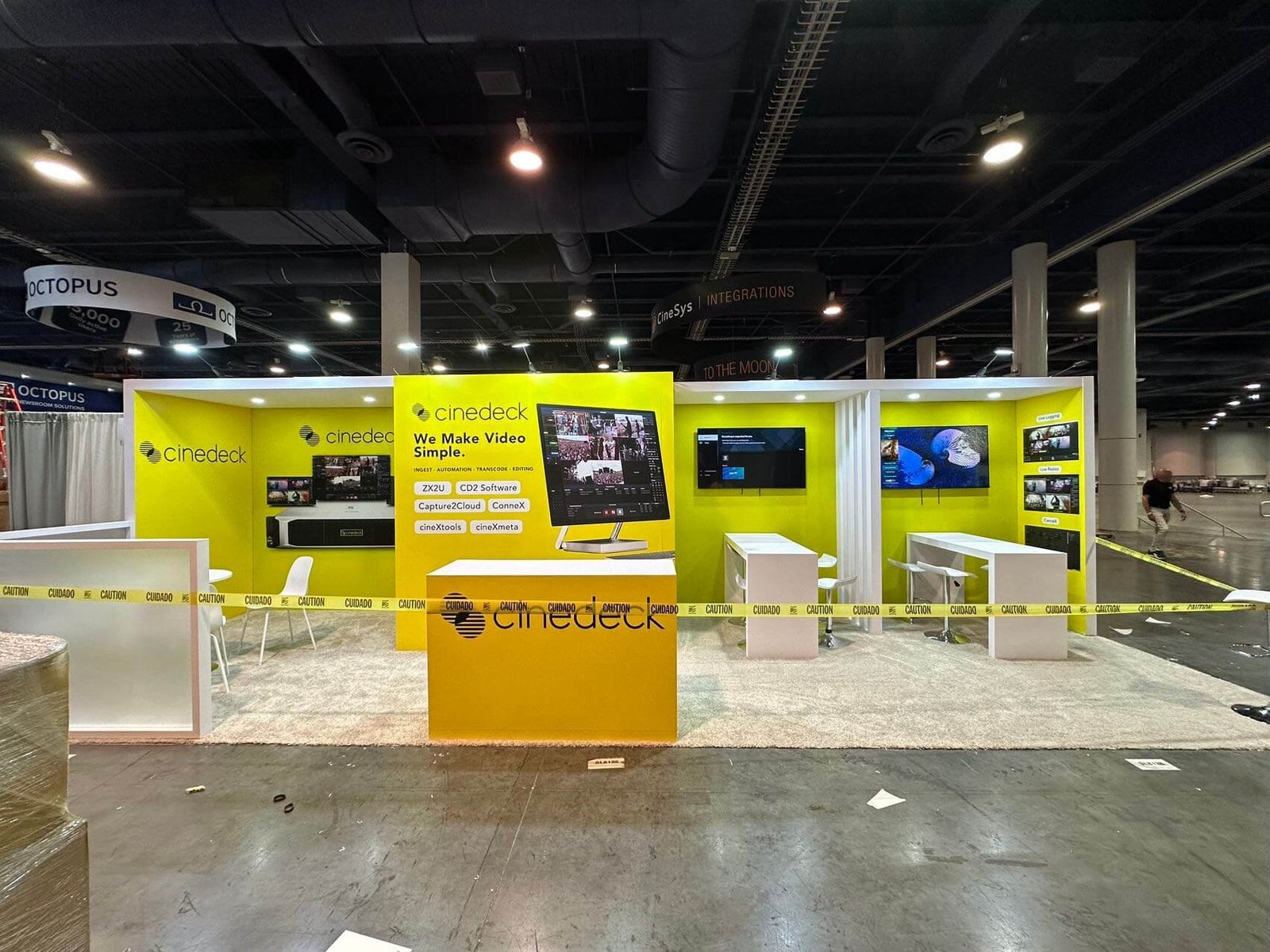
Senzani — 20×30 Exhibit at PACK EXPO 2025
Senzani’s completed 20×30 exhibit is a verified King Exhibits reference for integrating equipment, branded architecture and technical buyer conversation. It was delivered for PACK EXPO 2025, not at Music City Center. Buyers can use it to assess product positioning and production finish. A Nashville project would receive its own presentation, sound, hall, utility, rigging and freight plan under the accepted written scope.
The Demo Sequence Can Guide Fabrication and Equipment Placemen

King Exhibits has supported U.S. exhibit projects since 2008. Las Vegas-based production support combines 3D design, rental preparation, custom graphics, CNC work and wood fabrication. Presenter position, product support, screen mount, storage access and graphic cues can therefore be reviewed against the same run-of-show. Important assemblies may be checked before packing when included in scope. Freight coordination, installation and dismantling, audiovisual support and storage apply only when accepted in writing. Music City Center services, rigging, AV, labor, sound rules and freight handling remain with the designated parties.
Build the Music City Center Booth around a Repeatable Demo
The presentation creates value when every cue helps buyers see proof and move to the next conversation.
Choose product, audience, proof, run time and the next commercial action.
Place product, presenter, screen, sound, lighting, audience and storage.
Confirm power, data, AV, rigging, freight, services and approvals.
Approve run-of-show, drawings, content interfaces, assets and written scope.
Yes, when the organizer and venue allow it and the plan controls audience, sound, equipment and egress. Define the run time, presenter, product action, viewing area and frequency before design. King Exhibits can develop the physical environment and visible equipment within scope. The event, venue and authorized AV or labor providers decide installation, operating limits, permits and services required for the current show.
Music City Center’s floor-plan guide identifies a large Elephant Door in Hall D, but use depends on the assigned hall, event route, product, vehicle, schedule and authorization. Provide packed dimensions, weight, lifting points and operating conditions early. King Exhibits can design product clearances and packing for confirmed access. The organizer, venue and material handler control door scheduling, freight movement and any drive-in or on-floor vehicle permission.
Use the current MCC exhibitor portal and organizer manual to identify providers, order forms, placement drawings, labor and deadlines. The venue publishes electrical and technology ordering resources, while event arrangements may add AV and general-contractor responsibilities. King Exhibits can identify locations and equipment requirements within accepted drawings. The authorized providers price, install, inspect and verify the services assigned to them.
Send the event, hall, booth number, current manual, products, buyer roles, demo run time, presentation schedule, presenter, audience size, screens, sound, lighting, graphics, existing assets, power, data, rigging, freight, budget and approval date. Include large-item dimensions and post-demo sales actions. King Exhibits will develop the physical presentation and identify venue, organizer or provider work that requires separate confirmation or ordering.