
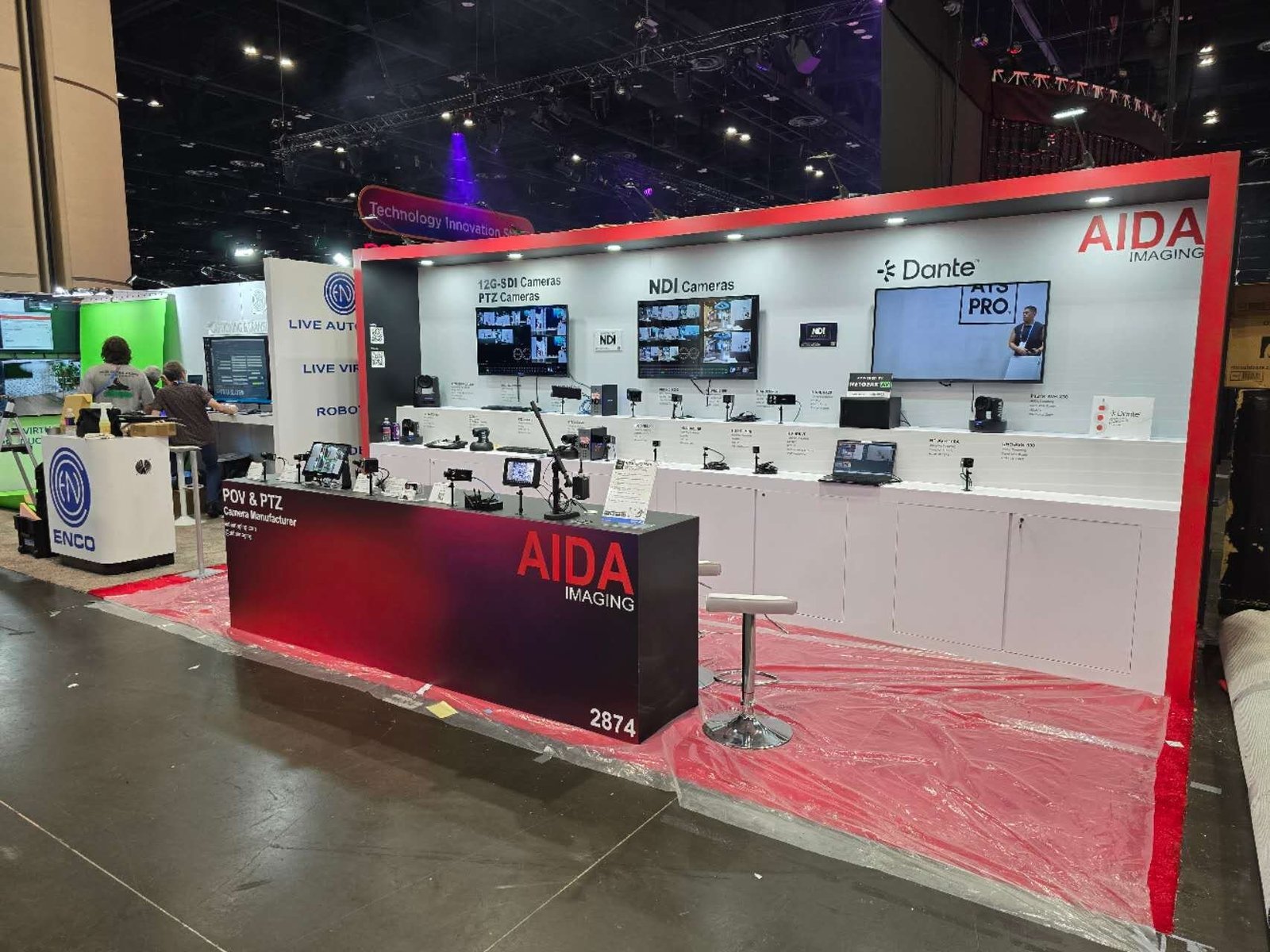


Choose the Booth Layout by What Buyers Need to Experience
• Control sightlines for lighting, projection, and visual-system comparisons.
• Show audio controls and results without exposed cable clutter.
• Support staging products using confirmed dimensions, weights, and moving parts.
• Operate lasers and effects only within approved paths and barriers.
An LDI Exhibit Rental Built from the Demonstration Brief
LDI brings together manufacturers and professionals working with lighting, audio, projection, media servers, controls, software, effects, electrical systems, fiber, staging and rigging. In that environment, a booth cannot rely on graphics alone. Visitors come to compare equipment in action, understand workflow and speak with people who can answer detailed questions.King Exhibits begins an LDI exhibit rental with the visitor action and the physical product. We record operating condition, viewing direction, operator position, signal and power paths, sound or light behavior, service access, storage and the next sales conversation. Those requirements shape the rental architecture instead of being fitted into the booth after approval. For an LDI trade show booth rental in Las Vegas, the current assignment and show documents remain the controlling inputs.The environment may combine modular walls, elevated brand markers, illuminated graphics, operating counters, floor treatment, furnishings, concealed storage and planned AV locations. After dimensions and access needs are confirmed, the quote may add CNC- or wood-made supports, control surfaces, removable panels or equipment compartments. Current LDI and LVCC documents still determine approval, rigging, utilities, labor, material handling and the demonstration that may operate onsite.
Select an LDI Exhibit Solution by Demonstration Format
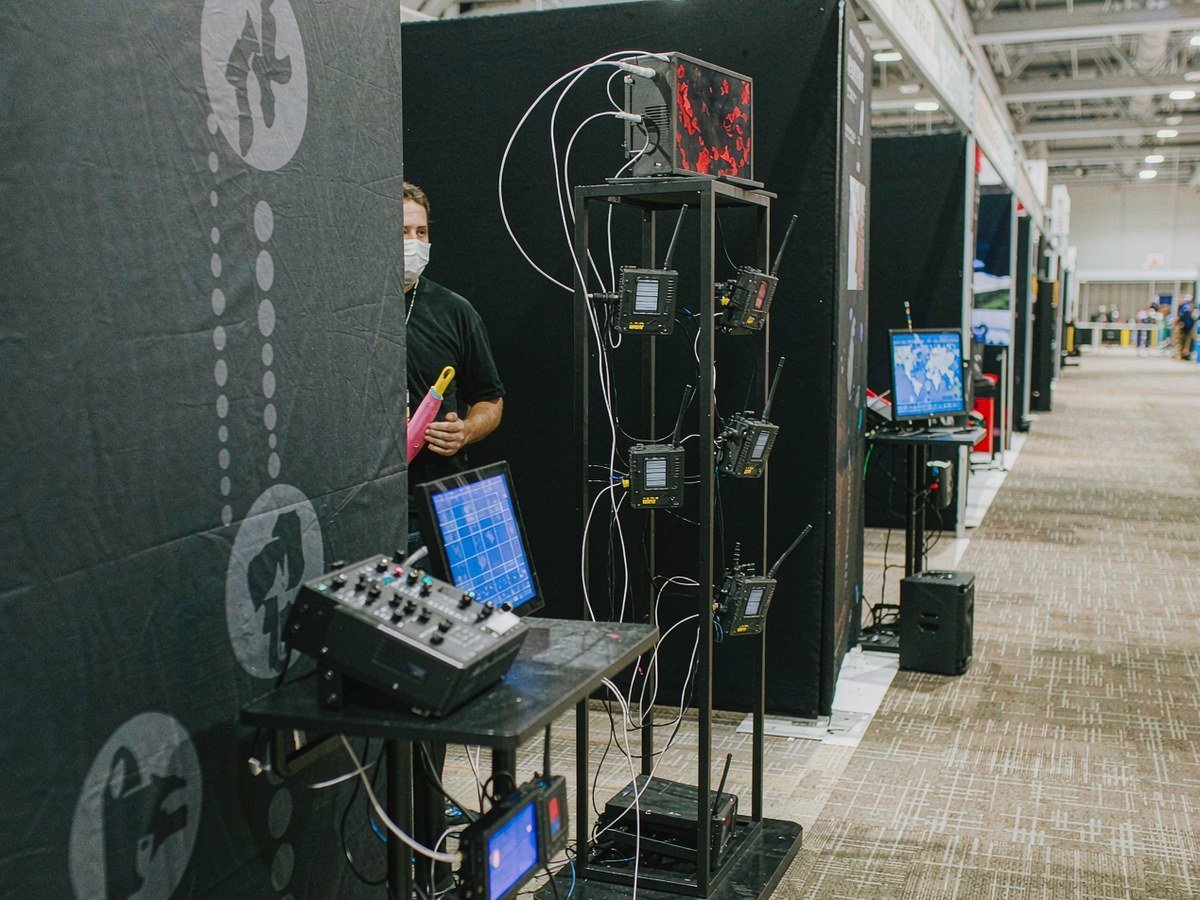
Choose this format when sources, processors, controls and outputs must operate as one system. The exhibit plan follows the signal from input to visible or audible result, keeps service access open and labels each stage without burying the live product under a generic AV presentation.
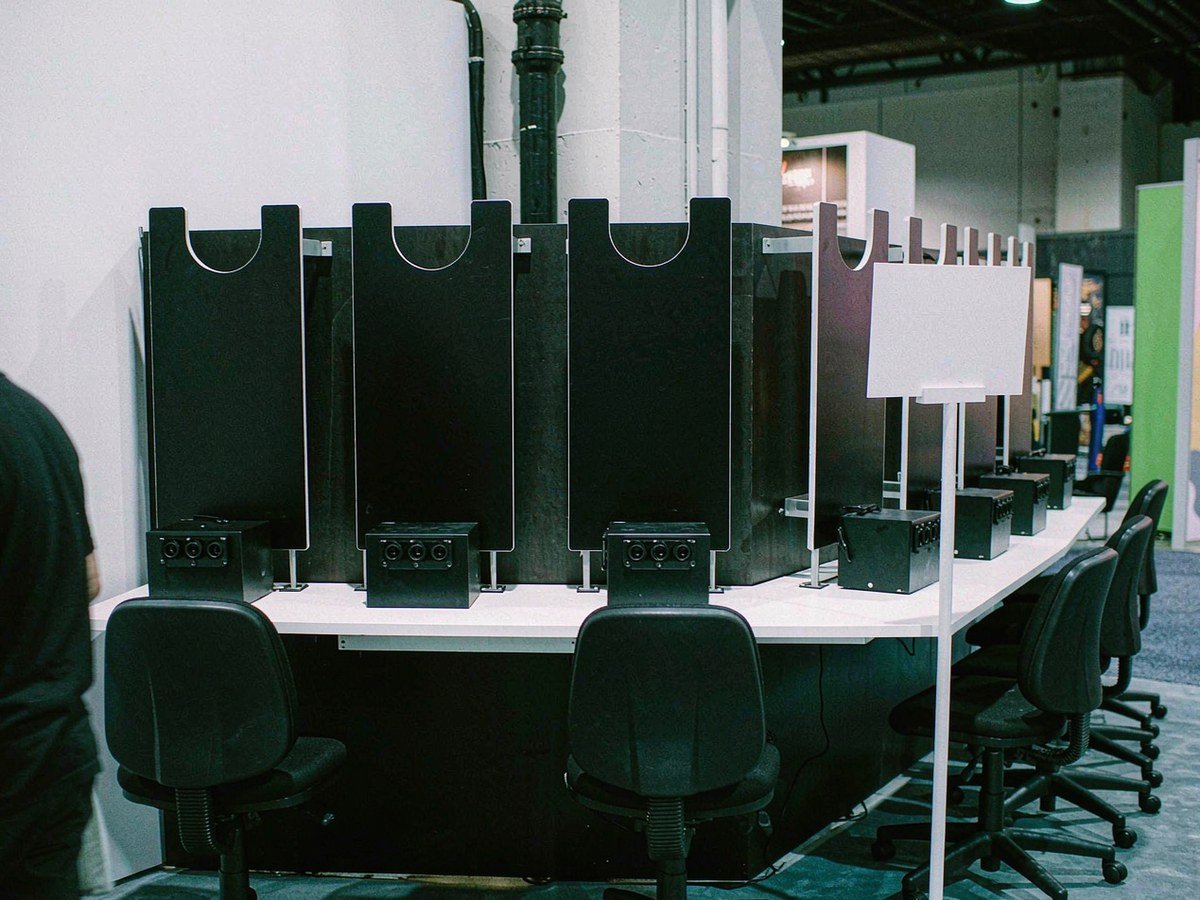
Use repeated stations when several consoles, software tools, fixtures or compact devices need independent trials. Each station receives its own operator position, power/data route, visitor clearance and reset storage, while shared graphics make the comparison easy to understand.
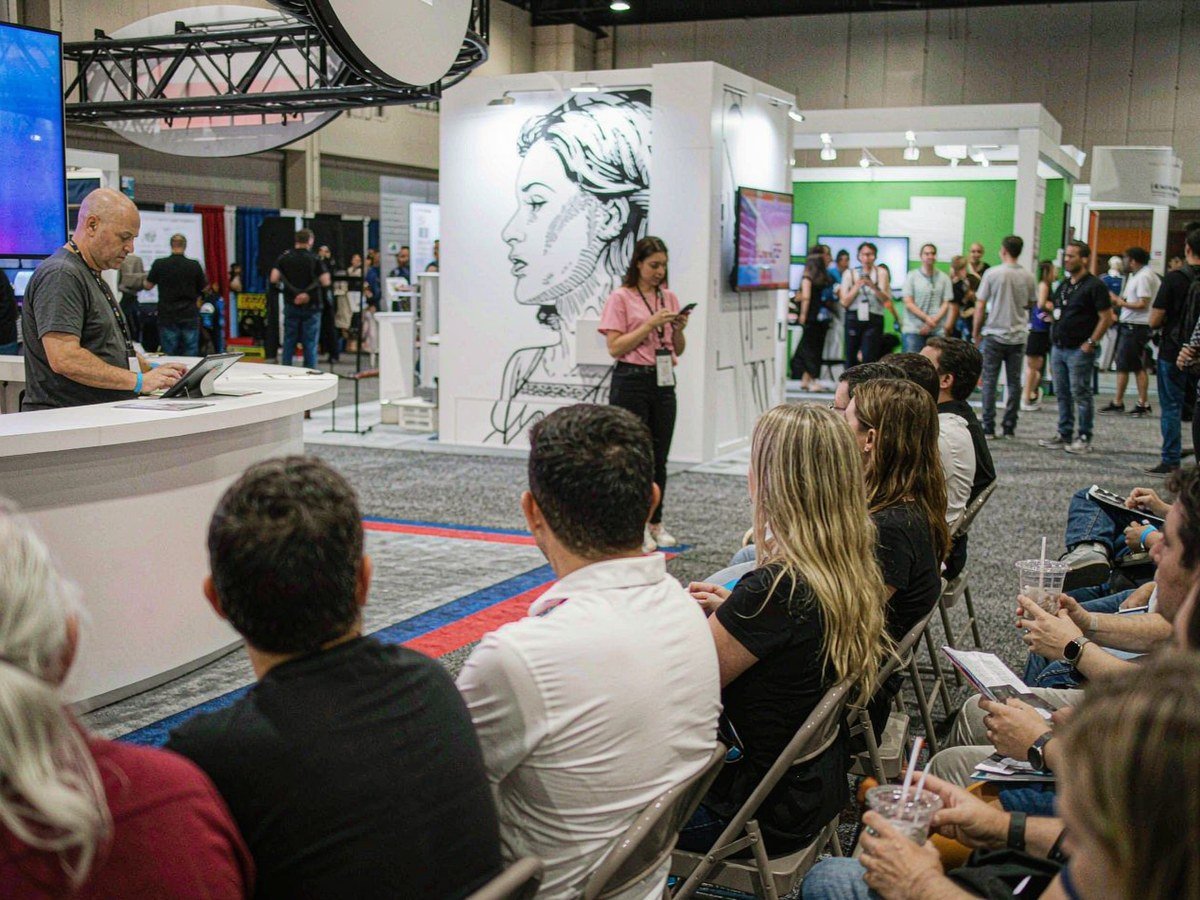
Plan a presentation format when the product story depends on a scheduled lighting look, sound sequence, projection scene or effects demonstration. Presenter control, audience orientation, waiting space and the approved operating window are resolved together so the presentation can start, finish and clear predictably.
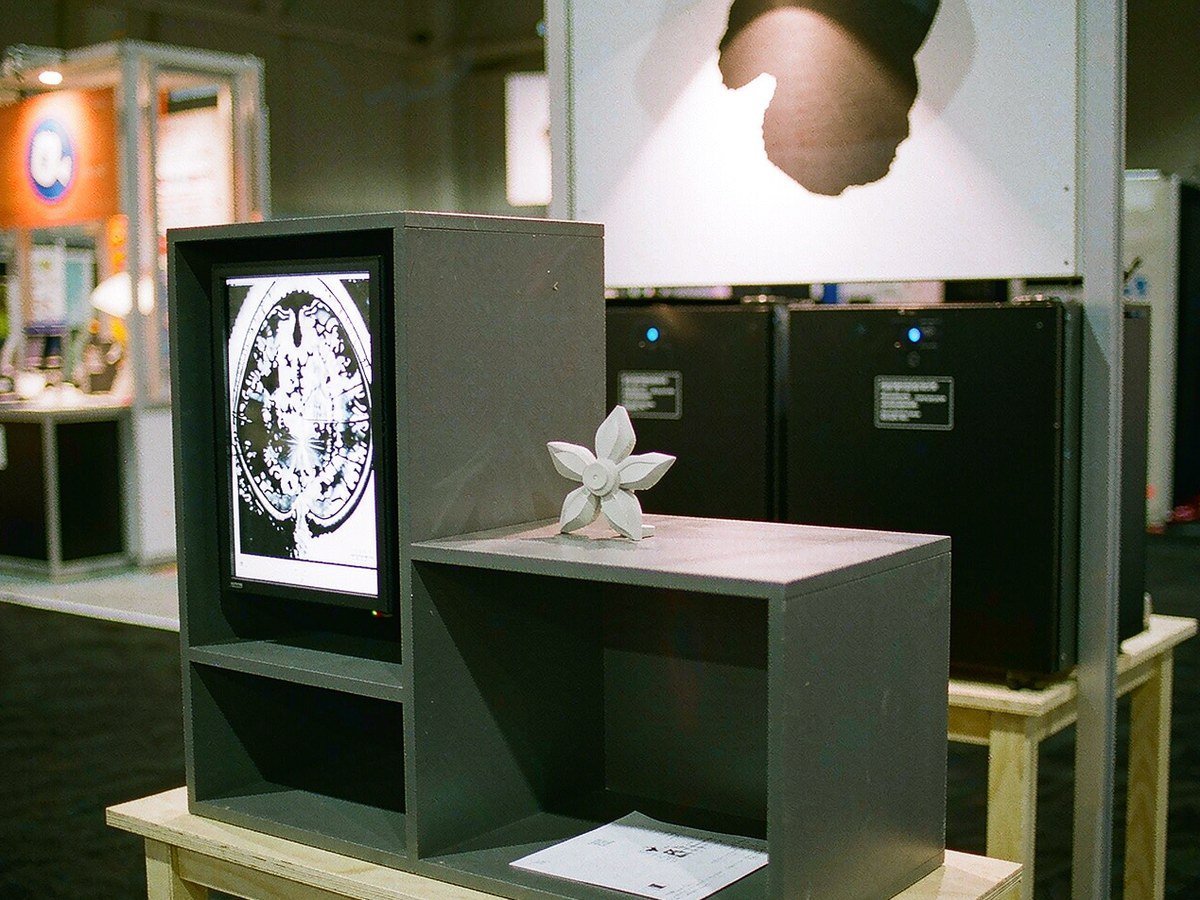
Use this solution when equipment cannot safely or practically run at full show-floor condition. Display the relevant hardware or sample beside an accurate screen sequence, signal diagram or recorded result. The copy must state what is live, simulated or shown by media so buyers do not infer an operating claim the exhibit cannot support.
Check Four Deliverables Before Releasing the LDI Exhibit

Review every major product footprint, operating side, visitor view, staff position, service clearance, storage need and meeting point in the same model. Your product and operations teams can flag a blocked connector, unsafe viewing angle or missing reset area before the layout moves into production.
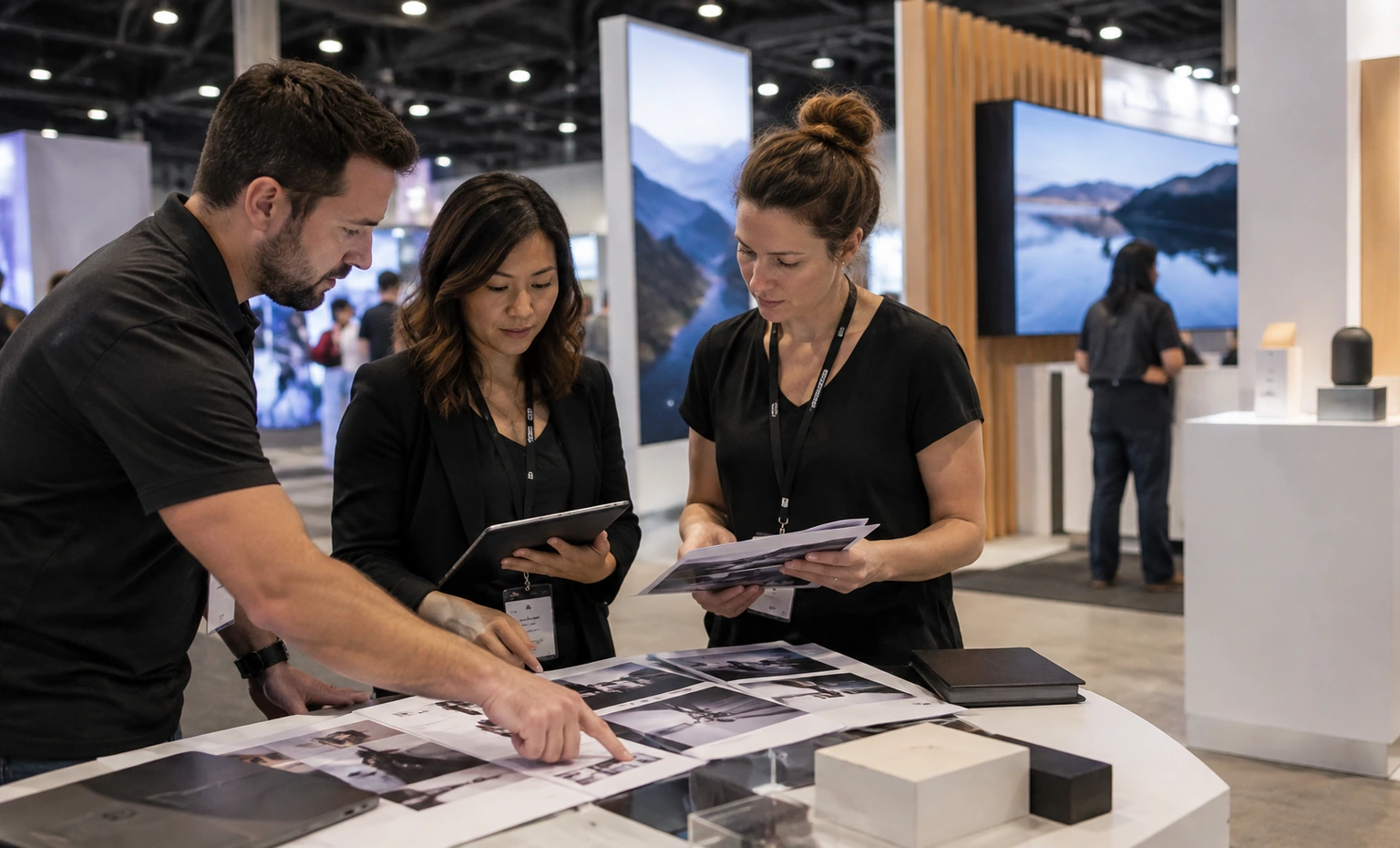
Match each approved graphic, screen sequence and product label to a named location in the exhibit. The review should show which physical product or demo the content supports, helping your team catch an outdated file or misplaced message before graphic production.
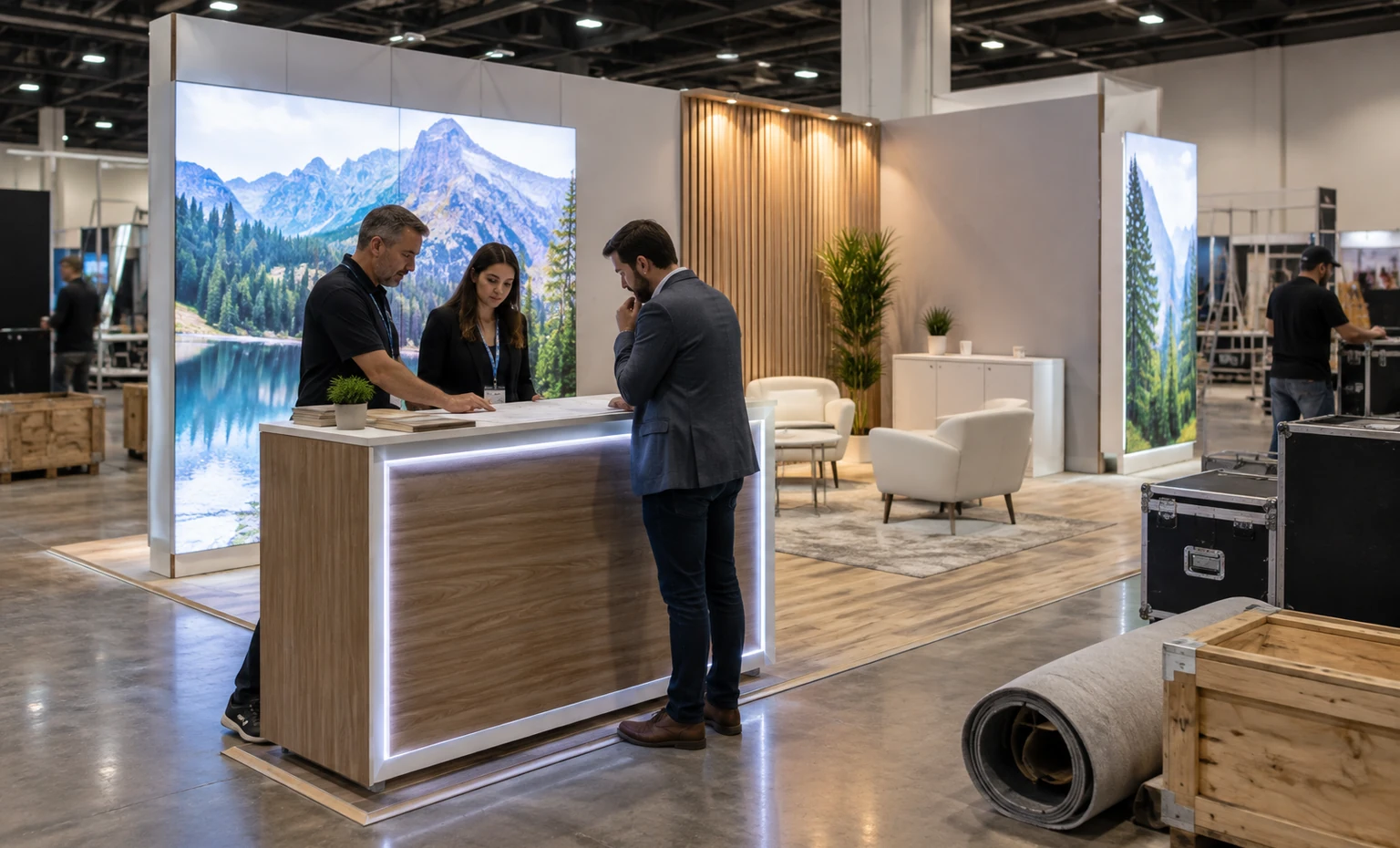
Identify the rental walls, counters, lightboxes, flooring, furniture and storage included in King’s proposal, then list any selected CNC- or wood-made support, control surface, access panel or compartment separately. Procurement can see what is standard, what is project-specific and what still requires confirmed dimensions.

State the transport and installation/dismantle work King has priced, then identify electricity, internet, rigging, material handling, labor, certification and approval dependencies outside that scope. This gives the exhibitor an actionable responsibility check instead of an undefined turnkey label.
Draw the Demo Mode and Signal Path Before the Architecture
List each product’s show-floor mode, the action a visitor can take and the result that should be visible or audible. Add the operator, observers, power, data, sources, processors, screens, speakers, cable exits, heat and reset materials. This record shows whether the station needs a protected cable route, staff-side access, a different viewing distance or a backup presentation. It also gives the designer a real footprint before walls and counters limit the technology.


Resolve Light, Sound, Laser and Overhead Limits Early
Show where every beam, fixture, speaker, effect and suspended element points, who controls it and what happens at the aisle or neighboring booth. LDI publishes separate booth, sound and laser requirements, while LVCC and assigned providers control other building or service interfaces. King can reflect approved conditions in the exhibit plan; it does not replace the exhibitor’s product certification, safety owner, organizer approval or official order. Keep the current documents beside the drawing until release.
Plan How the Gear Enters, Connects and Resets
Record shipping and operating dimensions, weight, lifting points, cases, product arrival method and the side needed for connection or service. Then place spare units, tools, packaging, personal items and daily reset supplies. The installation sequence should show which exhibit components can be completed before the equipment arrives and what must remain open. This keeps a crate route, service panel or replacement product from becoming an onsite surprise hidden behind the finished booth.
Carry the Approved LDI Plan into Las Vegas Preparation

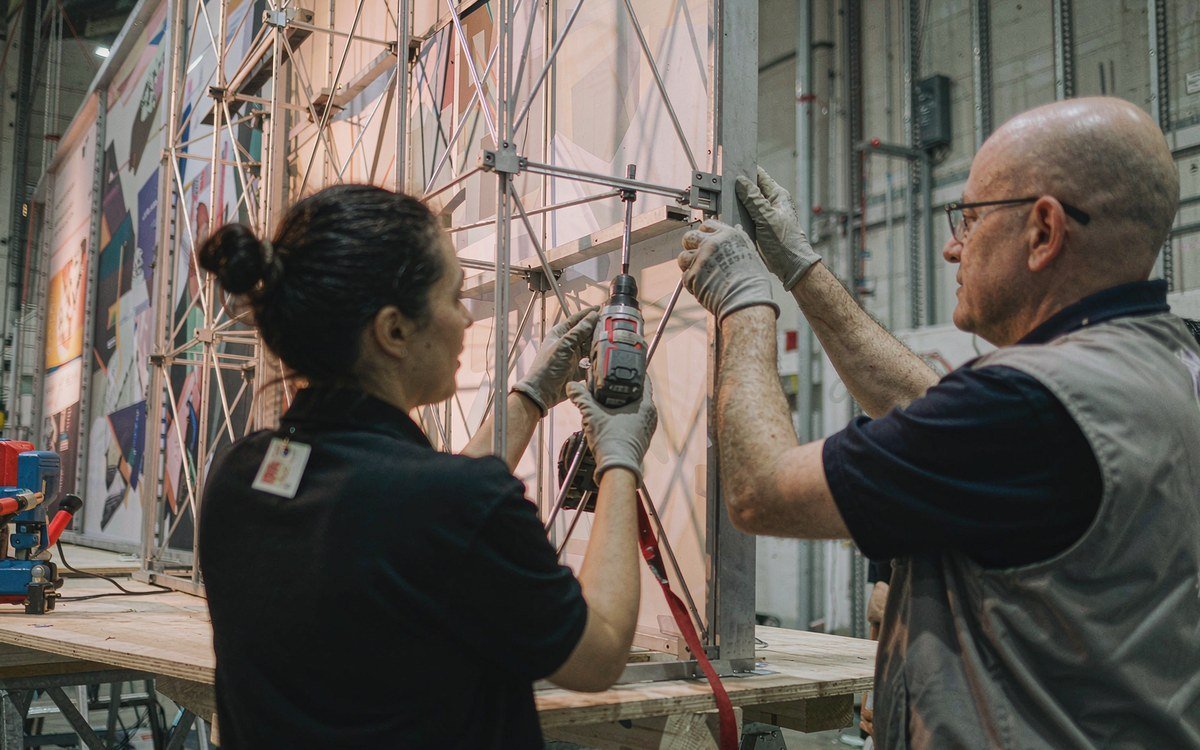
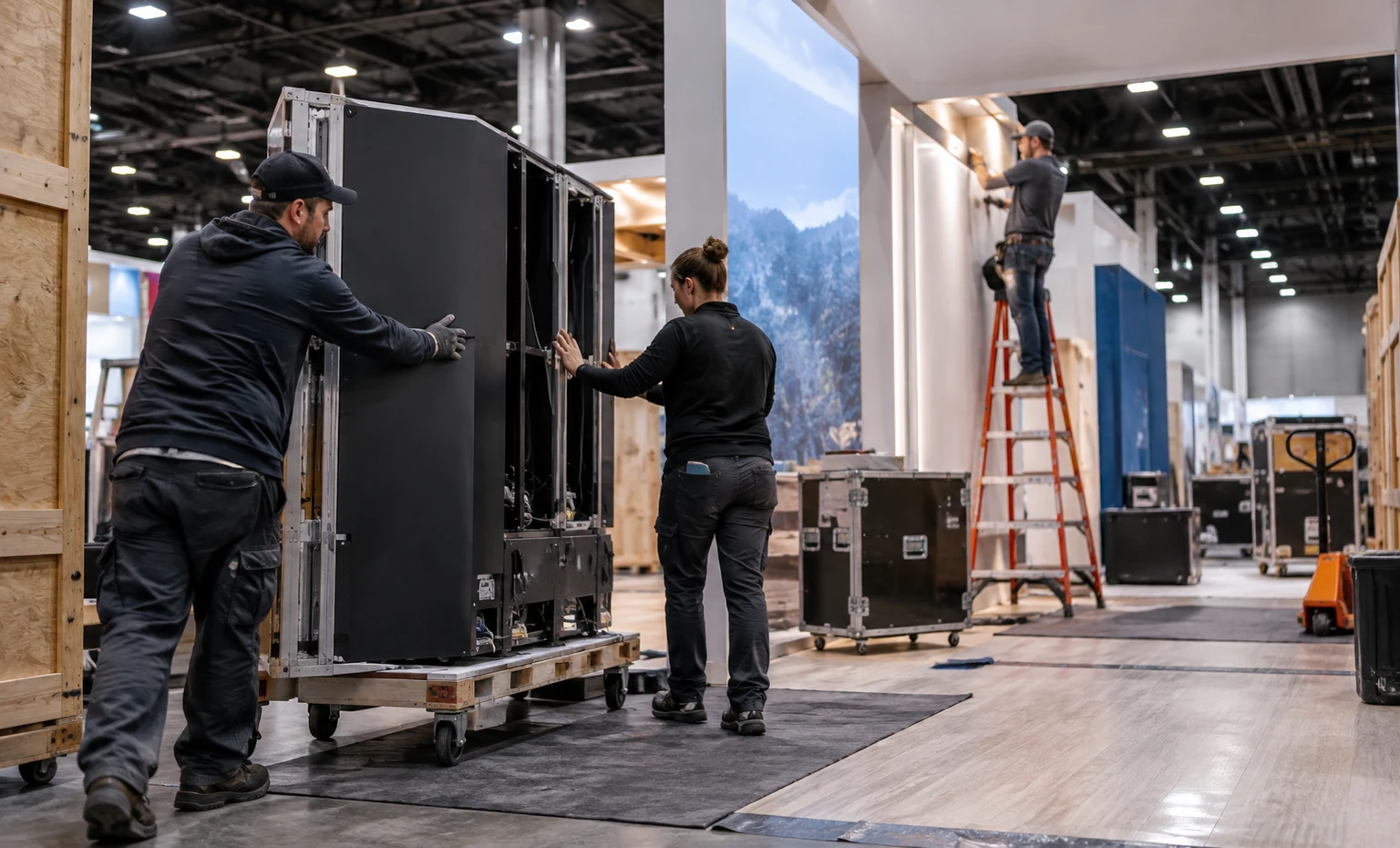
King Exhibits links design, graphic production and the agreed fabrication work through one project record. When a console cutout, screen orientation, fixture access point or product ID changes during review, the approved revision can continue into preparation instead of remaining in a disconnected comment or rendering.At the Las Vegas operation, CNC and wood fabrication are available for selected parts included in the accepted scope. Graphic production and material preparation support the approved rental build, while project-specific pre-build and quality checks examine the applicable components before loading. The depth of that check follows the project; it is not a promise that every booth will receive a complete rehearsal assembly.The same Las Vegas team can manage storage, transport and installation/dismantle tasks when they are written into the agreement. This operating continuity supports the accepted King work while LDI, LVCC, the exhibitor and assigned providers retain the responsibilities that belong to them.
Assign the LDI Project Responsibilities Before Release

Own the booth contract, product data, operating condition, certification and approved claims; name the demonstration and safety owners; approve the final design and official orders.

Design and prepare the accepted rental, graphics, quoted custom elements, packing, transport and onsite work stated in the proposal.
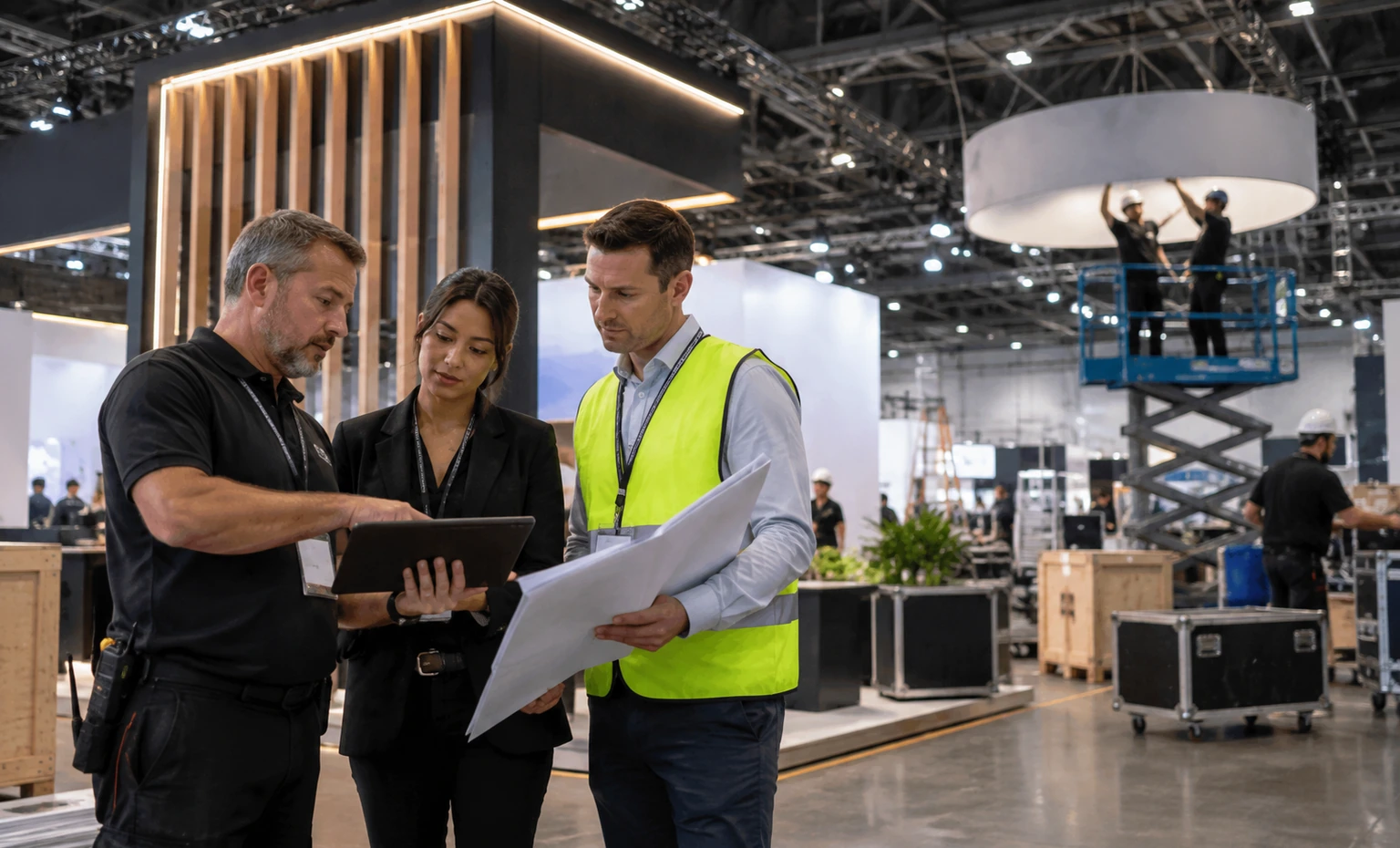
Control or supply the approvals and reserved services identified in the current resources, which may include booth review, rigging, utilities, internet, labor, material handling and building safety processes.
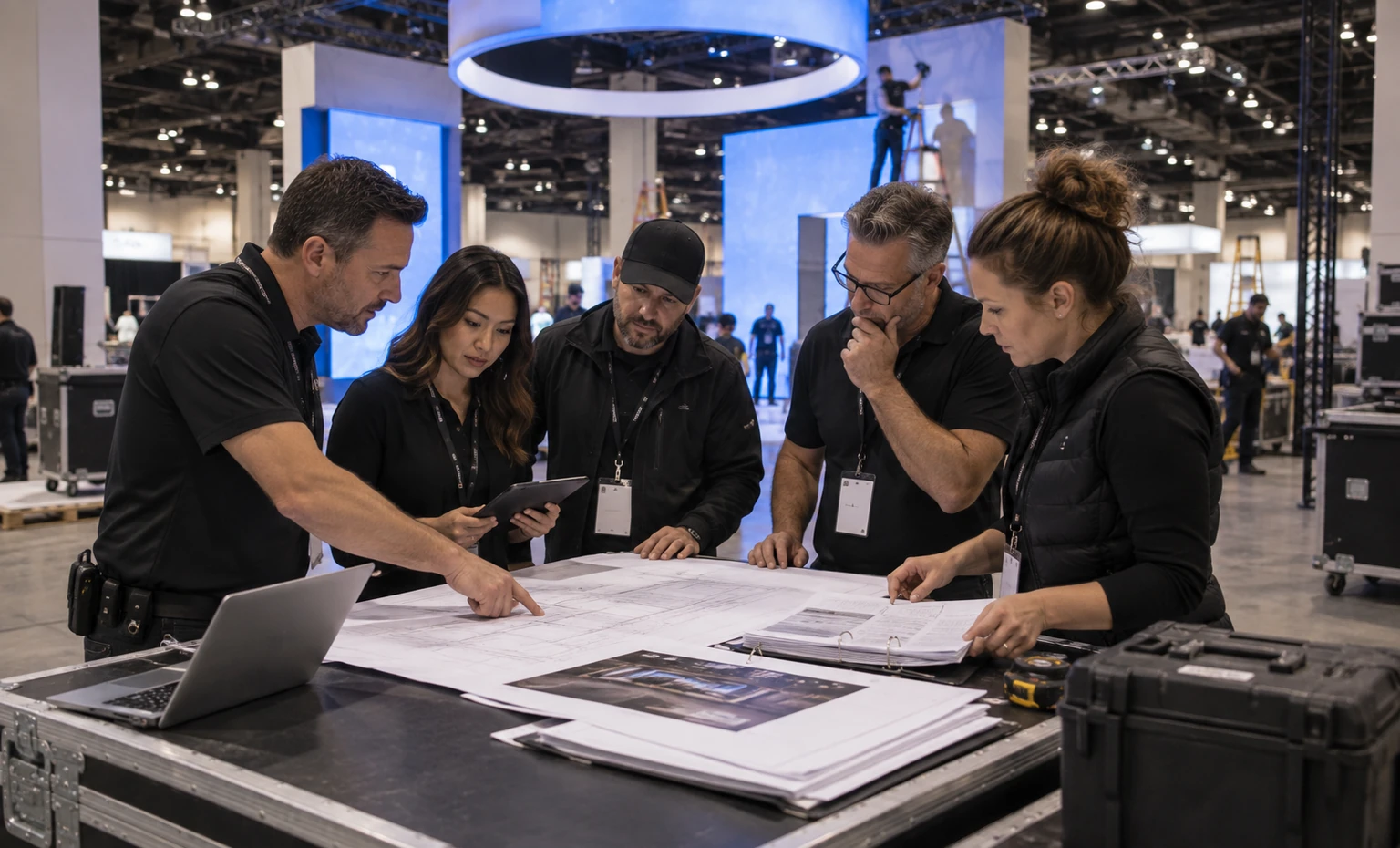
Reconcile the accepted King scope, official approvals and orders, equipment list, shipping plan, crew contacts and latest drawing before production and move-in.
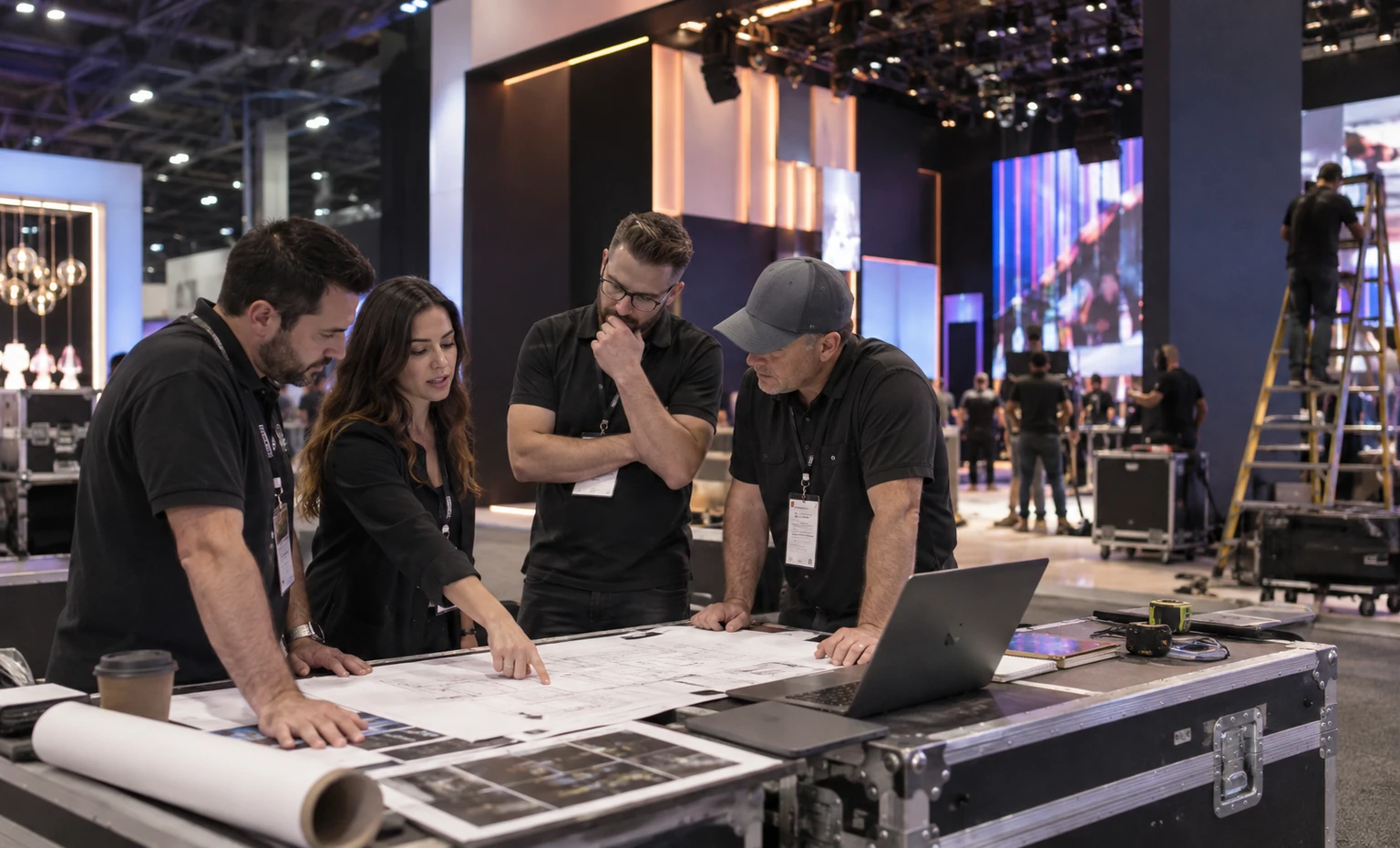
Move from LDI Assignment to a Released Demo Exhibit
What You Provide: Booth assignment, target visitors, priority products, visitor actions, specialist roles, meetings and budget.What We Do:
What You Provide: Equipment dimensions, weight, operating mode, controls, viewing/listening conditions, power, data, sound, light, heat, rigging, cables, cases and reset needs.What We Do:
What You Provide: Brand files, released graphics, booth rules, desired rental/custom scope, freight plan and consolidated feedback.What We Do:
What You Provide: Final approvals, official orders, shipment details, onsite contacts and any approved change.What We Do:
The quotation is the controlling list of King’s work. Depending on the brief, it can cover 3D design, rental components, graphic production, selected custom pieces, packing, freight coordination and agreed installation or dismantle work. Your LDI space agreement remains separate. Electricity, internet, rigging, handling, labor and other event orders follow their current purchasing route unless a specific King coordination duty or cost is written into the proposal. Compare both records before approval.
Yes, when the activity and equipment are permitted under the current LDI and LVCC requirements. Provide the demo mode, equipment positions, operator and observer areas, power/data, sound and light behavior, cable routes, heat, reset and safety needs. King plans the booth-side environment around approved conditions; the exhibitor owns the product, operating procedure, certification and required permission.
King can plan the physical booth around a laser setup that the exhibitor and responsible authorities have documented and approved. Send the device class or risk group, certification/variance status, beam path, operator, controls, barriers, termination and intended audience access. LDI’s current laser requirements and applicable FDA rules control operation. The exhibit proposal does not certify the product or guarantee approval.
Only when the assigned booth type and current approval process permit it. Inline booths and larger peninsula or island spaces do not share the same rules. Provide the floor assignment, dimensions, proposed loads and overhead concept early. King can coordinate the exhibit geometry and documented interfaces; the current organizer and assigned rigging provider control approval, service availability and installation.
Cost depends on the assigned footprint, rental architecture, custom supports, graphics, AV positions, furniture, storage, freight and onsite scope. Power, internet, rigging, material handling, labor and other show services may be ordered separately under current event requirements. We issue a scope-based quotation after reviewing the equipment and project brief rather than publishing a partial fixed price.
Provide the event edition and complete space assignment, then add the audience, gear and demo inventory, dimensions, weights, operating modes, utilities, signal routes, sound/light/laser behavior, approved graphics, meeting and storage needs, budget and freight plan. Mark the design, production, transport and floor support that should be priced. This lets the first concept show both the visitor experience and unresolved technical dependencies.
No. King is hired separately by the exhibitor to supply the work written into its proposal; it does not speak for LDI, Questex, LVCC or an assigned show-service company. The event and venue publish the governing requirements, and reserved services stay with the named provider. This page should never be read as an organizer endorsement or an authorization to bypass those processes.