


Match the JCK Exhibit Format to the Selling Method
Open Collection Gallery
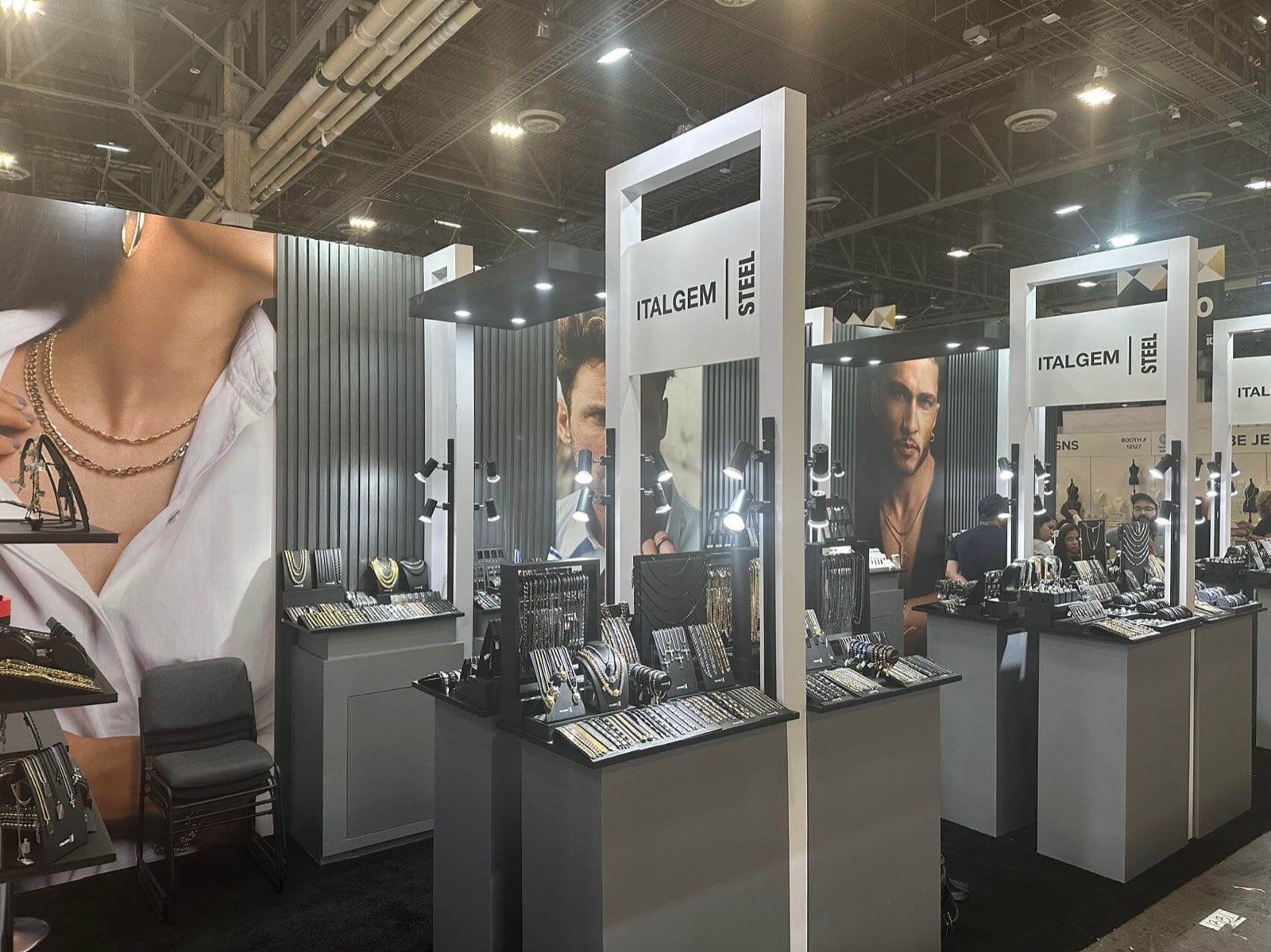
An open perimeter works for brands that want walk-up discovery and broad retailer access. Cases create the product route; a clear brand marker helps visitors understand the category before they stop. Staff positions need enough room to open cases and place pieces on viewing pads without turning the aisle edge into a service counter. Concealed stock and personal-item storage keep the gallery calm throughout the day.
Appointment Showroom
Higher-value lines, private previews and planned account reviews may need controlled entry, a reception check-in and tables inside the display environment. The room should still reveal enough product and brand identity from the aisle to confirm the destination. Build case count, guest capacity, hospitality and staff movement from the appointment calendar rather than filling the footprint with lounges that do not support selling.
Tools, Technology or Retail-Solution Demonstration
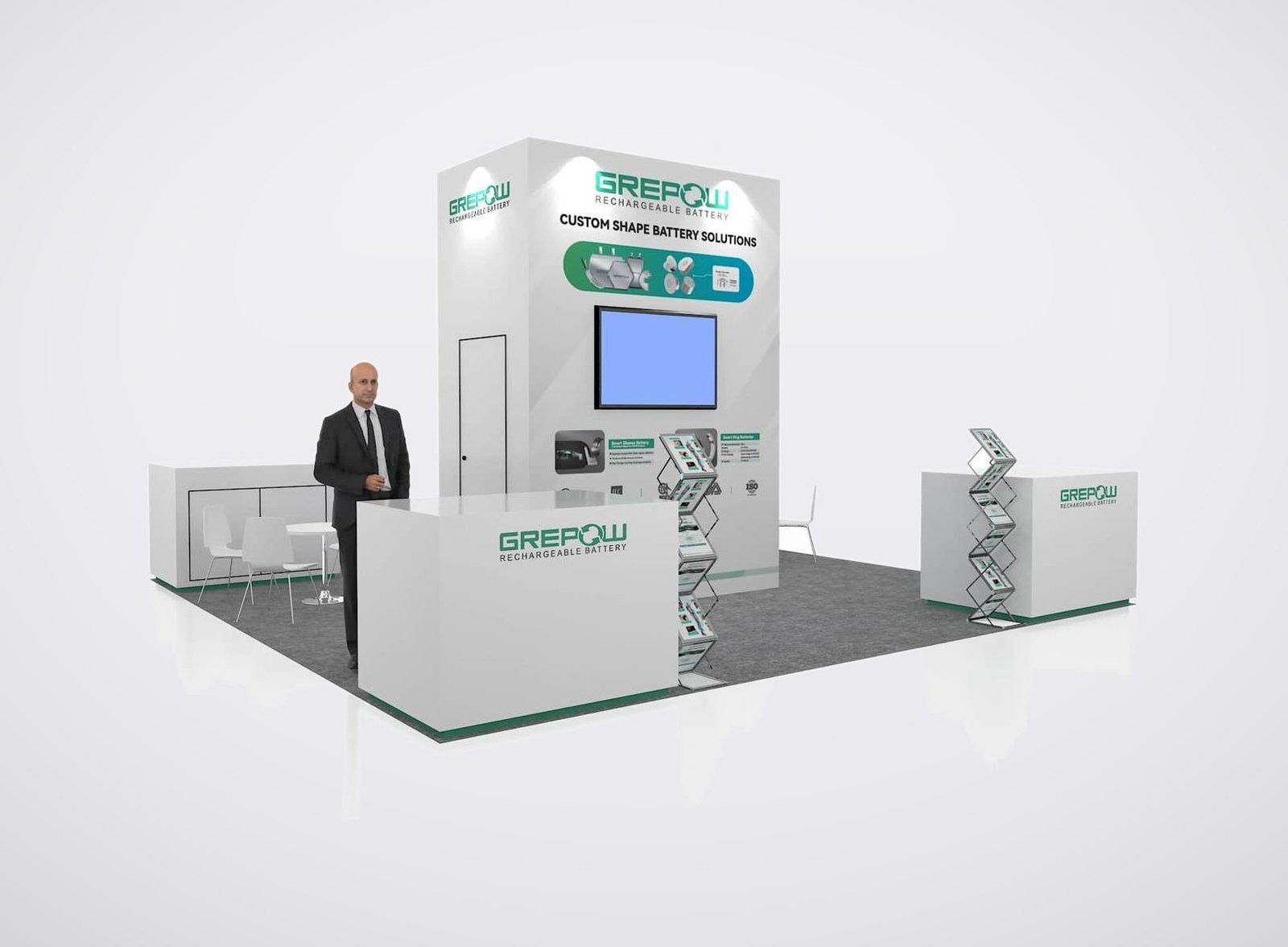
Jewelry equipment, packaging, CAD/CAM, testing, imaging, retail software and store technology require a different booth. Show one real task at a usable height, provide power and data access, and keep the demonstrator beside the buyer rather than behind a decorative case. A screen can enlarge a precise process while a table supports product, integration and commercial questions from retailers, manufacturers or service businesses.
Jewelry Trade Show Booth Rentals for Product Inspection and Wholesale Meetings
At JCK, the booth is both a display and a temporary selling room. Retailers may arrive with appointments, category gaps, price targets and existing supplier relationships. Other buyers discover a brand while walking a neighborhood or pavilion. The exhibit has to make the product category and positioning clear from the aisle, then give staff a controlled way to present individual pieces, compare collections and continue the commercial conversation.The product view matters more than a generic luxury effect. Diamonds, colored stones, polished metals, pearls, enamel and watches react differently to color temperature, contrast and reflection. Case glass, shelf material, graphic brightness and surrounding finishes can change what the buyer sees. Lighting and case placement should therefore be reviewed against actual merchandise or representative samples before the final production release.King Exhibits combines the collection schedule with the floor plan. We position showcases, feature displays, reception, order-writing tables, screens, storage, staff access and hospitality in 3D, then select rental walls, lightboxes, counters, flooring and furniture around that route. Confirmed case dimensions and access can support quoted surrounds, platforms, branded trims or millwork where the standard rental architecture needs a precise interface.Jewelry security begins with a written operating plan. Product shipment, receipt, daily case opening, overnight storage, safes, guards, badges, insurance and authorized access must follow the current JCK, venue, carrier, insurer and exhibitor procedures. The King quotation covers only the specified exhibit work and support; it does not replace the exhibitor’s merchandise-control or insurance responsibilities.
Build Each Selling Area Around the Merchandise

Use a strong collection edit rather than placing every style at equal visual weight. Feature new lines or signature pieces, then give account teams quick access to supporting trays, options and order tools. Bridal and finished-jewelry buyers may compare settings, metals, stones and price positions across a longer appointment, so comfortable viewing height and useful table space matter as much as the aisle image.
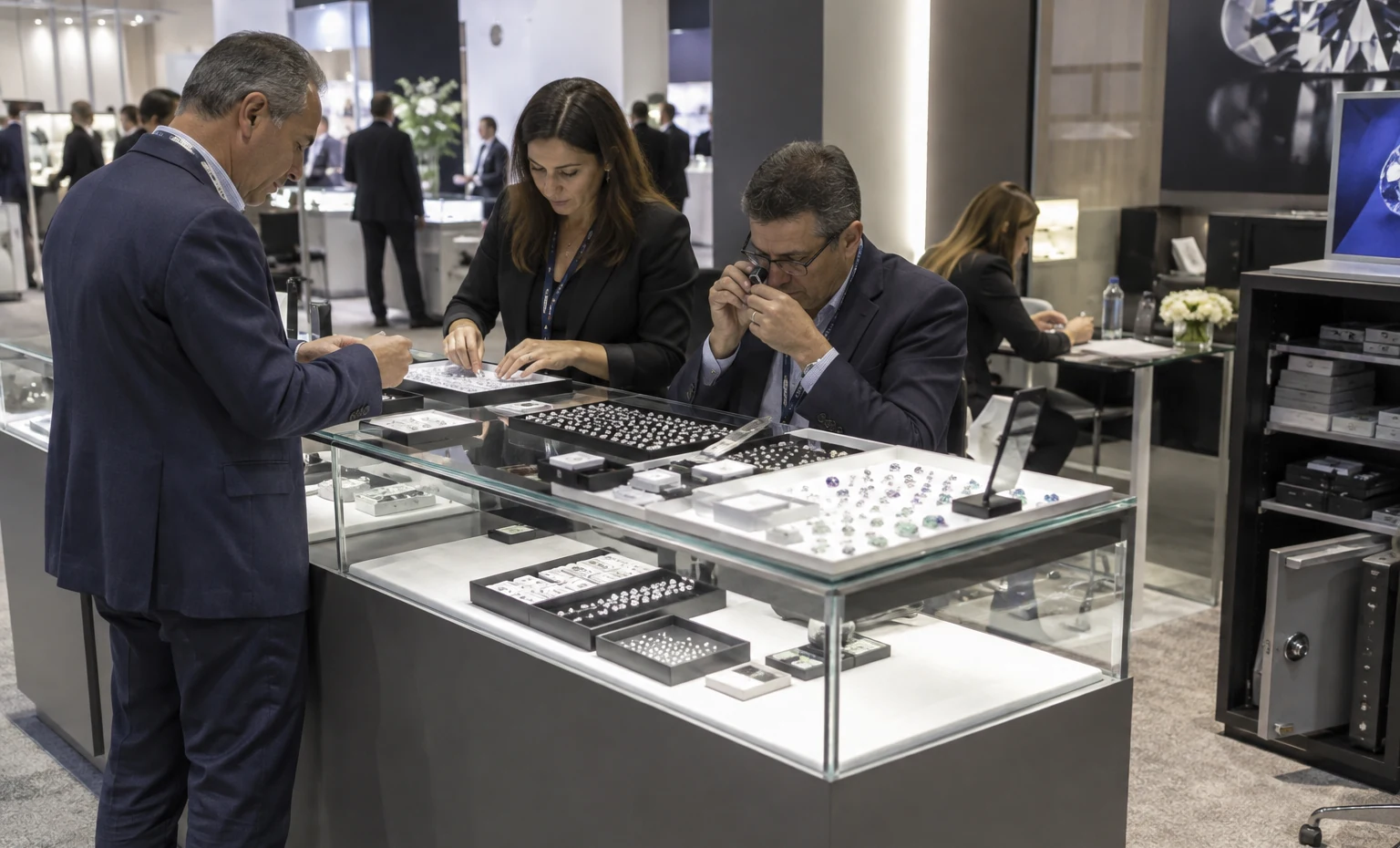
Loose products require controlled presentation, neutral viewing conditions and a disciplined transfer between storage, case and buyer. Confirm trays, papers, pads, tools, magnification, seating and staff access before specifying the case layout. Avoid decorative light or color that distorts the product. The booth should support careful inspection without exposing unrelated merchandise or interrupting the next account review.

Watch buyers may inspect dial, case, strap, movement story, packaging and merchandising program together. Combine illuminated displays with accessible presentation trays and a place to discuss the assortment. Large campaign imagery can build brand recognition, but it should not overpower the scale of the product. Storage needs room for alternate models, packaging and staff tools arranged by collection.
Show how the product changes the retail presentation. A small counter or store vignette can demonstrate boxes, bags, trays, stands, window systems or lighting in context. Keep samples accessible for handling and comparison, with reserve colors or sizes organized behind the display. Meetings can then move from appearance into customization, quantities, rollout and delivery based on the supplier’s real offer.
Test the Merchandise in the Light the Buyer Will See
A bright booth can still present jewelry poorly. Review representative stones, metals, finishes and watch faces under the proposed case light, with the shelf surface, glass and nearby graphics in place. Check color, sparkle, glare, shadows and readability from both standing and seated positions. The result should guide lamp direction and intensity, graphic brightness and case spacing before production, giving the product a more dependable viewing environment than a rendering alone can prove.
Plan Every Showcase from the Staff Side
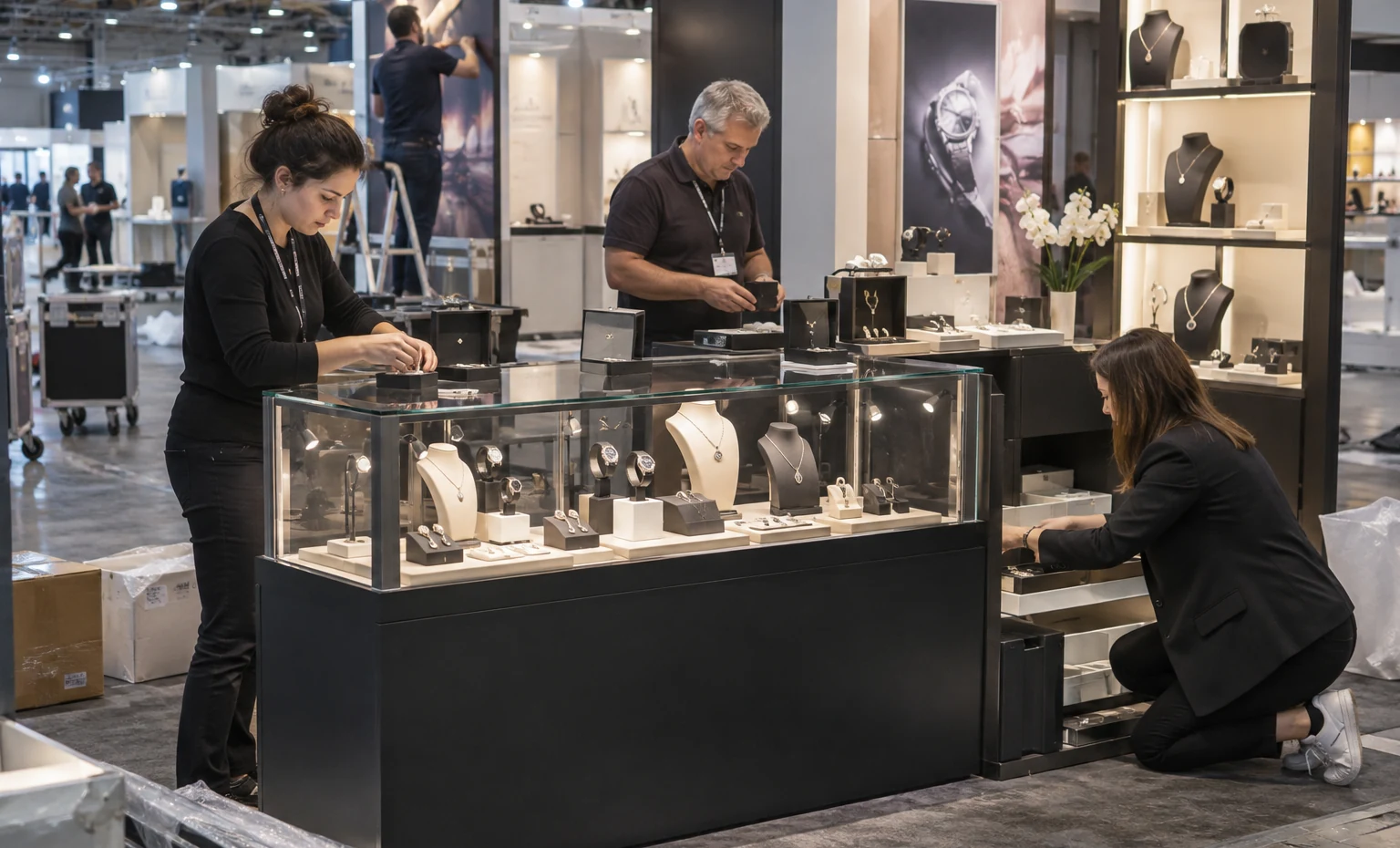
Count more than the cases. Record which collection sits in each one, where the door or drawer opens, who serves it and where the buyer examines the piece. Add trays, pads, mirrors, tools, order devices and reserve stock to the drawing. This staff-side review often reveals collisions that are invisible from the aisle view. It also helps the sales team prepare a consistent line-review sequence for appointments instead of searching across the booth.
Close the Merchandise Routine Before the Booth Opens
Write down who receives the product, who may access storage, when cases are loaded and cleared, and how pieces move into appointments. Add safes, guards, badges, keys, insurance conditions and carrier handoffs to the responsibility list using current show and company procedures. The exhibit layout can reserve the right access and storage positions, but the operating team must own the routine. A clear plan reduces improvisation around valuable merchandise during opening and closing periods.
Turn the Collection Schedule into a Buildable Exhibit
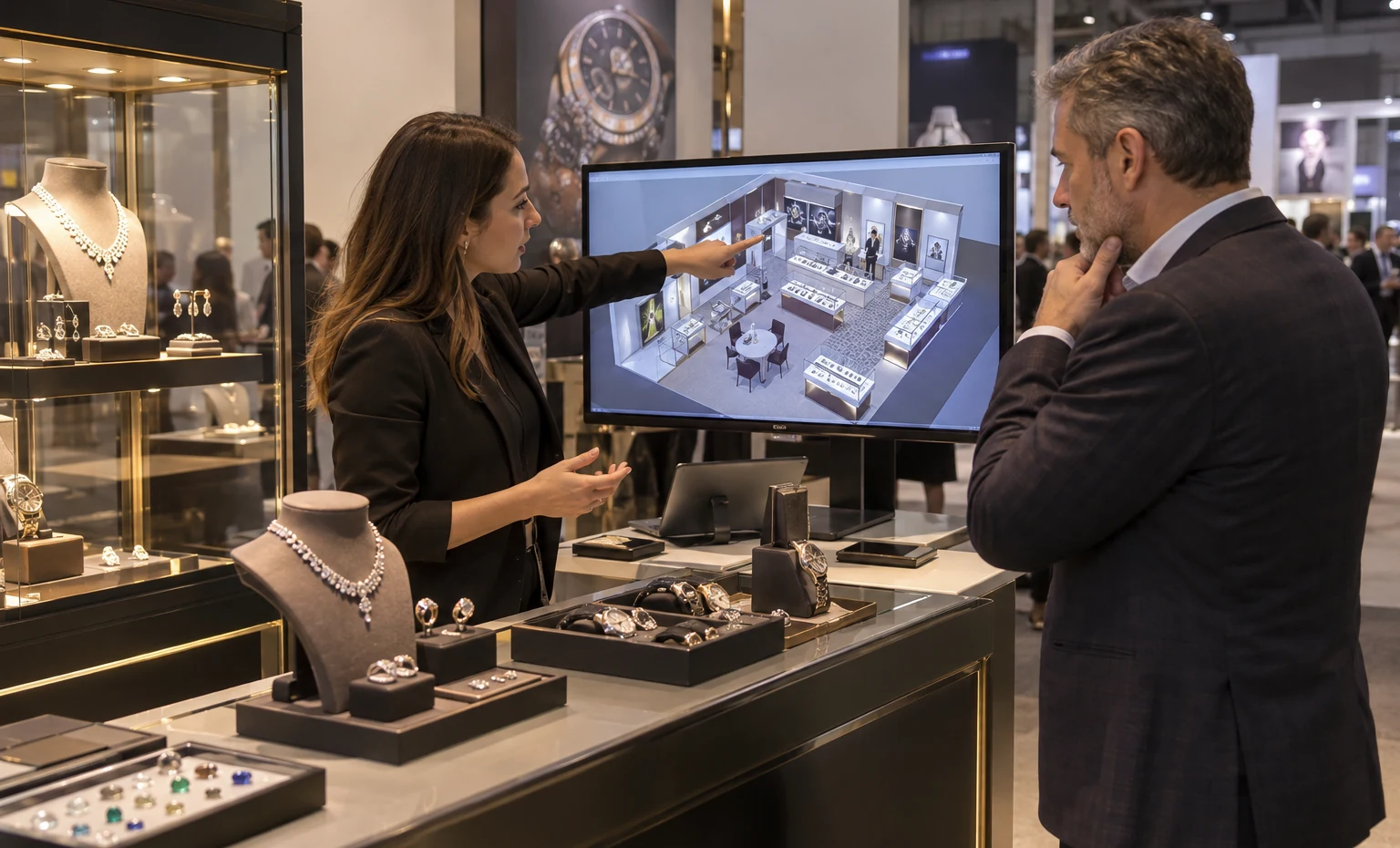
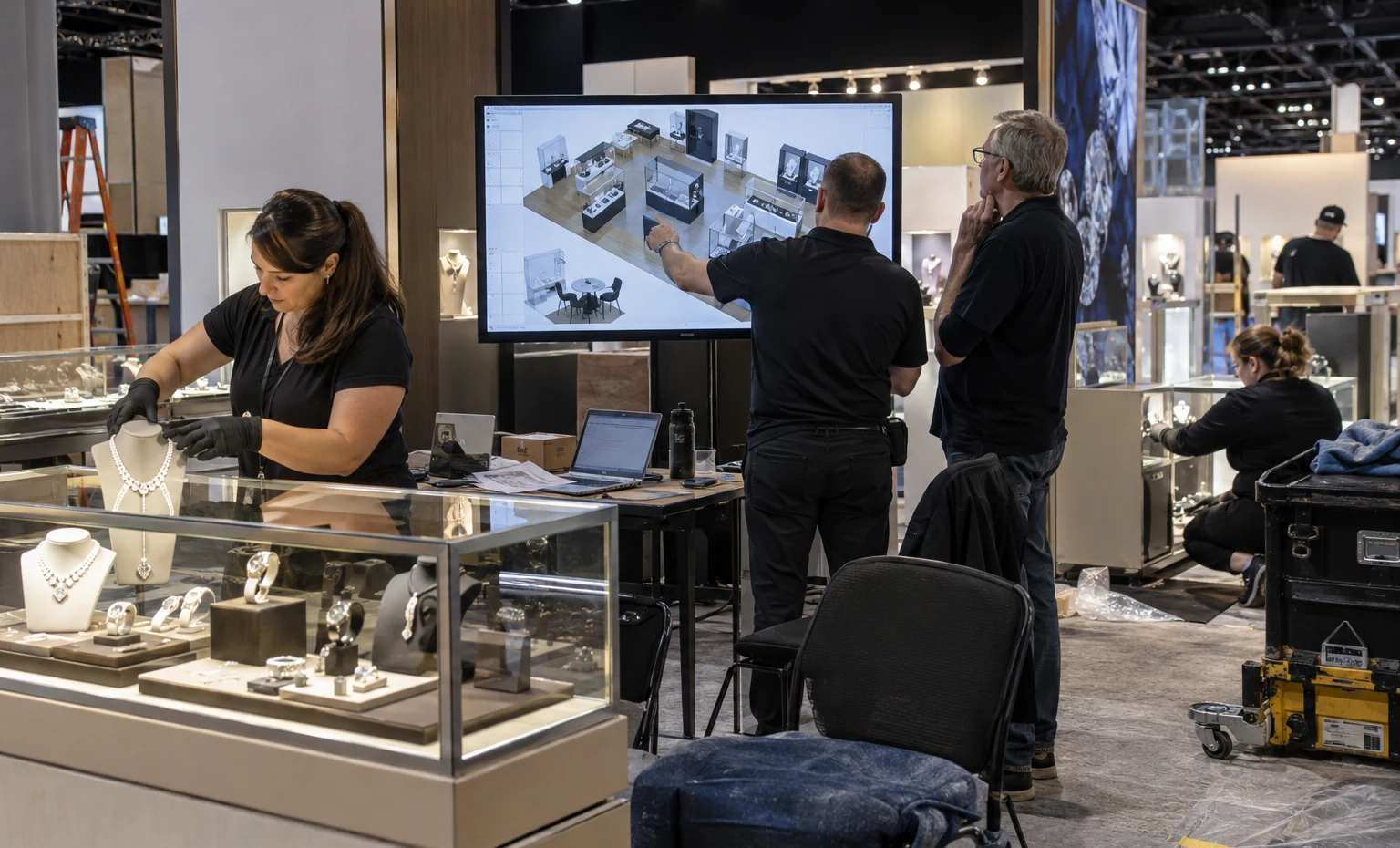
King Exhibits begins with the collection, not a generic luxury backdrop. Our designers place each product group, case, sales position, meeting table, screen and storage access on the 3D floor plan. The brand team can review the aisle presentation while sales and operations check case access, appointment capacity and the daily merchandise route on the same drawing.We build the visual shell from reusable rental walls, towers, lightboxes, flooring and furniture. Case dimensions, door swings, power and the merchandise plan can drive custom surrounds, platforms, trims, reception desks or storage elements included in the quotation. CNC and wood fabrication support those fitted pieces, while graphic production aligns collection names and campaign imagery with the final case positions.Before release, the project schedule identifies exhibit freight, graphics, rental components, selected millwork and onsite support. Show services, showcase rental, electrical, material handling, guards, safes, insurance and merchandise logistics remain separate unless the accepted proposal expressly includes them. A jewelry company can therefore review the design, responsibility and cost on the same proposal.
Develop the JCK Booth from the Collection Outward
What You Provide: Product categories, hero lines, representative merchandise, wholesale buyers, appointment length, order tools and approved messages.What We Do: We define how visitors recognize the brand and how account teams move through the line review.
What You Provide: Case inventory or rental needs, dimensions, access direction, lighting, power, trays, pads, storage, safe and security interfaces.What We Do: We position cases, staff access, viewing points and the planned merchandise route in 3D.
What You Provide: Booth assignment, open sides, graphics, furniture, hospitality, screens, budget, shipping plan and requested installation support.What We Do: We complete the design and issue a component-level quotation for the King Exhibits scope.
What You Provide: Final approvals, current exhibitor requirements, official-service orders, merchandise procedures, shipment contacts and onsite decision makers.What We Do: We produce and pack the approved exhibit work and coordinate its scheduled show-site handoff.
Yes. Tell us whether cases are supplied by your company, rented from an approved source or requested in our proposal. Provide external dimensions, glass height, door or drawer direction, locks, shelf finish, light, power and delivery responsibility. We will plan the exhibit interface; the accepted quotation will state whether the cases themselves are included.
Start with representative merchandise and the selling position. Color temperature, intensity, beam direction, glare, case glass, shelf surface and surrounding graphics all affect the view. Test the actual combination whenever possible and approve product appearance rather than selecting lamps from a decorative specification alone.
Yes. Share the calendar, peak concurrent meetings, guests, hosts, collection access, hospitality and privacy. An open table may support short line reviews; screened or enclosed areas suit longer or more sensitive discussions. The 3D plan tests meeting capacity against case count, aisle visibility and staff access.
No. A case is one physical element. Shipment, receipt, authorized access, daily setup and removal, overnight storage, safes, guards, badges, insurance and incident procedures still require a current plan agreed by the responsible parties. Follow the current JCK, venue, carrier and insurer requirements.
Yes. Send the inspection or demonstration sequence, product and device dimensions, seating, lighting, magnification, tools, power, data, consumables, security and viewing needs. We will allocate a suitable work surface and keep the activity from interfering with other cases or appointments.
Footprint, booth type, wall and tower system, case surrounds, custom millwork, lighting, graphics, flooring, reception, storage, screens, furniture and meeting rooms shape the exhibit price. Packing, freight and I&D are priced when requested. Cases, safes, guards, electrical, handling, internet, rigging and other show services may remain separate.
Usually. Rental architecture, lightboxes, case platforms, counters and meeting elements can be reconfigured. The next footprint, merchandise mix, case inventory, lighting environment and security procedures need a new review. Date-free collection and company graphics make reuse easier.
Send the year, booth number and size, neighborhood or pavilion, open sides, product categories, case count and specifications, lighting priorities, meetings, storage, safe/security interfaces, graphics, budget, freight plan and the exhibit services you want priced.
Compare Booth Sizes for Cases and Appointments
-
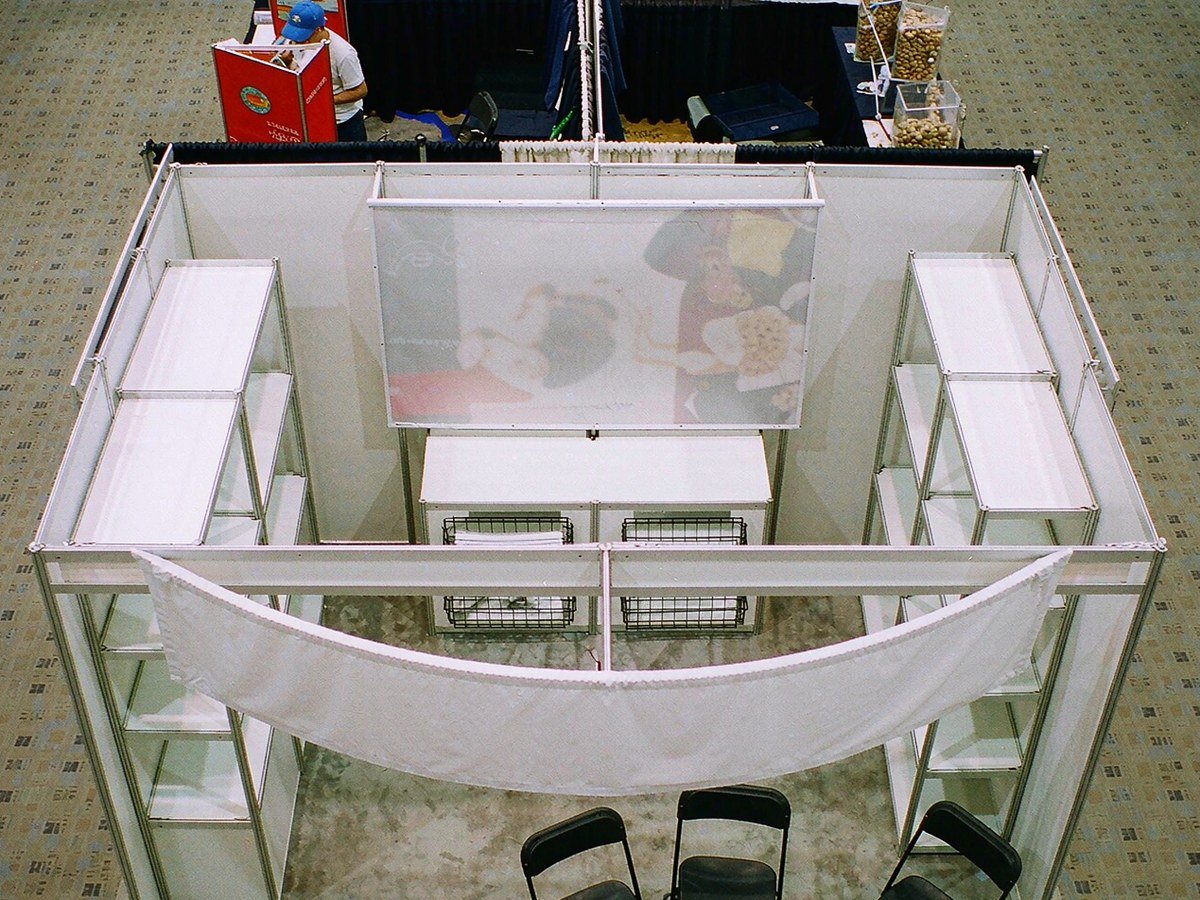
Works for an edited collection, a compact case plan and one direct consultation point when every staff-side movement is planned.
-
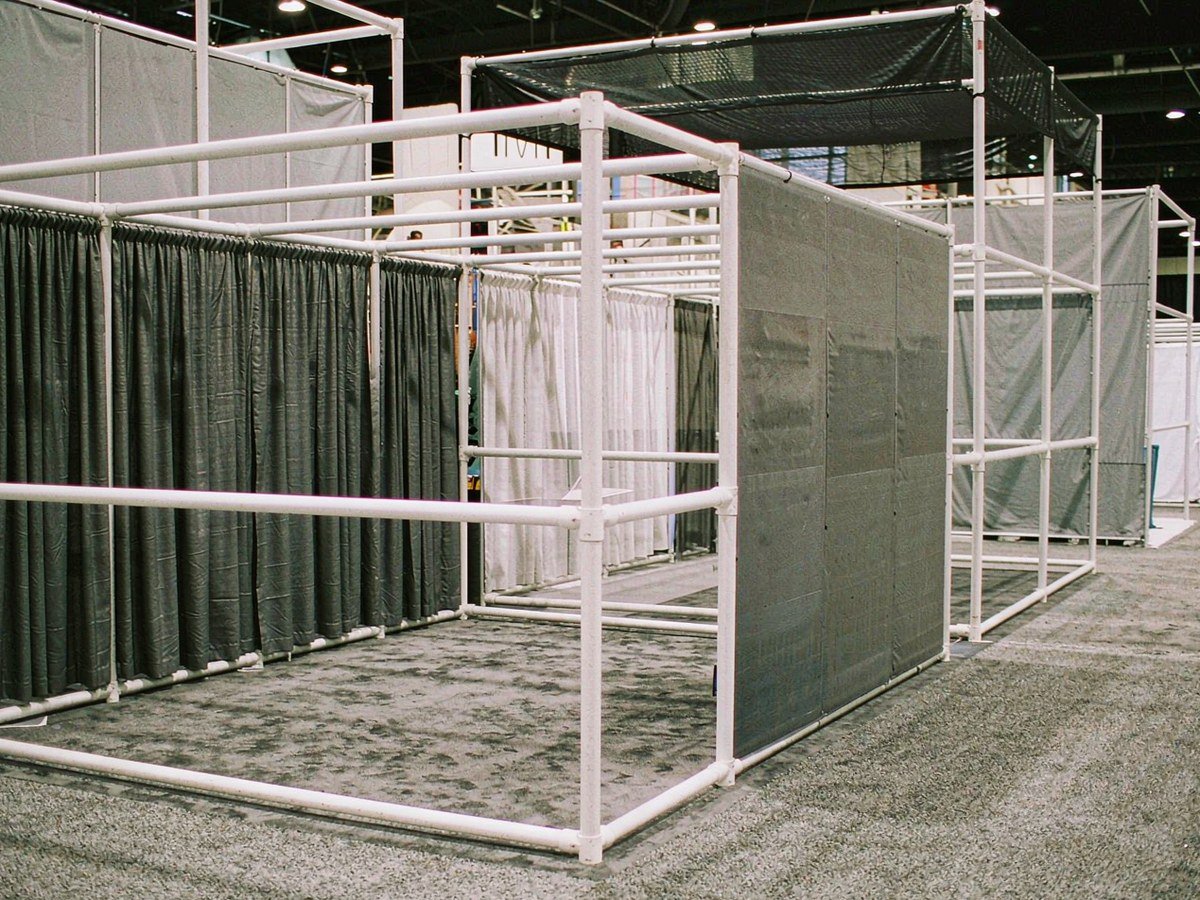
Creates a longer collection sequence with several presentation points and more concealed stock along an inline frontage.
-
Supports open collection discovery, controlled reception, several buyer appointments and a more substantial back-of-house area.