
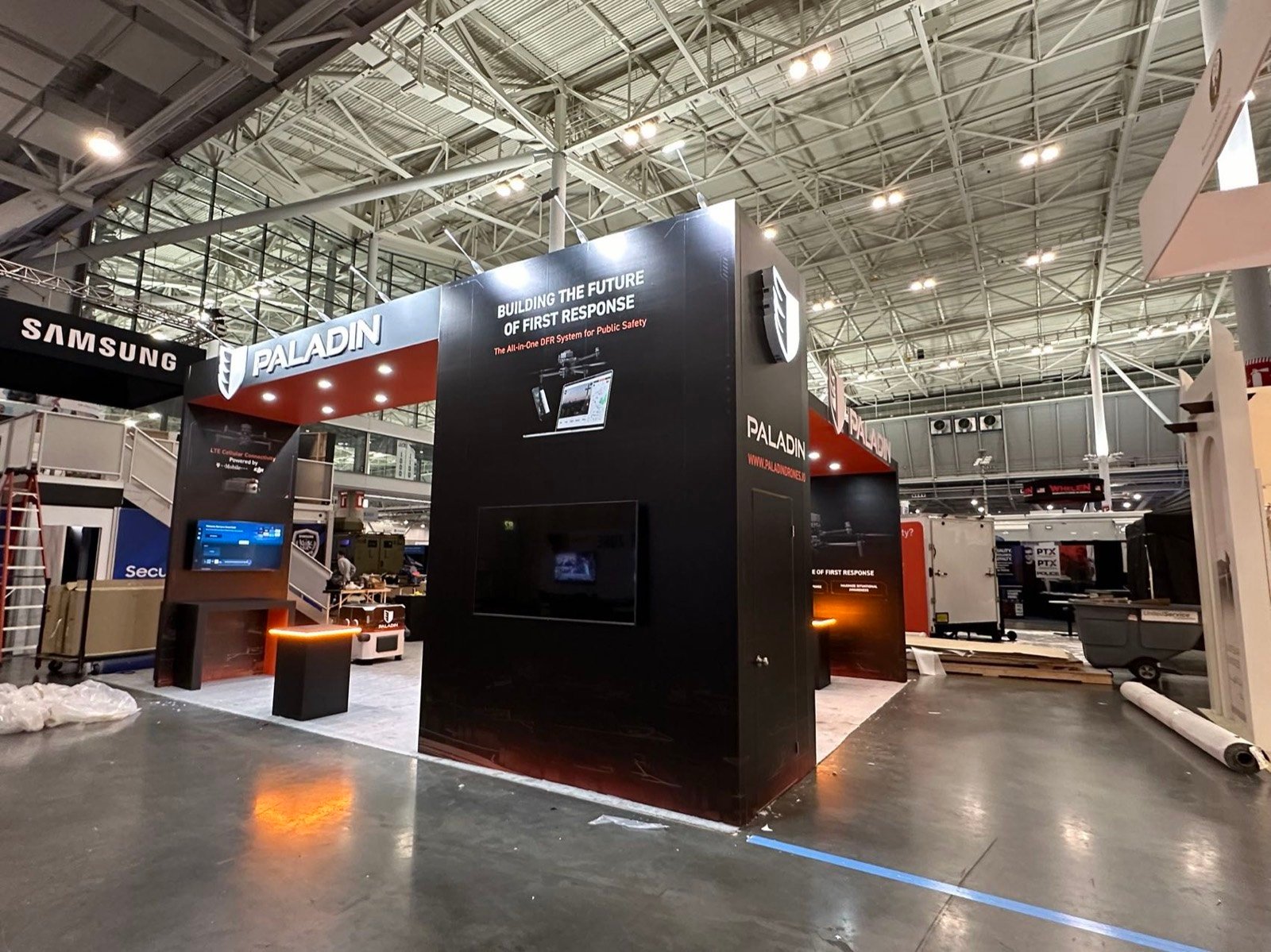

Name the incident, workflow or field task first so chiefs, operators and technical teams can recognize why the product belongs in their environment.

Use a working interface, equipment view, guided scenario, vehicle position or approved demonstration instead of asking a general graphic to carry the full sales argument.

Move command, operations, IT, fleet and procurement visitors from the same opening proof to the specialist and conversation each one needs.

Document vehicles, controlled products, replicas, utilities and official-service responsibilities while the layout can still change, not after fabrication or shipping.
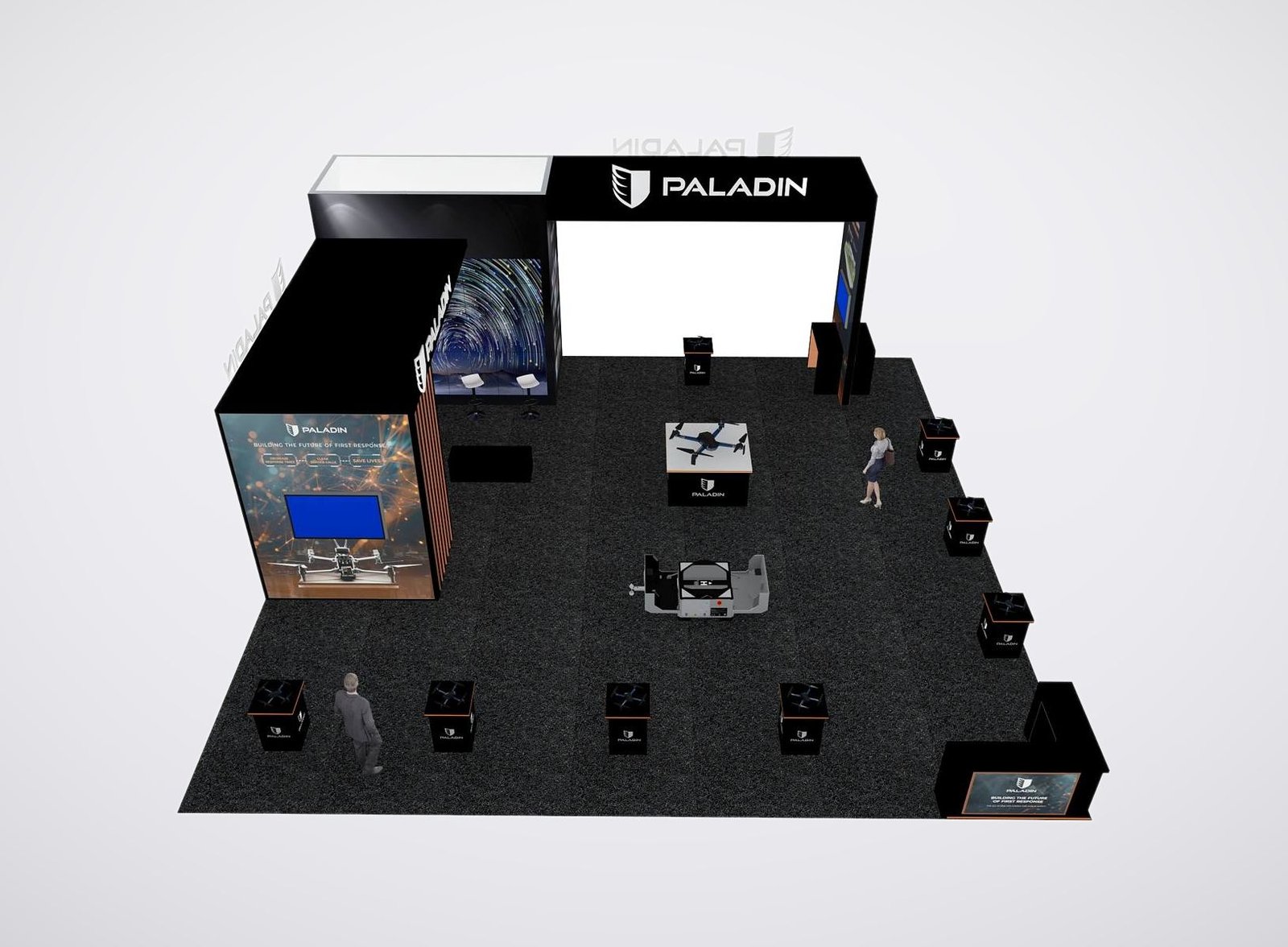
Choose the Exhibit Format from the Proof You Need to Show
Software, Evidence and Intelligence Platforms
Map the agency role, starting input, system action and useful result across a presenter-controlled screen. Confirm approved data, accounts, internet needs, device security and an offline fallback before the counter and cable plan is released.
Communications and Connected Technology
Show the operating environment, hardware touchpoints, network path and user handoff. Give technical staff access to interfaces while keeping the public explanation clear enough for command and procurement visitors.
Vehicles, Drones and Mobile Systems
Start with the full dimensions, weight, entry route, display position, power state, access sides and safe viewing boundary. The exhibit should explain the mission without trapping staff, products or attendees between the vehicle and booth structure.
Tactical, Field and Training Equipment
Decide what visitors may handle, what requires staff assistance and what stays display-only. Supports, cases, lighting and comparison surfaces should help inspection without implying organizer approval or transferring product safety to the exhibit builder.
An IACP Exhibit Rental Built for Public-Safety Evaluation
IACP is a professional law-enforcement conference rather than a public consumer show. Its exposition can bring command leaders, operators, trainers, technical services, IT and intelligence teams, fleet personnel, procurement staff and partners into the same hall. Those visitors do not evaluate a public-safety platform from the same angle, even when they stop at the same demonstration.
A strong IACP trade show booth therefore starts with one operational job and makes the relevant proof easy to find. A chief may need the program-level case. An end user may need to handle equipment or follow a short scenario. A technical visitor may need to inspect an interface or data path, while procurement needs a defined configuration and follow-up owner. The layout should support those routes without turning every conversation into a crowded product lecture.
King Exhibits develops the IACP booth rental around the confirmed product, audience and assignment. Rental walls, towers, counters, flooring, lightboxes, graphics, screens, furniture, storage, meeting space and project-dependent custom fabrication are selected for the approved plan. Product supports, vehicle interfaces, unusual openings, hanging elements and special demonstrations are quoted only after their dimensions, loads, access, approvals and service requirements are confirmed.
The proposal identifies the exhibit elements and project services assigned to King. The exhibitor remains responsible for product accuracy, approved data, operating procedures, security, controlled items and staff conduct. IACP, venue, official-contractor and exclusive-service requirements still control the event. Electrical, internet, material handling, labor, rigging, cleaning, security and other show services are included only when the accepted quotation names them.
Plan the Booth for the Agency Team Making the Decision

Connect the mission need, deployment context and organizational value to a short visual story. Provide a clear next step for program, partnership or budget discussions without blocking the main aisle.
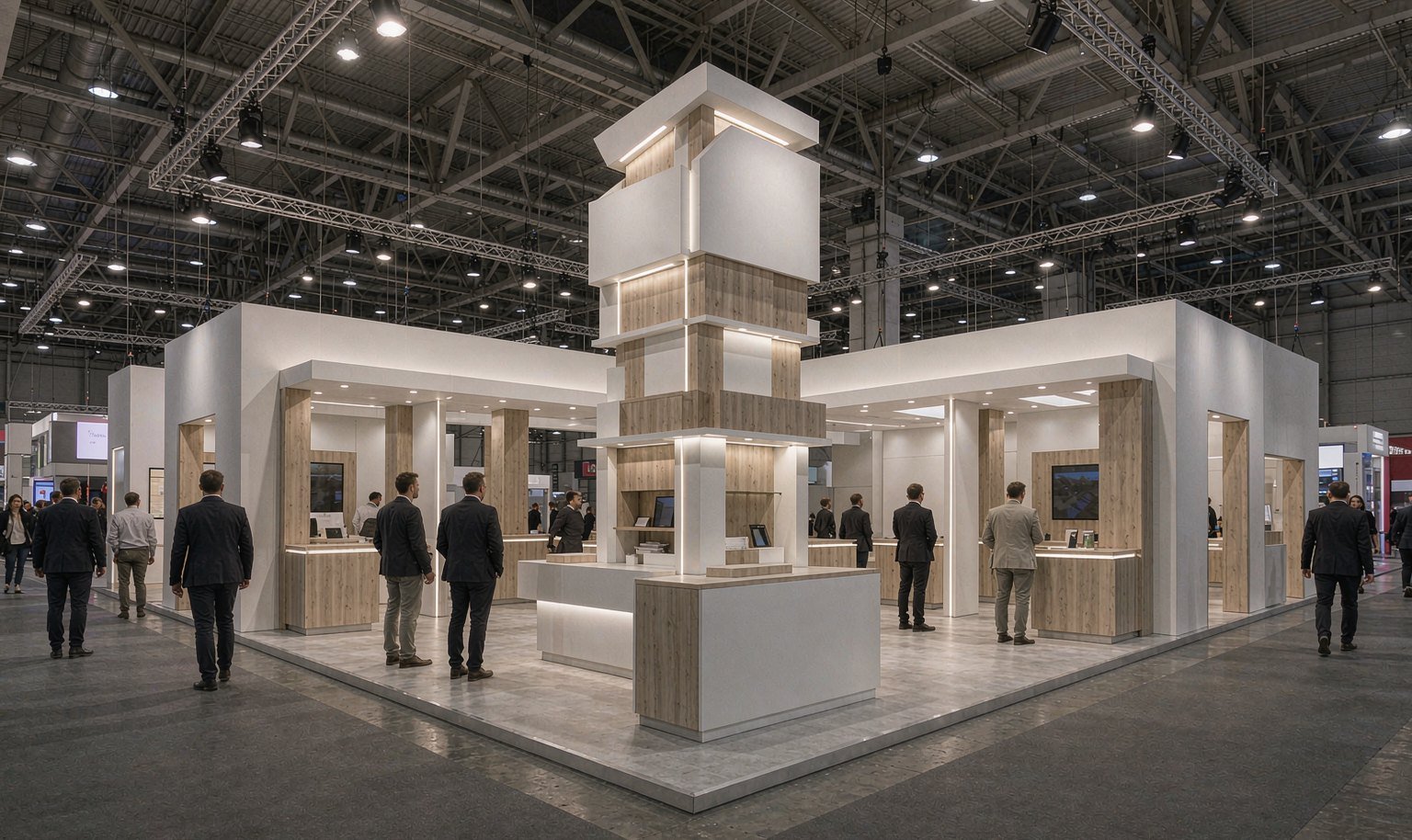
Let practitioners see the workflow, controls, handling and reset. Place the product specialist close enough to guide the proof and record questions that should reach engineering or product management.

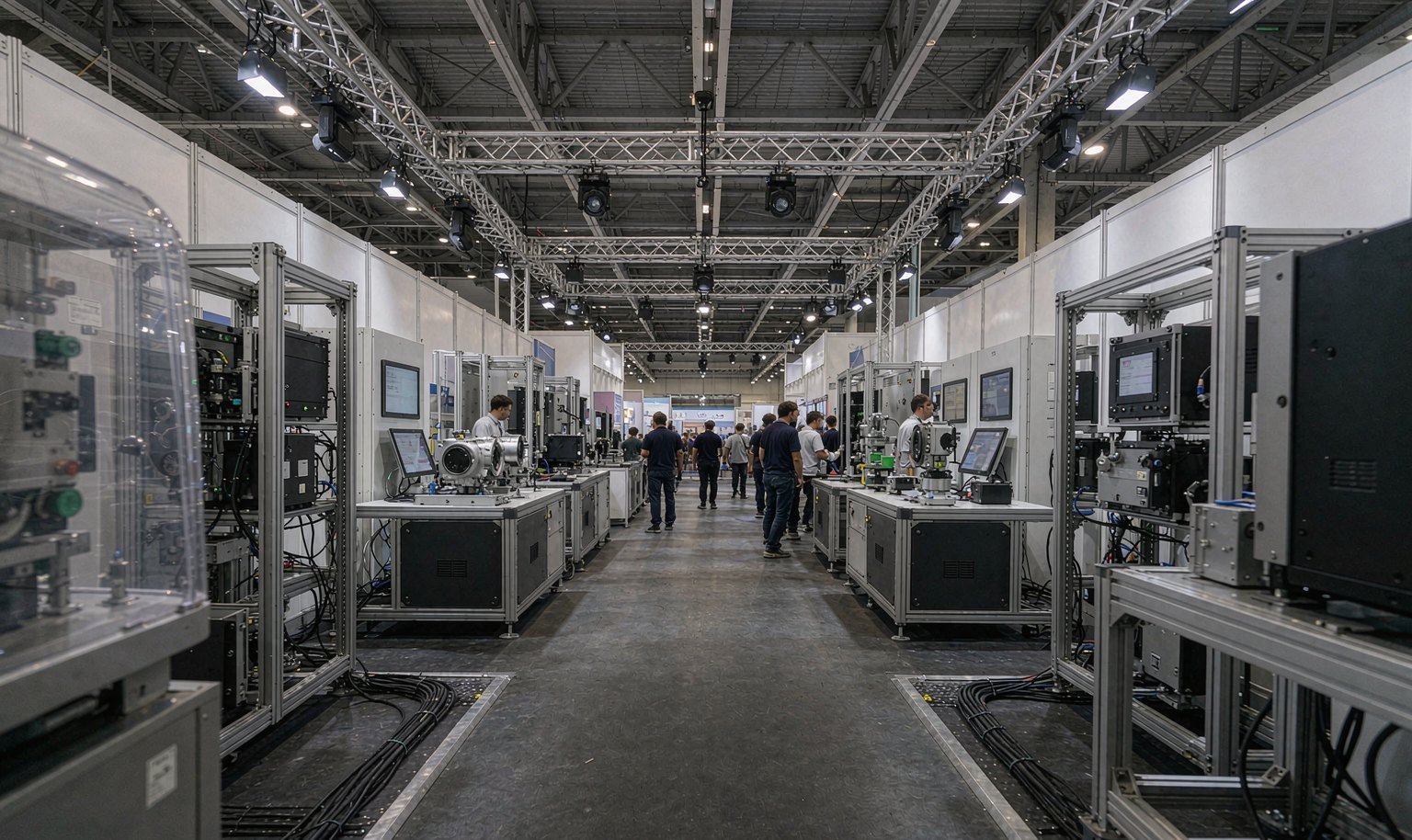
Make dimensions, mounting, utilities, vehicle access, maintenance and field support discussable. Physical equipment needs enough inspection space for the visitor to understand installation and service implications.
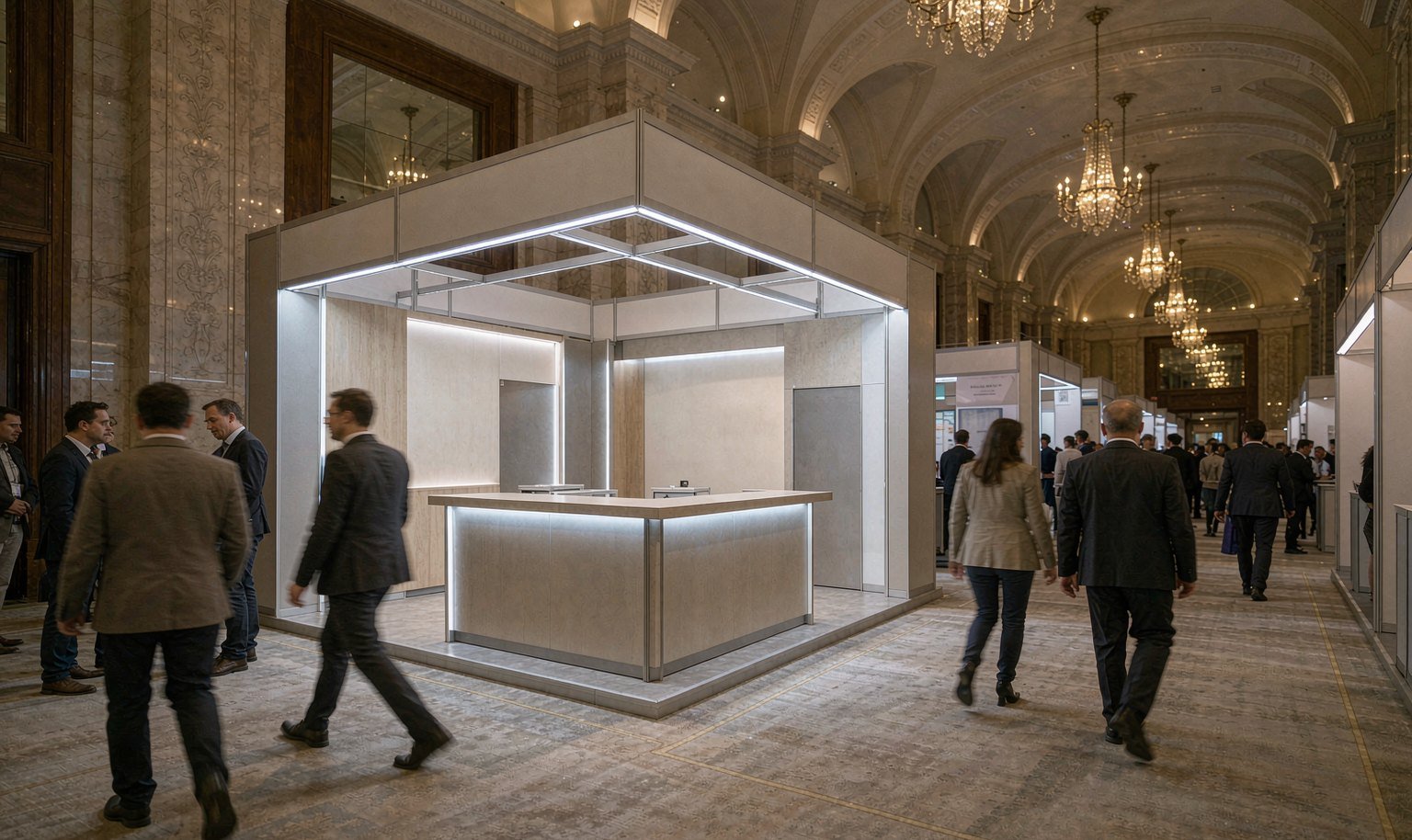
Give qualified visitors a place to compare configuration, scope, implementation and support. Reception should identify the responsible specialist instead of leaving commercial questions at an unattended display.
IACP Booth Examples at 40x40
These authorized IACP project images show two 40×40 exhibits with different product-presentation needs. Each example is described by the confirmed client, event, year and size, plus exhibit elements visible in the selected image. No campaign result, schedule, customer feedback or unverified delivery scope is attributed to either project.
-
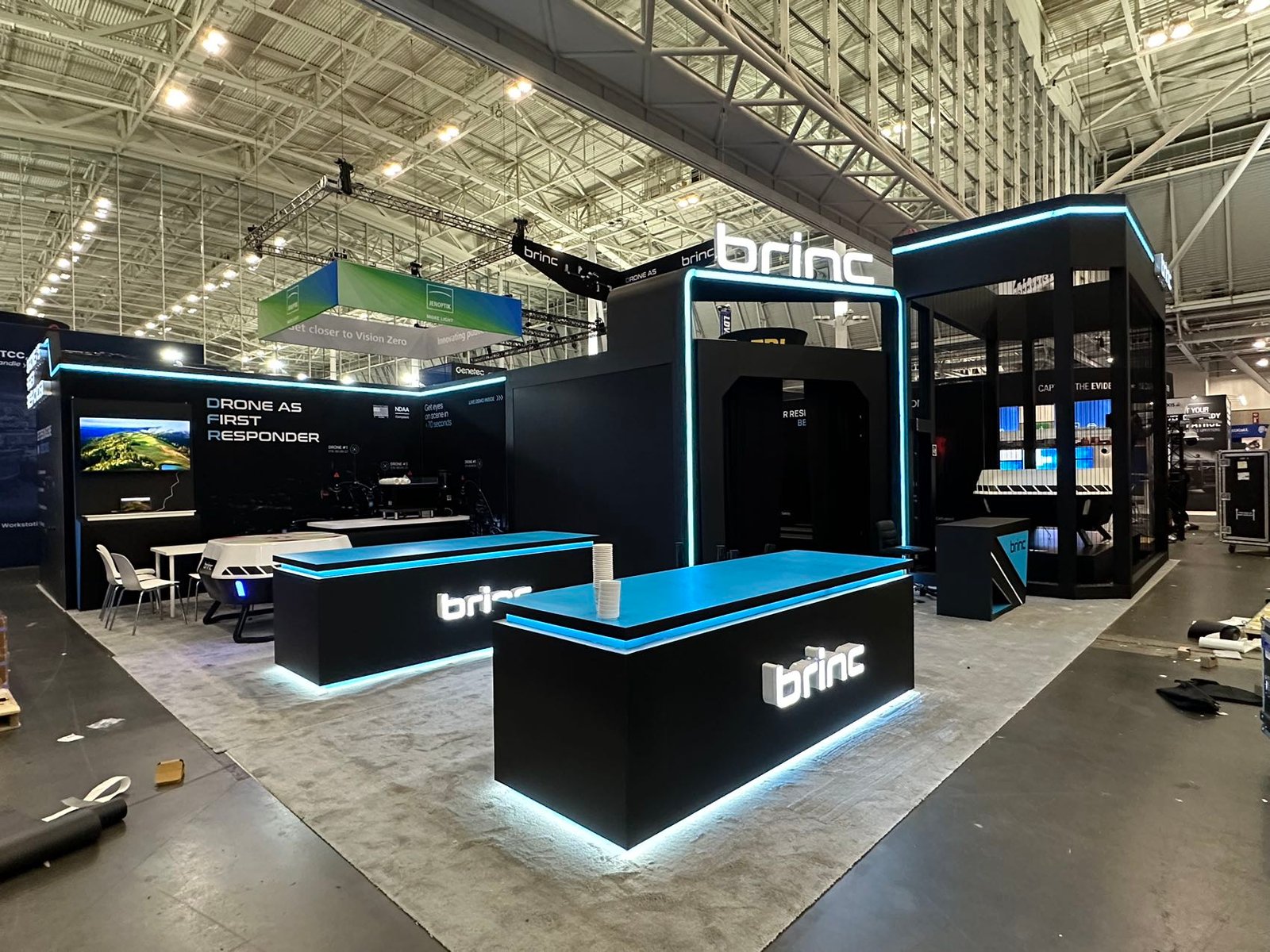 BRINC at IACP 2024 — 40x40
A 40×40 IACP exhibit with a black main visual, teal illuminated band, large digital content area and open product-viewing space.
-
 Paladin Drones at IACP 2025 — 40x40
A 40×40 IACP exhibit using black, gray and orange architecture, screens, counters and visible drone displays.
Plan the Agency Use Case Before Drawing the Demo Station
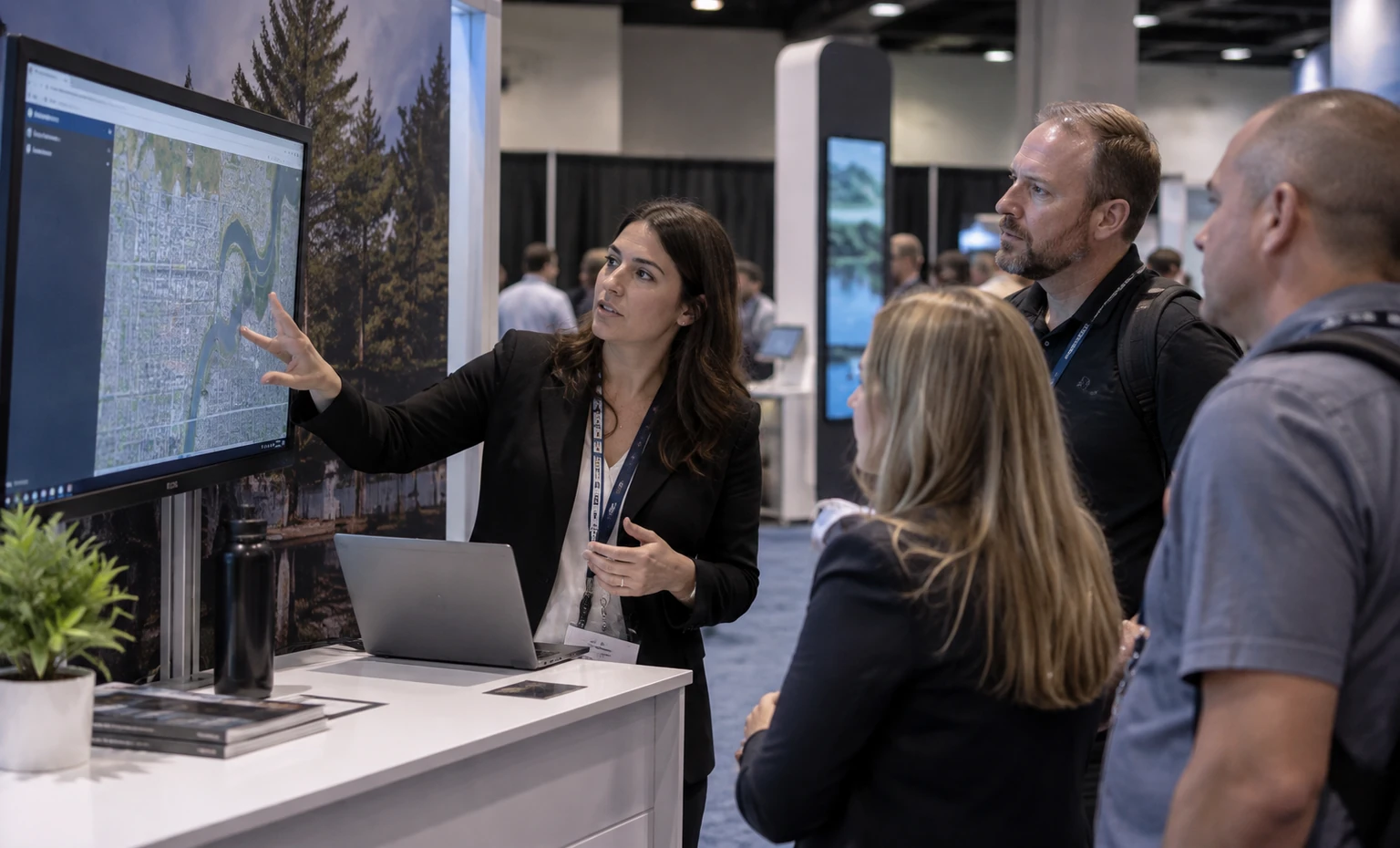
Choose one agency role and one operational problem for each station. Record the starting condition, the visitor action, the product response, the useful result and the specialist who should take the next question. King Exhibits can then position the screen, equipment, counter, viewing side and discussion point around that sequence. This prevents a large interface or hardware display from becoming an attractive object that visitors cannot connect to their work.
Put Controlled Products, Replicas and Vehicles on One Approval List
List every vehicle, firearm, pellet device, replica, drone, battery, moving assembly and other item that may need current organizer or venue review. Add dimensions, weight, condition, power state, shipping method, arrival plan, handler and intended visitor interaction. That schedule lets the booth team protect access and sightlines while the exhibitor closes required permissions. King can plan the physical display, but it does not approve, secure or operate the product.
Separate King's Booth Scope from Official Show Orders
Build one responsibility matrix for the rental structure, graphics, furniture, product supports, freight, material handling, installation labor, electricity, internet, AV, rigging, cleaning and security. Name the ordering party, provider, deadline and dependency for each line. Current IACP and OCCC requirements determine which services must remain with official or exclusive providers. King’s quotation should state the services it coordinates or supplies so procurement can compare a defined scope, not a vague turnkey label.
Review the Product Demo, Exhibit Design and Show Scope Together
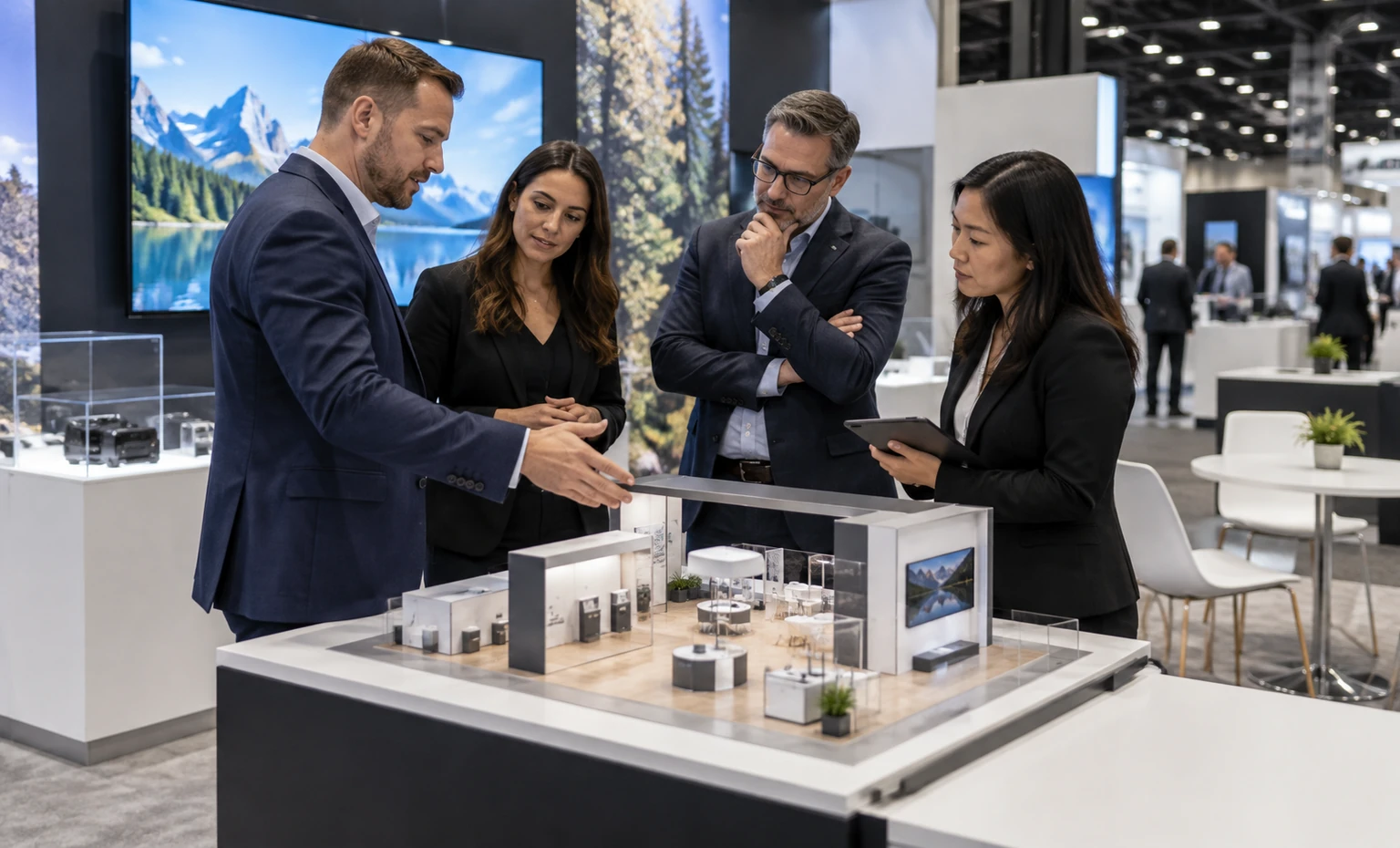
King Exhibits has recorded IACP exhibit references across multiple booth sizes. For a new project, those references provide context for screens, product displays, visitor access and meeting space without forcing a previous layout onto a different technology or agency audience.
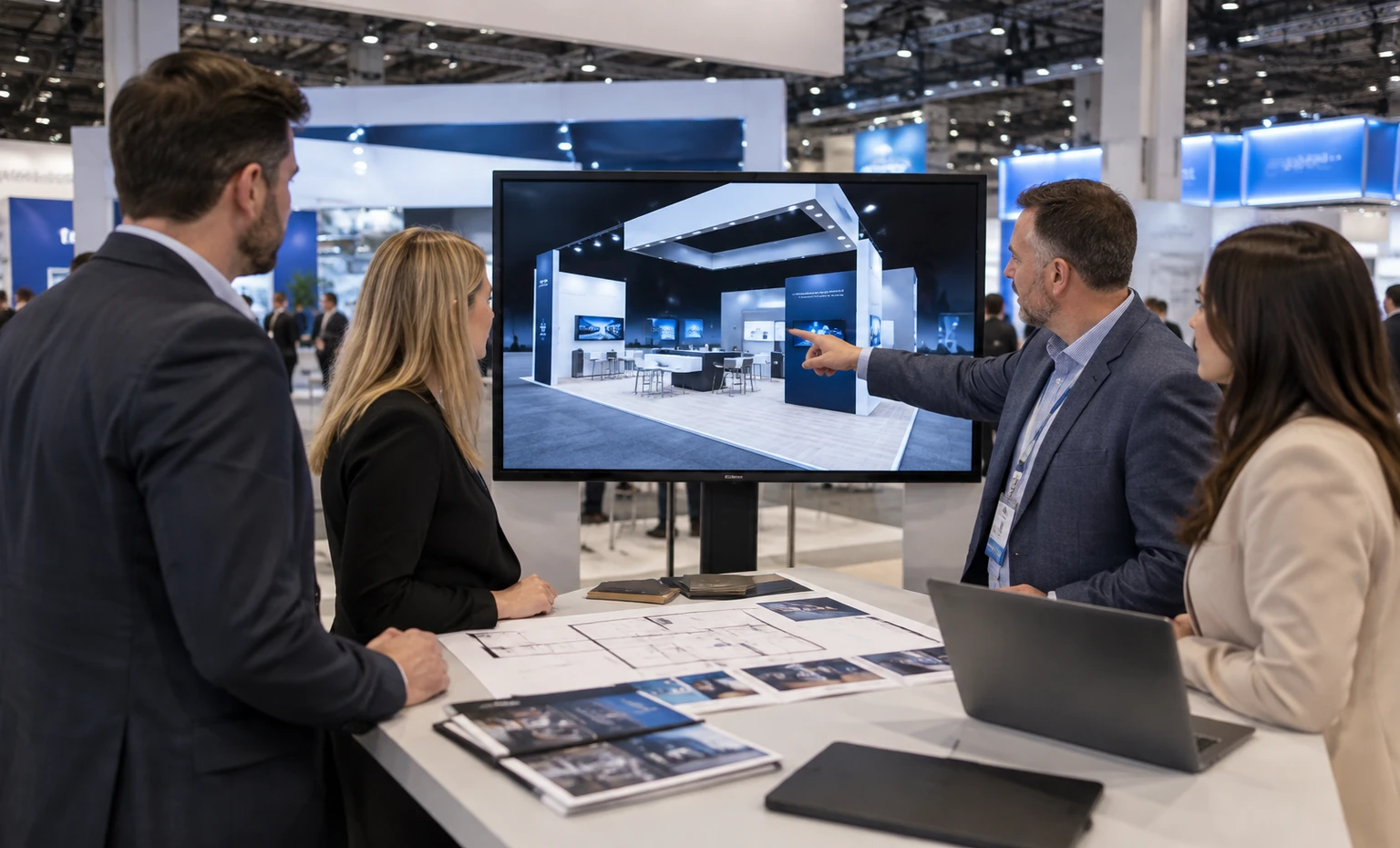
The King team can bring the approved agency use case, product envelope, screens, graphics, storage and meetings into a 3D layout. Marketing can review recognition and visitor flow while product and operations teams check access, interfaces, demonstration positions and reset space before fabrication details are released.
Confirmed projects may combine rental inventory, custom fabrication, graphics, AV integration, staging, packing, transportation and installation/dismantle coordination. The accepted proposal defines what applies to the current exhibit and distinguishes King’s work from exhibitor inputs and official show services.
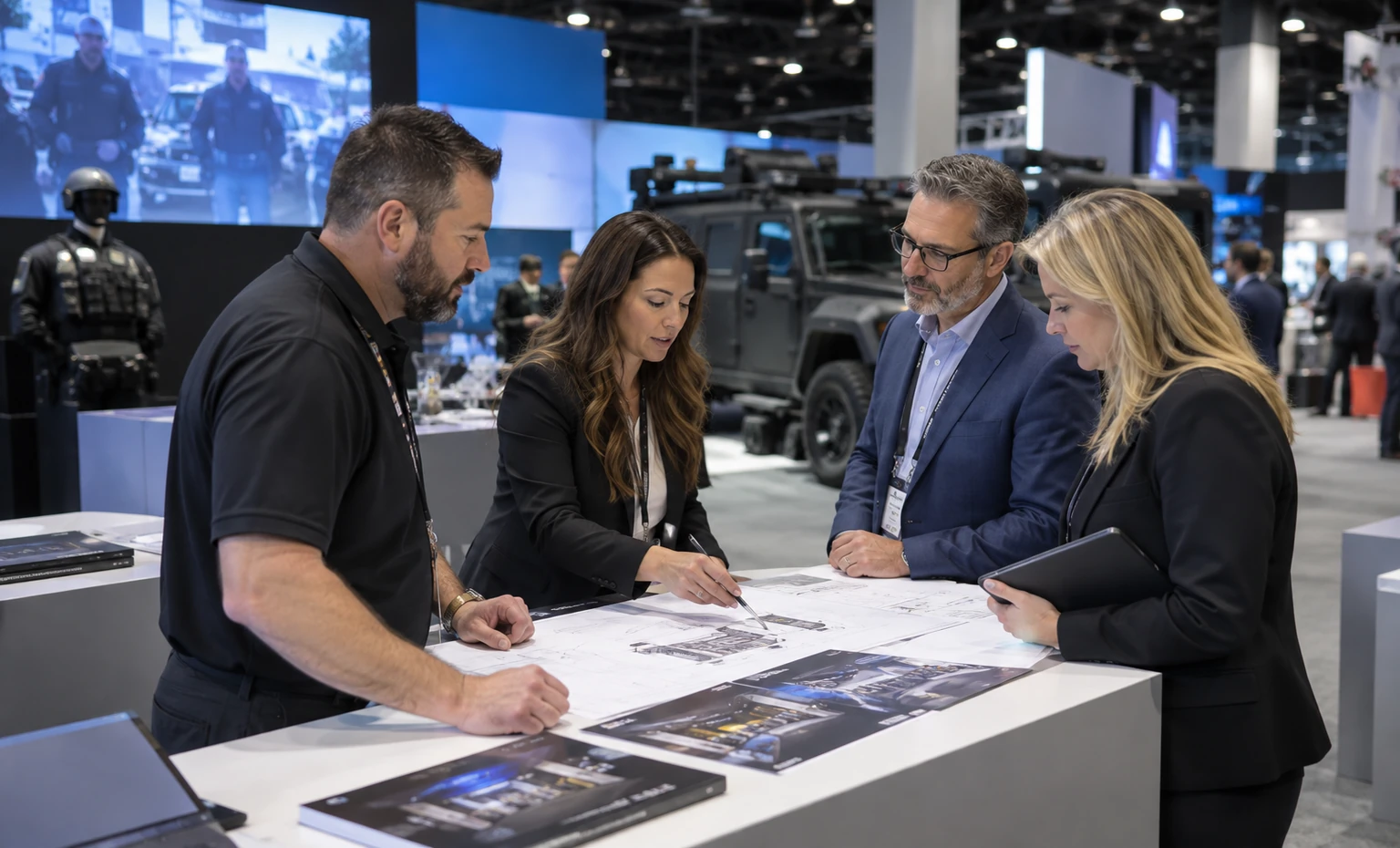
Plan the IACP Exhibit from Decision Goal to Onsite Handoff
What You Provide: Target agency roles, operational problem, product configuration, proof method and desired follow-up.
What We Do:
What You Provide: Equipment dimensions, vehicles, controlled items, software/data rules, power, internet, AV, handling and staffing inputs.
What We Do:
What You Provide: Current booth assignment, exhibitor manual, service kit, deadlines, provider orders and internal approval contacts.
What We Do:
What You Provide: Final artwork, content, product readiness, approvals, shipping information and authorized decisions.
What We Do:
Yes, when the current event rules, venue services and product requirements allow it. Send the hardware, software, accounts, data, internet, audio, power, staffing, reset and fallback plan. King can design the physical station and quote assigned support; the exhibitor controls product operation, data and claims.
Potentially. The active IACP assignment and exhibitor rules determine acceptable placement and conditions. Provide the full dimensions, weight, entry route, fuel or power state, display position, access sides and handler before design release. Organizer and venue approval remain outside King’s authority.
Only when current IACP and venue procedures permit the item and the exhibitor completes the required registration, handling, shipping, security and operating steps. Disclose every controlled or representative item early. King may plan the physical display but does not approve, secure or operate it.
It depends on the accepted proposal and current provider rules. Some services may be controlled by the venue or an official or exclusive provider. The quotation should name who orders and pays for each service, which inputs the exhibitor supplies, and which coordination tasks belong to King.
Footprint, rental structure, custom fabrication, graphics, lighting, screens, product supports, vehicles, furniture, storage, meeting space, freight, labor, material handling and official services can all change the total. A useful quote requires the actual assignment and product plan; a footprint alone does not define the scope.
Often, but the next assignment, venue, height limits, utilities, products and buyer journey must be checked first. Reusable walls, counters, graphics frames and other assets may be retained while show-specific product stations, messages or service plans change.
Send the booth number and dimensions, target agency roles, product and demo list, vehicle or controlled-item list, equipment dimensions, utilities, graphics status, meeting needs, shipping origin, requested onsite scope, budget range and approval date. Mark any information that is preliminary or restricted.
Compare Booth Sizes for Your IACP Exhibit Plan
-
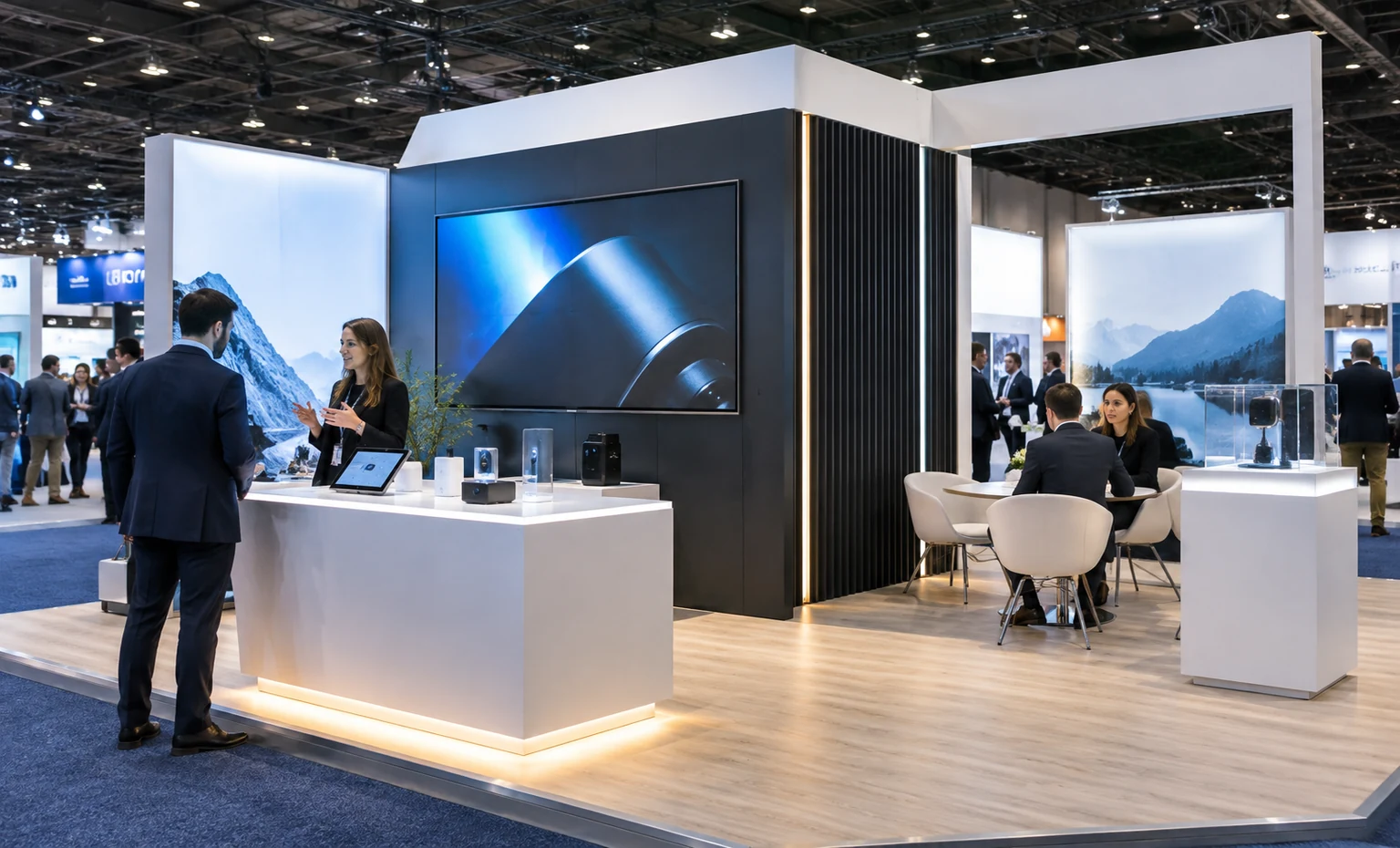
For a focused technology demonstration, visible product display and one qualified conversation area.
-
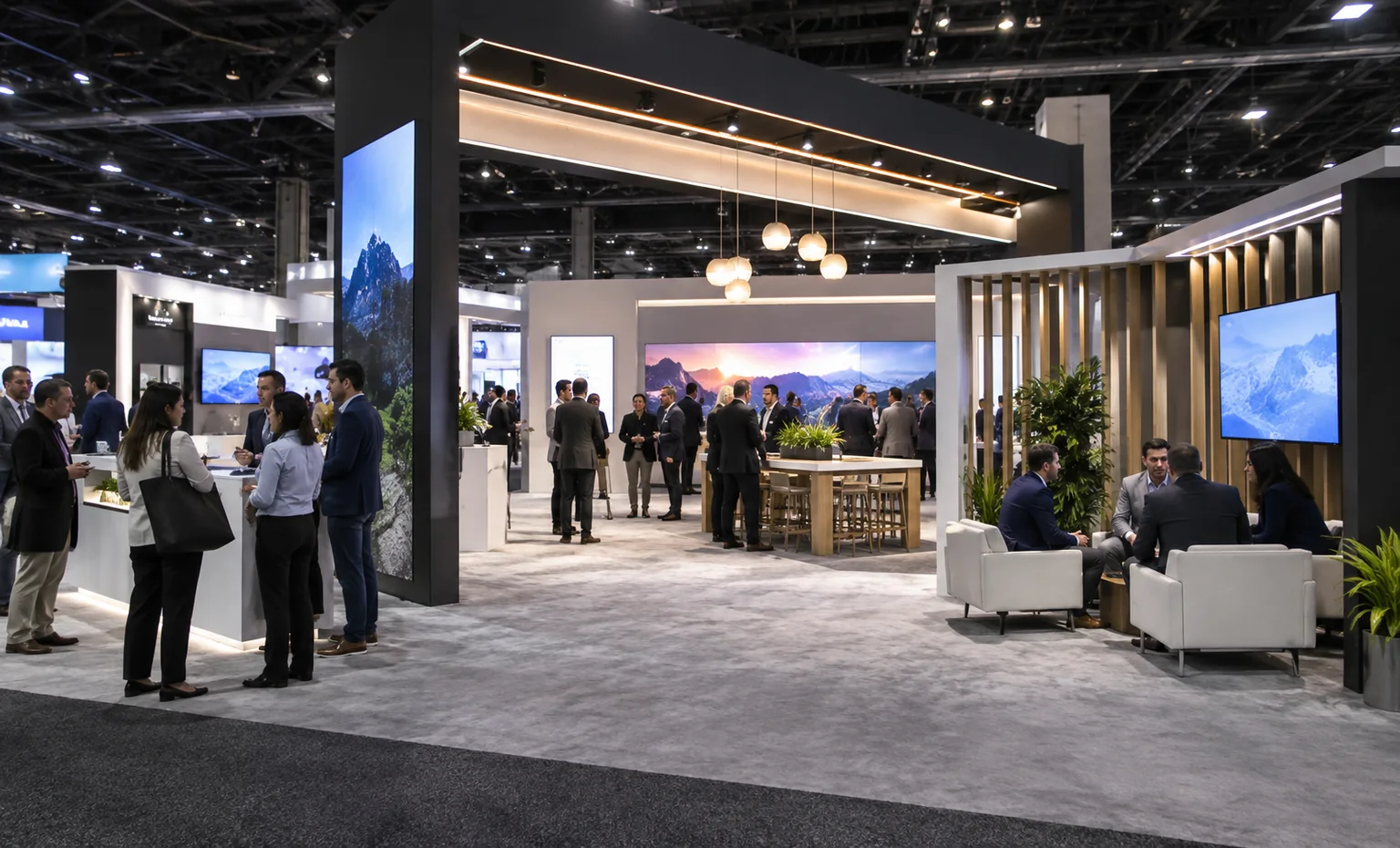
For multiple product or demo zones, broader aisle exposure and separate technical or command discussions.
-
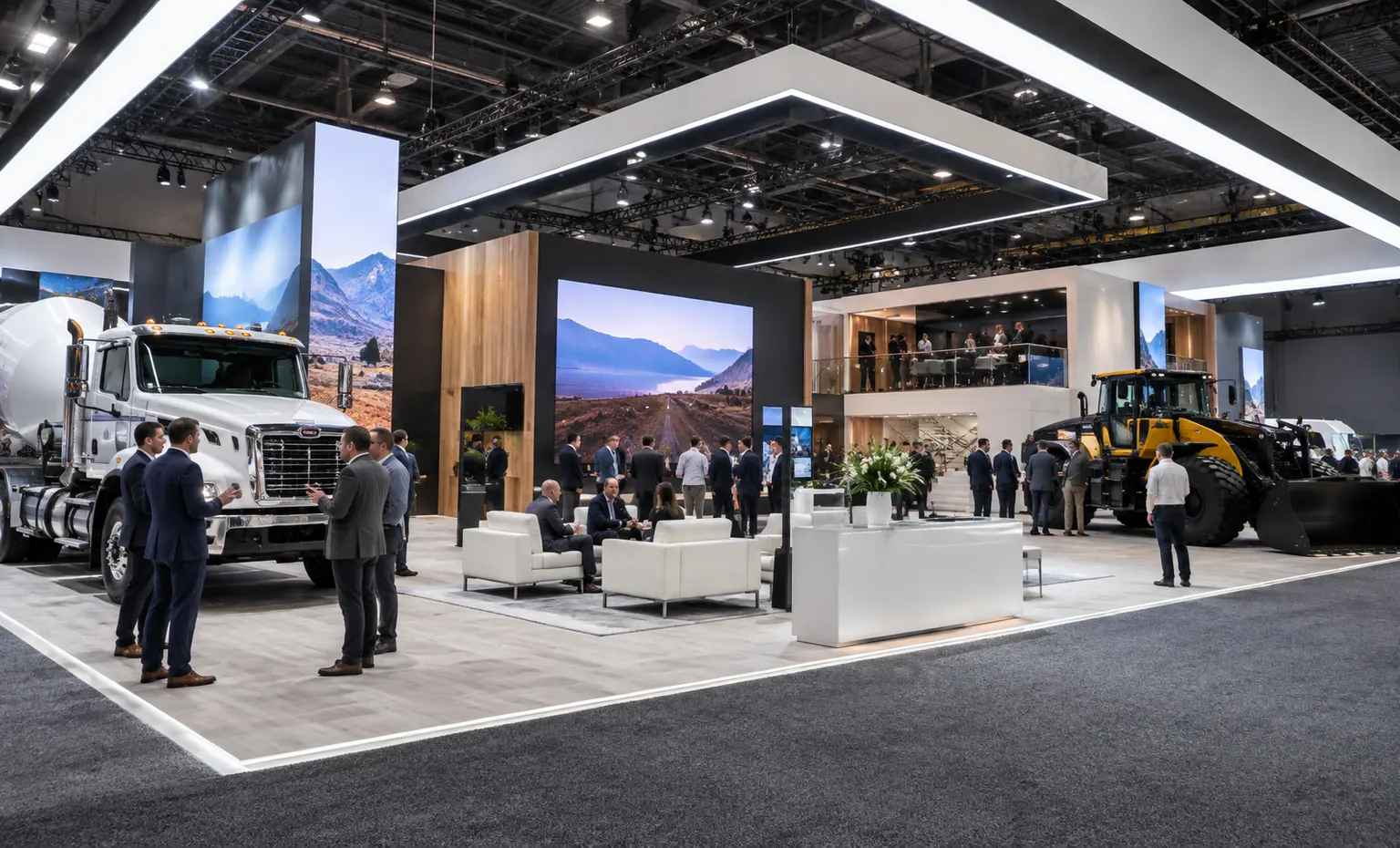
For a larger portfolio, vehicle or equipment presence, high-capacity media and several meeting paths.