


Give Us the Inputs That Control the Baltimore Booth
We review six items before the design and quotation move forward:
- Show, venue and assigned booth location
- Footprint, open sides and floor plan
- Products, demonstrations and visitor actions
- Brand files, graphics and screen conten
- Budget range and target approval date
- Freight, installation and dismantling scope
Review Enclosed and Complex Elements Before Production
Covered rooms, unusual ceilings, vehicles, large equipment or other complex elements may require early life-safety review. The floor plan should show dimensions, exits, sight lines and access to safety equipment before fabrication begins. If approval changes the concept, the booth can be revised while the materials are still flexible.
Design and fabrication resolve enclosed storage, suspended features and equipment access before the freight and review tracks separate. Drawings, produced parts and packing records then share the same approved dimensions.
The approval track covers drawings, required submissions and responses. The freight track covers packing, warehouse dates, direct-shipment windows and outbound paperwork. Joining them prevents an approved booth from missing its receiving window or a delivered booth from waiting on a design decision.
One Schedule, Two Tracks
The approval track covers drawings, required submissions and responses. The freight track covers packing, warehouse dates, direct-shipment windows and outbound paperwork. Joining them prevents an approved booth from missing its receiving window or a delivered booth from waiting on a design decision.
The accepted scope identifies design, rental structure, graphics, selected fabrication, packing, freight coordination and agreed installation and dismantling. Show and venue services follow the live exhibitor kit.
Enclosed rooms, vehicles, overhead elements and complex equipment can add drawings, review time, engineering or a fallback design. These are procurement consequences, not only compliance notes. If a critical feature remains unapproved when production begins, the buyer may pay for revisions, expedited work or components that cannot be used as planned.
Keep the Approved Drawing with the Shipment
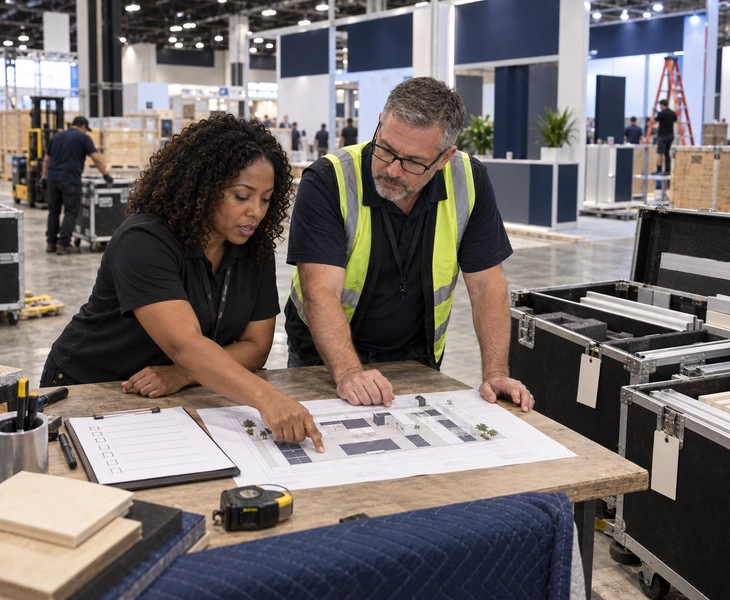
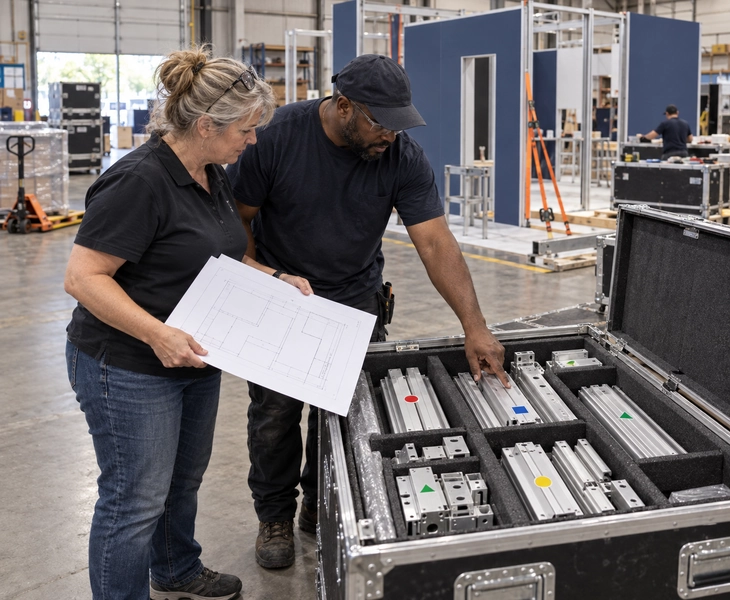
The production record uses the approved dimensions from the Baltimore review packet. Once the affected feature is cleared, the packing list and installation sequence are updated before the freight labels are issued. That keeps an older drawing from reaching the fabricator or floor crew after the official review has changed the booth.
To prepare a reliable quote, provide the live show manual, receiving option, booth plan, open sides, largest packed piece, review-triggering features, product requirements and desired floor scope. The release checklist confirms approval status, destination, shipping window, case count and onsite decision owner. Only then do the freight and fabrication tracks become one executable plan.
Align the Baltimore Freight and Approval Tracks
Share the freight pages, booth assignment, floor plan and any enclosed, suspended or equipment-heavy features. King Exhibits will connect the exhibit design to a workable approval and delivery sequence.
For this Baltimore decision, confirm the receiving method, largest packed piece, carrier window, site contact and outbound plan in the city show brief. King Exhibits carries those decisions into case labels and the installation sequence accepted in the quotation. This exposes the handoffs that affect timing and cost before the shipment leaves production.
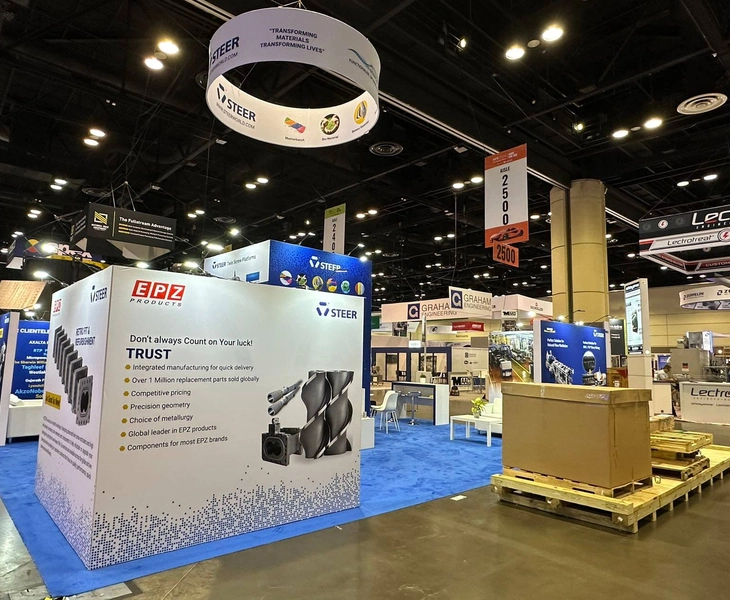
STEER — 30×30 Exhibit at NPE 2024, Orlando
This completed project gives teams planning Baltimore a concrete reference for scale, product presentation and visitor access. The verified project record identifies STEER, a 30×30 footprint, NPE 2024 and Orlando. A new booth for Baltimore would still be developed around the assigned space, products and event requirements. Use the example to discuss the design direction rather than as a local-project claim.
Keep Design, Production and Field Scope Connected
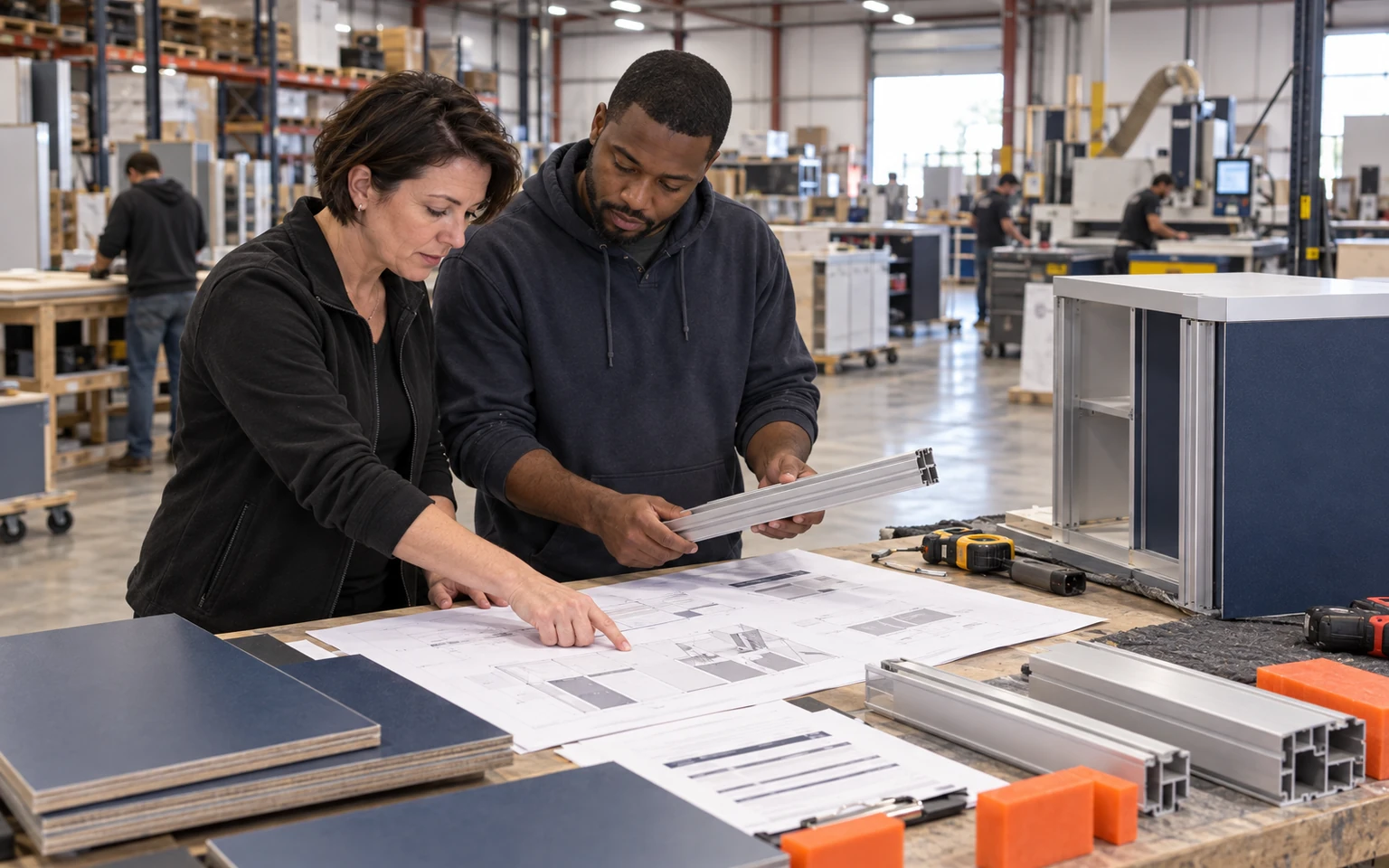
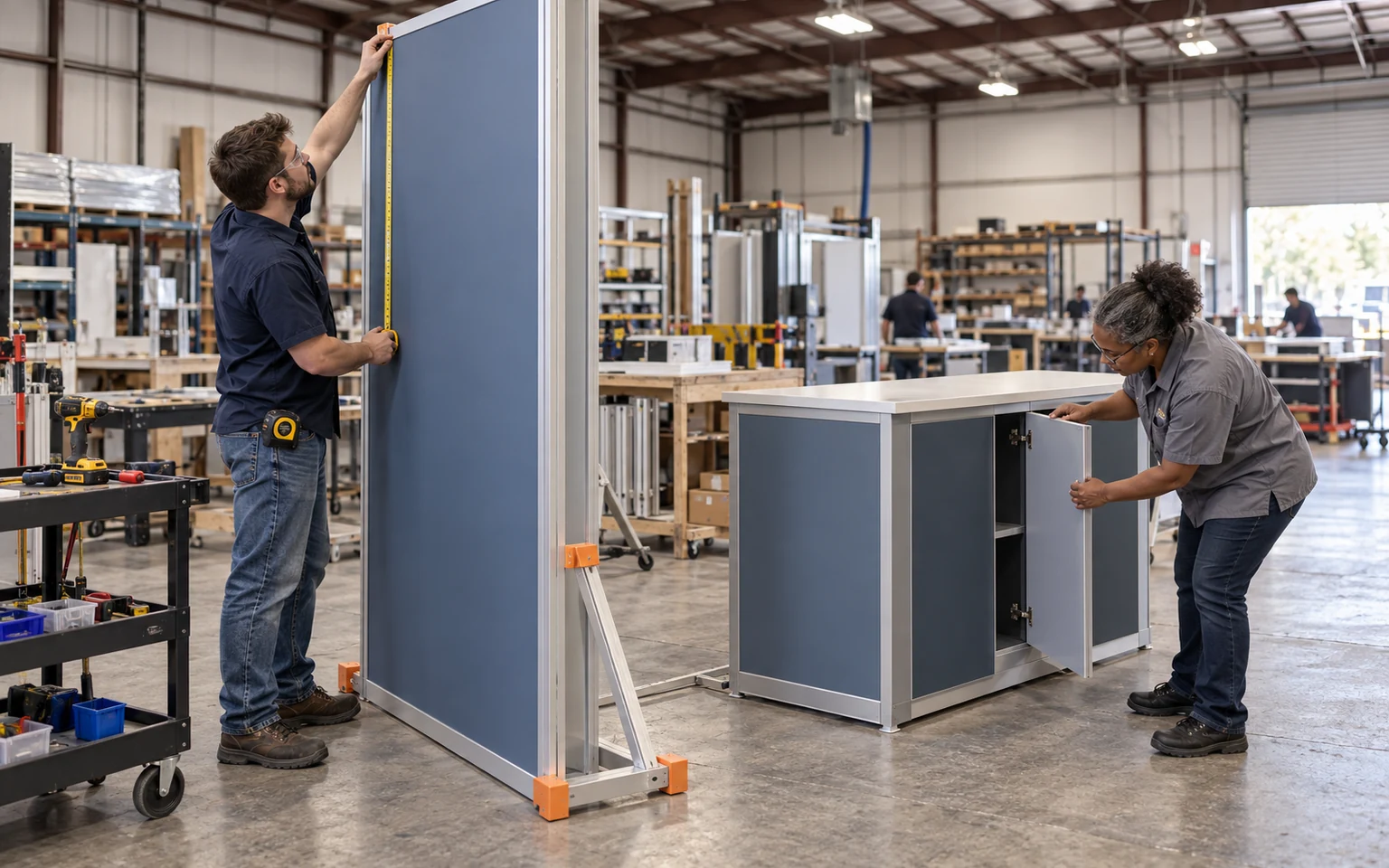
For Baltimore, the approved design should stay connected to the pieces that are produced, packed and installed. King Exhibits has supported U.S. exhibit projects since 2008. Our Las Vegas-based production support connects 3D visualization with rental preparation, custom graphics, CNC work and wood fabrication. When the project scope calls for it, key components can be assembled and checked before packing. The production record carries the approved local freight, service and reuse decisions into packing and field instructions. Freight and the floor work accepted in the quotation then follow that written scope.
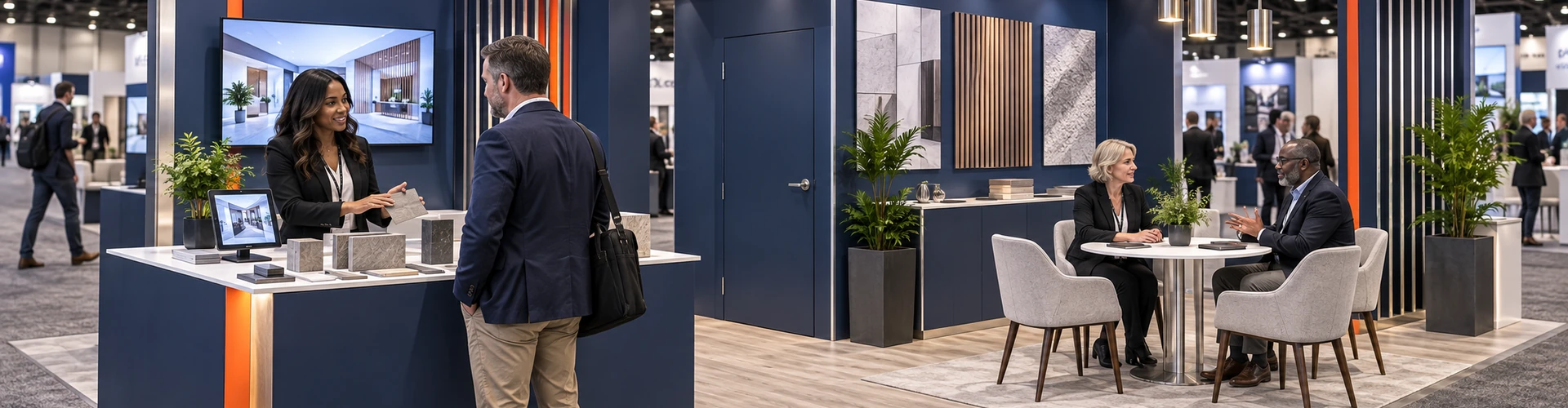
How the Baltimore Booth Moves from Brief to Show Floor
Each stage turns customer information into a defined project output.
You provide the event, assigned venue, booth location and floor plan, footprint, products, budget and deadline. We identify missing organizer and technical information. The output is one usable Baltimore project brief.
We use the confirmed Baltimore operating brief to shape visitor flow, product placement, services and structure. You review the 3D direction and functional fit. The output is an approved layout basis.
You approve dimensions, artwork and final product information. We carry the approved Baltimore freight and service assumptions into rental preparation, fabrication, graphics and packing. The output is a production record.
You confirm the current organizer instructions, carrier plan and authorized floor contacts. We coordinate the freight and field work accepted for Baltimore. The output assigns installation, dismantling and outbound responsibilities before dispatch.
Baltimore Exhibit Questions
Use the receiving option named in the current show manual. If CharmCityPASS is being considered, confirm its dates, package limits, handling charges and booth-delivery arrangement before labeling the shipment. Use the current floor plan and organizer documents to confirm the second setting before the structure, shipment or service orders are released.
As early as the organizer and venue require, and before the affected components enter production. King Exhibits uses the current Baltimore show, assigned space and visitor goal to turn that decision into a buildable exhibit plan. This lets procurement compare the exhibit scope with official show charges before approval. The final project record should identify who owns each remaining action and deadline.
Release only the unaffected base scope. Keep the reviewed enclosure, vehicle, overhead or other special component behind a documented approval gate. King Exhibits uses the current Baltimore show, assigned space and visitor goal to turn that decision into a buildable exhibit plan. This lets procurement compare the exhibit scope with official show charges before approval.