
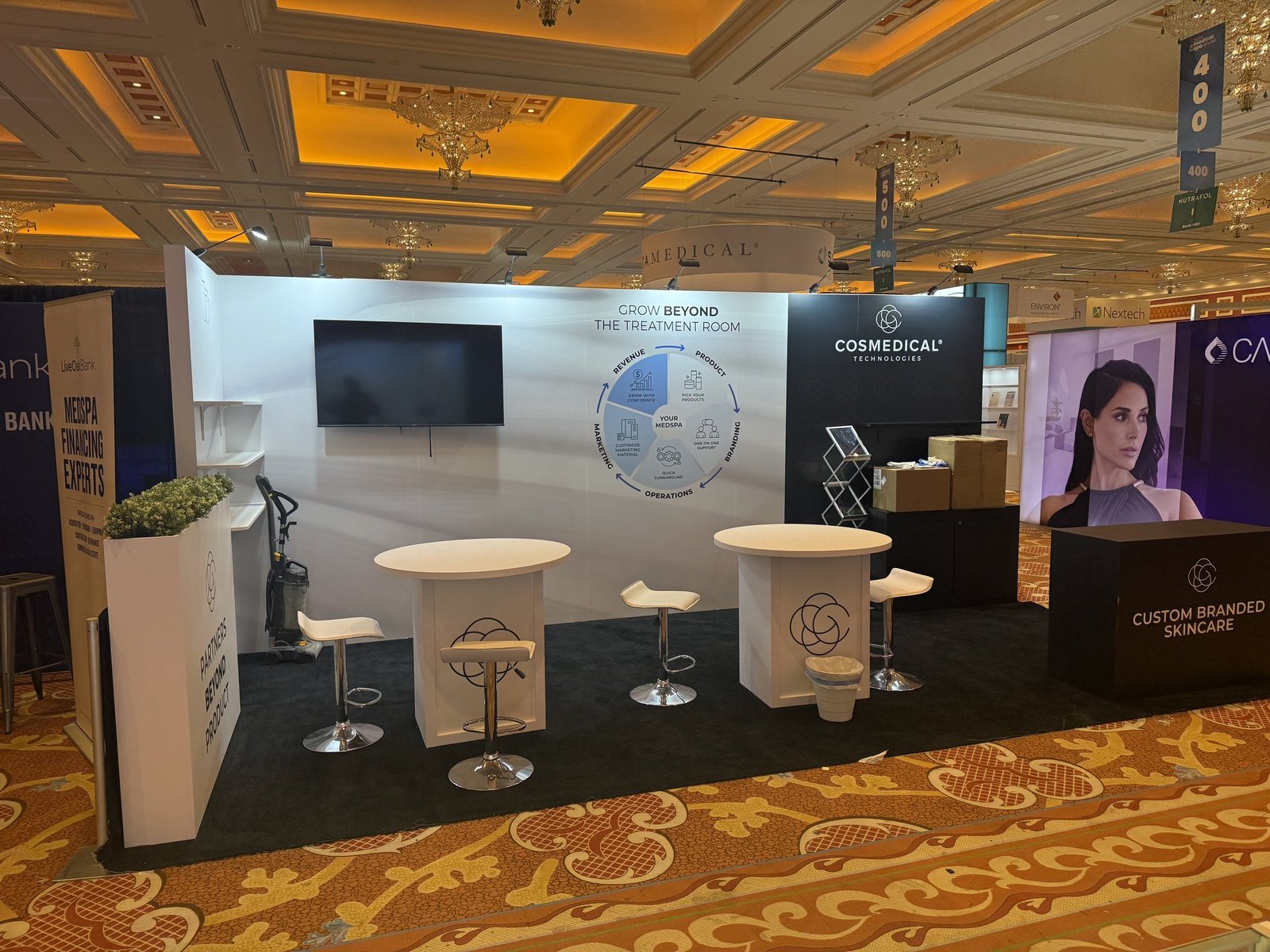


Choose the AAD Exhibit Format by Product and Demonstration
Prescription Drugs, Biologics and Disease Education
Dermatology Devices, Lasers and Light-Based Systems
Professional Skincare, Cosmetics and OTC Products
Diagnostics, Imaging and Practice Technology
AAD Exhibit Rentals Built from the Product Approval and Demo Plan
AAD exhibitors do not all sell in the same way. A dermatologist may stop for an approved disease-area message, compare an energy-based device, test a professional skincare product, inspect an imaging workflow or ask how a service fits the practice. The exhibit should make that first task obvious, then provide the product, evidence, specialist or meeting space needed for the next decision.King Exhibits develops the rental environment and the product interface together. The 3D direction can show the public message, demonstration setback, equipment envelope, tester position, screen, storage, meeting area and staff route before production begins. Rental walls, lightboxes, towers, counters, flooring, lighting and furniture create the main environment; quoted custom work can address equipment surrounds, fitted counters, secure storage or brand-specific details.The exhibitor controls product eligibility, FDA status, medical or promotional claims, demonstration personnel and approval of all content. AAD, Moscone Center and the current service providers control show permissions and official services. The accepted proposal defines only the design, production, coordination and onsite responsibilities assigned to King Exhibits.
Give Each Dermatology Visitor a Useful Next Step
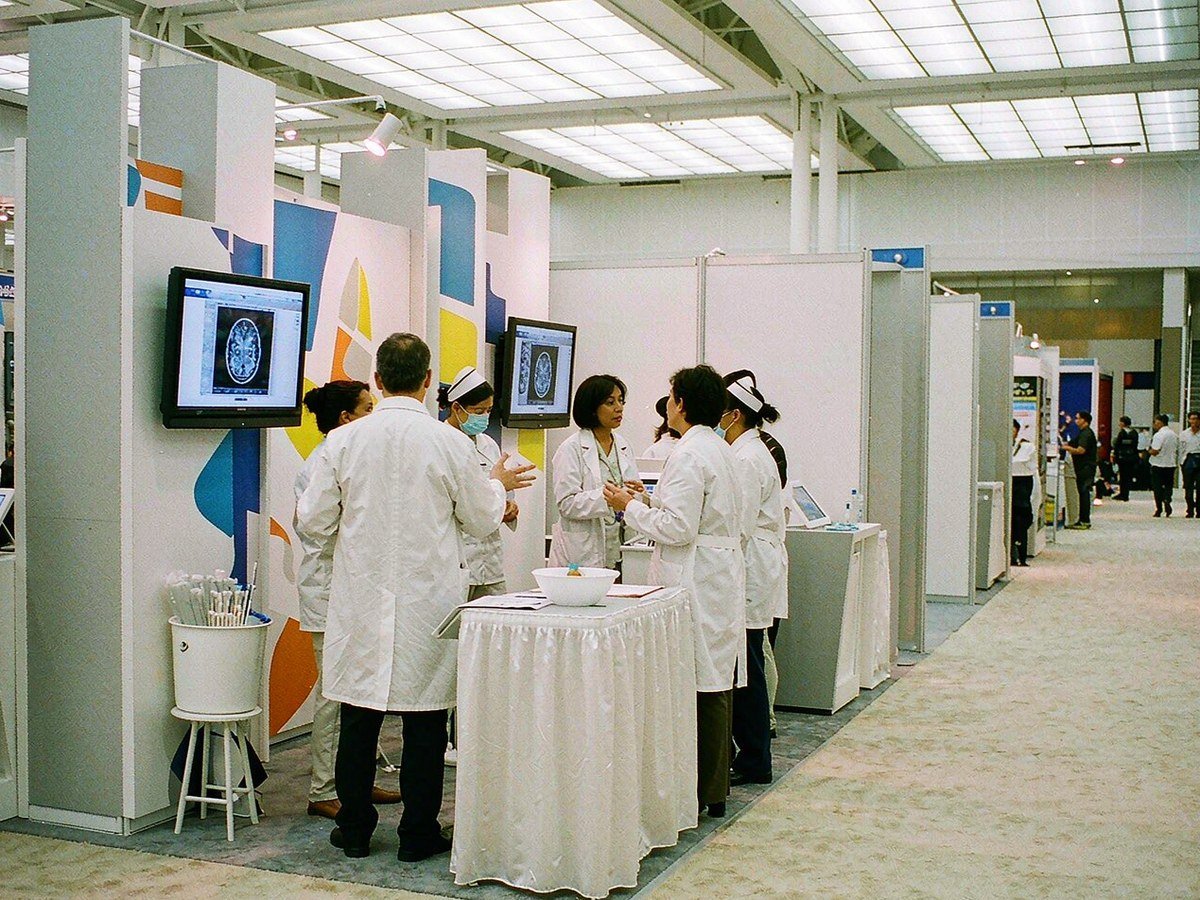
Start with the condition, procedure or practice problem they recognize. Place the approved content and product close enough for a focused review, then make a medical, clinical or device specialist easy to find.
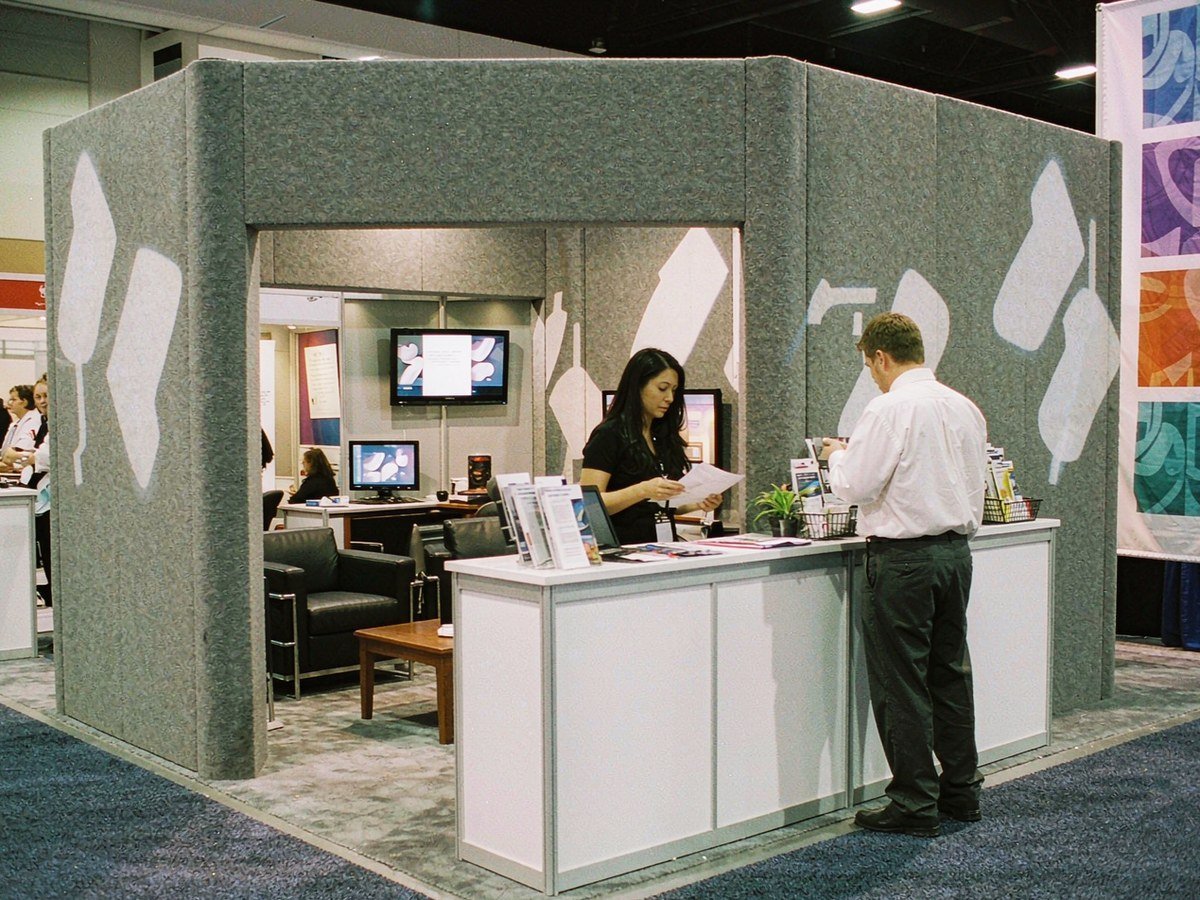
Show the workflow, staffing, patient experience or operating requirement that the product affects. A semi-private table can support implementation, service and purchasing questions after the public demonstration.

Keep the product range, professional-use position, packaging and support material together. Give channel teams a place to discuss territory, training, launch and commercial requirements without interrupting the main visitor flow.
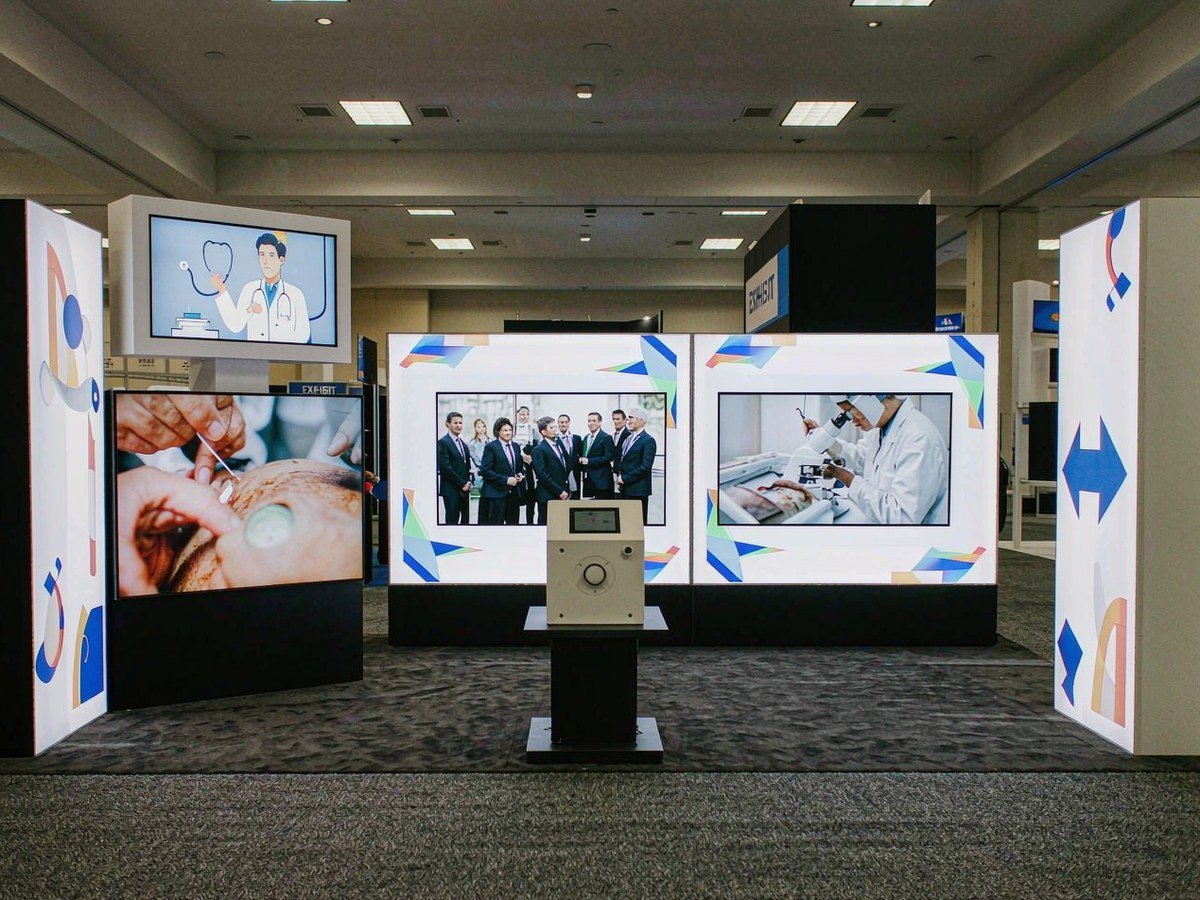
Provide a clean relationship between each claim, graphic, device status and demonstration. Changeable graphic positions and a controlled media list help internal reviewers approve the right content for the right product.
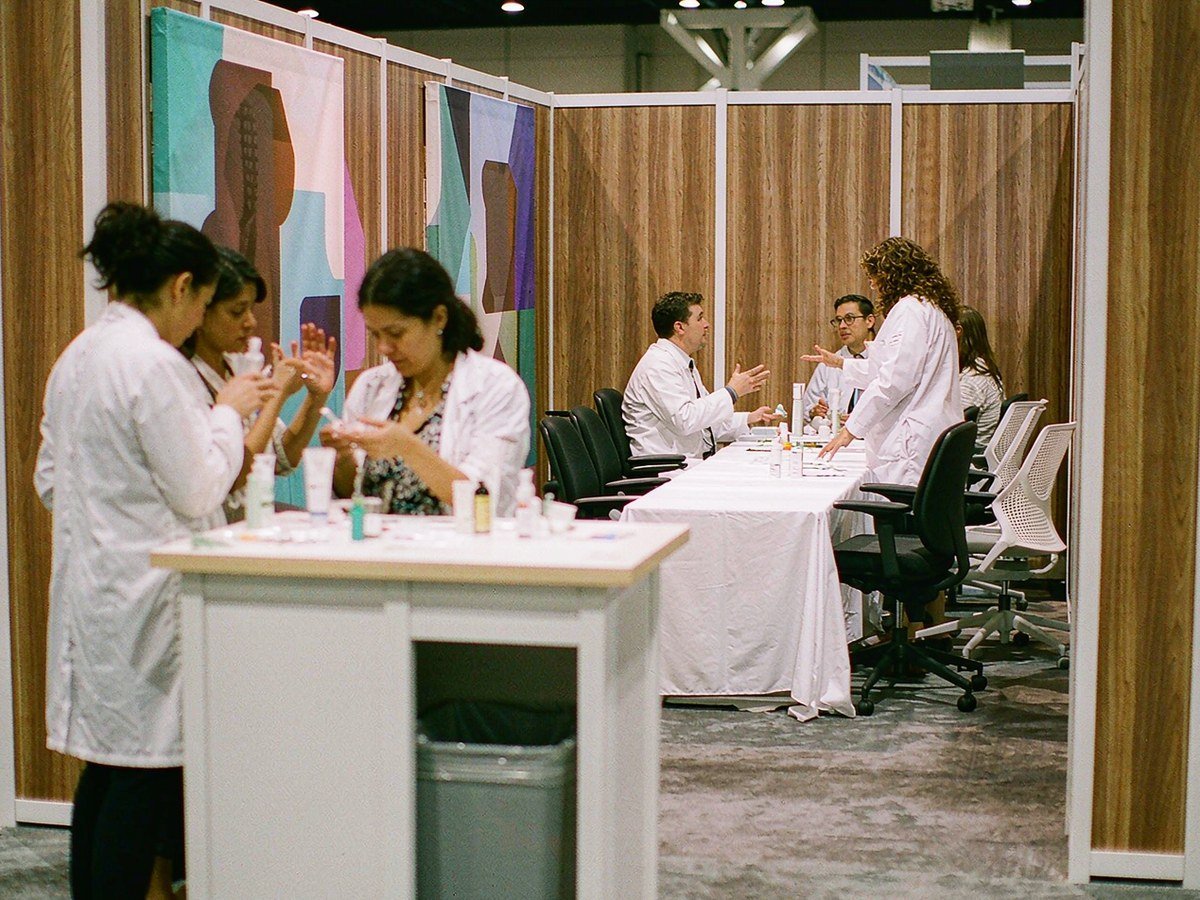
Let them inspect texture, packaging, application or equipment in a station that can be cleaned and replenished. Route longer brand, practice or distributor discussions away from the active tester edge.
An Adjacent Aesthetic-Medicine Exhibit Reference
CosMedical is shown in a 10×10 exhibit from AmSpa Show 2022. This is an adjacent aesthetic-medicine project, not an AAD case. It is included only as a compact-footprint reference; a new AAD exhibit would be rebuilt from the current assignment, product category and demonstration rules.
-
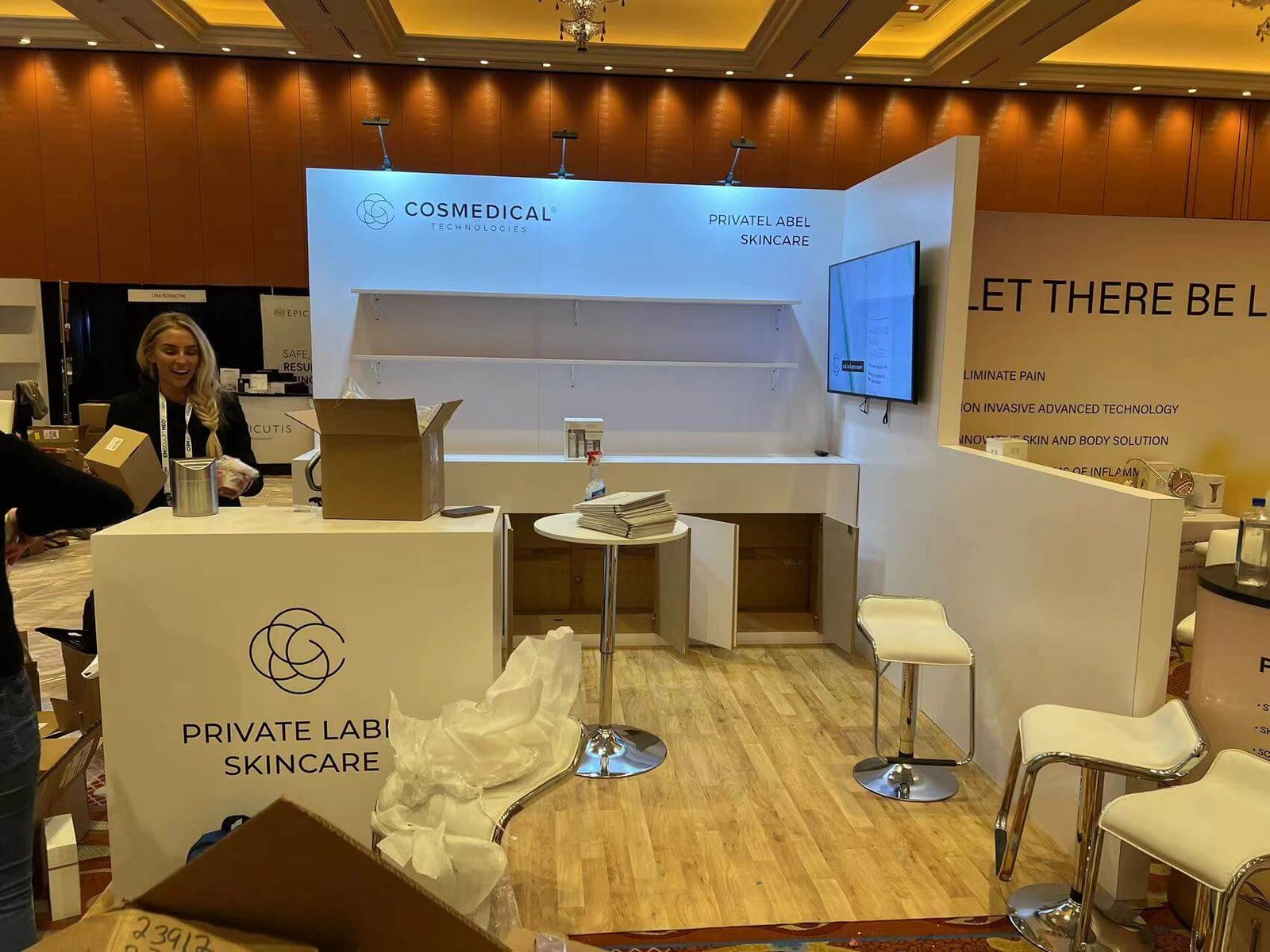 CosMedical at AmSpa Show 2022 — 10x10 ft
A compact exhibit can give one dermatology or aesthetic product category a clear entry point while preserving a staffed conversation area and enclosed support storage.
Build the Graphic Map from Approved Claims
List every disease-area message, product claim, indication, comparison, study visual and required disclosure beside the exact wall, screen or product it supports. Give each asset an owner and approval status before artwork release. King Exhibits can reserve changeable graphic or media positions in the booth plan, but your medical, legal and regulatory team controls the content. This map prevents a late revision from leaving an outdated statement beside the wrong product.

Draw the Demonstration Crowd Before Drawing the Counter
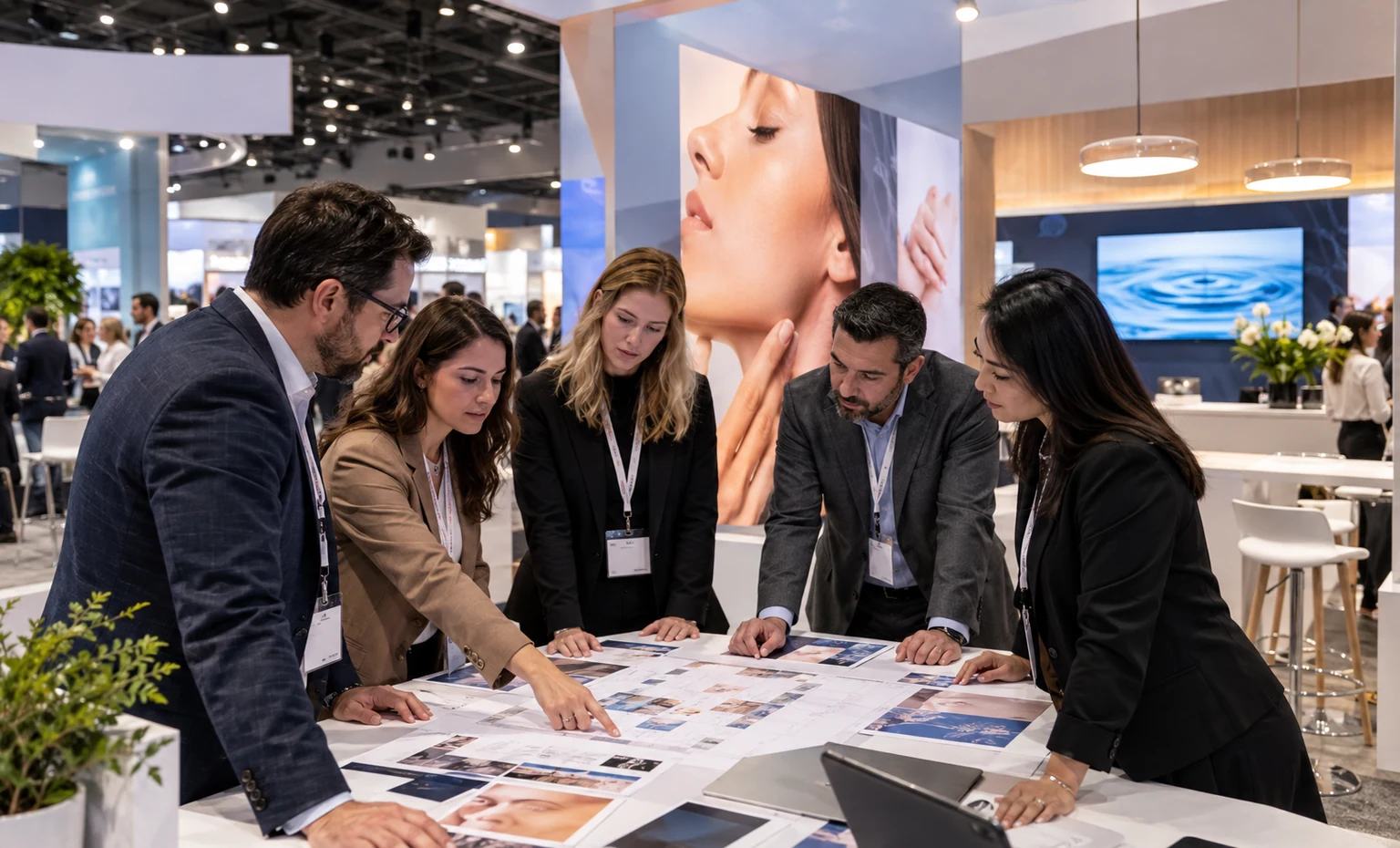
The current AAD prospectus says demonstration areas should sit at least five feet inside the aisle and must not create congestion. Mark the presenter, product, first viewing line, expected audience and staff path on the floor plan. Then check whether another visitor can still enter, reach a specialist and leave safely. Treat a video audience, skincare trial and device simulation as different crowd patterns rather than assigning them the same open counter.
Release the Laser or Device Interface as Its Own File
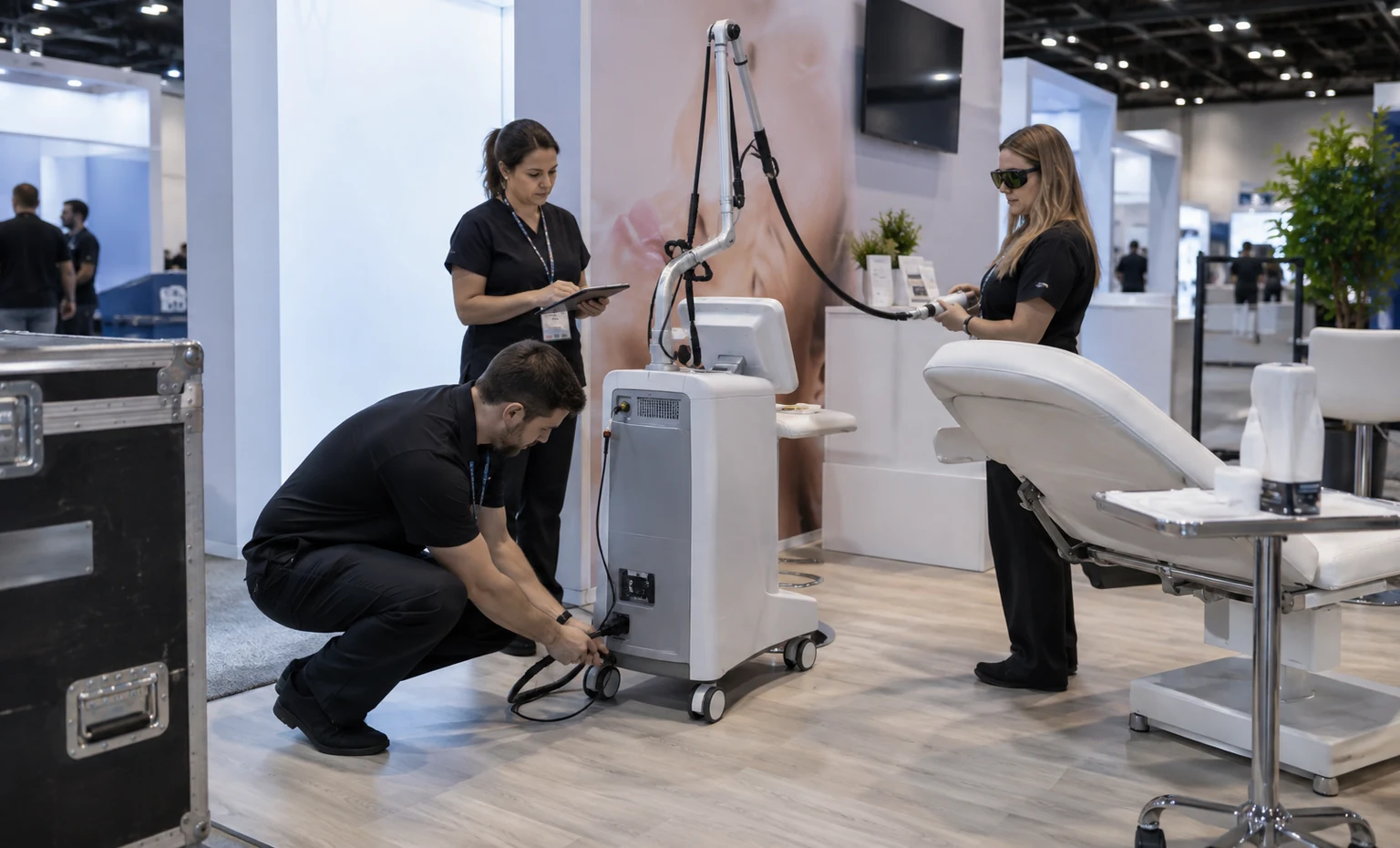
Record the exact model, installed size, weight, operating or simulation status, operator position, safety enclosure, eye protection, ventilation, power and cable route. Add who supplies, places, connects, approves and removes the equipment. King Exhibits can link the confirmed interface to the floor plan and quoted custom work. The exhibitor, equipment specialist and current AAD rules determine whether the activity may operate; the booth structure must never be treated as approval.
Keep Product Decisions Connected from 3D Review to Installation
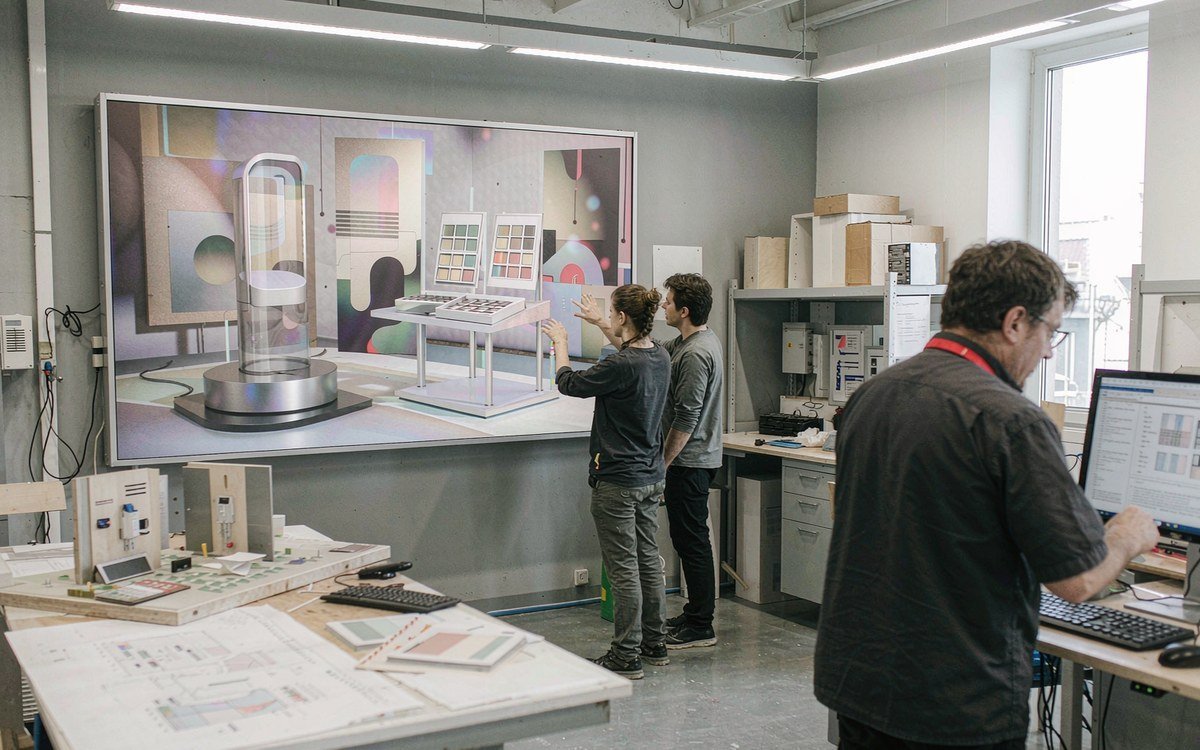
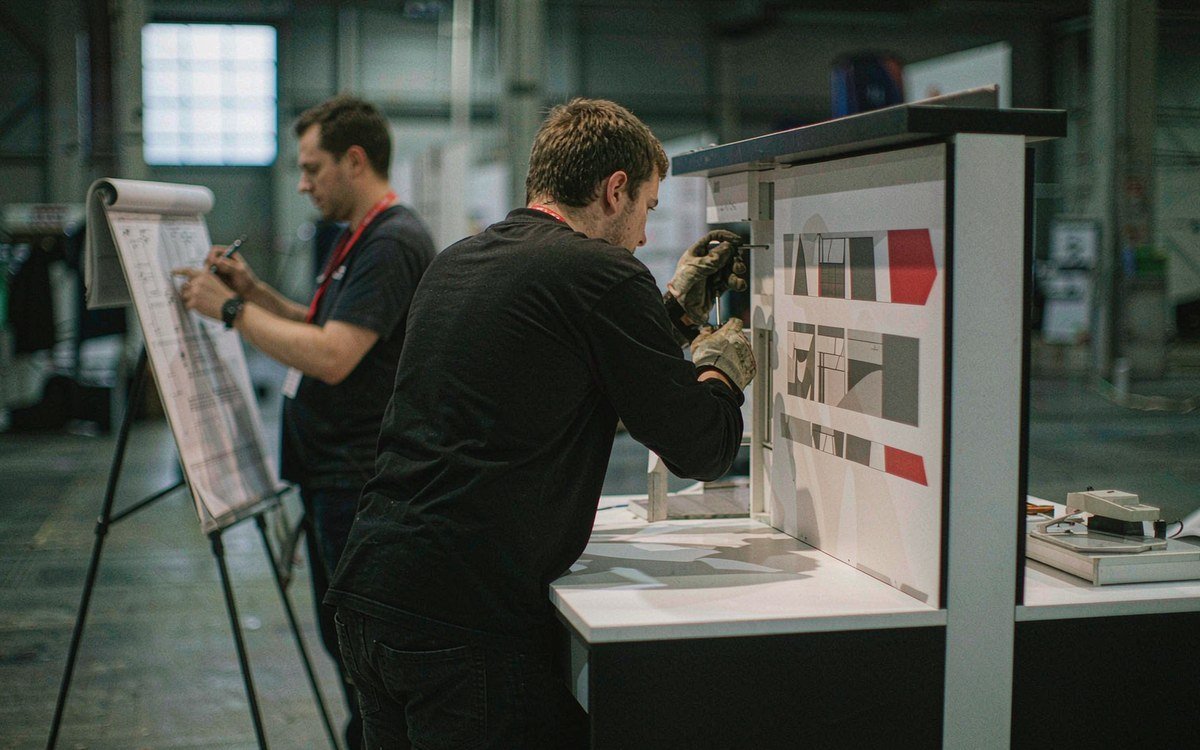
King Exhibits develops the rental structure, custom interfaces and graphics in one 3D direction based on the product and demonstration brief. Confirmed equipment footprints, tester positions, screens, storage and meeting areas can be reviewed before fabrication and artwork production begin. That gives exhibit, product, medical, regulatory and operations teams one practical layout to check.Quoted rental and custom components can then be reviewed against the accepted design, identified for packing and connected to the installation plan. The project record also separates the items supplied by King Exhibits from customer equipment, Freeman services, Moscone Center work and other contractor responsibilities. This continuity helps the exhibit manager see unresolved interfaces before the team reaches the hall.
Close the 2027 AAD Rules Before Production Release
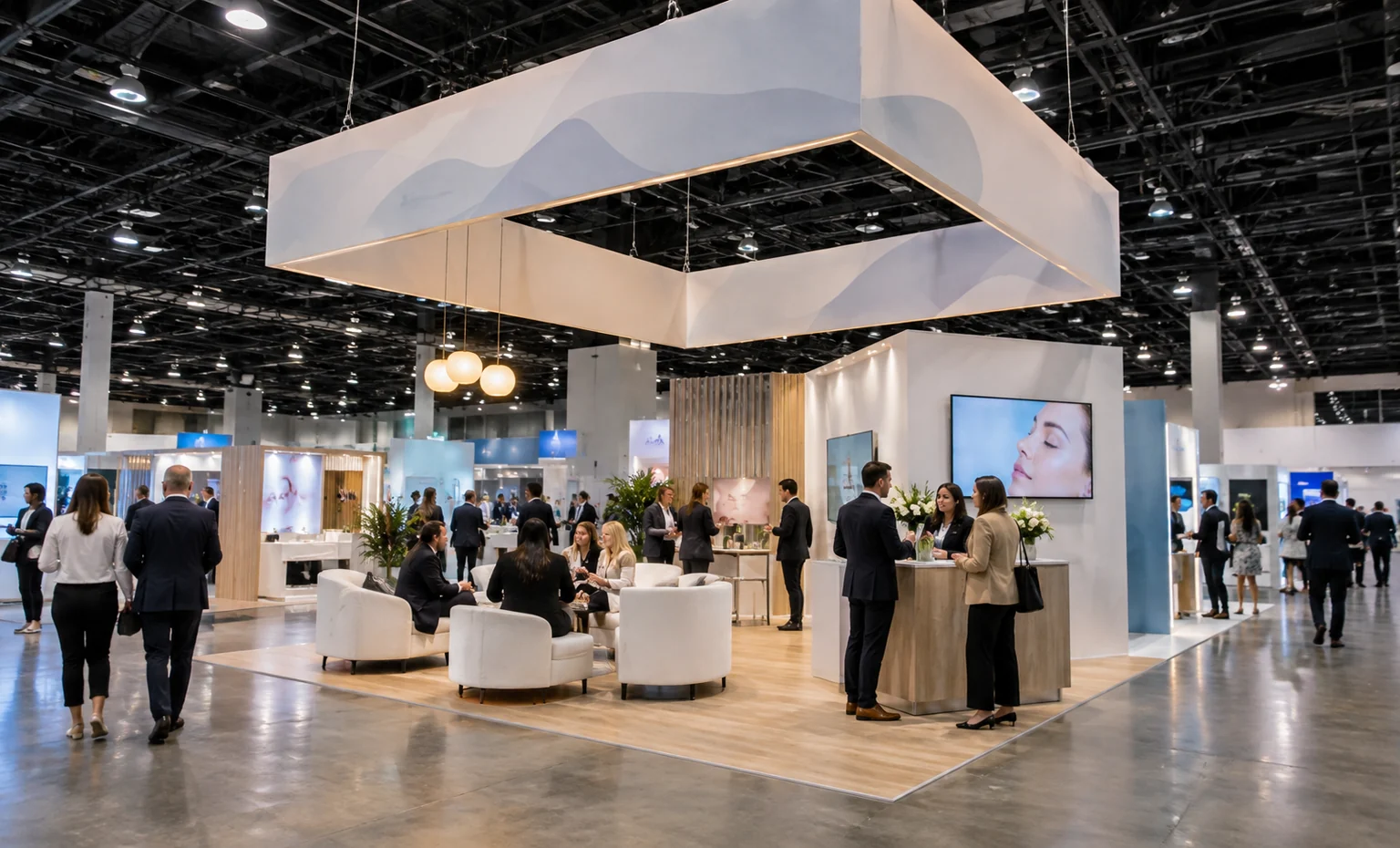
The 2027 prospectus treats linear and island exhibits differently. Linear booths have sightline and height limits. Island exhibits begin at 20×20, cannot be multi-level and require plans for review. Hanging signs are limited to island configurations under the current rules. Build from the assigned space rather than a generic footprint.

Live-subject use, simulations, prescription products, cosmetics, OTC skincare and devices requiring a medical license do not share one rule. Describe the product, operator and activity accurately. If the activity is uncertain, the exhibitor should submit it to AAD for review before the current deadline.
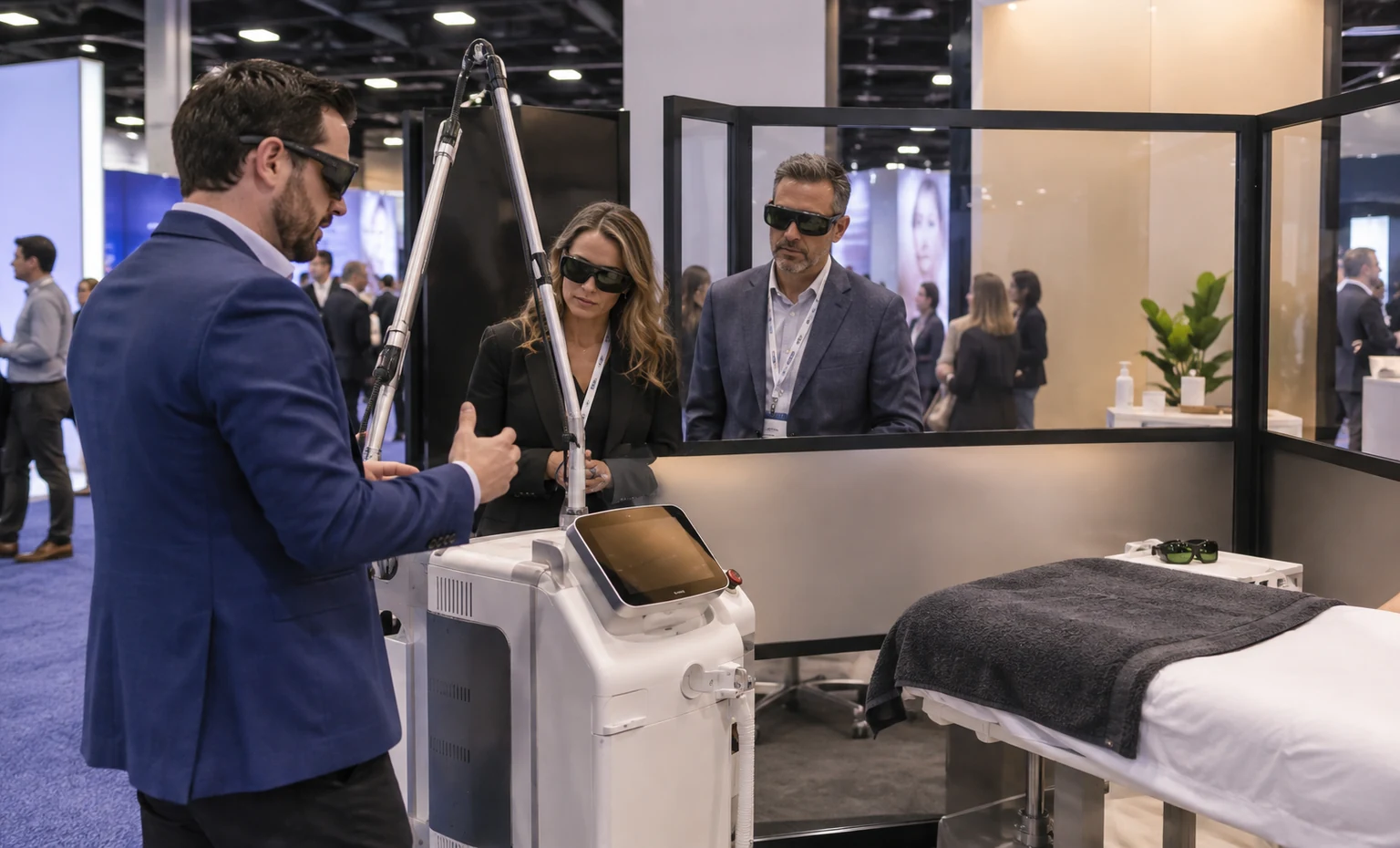
The current AAD laser precautions require suitable enclosure and appropriate protection, with additional conditions for specific laser, light-source and radiofrequency equipment. Confirm the device and safety plan before surrounding it with branded architecture or inviting an audience.
Freeman is the current official general service and drayage contractor. An outside EAC requires exhibitor notice and insurance documentation. Separate exhibit crates, customer equipment and official service orders, then match each movement and connection to a responsible party.
From Dermatology Product Brief to an Installed AAD Exhibit
Send the show edition, booth number, dimensions, open sides, product categories, approved-message status, devices, samples, meetings, budget and requested services.
Record the presenter, product, operating mode, audience, utilities, cleaning or safety needs and the next specialist conversation.
Check sightlines, visitor flow, equipment interfaces, approved-content positions, storage and meetings. The accepted proposal defines King Exhibits’ responsibilities.
Release approved graphics and device details, submit required activity or EAC information, and order the official services that belong to the exhibitor.
Rental components, custom items and graphics in the accepted scope are prepared against the approved project record and packing plan.
King Exhibits completes the assigned onsite work. AAD, venue, official-provider, customer-product and third-party work remains with the responsible party.
It depends on the device and procedure. The current AAD rules prohibit live-subject demonstrations of devices that require a medical license. Send the model, procedure, operator and proposed activity so the layout can support the permitted operating or simulation method. The exhibitor remains responsible for obtaining any required approval.
Potentially. The current AAD prospectus permits certain cosmetic and non-prescription skincare demonstrations on live subjects when the equipment or procedure does not require a medical license. Confirm the exact product, activity, personnel, cleaning and approval requirements before design release.
Only under the current safety and show conditions. Provide the equipment type, enclosure, protection, operator, power, ventilation and audience plan. King Exhibits can design around confirmed requirements, but the exhibit design is not medical, safety or AAD approval.
The exhibitor’s medical, legal and regulatory team must approve all claims, indications, comparisons, references and required disclosures. King Exhibits produces only the released graphics and media positions. Investigational or unapproved product presentation must follow the current AAD and applicable FDA conditions.
Only when those items are explicitly included in the accepted proposal. AAD, Moscone Center and current official providers control many services and fees. The scope should identify what King Exhibits coordinates, what the exhibitor orders and what is billed by another provider.
Send the show edition, booth assignment, products, approved-message status, device dimensions and weight, demonstrations, utilities, samples, storage, meetings, freight, budget, brand files and the design, production or onsite services you want King Exhibits to include.
Booth Sizes for Dermatology Products and Professional Meetings
-
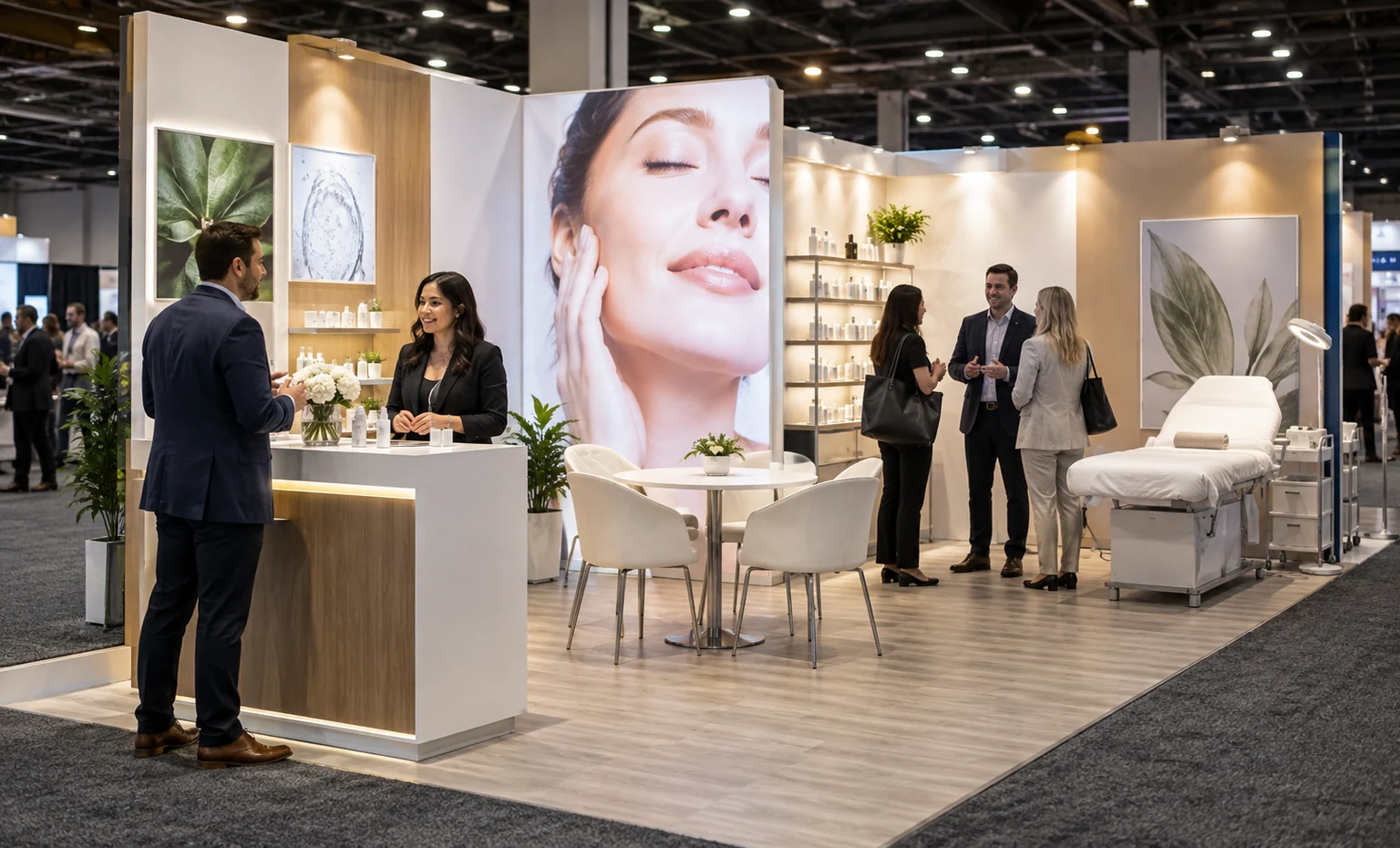
Fits one focused product story, a controlled skincare or software demonstration, storage and a compact specialist conversation point.
-

Creates open access around a device or several product zones while preserving a demonstration setback and semi-private meeting area.
-

Supports separate pharmaceutical, device or skincare conversations, several demonstrations, enclosed support space and longer clinical or channel meetings.