
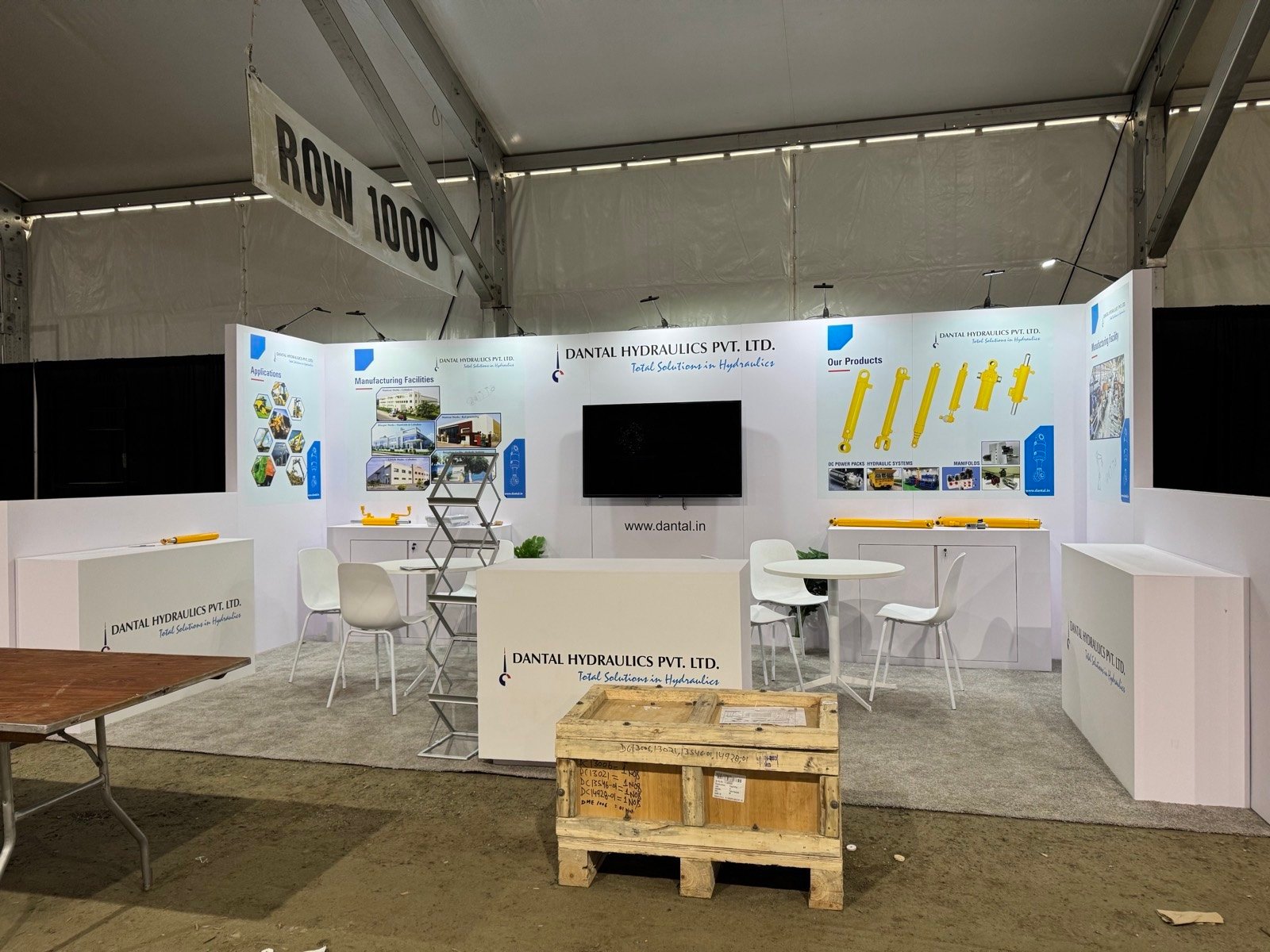
Plan Indoor and Outdoor Agriculture Exhibits as Different Jobs
Convention-hall booths offer predictable floors, walls and overhead conditions. Outdoor farm shows can add uneven ground, weather, long transport paths, tents, ballast, power distribution and larger equipment. The same display should not be copied between those environments without a new site plan.The confirmed location and equipment determine the branded rental portion of the exhibit. Indoor programs may use towers, lightboxes, product counters and meeting areas. Outdoor programs may require structures and services controlled by the show or specialist suppliers. The accepted proposal identifies which rental, graphic, freight and installation work King Exhibits provides for the selected site.Growers and dealers still need a direct product story. Position the machine or sample where its farm application is obvious, support it with concise operating information and keep space for territory, dealer, financing or technical conversations. Product performance and agronomic claims must come from the exhibitor’s approved material.
Build the Booth Around the Agriculture Sales Calendar
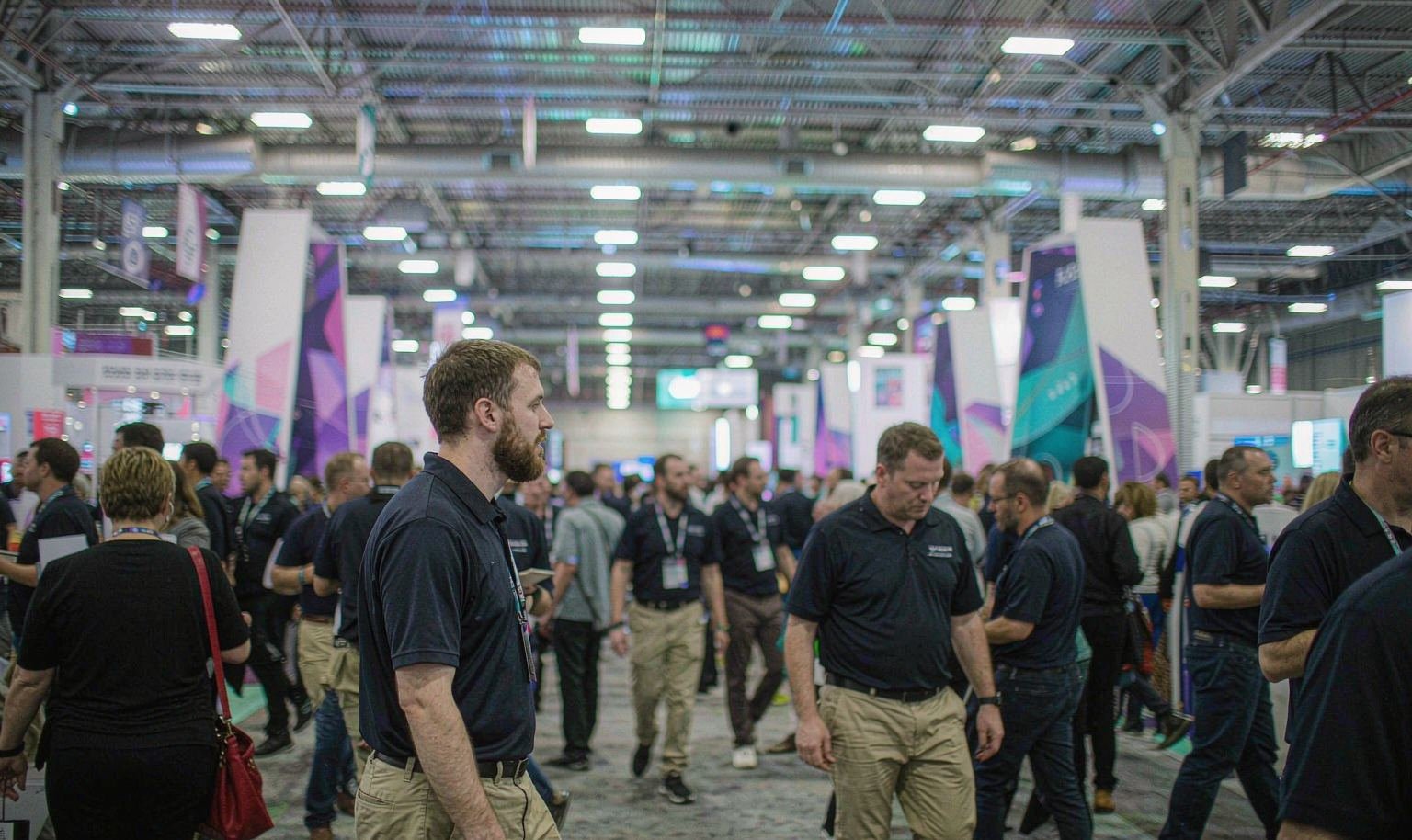
National shows may need broad product and dealer visibility. Regional events often require crop, climate and market relevance. Field demonstrations put operation first, while indoor conventions may support scheduled account meetings and product comparison. Share the territory goals and expected visitor mix before graphics are finalized. Rental architecture and graphics should change with the territory, visitor mix and event format instead of forcing one plan onto every agriculture show.
Give Large Farm Equipment a Clear Inspection Route
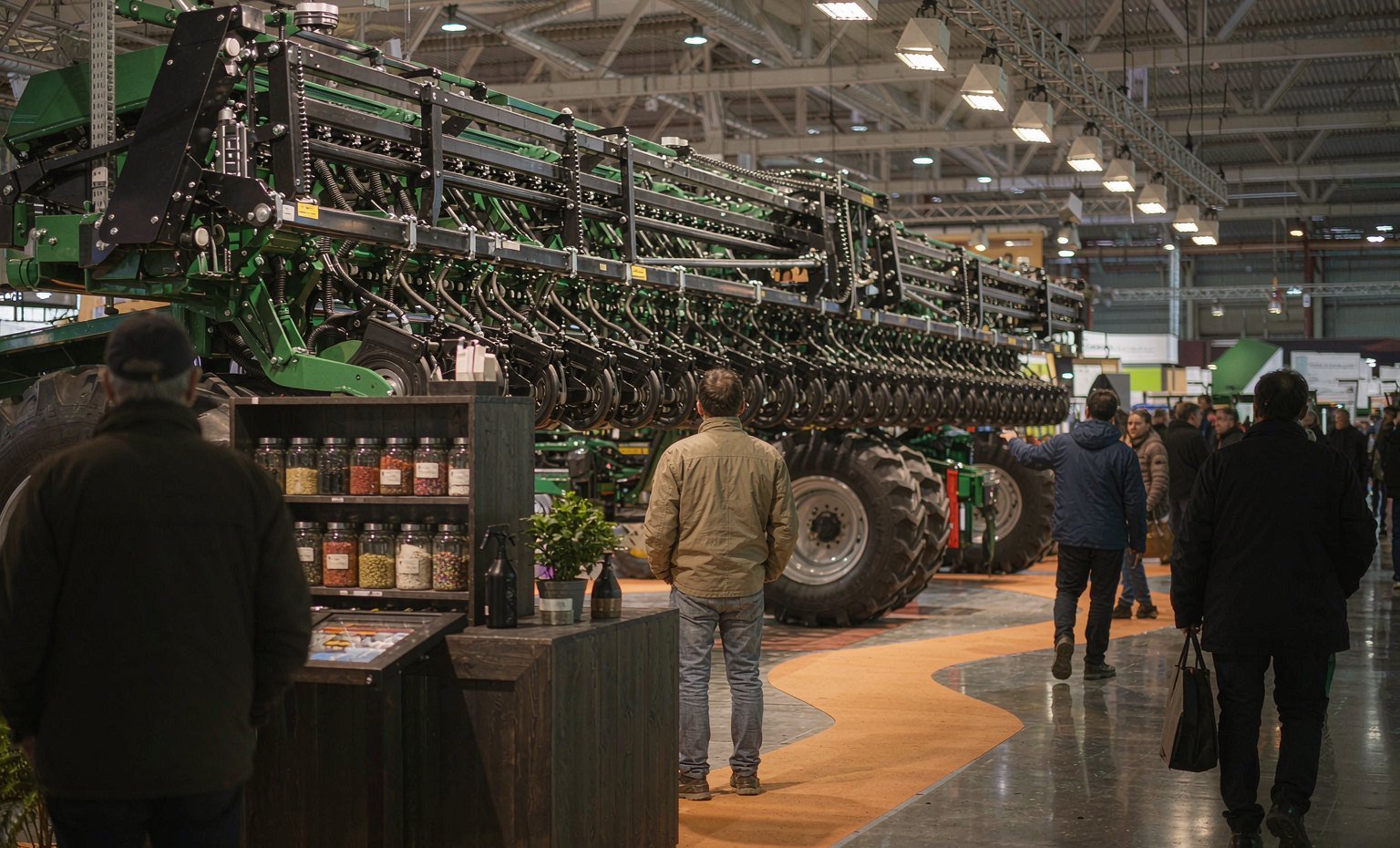
Tractors, implements, irrigation systems and handling equipment need space on the sides buyers actually inspect. Record transport width, installed width, weight, hitch or support points, moving sections and service access before approving the booth. Confirm who moves and positions the machine. Flooring, branded structures, lighting and product callouts follow the final machine location, keeping the visitor route clear while technical staff retain access at the show.
Make Seed and Input Displays Relevant to the Region
Crop-input walls lose value when every product receives equal attention. Lead with the crops, conditions or applications that matter to the event market, then organize approved samples and information around those priorities. Keep detailed literature and replacement stock within staff reach. Sample panels, counters, screens and regional graphics can turn those crop or application priorities into a clear presentation. Claims about yield, efficacy, compatibility or regulatory status remain the exhibitor’s responsibility and should use approved source material.
Equipment and Site Conditions Included Before the Booth Is Quoted
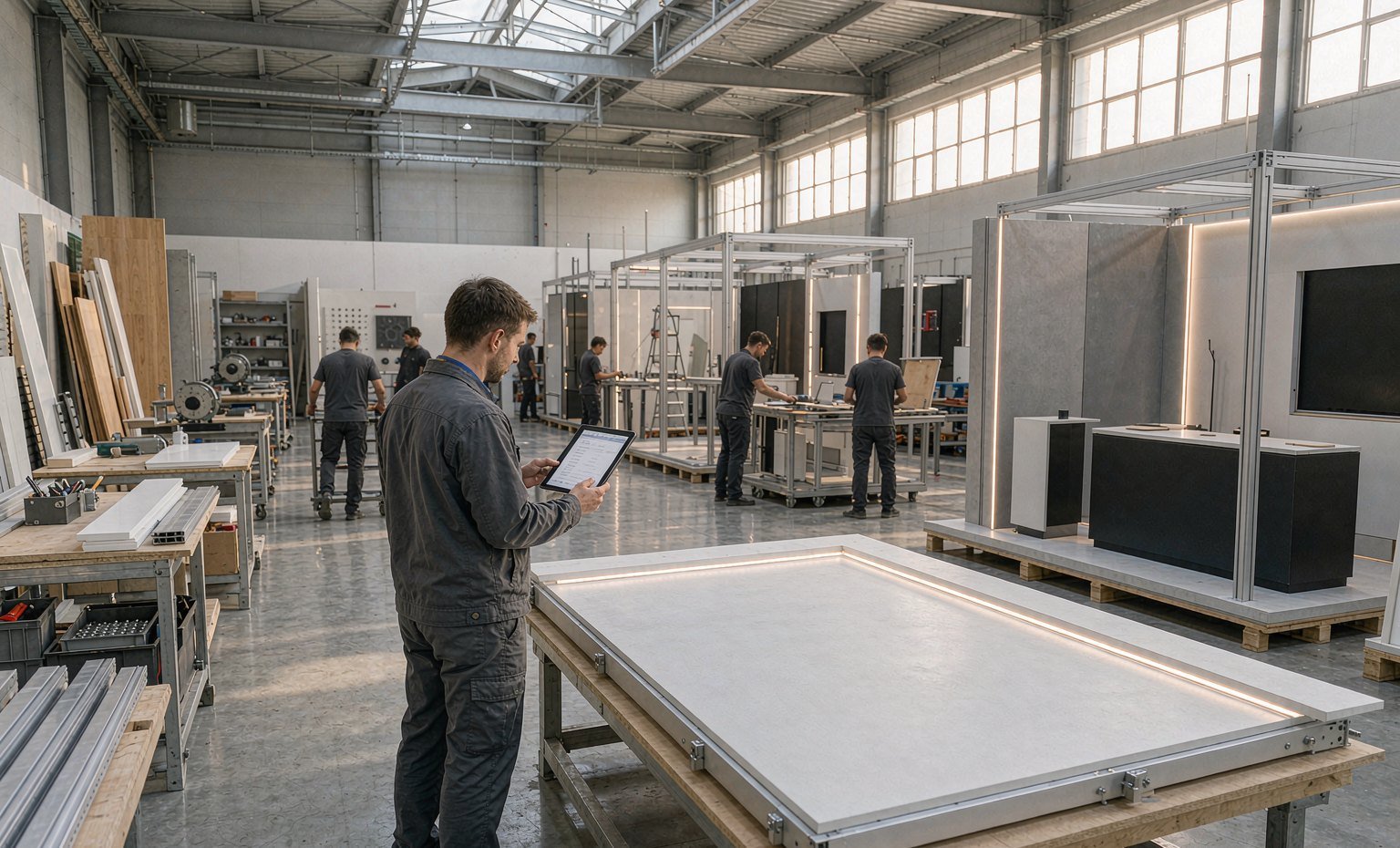
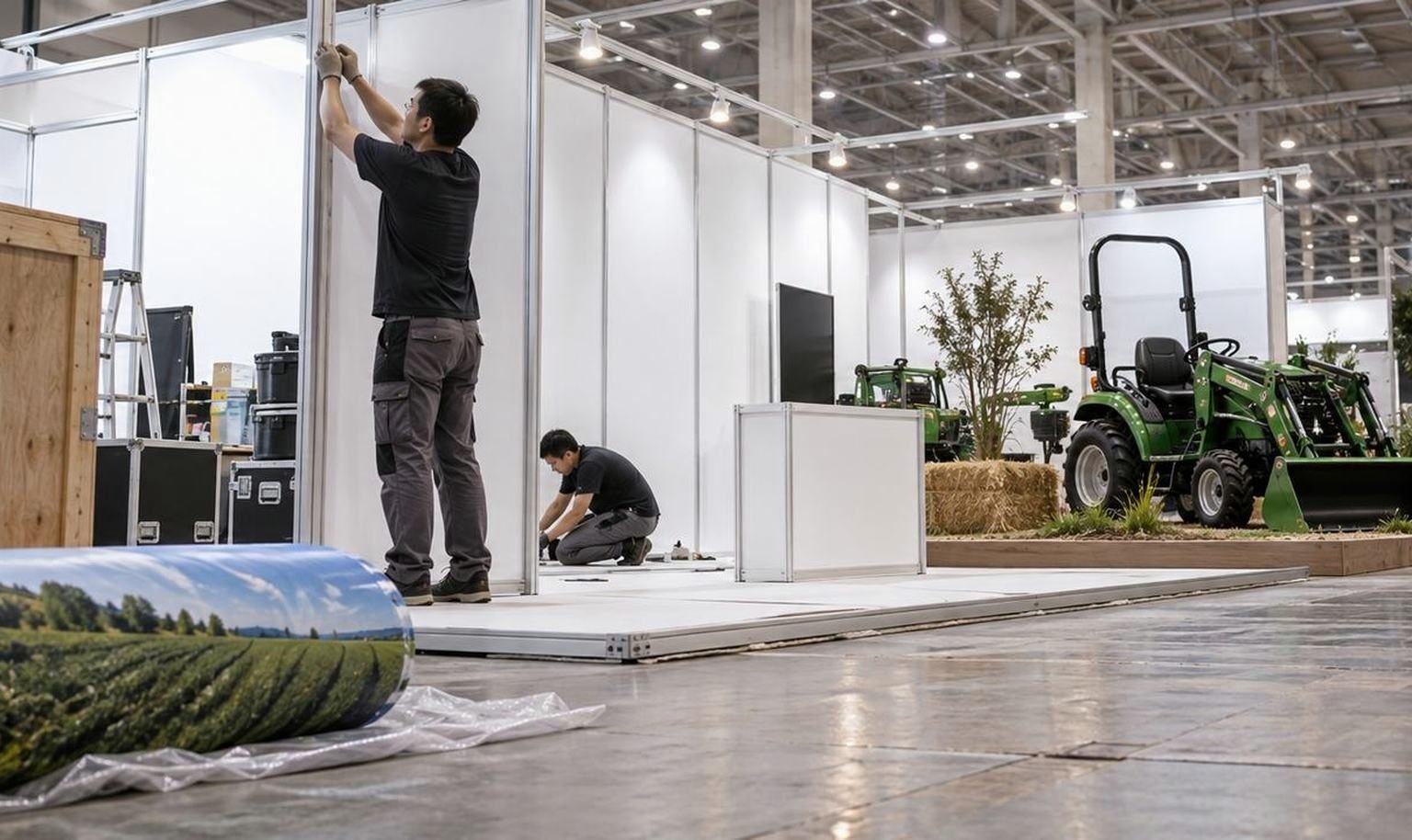
King Exhibits places confirmed equipment, samples, screens and meeting areas in the 3D plan for an indoor program. Outdoor work starts with the assigned ground, weather exposure, anchoring limits and organizer services instead of copying an indoor package. Rental components, graphics, selected fabrication, packing and installation are then priced for that setting. Agriculture exhibitors can review the product, site and sales areas together before committing the build.
U.S. Agriculture Trade Shows Where We Can Build Your Exhibit
Farm equipment, irrigation, inputs, livestock and agriculture technology suppliers exhibit across a large show site. Booth planning must start with the assigned indoor or outdoor location and product handling needs.
Growers evaluate large machinery, crop products and technology through exhibits and field demonstrations. Rental structures, equipment placement and weather planning depend on the confirmed host site.
Row-crop producers meet seed, input, equipment, technology and agricultural service companies. Indoor booth plans can support product comparison and focused grower or dealer conversations.
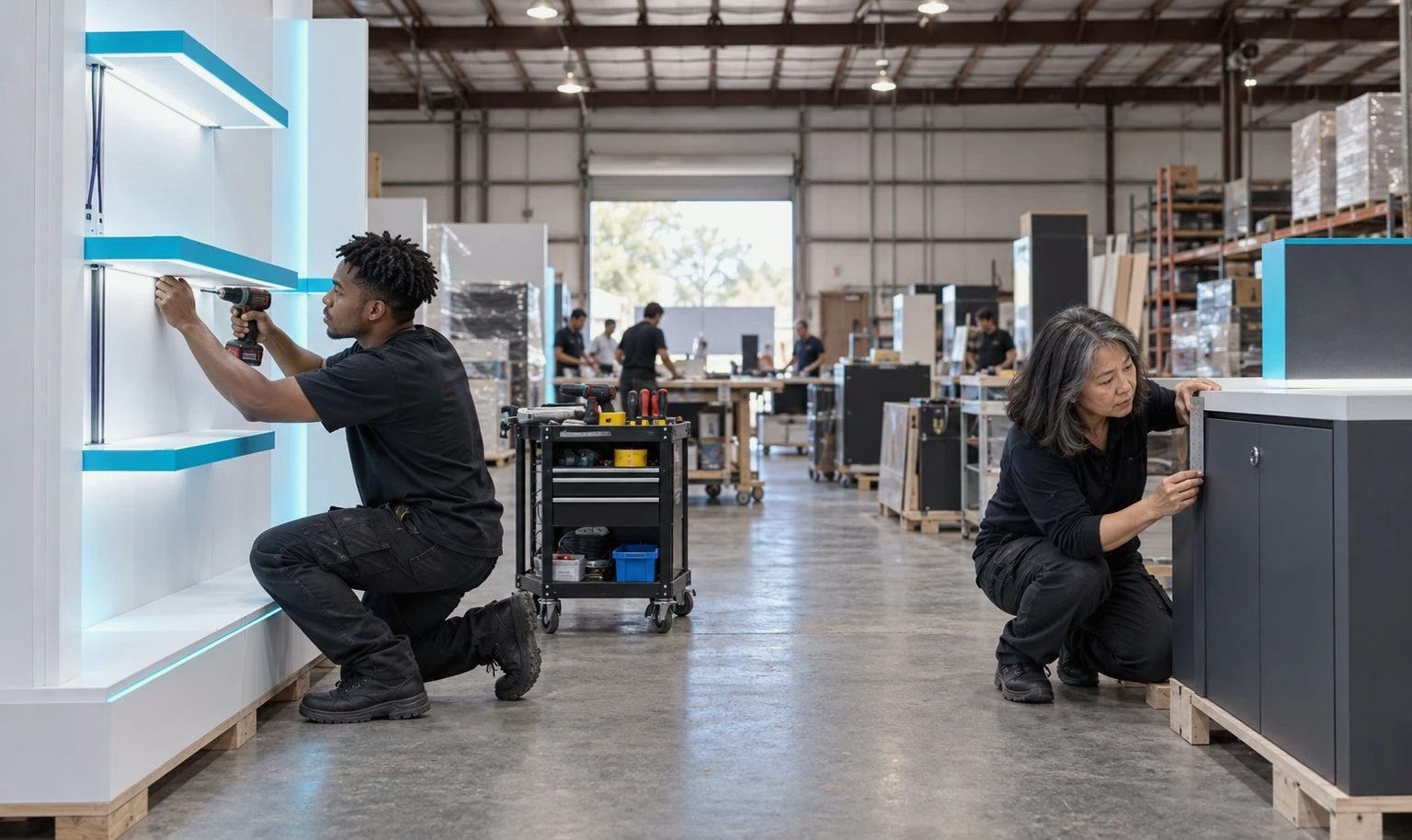
Machinery, implements, technology and farm suppliers meet producers and dealers in a large indoor exhibition. Equipment access, placement and technical discussion should guide the layout.
Yes, after the show site, surface, weather plan, approved structures, utilities and organizer-controlled services are confirmed. The scope may require specialist suppliers.
Yes, subject to the site and show rules. Provide transport and installed dimensions, weight, moving sections, access needs and placement responsibility before design approval.
Yes, when the event permits them. Approved samples and product materials can be incorporated. The exhibitor remains responsible for product legality, handling, regulatory status and every performance or agronomic claim.
Partly. Some graphics and components may transfer, but the structure, anchoring, weather protection, utilities and installation plan require a new review for each site.
Site type, footprint, equipment handling, structures, flooring, weather requirements, sample displays, graphics, freight, labor and show services shape the proposal.
First identify the event, assigned site and footprint, then provide the equipment and sample list, dimensions, weights, utilities, demonstrations, target crops or buyers, budget and requested services.
Booth Sizes for Agriculture Exhibitors
-
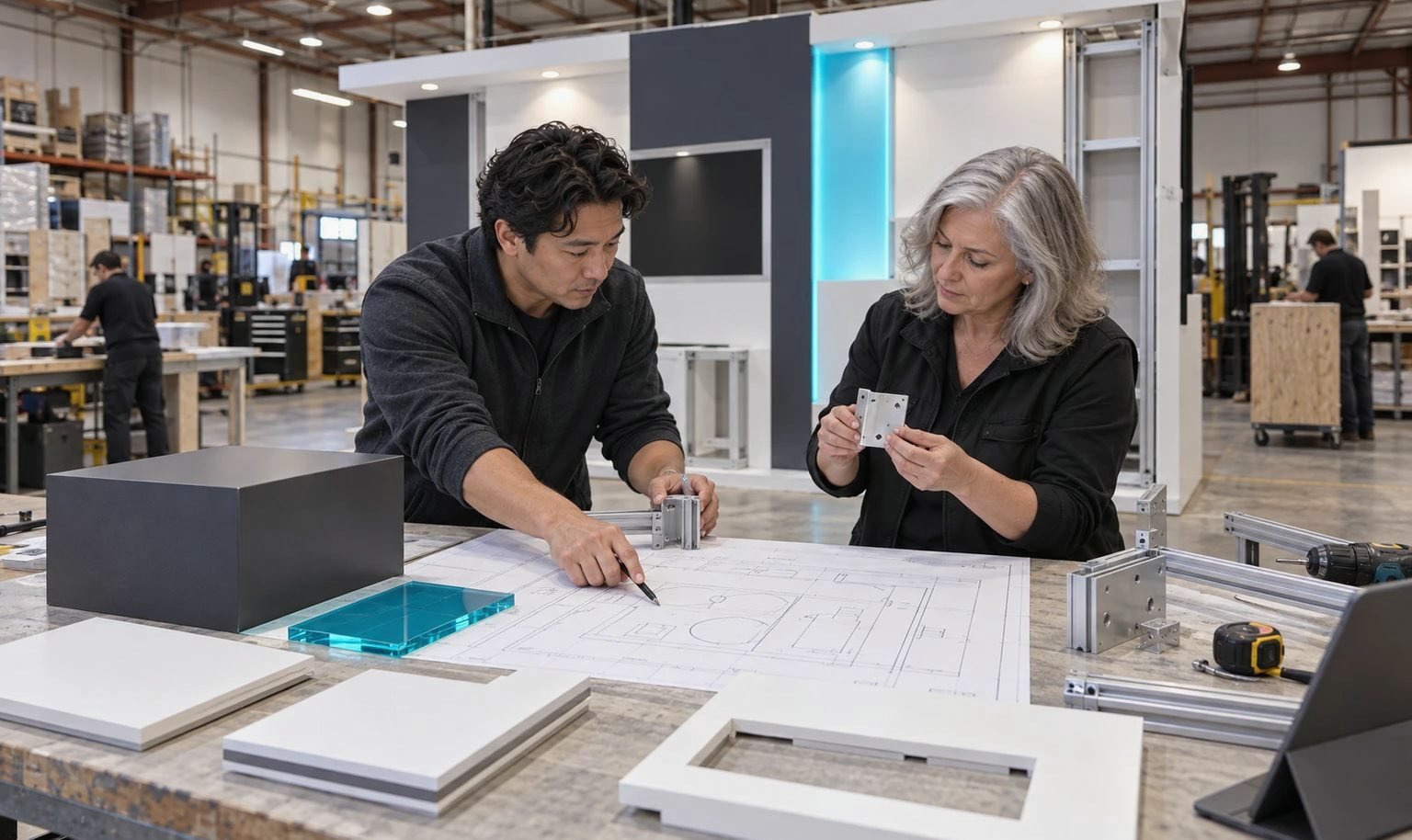
Link: /10×20-trade-show-booth-rental/ Fits a focused crop input, irrigation component or agriculture technology presentation.
-
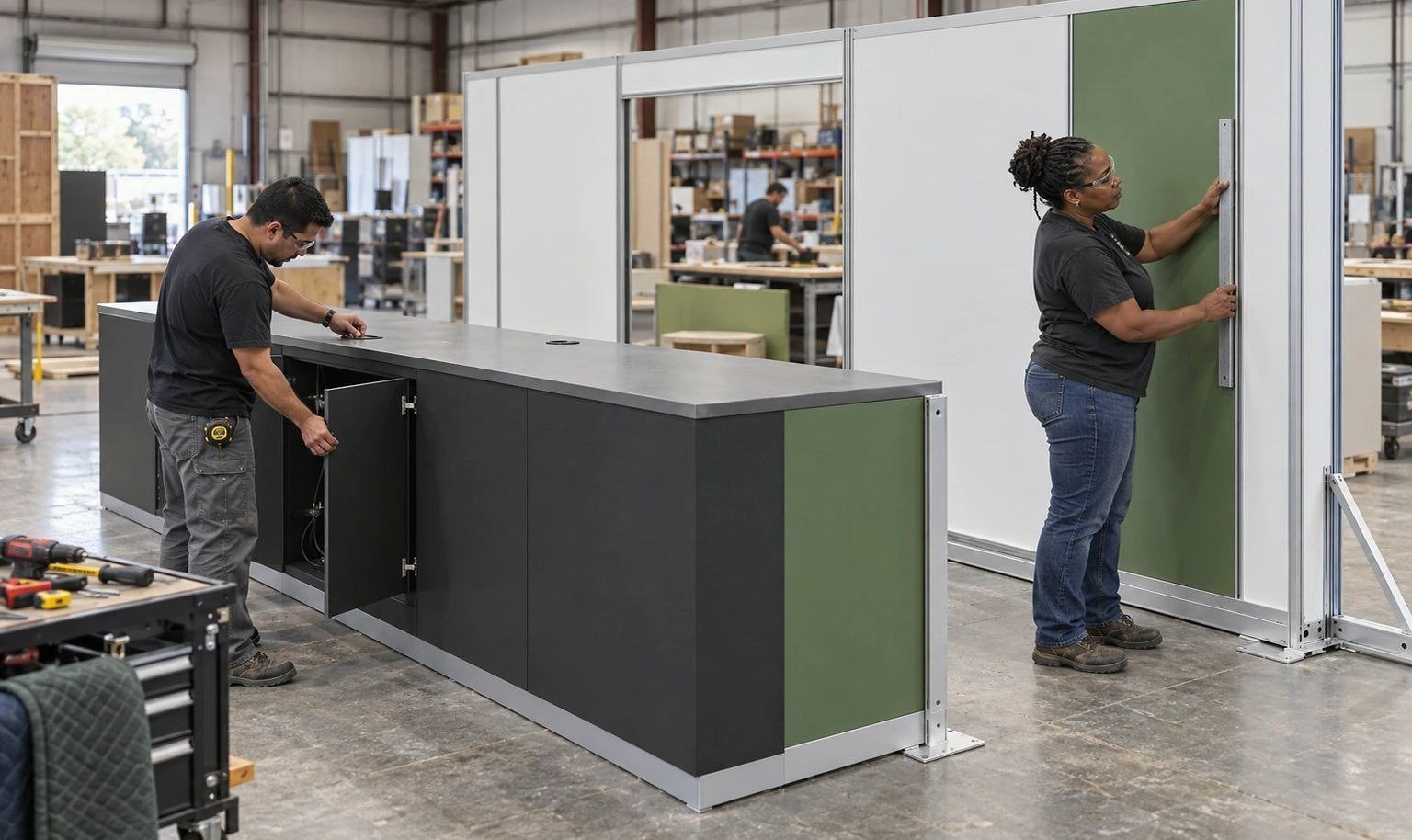
Link: /20×30-trade-show-rental-booths/ Supports machinery, product displays, dealer discussions and concealed storage.
-
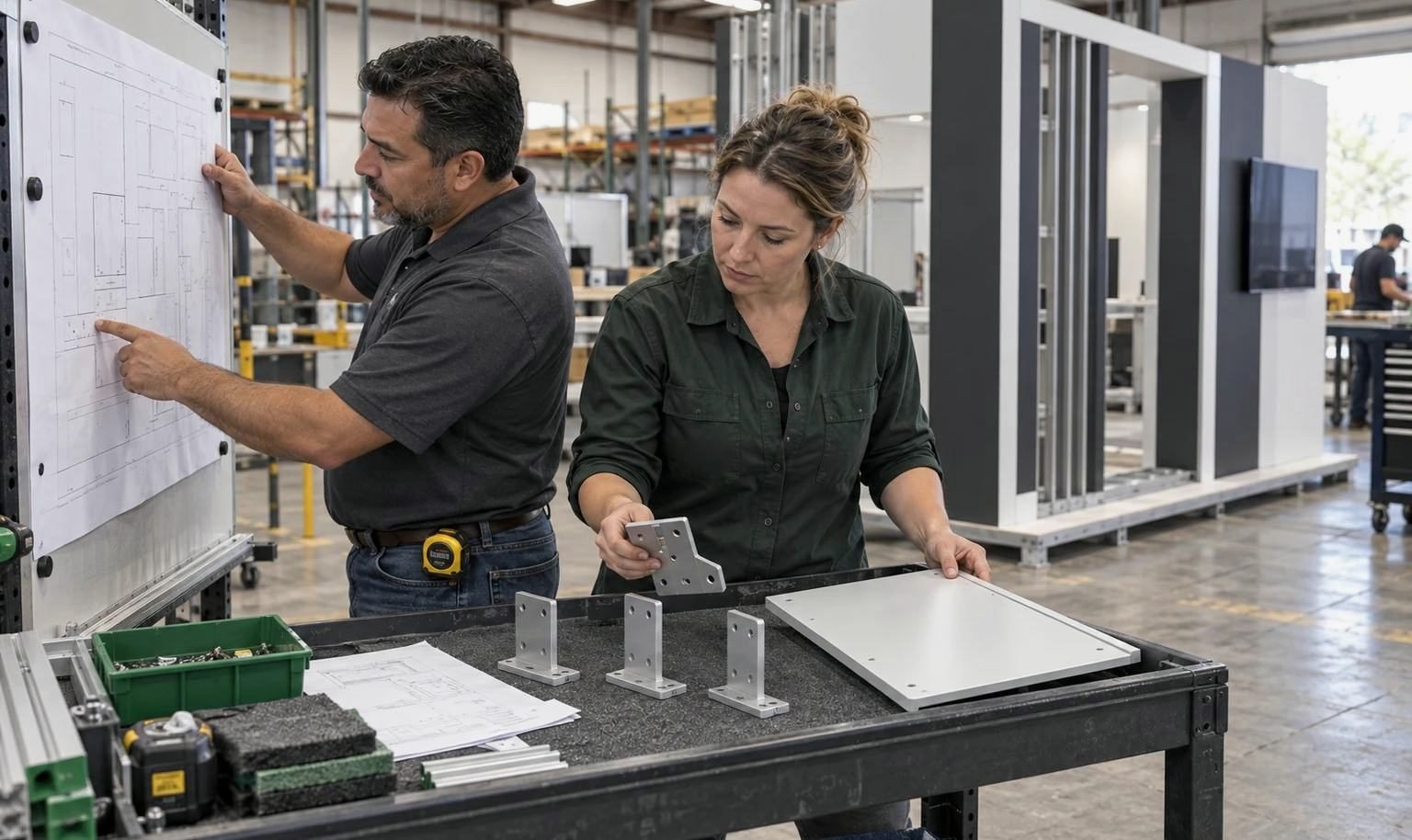
Link: /40×50-custom-trade-show-booth-rental/ Provides room for several equipment zones, demonstrations and regional dealer meetings.
Plan the Agriculture Booth Around Equipment, Inputs or Field Results
Indoor hall or outdoor site? That answer, together with the machinery, product dimensions, demonstrations and dealer meetings, determines the exhibit approach. The proposal will show the rental booth work and clarify where equipment handling or site services belong.