


Choose the ADLM Exhibit Format from What Visitors Must Examine
Analyzer or Laboratory-Automation Exhibit
Floor-standing analyzers, track systems and automation components need more than a product footprint. Record the largest shipping piece, final installed dimensions, weight, leveling or anchoring conditions, door and service access, operator position, heat output, cable exits and intended operating state. The booth can frame the system and explain where it fits in the laboratory, while the equipment route remains clear from delivery through removal.
Point-of-Care or Compact Device Demonstration
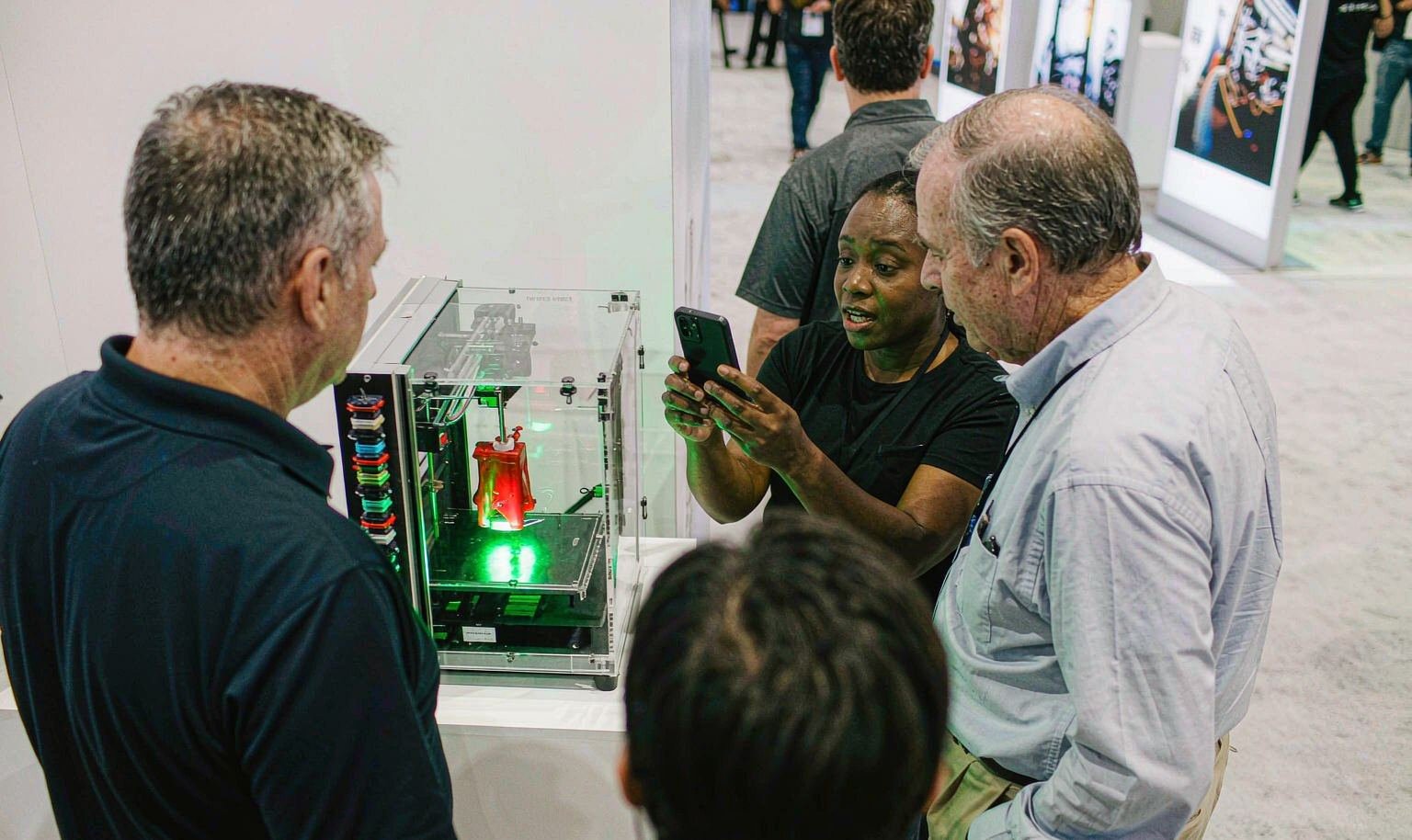
Smaller instruments invite close viewing and repeated handling. Set a defined operator side, visitor side and reset area so one demonstration does not stop the next. Keep cartridges, controls, accessories and approved disposables within staff reach but out of the main product view. A nearby screen can enlarge the interface or result sequence without replacing the physical product the visitor came to inspect.
Reagent, Assay and Consumable Presentation
Reagents, collection products, controls, calibrators and consumables become clearer when the display connects the item to the testing step and user. Use approved packaging, non-hazardous display materials or clearly identified representations appropriate to the current event rules. Confirm refrigeration, sample handling, liquid use, waste and staff responsibilities before the presentation is treated as operational.
Laboratory Software, Middleware or Data Workflow
Software demonstrations should start with a laboratory role and decision: accessioning, quality review, analyzer connectivity, result management, automation oversight or another verified task. Record the display, local or live environment, network dependency, peripherals, privacy controls and fallback content. Keep a technical specialist close enough to answer integration questions without turning every short product demonstration into a closed meeting.
ADLM Exhibit Rental Planned Around the Instrument and the Evidence
ADLM’s Clinical Lab Expo brings together products and services across diagnostics and laboratory medicine. A visitor may need to understand a testing principle, inspect an analyzer, compare workflow, review result presentation, discuss implementation or evaluate a supplier relationship. The booth should make that first task obvious from the aisle, then provide the product, approved evidence and qualified person needed for a deeper review.King Exhibits starts with the exhibit brief and equipment matrix. Each instrument, display, consumable set, screen, graphic, operator and meeting requirement receives a position in the 3D direction. This lets marketing review the message while product, applications, service and event teams check clearances, access, demonstrations and support needs against the same layout.Rental walls, towers, lightboxes, counters, flooring, furniture and storage can create the primary environment. Confirmed equipment conditions can then drive quoted work such as fitted counters, openings, supports, cable routes, access panels or branded surrounds. No product interface should be released from an estimated dimension when the actual equipment record can be obtained.The proposal defines what King Exhibits supplies and coordinates. Electrical, internet, plumbing, compressed air, material handling, rigging, labor, cleaning, security, catering and other organizer, venue or official-provider services remain separate unless the accepted quotation states otherwise. The current ADLM manual and approved plans control what may be operated or displayed at the event.
Build the Visitor Route Around Four Laboratory Buying Questions
Clinical laboratorians, pathologists, researchers and technical evaluators need a fast connection between the product and the test, specimen, analyte, laboratory setting or decision it supports. Lead with the verified application, then place detailed claims and references where the approved content can be read and discussed without crowding the aisle.

Laboratory managers, supervisors, applications teams and service engineers may focus on workflow, staffing, throughput, maintenance, interfaces, quality procedures or implementation. Give the relevant instrument, screen or process graphic enough room, then provide a standing or seated point where a specialist can answer operational questions using the exhibitor’s approved information.
Automation, middleware, data and integration discussions need more depth than a headline. A focused demonstration can show the authorized workflow while adjacent seating supports questions about instruments, users, connectivity, deployment and support. Use simulated or approved information and keep any confidential customer discussion away from open traffic.

Procurement, distributors, laboratory networks and business partners may need supply, territory, service, implementation or contracting discussions rather than another technical demonstration. Route qualified visitors to the appropriate team and give scheduled meetings enough privacy and duration. The exhibit should connect the product proof to the commercial next step without mixing private terms into public messaging.
A Direct AACC / ADLM Exhibit Reference
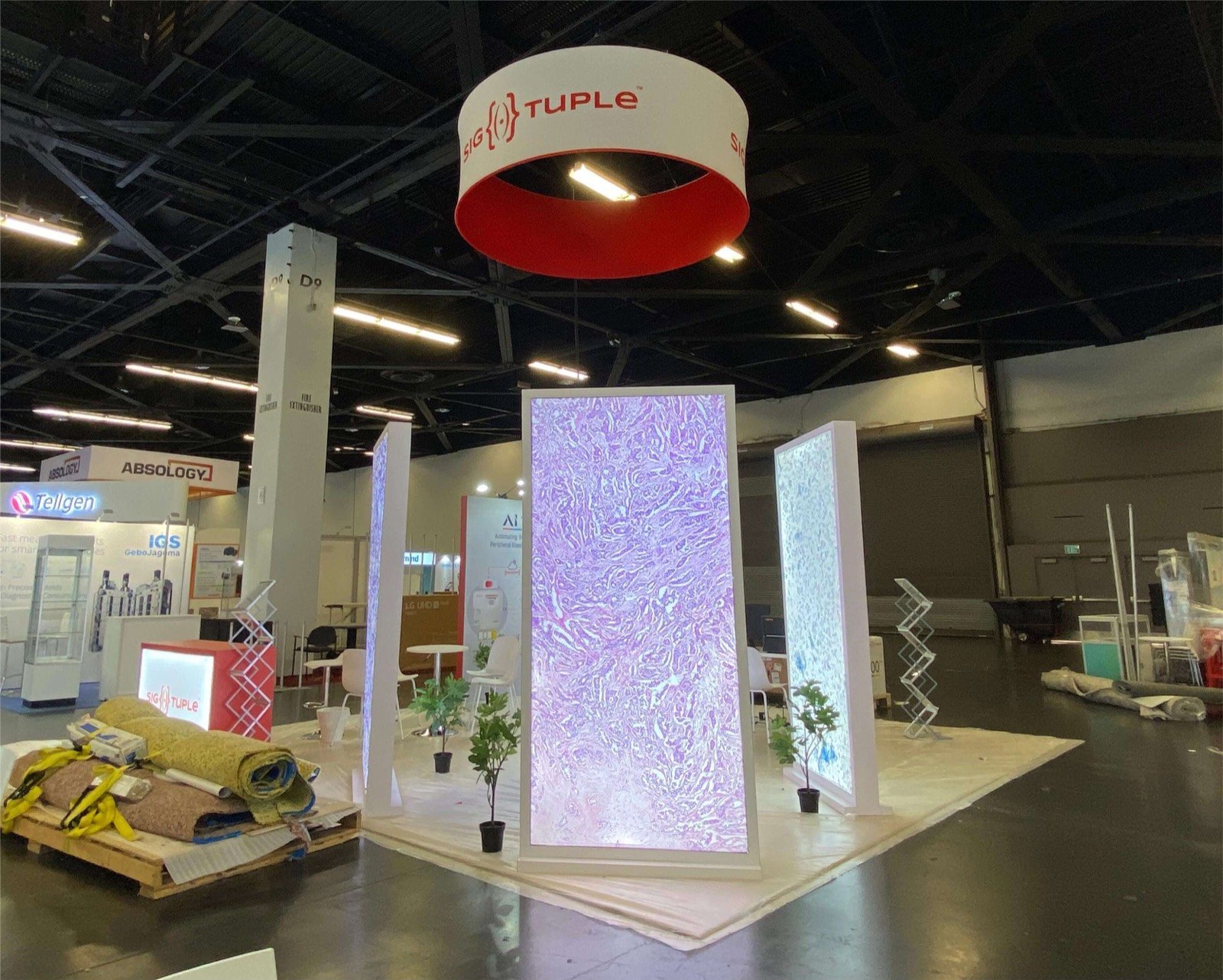
A 20×20 SigTuple exhibit was recorded at the 2023 AACC Annual Scientific Meeting, the former name used for today’s ADLM meeting. It is included as a predecessor-show space reference rather than proof of a measured result. Your next ADLM booth still begins with its own equipment, audience and current event requirements.
-
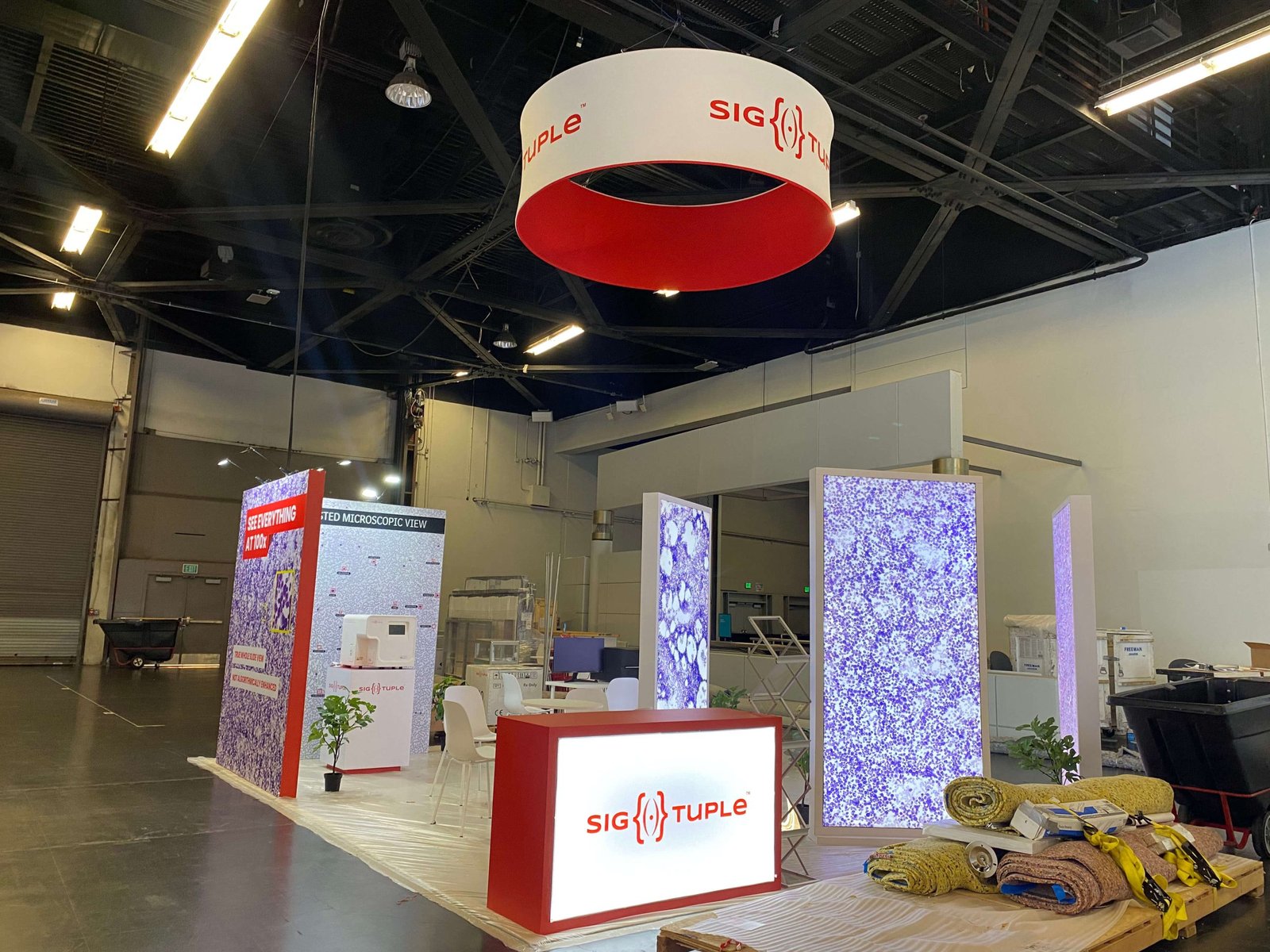 SigTuple at AACC 2023 — 20x20 ft
A 20×20 footprint can support a defined laboratory-technology story, hands-on or screen-based product review, storage and a place for technical discussion. A new ADLM project would still be rebuilt from its own equipment, audience, booth assignment and current rules.
Give Every Analyzer a Physical Interface Record
Assign each instrument, workstation and accessory an item number before the layout is approved. Record packed and operating dimensions, weight, doors, service panels, ventilation, operator space, visitor position, power, data, water, drain, heat and cable exits. King Exhibits can connect that record to the floor plan and any quoted counter, support or surround. When product and exhibit teams approve the same interface, the booth is less likely to block operation or require an improvised field correction.
Make the Sample-to-Result Story Visible in One View
List the step that brings a qualified visitor to each product: collection, preparation, analysis, quality control, interpretation, reporting or laboratory management. Place the approved graphic beside the instrument or screen that proves that step, then name the specialist who can continue the discussion. This keeps a broad portfolio from becoming a wall of unrelated platforms. It also shows where one shared workflow can connect several products without repeating the same introduction at every station.
Design the Demonstration Reset Before the First Visitor Arrives
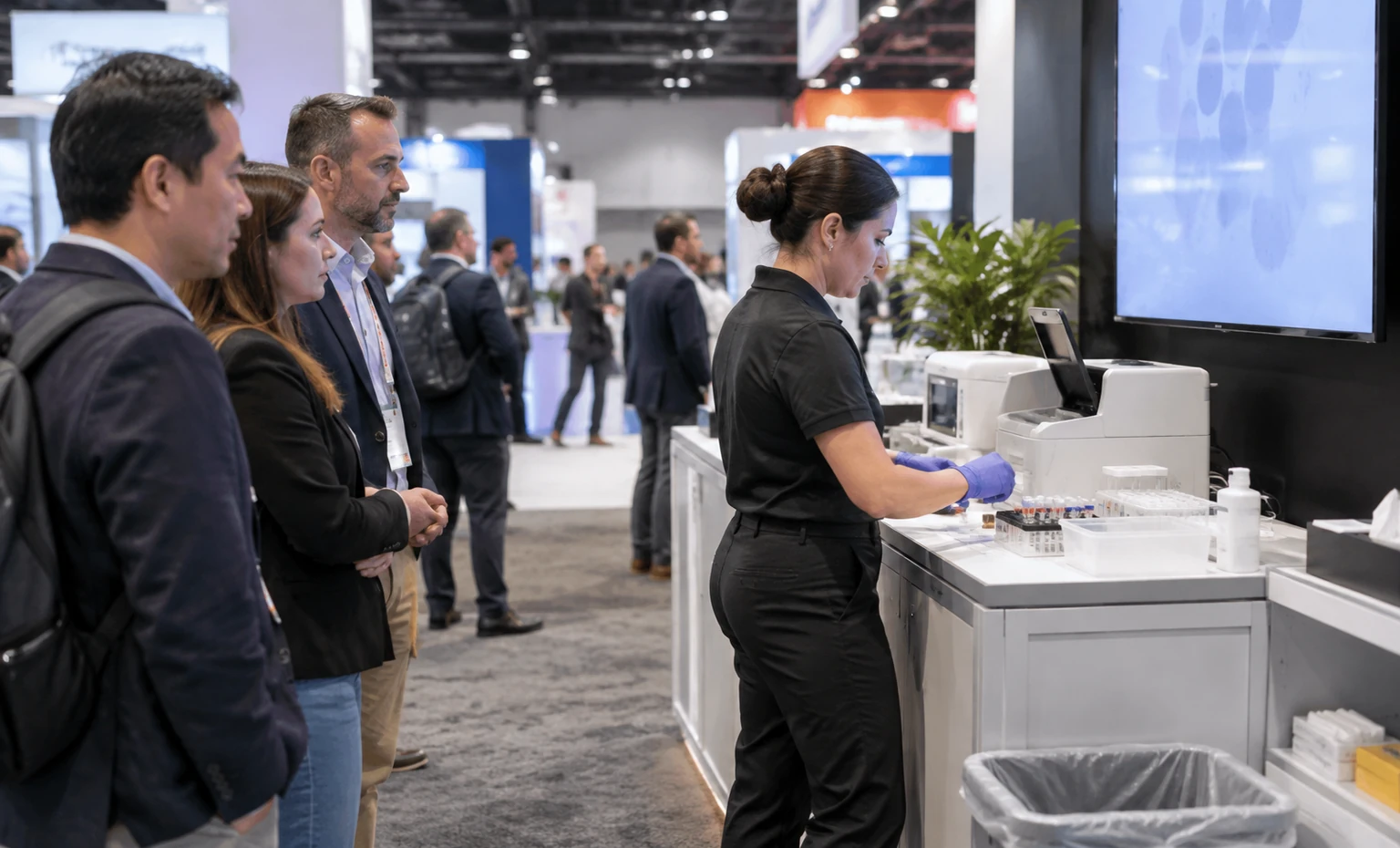
A laboratory demonstration must recover quickly after each group. Define who operates it, where viewers stand, how consumables are replenished, where used materials go and what happens when a connection or instrument is unavailable. Keep technical support access outside the visitor queue and prepare approved fallback media for the same product task. The resulting booth plan supports repeated evaluation instead of depending on one perfect live sequence throughout the expo day.
Review the Laboratory Product and the Rental Exhibit on the Same 3D Plan
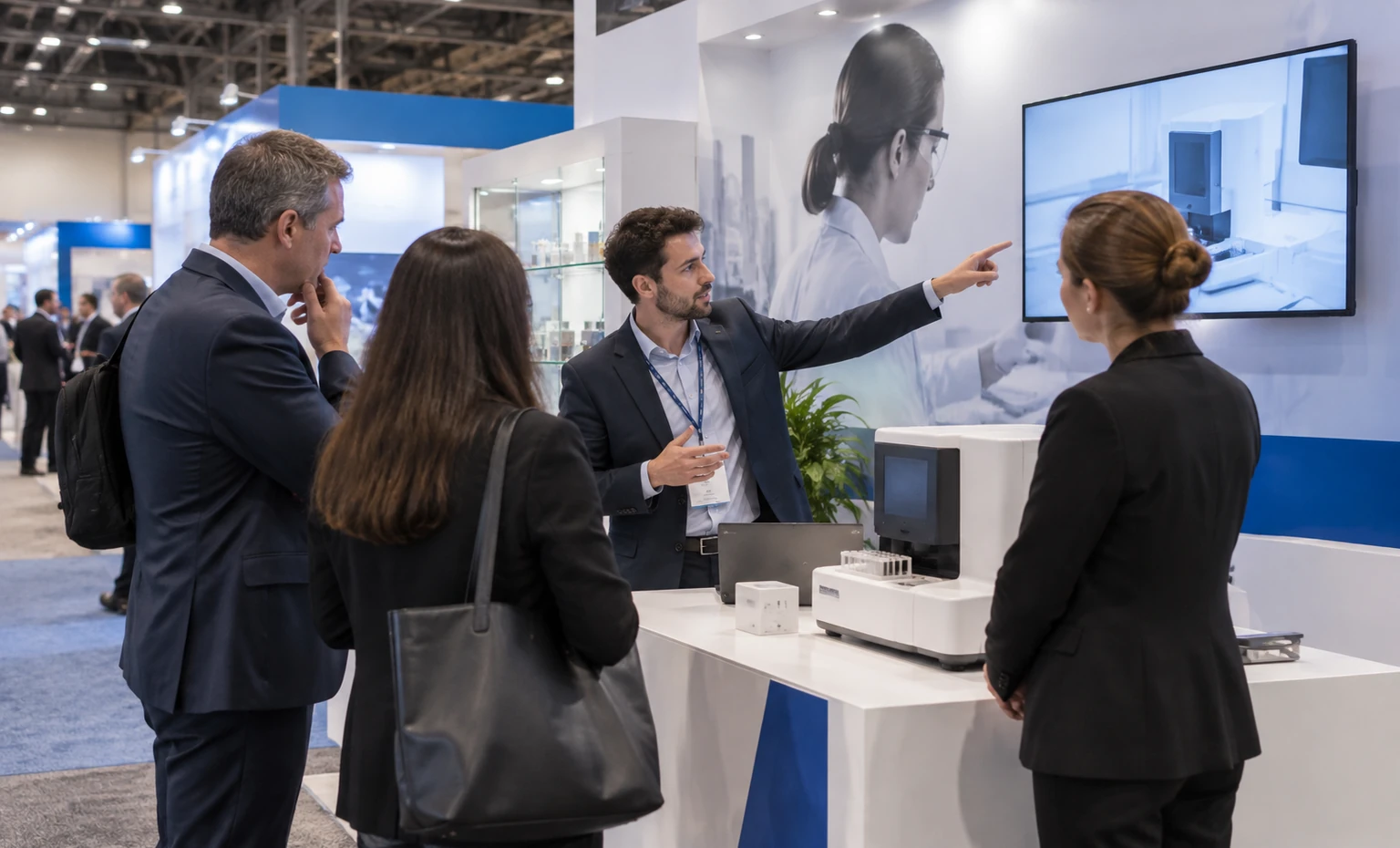
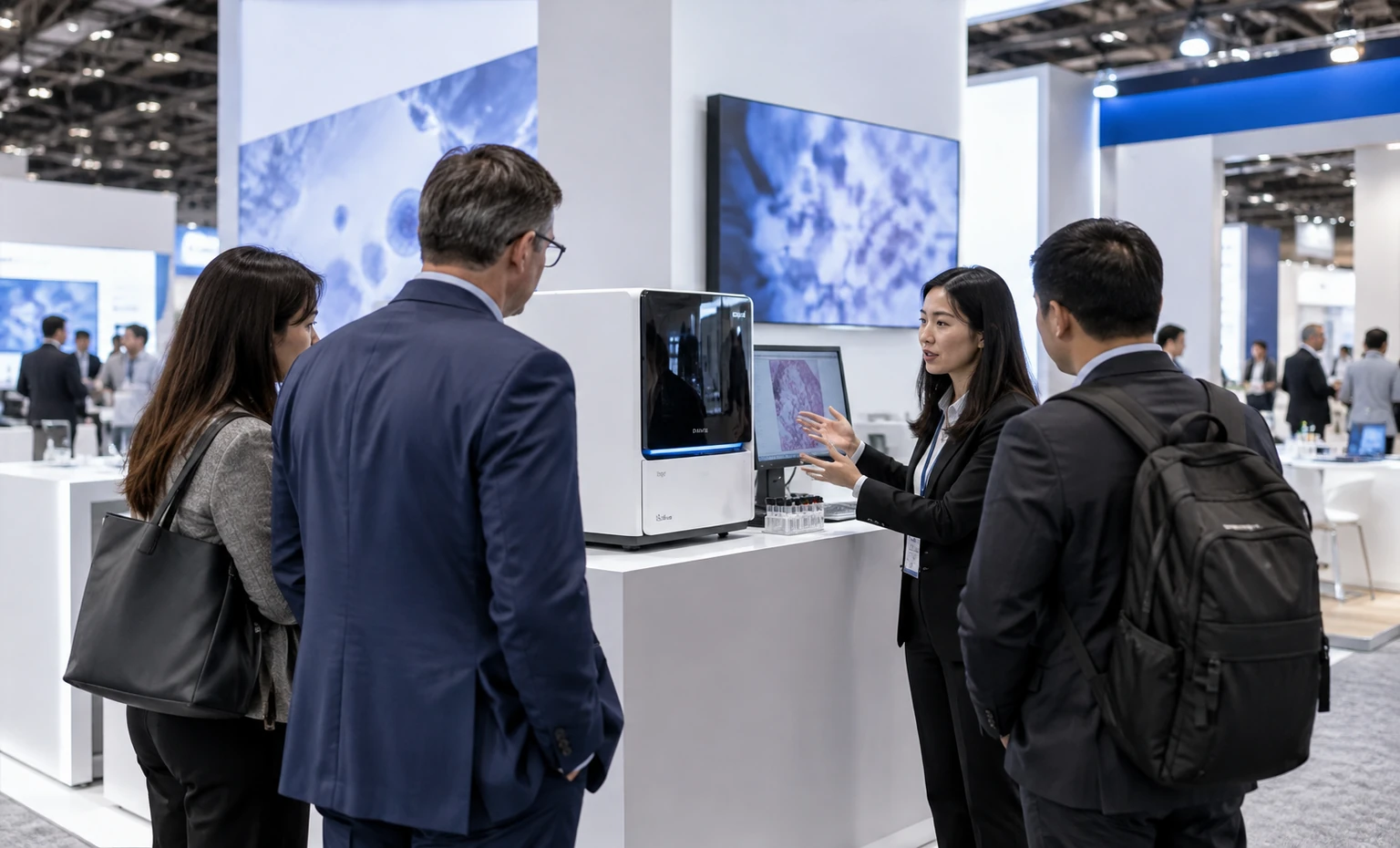
King Exhibits connects the selling task to the physical booth. The 3D direction shows the instrument or workflow, visitor approach, operator and viewing positions, product graphics, screens, storage and technical or commercial conversations together. Marketing can review the public story while product and applications teams verify that the demonstration still works in the proposed space.The rental system supplies the main branded environment. Where confirmed equipment needs a specific counter height, opening, support, mount, access panel or cable path, that feature can be defined and quoted against the interface record. This keeps custom work tied to a product requirement instead of using it as decoration without a purchasing purpose.The proposal then names the components, graphics and project work assigned to King Exhibits. Customer equipment, approved scientific or product content, official service orders and third-party responsibilities stay visible rather than disappearing inside a vague turnkey claim. The accepted quotation—not this page—defines the final commercial and onsite scope.
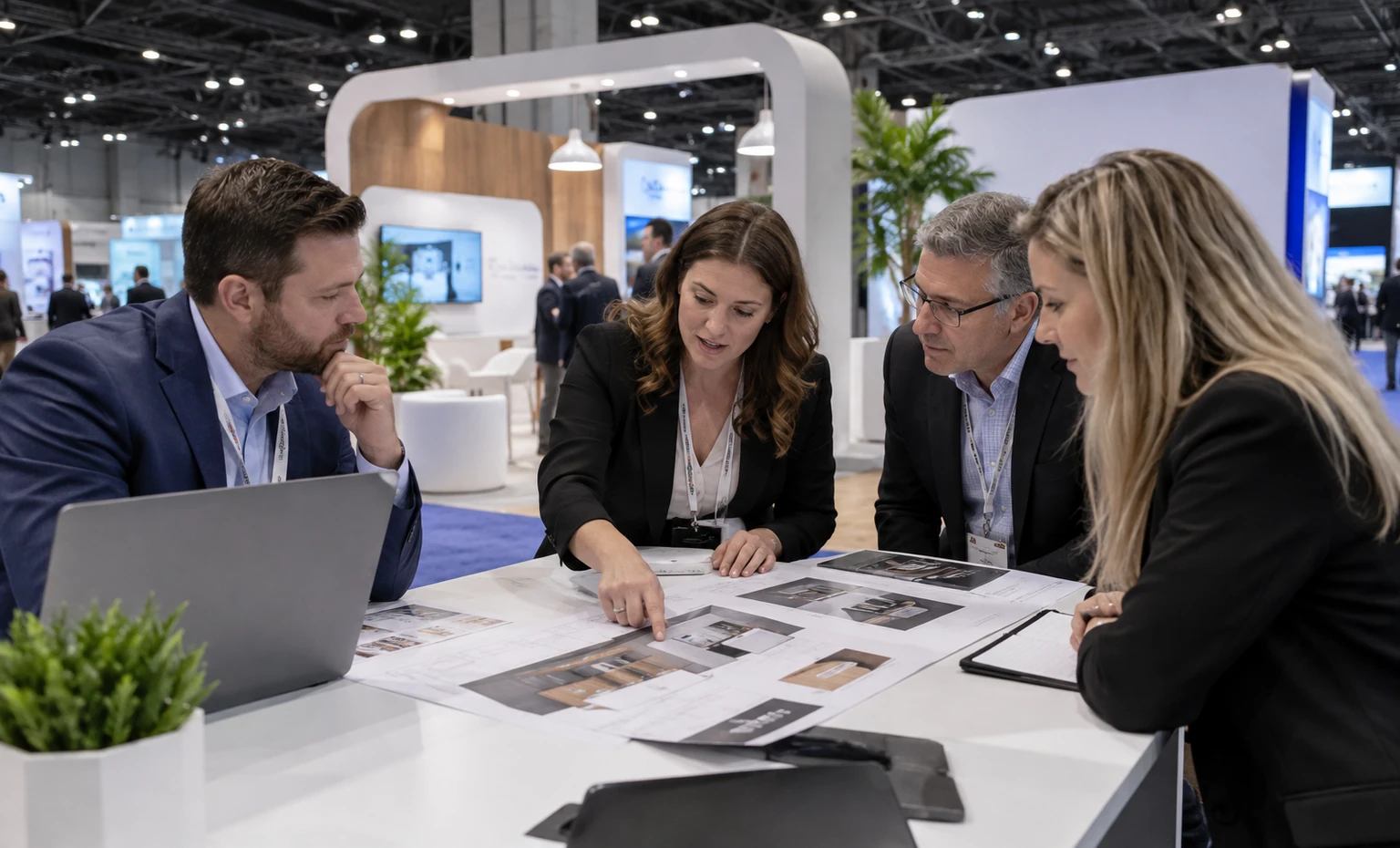
Turn the ADLM Product File into a Reviewable Exhibit Scope
What You Provide: Priority laboratory audiences, applications, products, approved claims, launch or sales goals and the action visitors should take.What We Do:
What You Provide: Instrument list, packed and operating dimensions, weight, access, operator and viewer positions, power, data, fluids, heat, consumables, waste, screens and fallback content.What We Do:
What You Provide: Staffing, scheduled meetings, visitor groups, privacy, literature, coats, bags, product storage, replenishment and hospitality needs.What We Do:
What You Provide: Booth assignment, open sides, height information, budget, freight route and the design, production or onsite support you want priced.What We Do:
What You Provide: Final artwork, approved product information, confirmed equipment records, accepted scope, current ADLM requirements, official orders, shipping details and onsite contacts.What We Do:
Yes, when the current show permits the intended operation and the complete equipment interface is approved. Send dimensions, weight, operating state, service access, operator and viewer positions, power, data, water, drain, heat, sound, consumables, waste and installation responsibility. The proposal will identify the quoted booth support; the exhibitor remains responsible for product operation and required approvals unless stated otherwise.
Only after the exhibiting organization confirms the material, procedure, labeling, storage, handling, safety, waste and current ADLM requirements. An approved non-hazardous representation, simulated workflow or recorded demonstration may be more practical when a live procedure is not allowed or cannot be supported safely. King Exhibits plans the physical display and interfaces named in the scope; it does not approve laboratory procedures or product claims.
Create one service row for every device and demonstration. Include the connection type, load or capacity, location, operating schedule, provider, order owner and test owner. Then show the route and access on the equipment plan. Current ADLM, McCormick Place and authorized-provider instructions determine the available services and ordering process; the accepted proposal defines any coordination assigned to King Exhibits.
Use the format that proves the intended buyer decision within the approved operating and logistics conditions. A live or non-operating analyzer supports physical evaluation; a cutaway or component may explain one mechanism; approved video can show a process that cannot run onsite. Compare evidence value, shipping, utilities, safety, staffing and reset time before reserving booth space around the display.
Start with the customer workflow or laboratory task that connects them. Give each product a distinct step, buyer, proof and specialist rather than repeating the corporate introduction. A shared orientation graphic can lead to focused instruments, screens or discussion points. The floor plan should preserve enough separation for simultaneous demonstrations while making related products easy to compare.
Footprint, booth type, rental architecture, graphics, lighting, flooring, counters, screens, storage, meetings and fitted equipment details shape the exhibit price. Packing, freight and installation or dismantling depend on the agreed scope. Organizer, venue and official-provider charges such as material handling, utilities, internet, rigging, labor, cleaning or security may be separate unless the quotation specifically includes them.
Often, but the next footprint, venue, audience, products, equipment interfaces, approved content and show rules require another review. Durable rental architecture and corporate graphics may be reconfigured, while event-specific messages, instrument surrounds or utility plans may change. Tell us which meetings are planned so the first proposal can distinguish reusable components from elements tied to one product or edition.
Send the edition, booth number and size, open sides, products, instruments, packed and operating dimensions, demonstration sequence, utilities, screens, graphics, target audiences, meetings, storage, freight, budget and the services you want King Exhibits to quote. Include the current exhibitor manual or portal access available to your team. We will identify missing inputs before presenting the 3D direction and proposal.
Compare Booth Sizes for Laboratory Equipment and Technical Meetings
-
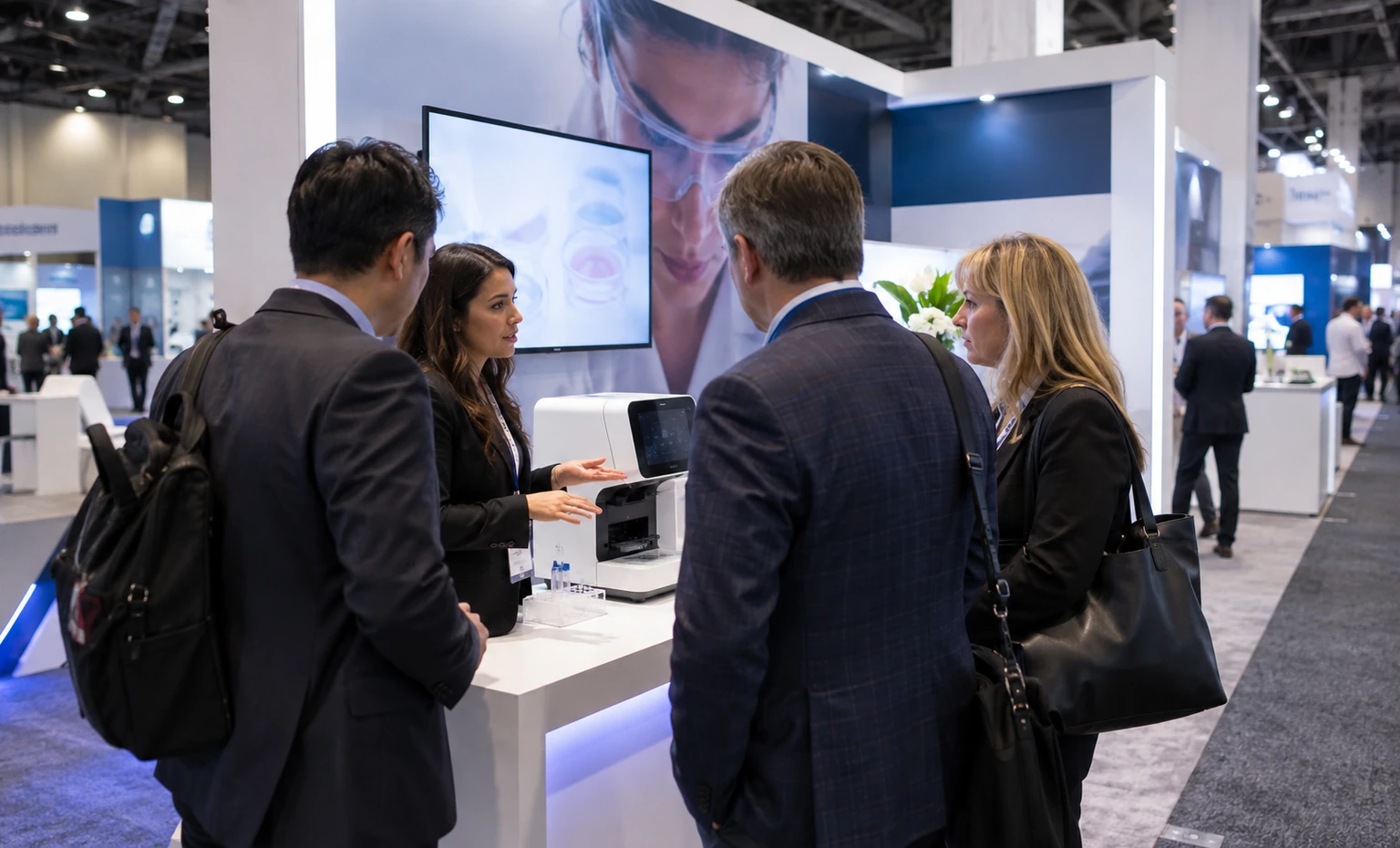
Suitable for one focused analyzer, point-of-care system, software workflow or assay story with a compact demonstration and conversation point.
-
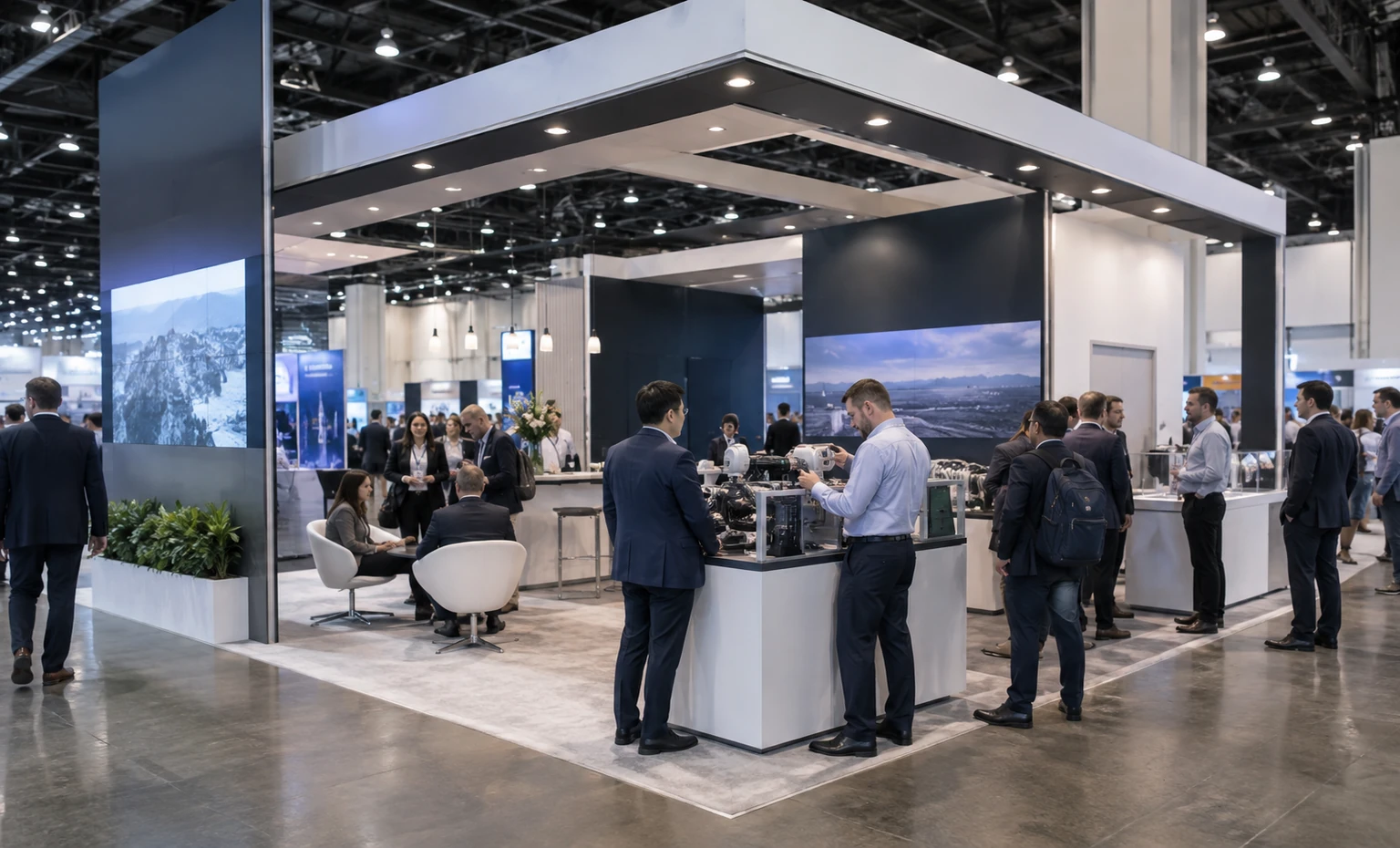
Supports several product touchpoints, a larger working demonstration, storage and open technical discussions within an island footprint.
-
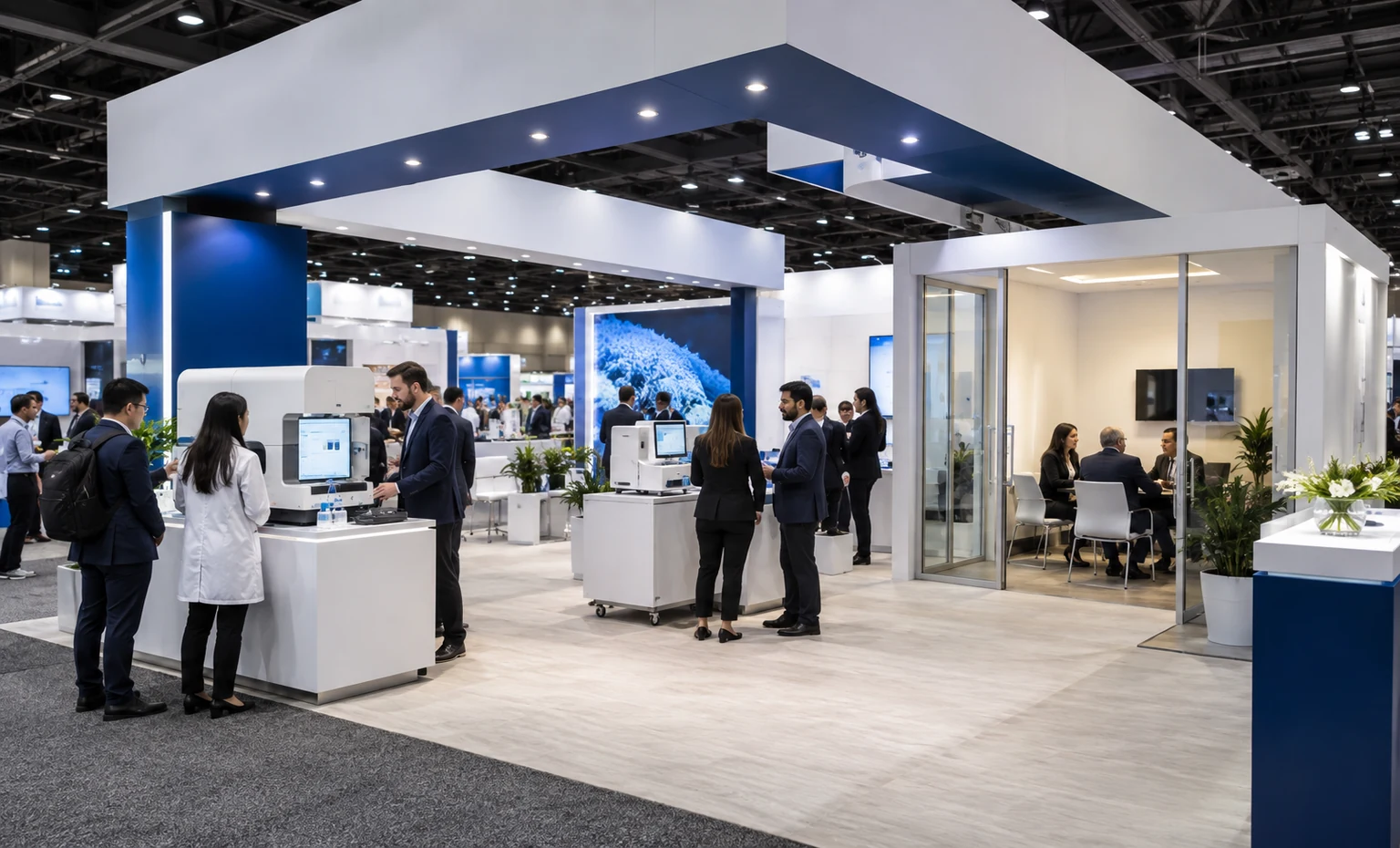
Provides more separation for multiple instruments or workflows, applications support, private meetings and back-of-house product operations.