
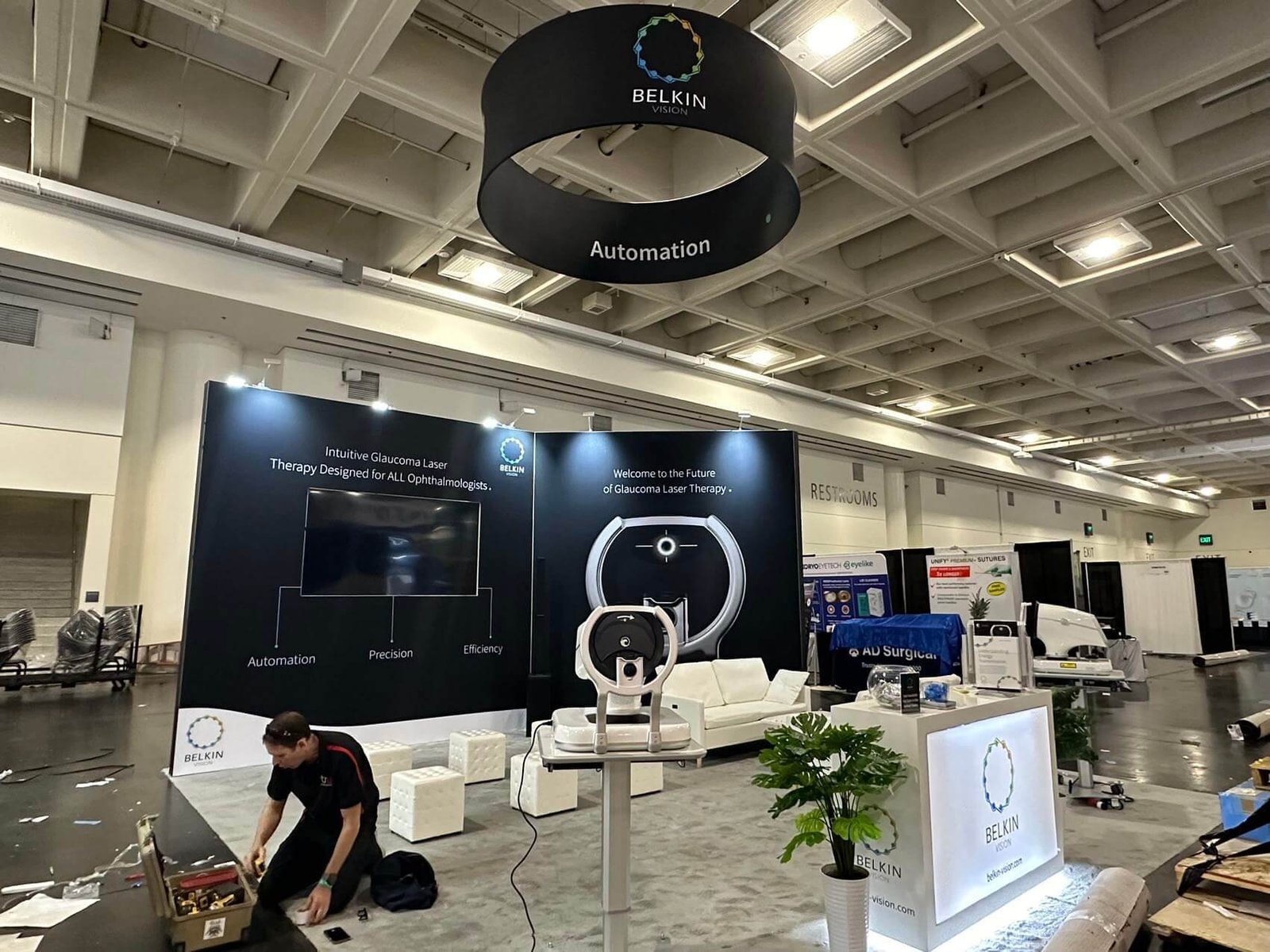


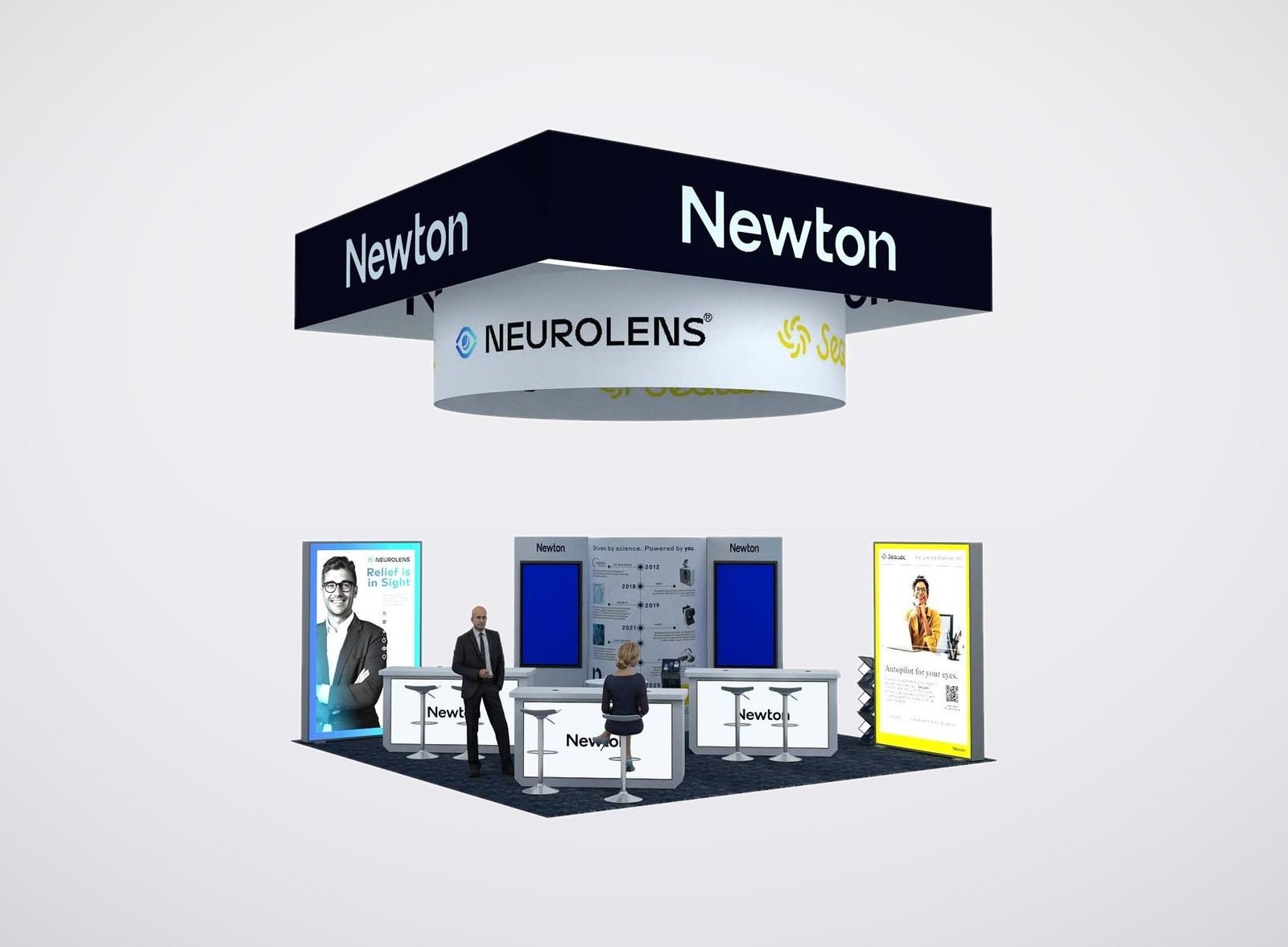
Choose the AAO Exhibit Layout by the Demonstration
Diagnostic and Imaging Equipment
Surgical Systems, Lasers and Procedure Technology
Instruments, Lenses, Implants and Small Products
Software, Practice Systems and Digital Services
AAO Exhibit Rental Built from Your Equipment and Conversation Plan
The American Academy of Ophthalmology Expo puts equipment, technology and specialist conversations in the same hall. For an exhibitor, that creates a physical design problem: the product, operator, viewer and result must remain understandable even when another group is waiting and the aisle is busy. A large logo cannot fix a screen reflection, inaccessible control, blocked sightline or missing reset area.King Exhibits starts an AAO exhibit rental with your product register. We record each device, instrument, sample, screen and workstation with its dimensions, handling condition, operating sides, technical connections and owner. Those items are placed with the rental architecture, graphics, lighting, flooring, storage and meeting areas in one 3D review. Quoted custom fabrication can address fitted work surfaces, mounts, compartments or access details after interfaces are confirmed.Your organization remains responsible for medical, scientific, legal and regulatory approval, product status, permitted demonstrations and staff conduct. Current AAO, venue and official-service requirements still govern show-floor work. The accepted King Exhibits proposal identifies our work and keeps organizer, venue and separately ordered services visible.
Plan Each Ophthalmology Exhibit Zone Around One Buyer Question
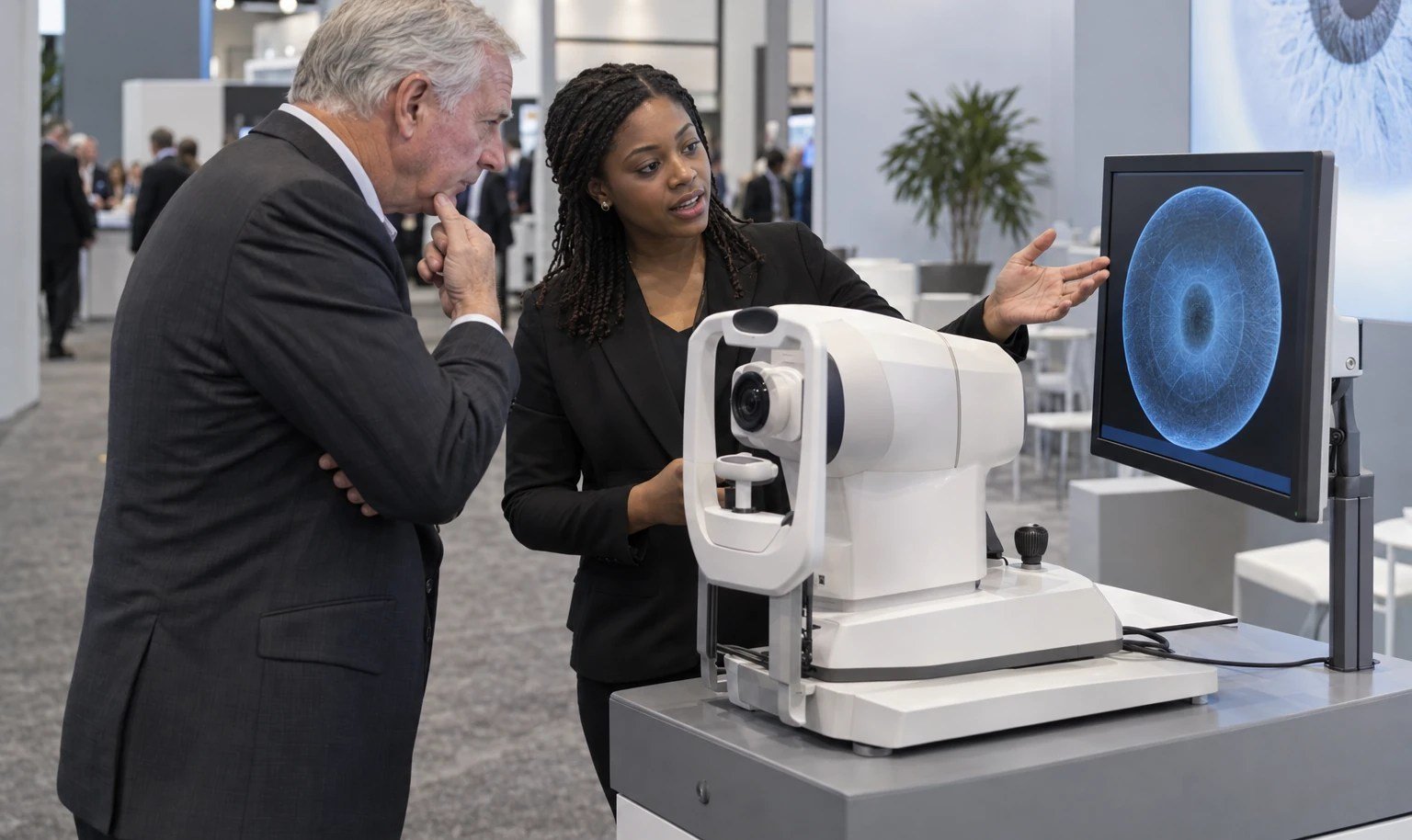
Give diagnostic, imaging and surgical-technology visitors the right viewing distance and a legible result. The device, screen and explanation should form one visual sequence. Keep operator access and service panels clear, then place the next question—workflow, specifications or commercial scope—where the appropriate specialist can answer it.
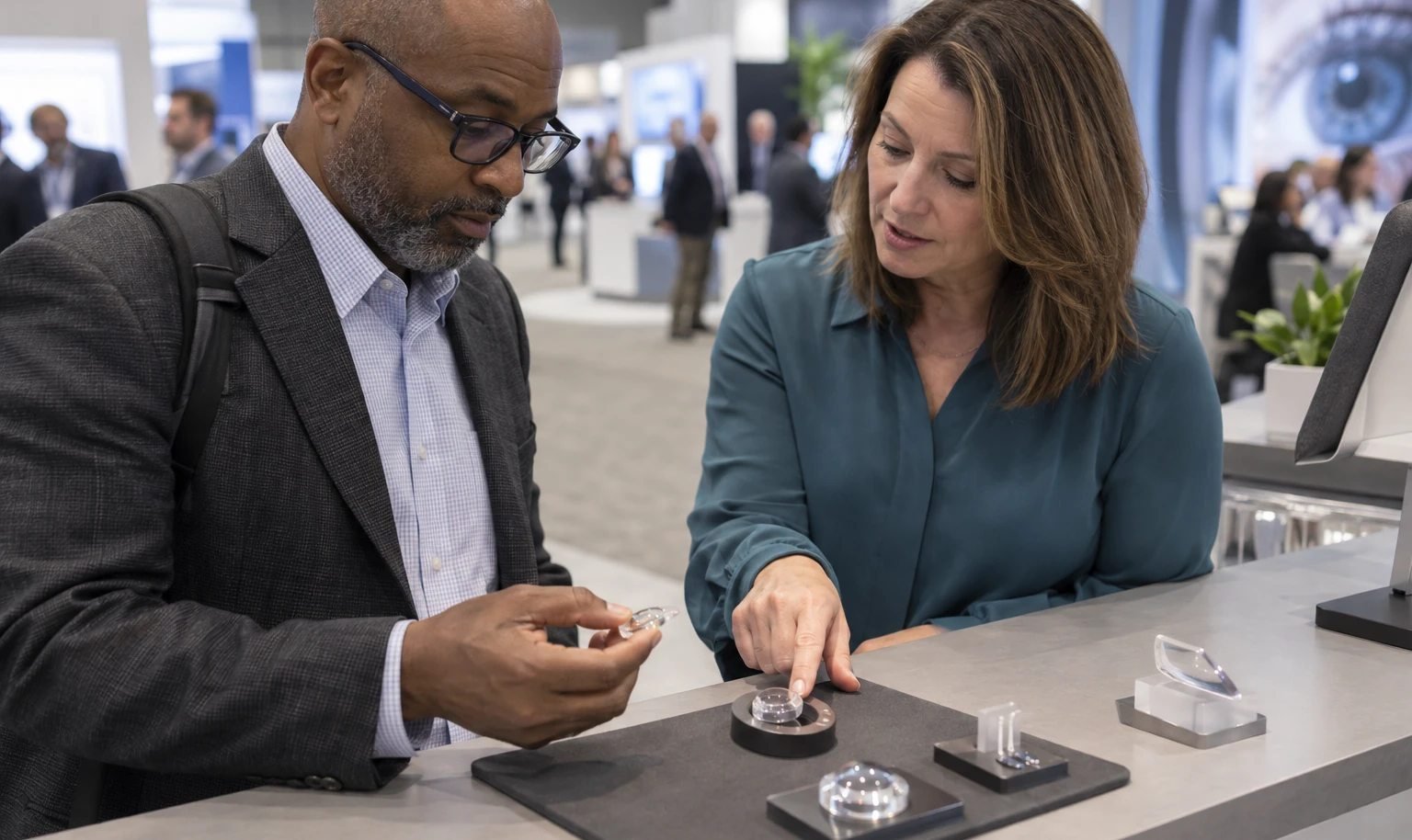
For instruments, lenses, implants, accessories and smaller products, define permitted handling, comparison order, staff control and reset. Avoid deep cases that hide the working detail or open trays that create inventory confusion. Lighting, holders and concise approved labels should support the actual decision, not decorate an undifferentiated product wall.
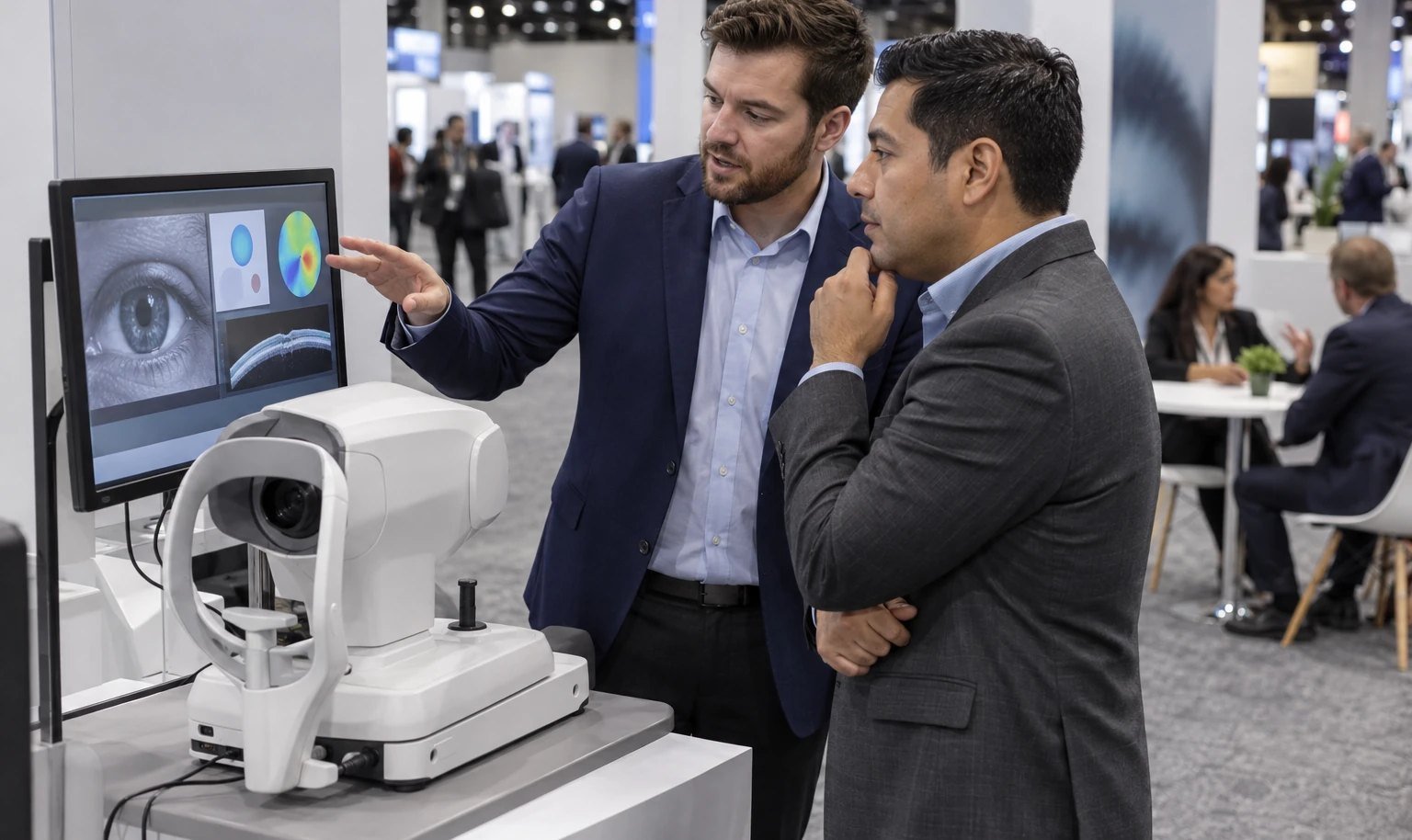
Software, practice systems and connected devices need a beginning and an end. Show the action, output and next operational step without exposing real patient data. Allow two people to view the interface comfortably, then provide a nearby place to discuss integration, training, purchasing or deployment without holding the main workstation.
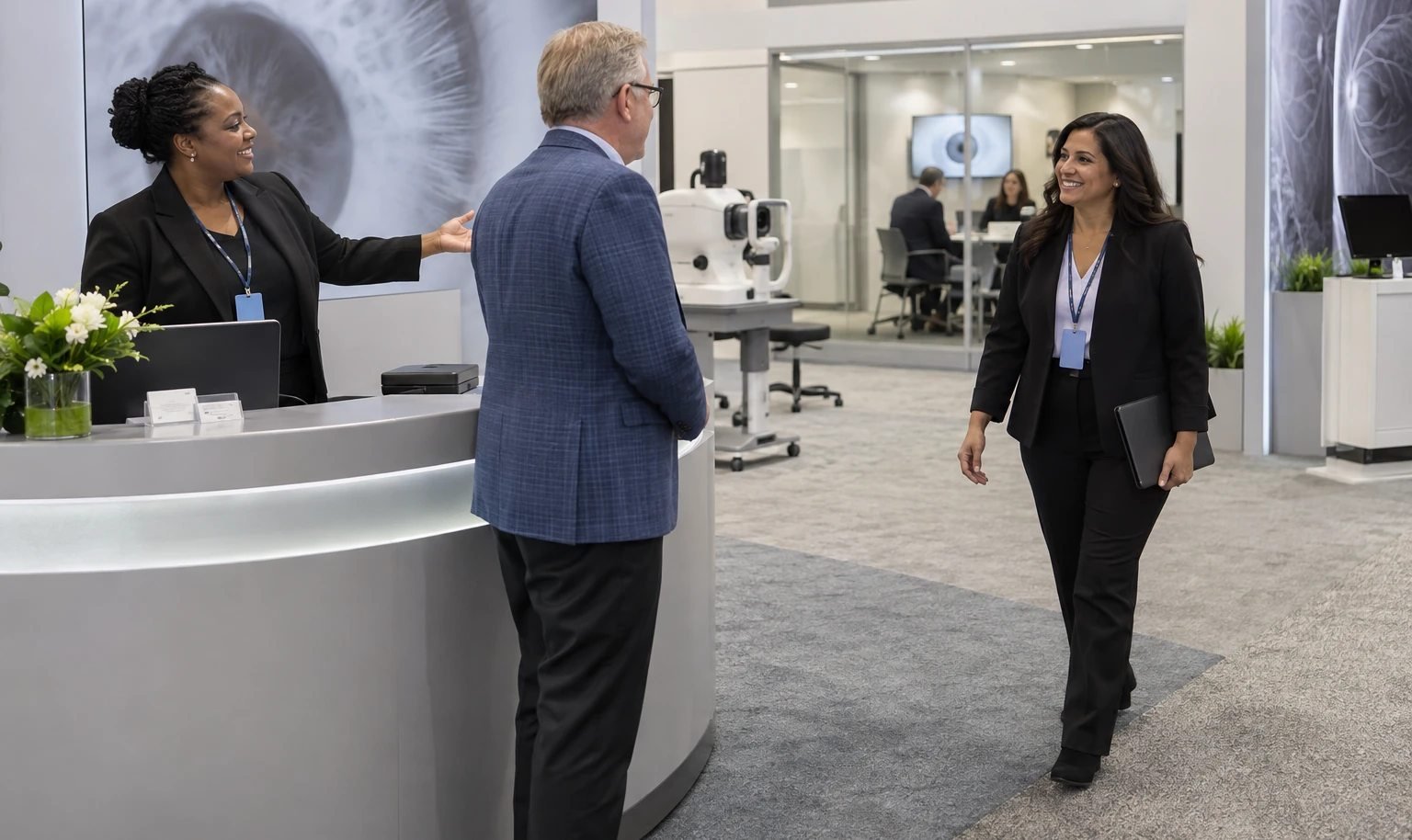
Reception should identify whether the visitor needs a product specialist, clinical educator, distributor contact, procurement discussion or scheduled meeting. The physical handoff matters: signs, staff positions and meeting access should move qualified conversations forward while keeping the product edge open for new visitors.
Draw the Complete Viewing Geometry
Place the device, operator and intended participant on the plan, then add what the ophthalmologist must see: the physical feature, eyepiece, projected image, live screen or result display. Mark the second observer and next waiting visitor as well. This reveals whether a counter, tower or screen blocks the evaluation. It also shows where an angled station, open corner, adjustable display or separate review screen can make the demonstration easier to follow.

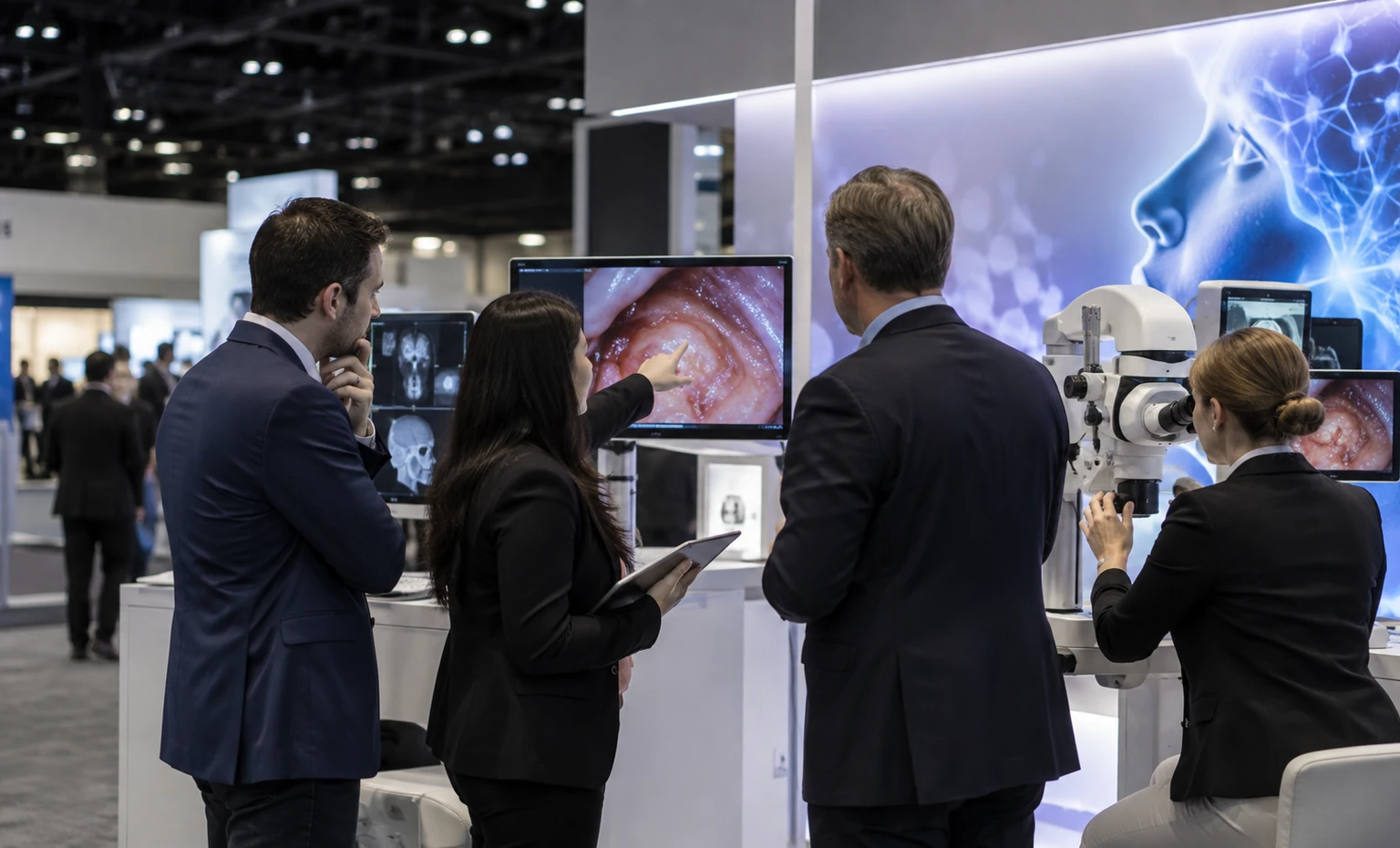
Test the Image Before Approving the Lighting
List every screen, microscope view, scan, surgical video and software output the visitor needs to read. Review its height, viewing distance, brightness, reflection risk and relationship to branded lighting. A dramatic illuminated wall can weaken the product explanation if it washes out a diagnostic image. Define a data-free or approved recorded fallback for network-dependent content, then keep controls and cable access reachable without exposing them to the public route.
Give Every Demonstration a Clean Reset
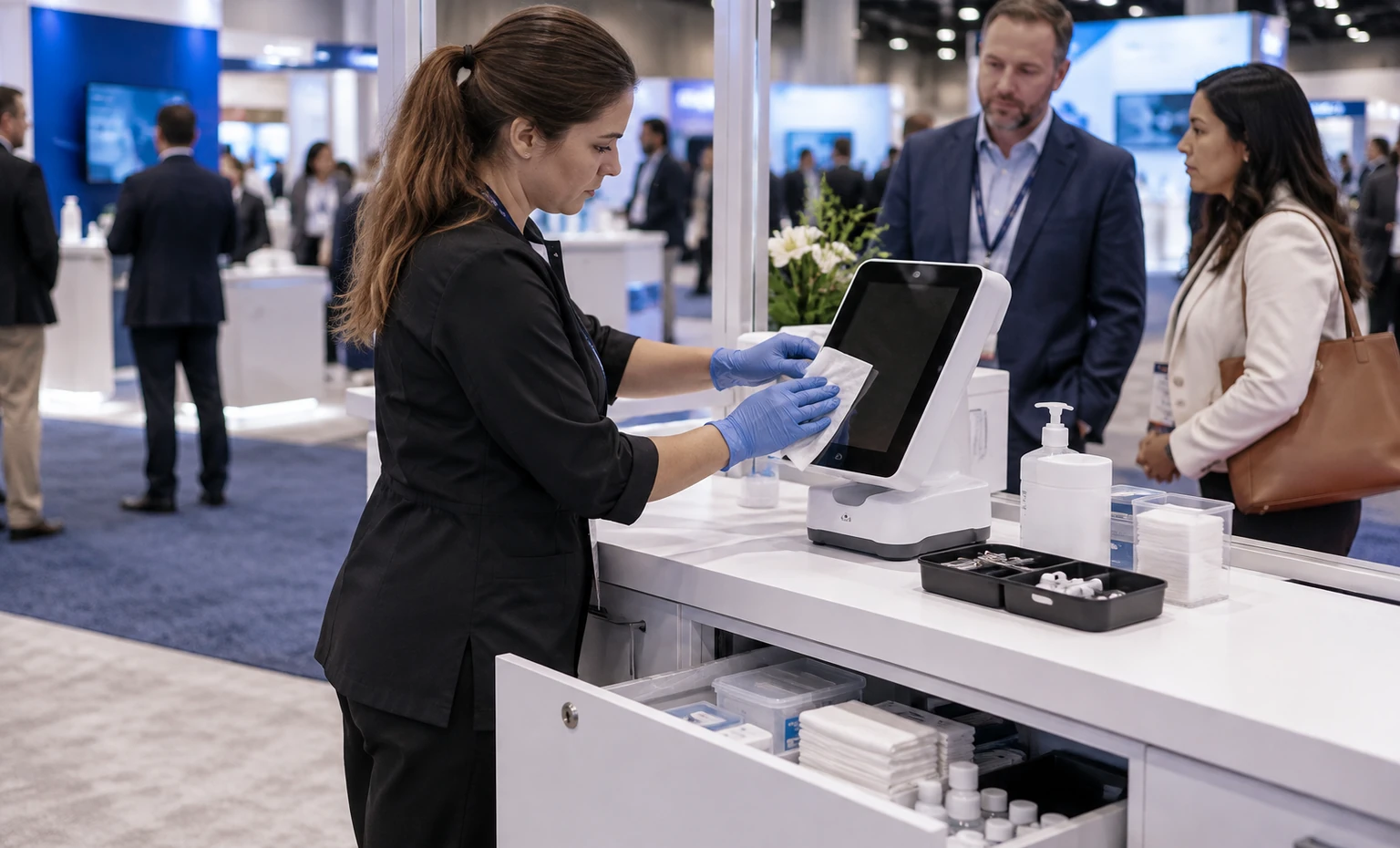
Write the exhibitor-approved steps between one visitor and the next: remove or replace a contact item, clean the specified surfaces, return controls, reload consumables, confirm the software state and account for small accessories. Put those supplies and actions on the staff side of the station. Lockable storage is useful only when the team can reach it without crossing the demonstration. Linking display counts, reserve stock and packing records helps the opening team spot a missing component early.
Review the Ophthalmic Product and Exhibit as One Build
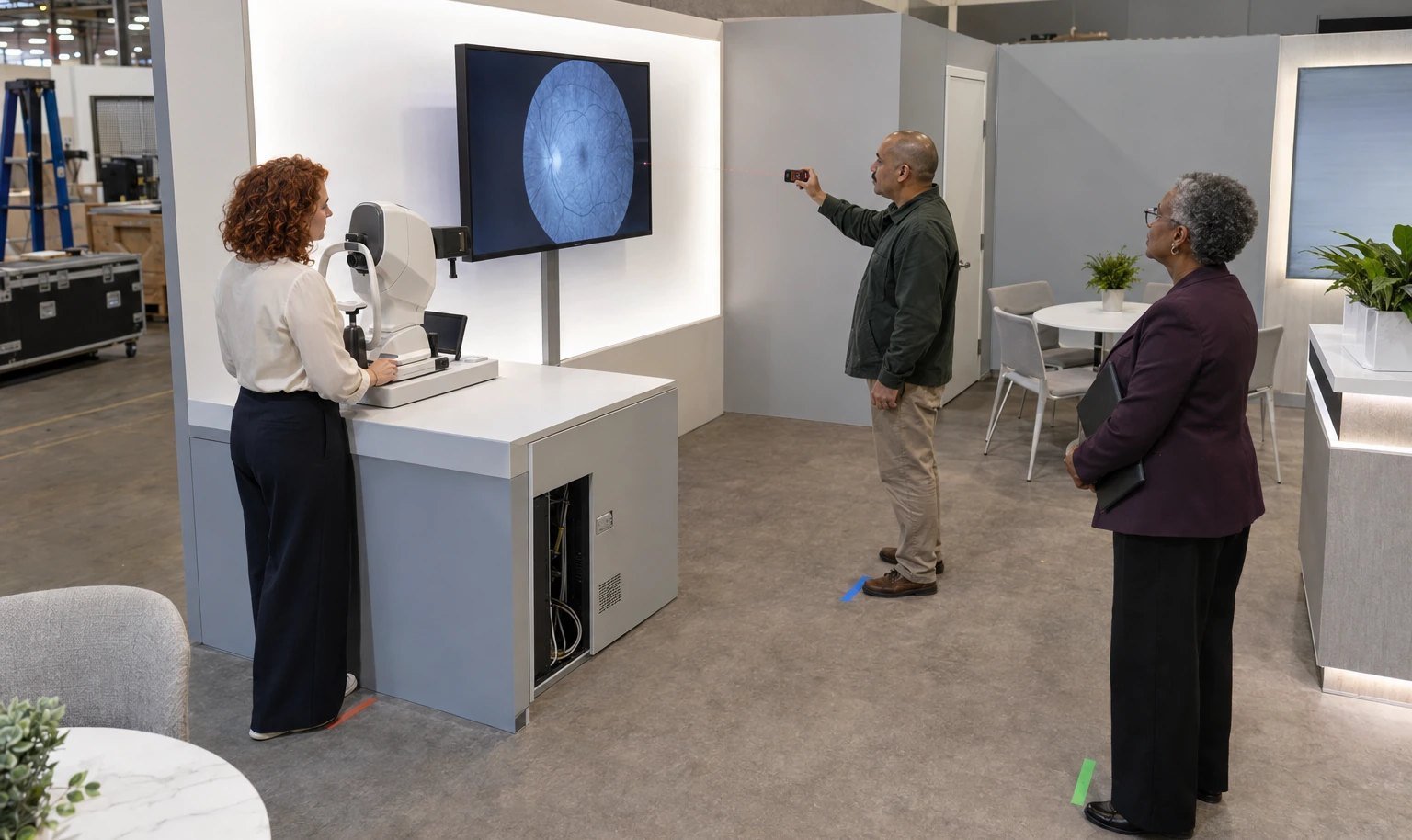

King Exhibits uses the confirmed product interaction to drive the booth plan. The 3D direction can show device positions, working sides, viewing geometry, screens, light sources, graphics, reception, storage and meeting areas together. Event marketing, product, medical/regulatory, sales and operations teams can review the same physical arrangement before the rental assets or custom parts move into production.Rental walls, towers, lightboxes, counters, flooring, furniture and screen supports create the main environment. When an ophthalmic device needs a fitted surface, cable opening, access panel, holder, secure compartment or brand-specific feature, confirmed drawings can guide quoted CNC and wood fabrication. Approved graphic files are assigned to named positions so late content changes remain traceable.Pre-build and project checks compare the approved structure, graphics and identified components before packing. The proposal also distinguishes King Exhibits’ rental, custom, transport and agreed installation/dismantling work from material handling, electrical, internet, rigging, labor, security and other show or venue services unless they are expressly included.

Move from Ophthalmic Demo Brief to AAO Exhibit Release
What You Provide: Booth assignment, target visitors, product list, visitor actions, approved-message status, staff roles and meeting goals.What We Do:
What You Provide: Device dimensions and weight, working and service sides, participant position, screens, power/data, heat, light sensitivity, sound, cables, cleaning/reset, security and delivery method.What We Do:
What You Provide: Brand files, approved graphics, furniture, storage, meeting needs, budget direction, freight plan and services you want priced.What We Do:
What You Provide: Final product/content approvals, current AAO requirements, official orders, shipment details and onsite contacts.What We Do:
Yes, when the product, activity and operating condition are permitted by current show requirements and your organization’s approvals. Send the equipment drawings, handling method, operator and participant positions, observer space, utilities, cleaning/reset routine and required status language. We will plan the physical station and identify the work included in our proposal; your team remains responsible for product use, claims and approvals.
We need the screen size, content source, aspect ratio, viewer distance, brightness, ambient-light concerns, audio, power/data, cable path and fallback content. The 3D review can test screen orientation and nearby light sources before production. Final medical, scientific and promotional content must be supplied and approved by the exhibitor.
Yes, when the equipment dimensions, weight, working sides, service access, ventilation, cable exits and supplier requirements are confirmed. Quoted CNC and wood fabrication can provide fitted work surfaces, openings, surrounds, holders or compartments. Equipment engineering, certification and permitted operation remain with the exhibitor and equipment provider.
Start with a display list, permitted handling method, reserve-stock count and staff responsibility. We can include fitted holders, staff-side access and lockable storage in the booth scope. Your team should define inventory checks, cleaning, product status, overnight procedures and whether separate security is required.
Footprint, open sides, rental architecture, custom equipment fixtures, graphics, lighting, screens, LED/AV, flooring, furniture, storage, meeting space and technical interfaces shape the exhibit scope. Packing, transport, installation, dismantling and storage are priced when requested. Official material handling, electrical, internet, rigging, labor, security and venue services may remain separate unless the accepted quotation states otherwise.
Often. Rental walls, towers, counters, lightboxes, screen supports and meeting components can be reconfigured, while event-specific graphics and device fixtures may change. The next assignment, rules, product list, approved content and demonstration plan must be reviewed again. Keeping durable architecture separate from edition-specific files makes adaptation easier to plan.
Send the show edition, booth number and size, open sides, target visitors, product and equipment register, dimensions and interfaces, demo sequence, approved-content status, staffing, screens, lighting concerns, cleaning/reset, storage/security, meetings, graphics, freight plan, budget direction and the onsite services you want King Exhibits to price.
Compare Booth Sizes for Ophthalmic Demos and Meetings
-
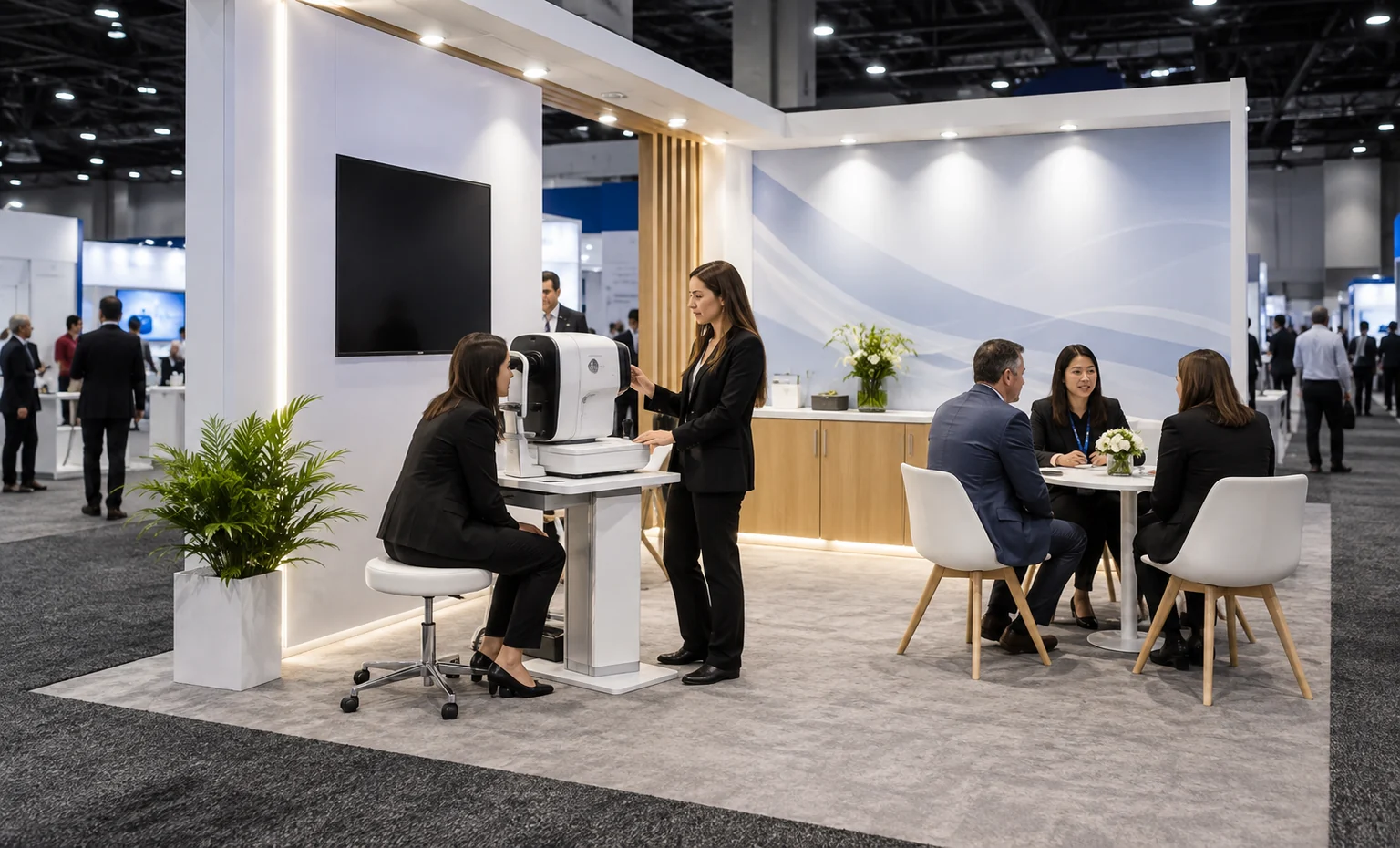
Supports one focused device or product family, a controlled demonstration edge, staff-side storage and a compact specialist discussion.
-
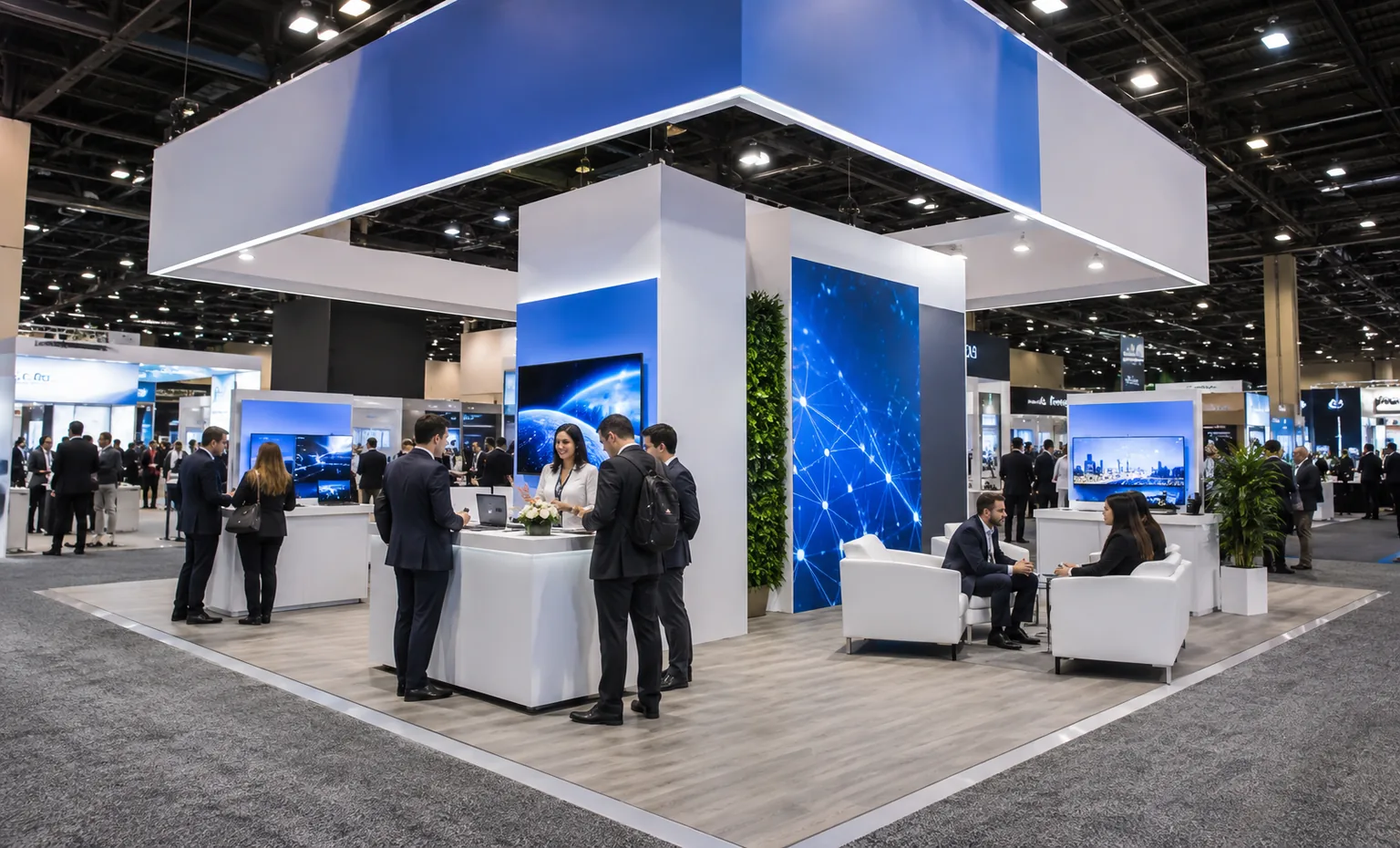
Creates an island layout for several viewing positions, one or more demonstration stations, concealed storage and a separate conversation point.
-
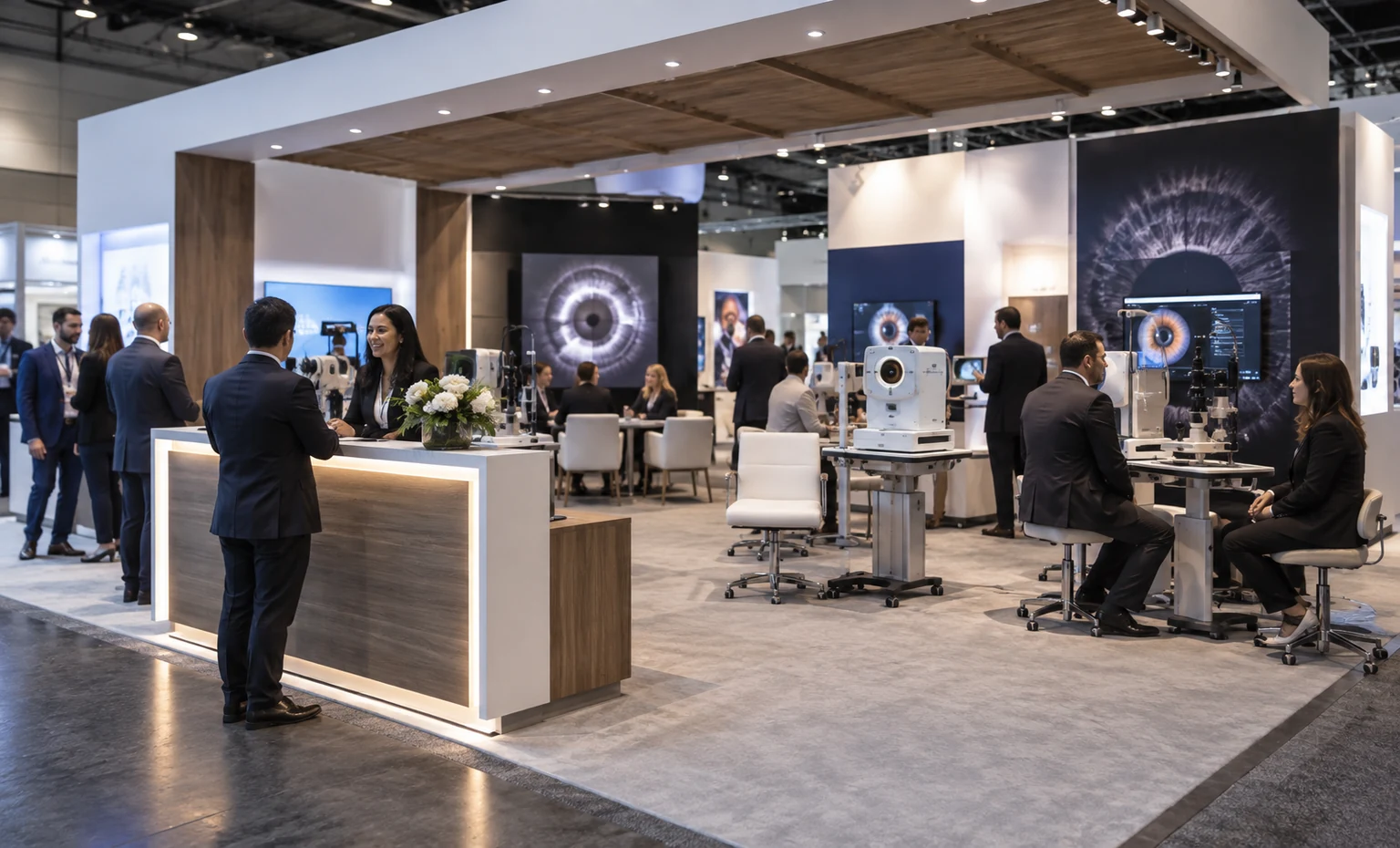
Adds capacity for multiple ophthalmic systems, stronger reception, controlled lighting zones, product reset space and more protected technical or commercial meetings.