


Group samples by buyer use, audience, program or product family so a visitor can enter at a relevant point instead of scanning one undifferentiated wall.

Connect a blank product, decoration method, color or finish choice and completed sample so the buyer understands what can change for a client program.

Separate public samples from reserve stock, packaging and personal items. Staff can replace a handled item without turning the booth into a packing area.

Place line sheets, screens and meeting positions close to the products that qualify the buyer's need, while keeping the main browsing route open.
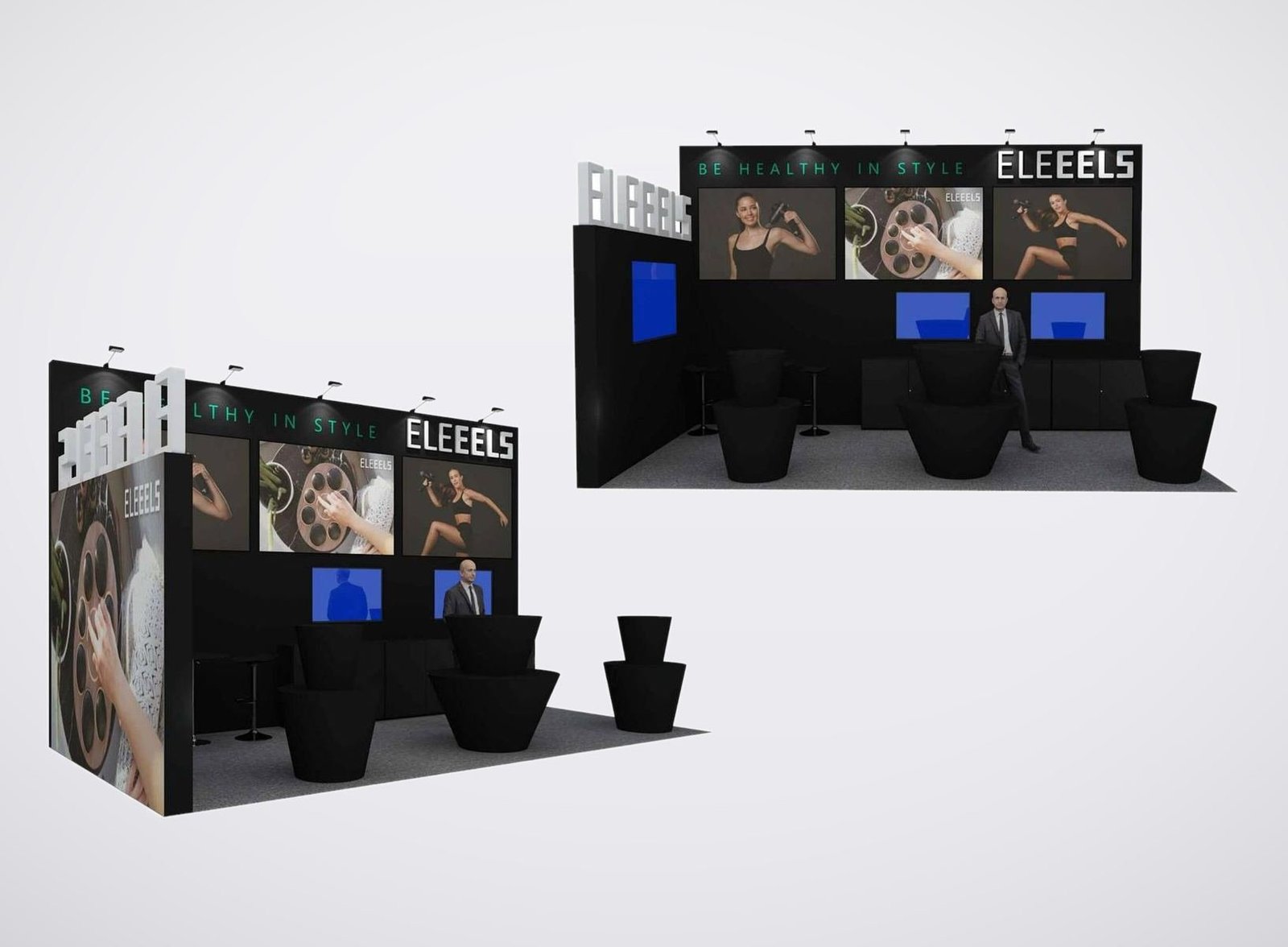
Choose the PPAI Exhibit Layout by the Sale You Need to Make
Category Discovery Exhibit
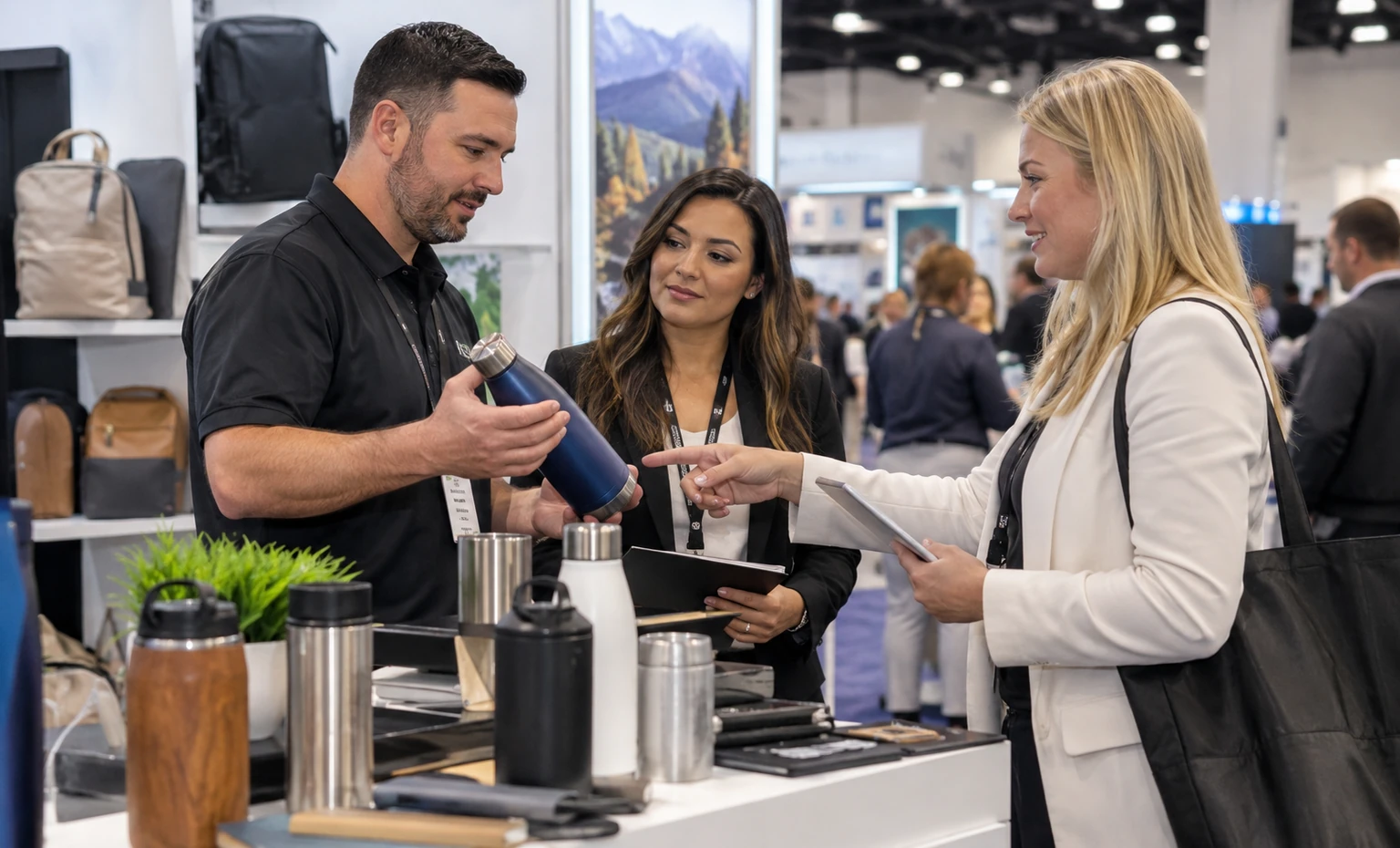
Use reachable shelves, pegs, trays or tables for a broad assortment. Category headers and consistent sample labels help buyers compare products without asking staff to explain where every family begins.
Decoration and Personalization Demonstration
Plan the equipment envelope, operator side, blanks, finished samples, power, network, consumables and waste before locating walls or counters. The audience must see the change without blocking the working area.
Campaign and Kitting Presentation
Bring several items, packaging and fulfillment steps together around a recognizable client program. Show the kit as a complete solution, then keep substitute products and production details close to the discussion.
Distributor Meeting Booth
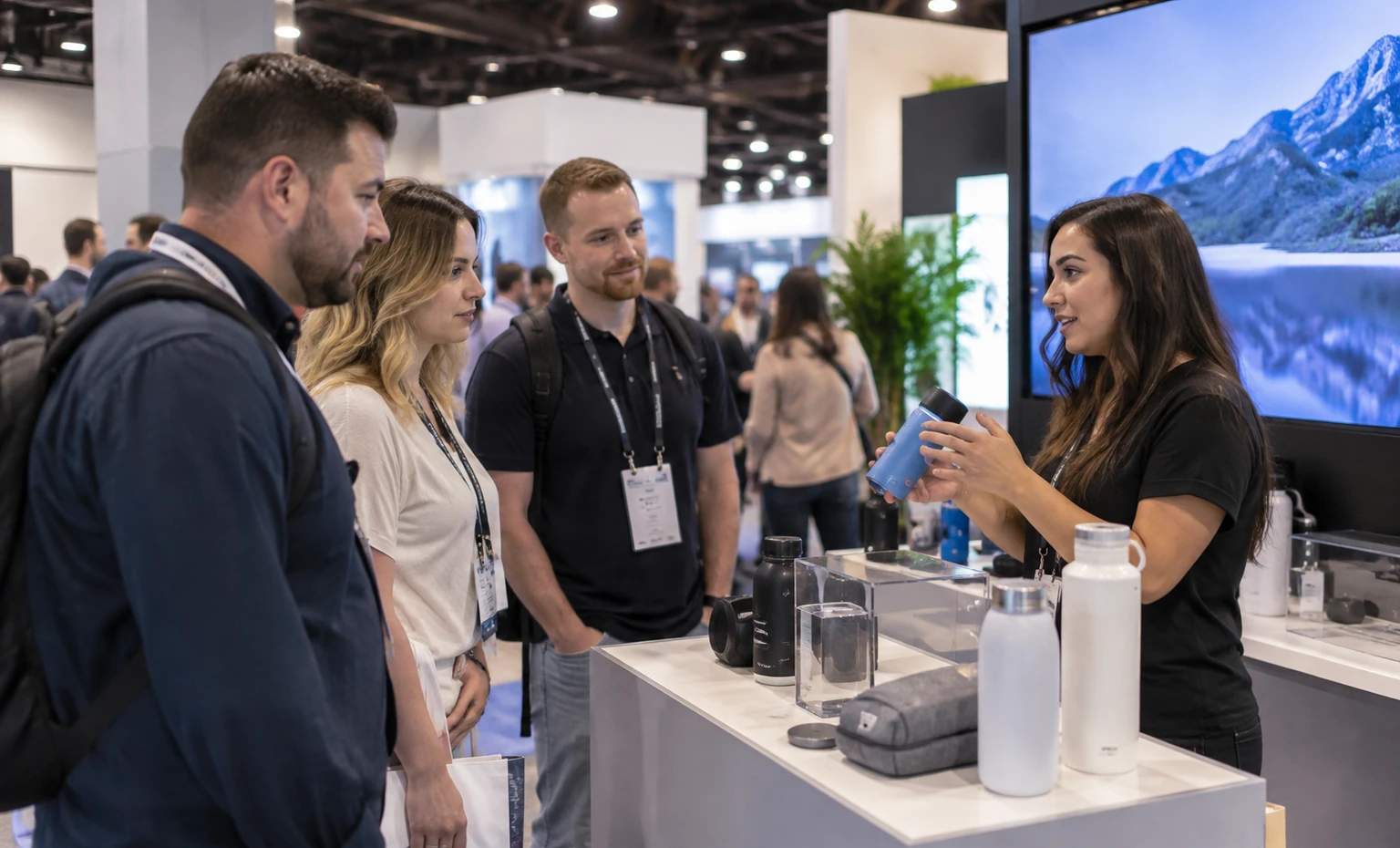
Use an edited public range to qualify visitors, then provide a practical table or semi-private position for pricing, sourcing, compliance, decoration and program questions that cannot be resolved in the aisle.
A Branded-Merch Exhibit Built for Selection, Comparison and Follow-Up
At The PPAI Expo, one supplier may bring many products that differ by material, color, imprint method, packaging, price position or end-user program. Showing every available item can make the range harder to buy. The exhibit needs a deliberate edit and a simple system for moving from category discovery to a useful commercial question.
King Exhibits develops the rental environment around the approved sample list, decoration story, storage plan, screens and meeting needs. The 3D review lets your team test reach, density, signage, replenishment and staff positions before those choices become physical fixtures.
The accepted proposal identifies King’s exhibit elements and services. Product samples, decoration equipment, content, show applications, official utilities, material handling, internet, catering, security and other third-party services remain with the named party unless the proposal expressly includes them.
Give Each Promotional Product Family the Right Display Job

Balance hanging range, folded samples, size or color references, decorated examples and reserve stock. Buyers need enough handling room to inspect the product without tangling the display.

Use stable shelves or tables sized for the actual items. Group variations clearly and protect heavy, breakable or liquid-related demonstrations from the main aisle edge.
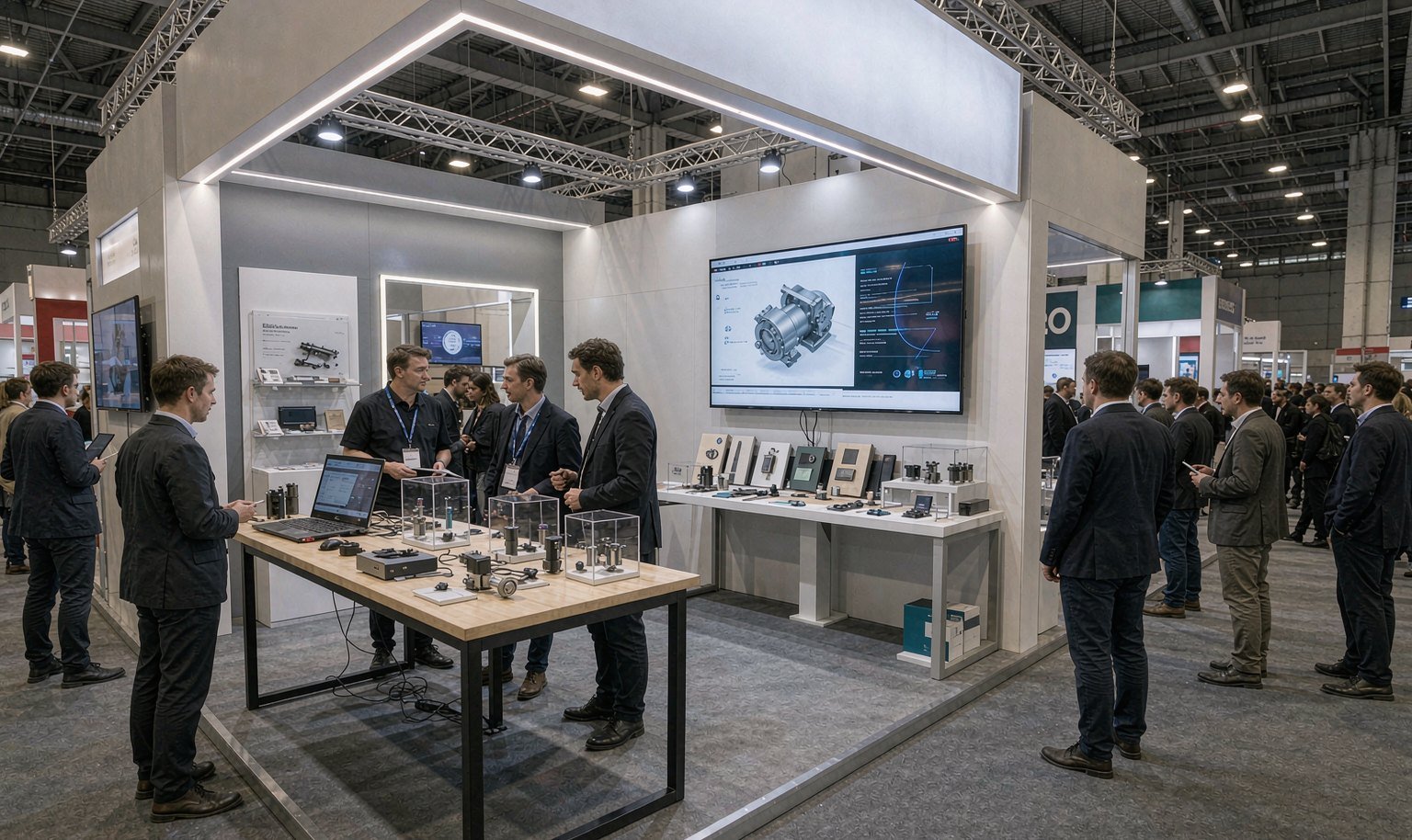
Create repeatable rows or trays that show choice without looking like bulk inventory. Secure small valuable samples and keep charging or cable needs out of the handling path.
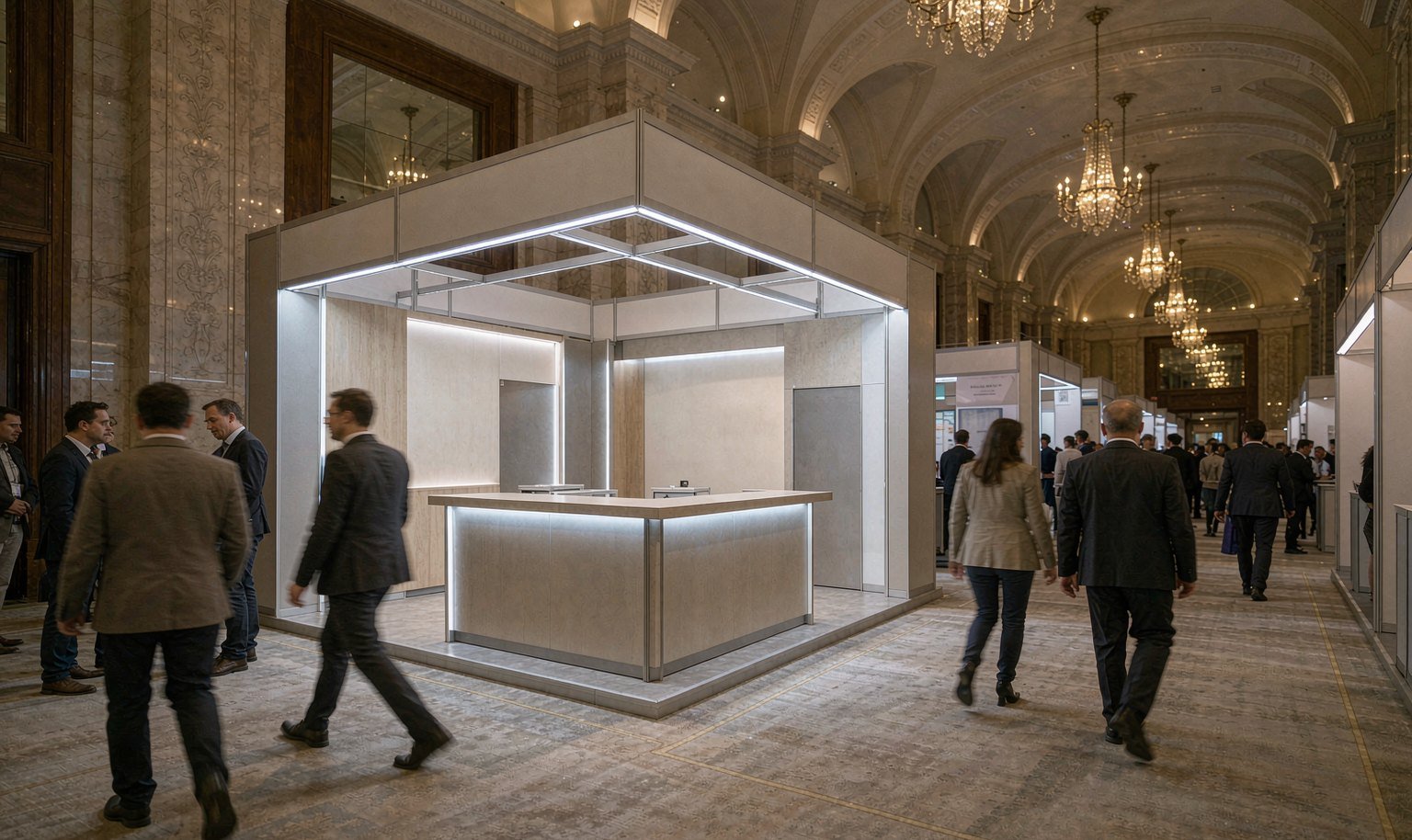
Use controlled light and accessible viewing angles for surface, color and finish. Give high-value or fragile pieces a defined handling method and return position.
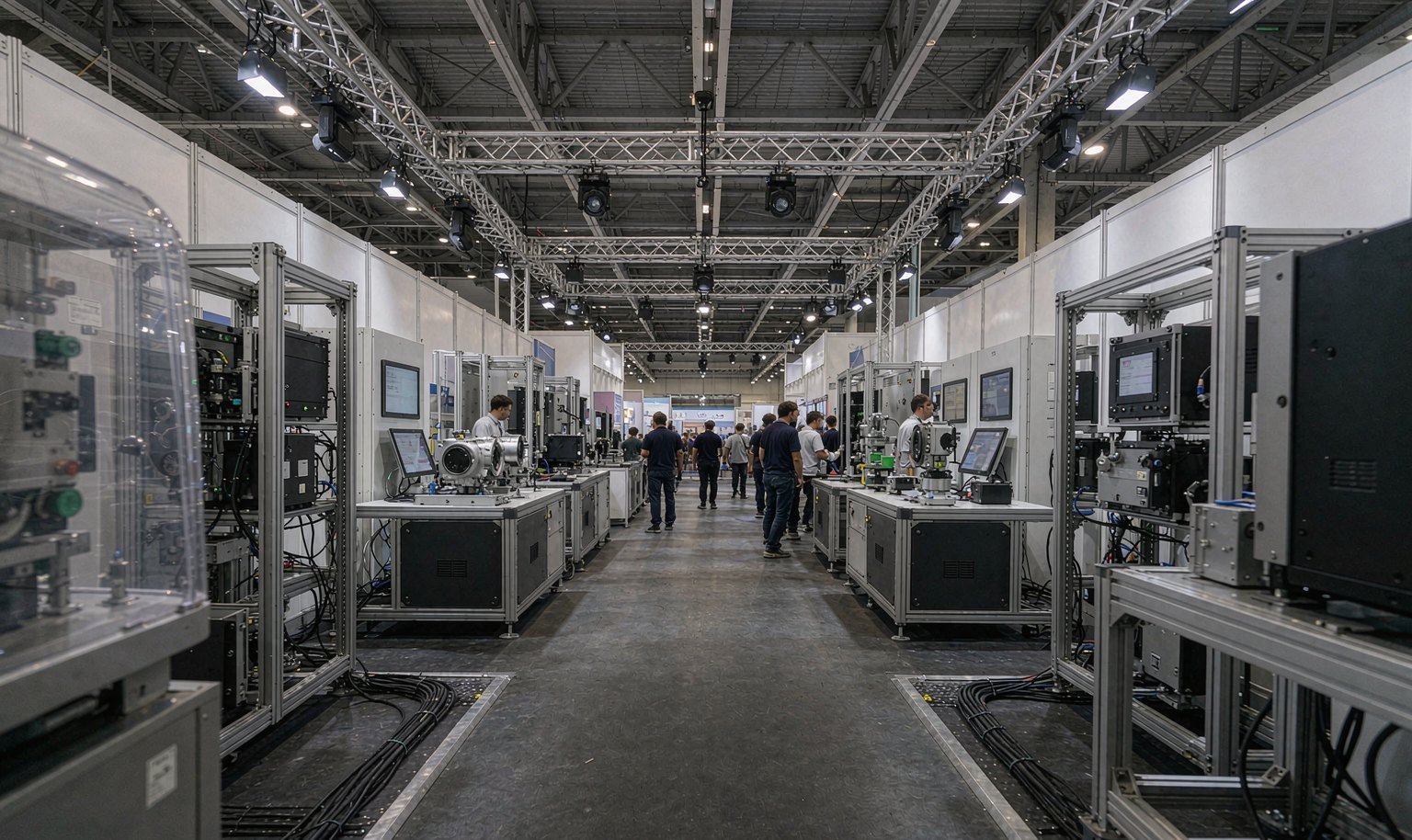
Show the workflow, input and output rather than filling the booth with feature lists. A buyer should see where the service or equipment changes a promotional-products program.
Make the Sample Wall Work Like a Shortlist
Start with the distributor’s likely question, then group products by audience, use, budget tier, material or program. Give every group a clear label and keep variations in a consistent order. Samples that buyers may handle need an obvious return point. This turns the display into a working shortlist: visitors can find a relevant family, compare meaningful differences and bring one or two qualified options into a conversation instead of photographing an unexplained wall.

Show How a Blank Product Becomes the Ordered Item
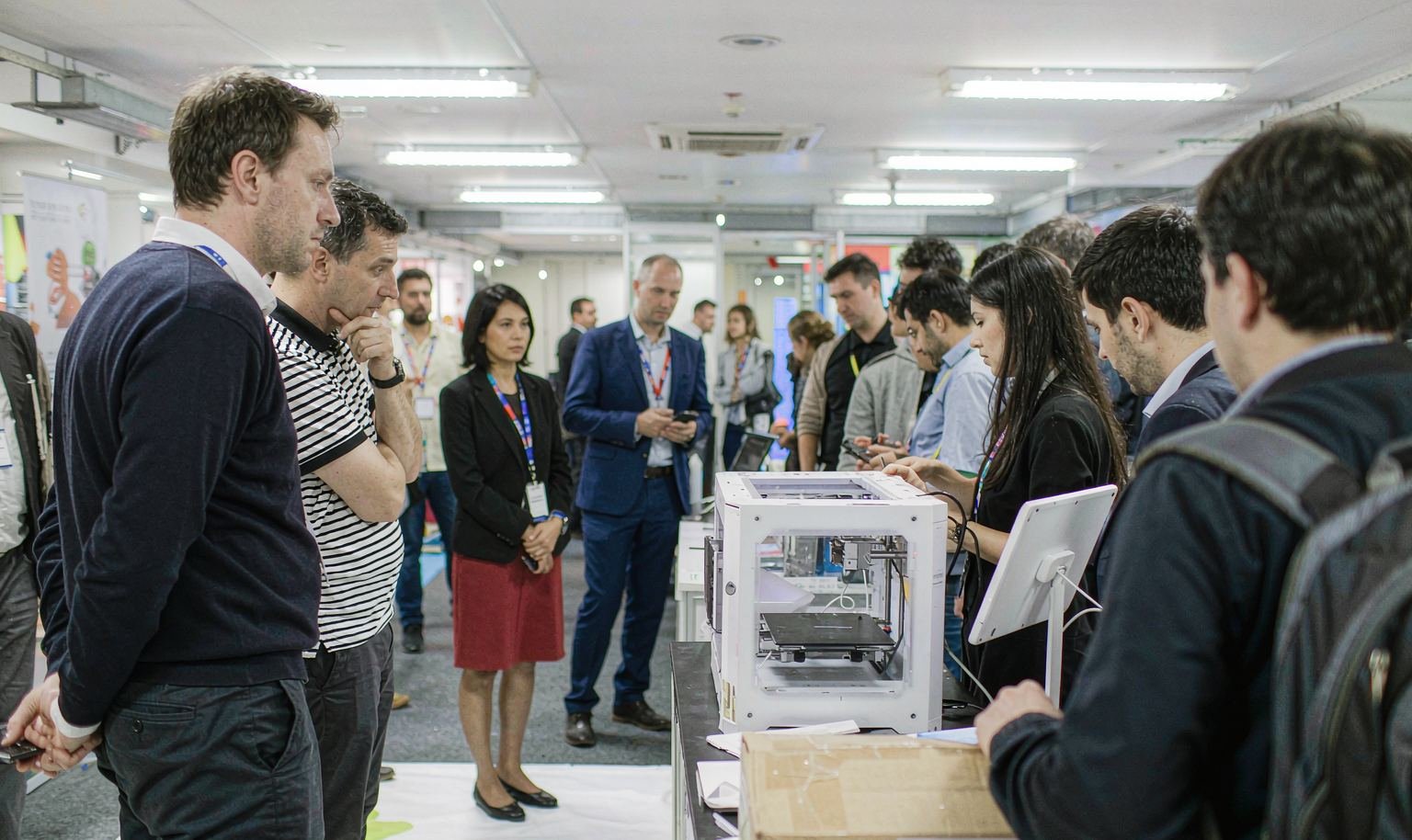
Place the undecorated item, available imprint area, process reference and finished sample in one visual sequence. When equipment is demonstrated, record its dimensions, operator clearance, utilities, consumables, ventilation or waste and safe visitor boundary. The booth should make customization easy to understand without implying that every method works on every product. Staff can then discuss artwork, color, quantity and production fit from a result the buyer has already seen.
Separate the Selling Samples from the Day's Backstock
Count the items that stay on display, the duplicates needed for replacement and the cartons, packaging, literature and devices staff use during the day. Give each group a named storage position before the exhibit is approved. A staff-side replenishment route keeps boxes out of sight and prevents someone from crossing a buyer meeting to retrieve one sample. Security and product custody remain the exhibitor’s responsibility unless the accepted proposal states otherwise.
Review Samples, Demonstrations and Storage in One 3D Plan
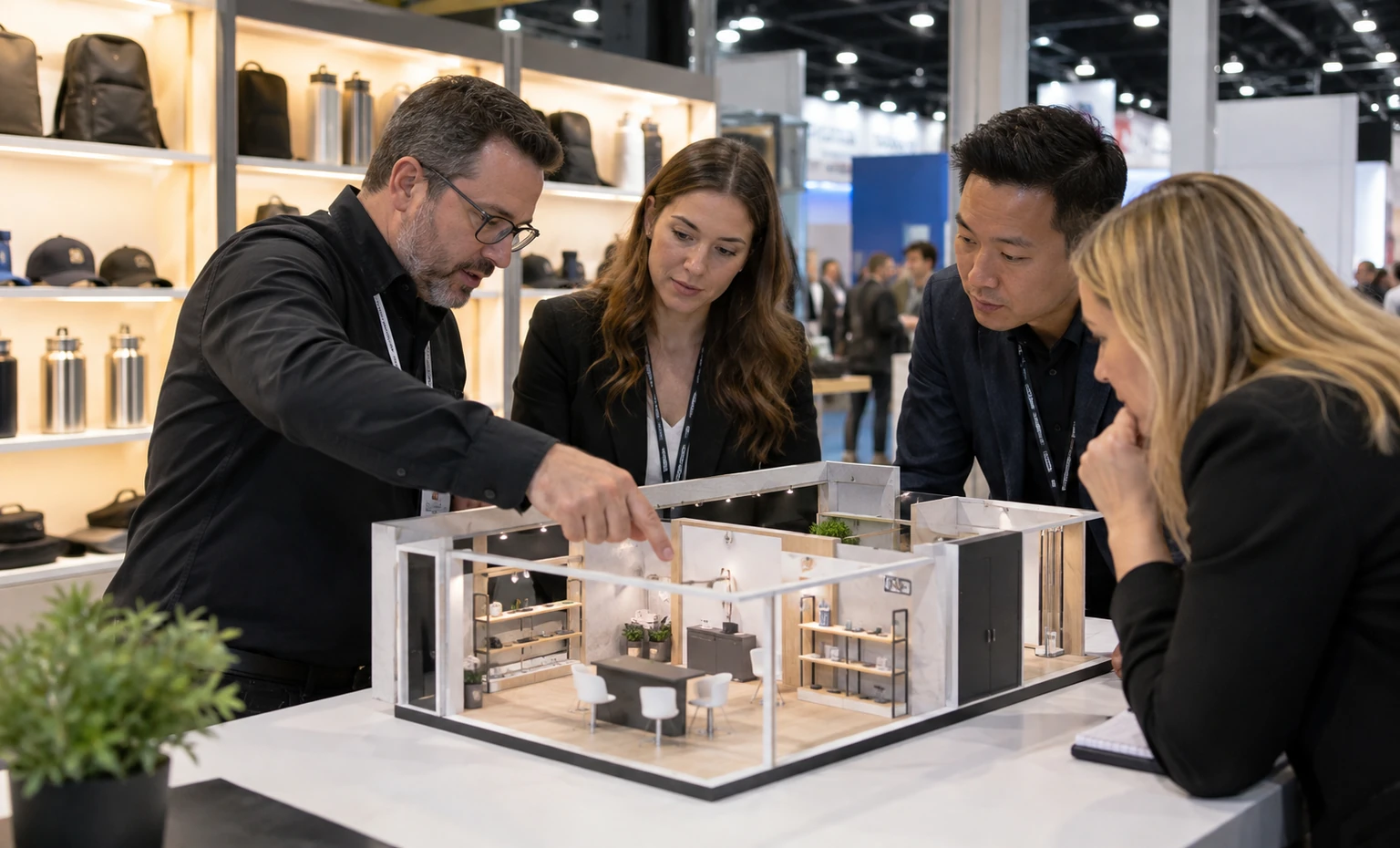
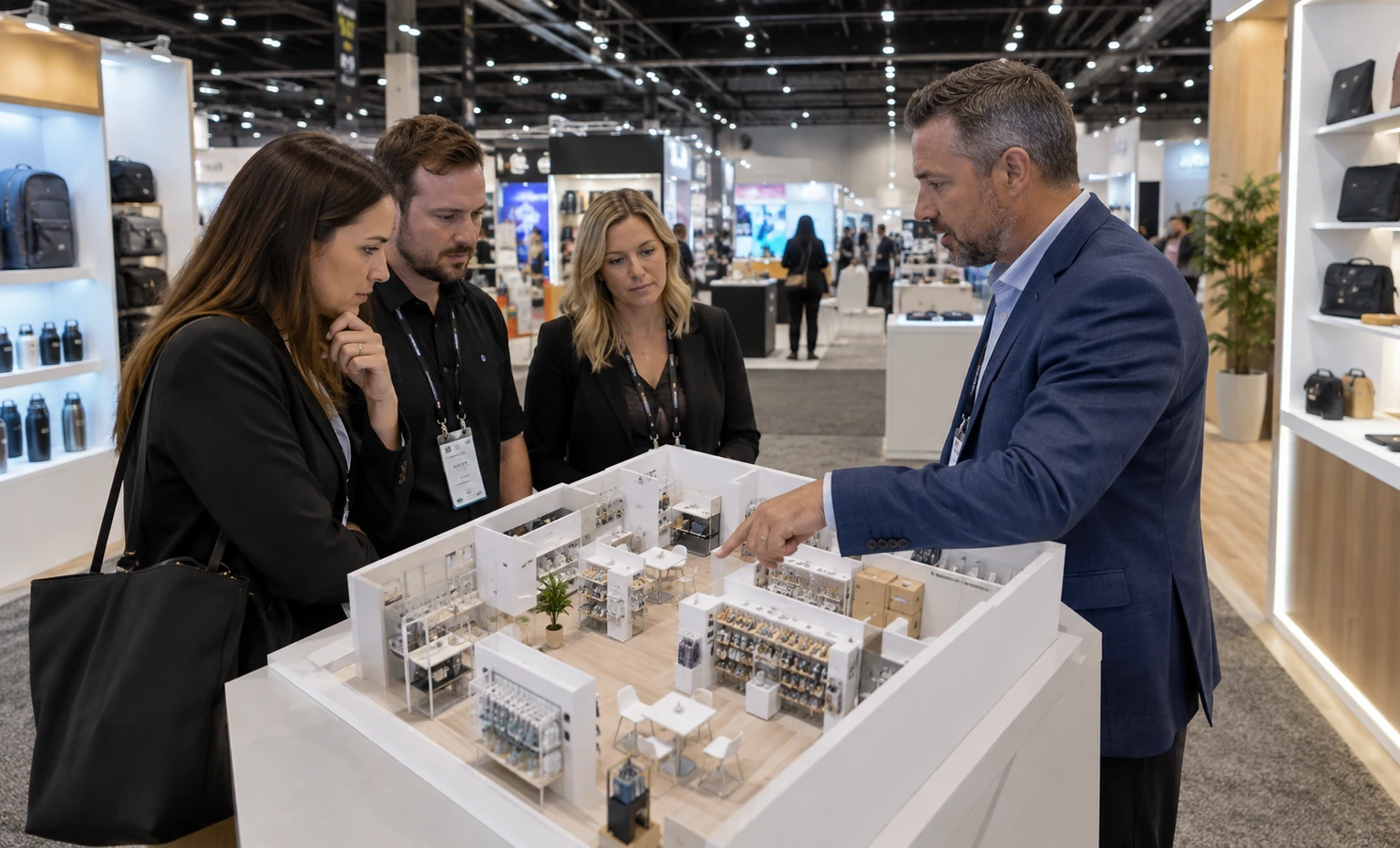
King Exhibits can place the confirmed product list, display method, demo envelope, buyer route, meeting seats, storage and staff access into one exhibit model. That review exposes overcrowded shelves, unreachable samples, poor sightlines and equipment conflicts while the plan can still change.
Rental walls, lighting, counters, furniture and storage establish the main environment. Quoted custom shelves, supports or branded details can address product-specific interfaces. The proposal then separates King’s scope from customer merchandise, show applications and services ordered through PPAI, the venue or other providers.
Release the PPAI Booth Against the Current Exhibitor Manual
PPAI controls exhibitor eligibility and show-floor placement. Confirm the applicant, represented brands, product types and assigned space before the exhibit message and layout are released.
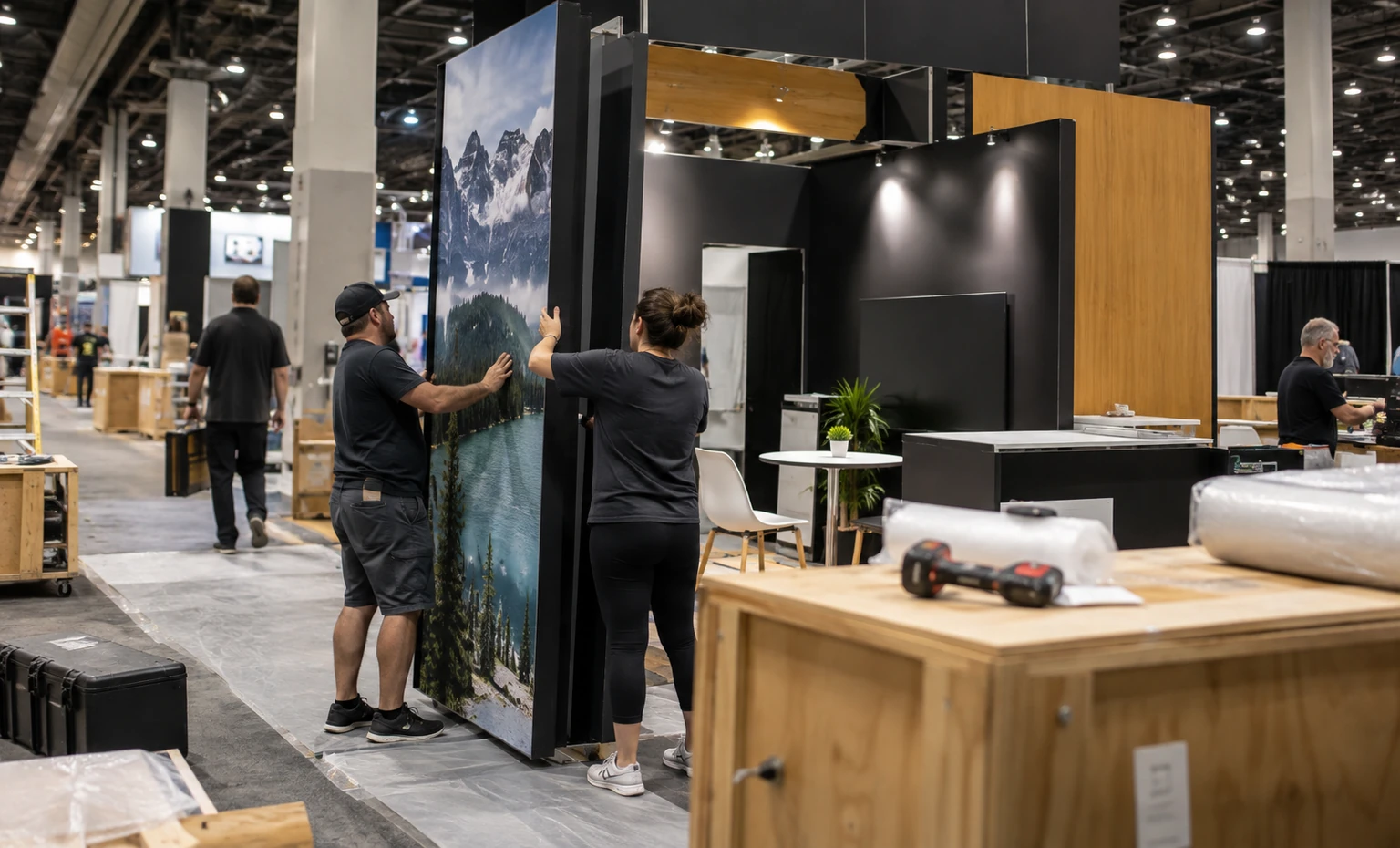
PPAI currently lists PPAI Advance on January 11, exhibits January 12–14 at Mandalay Bay Convention Center, exhibitor move-in beginning January 8 and move-out after the show and on January 15. Recheck all dates before upload and execution.
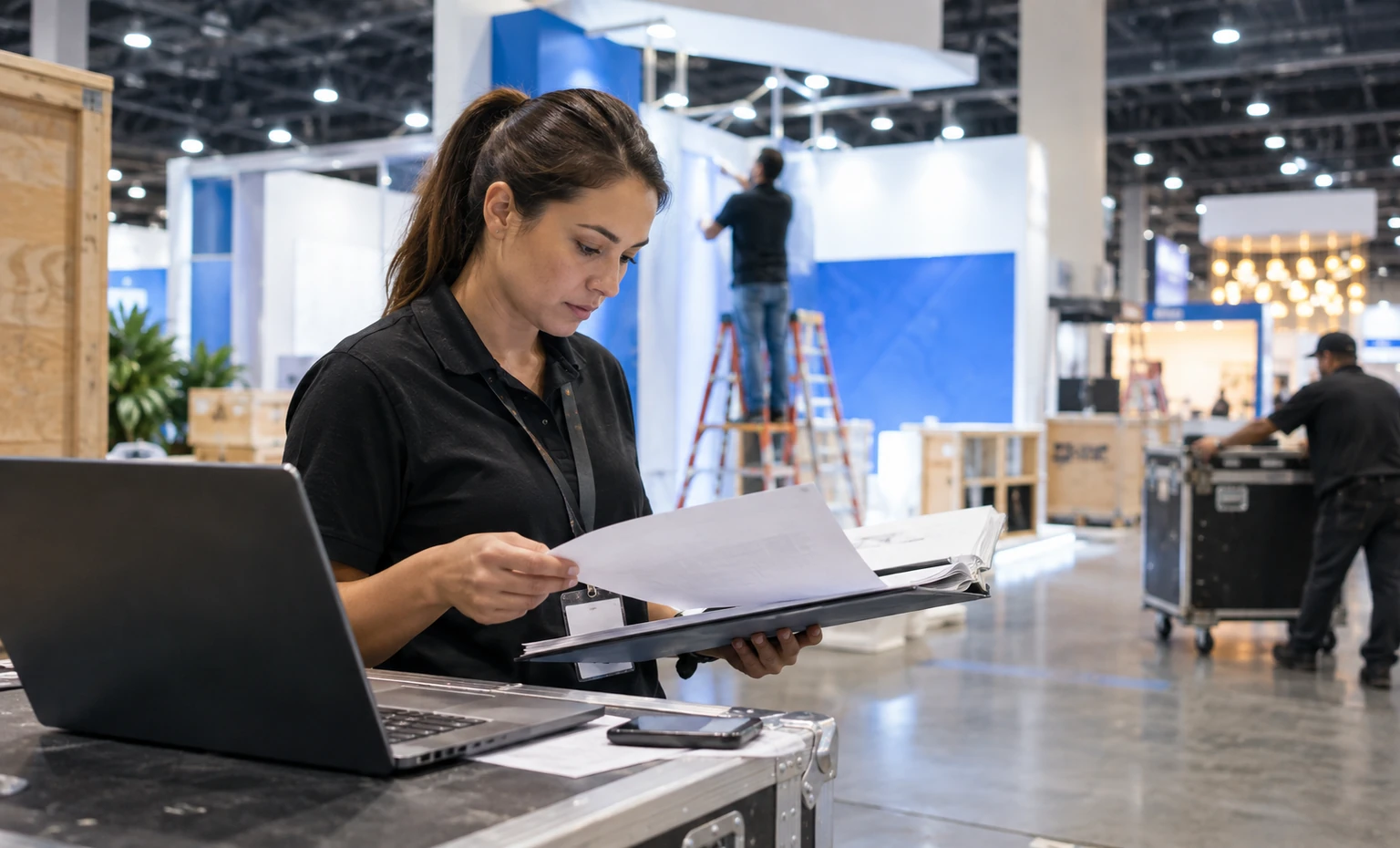
Use the current show-year Exhibitor Services Manual for rules, contractor forms, shipping and drayage, utilities, building services, display requirements and move-in/move-out details. Do not order against an archived manual from a prior edition.
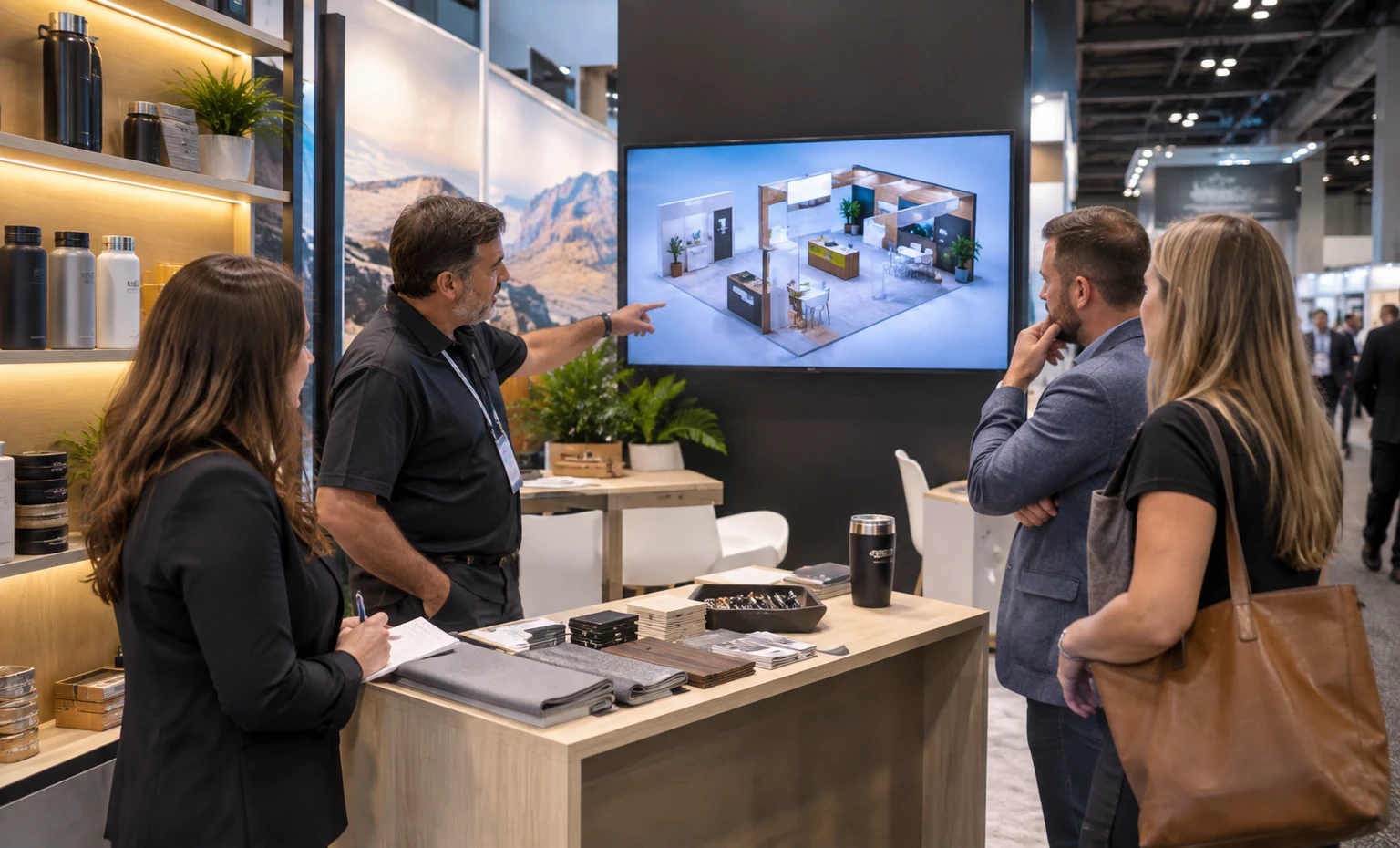
Build the PPAI Exhibit from the Product List Outward
Provide the edition, assignment, footprint, open sides, categories, sample quantities and dimensions, decoration or service story, staff, meetings, budget and scope.
Together we identify which items must be reachable, which need comparison, which support a demonstration and which remain in reserve.
We position sample systems, equipment, screens, meetings, storage and staff access in the 3D direction.
Review rental and custom exhibit elements, graphics, furniture, freight coordination, onsite work and services assigned to the exhibitor or official providers.
Confirm product labels, graphics, fixture loads, equipment, utilities, current show approvals, carrier details and installation sequence.
King completes and packs the quoted exhibit work for the agreed handoffs; customer products and separately assigned services follow their own confirmed plans.
Yes, after the sample inventory and display method are edited. Send the product families, dimensions, weight, quantity, handling needs and reserve stock. We can test shelf, peg, tray and table capacity in the 3D layout, but the useful number depends on reach, labeling and buyer space rather than square footage alone.
Yes, when the equipment, process and current show requirements are confirmed. Provide the equipment footprint, weight, operator side, utilities, consumables, heat, ventilation, waste, audience position and specialist responsibilities. The accepted proposal will identify the exhibit work King supplies and the services or approvals ordered elsewhere.
Only when the accepted proposal lists them. The PPAI Exhibitor Services Manual separates official contractor orders, shipping and drayage, utilities, building services and move-in/move-out information. Compare proposals by matching the same scope instead of assuming every venue or show charge is included in the rental.
Possibly, but not until the current PPAI and Mandalay Bay requirements are checked. Identify the item, packaging, serving method, quantity, preparation and waste. Treat catering, sampling approval, food safety and related services as separate responsibilities unless the written proposal expressly includes them.
It can be, with a tightly edited assortment and one clear priority. A broad public range, equipment demo, concealed backstock and scheduled meeting table may compete for the same floor area. Send the exact counts and operating clearances so the layout can show the tradeoff before you choose the footprint.
Send the 2027 booth assignment, dimensions, open sides, product categories, public and reserve sample counts, decoration or service demonstration, displays, furniture, screens, storage, meetings, utilities, graphics, freight, budget and the onsite work you want King Exhibits to quote.