


Select a VERTICON Exhibit Format That Fits the Offer
Standard Booth for a Focused Product Story
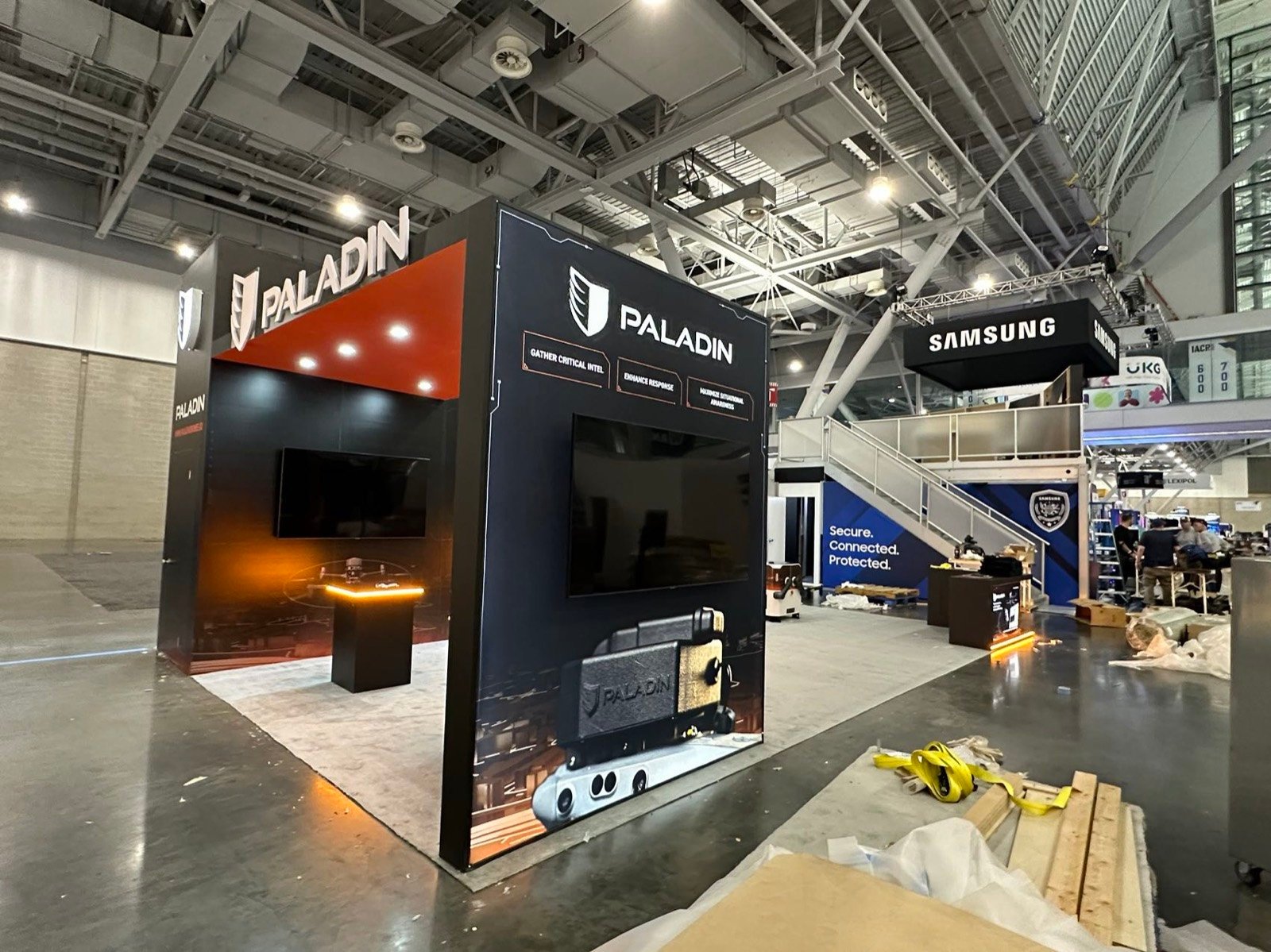
A linear or peninsula space can introduce one component family, maintenance capability, digital platform or training offer without overloading the aisle message. Use an application visual, representative product, screen or compact demonstration to identify the customer and task. Confirm display height, open sides, product support, service access and utility positions before approving the layout.
Island or Back-to-Back System Exhibit
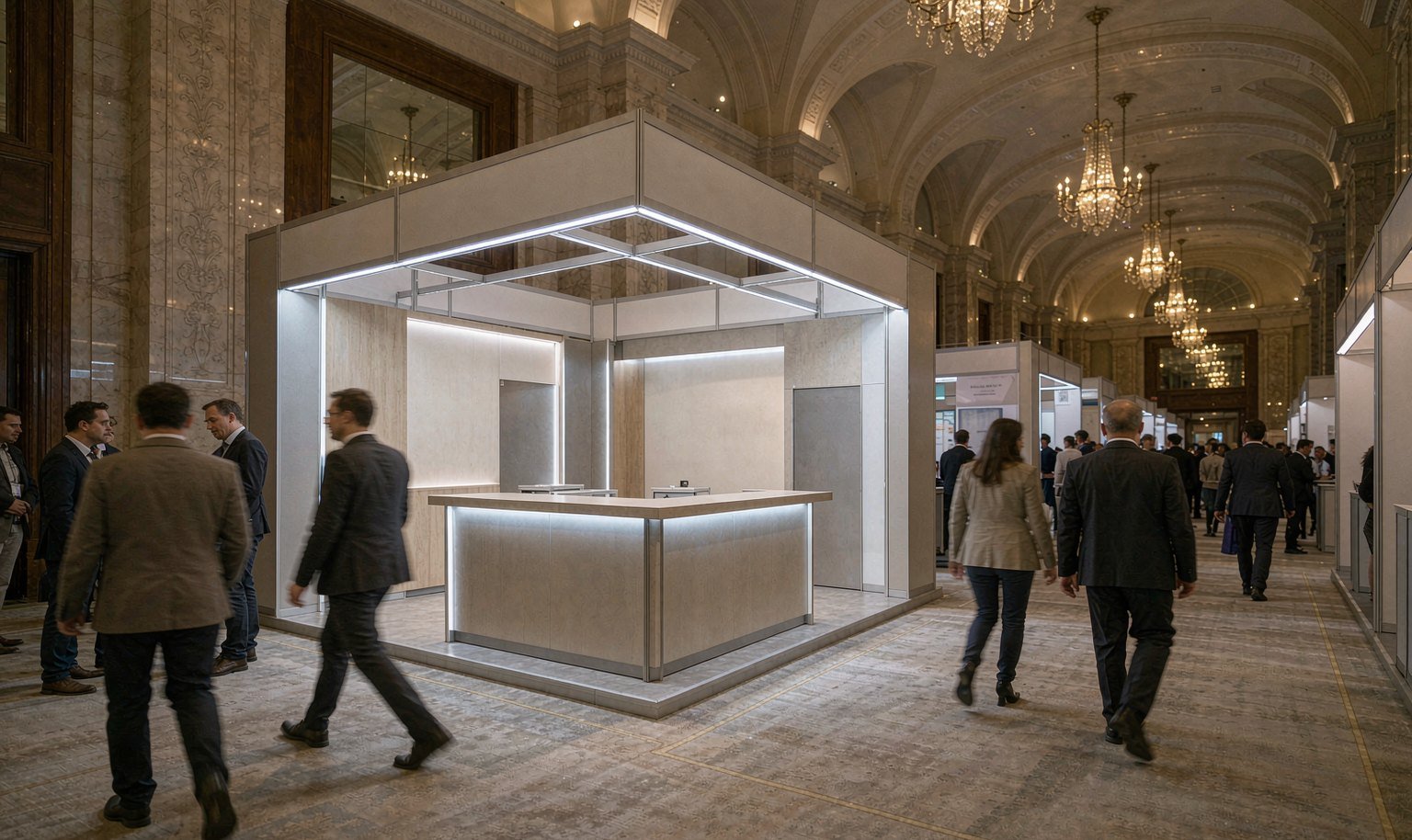
A larger open space can connect several subsystems, a full-scale assembly, partner interfaces and meeting areas. Organize the floor by the decision the buyer needs to make instead of by catalog categories. Product zones should remain legible from each approach, while reception, demonstration queues, storage and technical seating prevent one activity from consuming the entire exhibit.
Sales Booth Paired with Static Aircraft Space
An aircraft or oversized vehicle may require a separate static-display plan rather than a normal rental-booth structure. Use the sales exhibit to explain the program, mission, installed systems and next conversation; use official requirements to govern aircraft placement, preparation, movement and access. The relationship between both spaces must be clear without suggesting that King controls organizer or aircraft services.
Rental Exhibit Design for the Vertical-Aviation Supply Chain
VERTICON brings together organizations that design, build, operate, maintain, equip, train for and support vertical-flight systems. Their exhibits have different physical and commercial demands. An aircraft manufacturer may need to connect an indoor conversation to a static display. A drivetrain or avionics supplier may need to show an installed relationship. A maintenance, simulation or software company may need to turn an invisible workflow into a short, credible demonstration.The exhibit should therefore begin with the buyer’s task. Procurement may compare supply and support. Engineering may examine interfaces, dimensions or service access. Operators and pilots may judge usability. Maintenance teams may focus on inspection, removal and field conditions. The aisle message introduces one useful reason to stop; the product presentation and staff conversation provide the detail needed to continue.King Exhibits translates that plan into a 3D rental-exhibit direction. The layout can combine approved graphics, representative products, screens, counters, lighted architecture, product supports, meeting areas and concealed storage as required by the quoted concept. Confirmed product dimensions, weights, mounting information, operating clearances and utility needs are inputs to the design, not assumptions made after production begins.VERTICON floor space and many event services are governed outside the King rental agreement. The organizer, venue and designated providers control the applicable show rules, approvals, utilities, handling and aircraft-related procedures. King’s proposal identifies the exhibit work requested from our team and the known handoffs to other parties. The final method must follow the current edition’s rules and the accepted project scope.
Design Around the Product Your Aviation Buyer Must Evaluate

Use the booth to define the mission, customer, operating context and program conversation before showing every feature. Approved visuals, a configuration screen, a representative cabin or control detail and a disciplined reception point can support qualification. Any aircraft, rotor system or unmanned-aircraft activity must be planned against the assigned space and current official requirements rather than treated as ordinary booth decoration.
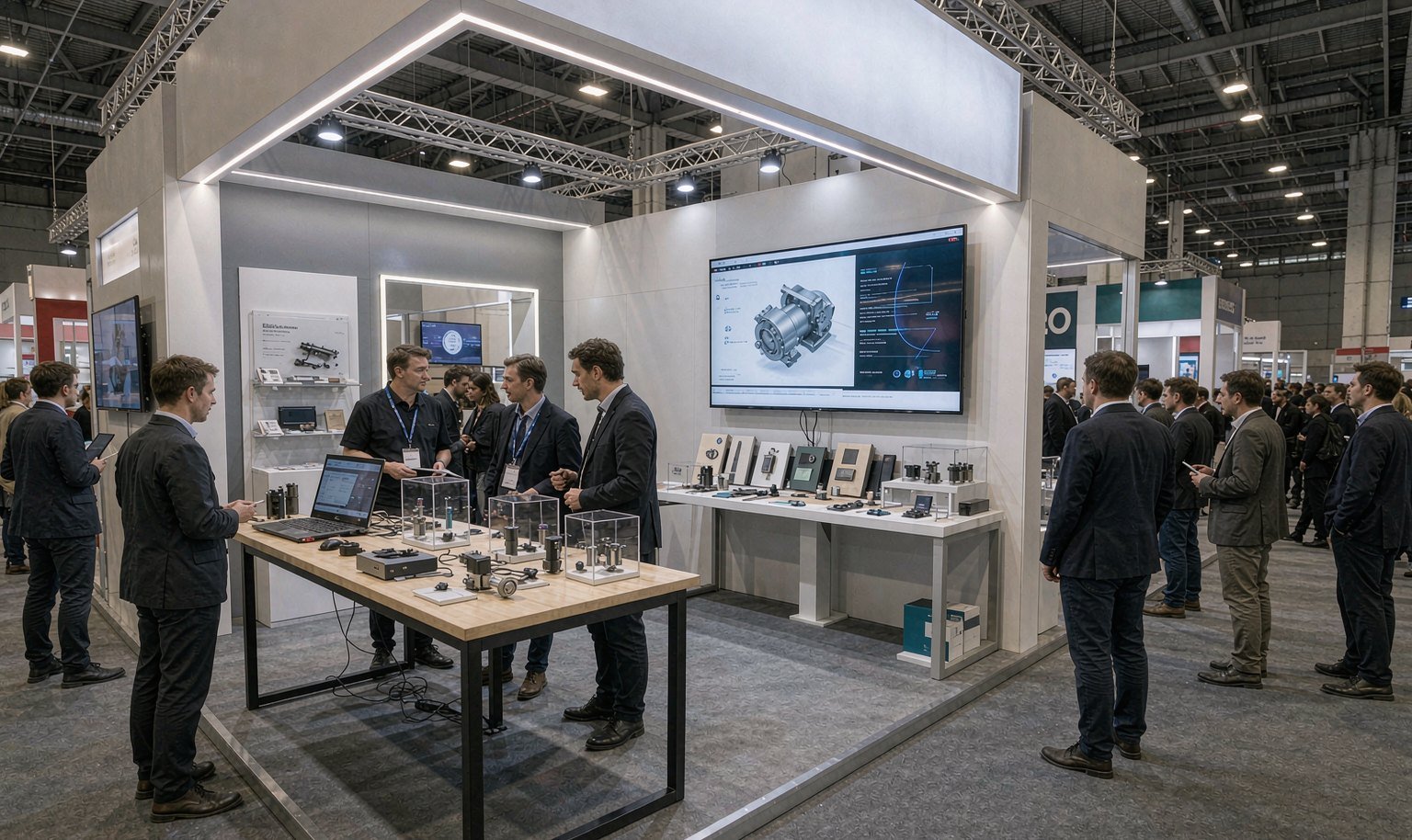
Show where the assembly belongs and what adjacent system it interfaces with. A mounting reference, section view, cutaway, mating component or maintenance position can give a part scale and purpose. Provide the actual weight, support points, moving envelope, access needs and handling method so the exhibit fixture and visitor position can be assessed before approval.

Build the explanation around an operator, passenger or maintenance task. Controls and screens need a believable viewing angle; equipment and cables need ventilation, power, data, security and service access. A concise workflow can connect the interface to the wider aircraft system while exhibitor-approved language keeps performance, compatibility and certification claims within their verified limits.

Arrange the presentation by inspection, repair, replacement, test or turnaround activity. A stable work surface, representative component and short supervised sequence can make the service problem visible. Record equipment dimensions, weight, compressed or extended position, consumables, sound, heat and staff access before the plan assigns demonstration and queue space.
Turn the offer into one recognizable scenario: a pilot decision, technician procedure, fleet workflow, mission-planning step or support request. Screens should show a short approved path rather than an unattended feature list. Seating can support deeper discussions about users, aircraft types, implementation and commercial scope without hiding the public explanation behind a meeting-room wall.
Keep the Aircraft and the Sales Booth in Separate Plans
A static aircraft display and a constructed sales exhibit do not begin with the same rules or service orders. Decide what visitors need to inspect at the aircraft and what they should learn or discuss in the booth. Then map the handoff between them. Aircraft preparation, movement, access and official approvals remain under current event requirements; the King proposal should identify only the adjacent exhibit structure, graphics, fixtures and support expressly requested.
Show the System Interface, Not Just the Component
A rotor, drivetrain part, avionics unit or maintenance tool is easier to evaluate when the buyer can see its operating relationship. Add a mounting reference, mating component, cutaway, connection path or service position at a useful scale. Keep the item visible while protecting support and cable access. Every performance, compatibility and certification statement must come from the exhibitor’s approved material; the display explains context but does not create technical approval.
Design the Demonstration from Its Operating Envelope
Record the product in packed, display and operating positions before deciding where the demonstration belongs. Include moving parts, support equipment, power, data, heat, sound, cable routes, staff supervision, visitor viewing and the time needed to reset. This prevents an active demo from blocking reception or technical meetings. It also gives the design team a real footprint to test instead of forcing an unverified product into a finished booth plan.

Review the Product Route and Project Scope in 3D

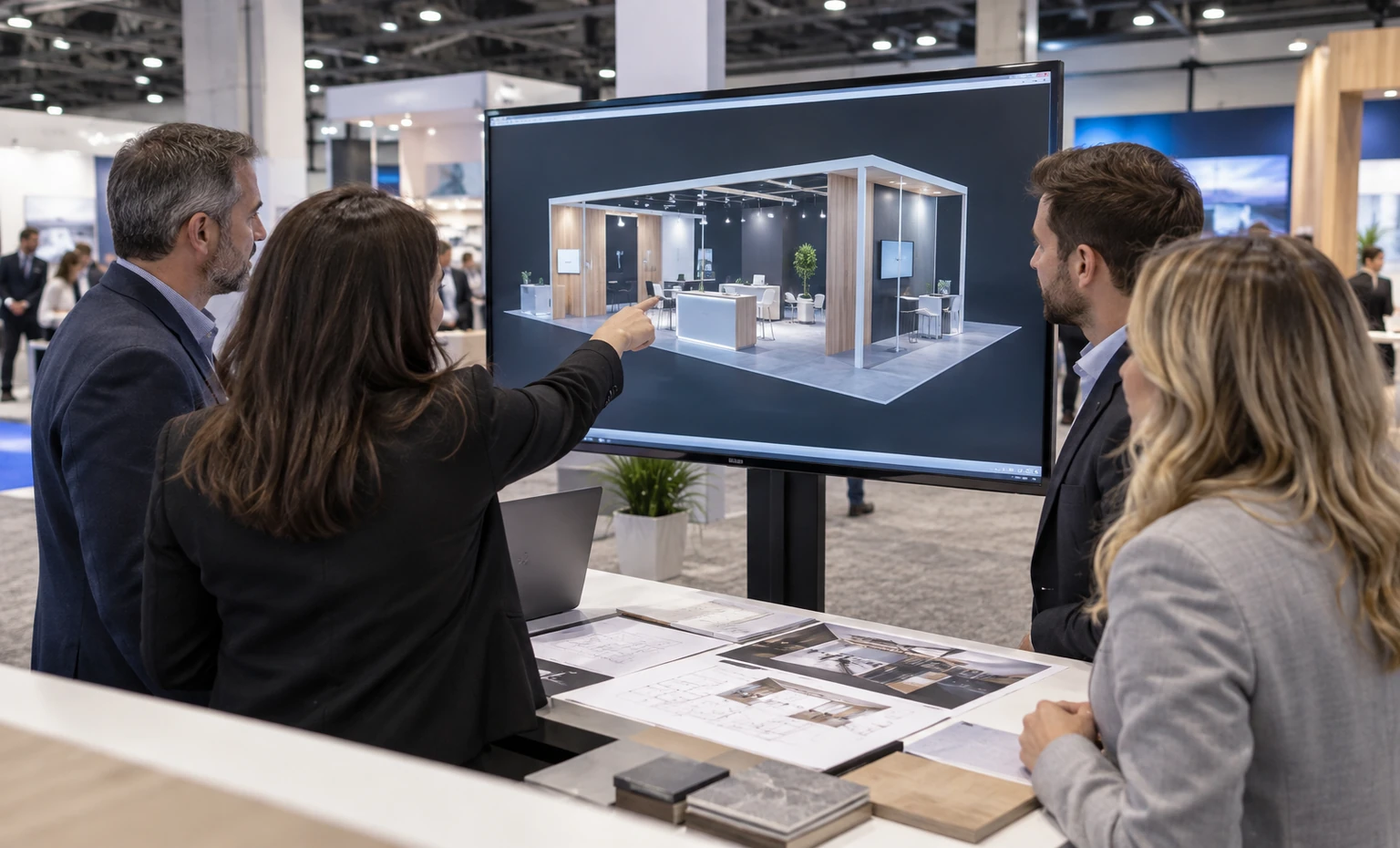
King Exhibits turns the confirmed space and product brief into a coordinated 3D direction. The same review shows what a visitor sees from each open side, where staff begin the conversation, how the product or interface is presented, and whether a demonstration, meeting or storage door interrupts another activity. Marketing, sales, product, engineering and purchasing can review one plan before it moves forward.The selected rental architecture can support approved graphics, screens, counters, lighting, product fixtures, meetings and storage. Components that need a special support, surround or work surface are evaluated from the dimensions, weight, access and operating information supplied by the exhibitor. The visual plan does not replace engineering confirmation, organizer approval or the exhibitor’s responsibility for technical accuracy.The commercial document then identifies included rental elements, graphics, packing, freight coordination, installation/dismantling and any additional support. Show space, utilities, material handling, rigging, fire review, aircraft services and designated-provider work stay separate unless the accepted quotation expressly states otherwise. Purchasing can therefore compare a defined King scope without mistaking it for control of the entire event.
Build the VERTICON Exhibit from Confirmed Inputs
What You Provide: Current edition, booth number, official space type, dimensions, open sides, assigned height conditions and show resources.What We Do:
What You Provide: Aircraft relationship, product dimensions and weight, support and access points, moving clearance, approved claims, power/data, heat, sound, screens and supervision.What We Do:
What You Provide: Brand assets, messages, meeting capacity, storage, hospitality, budget, freight plan and work requested from King.What We Do:
What You Provide: Final drawing and artwork approvals, the accepted commercial scope, technical confirmations, completed official orders, shipping information and onsite contacts.What We Do:
It depends on the assigned space and current rules. Aircraft, oversized equipment, rotor systems and unmanned-aircraft activity may require a static display, special preparation or prior approval rather than a standard constructed booth. Send the exact item, dimensions, weight, operating condition and intended activity before design. Organizer and designated-provider requirements control the final method.
King can propose the adjacent or separate sales exhibit and the elements specifically listed in the quotation. The booth can introduce the program, show installed systems and route buyers to the aircraft. Static-space assignment, aircraft movement, preparation, access, handling and other official services remain outside King’s assumed scope unless a verified written agreement states otherwise.
Provide the packed, display and operating dimensions; weight; support and access points; movement; power and data; heat and sound; cables; consumables; supervision; reset process; approved technical claims; and the intended visitor position. The 3D review uses these inputs to test the fixture, clearance and flow, but technical and structural details still require the responsible party’s confirmation.
The assigned footprint and open sides, rental structure, height, graphics, product supports, screens, demonstration area, lighting, flooring, reception, meetings, storage, furniture, packing, freight and installation/dismantling requested from King affect the proposal. VERTICON space charges, utilities, material handling, rigging, aircraft services, approvals and designated-provider work may be separate event expenses.
Reuse is frequently possible. The wall, lightbox, counter, screen and meeting components can form a different layout, while suitable graphic hardware remains in service. Replanning is still required for the next show’s footprint, audience, product program, venue and rules. Separating durable brand artwork from dates and event-specific messages makes later changes easier.
Send the current edition, booth assignment and type, open sides, aircraft or product relationship, product dimensions and weights, demonstration plan, approved claims, screens, utilities, meetings, storage, graphics, budget and freight plan. Also list each rental, logistics or onsite responsibility that should appear in King’s quotation.
Booth Sizes for Vertical-Aviation Products and Demos
-
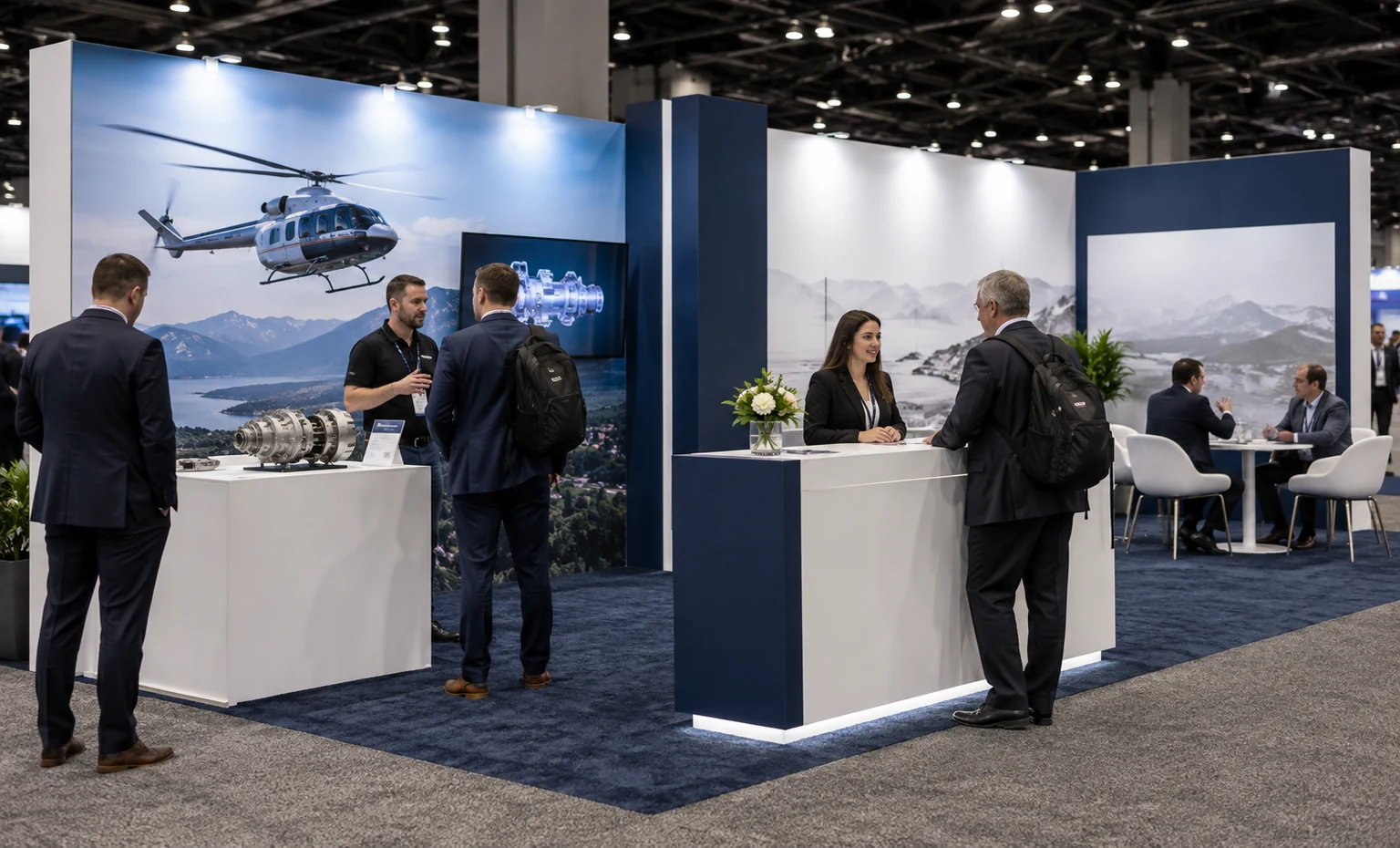
A practical format for one component family, one short technical workflow, reception and a compact buyer discussion.
-
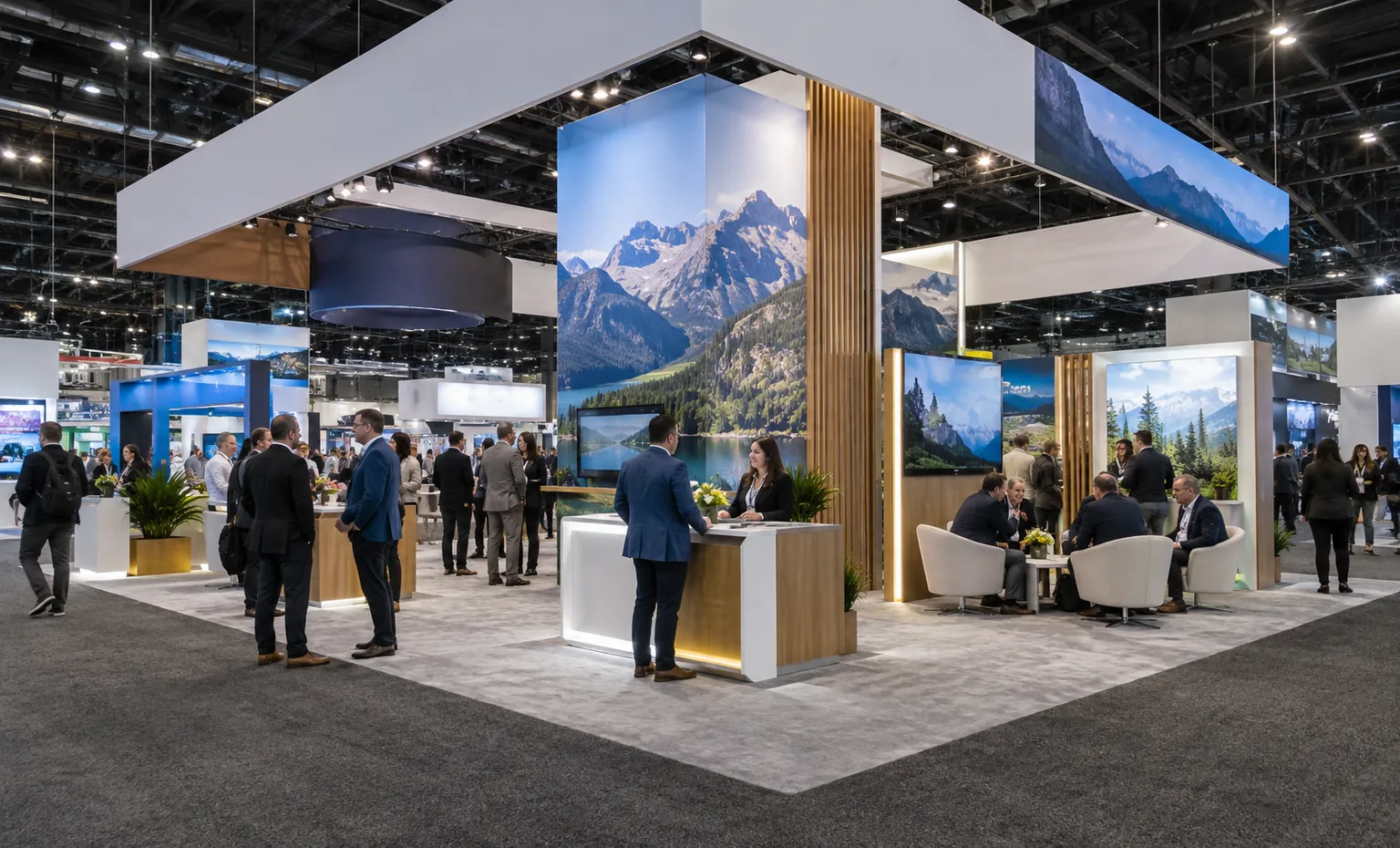
An island-sized option for multi-side access, a more substantial product presentation and a separated technical conversation.
-

More room for several system zones, a supervised demonstration, storage and planned meetings around a clear visitor route.