
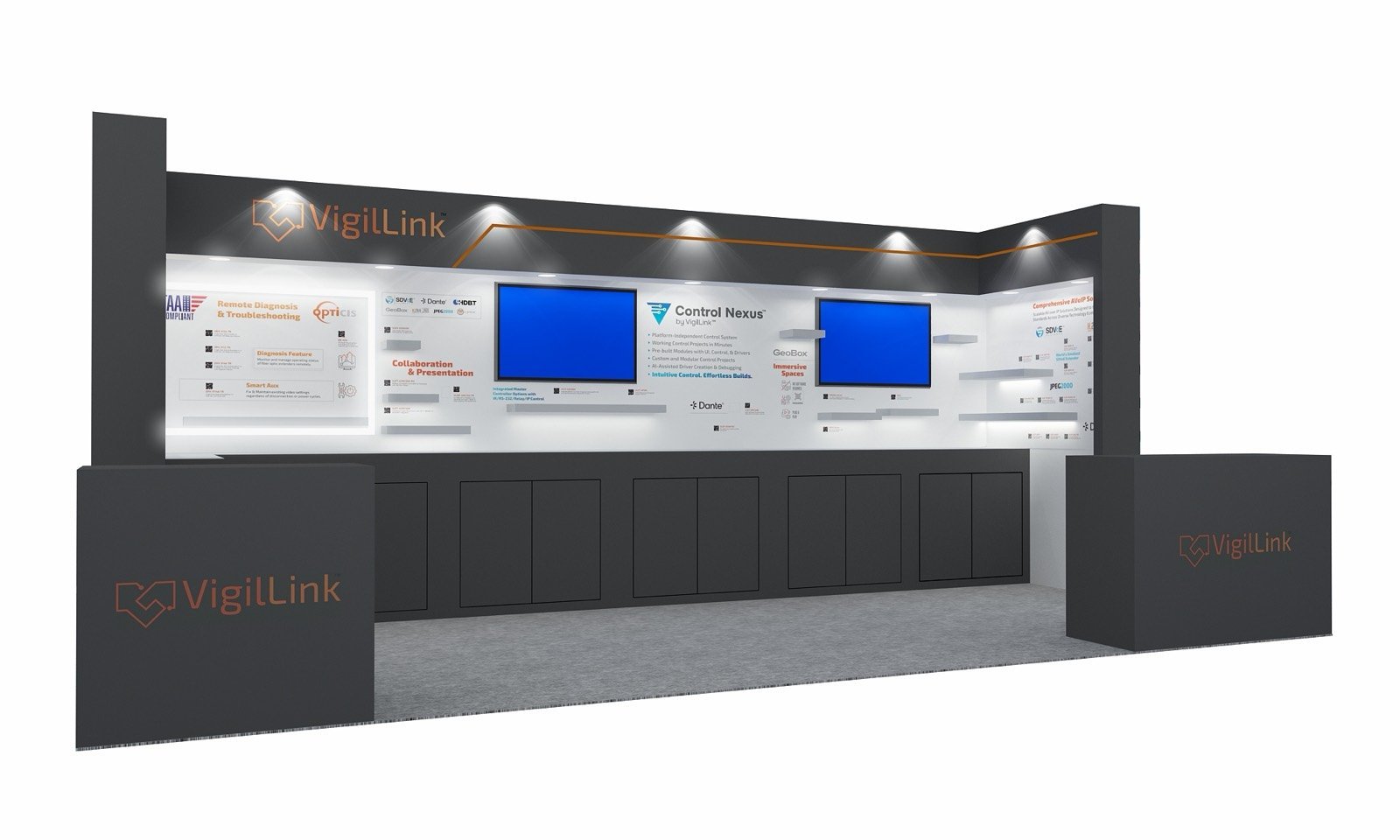

Display transceivers, cables, connectors, switches or transport hardware with enough access for close inspection. Controlled lighting and labeled link paths make small components easier to follow.

Use coverage, architecture or deployment graphics supported by devices, radios, models or approved demonstrations. Keep spectrum and performance claims within the supplied evidence.

Maps and network diagrams can establish reach, while meeting areas support route, capacity, partnership and commercial discussions specific to each account.

Demonstrate provisioning, assurance, orchestration, monitoring or service workflows at presenter-controlled screens with the required connectivity and fallback plan.
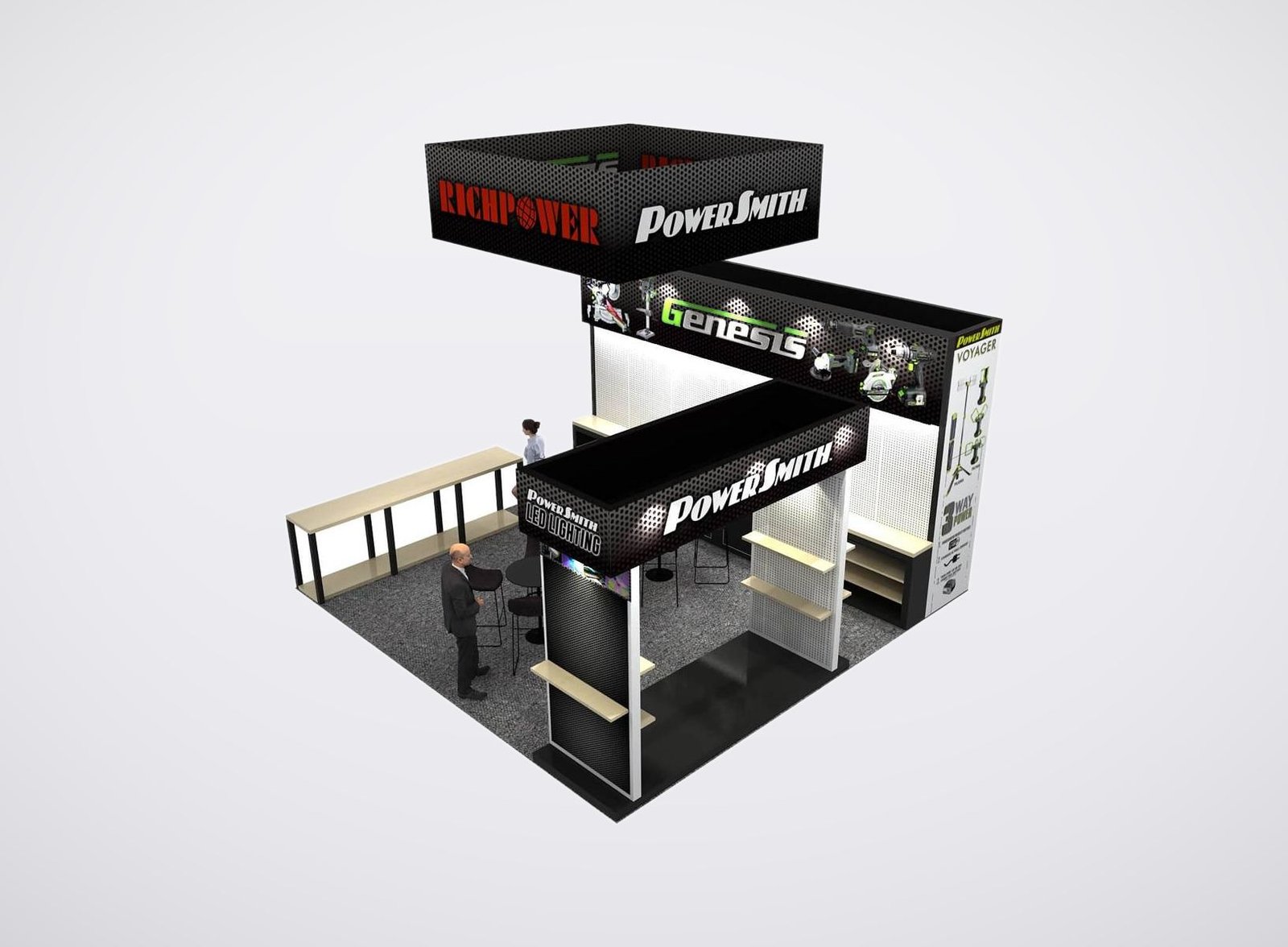
Build the Exhibit from the Network Outward
We review six inputs before arranging hardware, network visuals, software demos and meetings:
- Optical, wireless, broadband, carrier, cloud or operations solution
- Devices, radios, cables, connectors, switches or transport hardware
- Coverage, architecture, deployment and link-path graphics
- Presenter-controlled screens, accounts, connectivity and fallback content
- Power, cable routes, lighting and equipment storage
- Route, capacity, integration, partnership and commercial discussions
Make an End-to-End Network Story Easy to Enter
Telecommunications exhibits often contain products from different layers of the same connection. Hardware specialists need access to components and ports. Network engineers need architecture and interoperability context. Carrier and enterprise teams need to discuss deployment, operations and commercial requirements. The booth should connect those conversations instead of presenting every division as a separate company.
The network story runs through branded rental architecture, hardware displays, screens and meeting areas. One large graphic establishes the system. Product stations support close technical review. Demonstrations show the operational workflow. Storage keeps cables, adapters, tools, spare devices and literature close to the team without covering customer-facing surfaces.
Coverage, speed, latency, interoperability, reliability, security and customer-result claims must come from approved exhibitor material. Live network operation and specialized connections remain under the exhibitor or authorized provider.
Give Every Cable and Device an Owner
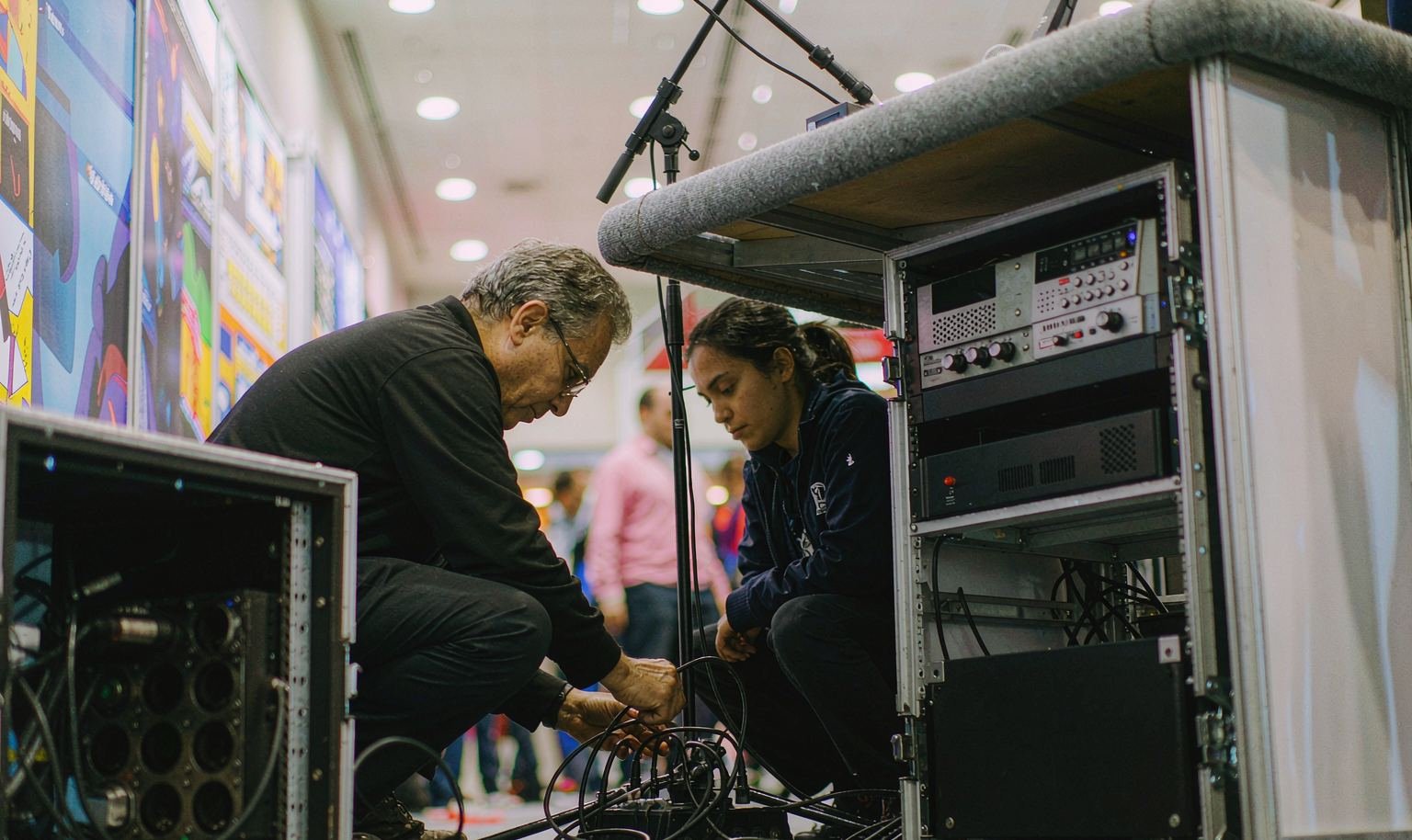
Telecommunications demos can involve production hardware, loaned equipment, fiber, copper, power supplies, converters, laptops and venue connectivity. Build one equipment record that names each item, its location, connection and responsible owner. Label hidden cable paths and preserve access for troubleshooting.
This work is operational, but it directly protects the sales experience. Product experts can start the next demonstration quickly, and the booth does not depend on an undocumented adapter or cable buried behind a finished wall.
Turn the Network Diagram into a Sales Tool
Dense engineering architecture does not belong on a full wall without editing. Start with the endpoints, network stage and outcome relevant to the event audience, then reveal technical detail at the product station or meeting screen. Use consistent labels between the diagram, hardware and demo. The exhibitor approves network relationships and claims; King Exhibits can translate the supplied structure into large graphics, screen content positions and product labels that remain readable on the show floor.

Prepare Live Connectivity with a Working Fallback
Network products are persuasive when visitors see a real connection, yet show connectivity may differ from a lab. Specify venue internet, wired service, private networking, local devices and any external link before booth approval. Test the complete demonstration and prepare an approved local or recorded fallback for outages. King Exhibits can plan screen mounts, racks, equipment access, power and cable routes within the quote; the exhibitor owns configuration, credentials, traffic and network security.
Cable Paths and Device Mounting Stay in the Same Build Plan
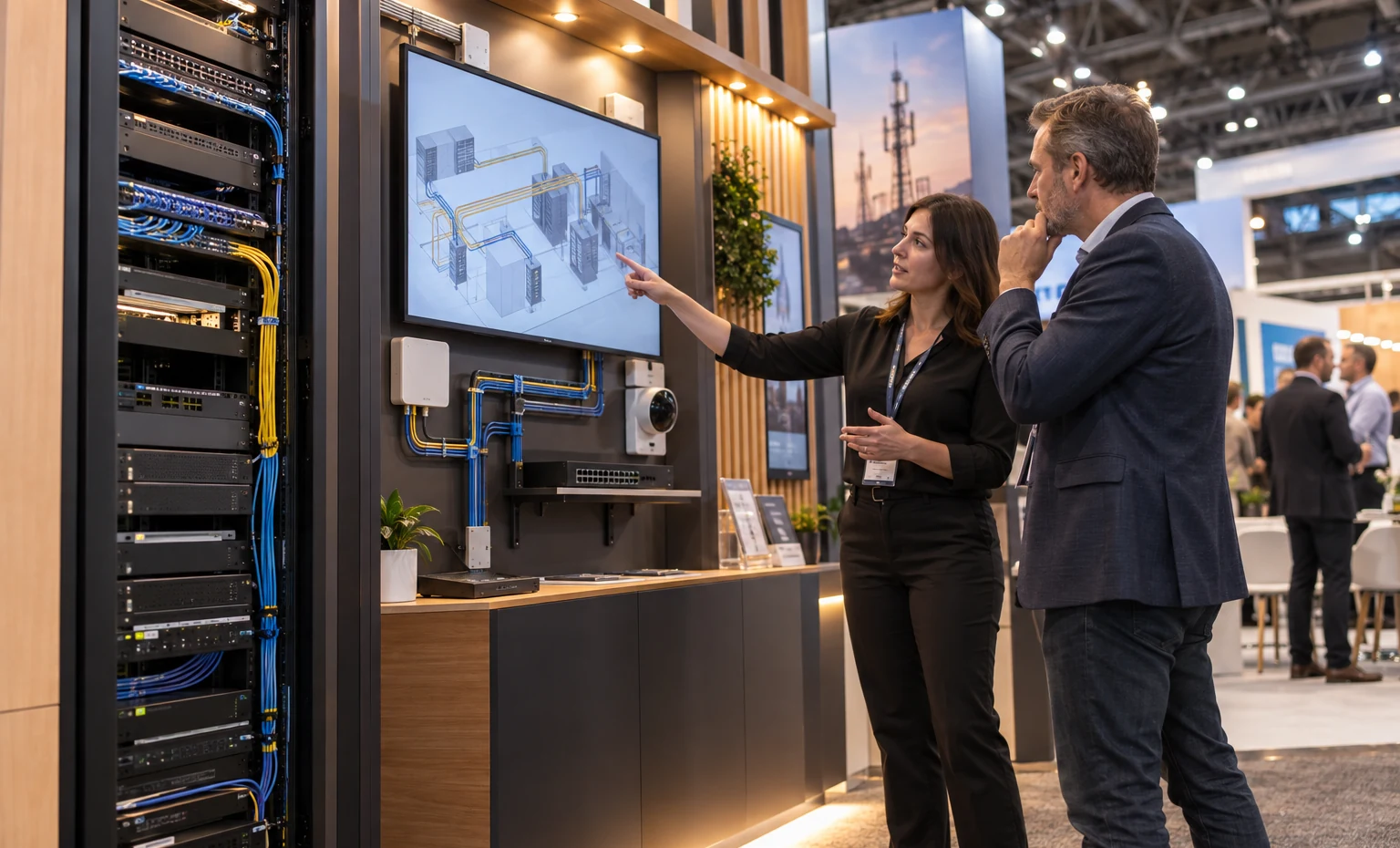
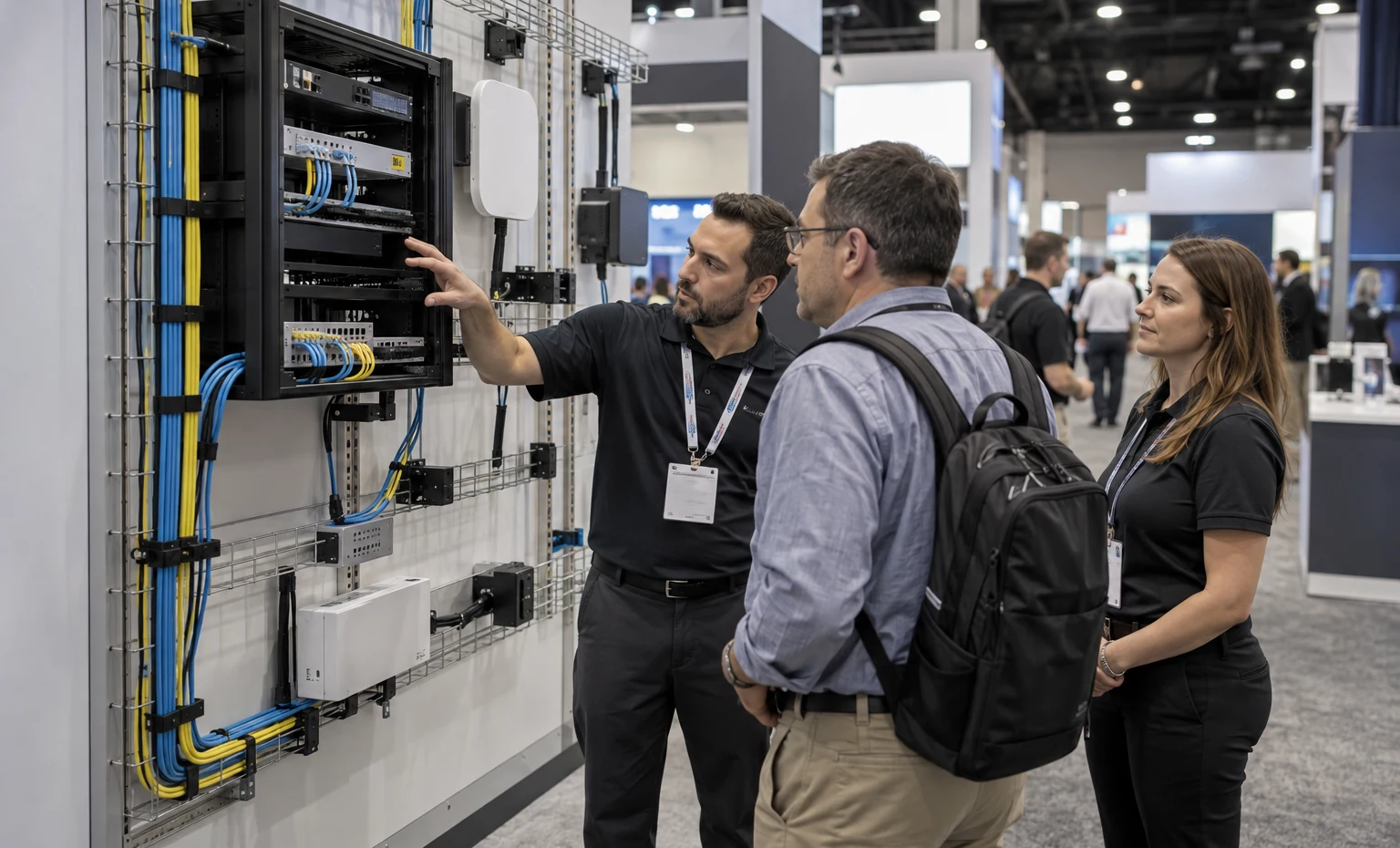
King Exhibits coordinates hardware, racks, displays, cable routes, network graphics, storage and meeting areas in the approved 3D layout. Confirmed devices and connection points guide quoted mounts and access openings before rental preparation. Custom graphics and labeled exhibit pieces follow the same plan, while the proposal assigns internet, freight and installation responsibilities. Telecom teams can review how the network story will work physically before the booth ships.
Telecommunications Events Where We Can Build Your Exhibit
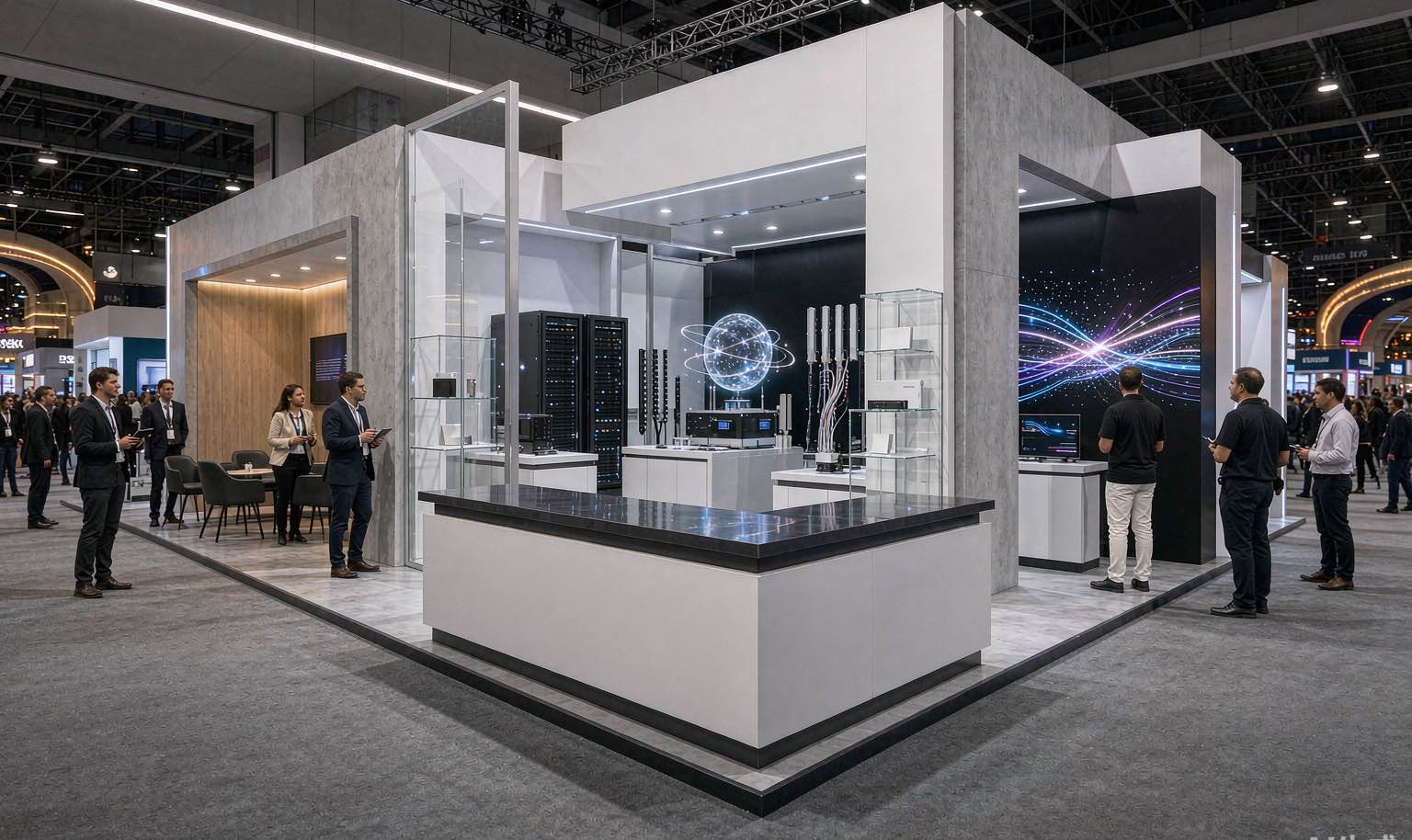
For wireless, network, enterprise and connected-industry technologies. Clear system positioning and strong product demonstrations help varied audiences identify the relevant solution.
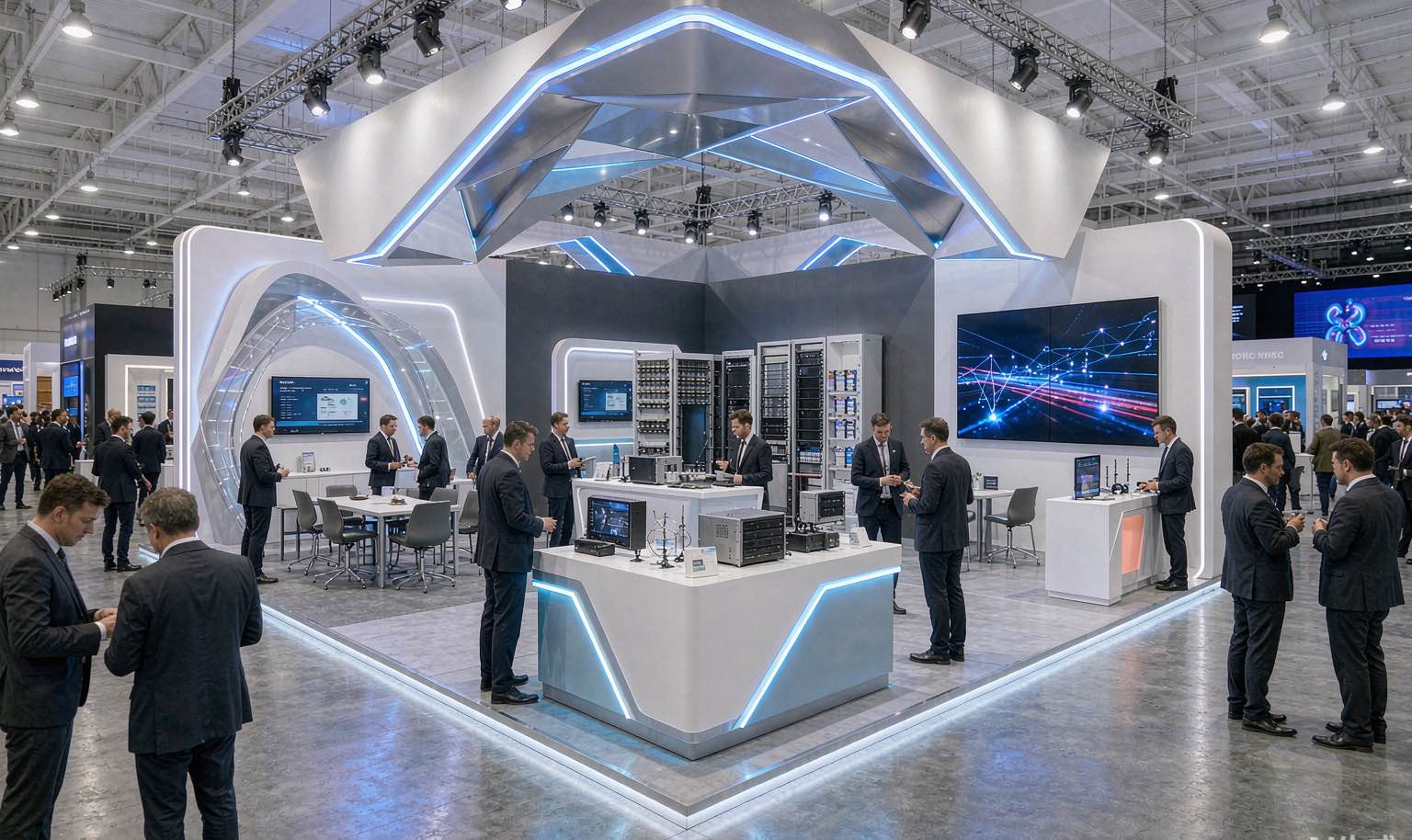
For cable, broadband, network operations and service-provider technology. Hardware access, interoperability stories and operator discussions should lead the exhibit.
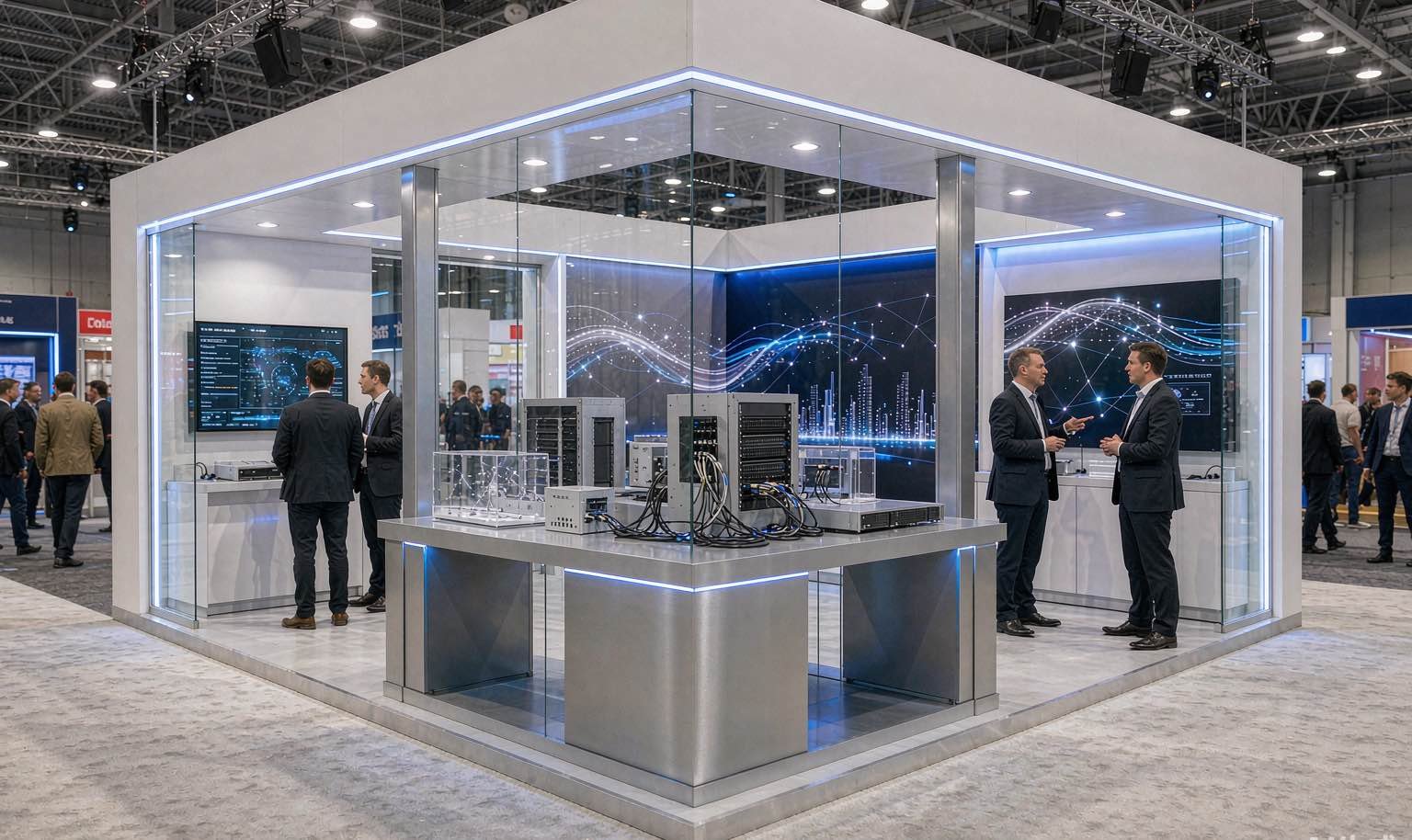
For carrier, cloud, data center and global connectivity meetings. Maps, network diagrams and appointment capacity often matter more than open-floor product volume.
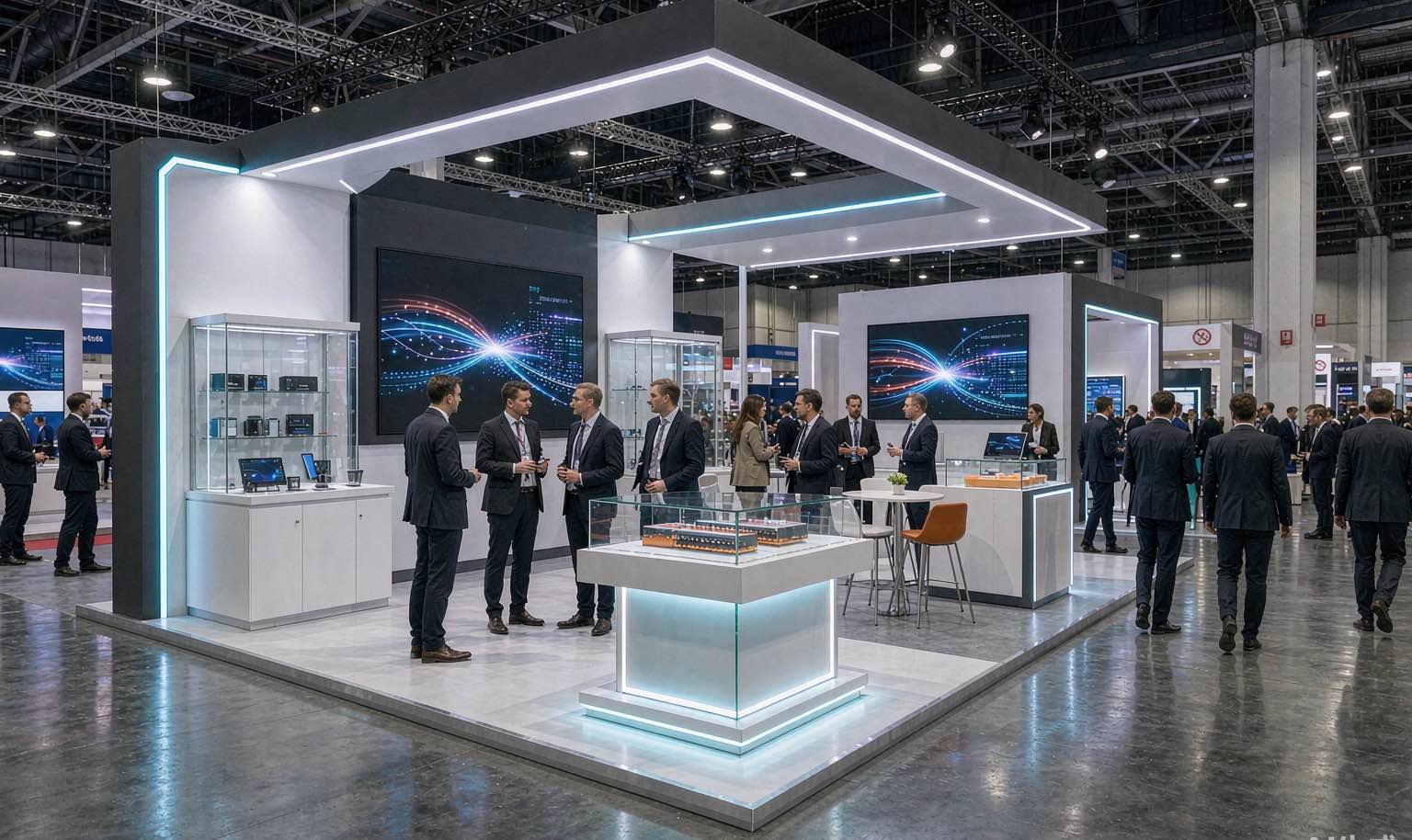
For optical communications, fiber, components, systems and network technology. Small product visibility and engineering discussion space are central.
Yes. Send dimensions, weight, mounting method, access, ventilation, power and cable information so suitable rental or quoted custom supports can be reviewed.
Yes, when the exhibitor confirms service, topology, equipment, credentials, configuration and fallback. Current venue and organizer rules control available connectivity.
Yes. The plan can include labeled paths, removable access and technician clearance while keeping customer-facing areas organized.
Yes. Open, semi-private or enclosed meeting areas can be planned around the appointment calendar, group size, confidentiality and footprint.
Yes. Use one clear system view to show where each product connects, then place detailed hardware, fiber, software or monitoring demonstrations in separate stations. Consistent labels help visitors move from the network overview to the specialist responsible for each layer.
Telecom exhibit pricing requires the event, footprint, network story, hardware, dimensions, racks, cabling, power, connectivity, screens, meetings, budget and requested services.
Booth Sizes for Telecommunications Exhibitors
-

For connectivity hardware, one network story and a focused technical demo.
-
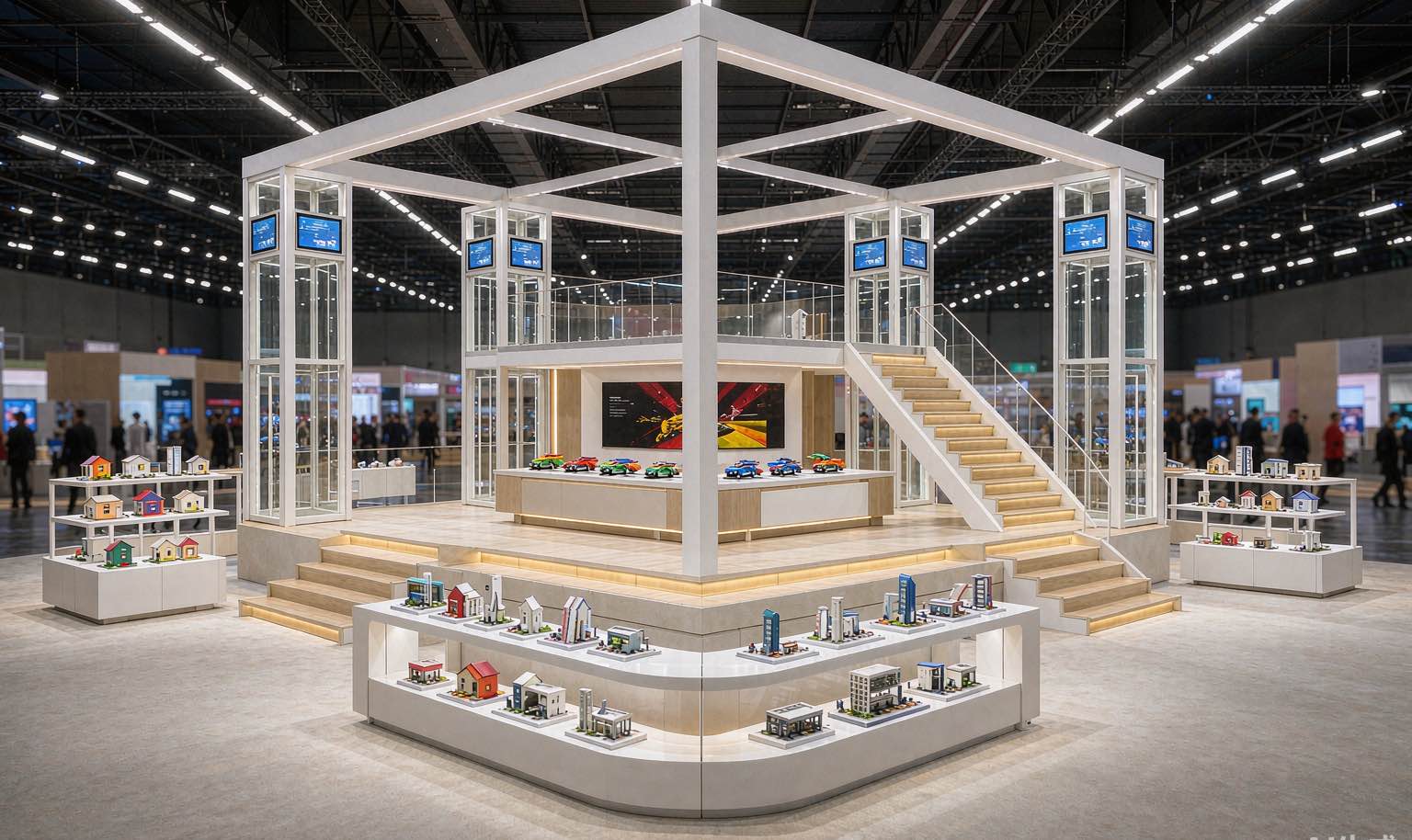
For several product stations and carrier meetings with island access.
-
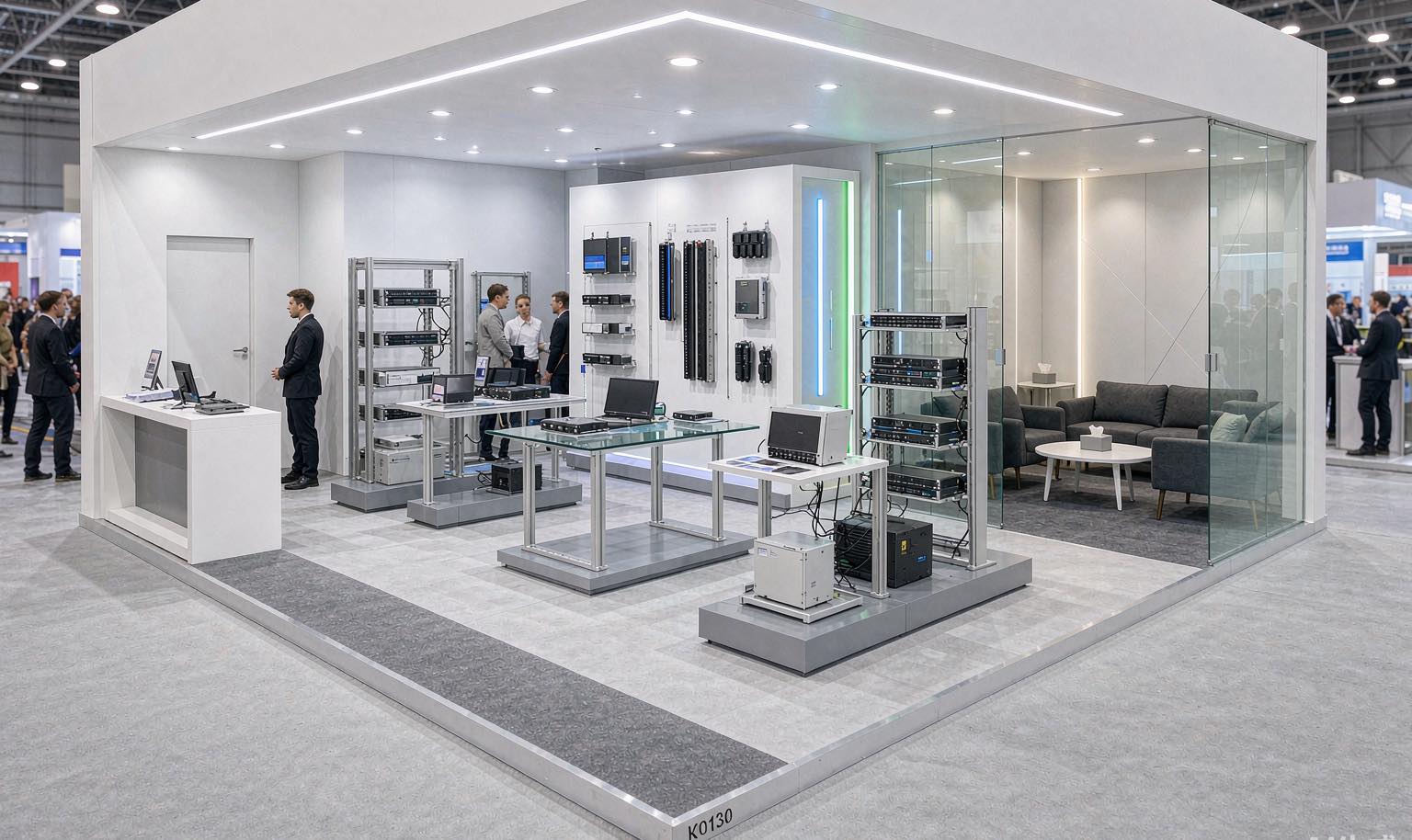
For hardware, software and service portfolios with multiple teams.
-
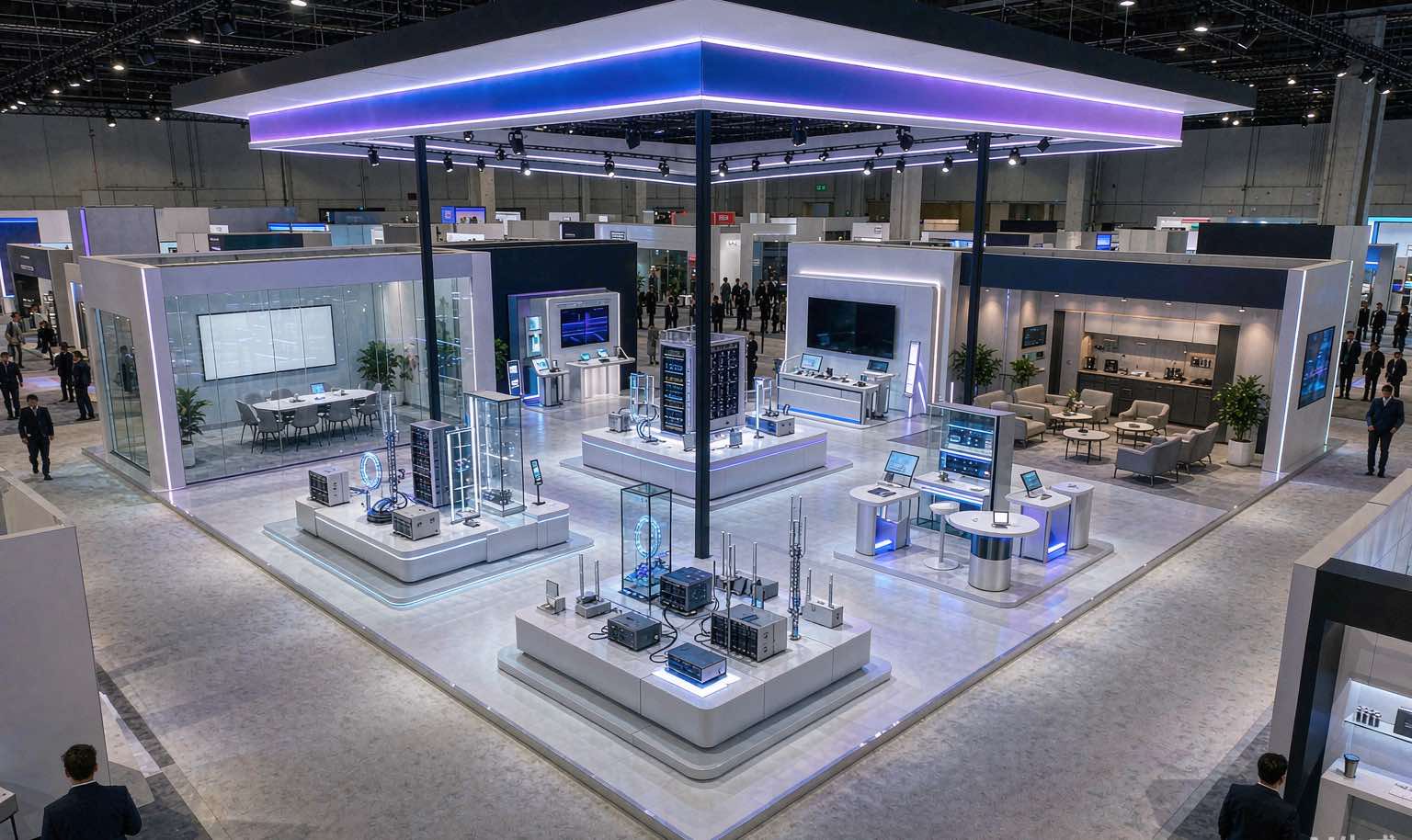
For network zones, larger demonstrations and enclosed meetings.
Request a Telecommunications Booth Plan Built Around the Connection
Draw the connection from the first device to the outcome buyers care about. The racks, cable map, live-connectivity plan, fallback demo and carrier meetings allow King Exhibits to turn that network story into an exhibit layout with clearly assigned technical work.