

Use illuminated cases, magnification, labeled samples or comparison fixtures. Keep approved technical data close enough for an engineer to connect it to the correct part.

Start with operating dimensions, weight, access, utilities and responsible technicians. Process graphics should show the equipment's place in fabrication, assembly, test or packaging.

Build a stable demonstration around the instrument, device under test, controls and shared results display. Confirm heat, power, cable and storage needs early.

Use guided screens and technical discussion space for simulation, design, data or verification workflows. Confidential examples should remain under exhibitor control.

Match the Display Method to the Product Scale
We confirm six inputs before choosing the display scale and demonstration method:
- Components, boards, materials, process equipment or engineering technology
- Product size, magnification, lighting and inspection method
- Equipment dimensions, weight, access and utilities
- Instrument, device under test, controls and results display
- Heat, power, cable routing and concealed storage
- Guided workflows, confidential examples and technical discussion space
Help Engineers Move from Application to Specification
Electronics and semiconductor buyers arrive with technical questions, but the booth still needs to establish relevance quickly. Application visuals can identify the system or manufacturing problem. Real parts, wafers, boards, assemblies or equipment provide physical evidence. Guided demos or process diagrams explain operation. Technical staff can then discuss specification, qualification, integration and supply.
King Exhibits combines those layers within a custom rental environment. Display cases and fixtures support small products. Rental walls and towers carry application graphics. Equipment zones preserve service access. Counters and meeting areas support closer review, while storage keeps samples, test accessories and staff items organized.
Reliability, yield, precision, certification, performance, capacity and customer-result claims must come from approved exhibitor material. Specialized handling, equipment operation and technical procedures remain with the exhibitor or authorized provider unless included in the proposal.
Use Magnification Without Separating the Image from the Part
Close-up photography, live cameras and enlarged diagrams help visitors see features that are too small for aisle viewing. Keep the physical component next to the corresponding image and label both with approved terminology. The display should make orientation and scale clear, especially when several similar parts share one case. King Exhibits can plan lighting, screens, cases and graphics around the supplied samples; the exhibitor confirms product identity, specifications and handling requirements.

Decide How Prototypes and Confidential Work Will Be Shown
Prototype boards, wafers, process images and customer applications may not belong in open view. Separate public product displays from controlled technical discussion before graphics and cases are designed. Sensitive samples can use supervised access, opaque storage or meeting-room presentation according to the exhibitor’s policy. The booth should still state the application and capability clearly enough for qualified visitors to ask for more information, without exposing restricted designs or implying approvals that do not exist.
Measured Product Interfaces Carried Through 3D Review
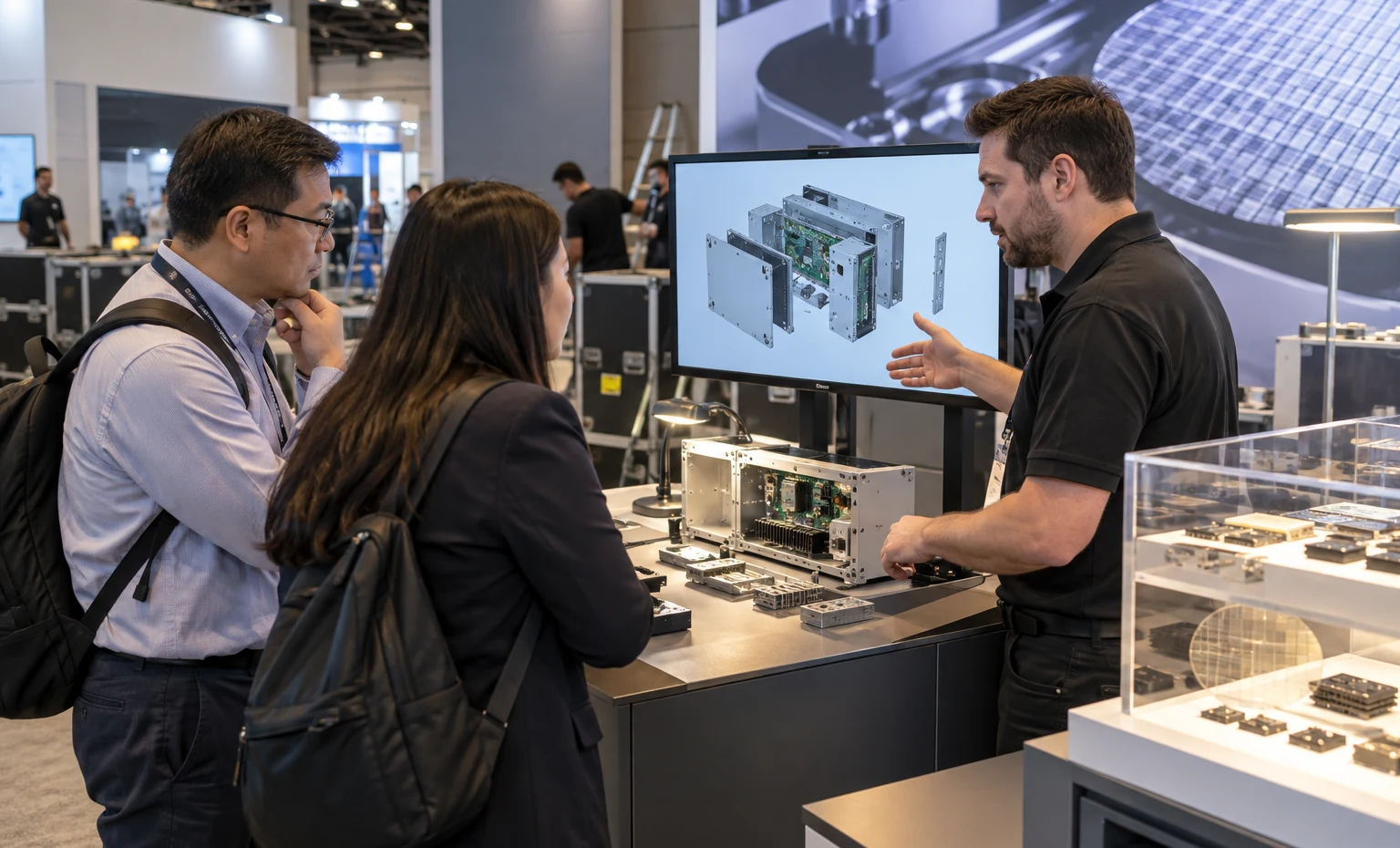

King Exhibits plans component cases, magnified displays, equipment access, screens, storage and engineering meetings in one 3D layout. Confirmed sample and device dimensions guide quoted fixtures and openings before rental preparation begins. Custom graphics connect the physical part to its application, while labeled packing supports installation. The proposal identifies the supplied booth elements and show services, giving electronics teams a clearer handoff from product engineering to the event floor.
Electronics and Semiconductor Events Where We Can Build Your Booth

For semiconductor manufacturing, equipment, materials, components and advanced technology. Technical equipment, process stages and specialist meetings often lead the exhibit plan.

For PCB, electronics assembly, manufacturing equipment, materials, test and suppliers. Components and process solutions need clear application and engineering context.
For chip, board and systems design, signal integrity, test and engineering audiences. Technical demonstrations and controlled design discussions deserve usable screen and meeting space.
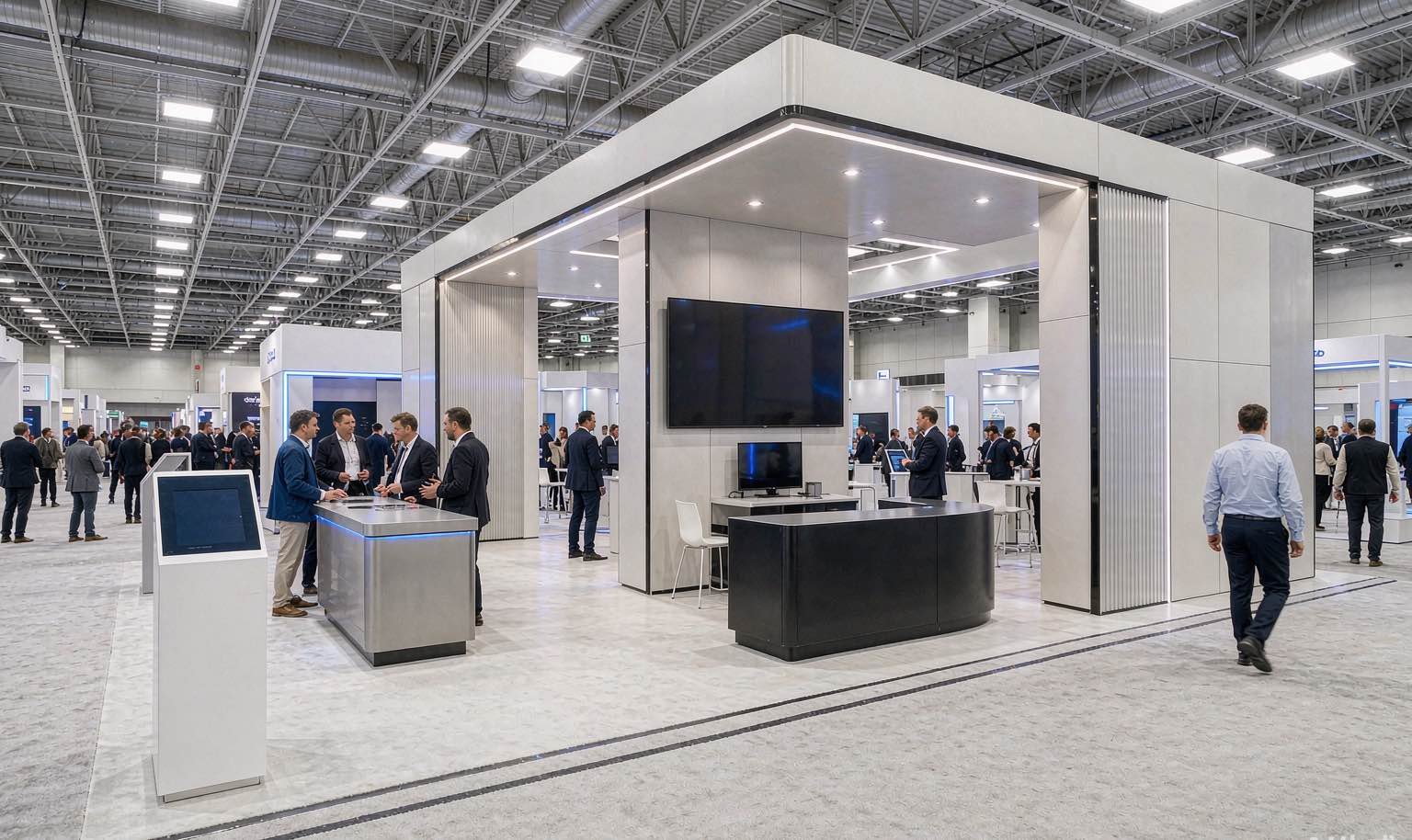
For electronics, automation and manufacturing components serving industrial and regulated products. Small component displays and connected equipment demonstrations can share one focused booth.
Quote the Product Display from Real Samples
Send photographs and dimensions for every part, board, wafer, material sample, instrument and machine. Identify items that need power, magnification, controlled access, ESD procedures, specialist handling or secure storage. Add the demonstration devices, screens, application graphics, expected meetings and target engineering roles.
These inputs determine cases, fixtures, lighting, counters, structure and service coordination. King Exhibits can quote the physical exhibit accurately while leaving product handling, technical operation and specialized controls with the responsible team.
Yes. Illuminated cases, enlarged graphics, magnification, live cameras and comparison fixtures can connect the real component to features visitors need to see.
Possibly. Provide operating dimensions, weight, access, utilities, heat, noise and procedures. Current event and venue rules determine permitted operation and connections.
Yes. Controlled cases, supervised access, concealed storage or meeting-room presentation can be planned according to the exhibitor’s confidentiality policy.
Only items expressly listed in the proposal are included. The exhibitor must define and provide specialized ESD, test, handling and operating requirements unless an agreed provider is named.
Keep quick sample inspection and application recognition near the aisle, then provide a screen or meeting table for specifications, test data and integration questions. Confidential material should follow the exhibitor’s access rules and stay out of general view.
For pricing, provide the event, footprint, products, dimensions, equipment, displays, lighting, power, demo workflow, confidentiality needs, meetings, budget and requested services.
Booth Sizes for Electronics and Semiconductor Exhibitors
-
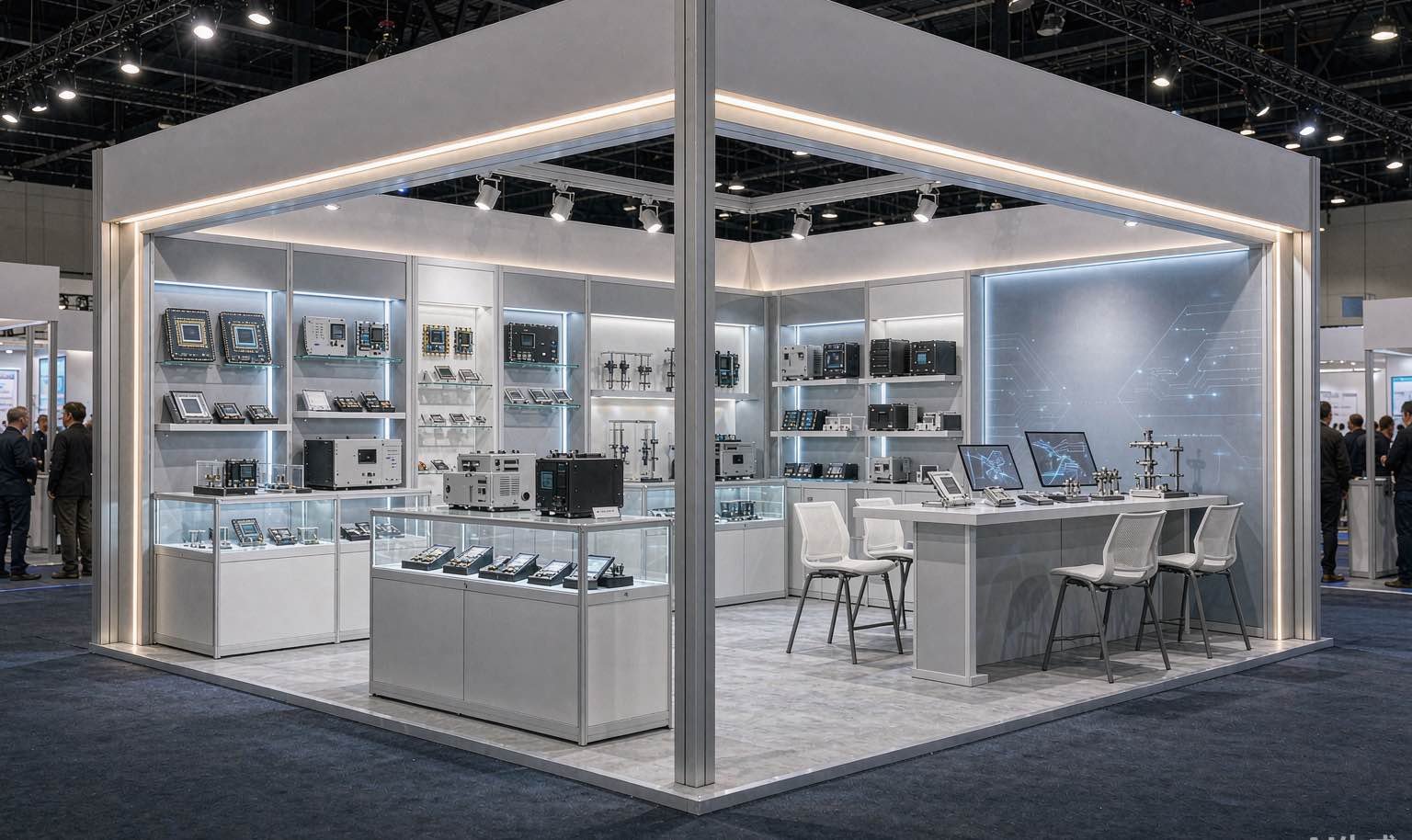
For components, illuminated samples and a focused technical demo.
-
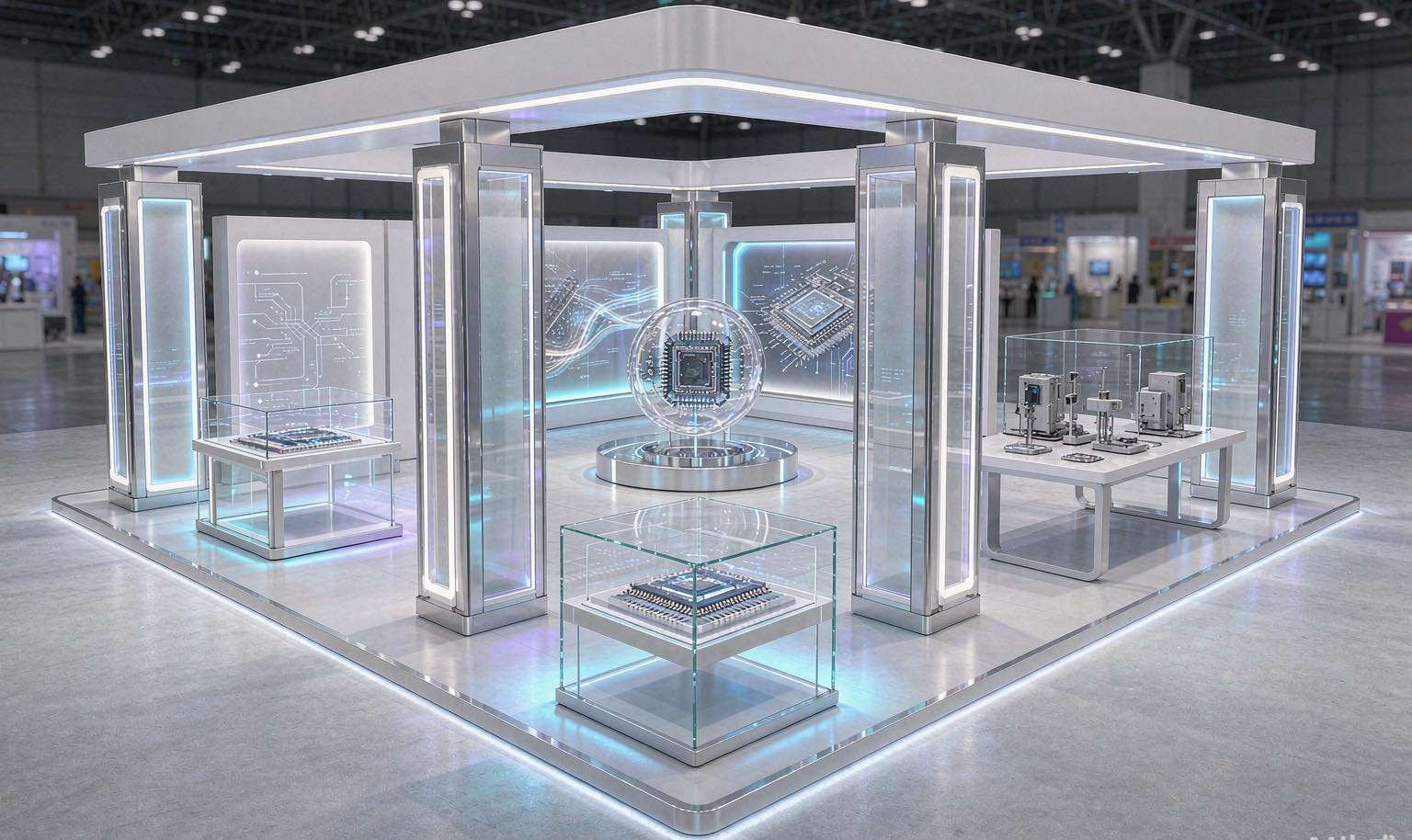
For equipment, product cases and engineering meetings with island access.
-

For several component families, process stages and specialist teams.
-

For major equipment, multiple technical zones and private discussions.
Scope an Electronics and Semiconductor Exhibit from the Real Product List
Bring the real parts, sample sizes and equipment drawings into the exhibit brief. Magnification, demo hardware, confidentiality limits and engineering meetings will determine the display method and the rental scope King Exhibits prices.