


Decide Which Security Conversation the Booth Must Win
We review six inputs before planning screens, diagrams and meeting zones:
- Product evaluation, architecture, executive or technical-community goals
- Workflow, deployment, integration and daily-use scenarios
- Presenter-controlled screens and shared architecture diagrams
- Demo accounts, connectivity and fallback content
- Confidential interfaces, sensitive data and aisle-view limits
- Specialist positions, scheduled meetings and crowd capacity
Design for Skeptical Visitors, Not Passive Screen Traffic
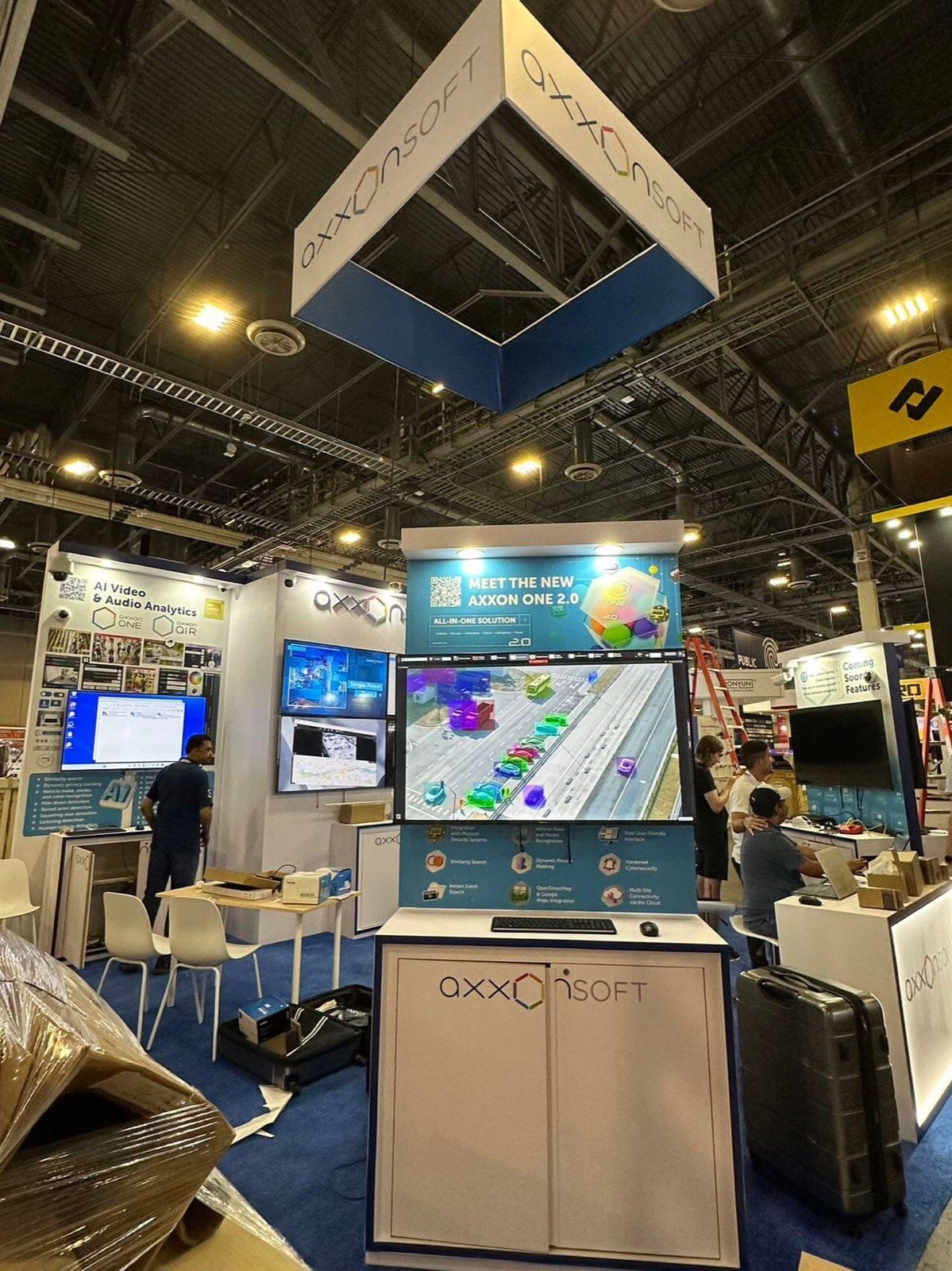
Security professionals expect specific answers. Brand visibility may bring them to the booth, but the product story must quickly identify the environment protected, the problem addressed and the action the platform helps the user take. Live demonstrations, architecture visuals and technical staff should work together rather than compete across unrelated screens.King Exhibits turns that selling plan into a branded rental environment. Demo stations can support guided workflows, while wall graphics or large displays establish the category from a distance. Open tables handle quick technical follow-up. Enclosed rooms support scheduled enterprise or partner meetings when privacy and focus matter.Threat, breach, compliance, efficacy, performance, customer-result and competitive claims must come from approved exhibitor content. The exhibitor controls software, accounts, data and security procedures. King Exhibits provides only the exhibit elements and show services documented in the accepted proposal.
Separate Demonstration Traffic from Enterprise Meetings
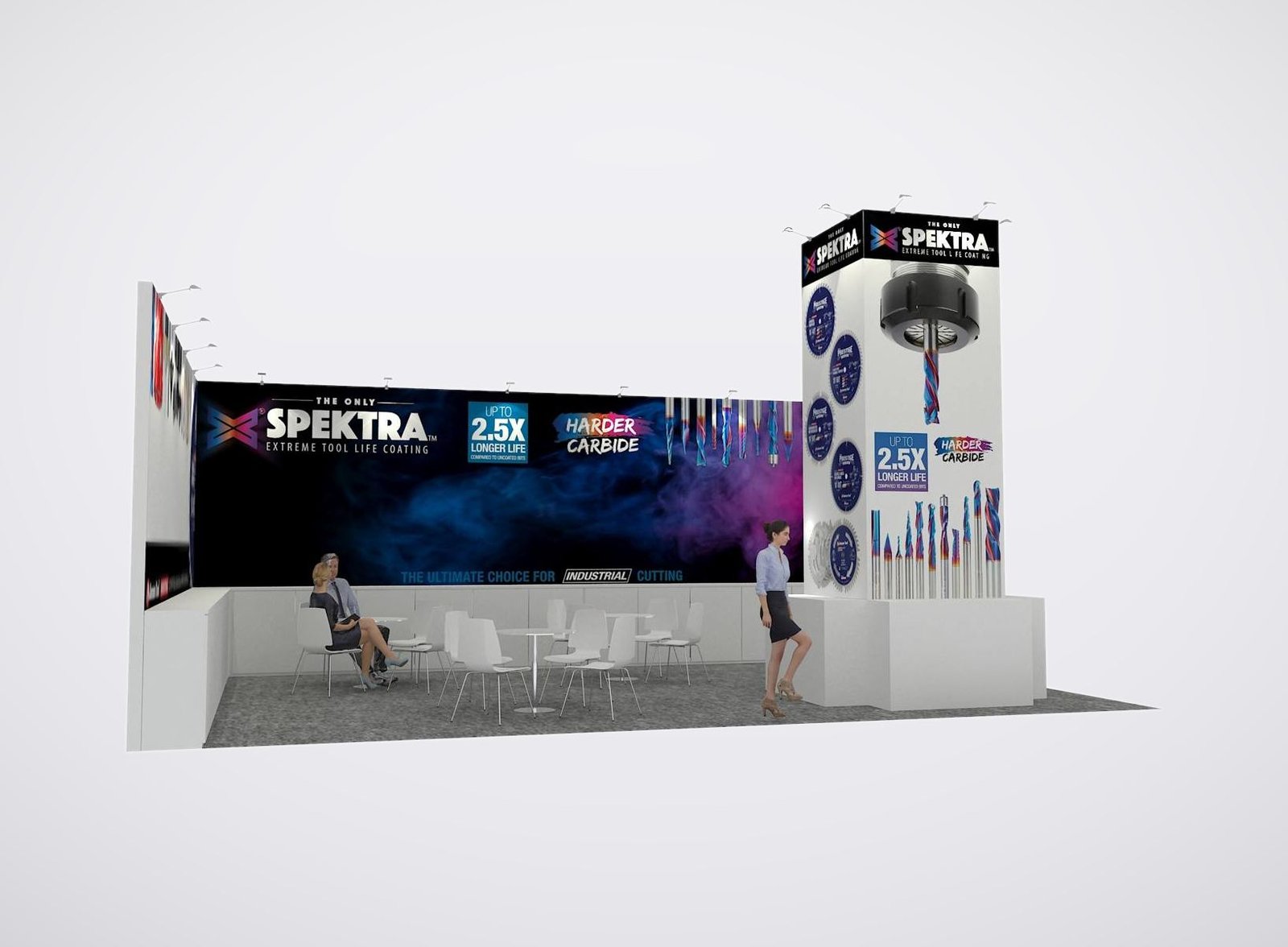
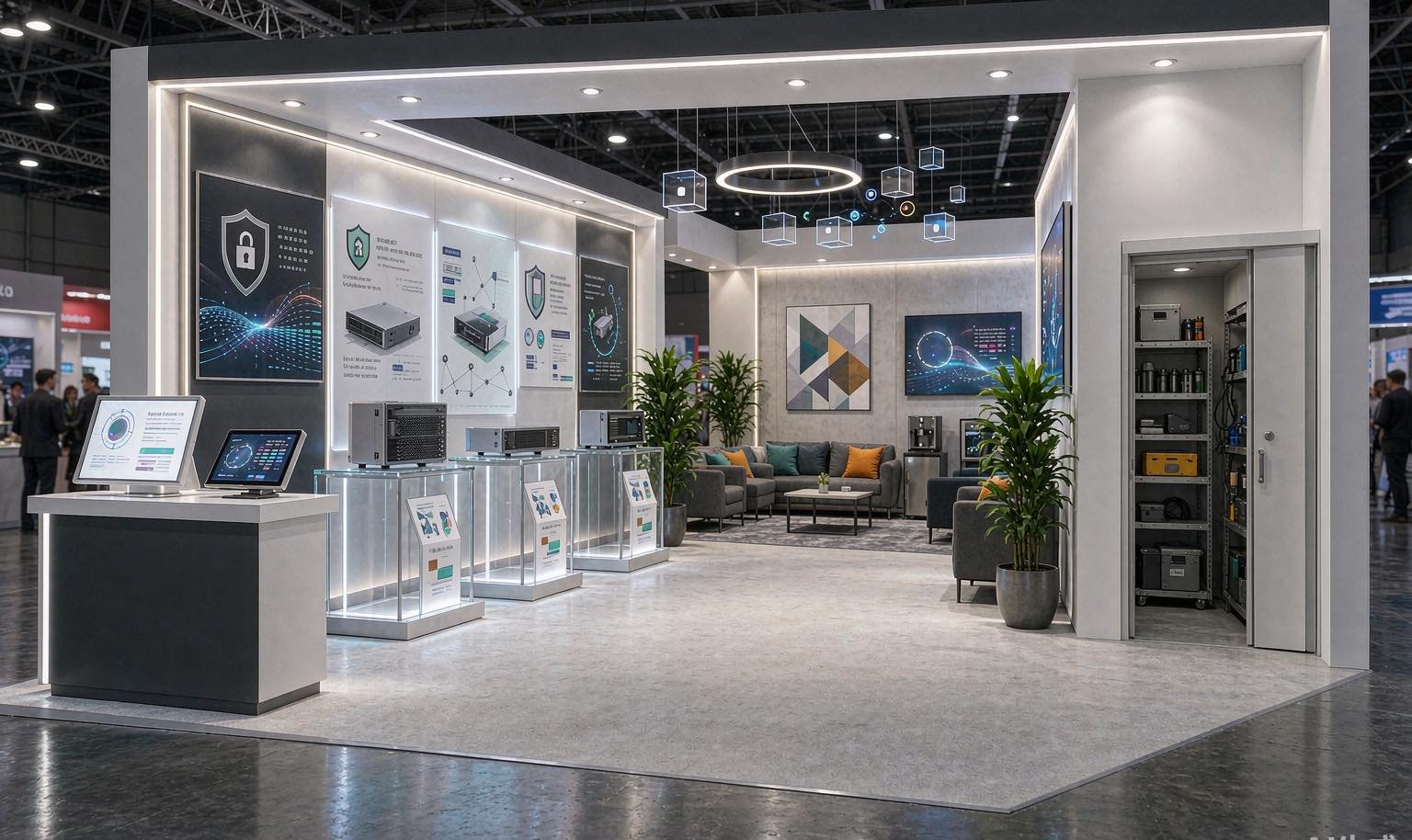
Place the highest-volume demo where passing visitors can join without crossing a meeting area. Give product specialists enough shoulder room to present and enough storage for devices, chargers and personal items. Architecture reviews often work better at a shared screen or table slightly behind the public line. Scheduled executive meetings need acoustic and visual separation appropriate to the subject.This zoning helps a cybersecurity booth serve practitioners, architects, channel partners and security leaders at the same time. The footprint should follow the planned conversation mix, not a generic software-booth layout.
Demonstrate the Product with Safe, Approved Data
Use demonstration tenants, synthetic records or other exhibitor-approved material instead of exposing customer names, internal alerts or production environments. Angle screens toward the presenter, keep credentials out of public view and define what may appear on large displays. Internet, wired service and local fallback requirements should be settled before counter design. King Exhibits plans the physical screen, device, power and cable environment; the security team owns access, data, software and operating procedure.

Give Technical Staff a Booth They Can Operate All Day
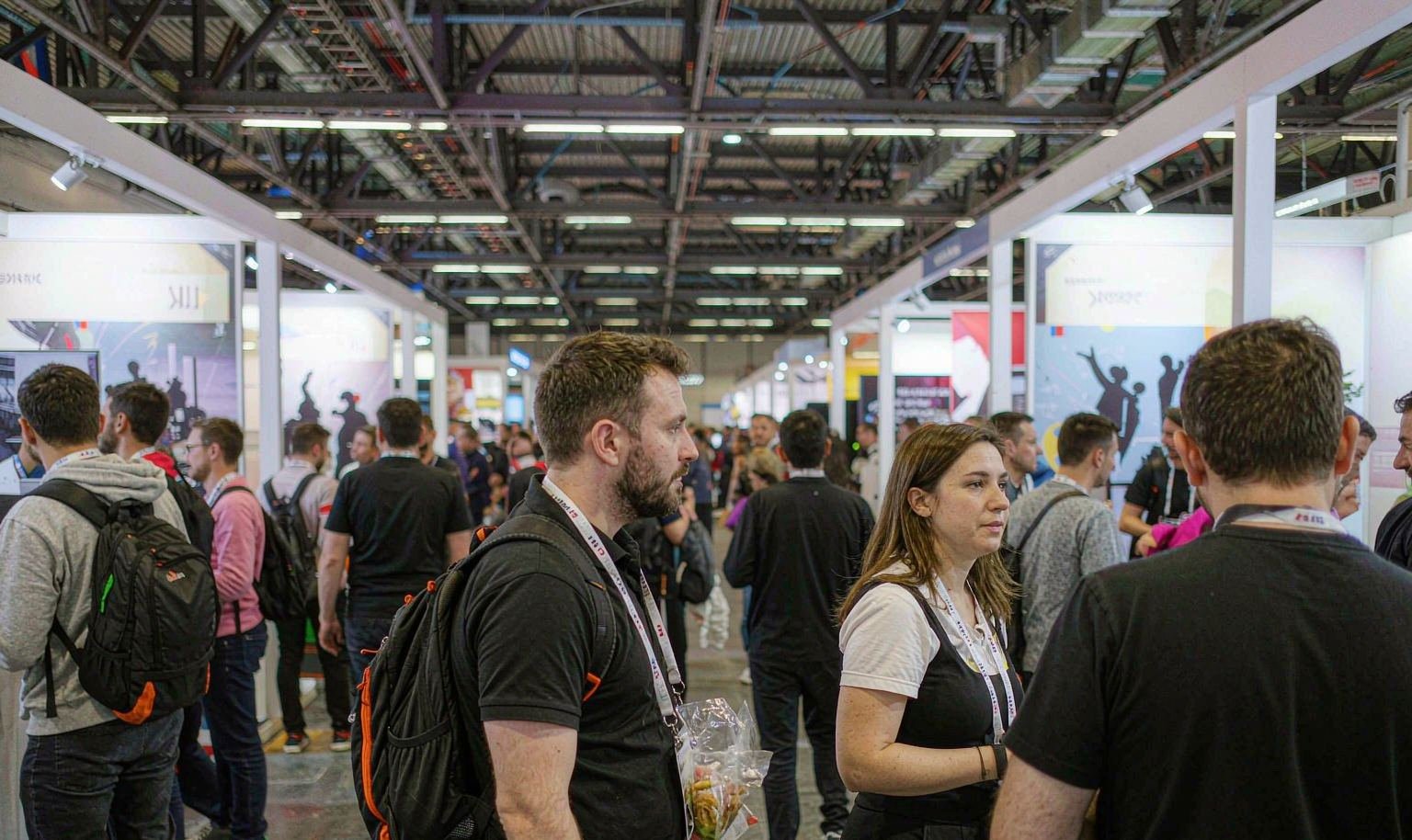
Repeated demos fail when devices overheat, batteries run down, cables become exposed or specialists cannot reach the controls. Confirm hardware, ventilation, power, internet, presenter position and reset steps while the exhibit is still in 3D review. Nearby storage should hold backup devices, adapters and approved handouts. The resulting station supports better technical conversations because the specialist can focus on the visitor instead of repairing the physical setup between demonstrations.
The Technology Plan Is Reviewed with the Exhibit, Not Added Later
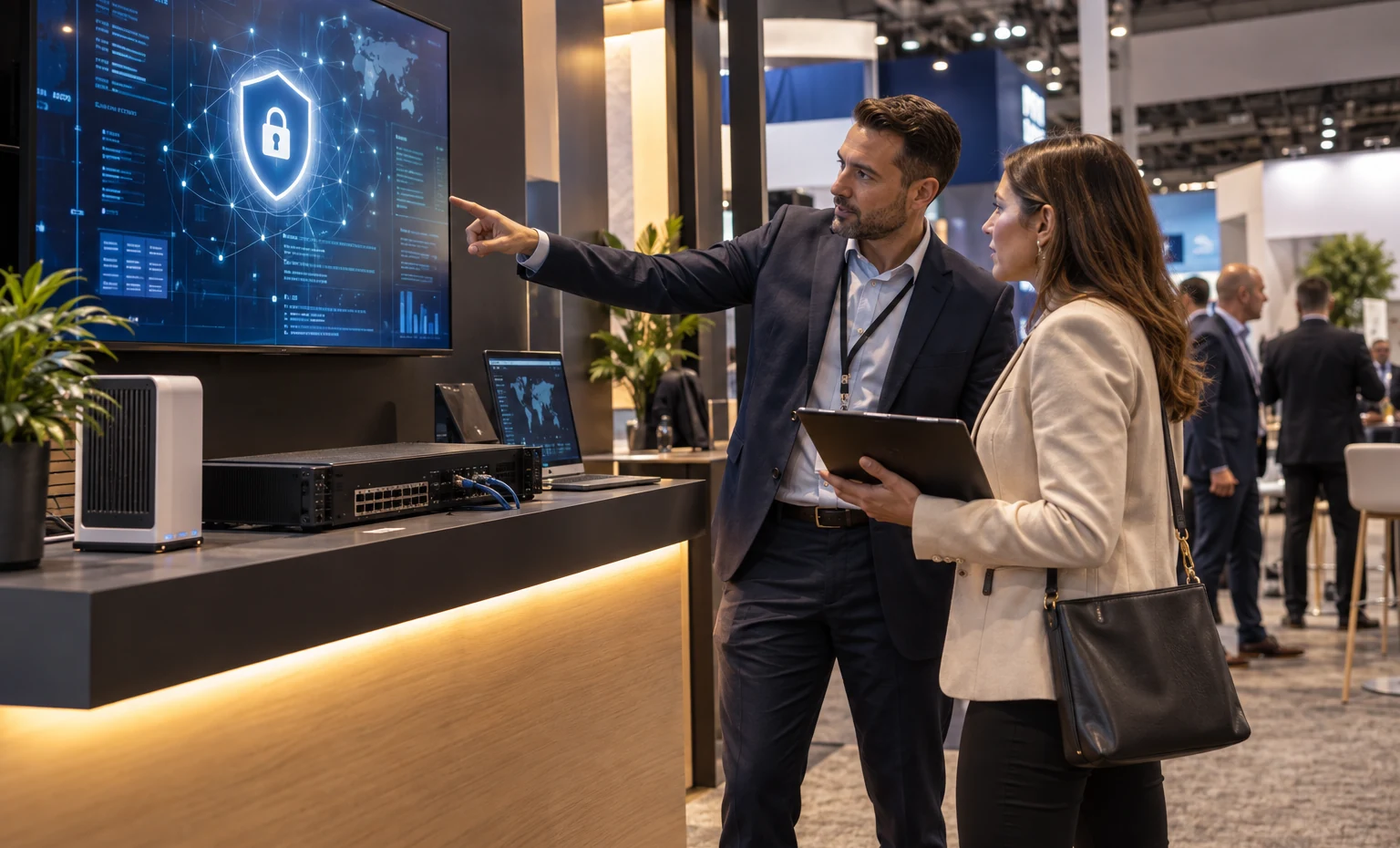
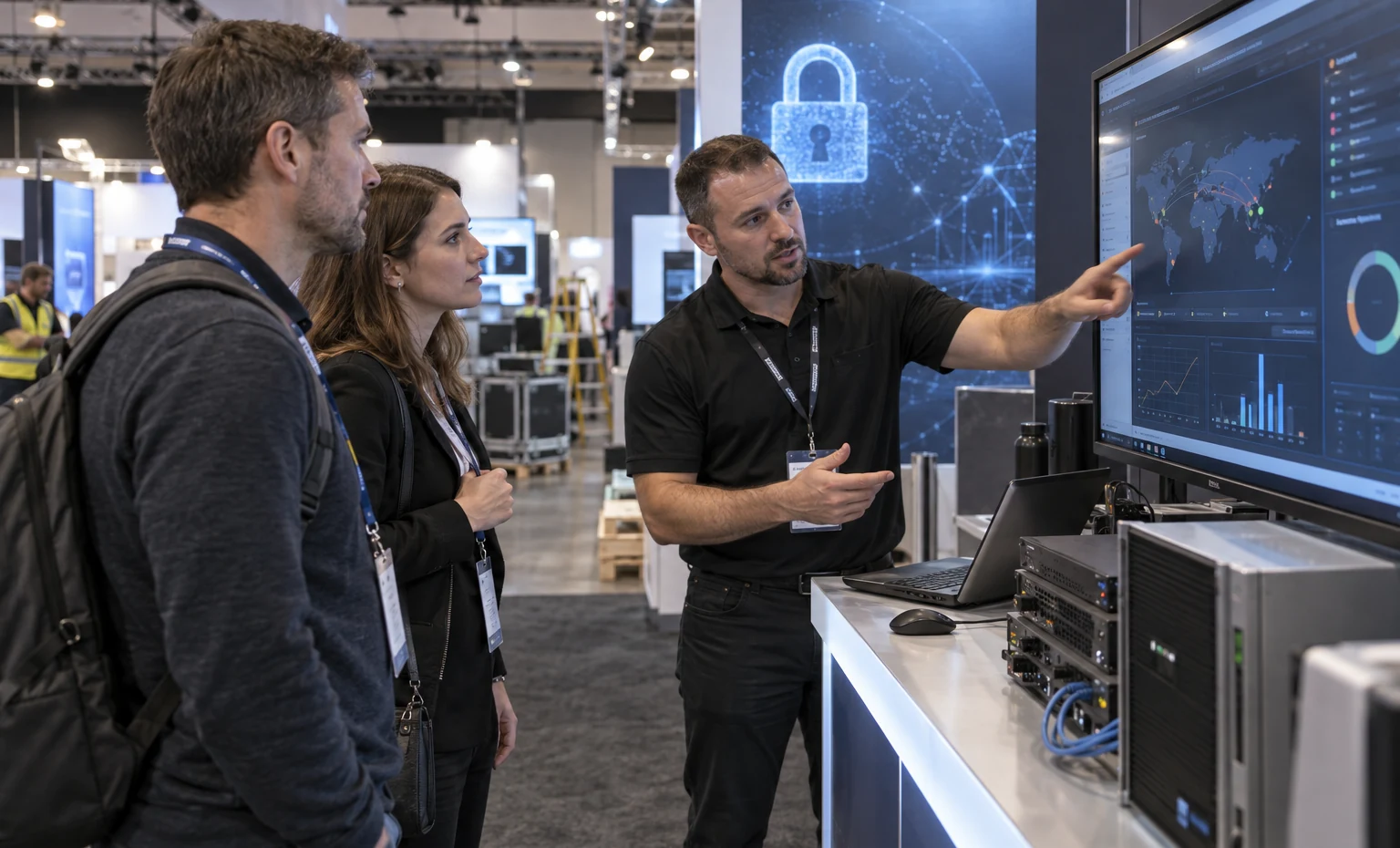
King Exhibits develops the 3D environment around the confirmed demo equipment, screen sightlines, meeting use, storage and approved brand content. The same plan guides rental preparation, graphic production and the physical interfaces quoted for screens and devices. This catches layout conflicts before the booth reaches the show floor and gives the exhibitor a clear basis for ordering electrical, internet and other services from the responsible providers.Rental structures and custom graphics move into documented show preparation after approval. Selected custom counters, freight coordination, installation and dismantling can be included when stated in the proposal. Cybersecurity claims and software operation remain with the exhibitor; King Exhibits builds the agreed setting in which the team presents them.
Cybersecurity Events Where We Can Build Your Booth
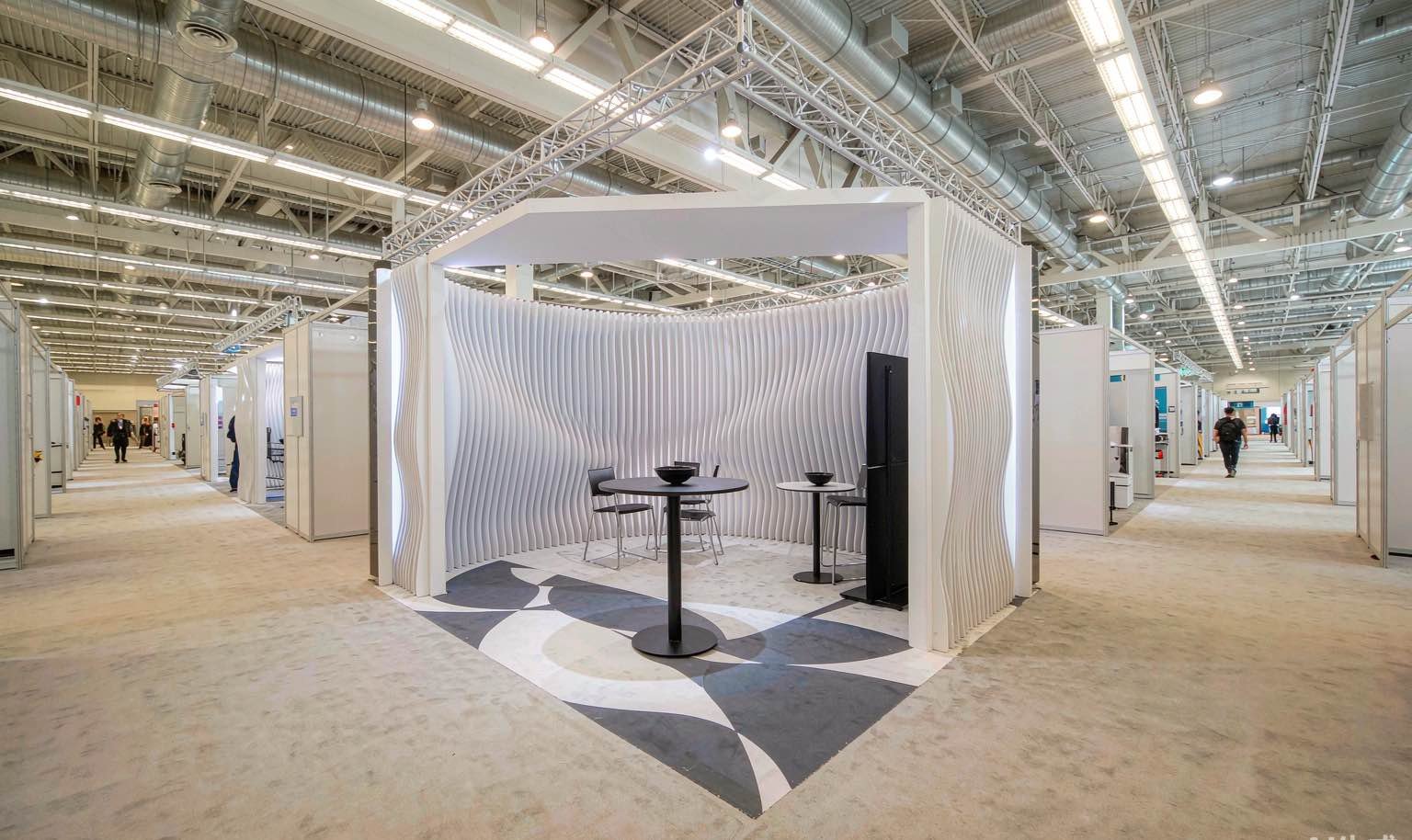
For identity, cloud, network, data, application, security services and enterprise buying teams. Strong category recognition and a clear split between demos and meetings help large teams use the exhibit effectively.
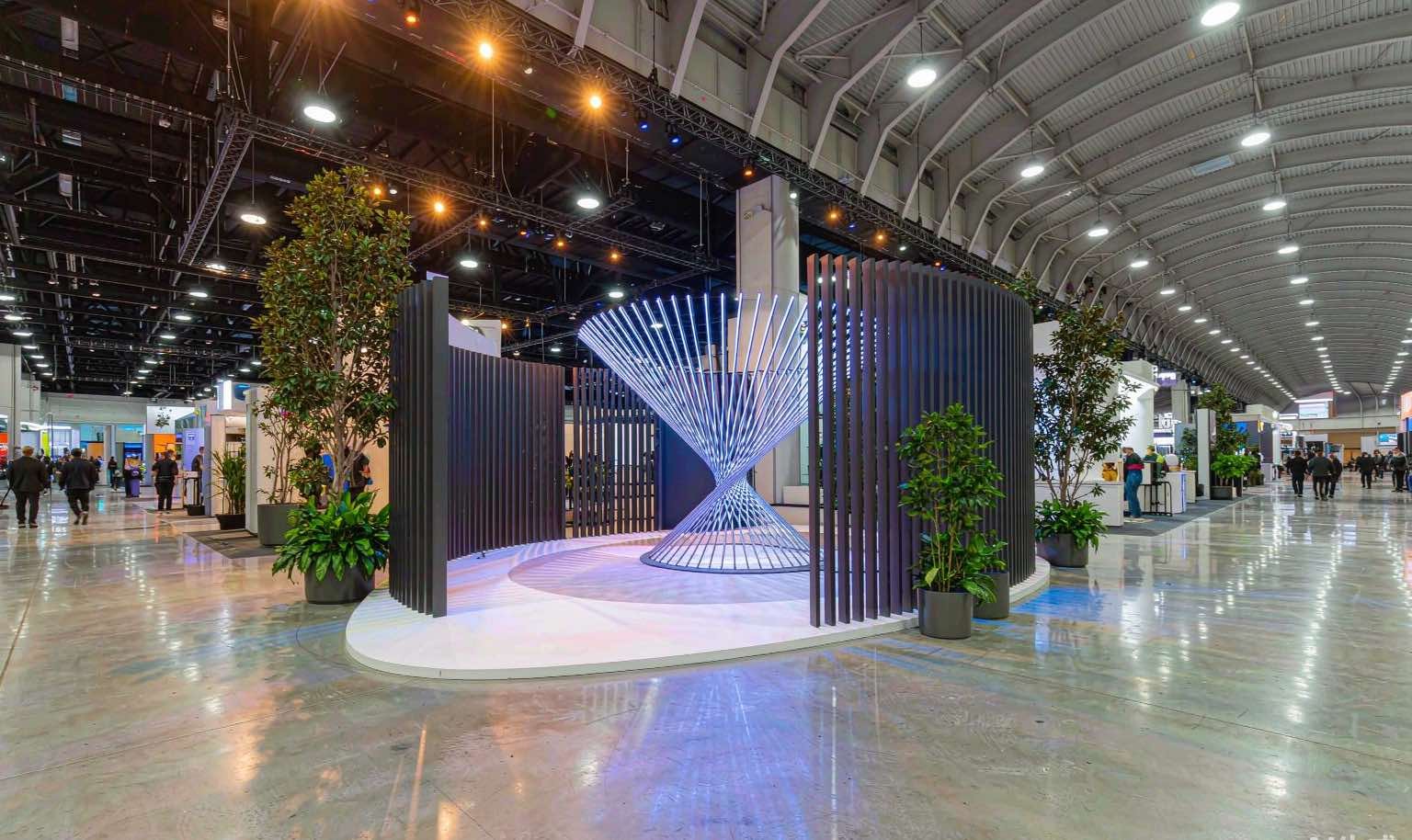
For security practitioners, researchers, technical buyers and solution providers. Accessible expert-led demonstrations and practical technical discussion should take priority over broad promotional theater.
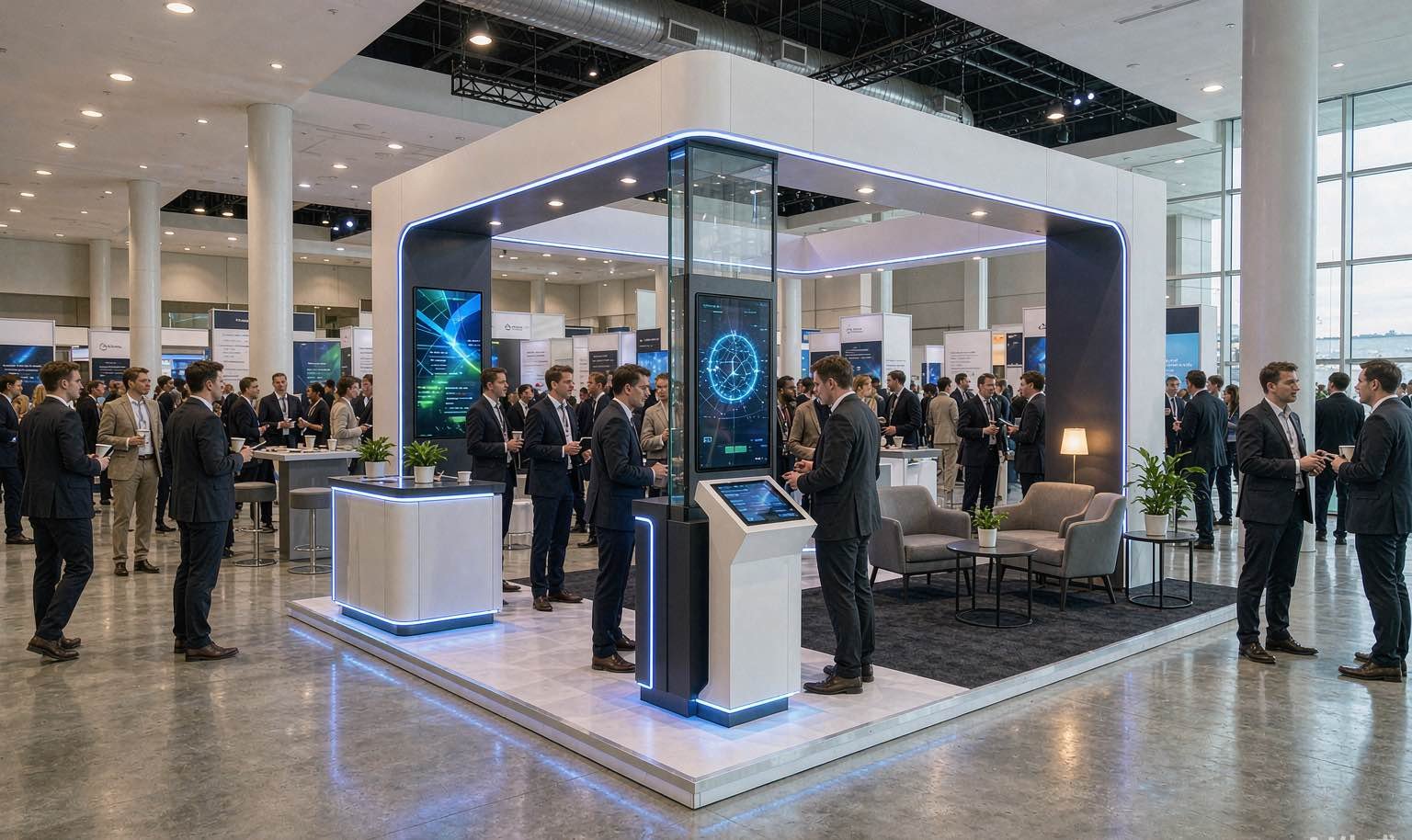
For enterprise security, risk and executive audiences. Meeting quality, concise positioning and a credible architecture story often carry more value than high-volume walk-up interaction.
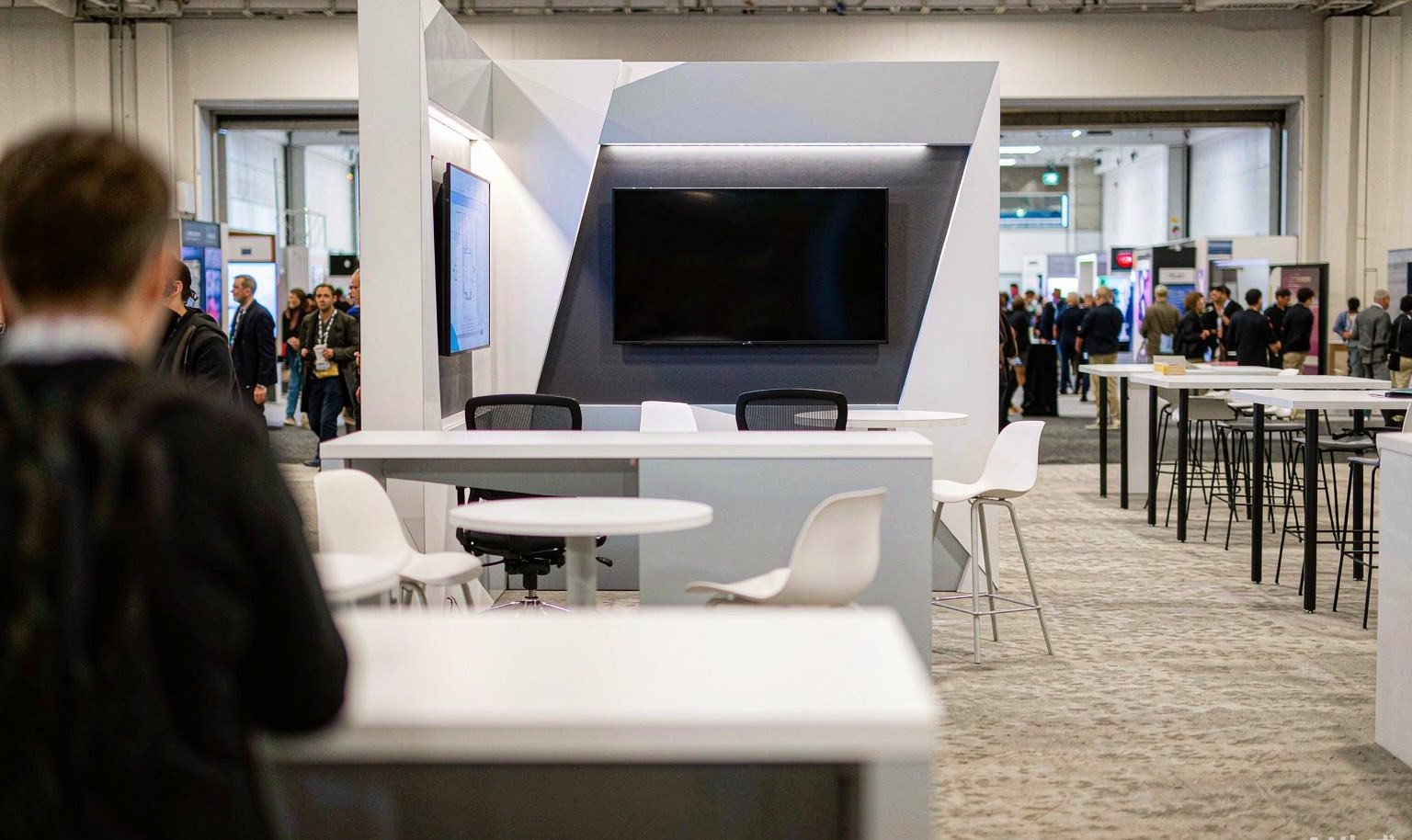
For identity, access and digital-trust solutions. User journeys, administration, integrations and governance can be shown through controlled workflows and shared architecture visuals.
What to Send Before the First 3D Concept
Provide the security category, protected environment, top use case and approved value statement. List every demo screen, computer, device, appliance and network connection. Identify public demos, technical reviews, executive appointments, partner activity and any session or hospitality planned inside the footprint.The brief should also include graphics status, desired storage, booth size, budget, destination and requested show services. These details let King Exhibits design around the actual product motion and quote the exhibit work without guessing at cybersecurity claims or infrastructure.
Yes. Confirm each product, screen, presenter, device, power connection, internet path and expected audience so stations can be spaced and supported correctly.
Often. Private or semi-private meeting space helps with scheduled enterprise, partner and executive conversations. The right amount depends on the calendar, group size, footprint and subject matter.
Only services specifically quoted are included, and venue or official providers usually supply show connectivity. The exhibitor remains responsible for network architecture, access controls, accounts, data and security procedures.
Yes. Approved diagrams can explain the product’s place across users, data, applications, infrastructure and controls. Keep the text readable and avoid exposing confidential implementation details.
Prepare a tested local or recorded demonstration that still explains the product without exposing sensitive data. Device storage, cable routes and screen positions can support both the live and fallback modes, while the exhibitor controls accounts, access and network security.
The proposal brief should include the event, footprint, security category, target roles, approved story, demo equipment, screens, network needs, meetings, graphics status, budget and requested show services.
Booth Sizes for Cybersecurity Exhibitors
-
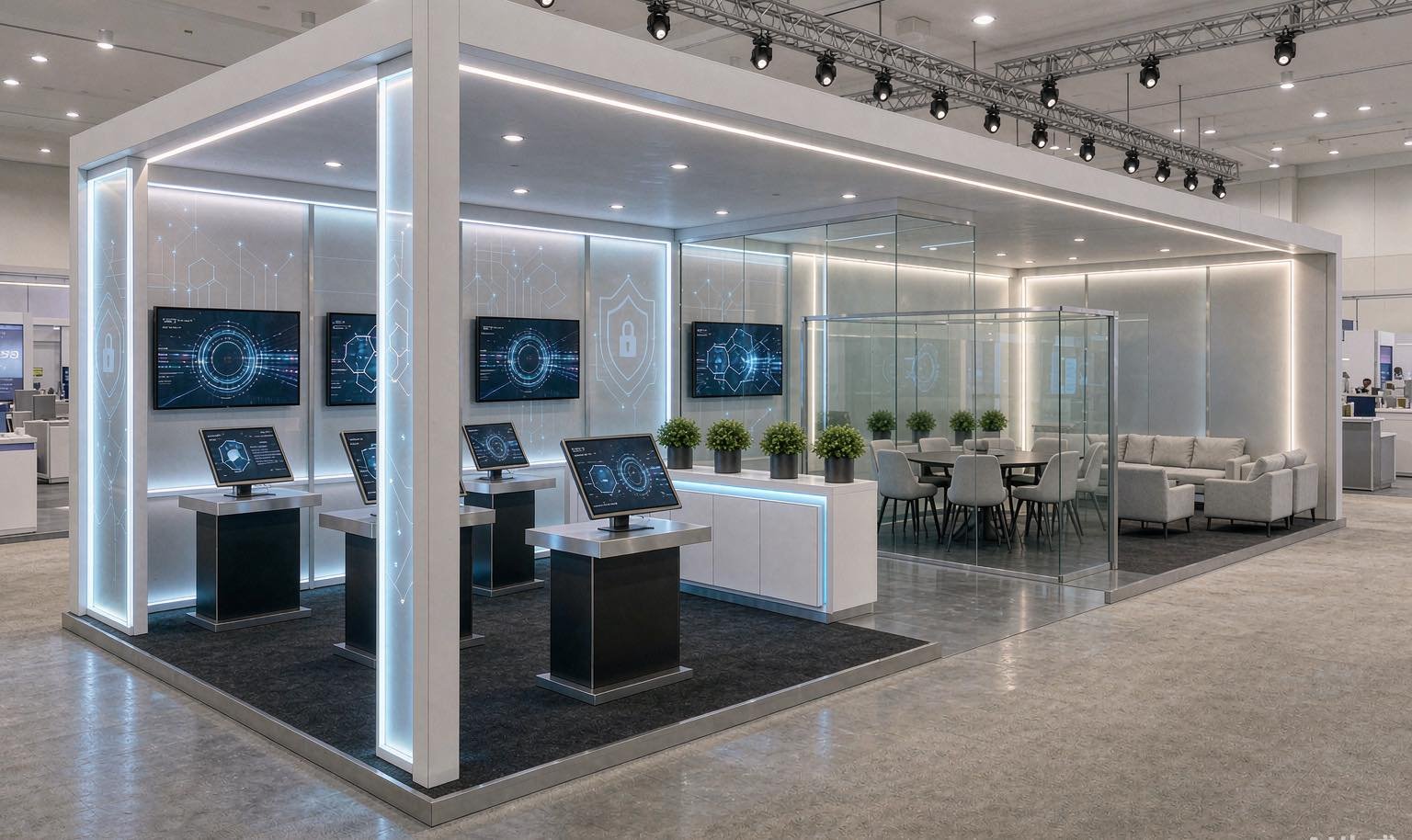
For several guided demos, an architecture story and a compact enterprise meeting zone.
-
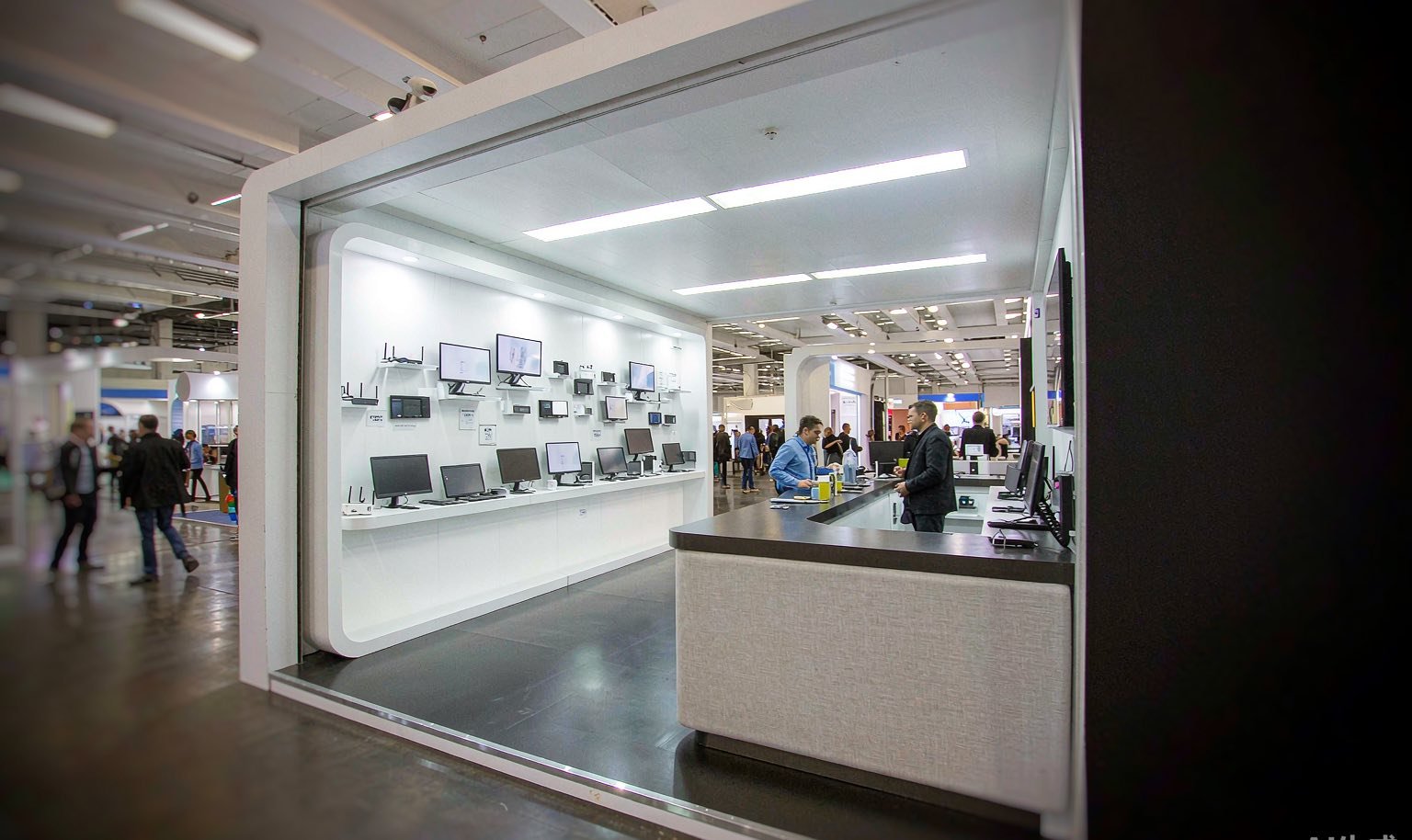
For several demo points and a compact technical discussion area.
-
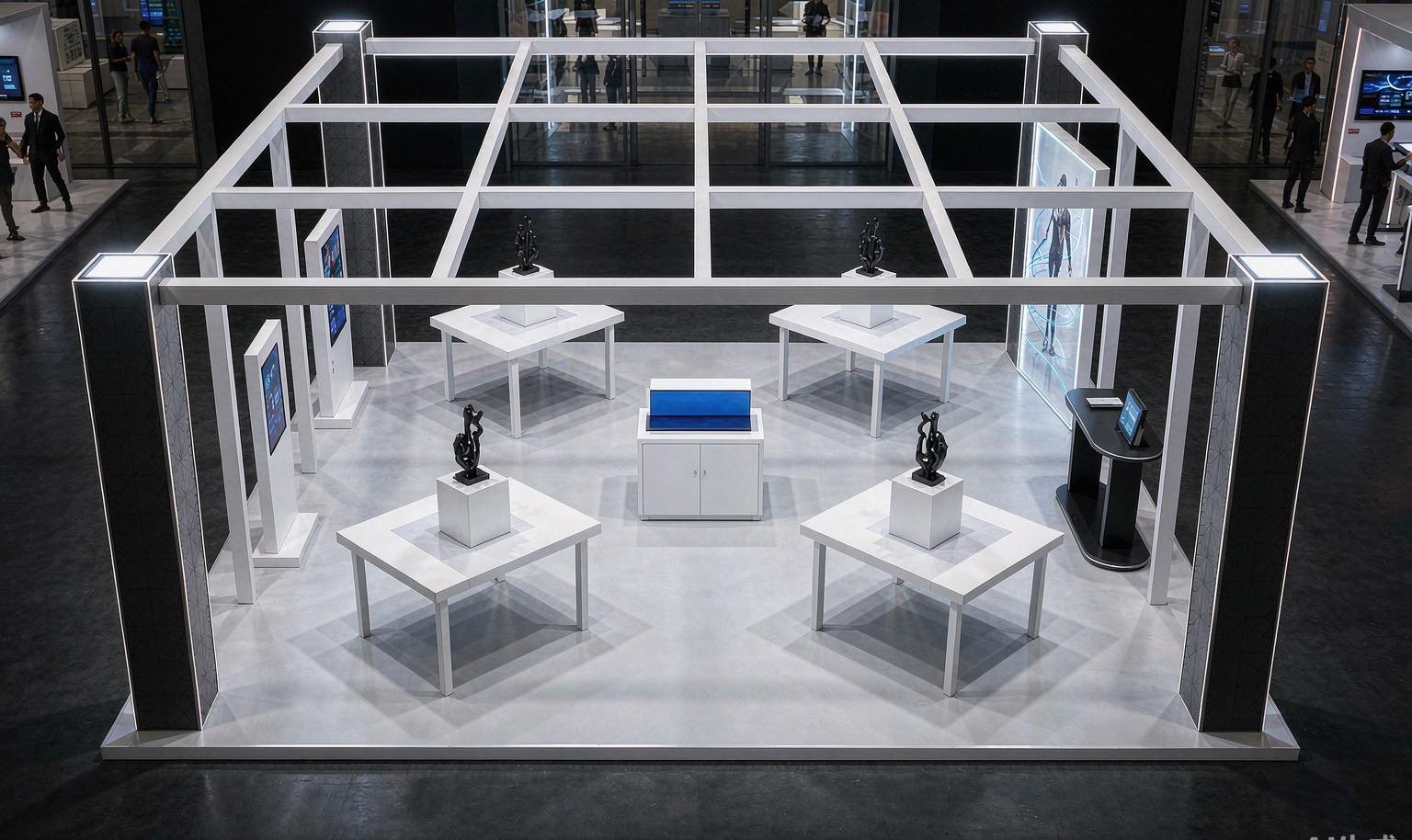
For public demonstrations, architecture reviews and scheduled meetings.
-
For several product teams, partners or enclosed enterprise meetings.
Request a Cybersecurity Booth Rental Plan
Name the security category and the two-minute demonstration a visitor should understand. Device count, network plan, approved datasets, fallback content and meeting schedule give King Exhibits enough detail to plan the physical booth without guessing at the product claim.