


Select the Display Format from the Buyer Question
Product Family Wall or CounterUse this format when buyers need to understand breadth, construction, packaging or application across a part family. Group products by vehicle system or job, then use labels and a digital catalog for deeper fitment. Small pieces need secure, reachable presentation; heavier parts need supports based on confirmed weight and contact points.Tool, Equipment or Diagnostic DemonstrationGive the operator a stable work surface, utilities and enough clearance to repeat the action. The audience should be able to see the tool, connection and result without leaning into the technician’s area. Screens can magnify a scan result, measurement, repair step or software workflow while the physical product remains visible.Channel Program and Account AreaProduct discovery may lead to questions about range, packaging, data, merchandising, training, fulfillment and commercial terms. Place account seating close enough to reference products but outside the demonstration. Key samples, literature, devices and personal belongings need planned storage so the table is ready for the next meeting.
An AAPEX Exhibit Rental Built for Aftermarket Decisions
AAPEX buyers range from distributors and retailers to service chains, shop professionals and technology teams. One visitor may be checking the construction of a replacement part; another wants fitment coverage, packaging, data and supply information. Tools and diagnostics must make sense in the repair process. Software and business services need a recognizable shop or channel problem rather than a screen full of features.King Exhibits turns those buying tasks into an AAPEX trade show display. We map the product families, demonstration, catalog access, storage and account conversations before selecting rental walls, towers, lightboxes, counters, flooring, lighting, screens and furniture. The booth can then show both the physical product and the commercial program that supports it.Confirmed part weights and dimensions can inform quoted shelves, pedestals, mounts, cutaway surrounds or demo counters. Graphics can connect product groups to vehicle systems, repair jobs or channel applications. Packing and freight coordination, installation and dismantling are included only when the accepted proposal assigns them to King.AAPEX currently directs exhibitors to different service guides according to their booth location. The assigned space therefore comes before service orders or logistics assumptions. Current event resources control regulations, material handling, labor, utilities, rigging, EAC requirements and other show work; our proposal keeps the exhibit scope and those interfaces clearly separated.
Present Aftermarket Products by How They Are Purchased and Used
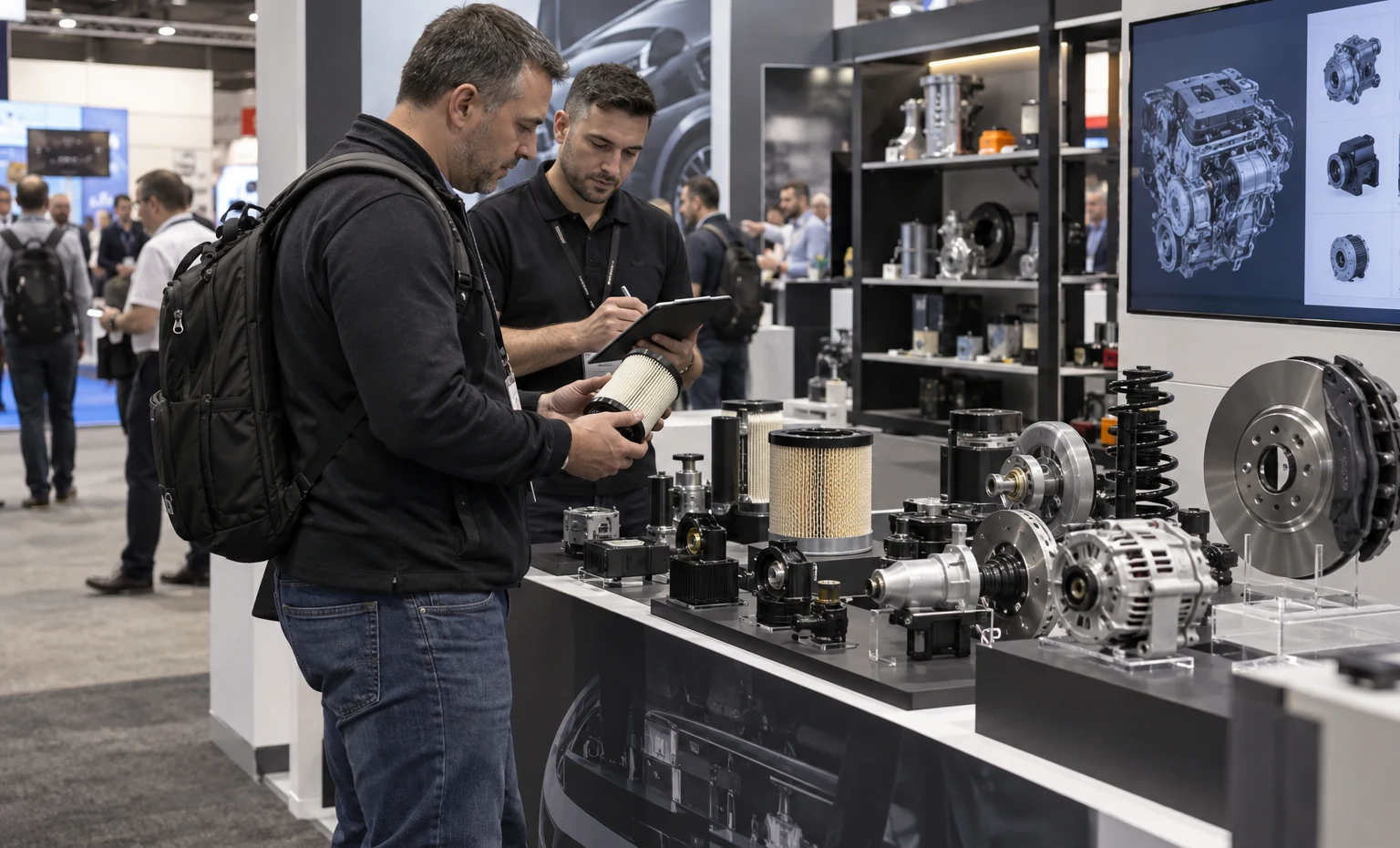
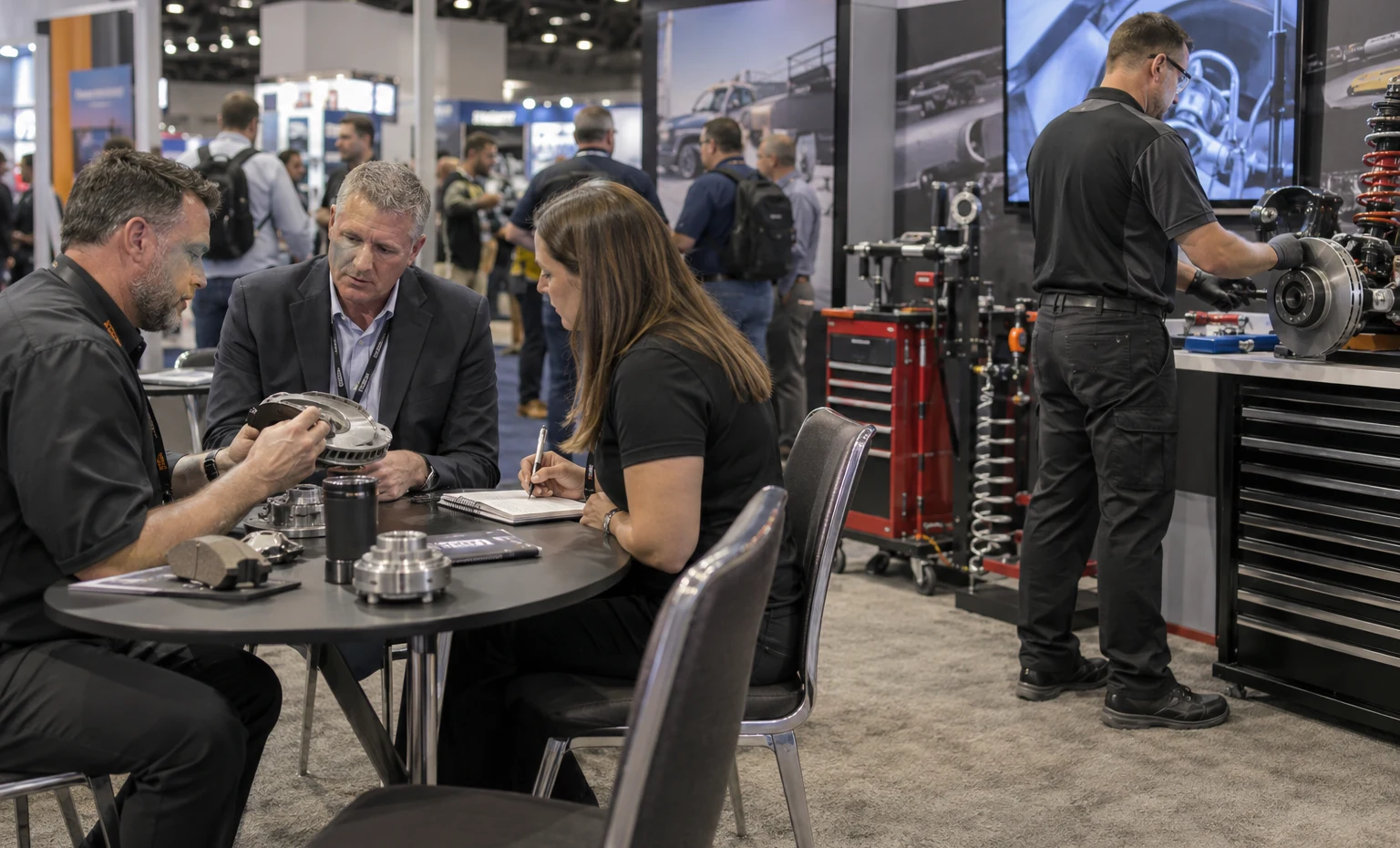
Organize filters, pumps, sensors, electrical parts, engine components, brake products, chassis items and other hard parts by vehicle system, repair need or program. A few representative SKUs can demonstrate construction and range while screens or literature handle deeper fitment. Avoid treating every small part as an equal hero.
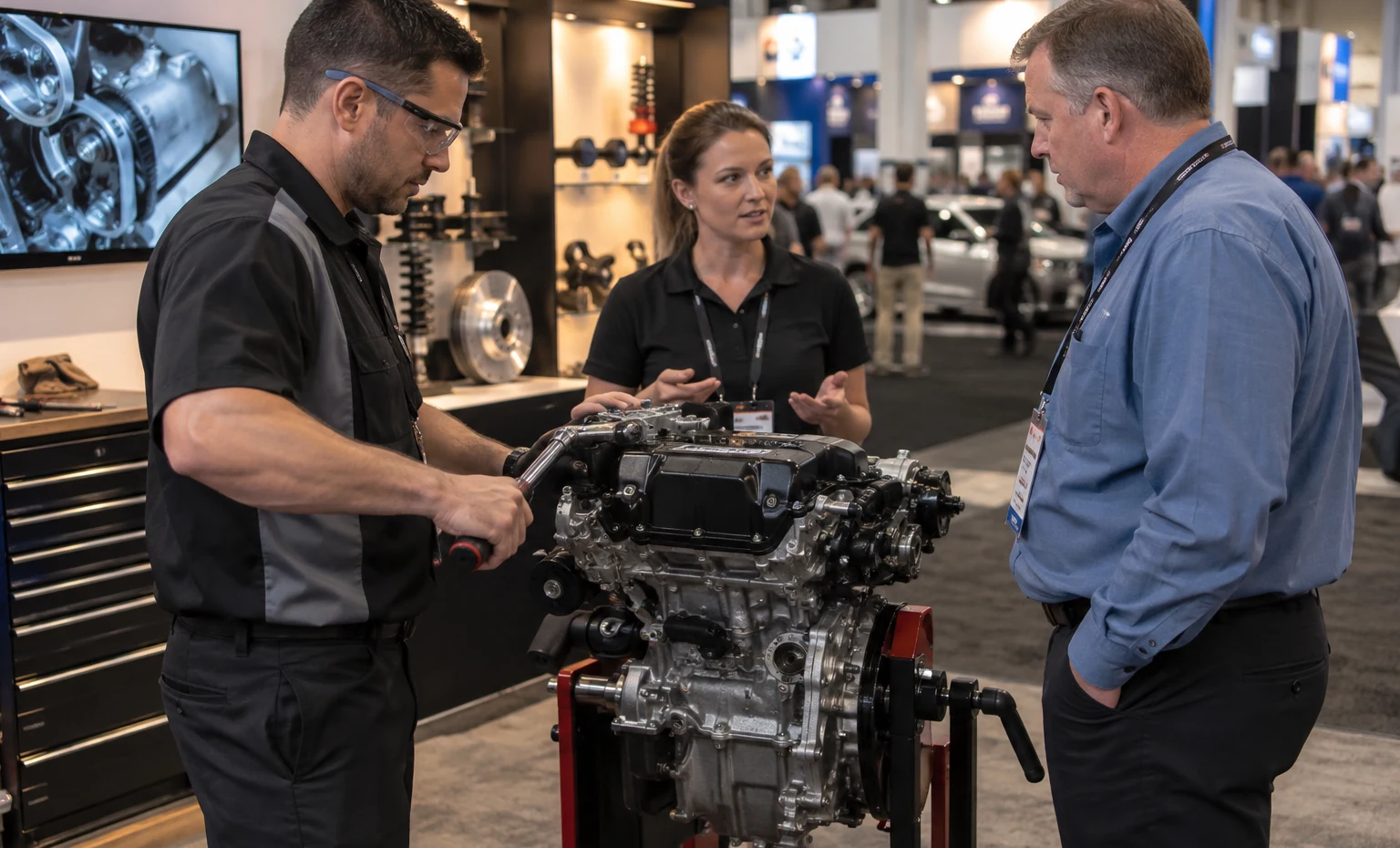
Show the working end of the product, the technician position and the result. Benches, lifts, chargers, scan tools, measuring systems and service equipment may require power, air, data, vehicle interfaces or clear operating space. The booth should protect the demonstration while giving serious buyers access to controls and technical questions.
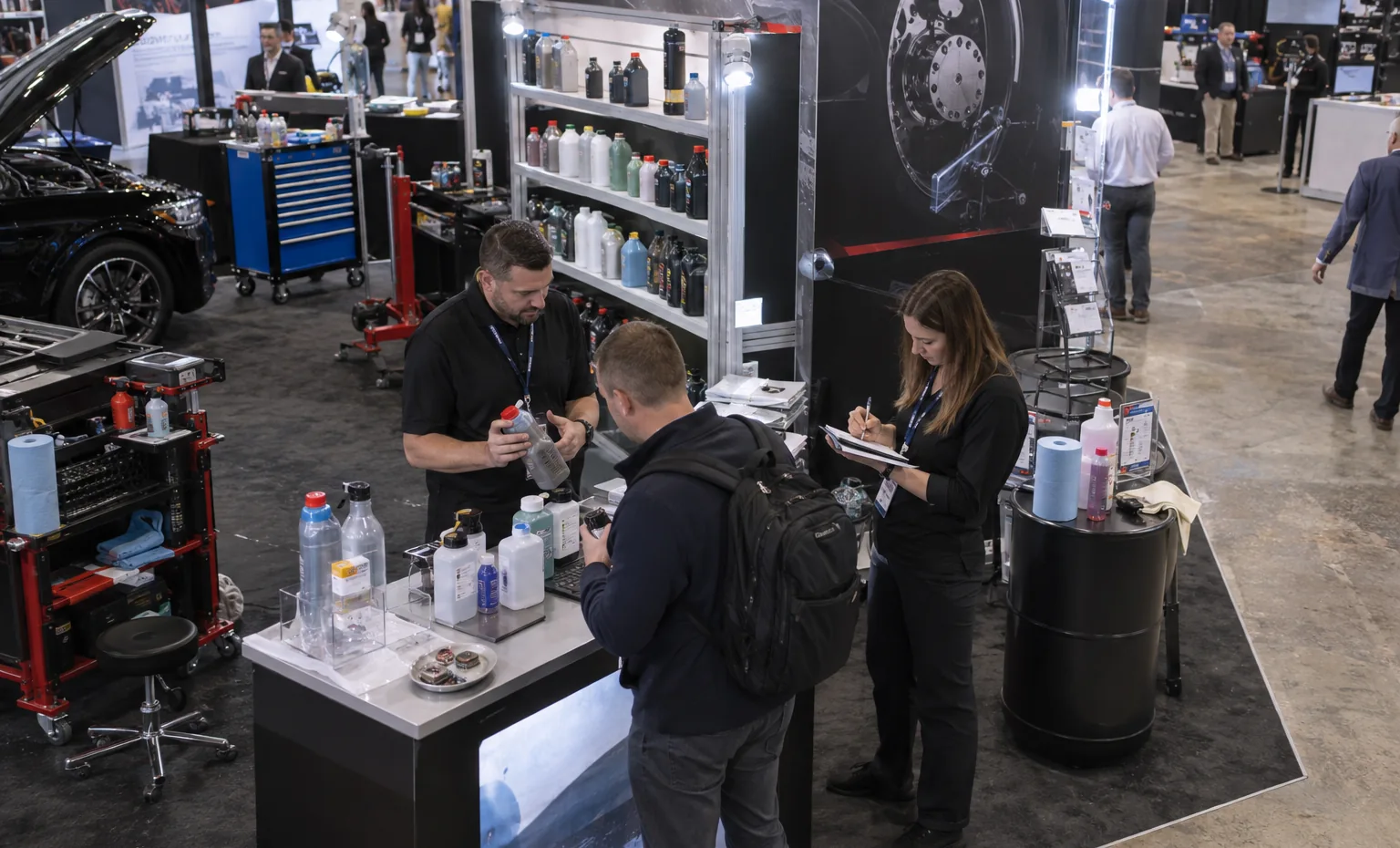
Group containers and samples by service application, treatment step or customer program. Packaging, dispensing, safety information, before-and-after proof and branded merchandising may carry different parts of the story. Sampling, liquids, cleaning, waste or live-use demonstrations need confirmation under current event and venue requirements.
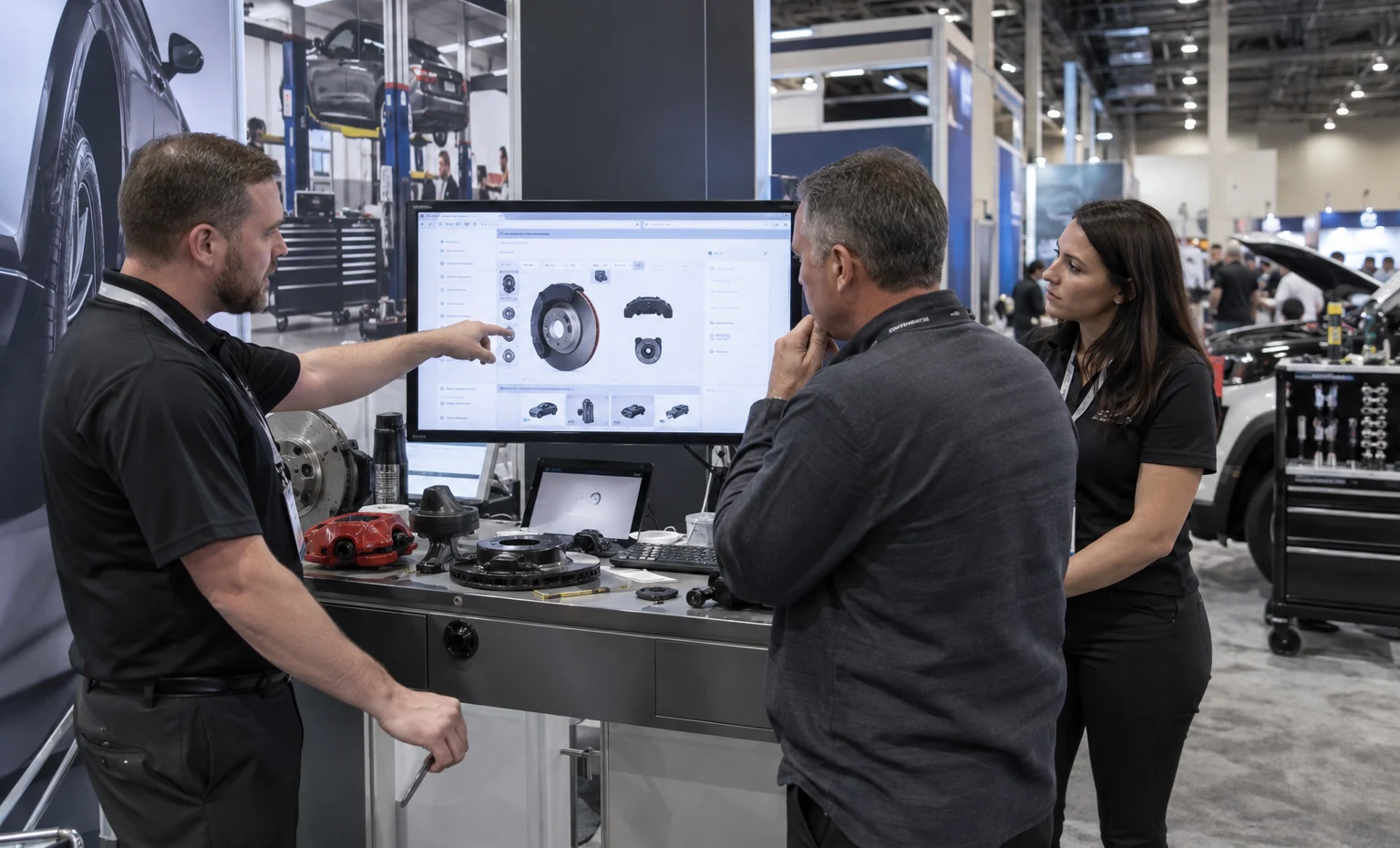
Use one workflow that matters to the buyer: parts lookup, fitment, estimating, shop management, inspection, training, inventory, fulfillment or customer communication. Let the visitor complete a useful action, then provide account space for integrations, deployment, commercial terms and support.
Organize the Range Around the Job, Not the SKU Count
Hundreds of part numbers do not require hundreds of equal displays. Select representative products that explain construction, coverage or a meaningful range, then group them by vehicle system, repair task or channel program. Labels should answer the first application question without becoming miniature catalogs. A nearby screen or printed tool can take qualified buyers into fitment and assortment depth. This keeps the physical exhibit readable while preserving the breadth needed for a serious aftermarket conversation.
Support Every Part for Its Weight, Detail and Handling
A sensor, brake component, lighting assembly and heavy mechanical part cannot share one generic shelf plan. Record each displayed item’s size, weight, support points, finish, security need and whether buyers may handle it. Lighting and labels should reveal the detail that matters without blocking removal or service access. King Exhibits can translate confirmed product data into quoted mounts, shelves, pedestals or counter details, while the exhibitor approves all technical and application claims.
Keep the Working Demo Clear of Account Meetings
Tool noise, technician movement and a standing audience can interrupt a distributor or service-network meeting. Set the demo position, operator side, viewer line, utilities and reset route first. Place account seating where representatives can still reach products, catalogs and program material without crossing that working area. A defined split lets the booth prove how the product performs and still support the commercial questions that determine assortment, rollout, training or supply discussions.
Connect Product Data, Display Hardware and the Quote
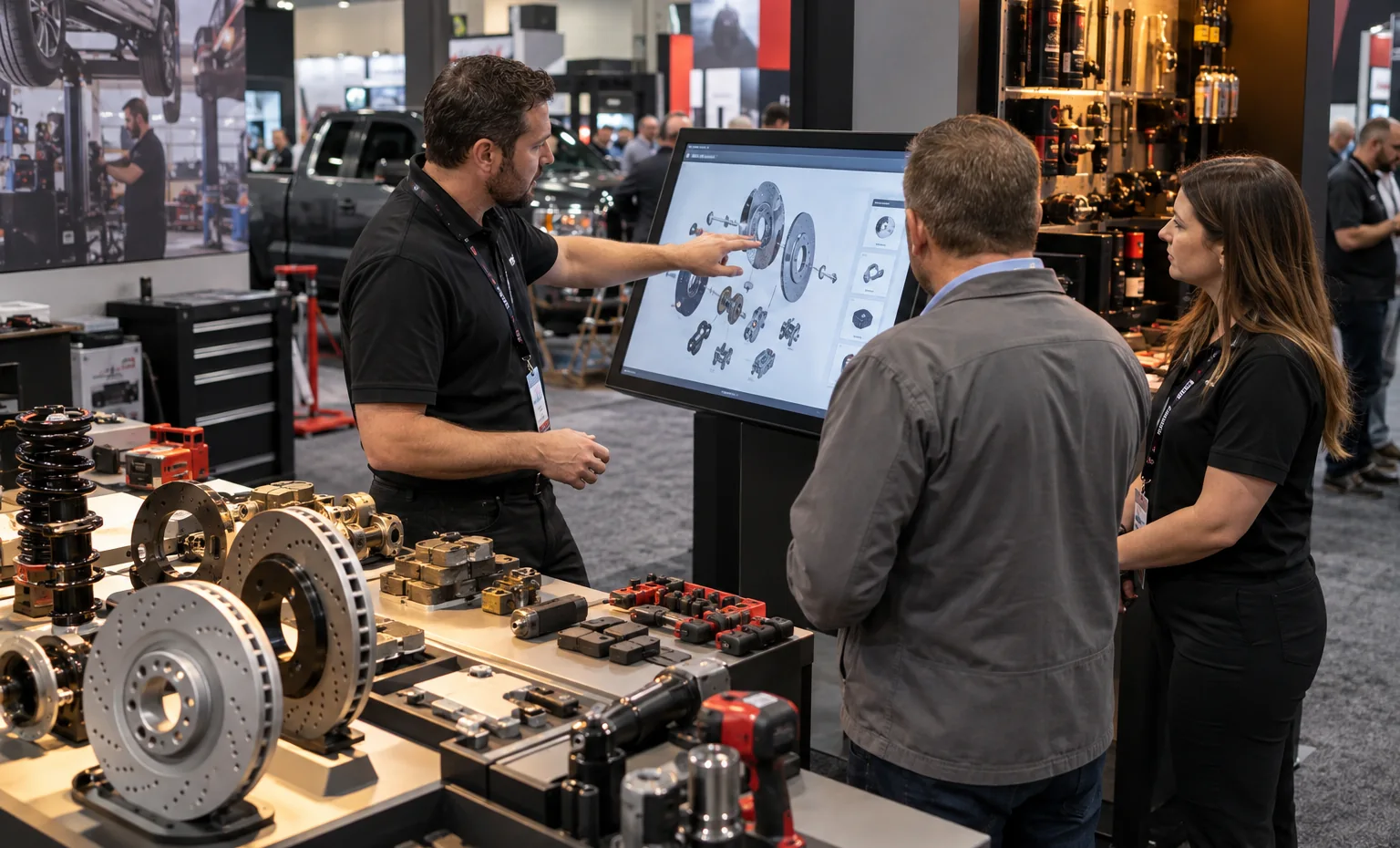
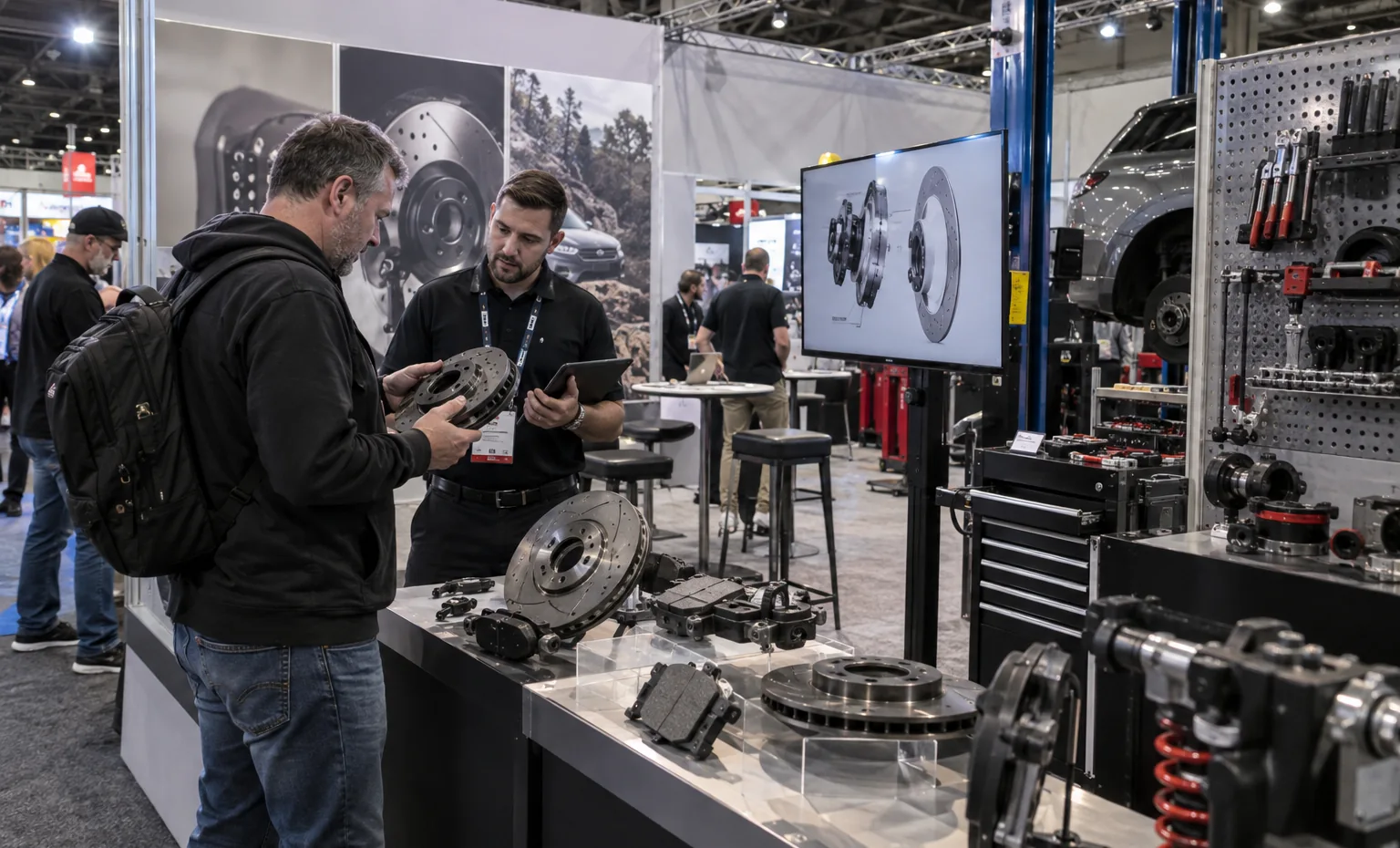
King Exhibits begins with the parts, equipment and conversations the booth must support. The 3D plan shows product groups, buyer access, demonstration clearances, screens, storage and account seating together. Product, channel, marketing and event teams can review whether the booth explains the offer and whether the chosen fixtures actually hold the samples before production begins.When standard rental shelves or counters are not sufficient, confirmed dimensions and weights can support quoted mounts, pedestals, openings, surrounds or demo work surfaces produced with our CNC and wood-fabrication capabilities. Graphics and product labels can follow the approved positions. Identified exhibit pieces and packing references then give the field team a clearer link between the 3D design and the physical installation.The proposal names the rental components, graphics, selected custom work and agreed logistics or floor support assigned to King. Customer products, demo operation, official service orders and technical commissioning remain visible with their owners. This allows procurement to compare a complete booth configuration instead of assuming that every product fixture and onsite service is hidden inside a single rental price.
Build the AAPEX Booth from the Product Program
What You Provide: Target distributors, retailers, service networks or technicians; product families; vehicle systems; repair tasks; program goals and approved claims.What We Do: We establish the product groups and first message that help the right buyer recognize the offer.
What You Provide: Sample list, dimensions, weights, handling/security needs, cutaways, tools, operating steps, utilities, screens, software access and staff roles.What We Do: We assign display hardware, technical access, demonstration space and catalog support before surrounding the products with structure.
What You Provide: Booth location and open sides, graphics, lighting, storage, meeting schedule, furniture, freight plan, budget and requested services.What We Do: We develop the complete 3D direction and issue an itemized King Exhibits proposal.
What You Provide: Approved drawing and artwork, signed proposal, the correct AAPEX service guide, shipping information, purchased official services and the onsite product or demo lead.What We Do: We complete the agreed booth production and align its recorded arrival and setup work with the product and show-service sequence.
Yes, when accurate product data supports the design. Provide dimensions, weight, support points, center-of-gravity concerns, handling method, buyer access, power or air, service clearances and placement sequence. King can design quoted exhibit supports around confirmed requirements; official handling, rigging, utilities and other controlled work follow the current AAPEX guide for the assigned location.
Display representative products by vehicle system, repair job or program, then use a screen or organized literature for deeper fitment. Keep labels short enough to support inspection. The sample list should identify what is public, what stays in storage and what staff can retrieve for account meetings.
Possibly, subject to the current event and venue rules. Send the operating sequence, product or vehicle interface, operator, audience, noise, power, air, data, heat, waste, safety and reset information. The exhibit can support an approved demo, while the organizer and authorized providers determine permissions and controlled services.
AAPEX currently provides location-specific exhibitor service guides, including separate information for Venetian Expo and AAPEX Forum assignments. The booth number identifies which current forms, providers, freight route and service instructions apply. Confirming it prevents an older or wrong-location guide from controlling the project.
Footprint, open sides, structure, height, product supports, demo counters, graphics, lighting, screens, storage, meetings, packing, freight and installation shape the King quote. Heavy equipment or working demonstrations may also require separately ordered handling, power, air, internet, rigging or technical labor.
Often. Rental structure, graphics hardware, counters and some product fixtures may adapt to another footprint. The products, open sides, venue, service orders and buyer emphasis still need a fresh review. Share the next assignment early so reusable pieces are identified without forcing a new product program into the old layout.
Send the event edition, booth number and venue area, open sides, target accounts, product groups, sample dimensions and weights, demonstrations, utilities, screens, storage, meetings, graphics and freight schedule. Identify the exhibit production or floor responsibilities that should appear in our proposal.
Compare Booth Sizes for Parts, Demonstrations and Account Meetings
-
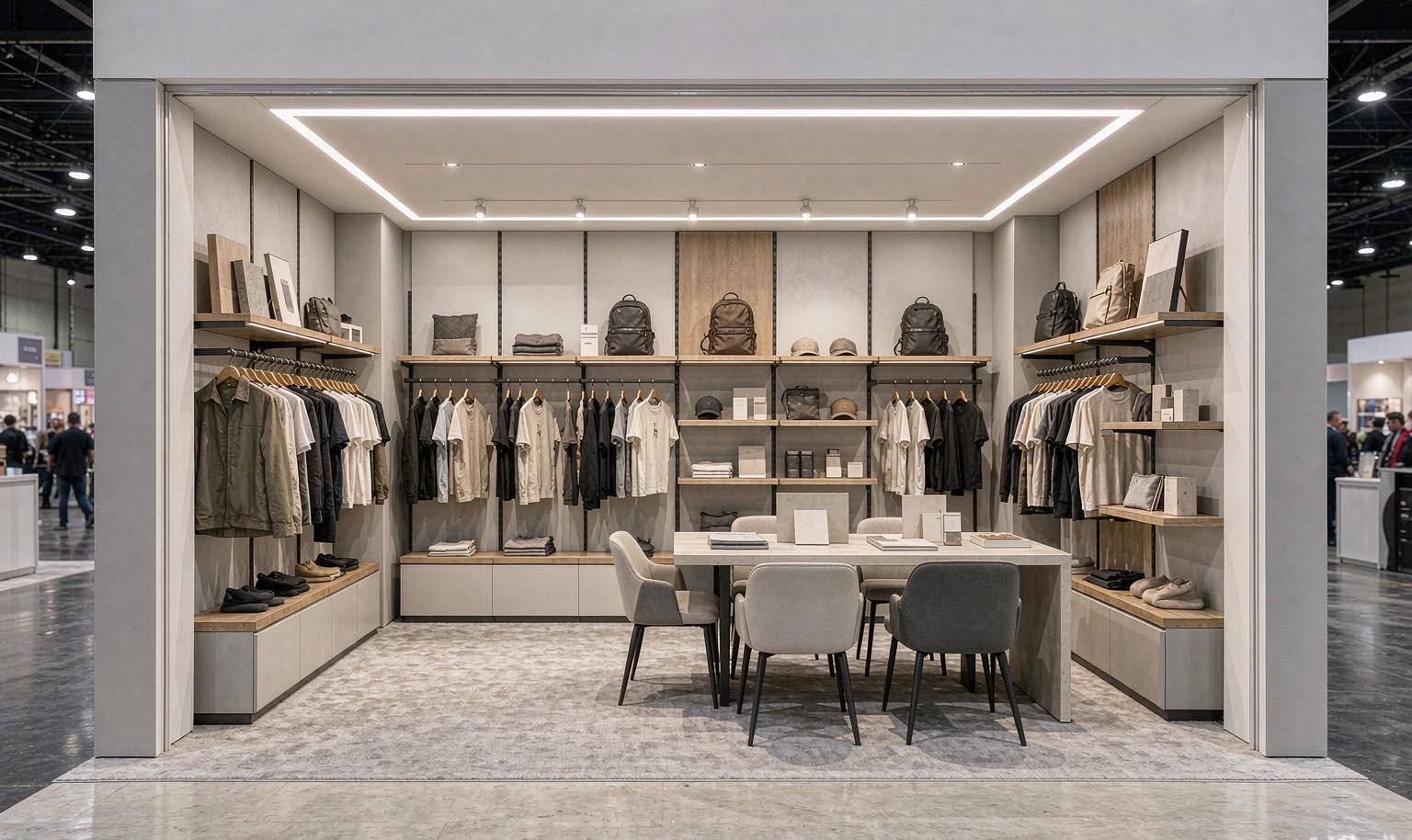
Useful for several organized part groups, one compact demo or catalog station, storage and a direct account conversation.
-
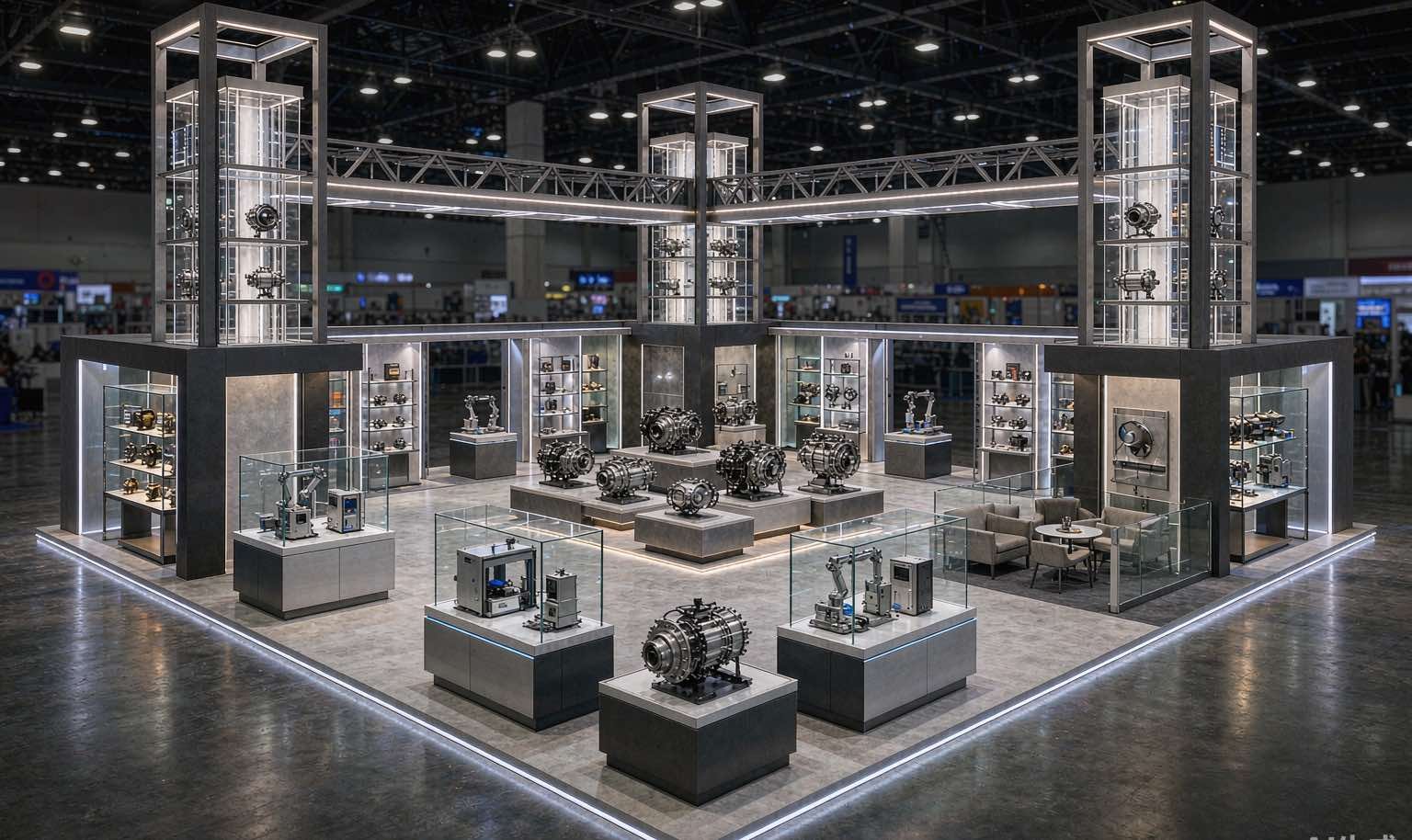
An island footprint for more buyer access around parts or equipment and a clearer split between demonstration and meetings.
-
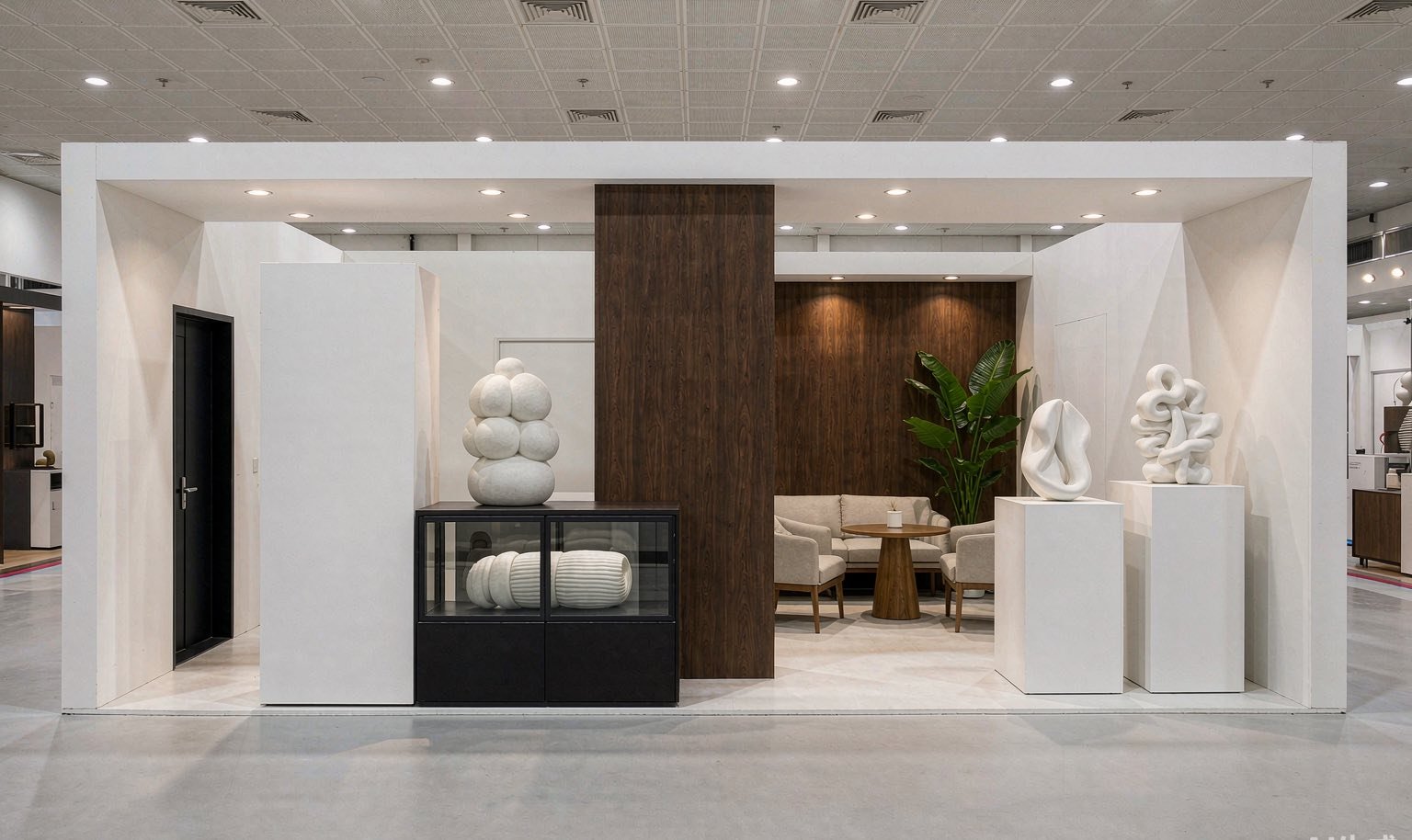
A larger format for a broad product program, working equipment, several sales roles, storage and distributor or service-network meetings.