


Inputs for a Kentucky Exposition Center Exhibi
Send the product record with the sales plan:
• Event, hall, booth and outdoor assignmen
• Product dimensions, weights and operating conditions
• Buyer roles, applications and sales objectives
• Indoor message and outdoor demonstration sequence
• Utilities, handling, flooring and protection needs
• Budget, approval date and requested King scope
Build One Sales Story across a Very Large Campus
Kentucky Exposition Center publishes 1.2 million square feet of climate-controlled space and 356 acres of outdoor exhibit and demonstration area. For equipment exhibitors, the commercial opportunity is the relationship between those environments. The indoor booth can explain application, controls, service and return on investment. An outdoor demonstration can prove movement, output or field use. King Exhibits designs the rental architecture, graphics, product presentation and lead path around that division of work. Product dimensions, handling, utilities and protection are documented early because a late change affects much more than appearance. Buyers receive a clear path from recognition to evidence, while procurement receives a scope tied to real assets and the current show plan.
Give the Indoor Booth the Job the Field Cannot Do
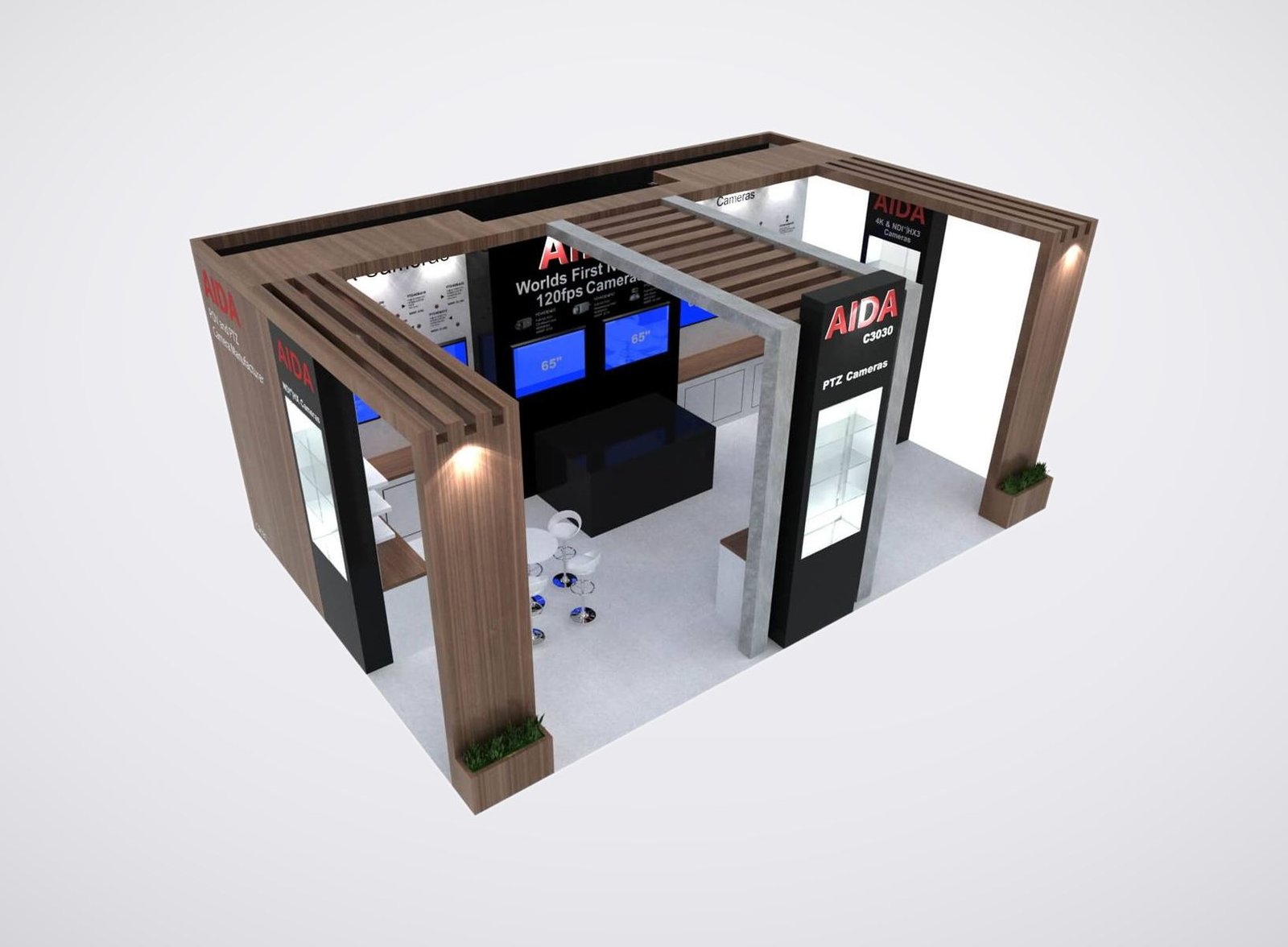
A moving demonstration proves performance but rarely supports a detailed commercial conversation. Use the indoor space to identify applications, compare configurations, show controls and introduce service or dealer support. King Exhibits can create a product-led display with clear graphics, accessible samples and a meeting point sized for the actual sales team. The booth prepares visitors to understand the outdoor proof and captures the questions that should follow after they have seen it.

Carry the Same Message into the Outdoor Demonstration
Treat the outdoor area as the second act of the exhibit, not a separate attraction. Repeat the product name, application claim and next action so visitors can connect what they saw inside with what the machine does outside. The operating plan should identify weather, surface, audience boundary, operator, cycle and lead capture. King Exhibits can align portable graphics and buyer prompts within its scope while the organizer and venue control outdoor operations and safety requirements.
Design around the Product Movement Record
Before architecture is approved, record the shipped dimensions, operating dimensions, weight, center of gravity, lifting points, fluids, battery or fuel status and required floor protection. KEC’s planning guide includes specific handling, freight and surface-protection rules, and the current event may add more. King Exhibits can use that record to shape clearances, supports, graphics and packing. Venue and show-authorized parties retain control of freight, equipment handling and approvals assigned to them.


Price the Commercial System, Not Just the Square Fee
For a large equipment show, the booth cost should be read against the selling work it enables. Separate the product interface, reusable rental structure, custom fabrication, graphics, packing and agreed coordination. Then identify outdoor graphics, hospitality, storage or media as choices connected to a specific audience task. This lets procurement compare a credible working scope rather than two totals built on different freight, service or demonstration assumptions. Only the accepted quotation defines King Exhibits’ responsibilities.
Senzani — 20×30 Exhibit at PACK EXPO 2025
Senzani’s completed 20×30 exhibit is a verified King Exhibits reference for giving industrial equipment a clear position inside branded architecture. It was delivered for PACK EXPO 2025, not at Kentucky Exposition Center. Buyers can use the project to evaluate product integration, finish and meeting balance. A KEC exhibit would receive a separate indoor or outdoor assignment plan, handling record, service map and accepted written scope.

The Product Interface Can Be Designed with the Exhibi


King Exhibits has supported U.S. exhibit projects since 2008. Las Vegas-based production support combines 3D design, rental preparation, custom graphics, CNC work and wood fabrication. That makes it possible to develop product clearances, access panels, supports, graphic frames and packing as one approved system rather than independent purchases. Important assemblies may be checked before packing when included in scope. Freight coordination, installation and dismantling, audiovisual support and storage are available only when accepted in writing. KEC-exclusive services, show-contractor work, equipment operation and approvals remain with the named responsible parties.

Develop the Exhibit from the Operating Product Outward
The design is released after buyer work, equipment conditions and responsible handoffs agree.
Assign recognition, explanation, live proof and conversation to the right location.
Record dimensions, weight, access, utilities, operating conditions and handling points.
Develop structure, graphics, supports, media, staff positions and lead transition.
Approve packed assets, services, freight, labor, schedule, responsibilities and written scope.
Yes, when both assignments are confirmed and the sales story is planned across them. Use the indoor booth for explanation, comparison and qualified discussion; use the outdoor area for proof that requires movement, scale or field conditions. Graphics and lead capture should connect the two locations. The organizer and venue control the outdoor schedule, operating rules and safety boundaries, so those conditions must be verified before production.
KEC’s Event Planning Guide states that freight is an exclusive right of the facility and distinguishes advance shipments from deliveries after official move-in. The current event manual and contractor instructions control the working process. King Exhibits can prepare labels, packing records and accepted coordination, but it does not replace the authorized handler. Confirm addresses, dates, marshaling, equipment needs, charges and outbound paperwork before the carrier is dispatched.
Provide shipped and operating dimensions, weight, lifting points, center of gravity, access doors, operator position, fluids, battery or fuel conditions, heat, noise, exhaust, motion, utilities and floor-protection needs. Also explain what the buyer must see or compare. King Exhibits uses this record to plan structure, clearances, graphics and supports. The venue, organizer and authorized providers decide operational permissions and handling requirements.
Send the event, hall, indoor booth, outdoor assignment, current manual, products, buyer roles, demonstration plan, staff, graphics, existing assets, utilities, handling record, freight schedule, budget and approval date. Identify the help expected from King Exhibits and every service already ordered elsewhere. The resulting proposal can distinguish selling-critical exhibit work from venue, organizer and contractor charges that are still pending or outside the requested scope.