


Give Us the Inputs That Control the Columbus Booth
We review six items before the design and quotation move forward:
- Show, venue and assigned booth location
- Footprint, open sides and floor plan
- Products, demonstrations and visitor actions
- Brand files, graphics and screen conten
- Budget range and target approval date
- Freight, installation and dismantling scope
Design Around the Operator as Well as the Product
A working display needs room to load samples, reach controls and recover from a stop. Visitors need a safe viewing position that does not block the aisle. Staff need a natural place to continue the conversation after the demonstration. Those spaces should be drawn before decorative storage or extra furniture is added.
After the structure is stable, connect utilities, place the product, load the media and test the complete visitor sequence. The responsibility plan should name who can correct the exhibit, the product and each official service.
Production drawings assign a sequence number to every product support, service opening and closing panel. During pre-build review, the team checks product fit, operator access, cable or hose clearance and the viewing position before graphics are packed. Onsite, the floor team establishes the service routes first, positions the product, completes official connections and closes the visible surfaces only after testing.
Test in the Same Order the Booth Will Open
After the structure is stable, connect utilities, place the product, load the media and test the complete visitor sequence. The responsibility plan should name who can correct the exhibit, the product and each official service.
The King Exhibits quote may cover concept work, rental components, graphics, fixtures, packing, freight coordination and contracted labor. Facility and event orders remain listed with their providers and purchasers.
The equipment schedule shows where standard rental parts are sufficient and where the working product requires a fitted support, removable access panel, protected route or ventilation. Each produced item traces to a verified clearance or connection; facility electricity, plumbing, internet, cleaning and material handling remain separate orders.

Build and Test by Service Dependency
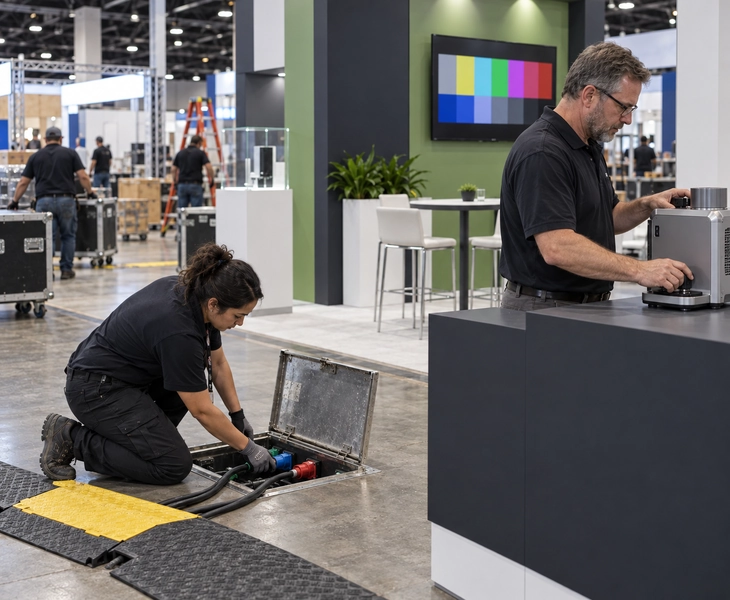
Production drawings assign a sequence number to every product support, service opening and closing panel. During pre-build review, the team checks product fit, operator access, cable or hose clearance and the viewing position before graphics are packed. Onsite, the floor team establishes the service routes first, positions the product, completes official connections and closes the visible surfaces only after testing.
Provide the current exhibitor kit, measured booth plan, equipment specifications, sample quantities, utility loads, operator position and target visitor action. The opening record should confirm that the demonstration runs, access panels remain reachable and staff can continue the conversation without blocking the operating zone.
Turn the Columbus Equipment Schedule into a Booth Plan
Send the current event kit, booth plan and product connection data. King Exhibits will develop a display that supports installation, operation and the sales conversation.
For this Columbus decision, list each device, load, connection point, operator position and test owner in the city show brief. King Exhibits can use that schedule to coordinate mounts, openings, cable access and visitor clearance in the 3D and production drawings. The buyer can then review booth fabrication and official service orders against the same operating plan.
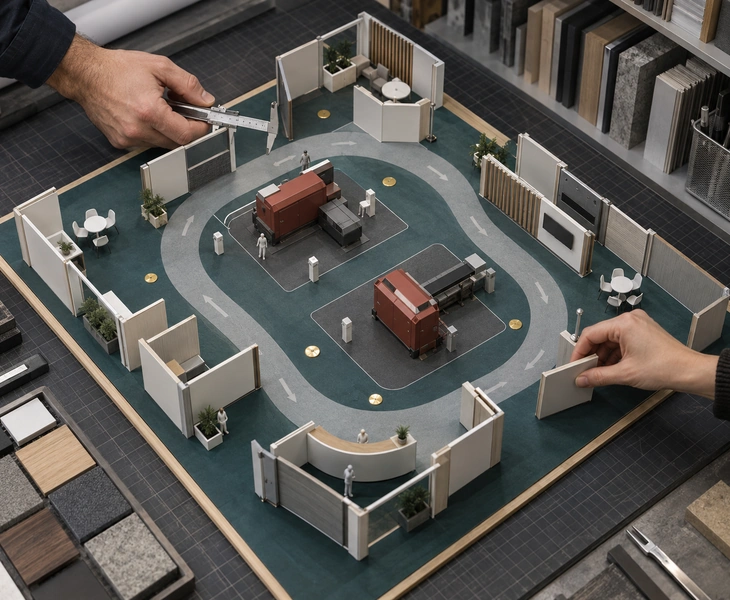
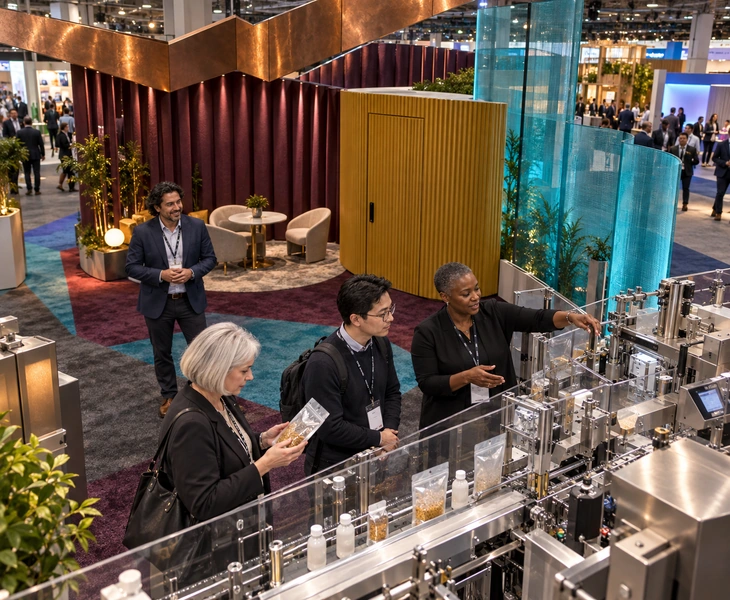
Illustrative 20×30 Packaging Exhibit Concept
This illustrative concept gives teams planning Columbus a visual reference for scale, equipment presentation and visitor access. It is not a completed customer project. A new Columbus booth would be developed around the assigned space, products and current event requirements. Use the concept to discuss design direction rather than as a local-project claim.
Keep Design, Production and Field Scope Connected
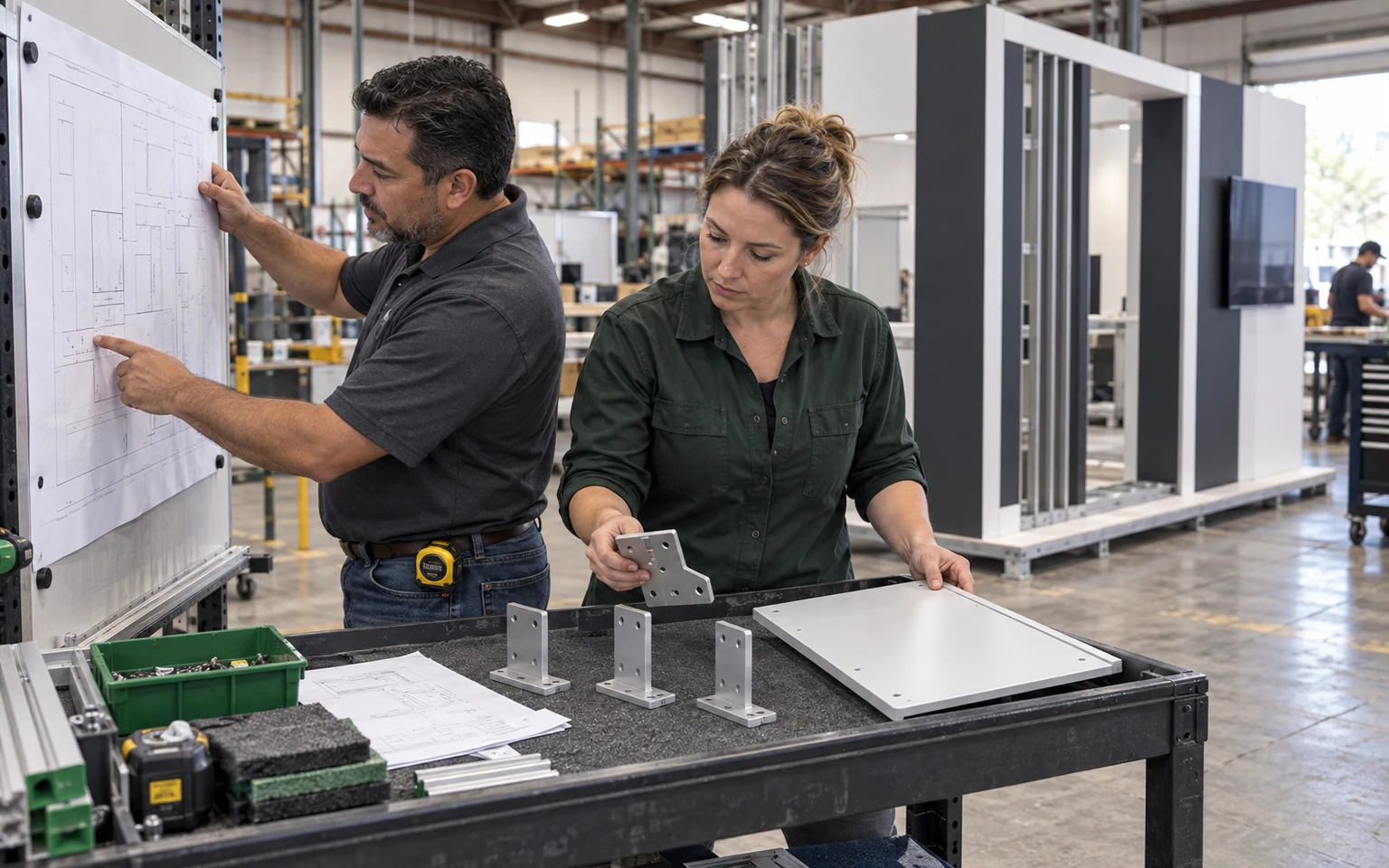
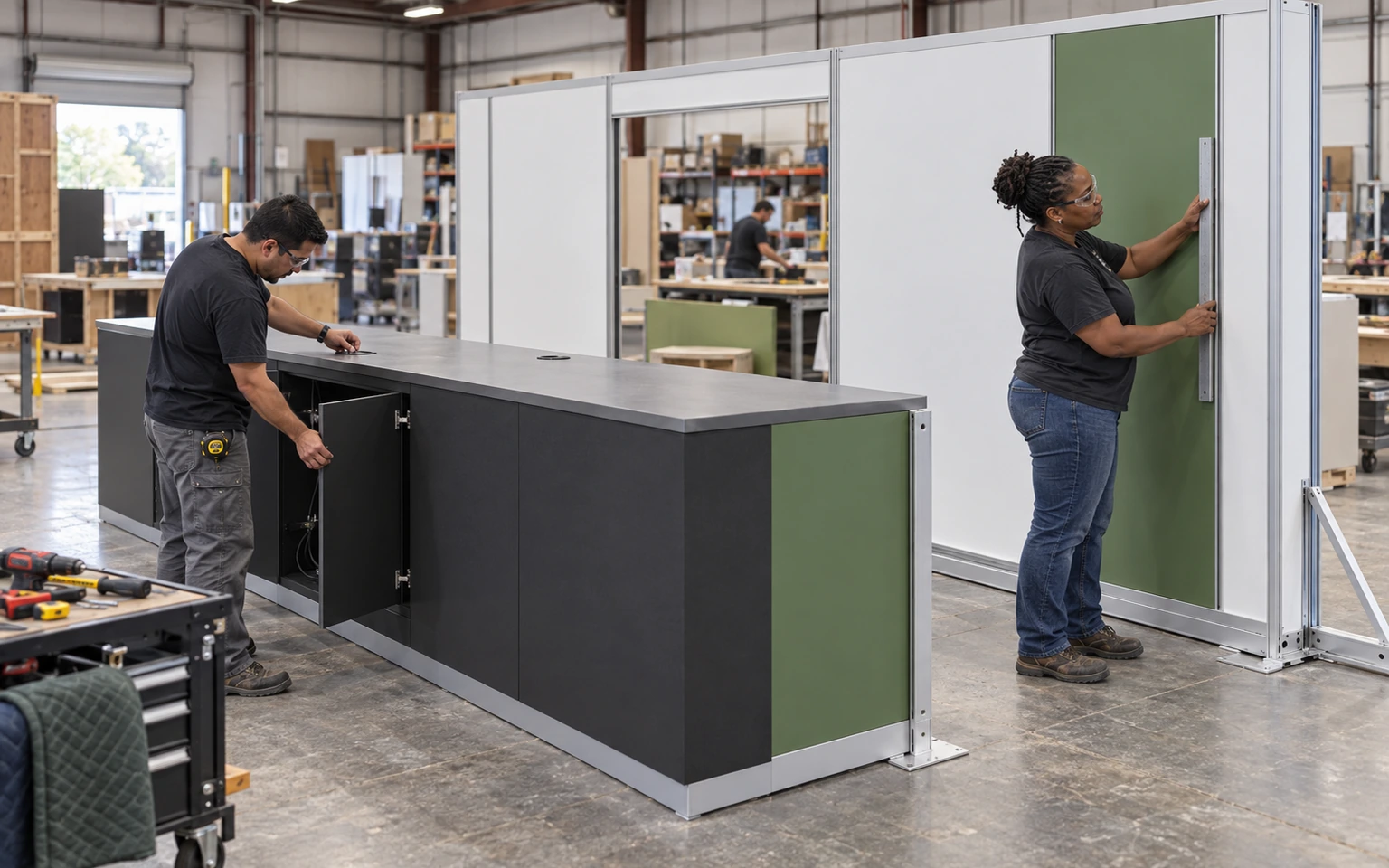
For Columbus, the approved design should stay connected to the pieces that are produced, packed and installed. King Exhibits has supported U.S. exhibit projects since 2008. Our Las Vegas-based production support connects 3D visualization with rental preparation, custom graphics, CNC work and wood fabrication. When the project scope calls for it, key components can be assembled and checked before packing. The production record carries the approved local freight, service and reuse decisions into packing and field instructions. Freight and the floor work accepted in the quotation then follow that written scope.

How the Columbus Booth Moves from Brief to Show Floor
Each stage turns customer information into a defined project output.
You provide the event, assigned venue, booth location and floor plan, footprint, products, budget and deadline. We identify missing organizer and technical information. The output is one usable Columbus project brief.
We use the confirmed Columbus operating brief to shape visitor flow, product placement, services and structure. You review the 3D direction and functional fit. The output is an approved layout basis.
You approve dimensions, artwork and final product information. We carry the approved Columbus freight and service assumptions into rental preparation, fabrication, graphics and packing. The output is a production record.
You confirm the current organizer instructions, carrier plan and authorized floor contacts. We coordinate the freight and field work accepted for Columbus. The output assigns installation, dismantling and outbound responsibilities before dispatch.
Columbus Trade Show Booth Rental Questions
No. Providers generally need the booth number and measured placement, and the crew needs the same information on the released drawing. King Exhibits uses the current Columbus show, assigned space and visitor goal to turn that decision into a buildable exhibit plan. This lets procurement compare the exhibit scope with official show charges before approval.
Before layout approval. Include dimensions, weight, operating clearance and every electrical or plumbing requirement. King Exhibits uses the current Columbus show, assigned space and visitor goal to turn that decision into a buildable exhibit plan. This lets procurement compare the exhibit scope with official show charges before approval. The final project record should identify who owns each remaining action and deadline.
Freeze the product model, operating side, loads, measured utility points, staff position and demonstration sequence. These items control fixtures, access and installation order. King Exhibits uses the current Columbus show, assigned space and visitor goal to turn that decision into a buildable exhibit plan. This lets procurement compare the exhibit scope with official show charges before approval.